2 New Writer’s Lessons
I’ve posted two new writer’s lessons that discuss how emotion works and the essential parts of story.
I’ve posted two new writer’s lessons that discuss how emotion works and the essential parts of story.

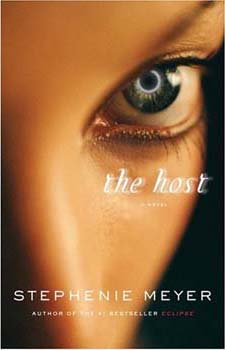
Watch an interesting Borders interview with Meyer about Host and Twilight. The thing I keep seeing in her interviews is that this woman follows her passion. She follows the story that wows her. It’s nice, of course, that millions of fans want to share that wow with her. But I don’t know that a writer can be successful doing anything else.
Here’s Orson Card’s blurb about Meyer in Time’s list of the 100 Most Influential People
Nobody was looking for Twilight. A Mormon housewife writes a young-adult novel about a love affair between a teenage girl and a vampire?
Is this Anne Rice lite? Not in the eyes of the teenagers—and their mothers—who have embraced the book.
But Stephenie Meyer’s Twilight does raise some questions, and I’ve asked them. “You really want your teenage daughter to live inside the story of a girl who lies to her parents, invites a boy to sleep in her bed and trusts him not to take advantage of her?”
These women look at me as if I’m insane. “But she can trust him. He really loves her. He’s…perfect.”
In an era when much of the romance genre has been given over to soft porn, and dark fantasy is peopled with one-dimensional characters bent on grim violence, many readers have become hungry for pure romantic fantasy—lots of sexual tension, but as decorous as Jane Austen.
Meyer, 34, did not calculatedly reach for that audience. Instead, she wrote the story she believed in and cared about. She writes with luminous clarity, never standing between the reader and the dream they share. She’s the real thing. Still, who’d have thought it? Today Mr. Darcy is a vampire.
Card is author of Ender’s Game, Empire and Women of Genesis
Laughs are lovely. I just came across this wonderful parody by novelist Jim C. Hines which will give you a few for free. Enjoy!
Slush I Read
by Jim C. Hines
(Apologies to Seuss)
I read slush.
Slush I read.
That slush I read.
That slush I read!
I do not like that slush I read.
Do you like fanfic with vamps?
I do not like them Mary Sue.
Why do these vamps all worship you?
Here’s a tale from D & D!
I do not want your D & D.
I do not like your elf PC.
I can not stand your purple prose.
I want to punch you in the nose!
Would you like a hot sex scene?
I wrote it for my online ‘zine!
This is J. K. Rowling’s 2008 Harvard commencement speech, “The Fringe Benefits of Failure, and the Importance of Imagination.” It’s one of the best speeches I’ve ever heard. Watch and then watch again. Read the full text here.
Two quotes that in no way can do justice to the whole thing.
And so rock bottom became the solid foundation on which I rebuilt my life.
You might never fail on the scale I did, but some failure in life is inevitable. It is impossible to live without failing at something, unless you live so cautiously that you might as well not have lived at all – in which case, you fail by default.
. . .
Though I personally will defend the value of bedtime stories to my last gasp, I have learned to value imagination in a much broader sense. Imagination is not only the uniquely human capacity to envision that which is not, and therefore the fount of all invention and innovation. In its arguably most transformative and revelatory capacity, it is the power that enables us to empathise with humans whose experiences we have never shared.
One of the greatest formative experiences of my life preceded Harry Potter, though it informed much of what I subsequently wrote in those books.
In The Business Rusch: Generational Divide Kris Rusch points out that the new on-demand and long-tail market for books has changed the duration of the opportunity a book has to be successful, but that it seems the industry still isn’t recognizing this in how they measure success.
The problems come from the fact that those of us who run things—people in our forties, fifties, and sixties—use metrics that were developed by our parents for their world, that tightly controlled Mad Men world where everyone was expected to be the same, not just in what they wore or bought but in what they listened to or watched or read as well.
The bestseller list?
It measures velocity. (A good essay on this topic, “The Meaningless Metrics of Fame,” came from Mike Briggs, husband of Patricia Briggs, earlier this week. I’ve also dealt with it.)
Reviews?
They only want new books, and then only at the time of release.
Brick and mortar bookstores?
They only have room for the latest releases, and then only the ones that are the most popular with their customers (whoever those folks might be).
Books have come late to this fight. Books have been available on demand for only about four years now, in the U.S. In other countries, there’s been even less time.
And we’re all still fighting over meaningless metrics, to use Mike Briggs’ term, because those metrics only measure things that were important around the water cooler, not things which are important now.
What’s important now?
She goes on to say:
The publishing industry isn’t even talking about new metrics. That idea hasn’t occurred to traditional publishing, and indie (or self) published writers are constantly seeking validation from the old system—trying to figure out ways to game the bestseller lists or to get a fantastic review from somewhere that has old-world prestige . . . But at some point, traditional publishers are going to have to develop new ways to figure out which products sell well and which ones don’t. All of their systems—from sales figures (which measure books shipped not books sold) to bestseller lists to critical acclaim—are based on the old models.
Kris is a very experienced with publishing, but her last point conflates internal accounting with marketing. Publishers DO know which products sell.
The primary measure of success in a financial enterprise s not new. It’s been around for 100’s of years. And on demand and long-tail markets don’t change it.
The measure is how much a product or service contributes in profit to the bottom line. You take revenues, minus expenses, and that’s the contribution that product (a book in this instance) makes to your total profit. Or to covering your fixed costs.
Booksellers have measured the success of their books with actual or estimated profits for quite some time. Publishers already know which books sell well and which don’t. No accountant in the world is going to report books shipped as the measure of success. And they don’t. The very fact that publishers have a profit and loss statement and show returns on royalty statements demonstrate that. They look very closely at actual and estimated profits. And to they do this by channel, which is reflected in a small way when they break out ebooks on royalty reports. This is all basic accounting.
Here’s an example. Until Ender’s Game the movie, Ender’s Game the book hadn’t appeared on any best seller list since it was first released. And its release was 30 years ago! Yet over the years Tom Doherty touted its sales numbers many times. Tom knew that book was gold. Of course, he did. Because he doesn’t use best seller lists to tell him what’s selling well. He knows those lists are marketing devices. He has the real data in house. Why would he need a list to tell him anything?
And Tom isn’t going to use books shipped either. Tor may report those numbers to Publishers Weekly for marketing purposes, but he will always multiply that number by an expected return rate to estimate sales. He wants to do that. Because books shipped is meaningless to the bottom line and everyone knows it, including the auditors.
Publishers are well aware of the long tail. They see it with books that have been rotated out of the brick and mortar channels but are still selling in the online ones. They report it in their annual statements. They know the online channels work differently from the brick & mortar ones.
The measure of success is still the same as it ever was—how much profit is this property contributing to our bottom line?
Marketing, however, is a whole other ball of wax.
What the long tail and on-demand allow are marketing campaigns that are impossible in the brick & mortar channel. In brick & mortar you have a limited time to advertise (roughly 8-15 weeks). After that period, most books are rotated out of the store. This means that any marketing for those brick & mortar buyers MUST coincide with the period when the books are in the stores.
But the online channels open up all sorts of other opportunities. You can market forever. And the contribution margin is always positive. The online and POD costs are easily recouped with each sale. (Publishers are well aware of this profit potential; this is why we have so many making grabs for backlists.)
And I see publishers taking advantage of these new marketing methods. This last week I saw publisher books not currently stocked by brick & mortar retailers on BookBub, BargainBooksy, and Book Sends. And the industry isn’t totally focused on new books for reviews. I just had a large newspaper agree to look at my book that was published four months ago. Still, Rusch is right when she says that the publishers haven’t adapted one of their biggest marketing tools to take advantage of the new opportunities–they haven’t done anything with the best seller lists.
Amazon has lead the way in creating new ways of marketing books to different types of readers with their best seller lists. These lists create the excitement of discovery.
But every one else is still reporting weekly sales on the big lists.
If I were a publisher, I’d be asking USA Today to provide more than just the weekly view of the top 150 books. And USA Today is THE list to watch because their numbers are not based on units shipped to a sample of stores, but actual sales. Here are some lists that readers would be interested in.
Let the reader select the view they want to see!
Avid readers will gravitate towards the shorter time periods. Those that read fewer books will gravitate towards the longer periods. Everyone who wants to discover something new will go to the contender and mover lists.
This is about marketing. Not publishers measuring success.
And then armed with those numbers guess what the publishers will do? They will go back to the brick & mortar venues and pitch to have some of these same books carried in the stores for the first time (some publisher books are printed digital first) or carried again.
One of the best articles on responding to stories and listening to responses that I have ever read. Ever. “The Business Rusch: Perfection” by Kristine Rusch.
For those of you that have seen my presentation on The Hunger Games, you’ll recognize the idea immediately. O, but Kristine says it with so much more insight and grace.
No, I’m not going to comment. Just go read that essay.
I had an absolute BLAST with Larry and the audience at LTUE. I think the workshop went very well for the first time. Of course, I’m going to make some tweaks. Paul Genesse had some interesting feedback and I’ll have to see if I can’t do more with character. Two hours is such a short period of time.
The good news for those who couldn’t attend is that we have a recording and will be posting probably next week. Everyone should thank Stephen Nelson!
We ran out of handouts. I printed 80. Then Mark Holt generously had 30 more printed. We still didn’t have enough. For those of you who didn’t get one or who want an electronic copy, here it is.
