“26 Monkeys, Also The Abyss” by Kij Johnson

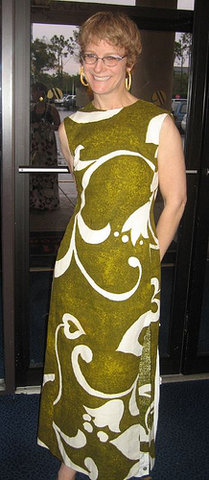
Why is Kij smiling?

Because she knows how the blasted monkeys do it!

And she’s not telling, neither. Neener-neener.

I just read Johnson’s story and enjoyed it. I enjoyed the inexplicable trick, the narrator, the transport to this odd and wonderful traveling troupe, and dang it, even the ending. Furthermore, there are moments in the story that capture the wonderousness of these fellow animals so well that they shine like jewels.

I always wanted a monkey friend. You can read about someone who has 26 of them.

 It’s on her website, free, just waiting to be enjoyed. Kind of like a delicous mango or bananna.
.
.
.
.

Share

Similar Posts

  • The Rocket Science of Overspending

    In July, I blogged some spending 101 for Congress and the President, including contigency planning for alien invasions.  I thought I made some good points.  However, through the whole spending debate that occured this last spring nobody in the media or elsewhere was able to make clear what is going on with the US government. Nobody except Dave Ramsey. He explained it on Fox and then on his website. If you take the big federal numbers and translate them to a size we can understand, here’s the situation:

    – Joe and Susie (the Federal government) make $55,000 a year
    – They spend $96,000 a year
    – At the same time, they have $366,000 in credit card debt

    Look at those numbers again. Every year those clowns in Washington are adding $41,000 a year to that massive debt total. Soon enough, our overspending will kill our ability to do anything else except pay the interest on that debt.  150 years after America abolishes slavery, we decide that debt slavery really is a good idea. Yea! Give us shackles! Give us shackles!

    No wonder our credit score as a nation (our bond rating) was reduced.

    So what did the government do this last Spring? They agreed to find some way to cut spending from $96,000 to $78,000. Meaning they’re still adding $28,000 dollars a year to the government’s massive credit card debt total. Which we have to pay!

    If the US Government was a family, they would be making $55,000 a year, they spend $96,500 a year, & are $366,000 in credit card debt. What’s the first step to get out of debt? Stop overspending! But that means a family that is used to spending $96,500 a year has to learn how to live on $55,000. That’s a tough pill to swallow. It works the same way for the government. You can’t borrow your way out of debt, whether you’re a typical American family or the entire U.S. government. At some point, you’ve got to say, “Enough is enough!” and make the hard cuts necessary to win over the long haul. – Dave Ramsey

    The answer is NOT to print more money.

    If you do that, you reduce the value of each dollar. It’s called inflation. As Ron Paul rightly points out, it acts effectively as a tax. Or as I like to put it–a PAY CUT. How many of you would like to get a nice fat 10% or 20% pay cut this year? Furthermore, instead of fixing the problem, the overspending continues, which means more pay cuts in the future. More fun!

    No, the thing we have to do is STOP SPENDING MORE THAN WE MAKE.  Here’s what has to happen.

    1. We must write into law that Congress balance its budget every year–they must not be able to spend more than they take in except in rare emergencies. This means they might need to build up a rainy-day fund.
    2. We must cut our spending. Now. I linked to an idea Ron Paul has for this in my 101 post where we just go back to 2007 levels of spending.
    3. We must work to increase our revenues. Not through hiking taxes to monstrous levels, but by providing optiomal regulatory conditions for economic growth. See my 101 post. 
    4. We need to make sure the taxes are visible, so the American people can easily see what’s going on. Congress has mandated that lenders provide clients an APR so they can clearly see the rate they will pay on a mortgage. Why shouldn’t we mandate that the IRS send out an ATR–annual tax rate (or maybe Annual Grab Rate or Annual Tax Burden or you come up with the name)–which includes all Federal taxes translated into one total rate?  
    5. We need to give everyone the opportunity to pay for the soldiers that defend them and the roads they drive on, even if it’s just $50-100 a year for the very poor.
    6. We must send people to the White House and Congress who are willing to do what it takes RIGHT NOW.

    I mentioned Ron Paul a number of times above. He’s not my choice for president. But he has added a number of good things to this discussion. Here are the Ramsey links:

    EDIT: Mark Holt makes an excellent point in the comments. Inflation isn’t just a pay cut. It’s a savings cut, a retirement cut, a 401k cut, a house value cut, an everything cut. Using that backdoor method, the DC Connivers institute a tax of everything, something they’d never be able to pass out in the open.


    Share
  • | |

    30 books you should read before you die

    An avid reader friend of mine began reading through the books in a list called “100 books you must read before you die.”

    She got to Jack Kerouac’s On The Road and went to Facebook and posted the following: “I don’t get the appeal. It’s about a group of boys/men who are irresponsible, drunks, whoring around taking advantage of others and being enabled by their women. Why is this a classic and why should I have wasted my time on it? Can some of my literary friends explain? I hated a brave new world and the handmaid’s tale too.”

    Is the book a classic?

    Should she read it before she dies?

    Is it really that important?

    Let me share an edited version of my response and then provide my list of 30 books you should read before you die.

    *

    Annette, the unfortunate truth is that these lists of “classics” are a sham because there is no objective criteria for determining literary excellence.

    Or maybe I should say that measuring quality in the arts isn’t like measuring the unambiguous, objective score of a baseball game. After books exhibit a certain level of proficiency, it becomes increasingly difficult to distinguish the quality of one book from another, especially because much of this depends on a reader’s interests and subjective experience of the story.

    When it becomes hard to rank performances, people rely on other measures. One of the most powerful is social networks.

    So if two readers find two different books that blow them away, one of the books might get all the attention because the one book gets picked up by a news service (The New York Times) or a platform (the Oprah Book Club effect) or some other social network of influence. A lot of the so-called literary classics only appear on various lists because they tapped into the academic network, which kept them alive far longer than they would have lasted otherwise.

    On The Road is simply a book that made a stir among some circles in the 1950s. That’s it.

    Was it more important or of higher quality than Exodus? The Chronicles of Narnia? Lord of the Rings? A Town Like Alice? All published in the 1950s as well.

    It depends.

    If you’re wanting to understand the 1950s beat culture, it would be an important book.

    But if you’re wanting to understand fantasy writing of the time, it wouldn’t.

    If you’re wanting to read a book that’s had a huge impact on popular culture, well, LOTR beats On The Road like a dog.

    Some people have the feeling that the so-called classics have some inherent medicinal value because someone put them on a list and called them classics.

    Nope. They’re just stories. Some of which can shed light on the issues and interests of a part of the culture in a given period. But if you’re not interested in that specific sub-culture, who cares?

    And if you’re reading to be entertained, moved, uplifted, or educated—which ones do that best for Annette is for you to decide.

    So all that to say I wouldn’t devalue your reaction to the book ?

    *

    I’m now going to give you my list.

    But it’s not going to be a list of titles. Nor will it focus on a book’s impact on some sub-culture of a given period.

    It’s going to be a real list. One that focuses on what so many of us go to stories for.

    1. The one that makes you weep.
    2. The one that makes you giggle and snort.
    3. The one that reminds you of what it’s like to fall in love.
    4. The one that gives you hope.
    5. The one that you begin to read more and more slowly because you don’t want it to end.
    6. The one that scares the soup out of you.
    7. The one that you can’t put down, even though you need to wake up early in the morning.
    8. The one that makes you wish you lived there.
    9. The one that’s so good that when you close it, you immediately start to read it a second time.
    10. The one that gives you and your child hours of pleasure together.
    11. The one that gives you a sacred, spiritual experience.
    12. The one that makes you reread some of the lines because the turns of phrase are just so delicious.
    13. The one that gives you courage.
    14. The one that takes you on an awesome adventure.
    15. The one that makes you want to be a better person.
    16. The one that bores you to tears (just so know you how good the others are).
    17. The one that introduces you to a different culture that delights you.
    18. The one that makes you think.
    19. The one that lingers with you for days.
    20. The one that gives you lovely insights.
    21. The one that inspires you to love your spouse more.
    22. The one that introduces you to the sorts of people you normally don’t like and makes you actually like them.
    23. The one that delights you with its characters.
    24. The one that whisks you away to a different historical period.
    25. The one that inspires you to give your children a hug.
    26. The one that gets your adrenaline pumping.
    27. The one that sparks all sorts of ideas in your head.
    28. The one that makes you wonder and start imagining what it would be like to be there.
    29. The one that blows your freaking mind.
    30. The one that makes you stand up in your living room and cheer.

    We could do more than 30, couldn’t we?

    Like the one that makes you think people from a different time period are just like us. And the one that makes you think people from that same period are completely alien.

    But I think we’ll stop. That there above is a list.

    Those are 30 books I think everyone will want to read before they die.

    Share
  • “From the Clay of His Heart” reprinted

    Cover_YearsBestFantasy9I loves me golem story. It was such a joy to write. Obviously, two editors found it a joy to read as well. So it was just reprinted in Year’s Best Fantasy 9 edited by David Hartwell and Kathryn Cramer and published by Tor.com.

    The good thing is that there is a whole boatload of other great stories in this anthology including one of my favorites, Kij Johnson’s “26 Monkeys and the Abyss.”

    Here’s the Amazon link.

    Share
  • For those whole love ENDER’S GAME

    Enders World Essays SmartPopThere’s a special joy in sharing a wonderful experience with someone else. There’s a delight in reliving the experience afterwards, in recalling key moments and quoting funny or cool lines. This is especially true of books. One of my favorite book experiences is Ender’s Game. Which is why I’m so happy to announce that Smart Pop is about to release a collection of articles written by folks sharing their experience with that book.

    You get to hear from Eric James Stone about how the book should have ended. You get to hear from Matt Nix (creator and producer of Burn Notice) how the book was a guide to his life. You get to hear from Colonel Tom Ruby why he made the book mandatory reading for the Air Force’s Air Command and Staff College.

    There are 11 other articles from Neal Shusterman, Captain John F. Schmitt U.S.M.C., Mary Robinette Kowal, Hilari Bell, Ken Scholes, Mette Ivie Harrison, and many others. There are Q&A sections. And there is Card’s own introduction in which he explains what Ender’s Game is really about for him. All of these articles are wonderful reads.

    If you loved Ender’s Game like I did, you’re going to enjoy this book. You can get a free PDF excerpt from the book that includes a few of the Q&As from Card along with the full version of my essay “The Monster’s Heart.” To download the PDF, just scroll down to where it says “Sign Up for Free Chapters & Book Updates”: http://www.smartpopbooks.com/book/enders-world.


    Share
  • Good Stuff! The winning Lady Rebels and Lady Tigers

    RichRebelsBB360x240Cody Lundgren, Jesse Calder, and Louie Stewart led our Lady Rebel basketball team to a 10- 10 record in the regular season and a 2-2 performance at the state tournament that earned our girls second place in our region and sixth at state.

    It’s interesting that the wins and losses were split right down the middle, which means it wasn’t a losing season, but it wasn’t a winning season either.

    Or was it?

    Now, I love it when our kids win. But I’ve never believed that winning should be the ultimate measurement or objective of high school sports. In fact, I will go so far as to say that it’s possible to win every game and become the state champion and utterly fail. Because, for me, high school sports are not about winning games. They are about the lessons that can only be learned by striving for excellence through competition.

    Lessons such as learning to:

    • Work hard
    • Work smart
    • Push yourself over a long period to obtain something you desire
    • Not give up in the face of adversity
    • Not give up even when you’re behind or the odds are against you
    • Play on a team, including supporting other team members in their roles, especially during the bad times
    • See mistakes and losses as feedback and triggers for learning instead of labels
    • Exert control over your future instead of feeling nothing you do makes a difference
    • Deal with both success and defeat
    • Deal with competitors who haven’t quite yet caught the vision

    I could list many more. The opportunities for learning key lessons about winning in life litter the ground in our gyms and on our fields and on our mats.

    The question is: did our coaches help our kids seize those opportunities? Did they help them learn what really matters and have a good time doing it?

    I’m pleased to report from what I and others observed that the three amigos listed above helped our girls do just that.

    They built positive and fun relationships.

    They asked the girls to meet high standards of performance and kept the girls busy in practice with useful drills that built skills.

    They taught them instead of yelled at them, and they praised them when they did well and when they attempted to do well but weren’t yet able to execute the skills right.

    They taught them to play with skill, not with cheap shots, as was displayed by one team at the state tournament that had learned to punch the opposing team’s stomachs when they went up for shots.

    They demonstrated, by example, how to deal with losses and mistakes.

    Coach Lundgren also worked in a demonstration of how tricky the lines on the court can be for old guys, tripping them and causing them to slide across the floor (grin).

    This was a winning season for me. Coaches are really just a certain type of teacher, and I’m sure they have things they want to improve in their curriculum. But this was a fabulous season full of opportunities to learn the things that really matter in life.

    TabionaTigersBB360x240And it wasn’t just the Lady Rebels learning these kinds of lessons. For those of you that didn’t go to the tournament, you should know about the Lady Tigers from Tabiona. They’re one of our region opponents. One that we beat both times we met them in the regular season.

    In our second game of the tournament, one of our girls, one of our top rebounders, a demon under the basket, broke her hand. She knew it hurt like heck, enough to bring tears to her eyes, but didn’t know she’d broken it, and so she played the last quarter and a half with a broken hand. (Is there a lesson there?) Well, Tabiona was our next game.

    Now stop and think about this. We beat Tabiona both times this season. I think we’ve probably beaten them a lot more than they’ve beaten us these last few years. You know what you feel when a team keeps beating you.

    So the Lady Tigers found out that one of our starters, one of the players that was supposed to have played them the next day, had broken her hand. And the girls, not their coaches, decided to get her . . . flowers.

    Flowers. For a player on their region opponent’s team.

    Who does that?

    Well, the Lady Tigers do. I talked to their coach, and he said it was all the girls’ idea.

    They’re learning things down in Tabiona that go far beyond basketball.

    And they’re learning things that go far beyond basketball here, thanks to Lundgren, Calder, and Stuart.

    That’s good stuff, baby. That’s excellent stuff.

    Share
  • Interview with Author Judson Roberts

    I’m very excited to present an interview I did with Judson Roberts, author of the Strongbow Saga.

    Over his long and varied career, Judson Roberts has been a police officer, federal agent, organized crime prosecutor, and private investigator. He is also reputedly a distant descendant of Rollo, also known as Rolf or Hrolf, the Viking leader who in 911 AD entered into a treaty with the King of the Western Franks and was granted the lands located around the mouth of the Seine River which eventually became known as Normandy, after the Northmen who settled there. He currently lives in Houston, Texas, but is looking forward to moving. (I’d think–what’s a Viking gonna do in landlocked Houston except go crazy?)

    Here’s what the scion of Rollo had to say. BTW, you’re going to see how ebooks have changed things so much for authors.

    *

    JB: Judson, you’ve had quite a rollercoaster ride with publishing these last few years. You were picked up by HarperTeen for a trilogy. Orson Scott Card reviewed the first novel and called it “A well-written, well-researched, exciting, moving historical novel.” But some things didn’t go as planned. Give us the story.

    JR: That’s a good way of putting it: some things didn’t go as planned. The whole experience has been a valuable lesson for me, in part about what realistically to expect when dealing with a big publisher, but even more so, that often in life, things that seem like disasters at the time can, in the long run, prove to be opportunities we never could have found otherwise.

    My experience with HarperCollins was not a happy one. But before I get into that, I should give a bit of background information. The books that HarperCollins published are the first three volumes of a historical fiction series, set in the world of the Vikings during the 9th century, which I plan to eventually be five books long. I always envisioned the series as adult fiction, and wrote each book as such.

    I initially had a very hard time finding an agent. After a year or so of trying, I saw an advertisement about the Maui Writers Conference in Hawaii that said that authors could submit a “resume” consisting of a brief excerpt and a pitch for their current work to the conference-for a fee, of course-and the resume would be circulated to all agents and publishers attending the conference. I gave it a shot, and ended up being contacted by three agents as a result. One was especially eager—she asked me to give her an exclusive look at the full manuscript, but promised to give me her decision within two weeks. In fact, she asked to represent me within a week. Her agency primarily handles children’s and young adult books, but she assured me she also handled some adult fiction and wanted to handle more, so that, and her enthusiasm, won me over.

    She ended up being unable to interest any adult fiction editors in the book—at that time, I’d only actually written what is now book 1 of the series, Viking Warrior, although the way that book ends there’s obviously more of the story to come. So she asked if she could try to sell it as YA fiction, I agreed, and not too long after that, she secured a three book contract for the Strongbow Saga with HarperTeen, part of the children’s books division of HarperCollins.

    My editor at HarperCollins was very good-whatever I may feel about other divisions of that publisher, I’ve had nothing but good experience with editorial staff there-and was very enthusiastic about the series. She never made me tone the books down in any way—as intended adult fiction, and historically accurate to the period, there are some scenes that are quite violent. She even went so far as to say that she could see the series developing the kind of enthusiasm across different age groups-becoming a cross-over book for teens and adults-whose popularity might last for many years, similar to The Lord of the Rings, and she. That was a bigger vision than I had for the books, but it was certainly an exciting comparison to hear-The Lord of the Rings has been my favorite book since I first read it decades ago in high school. Unfortunately, the marketing side of HarperCollins apparently did not share her vision.

    Trouble in paradise initially began with the cover design. Someone in marketing decided that the group of targeted readers (and as it turned out, the marketing side never had any idea of trying to reach adult readers—they worked for the children’s division, after all) least likely to be attracted to a book about the Vikings was teenage girls, so they developed a series of covers, using different samples and focus groups, specifically designed to attract them. The results look a lot like covers for romance novels, though at least without the bare chests.

    In the months leading up to the release of book 1, I asked the marketing department what plans they had to get the word out about the new series, and what I could do to help. They responded that their primary focus was going to be libraries, that they’d be pushing the books hard to librarians, using them as a gateway to get the books in front of young readers. They’d also be sending out the typical round of advance review copies prior to release.

    The reality was far different. Had it been a test of stealth technology, Viking Warrior’s release would have been a great success, but book releases are not supposed to totally invisible. It was not reviewed in a single major review venue—my agent said she had never, in her entire career, seen a new series being launched in hardback by a major publisher get no reviews at all. I’d suggested a number of specialized venues to send review copies to also—publications specifically targeted at fans of history and historical fiction, reenactors, and the like, and none of them put out reviews, either. Eventually I started contacting a number of these smaller venues, and learned than none had received review copies of my book. It looked like someone on the marketing side made a huge mistake and somehow failed to send out review copies, although HarperCollins has repeatedly refused to admit that had happened.

    Eventually a few scattered reviews were received months after Viking Warrior had been released, but by then the damage had been done. I learned a new term: “sell through.” In publishing, that term refers to how many of the copies of a book that are shipped out to distributors and booksellers are actually sold, instead of being returned. The first months after a book’s release are the most carefully scrutinized—publishers want a new book to hit the ground running and sell lots of copies quickly. Needless to say, if no one has ever heard of a book, and its only sales occur when someone just happens to discover it on a bookstore’s shelves (and on the shelves of the children’s books section, in the case of my books) that kind of early momentum does not happen.

    The promised campaign to reach out to librarians never happened, either. About two or so or so years after the series first came out, I began periodically receiving emails from school librarians who had belatedly discovered the books, fallen in love with them themselves, and had become eager advocates for the series to their students. Over and over, I’ve heard from these librarians, “Why have I never heard of these books before?” One even confronted a HarperTeen representative at a big library conference, asking why they didn’t publicize the series more, and the rep didn’t even know what books she was talking about. And always, they asked when the next book in the series would be coming out.

    That was a painful question. Because the sell through numbers were so low for book 1, each of the next two books had successively smaller printings, and again received little or no support from the publisher. By the time the third book came out, the series was unofficially dead. My editor said that, based on the numbers, there was no way she could persuade HarperCollins to buy the other two books in the series. However, the publisher had the right to buy them locked up with an option clause in the contract, so I was unable to publish them any other way, either. It was not until 2010—after my original editor had moved from HarperCollins to another of the big publishers, and after the decision had been made to start taking the series out of print-that the option clause was released, and I had the unrestricted right to finish my own series.

    JB: Oh. My. Heck. Wow, talk about a sucker punch. Body blow, body blow! I knew some of the details from Card’s review, but this just fills me with dismay. How could that happen? I don’t know. Mistakes are made, but geez. I’m sure those must have been a rough couple of years as a writer. Of course, you knew you had a good book. So what happened next?

    JR: There were certainly a couple of grim years in there. I couldn’t write the next book in the series because HarperCollins was keeping it locked up with the option clause of the contract, my sales—and royalty income—were dropping to minimal levels, and my agent—now my former agent—basically said it was all a tough break, and I should just give up on the series and move on to something else. Given that I’d spent years of research developing my base of knowledge and expertise about the Vikings and their time period, that suggestion didn’t sit very well.

    What really sustained me as a writer during this period were the emails I received from readers. Understand that when I starting writing this series, my goal was to try to write a story that  would have the following attributes, of the novels I’ve read over my lifetime that I’m most enjoyed and that have stuck with me as lasting favorites: I wanted the world the story takes place in to be exotic and different from our own, but so vivid that the reader is swept into it (and since the series is historical fiction, I also wanted it to be as rigorously accurate as possible), and I wanted the characters to become real for the reader, so that readers would become emotionally involved with them. But I truly never anticipated the kind of responses the story seems to be evoking in some people. For example, I had several emails from a major in the Australian Army, stationed in Afghanistan, who said the books are part of his permanent inspirational collection, and that he and his young son both love them. A young man told me the books had helped him during a difficult period when he was going through drug rehabilitation, and recently a young woman wrote to tell me that her cousin, who’d recently returned from a tour in Afghanistan and was deeply disturbed by his experiences there, had enjoyed the books and they’d given him comfort. I’ve been tremendously moved, but also more than a little amazed, at how deeply some readers are connecting Halfdan, the protagonist of the series, and I am resolved to finish the story for them.

    I eventually decided to sidestep the option clause by writing a stand-alone historical thriller, which involves some of the characters from the series but not the protagonist, which will in some ways also be a prequel to the series, in that I’m using it to introduce a new character who will play a major role in the final novel of the Strongbow Saga when it’s written. The new novel—its title is The Beast of Dublin—is set in Ireland about five years before the series begins, and part of its plot involves a twist on the Beowulf story. I’m still in the midst of writing that novel—Ireland in the mid-ninth century proved to have horribly difficult history and culture to research and understand, so I’m far behind my planned schedule.

    Meanwhile, during 2010 things started to happen. Around the middle of the year I begin hearing about an author named J.A. Konrath and his experiences self-publishing through Amazon’s Kindle e-book store. He had a number of books that had previously been traditionally published but had gone out of print, so he made them available again as e-books, and also self-published some books he’d written that had never sold. He has experimented a lot with pricing, cover designs, etc. and has published his results on a blog he writes, to spread the word about how Amazon has changed the game for authors, giving them a way to make a living through their writing free of the problems inherent in the traditional publishing system. As an experiment and to learn how to create an ebook, I published a roughly 30,000 “first look” preview of The Beast of Dublin for any Strongbow Saga fans who wanted to get a glimpse of what I’m currently writing—almost every email I receive from readers asks when my next book is coming out.

    Also around the middle of 2010, I noticed that Amazon had started listing book 2 of my series, Dragons from the Sea, as unavailable. It took months to get HarperCollins to even admit they’d taken that book out of print, and then to respond to a request I sent them that rights to the book be reverted to me, but finally, in October, I owned that book again. While I was waiting for the reversion to come through, I worked with a tremendously talented computer and graphics designer named Luc Reid to create a new cover which does justice to the book, and after the time consuming process of re-editing the book (is any author ever satisfied enough with a finished book to forego a chance to tweak it one more time?) and the excruciatingly slow process of converting it into Kindle format—I do NOT have any skills at computer language or programming—I managed to get the book live in the Kindle store by late October.

    In the meantime, HarperCollins took book 1 of the series out of print, so the whole process—request reversion of rights, design new cover, re-edit, and convert to Kindle format, began again. Book 1 of the series, Viking Warrior, did not go live in Amazon’s Kindle store until December 24th. Christmas had been my target date, because Amazon has surprised every analyst and expectation by selling somewhere between seven and eight million Kindles during 2010, many during the months leading up to Christmas, so even the traditional publishers have been expecting to see a huge surge in e-book sales beginning in early 2011.

    It’s still early days yet, but so far I’m tremendously encouraged by how my books are moving on Amazon. The total numbers still probably would not impress a big traditional publisher looking for the quick sell-through blitz, but thanks to Amazon’s generous royalty program, I’m starting to see my series produce some meaningful income. In October, when book 2 first went live for part of the month but book 1 was unavailable, I earned barely over $100. During November, despite the fact that book 1 was still unavailable, sales earnings climbed to about $470. In December they jumped to over $800, and if the rate of sales for January keeps up for the entire month like the first two weeks have gone, they’ll easily pass $2,000.

    And the earnings alone aren’t the whole story. Amazon’s sales reports reflect that a significant portion of these sales are taking place outside of the U.S., and I’ve begun having contacts from new readers in the U.K., Scandinavia, and even Spain. HarperCollins had insisted on acquiring foreign rights with their contract, but then essentially did nothing with them. Now I have a chance to get the story into overseas markets.

    I’m not yet ready to say I’ll never try the traditional publishing route again—I’ll probably at least test those waters with The Beast of Dublin once it’s finished. But I will, without question, self-publish book 4 of the series through Amazon once it is written. There are just so many advantages, not the least of which is that I can get the book to readers within a month or two after I’ve finished writing it, compared to a year or longer via the traditional publishing route. The world we as writers are working in is changing dramatically.  I don’t think anyone really knows what it’s going to look like ten years from now, but so far, it’s looking like the changes could be very good for writers.

    JB: Hey, I’ll take an extra $1-2k any month (grin). I’m so excited to see this series find its audience. What particularly impresses me is the resonance the books have had with some of your readers. You know, there’s art that entertains, art that gets in your face on purpose, art that enlightens, art that gives solace—I’m sure there are dozens of other things that art does. You mentioned your goals with the book in your response. But do you have another ultimate goal? Or maybe I should say, what’s your view of yourself as an author? What is it you see yourself providing the reader?

    JR: I view myself as a storyteller. My goal is to provide readers with entertainment, escape, to touch them emotionally, and maybe occasionally subtly provide a bit of inspiration.

    JB: I love it. It’s clear you’re succeeding. I think I have two more questions for you. First, I’d like you to tell my readers about Viking Warrior, the first book in the Strongbow Saga, itself. It should be clear now that it’s a historical, but what’s it about?

    JR: The story is set during the mid-ninth century. When it begins in Viking Warrior, Halfdan, the protagonist, is a fifteen year old slave living on the estate of a Danish chieftain. His mother, also a slave, is an Irish noblewoman stolen years ago in a raid, and his father the chieftain whose estate they live on and belong to.

     The chieftain is mortally wounded in a raid on England, and is brought home by his son, Harald, to die. The chieftain wants Halfdan’s mother to accompany him on his death voyage to the next world (an actual custom sometimes practiced in Viking society). She cuts a bargain that will cost her her life–if he tries to force her, she will call upon the god of the Christians to curse him and derail his death voyage, but if he agrees to free Halfdan and acknowledge him as his son, she will go willingly.

     After the funeral, Harald, now the head of the family, undertakes to train Halfdan in the skills he will need as a free man and a warrior. But Halfdan’s new life is soon shattered by a terrible act of treachery that leaves Harald and most of his followers dead, and Halfdan on the run with the warriors of an enemy chieftain hunting him.

    JB: (Folks, if Card’s review and that description doesn’t induce you to read this excellent book, I don’t know what will.) Dude, talk about a setup. I think anyone who is a Bernard Cornwell fan should enjoy this. You’ve mentioned a bit about what books you’re working on, but give us the details about what’s coming next and what’s available right now.

    JR: Currently the first three books of the Strongbow Saga series are available, although paper editions of book 1, Viking Warrior, and book 2, Dragons from the Sea, are temporarily out of print. I hope to get a new print edition of Dragons  back out within a week or so.  It will take a bit longer to get the new print version of Viking Warrior  into circulation, because I have to hire someone to set up the print format, and I’m at the mercy of their time constraints. However, for now new and used copies of both are still available–often quite cheaply–on Amazon through affiliated booksellers, and they’re also available as e-books through Amazon’s Kindle store.

     I’m currently in the middle of writing the novel I mentioned earlier, The Beast of Dublin, which is set in same the world as the series and includes a number of characters from it, but takes place in Ireland about five years before the series begins and will be a stand-alone historical thriller. As soon as I finish it, I’ll begin writing the fourth book of the Saga–I’ve already got the plot roughly outlined. Over the five books of the series, readers will journey with Halfdan over much of the Viking world. Books 2 and 3 are set mostly in western Frankia–the kingdom that became modern France–and in book 4, Halfdan’s pursuit of his sworn enemy will carry him from Denmark to Sweden and down into Russia.

    JB: It looks like you’re going to be keeping busy. Judson, this has been great. I really enjoyed the interview. Thanks so much for taking time out to share your experience with us.

    JR: Thank you, John. It was my pleasure. You’re a thorough interviewer.

    *

    John sez . . . first of all, wow. Talk about a fighter. Bam, bam, bam and the series is on the floor, bleeding and written off as dead. A lot of authors might have given up at that moment and gone onto pole dancing or avocado picking. Not Roberts. He gets back up and finds new distribution and continues to write (this time a cool Beowulf thriller). And, lo, his books are finding their audience–all over the world! Second, I think five years ago Roberts could have only come back under a different name. But now, heck, he’s selling on Amazon. And not just floating around with a book sale every month. He’s in the 2000’s out of hundreds of thousands of books. Holy schnitzel. Look at this ranking as of 1/24/11 5:11 PM my time (the most important time).

    Amazon Bestsellers Rank: #2,349 Paid in Kindle Store (See Top 100 Paid in Kindle Store)

    A book and series considered dead is selling as well as or better than thousands of other “live” books. Long live the zombies. Ebooks have changed everything. Everything. So much power is shifting to the creators. It’s totally exciting to me.

    LINKS

    Judson Robert’s website

    Reviews & Praise

    Viking Warrior on Amazon

    2011 Codex Blog Tour

    Share