I enjoyed Joss Whedon’s movie Serenity as well as many of the TV episodes of Firefly which featured the same characters and world. So when I saw Whedon had put up another movie called Dr. Horrible’s Sing-Along Blog and made it available over the internet, I had to watch it. And then watch it again, and again.
I loved the characters. I couldn’t get some of the songs out of my mind. Some of the plot turns simply delighted. Here’s a preview.
And here’s where you can watch it right now for free. It’s only 42 minutes long. Give it 4 minutes (literally). If you’re not hooked, let me know right here. I’d give it a PG-13 for some language and thematic stuff.
Radio and TV have incredible power. But until the last decade they were always constrained by time and signal power. You had to listen when the station broadcast it, and you had to listen where you could pick up the signal.
Living out in the boonies we don’t get good radio or TV reception (no I don’t subscribe to satellite). Which is why the internet is so wonderful.
You can listen and watch almost anything when you want from almost any location–yes, even in Laketown, UT, Boonie Central. Millions listen to music, conservative talk, or libral talk (NPR) via the internet. I enjoy all three depending on my mood. But there’s so much more out there than music and blah blah blah, as much as I love it. For example, you can listen to the British BBC. You can listen to the Dutch. See what’s going on in Australia. Doesn’t matter that they are a number time zones away and all asleep when I’m working. I love the internet.
One of the best programs I’ve heard in the last six months is the three-part “Parasites” presented by Radiolab. In a fascinating hour they address the following questions:
Parasites: are they evil, or are they awesome?
Should you get infected with hookworms?
Can parasites exercise mind control over their hosts?
Along the way they tell a number of amazing stories. Listen now. You won’t be able to stop.
“When Runnel was born, he was given a water name even though there had never been a wetwizard in the family.
In the old days such names were given only to those babies as would be sacrificed to Yeggut, the water god. Later, such names were given to those whould would live to serve as priests to Yeggut. Still later, wetnames went to children of families thath pretended they once had a watermage in their ancestry.
But now, in the village o Farzibeck, wetnames were given because the mother was fond of a nearby brooklet or because the father had a freind with such a name.”
So begins Stonefather by Orson Scott Card. It tells the tale of Runnel who is the ninth son and fifteenth child of a farmwife who likes all her children well enough but calls them all “by each other’s names and didn’t know enough numbers to take a census and notice when one or two were missing.” He’s also the son a man who beats him. Eventually, Runnel leaves home and seeks his fortunes in Mitherhome, the big city far to the south.
This isn’t a full novel, but a novella of 112 pages. However, the Subterranean Press edition has a glorious cover and ink illustrations inside. More importantly, the story tells a tale that’s full of wonder, humor, and a number of delightful characters. It reminded me of the best of Card’s Hatrack books. But, of course, this world is very different. It’s strange, and I was happy to explore it with Runnel as my guide. Take an hour to read this. You won’t be disappointed. Then you can look forward, as I do, to the first of the Mithermage novels based on this world.
I have read few books more interesting than Temple Grandin’s Animals in Translation: Using the Mysteries of Autism to Decode AnimalBehavior.
In it she describes her world of autism and how it helped her a perspective into animals unlike any other expert in the field. She can literally see what we block out. It’s part of what helped her make a huge impact on the meat packing industry.
And it’s had an impact on her. When she was visiting her grandparents once in Arizona, she saw a squeeze chute in operation on a ranch. She saw the cattle calm, for the most part, in the chute. “Watching those cattle calm down,” she says, “I knew I needed a squeeze chute of my own.” So when she got back home she built a human-sized one with the help of her teacher. “I got through my teenage years thanks to my squeeze machine and my horses.”
Grandin is not a vegetarian activitst (she eats meat herself) or a brutal slayer. She has taken the middle ground between the fantatics that want to prevent the consumption of all meat, on one hand, or totally disregard the life of animals on the other. She writes, she says, “because I wish animals could have more than just a low-stress life and a quick, painless death. I wish animals could have a good life, too, with something useful to do. I think we owe them that.”
Temple has dozens and dozens of insights into animals, which she shares here. You’ll learn about rapist roosters and the problem of one-trait breeding, whether prediators find it “fun to kill a groundhog” (yes, she says, they do), whether animals have true cognition, and so many other things it’s impossible to list them here. I was fascinated on every page. If you have anything to do with animals, you’re going to LOVE this book.
Get the book. Read it. In the meantime, watch a 27 minute interview of Temple by Doug Fabrizio on Utah NOW. I caught this on TV flipping through the channels and couldn’t look away. This is a fascinating interview of a fascinating woman.
Smart Pop publishes smart, fresh, and engaging articles on the best of pop culture TV, books, and film, with a particular focus on science fiction and fantasy television and literature.
You want to hear what Scott Westerfield (Uglies, Pretties, etc.) has to say about Buffy? Go to Smart Pop.
What about Orson Card’s thoughts on Joss Whedon’s Firefly universe? Smart Pop.
What about the venerable Lawrence Block on Robert B. Parker’s Spenser series? Um, Smart Pop.
Strange. Do you see a pattern emerging?
Whether it’s Mad Men, House, Hunger Games, George Martin’s epic fantasies, Halo, True Blood, or Alias, Smart Pop gathers together New York Times bestselling authors, television writers, psychologists, philosophers, and others–folks who love of pop culture and have something worth sharing about it–and asks them to share their insights.
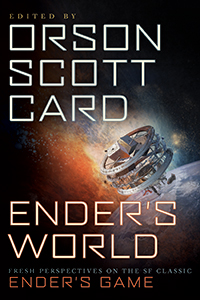
Recently, they’ve been putting together just such a collection on Ender’s Game. It’s called Ender’s World: Fresh Perspectives on the SF Classic Ender’s Game. It’s coming out February 2013. You can read more about it here.
I’m announcing this now because The Man was fortunate enough to be invited to contribute. I love Ender’s Game. LOVE IT. How cool is it that I get to write about it in an anthology edited by the folks at Smart Pop and Card himself? And then get to read what everyone else has to say, including military strategists Colonel Tom Ruby and Captain John Schmitt. As well as the little bits they’ll include on things like why the battle room is the shape it is and why they were recruiting kids.
But I’m also announcing this because in addition to the essays all we Ender-lovers get to write, Smart Pop is also going to include a series of Q&As with Scott Card, and they are currently soliciting the question from readers. FROM YOU. Right now.
From a writer’s pov, I have to tell you that the folks at Smart Pop have been nothing but enjoyable and insightful to work with. I’m looking forward to this book!
No, really. It’s true. You just have to spend smartly. And in a special way.
Over the course of your life, if you make what the average American does, more than a million dollars will flow through your hands. And yet so many of us don’t feel rich. That’s because money is like the Gingerbread Man. Turn your back on it, and it’s out the door, rudely taunting everyone as it flies by. And then it gets eaten by a fox. Such a waste.
But it doesn’t have to be.
Let me share with you THE best method I’ve found for managing my money. It takes tons of anxiety out of spending and saving. And, if you’re a Dave Ramsey fan, it is the one thing upon which everything else he teaches depends. If you’re not a Ramsey fan, it doesn’t matter. After getting a job, this is the first thing you must do to get rich.
Here’s the big secret. It has three parts:
1) Decide how much you’re going to spend on various things BEFORE you spend it
2) Make what you have left in each spending category EASY to track
3) Manage the things you can’t foresee
To do the first two parts, you’re going to create a special kind of spending plan. We won’t use the term “budgeting” because “spending” is so much more fun, and because that’s what we’re going to do anyway. To understand how to do this, you need to watch three videos.
Before you do, please know I earned a Masters degree in accounting. I’ve used Quicken for more than twenty years. Neither of those things has helped me manage my money like this simple method. If you’re looking for a better way to manage your money, this is it.
First, watch this video to get an overall idea of how this method works.
Note: you can use actual envelopes and cash for everything if that makes you happy, but you really don’t need to. The idea is to think of pre-allocating your monthly income to categories of expenses AND then having an easy way to track what’s left.
Now, watch this bubba explain how he does it.
But John, didn’t he say the same thing?
Basically, but he has a fun accent. Besides, it’s good to see another example. And please note again: you don’t have to use actual envelopes and cash, although many swear by them.
Finally, watch this one. No, it’s not just another repeat. There are some additional important ideas illustrated here.
This video brings up the idea of why simply tracking an overall account balance isn’t very helpful. It also shows you WHY envelope categories are–they make it immediately apparent how much money you have to spend for a thing. If you just use Quicken to track what you spent (looking in the past), you’ll run into troubles. Let me tell you, I know this from experience. We use Quicken, and have for years, and plan use it for some time to come because it makes taxes and bank reconciliation a snap. But Quicken only tracks what you spent. Tracking, as important as it is, is not the key to success. The key is pre-allocating BEFORE you spend. And then tracking so you know what you have left in that category. And making that tracking EASY.
The final thing you have to do is manage the things you can’t foresee because things rarely go exactly to plan. Unexpected things ALWAYS come up. Your daughter will crash the car. Your husband will get appendicitis. You will forget that you had a $200 school sports expense.
Okay, fine. Things happen. But how do you manage them if you can’t foresee them?
If it’s really small, you simply adjust your plan. For example, if you need $30 more in food, you can transfer it from fuel if you have some extra there.
You manage larger things by building up an emergency fund. Ramsey suggests starting with a $1,000 emergency fund and then trying to get two to three months of living expenses—about $10,000 to $15,000 for most people. Unexpected things WILL happen and cost your money. So build up some cushion to take care of them.
Finally, you manage the really large things by getting proper insurance. This is what insurance is for. The types of insurance you need include (1) homeowner’s or renter’s, (2) auto, (3) medical, (4) long-term disability, (5) long-term care (for those 60 and older), and (6) life insurance. You may add true identity theft insurance as well.
Okay, so that’s the overview. If you want to try this, here’s how you do it. It’s fairly easy.
STEP 1: get your head straight
Resolve that you will NOT use credit for anything. You will not spend any money you don’t have. You will not put another dime on a credit card, and this despite the fact that the plastic devil companies are begging you with offers almost every day to sign up for their cards. (Hum, I wonder how they afford all that junk mail.) If your monthly bills are greater than your income, then we have to fix that first. But the new law of the land is zero new debt.
Next, always remember to allocate your money to these categories first—shelter, food, adequate clothing, and adequate transportation. This means if you have a crunch month, you would NOT pay credit card bills before food, even if you work for Visa.
STEP 2: get your blank sheet & pencil
Get out a piece of paper and pencil (not a pen) or open an Excel spreadsheet. Whoa, that was an easy step.
STEP 3: list your monthly income
List your expected monthly income at the top from all sources.
STEP 4: list your spending categories
List your spending categories. You’re going to split them into two groups.
The first group goes right below your income and includes all of your recurring monthly expense/spending categories. Not the amounts you spend. Just the categories. Things like mortgage, electricity, phone, groceries, dining, etc. Make sure you include some entertainment/fun money.
The second group goes below your recurring monthly expenses and includes all of your major annual periodic expense/spending categories. Things like Christmas, vacation, clothing, kids back to school stuff, etc. And things you want to save for—a couch, iPhone, car, etc. Your emergency fund goes here as well.
Decide how much you will spend in each category this month. You should have 0 dollars when you get to the bottom of the sheet. Spend (allocate) every dime BEFORE you start the month. You’re going to do this at the beginning of each month. And you will probably have to adjust it a couple of times during the month.
You will probably have categories that don’t get any money this month.
You will also have categories that get money, but you won’t spend any of it this month. These are your periodic expenses. Your goal is to have the cash up front to pay for them, so you have to save for them. Remember, you are NOT going to take on any new debt.
For example, if you’re saving up for Christmas, you allocate some money for that out of this month’s funds and TRANSFER it to savings. Then it will be there when you need it. You could draw the cash out and put it in an actual envelope, but you don’t have to. Just as long as you keep a record of the total amount in savings and what it’s all supposed to be for, i.e. total savings in July = $1,000: $500 for back to school, $200 for Christmas, and $300 for my trip with kids to Six Flags in 2013.
STEP 6: mark the “watch” categories
Some of the categories you need to watch closely, and some you don’t. The ones you need to watch closely will be your “envelope watch” categories.
The categories you don’t need to watch as closely are those that are automatically taken out of your account each month. And those you will write a check once a month for. These things include mortgage, car payment, electricity, etc. These are NOT categories you need to use actual envelopes for. You can track it on paper or in the spreadsheet. Not much happens with these categories.
But there are other categories that you’re going to be spending throughout the month, and it’s easy to over spend if you don’t track them. Groceries, dining, entertainment, gasoline, a specific vacation, etc. are all categories that you make multiple purchases with each month and are flexible/discretionary and need to be watched closely. So while everything is tracked in a category/envelope on paper or on the computer, you’ll track these with either a real envelope and cash or a virtual one using that free software you saw in the third video or a piece of paper with a running category balance in your wallet.
STEP 7: have fun and spend!
Now go out and spend!
Before spending, check your envelope. Do you have enough money? If you do, spend and be happy. If not, save up for it or find a way to save money in another category and adjust so that you’re still spending the same total amount. Never spend what you don’t have.
If you feel you need something not planned for, well, you have to get it later OR transfer something out of another envelope. I just make myself wait a day or three, and usually the urge to buy, Buy, BUY! goes away, and I see I don’t “need” it right now. Or maybe a more affordable option presents itself.
If the kids want something, and you feel guilty you can’t give it to them, just tell them what’s in the envelope/category, and tell them they can save for it or choose something else in that category that will fit with what you have left.
If you’re tracking envelopes virtually or using the paper balance in your wallet, you MUST update your envelope AFTER every purchase so you don’t spend more than you have. If you find you just can’t seem to remember to do this, go to the cash method.
That’s it!
Of course, that’s not quite it because even though it’s easy, if you haven’t done this before, it might take some adjustment. Give yourself a month or three to get it down. Because when you do, it WILL produce great results and peace. It’s doing that for us.
If you feel you need more info, I suggest you read Dave Ramsey’s Complete Guide to Money. Here’s the first chapter to sample: Complete Guide To Money sample chapter.
Happy spending.
EDIT: here’s another video to watch: http://www.youneedabudget.com/. Then read about the method: http://www.youneedabudget.com/method. This one highlights the idea that you need to make sure you realize that things will happen that you cannot foresee. No plan survives contact with the enemy.
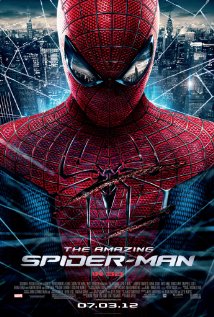
The Amazing Spider-man is one of the most enjoyable superhero movies I’ve seen in the last ten, heck, fifteen years. It rocks.
Is it as good as any in Christopher Nolan’s Batman series? Yes, but it never becomes dark. And in many ways I think it might be better.
How about Iron Man? Oh, yeah. Not as witty, but just as funny.
Sherlock Holmes? Spiderman 2? Yes and yes. And I don’t care what you say, Sherlock Holmes is a superhero. He can’t bend metal with his mind, but almost. He’s certainly as much a superhero as, say, Black Widow.
What made this Spider-man so good?
The story tells the story of how Peter Parker becomes Spider-man. I know, we’ve seen it before, but unlike other superhero movies, this one, like Iron Man and Sherlock Holmes, actually chooses more realism and less cartoon. There were so many unexpected real moments and details that I couldn’t help but believe. There were Parker’s boxers hanging out when he gets beat up, his reactions when he’s trying to find his hero outfit, and the fact that he performs his derring-do while toting about a teen’s most trusted gear–a backpack and cell phone! He fails at many things, just like a teen would in this situation, which is so refreshing–this is not yet another all-powerful superhero!
Like so many superhero movies, this one features another mad scientist with mad science. It’s still the stuff of comic books after all. But what I really enjoyed were the moments of comedy, the delightful romance, and the fact that Spider-man is way more vulnerable than I’ve ever seen him portrayed. The movie kept delivering pleasant surprise after pleasant surprise. Towards the end, it all works together to honestly earn a swell of emotion in a scene which I won’t reveal here and spoil for you.
Just know that if you want to see a movie full of action, drama, and fun, you’ll want to watch this one.
The Dark Knight Rises
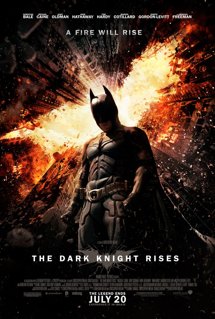
I have been looking forward to the last Christopher Nolan Batman for quite some time, and The Dark Knight Rises delivers.
After taking the fall in the last movie for Harvey Dent, Batman/Bruce Wayne goes into reclusive retirement. But we all know what happens when you stop minding the wheel. A new villain shows up named Bane, and very soon Gotham is reeling. Which means Batman needs to come back. But Batman ain’t the Batman he used to be.
This Batman and the recent Spider-man have taught me that I enjoy heroes that can be beaten soundly. I like heroes that can and do lose. They are so much more interesting than those who always seem to pull it out.
There’s a lot of cool action in this movie. Batman has a cool new toy. There are a number of well-executed plot twists. And I think I enjoyed the slow reveal of Bane’s back story about as much or more than I have for any villain. But I think my favorite part is at the end when Batman makes his sacrifice. I know the movie had to end as it does, but I almost wish we didn’t have the last five minutes because it undermined that incredibly powerful note for me. Yes, I’m being intentionally obscure to avoid spoilers. Whether you agree with me or like the movie with the last five minutes added on (as my wife did), if you like big action flicks, you don’t want to miss this one.
Downton Abbey season 2
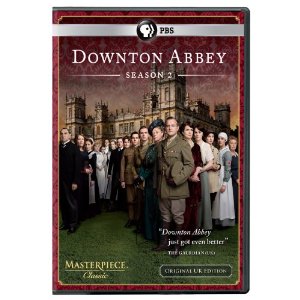
About nine months ago I reviewed Downton Abbey, a BBC miniseries that aired on PBS. The first season is set in the fictional Downton Abbey and follows the lives of the aristocratic Crawley family and their servants. The stories take place over the time period that starts with the sinking of the Titanic in April 1912 to the outbreak of the First World War on 4 August 1914.
The main story line running through those episodes is the fact that the Crawley family must give up the estate to a distant relation because they have no male heir. But it wasn’t just about the aristocrats. One of the most delightful aspects of the series is that it also featured the refreshing stories of various servants. Some were funny. Some pulled at your heart strings. Some were tragic.
Well, Downton is back with a second season that you can get on Netflix if you missed it on PBS. The events span the first world war. Some of those we met in season one go to war; some stay at the estate. Other new folks mix in. What’s constant is that the wonderful storytelling continues. As a family, we enjoyed all of the characters, but I must say that Maggie Smith (who played Professor McGonagall in the Harry Potter series) seems to get a majority of the best lines as the Dowager Countess. We looked forward to every minute she was on the screen.
This is a fabulous series. If you like Pride & Prejudice or Cranford, you will love watching the stories of Downton Abbey.
Brave
I’m just about out of time, but let me just say that if you’re looking for an enjoyable family movie, you need to watch Brave. It’s set in the highlands of Scotland in the 10th century and tells the story of Princess Merida who doesn’t want to marry, even if it means war with the other clans. To change her mother’s mind, Merida turns to a witch for a potion. Of course, potions never go well, do they, and the kingdom and lives of those Merida loves are soon put at stake. The movie focuses on the mother and daughter, with the father providing comic relief. There are plenty of laffs, some parts that will put younger viewers on the edge of their seats, and a wise message for parents and children alike.

 Radio and TV have incredible power. But until the last decade they were always constrained by time and signal power. You had to listen when the station broadcast it, and you had to listen where you could pick up the signal.


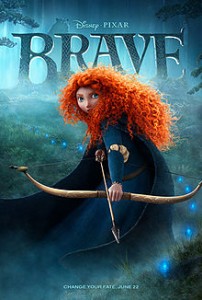 I’m just about out of time, but let me just say that if you’re looking for an enjoyable family movie, you need to watch