Some 101 for Congress and the President

It’s not really rocket science.

  1. If you have loans outstanding and the payment is due, you owe the creditors a payment. Payables for Idiots 101.
  2. If you have received goods and services, then you owe your vendors a payment. Payables for Idiots 102.
  3. You pay your bills. End of story. That’s what grown ups do. If you have to float some debt for a few months, you do it. And you staple a note to your head to stop spending like a slot machine junkie. Payables for Idiots 103.

The debts we have are for goods and services we’ve already received. So increase the debt limit and pay your damn bills. What about spending?

  1. You do not spend more than you take in year after year. If you do, that’s called running your business into the ground. In the case of the Congress (primarily Harry Reid’s Senate at this point, although many, but not all, of the Republicans were happy to go along with dumb spending earlier) and the President, it’s the country they’re running into the ground. Spending for Idiots 101.
  2. If you’ve got all sorts of cool things planned like Acorn subsidies for pimps and Antarctica Jell-O wrestling grants for scientists, but you can’t afford them—i.e. you have to go into debt to get them–you cancel those plans. Spending for Idiots 102.
  3. The problem is that Congress and the President buy all sorts of crap and expect to put it on a credit card when it comes due. And there’s nothing to prevent them from doing it.
  4. They’re like irresponsible teenagers. They need controls that won’t allow them to overspend. Kind of like putting limits on a teenager’s cell phone minutes. Or forcing them to use a debit card. When they’re out of cash, they get a card denied response from their vendors.
  5. So you set spending limits, debt limits, and force them to balance the budget each year, except in extreme emergencies like when space aliens try to wipe out humanity. Spending for Idiots 103.

This means you pass Cut, Cap, and Balance and quit spending money you don’t have. Really difficult stuff. What about getting out of debt?

  1. You eat rice and beans until you’re debt is gone or down to a manageable level. That means you cancel crap you can’t pay for. Sorry earmarks, you’re gone. Sorry grants for nude artists in trees, you’re gone. Sorry subsidies for PBS, you’re gone.  Finances 200: How to Not Be A Money Moron.
  2. You figure out how to reduce your current cost structure. This means you figure out a way to reduce the costs of Medicare, Medicaid, Social Security, and every other service or product you provide, cutting those that aren’t essential. You hire someone like Mitt Romney who knows how to go through every line in a budget and turn a bloated ship around.  Finances 300: No, You Can’t Pay For Your Sister’s Hair Implants with My Money.
  3. You remind people this is the freaking U S of A. A place where a man or woman can make themselves. Not where the government changes your diapers and feeds you mush three times a day. Communism and socialism have failed. They were badly conceived utopias, much like multi-level soap and vitamin marketing schemes that are supposed to usher in the Second Coming.  Finances 400: The USA Buried the USSR for a Reason.
  4. You increase your revenues.
  5. However, if you raise taxes, you’re actually going to depress your revenues. Think about this. Which car company has bigger revenues–Lamborgini or Honda? Who is going to put out, if they’ve got Louie the Fingers and his buddy Jockstrap taking increasing amounts of their money in a protection racket? Don’t be a thug. Be an enabler.  Do what Wal-Mart does and go for volume.  Do what Ebay does–create the environment that entices tons of commerce, entices people to dramatically increase their transactions. Transactions go through the roof; you take only a tiny cut, and, shazam, you increase your revenues.  Finances 500: Um, Do You Want People to Work to Become Rich or Do You Want Them To Pick Up Torches and Burn the Houses of the Rich Down?

Cut spending, reduce cost structure, and increase your revenues. That’s getting out of debt.

Is this really that hard?

EDIT: 8/1 Seems that “wacky” Ron Paul actually has a simple commonsense approach that doesn’t sound crazy. Why couldn’t we do this?

Share

Similar Posts

  • Top 200 YA Authors of 2010, Part 2

    Okay, I’ve really got to get some writing done. But since I posted the idea of seeing which authors have the highest average checkouts per book, I now feel obligated to share it because some of those on the top 200 authors list drop off while others appear. So this one shows the authors getting the most readers per book. For more information on the lists and source of the data, please see the previous two posts.

    BTW, a number of Utahans made this list that we hadn’t seen on the others.

    1. Stephenie Meyer (3)
    2. Shannon Hale (4)
    3. Lisa Mangum (8)
    4. Jessica Day George (10)
    5. Aprilynne Pike (13)
    6. James Dashner (21)
    7. Bree Despain (32)
    8. Mette Ivie Harrison (40)
    9. M.L. Forman (52)
    10. Brandon Sanderson (64)
    11. Chris Heimerdinger (112)
    12. Julie Wright (145)
    13. Ally Condie (146)
    14. Kiersten White (151)
    15. Jack Weyland (188)

    If I’ve missed any Utah (or former Utah) authors, please let me know. Holy schnitzel, look at them all.

    EDIT: 1/16/2011 9:32 AM: Informed that Bree Despain is also a Utah author.

    EDIT: 1/18/2011 6:21 PM: Turns out Kiersten White grew up in Utah, but moved to San Diego after she married. I’m still claiming her, although I often wish I could trade subzero land for beaches and 70 degrees

    EDIT: 1/18/2011 10:20 PM: just informed that M.L. Forman is a Utah author.

    The List

    Author Times Checked Out Number of Titles Avg Check Outs per Title % Rank
    Suzanne Collins 888 3 296 2.68% 1
    Rick Riordan 989 8 124 2.98% 2
    Stephenie Meyer 529 5 106 1.60% 3
    Shannon Hale 517 6 86 1.56% 4
    J.K. Rowling 318 4 80 0.96% 5
    Cassandra Clare 309 4 77 0.93% 6
    Christopher Paolini 191 3 64 0.58% 7
    Lisa Mangum 124 2 62 0.37% 8
    P.C. Cast and Kristin Cast 393 7 56 1.19% 9
    Jessica Day George 328 6 55 0.99% 10
    Kristin Cashore 105 2 53 0.32% 11
    Cornelia Funke  51 1 51 0.15% 12
    Aprilynne Pike 101 2 51 0.30% 13
    Judy Blundell 48 1 48 0.14% 14
    John Flanagan 413 9 46 1.25% 15
    Kelley Armstrong 131 3 44 0.40% 16
    John Grisham  43 1 43 0.13% 17
    Michael Scott 165 4 41 0.50% 18
    Angie Sage 246 6 41 0.74% 19
    Maggie Stiefvater 153 4 38 0.46% 20
    James Dashner 75 2 38 0.23% 21
    Kimberly Derting 37 1 37 0.11% 22
    Frank Beddor 110 3 37 0.33% 23
    Carrie Ryan 69 2 35 0.21% 24
    Gail Carson Levine 34 1 34 0.10% 25
    Jay Asher 34 1 34 0.10% 26
    Becca Fitzpatrick 68 2 34 0.21% 27
    Libba Bray 136 4 34 0.41% 28
    Julie Berry 34 1 34 0.10% 29
    Richelle Mead 202 6 34 0.61% 30
    Elizabeth Knox 67 2 34 0.20% 31
    Bree Despain 66 2 33 0.20% 32
    James Patterson 257 8 32 0.78% 33
    Cornelia Funke 63 2 32 0.19% 34
    Lisa McMann 94 3 31 0.28% 35
    Carolyn MacCullough 31 1 31 0.09% 36
    Markus Zusak 124 4 31 0.37% 37
    Lauren Oliver 31 1 31 0.09% 38
    Emily Whitman 31 1 31 0.09% 39
    Mette Ivie Harrison 123 4 31 0.37% 40
    Ally Carter 152 5 30 0.46% 41
    Cameron Dokey 271 9 30 0.82% 42
    Jason Henderson 30 1 30 0.09% 43
    Caragh M. O’Brien 30 1 30 0.09% 44
    Scott Westerfeld 354 12 30 1.07% 45
    Carrie Jones 88 3 29 0.27% 46
    Lindsey Leavitt 29 1 29 0.09% 47
    Lois Lowry 86 3 29 0.26% 48
    Philip Pullman  57 2 29 0.17% 49
    Lauren Kate 57 2 29 0.17% 50
    Lili St. Crow 56 2 28 0.17% 51
    M.L. Forman 28 1 28 0.08% 52
    Alison Goodman 28 1 28 0.08% 53
    Marissa Doyle 55 2 28 0.17% 54
    Eoin Colfer 302 11 27 0.91% 55
    Rachel Hawkins 27 1 27 0.08% 56
    Joseph Delaney 240 9 27 0.72% 57
    Cyn Balog 26 1 26 0.08% 58
    Christine Johnson 26 1 26 0.08% 59
    Anna Godbersen 127 5 25 0.38% 60
    Shauna Cross 25 1 25 0.08% 61
    Veronica Bennett 25 1 25 0.08% 62
    Betty Smith 25 1 25 0.08% 63
    Brandon Sanderson 100 4 25 0.30% 64
    Melissa Marr 99 4 25 0.30% 65
    Tamora Pierce 634 26 24 1.91% 66
    Aubrey Mace 24 1 24 0.07% 67
    N.D. Wilson 70 3 23 0.21% 68
    Kami Garcia & Margaret Stohl 46 2 23 0.14% 69
    Lesley Livingston 68 3 23 0.21% 70
    Alex Flinn 68 3 23 0.21% 71
    Sara Shepard 181 8 23 0.55% 72
    Cinda Williams Chima 113 5 23 0.34% 73
    Melissa de la Cruz 154 7 22 0.46% 74
    Kay Cassidy 22 1 22 0.07% 75
    Louis Sachar 44 2 22 0.13% 76
    D.J. MacHale 328 15 22 0.99% 77
    Heather Brewer 108 5 22 0.33% 78
    Beth Fantaskey 43 2 22 0.13% 79
    Kimberly Pauley 43 2 22 0.13% 80
    Diana Wynne Jones 128 6 21 0.39% 81
    Herbie Brennan 106 5 21 0.32% 82
    Dia Reeves 21 1 21 0.06% 83
    Heather Hepler 21 1 21 0.06% 84
    Susanne Dunlap 21 1 21 0.06% 85
    Erica S. Perl 21 1 21 0.06% 86
    Linda Buckley-Archer 63 3 21 0.19% 87
    Lise Haines 21 1 21 0.06% 88
    Alyson Noel 188 9 21 0.57% 89
    Eva Ibbotson 41 2 21 0.12% 90
    Anne Osterlund 41 2 21 0.12% 91
    Sherrilyn Kenyon 20 1 20 0.06% 92
    Kenneth Oppel 80 4 20 0.24% 93
    story by Tohru Kai  20 1 20 0.06% 94
    M.R. Bunderson 20 1 20 0.06% 95
    Robin Palmer 59 3 20 0.18% 96
    Claudia Gray 59 3 20 0.18% 97
    Frewin Jones 155 8 19 0.47% 98
    Carl Hiaasen 58 3 19 0.17% 99
    Lisa Greenwald 19 1 19 0.06% 100
    Catherine Gilbert Murdock 76 4 19 0.23% 101
    Suzanne Harper 19 1 19 0.06% 102
    Suzanne Weyn 150 8 19 0.45% 103
    Rosalind Wiseman 18 1 18 0.05% 104
    Jen Nadol 18 1 18 0.05% 105
    Thomas W harton 18 1 18 0.05% 106
    Margaret Peterson Haddix 144 8 18 0.43% 107
    Ellen Schreiber 160 9 18 0.48% 108
    Patricia C. Wrede 158 9 18 0.48% 109
    Robin McKinley 105 6 18 0.32% 110
    Zoèe Marriott 35 2 18 0.11% 111
    Chris Heimerdinger 280 16 18 0.84% 112
    Amy Huntley 17 1 17 0.05% 113
    Rachel Ward 17 1 17 0.05% 114
    Sarwat Chadda 17 1 17 0.05% 115
    Nina Malkin 17 1 17 0.05% 116
    Chris Heimerd 17 1 17 0.05% 117
    Elizabeth Eulberg 17 1 17 0.05% 118
    Kathi Oram Peterson 17 1 17 0.05% 119
    Megan Whalen Turner 68 4 17 0.21% 120
    Chelsea M. Campbell 17 1 17 0.05% 121
    Rachel Vail 51 3 17 0.15% 122
    Becca Wilhite 34 2 17 0.10% 123
    Sarah Dessen 150 9 17 0.45% 124
    Debbie Viguie 100 6 17 0.30% 125
    Garth Nix 182 11 17 0.55% 126
    Michael Grant 49 3 16 0.15% 127
    Rachel Vincent 49 3 16 0.15% 128
    Jonathan Stroud 97 6 16 0.29% 129
    Lucy Christopher 16 1 16 0.05% 130
    Kay Lynn Mangum 48 3 16 0.14% 131
    Anna Jarzab 16 1 16 0.05% 132
    Sarah MacLean 16 1 16 0.05% 133
    Josh Berk 16 1 16 0.05% 134
    Lisa Klein 16 1 16 0.05% 135
    Jackson Pearce 16 1 16 0.05% 136
    Jacqueline Kelly 16 1 16 0.05% 137
    Caroline Goode 16 1 16 0.05% 138
    Kirby Larson 16 1 16 0.05% 139
    Lisa Shanahan 16 1 16 0.05% 140
    Katherine Applegate 16 1 16 0.05% 141
    Marthe Jocelyn 16 1 16 0.05% 142
    Ann Brashares 64 4 16 0.19% 143
    Holly Black 78 5 16 0.24% 144
    Julie Wright 31 2 16 0.09% 145
    Ally Condie 93 6 16 0.28% 146
    Juliet Marillier 31 2 16 0.09% 147
    Janet Lee Carey 46 3 15 0.14% 148
    Donita K. Paul 90 6 15 0.27% 149
    Tera Lynn Childs 45 3 15 0.14% 150
    Kiersten White 15 1 15 0.05% 151
    Jane Eagland 15 1 15 0.05% 152
    Sophie Jordan 15 1 15 0.05% 153
    Maureen Daly 15 1 15 0.05% 154
    Debbie Vguie 15 1 15 0.05% 155
    Leah Cypess 15 1 15 0.05% 156
    Jessica Brody 15 1 15 0.05% 157
    Rosie Rushton 15 1 15 0.05% 158
    Rachel Caine 134 9 15 0.40% 159
    R.D. Henham 104 7 15 0.31% 160
    Hilari Bell 178 12 15 0.54% 161
    L.J. Smith 326 22 15 0.98% 162
    Carol Lynch Williams 44 3 15 0.13% 163
    Laini Taylor 44 3 15 0.13% 164
    John Boyne 29 2 15 0.09% 165
    Victoria Hanley 58 4 15 0.17% 166
    Guillaume Prevost 43 3 14 0.13% 167
    Michelle Zink 28 2 14 0.08% 168
    Andrea R. Cremer 14 1 14 0.04% 169
    Lynn Weingarten 14 1 14 0.04% 170
    Kristopher Reisz 14 1 14 0.04% 171
    Andrew Klavan 28 2 14 0.08% 172
    Jessica Verday 14 1 14 0.04% 173
    Kim Harrison 14 1 14 0.04% 174
    L.K. Madigan 14 1 14 0.04% 175
    Heather Davis 14 1 14 0.04% 176
    Lauren Conrad 42 3 14 0.13% 177
    Sherman Ale 14 1 14 0.04% 178
    Alexandra Adornetto 14 1 14 0.04% 179
    Martine Leavitt 14 1 14 0.04% 180
    Morris Gleitzman 14 1 14 0.04% 181
    Charmian Hussey  14 1 14 0.04% 182
    Douglas Rees 14 1 14 0.04% 183
    Stephanie Hem 14 1 14 0.04% 184
    C.J. Omololu 14 1 14 0.04% 185
    Aimee Friedman 42 3 14 0.13% 186
    Kate Coombs 28 2 14 0.08% 187
    Jack Weyland 151 11 14 0.46% 188
    Michael Carroll 41 3 14 0.12% 189
    Philip Caveney 41 3 14 0.12% 190
    Pamela Wells 27 2 14 0.08% 191
    Grace Cavendish 27 2 14 0.08% 192
    Elizabeth Scott 54 4 14 0.16% 193
    Ridley Pearson 54 4 14 0.16% 194
    Laurie Halse Anderson 108 8 14 0.33% 195
    Gillian Shields 40 3 13 0.12% 196
    Simone Elkeles 93 7 13 0.28% 197
    Lisi Harrison 304 23 13 0.92% 198
    Patrick Carman 66 5 13 0.20% 199
    Darren Shan 313 24 13 0.94% 200
    Gary D. Schmidt 26 2 13 0.08% 201
    Gena Showalter 26 2 13 0.08% 202
    Michael Young 13 1 13 0.04% 203
    Miyuki Miyabe  13 1 13 0.04% 204
    J.V. Hart  13 1 13 0.04% 205
    Dandi Daley Mackall 13 1 13 0.04% 206
    Beatrice Gormley 13 1 13 0.04% 207
    Dodie Smith 13 1 13 0.04% 208
    Jaclyn Moriarty 52 4 13 0.16% 209
    Angela Morrison 26 2 13 0.08% 210
    James A. Owen 52 4 13 0.16% 211
    Nick Lake 13 1 13 0.04% 212
    E.E. Richardson 13 1 13 0.04% 213
    Fern Schumer Chapman 13 1 13 0.04% 214
    Priscilla Cummings 13 1 13 0.04% 215
    Stuart Hill 39 3 13 0.12% 216
    Jen Calonita 78 6 13 0.24% 217
    Valerie O. Patterson 13 1 13 0.04% 218
    Julie Kagawa 26 2 13 0.08% 219
    William golding 13 1 13 0.04% 220
    Lisa M. Klein 13 1 13 0.04% 221
    Lisa Mantchev 26 2 13 0.08% 222
    Gerald Morris 129 10 13 0.39% 223
    Cory Doctorow 25 2 13 0.08% 224
    Janette Rallison 125 10 13 0.38% 225
    Share
  • Good Stuff! The audio production of Lockwood & Co.

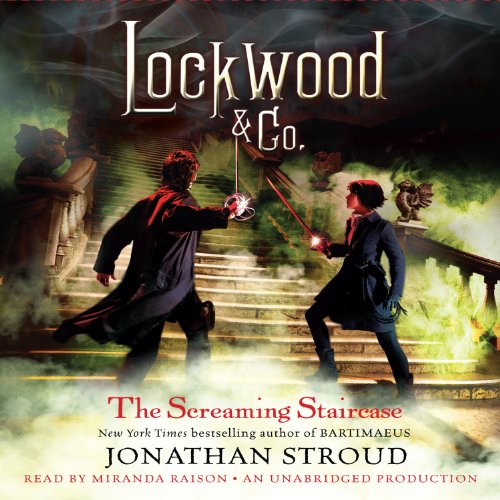
    I’m excited to share the Lockwood & Co. series by Jonathan Stroud. It’s a delightful audiobook experience for the whole family.

    Nellie introduced me to it on our road trip to Yosemite last October.

    And, oh my gosh, how we’ve enjoyed listening.

    They’re young adult paranormal thrillers with a good dose of humor and English charm.

    Yes, Netflix, launched a show based on the books, but Nellie and I tried it, and the Netflix productions don’t hold a candle to the audiobooks.

    It’s not even close.

    If you’re going to do this series, listen to the audiobooks or read them.

    The story is set in England in, I’d say, the 1980s, before cell phones and the internet became a thing. The problem is that ghosts, specters, tommy knockers, etc. are appearing all over the place and causing havoc. Because, in this world, when you’re touched by a visitor from the other side, you can easily become ghost locked, basically put in coma, or die.

    And while the ghosts can touch anyone, children and teens are the only ones who can see them. And so it’s children and teens who must fight them. Of course, large ghost protection agencies are formed, but our story is about Lucy Carlisle, who joins a tiny agency run by a daring young man named Anthony Lockwood.

    There are five books in the series, which translates to about fifty-nine hours of delightful listening. Perfect for the long road trips, cleaning, fixing dinner, walks, etc.

    Miranda Raison is the reader for the first book, Katie Lyons the second, and Emily Bevan for the final three. And they’ve all been a joy to listen to.

    I’m not normally a paranormal kind of guy, but this is making me reconsider. We loved Stroud’s Bartimaeus series. And he brings the same fast action, interesting characters, and wit to these. 

    If you enjoy delightful characters and derring-do leavened with some humor, give these a try. I think you’ll be glad you did.

    Share
  • A Wowser Mouse & Financial Peace

    Dis Eez A Mouse

    I’m a Luddite, which means that even though I work in the software industry, I do not rush out to purchase the latest and greatest gadget.  Our family computer, for example, is running Windows 98, primarily because we purchased the computer itself in 1999.  In human years that computer is like 432 years old.  Maybe we’ll retire the old boy this year.  The point is that I don’t like to churn through tons of gadgets.  I want something to work.  I want it to work well.  And then I want to use it for a long time. 

    Recently, my mouse started acting up.  So I went out and found a new one.  I settled on a Microsoft Wireless Mobile Mouse 4000.  It comes with three parts: the mouse, an AA battery, which is supposed to last for up to ten months, and a tiny transceiver you insert into one of your computer’s USB ports.  The mouse has a great hand-feel.  The clicks are smooth.  If you want to take your mouse with you somewhere, there’s an easy storage slot inside the mouse for the transceiver.

    But the best thing of all is its BlueTrack technology.  This is not an ancient mouse with a track ball that you have to clean every so often.  It’s an optical mouse.  But unlike earlier versions of optical mice (why do I have a terrible urge to use “mouses” or “meece”?) that didn’t work very well on a number of surfaces, this BlueTrack technology works like a charm on everything I’ve tried it on, including glass. 

    You need a new mouse?  This is a good one.

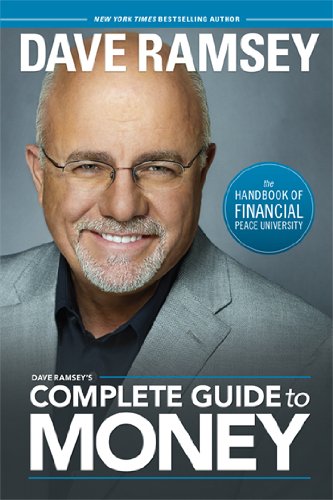
    Dave Ramsey’s Complete Guide to Money

    If you’re like 70% of America, you are living paycheck to paycheck, which means that if you or your spouse (assuming you have one) were laid off, you would probably have difficulties meeting your mortgage the next month.  If you didn’t go into default on the house, you certainly would on other payments and bills. 

    You also have very little retirement. 

    You probably have around $7,000 in credit card debt.  Maybe a lot more.

    You also have a car payment or two.  Or, heaven forbid, a lease. 

    You might be house poor—the house payment is so large you can’t seem to do anything else. 

    You might have creditors hounding you. 

    You might be one of those folks throwing their money away on the lotto instead of investing it. 

    Did you know that if you invested $50 a month, an average of what many lotto players spend, in the stock market for 40 years, you’d very likely end up with $316,000 in the bank  (over the last 40 years of ups and downs, the annualized return of the market was almost 10%). You would have put in only $24,000 over that time period, which means you would have made $292,203!  But instead, if you’re a lotto player, you just throw all that out the window.  (No, you’re not going to win; not even maybe in your dreams.)

    You probably think your kids will have to take out loans to go to college. And you think that’s a good idea.  In fact, you probably think it’s a good idea to have a credit card just in case there’s an emergency because you don’t have any savings to cover any emergencies.

    The list goes on.  The sad part of this is that our finances cause us average Americans a lot of stress in our lives and marriages and families (even if we’re in denial) and very often heartbreak. 

    I know that a lot of us look at our financial chains and throw our hands up in despair—what can I do?  The mountain of debt and bills are just too high.  Besides, this is how everybody lives.

    But it’s not.

    There is a way out.  And it doesn’t matter how old you are, it’s not too late.

    Dave Ramsey has written his hands-down best book ever, which will take you step-by-step through the process of turning a financial mess into financial peace.  He’ll do it in a down-to-earth easy-to-read style. No confusing ten dollar words that make your head spin.

    Ramsey himself went through financial hell.  He was the guy that made all the mistakes with his money.  Lost everything.  Had collection agencies coming after him.  Didn’t know how he was going to feed the family.  He turned that all around.  Yes, he’s a millionaire, but more importantly, he has been working for the last twenty years to teach regular people with regular jobs the simple principles that lead to financial peace.  They’re becoming debt free and working their way towards huge net-worth.  

    You want a step-by-step plan?  You want to educate yourself about money and family finances from one of the nation’s leading experts?  Then go and purchase Dave Ramsey’s Complete Guide to Money today and start reading it.  You will not regret it.  If you already have his Total Money Makeover and don’t think this will be worth it, think again.  This goes into all sorts of things the Total Money Makeover doesn’t.

    Be free, people.  Be free.


    Related Stuff

    Look at the links and the video.

    Share
  • The MT Sandwich, To A Dying Girl, Bloody Jack

    you-MOM-ee

    I used to move along the salad bars, looking at the mushrooms, and think: they’re vegetable Styrofoam! Who ever thought eating mushrooms was a good idea? My answer, of course, was it must have been some starving dude lost in the woods who found they were easier to chew on than bark.

    Such were the days of my ignorance. Because while raw mushrooms are fairly bland, sautéed or grilled mushrooms are worthy of a passionate, say it slowly, “oh my freaking heck” (hey, I live in Utah).

    I now love mushrooms. And I’ve found they very easily replace tasty meats. Probably because they have loads of the fifth basic taste—umami (you-MOM-ee)—just as meats do. I know some of you are thinking, “hold on, didn’t I learn that the tongue can only taste four things?” That’s indeed what you learned. But you were wrong. In 1985 scientists discovered we have a fifth taste, popularly referred to as savoriness, that’s been sitting on the tongue with the sweet, sour, bitter, and salty all along. In fact, humans get their first experience with it in momma’s milk.

    But cooked mushrooms not only taste good, they are also actually good for you. They help safeguard against cancer, boost the immune system, supply hard to get nutrients, and can help you cut calories and saturated fats by, as I said before, moving some of the meat off the plate.

    With all this goodness it’s hard not to see new opportunities for consumption. And indeed I found one. I love a good BLT (bacon-lettuce-tomato sandwich, for any troglodytes who read this column), especially when the bacon is crispy and the tomatoes have some sass or a little feta cheese to accompany them. But one day while partaking of some of my fungus friends, my mind was expanded, and I thought: why not replace the bacon with some sautéed mushrooms? Why not, indeed?

    I replaced. I partook. And rejoiced. Then I ate my MT (mushroom-tomato) for lunch three more days in a row (I also found if you must have crispiness, two Sun Chips added to the top of the sandwich do the trick nicely).

    Do not disdain the fungus. Cook the little guys up and devour them with some well placed oohs and aahs on an open-faced MT.

    “To A Dying Girl”

    Clinton F. Larson was a poet who taught at BYU. I remember him coming in to read during one of my classes, but he soon retired, and I was never able to take any of his classes. How sad I am that I could not learn from him because he had much to teach, as evidenced by some of his poems. Here’s one of my favorites.

    To a Dying Girl

    How quickly must she go?

    She calls dark swans from mirrors everywhere:

    From halls and porticos, from pools of air.

    How quickly must she know?

    They wander through the fathoms of her eye,

    Waning southerly until their cry

    Is gone where she must go.

    How quickly does the cloudfire streak the sky,

    Tremble on the peaks, then cool and die?

    She moves like evening into night,

    Forgetful as swans forget their flight

    Or spring the fragile snow,

    So quickly she must go.

     -Clinton F. Larson

    The first reading fills the mind with vivid images and a sense of beauty and sorrow. Subsequent readings deepen the feeling. Especially when we reflect a bit on the three images he evokes of passing from life into death. First, the black swans arise to fly south for winter: graceful, beautiful, and dark as death. They’re the girl’s own harbingers, maybe her guides, coming from mirrors, reflecting in the depths of her eye. The second image presents fleeting grandeur and beauty with the stunning cloudfire that often awes us as the sun sets. Isn’t death the time we most value life? The time when, like cloudfire, it burns in glory and beauty and then is gone? The last image presents another image of passing, but not one of loss. It’s not a transition to blackness or cold or bitter loneliness, but of winter passing to spring. Of a fecund beginning.

    Of course, there are other things the lines and images evoke. This isn’t a poem to be wrapped up in a tidy bow. Poetry is meant to be felt, not dissected like a dead animal. In the end, that’s what Larson delivers: sorrow, loss, and hope all wraped in the music of his rhythm and words. Beautiful.

    A Great Read

    Sometimes a book’s beginning is so good you can’t not purchase it. Here’s one that forced my hand.

    “My name is Jacky Faber and in London I was born, but, no, I wasn’t born with that name. Well, the faber part, yes, the Jacky part, no, but they call me Jacky now and it’s fine with me. They also call me Jack-0 and Jock and the Jackeroe, too, and, aye, it’s true I’ve been called Bloody Jack a few times, but that wasn’t all my fault. Mostly, though, they just call me Jacky.

    “That wasn’t my name, though, back on That Dark Day when my poor dad died of the pestilence and the men dragged him out of our rooms and down the stairs, his poor head hanging between his shoulders and his poor feet bouncin’ on the stairs, and me all sobbin’ and blubberin’ and mum no help, she bein’ sick, too, and my little sister, as well.

    “Back then my name was Mary.”

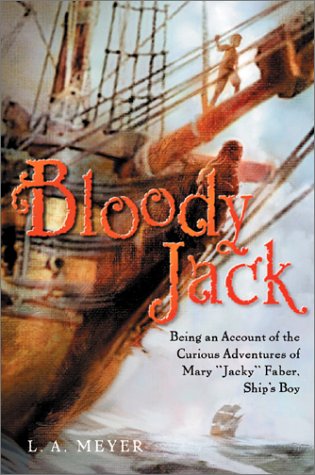
    The book is a historical novel by L. A. Meyer called Bloody Jack. It tells the tale of Mary Faber, who is orphaned in London in the early 19th century and survives only by joining a street gang and then, posing as a boy, the crew of a ship. On board, she has to hide who she is and avoid the many perils of ship life.

    The book is delightful, transporting the reader to the time and place with excellent details and a style that evokes the speech and times. There’s humor, danger, adventure, and an interesting cast of characters. I recommend it highly. If you end up loving it as I do, you’ll then be happy to know this is only Jack’s first adventure.

    Share
  • Good Stuff! Those looking to seal their asphalt in Ogden, Logan, and Bear Lake areas

    AndersenAsphaltFolks with asphalt driveways and parking areas, I have something you’ll be interested in.
    I have a nice long driveway, about 5,500 square feet of asphalt. We hadn’t touched it since 2005 when it was installed. But asphalt doesn’t last forever. If it’s not periodically sealed, it weathers and cracks, and then the water gets in and undermines the whole structure, and soon you get pot holes and alligator cracks and the thing becomes a mess. Last year some small cracks began to show, and we knew we couldn’t put it off any longer.

    I called a number of places for quotes and availability. And the person who gave me the best quote and quickest turnaround was Caden Andersen of Andersen Asphalt. The name will sound familiar because that’s the Caden that grew up in Rich County. He and his brother took over his grandfather’s long-standing business.

    And I am happy to report that they did an excellent job at an excellent price. They came and cleaned the whole thing with wire brooms (although I power washed it before they came), filled the cracks with hot tar, then sealed everything with two coats. Their service was friendly and prompt. And they went the extra mile. There were some large cracks in the city’s road right before you turn off into our driveway. They filled those cracks with tar as well for no extra charge. The result is a beautiful driveway that’s going to last for quite some time.

    They have two locations right now, one in Cokeville, Wyoming and the second in South Ogden, Utah. If you live within an hour or two of either of those places and need to seal some asphalt, I highly recommend you give Andersen Asphalt a call.

    Share
  • Good Stuff! The Man Who Invented Christmas

    If you love funny, feel-good movies, today’s you’re lucky day.

    Because I’m going to tell you about one that will help brighten your Christmas season.

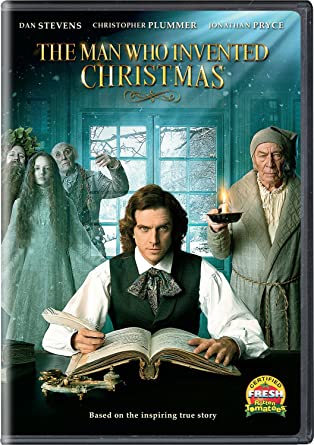
    The movie is The Man Who Invented Christmas.

    It’s about Charles Dickens, the author of A Christmas Carol.

    Now some of you might already be groaning. Please, no, not another story about Scrooge.

    I felt the same way. I haven’t enjoyed a movie about Scrooge for a long time. No, not even the one featuring Scrooge McDuck.

    So I didn’t want to watch this, but I kept hearing so many good reviews, I finally caved and gave it a shot. I’m so happy I did.

    This delightful movie reinvigorates the story with a whole new twist because it’s not about Scrooge. Not directly.

    Instead, it’s about Charles Dickens. It’s 1843 and Dickens is suffering financial hardship because his last three books bombed in the marketplace. He determines to write a new book and publish it himself to restore his finances. That book is A Christmas Carol.

    Dickens needs to finish it in six weeks so it can be ready for Christmas. That’s difficult enough, but will anyone read it? His friends and publishers keep telling him that the book will be a failure because, at the time, many thought Christmas irrelevant and didn’t celebrate it. Furthermore, the story isn’t developing as it should.

    Now the movie does take some dramatic license, but, by the end, I think you’ll agree the message of Scrooge is never more poignant. I watched the final scene with Scrooge multiple times and thought about it for days afterwards.

    If you want to laugh, be inspired, and feel the spirit of Christmas, I think you’ll love this movie.

    Share

9 Comments

  1. And you establish a pro-growth, pro-jobs tax policy (which may or may not include actual tax cuts) to increase revenues. The tax surplus of the late 90’s was not the result of government frugality, it was the result of economic growth – people makine more money than expected.

    Now, stop with the politics and get back to your revisions…

  2. I agree wholeheartedly. If my parents could explain saving and debt to me in primary school, then how can the concept escape whole governments? And I mean that plural. My state government is cutting *everything*… excluding rates, of course. Anyway, I thought I’d weigh in with James C and add an idea I’m partial to.

    We could simplify our tax system, so the average person could figure out how much money he or she owed without having to buy a computer program or pay someone to figure it out.

    Of course, this would get rid of a whole lot of loopholes, making everything much fairer. Some people wouldn’t like that. They might leave. They’d have probably been using loopholes, though, so their loss would be a smaller blow than you might think. To counterbalance that, there’d be a blossoming of small business. By not having to pay as many accountants, entry and running costs for virtually every industry would be lowered (Economics: 101). It’s a way to apply James C’s idea of promoting entrepreneurship while not cutting the actual tax rate.

    Speaking of which, the government wouldn’t have to pay so many accountants to look for tax cheats – or perhaps rake more money in by keeping all of its accountants, while making it vastly easier to *catch* cheats.

    Of course by ‘we’ I mean Australians. Not being a resident of the USA, I’m not going to claim privileged knowledge about your nation. But a few years ago, Australia’s treasurer explained our business tax law could be reduced from bulky tomes to flimsy handbooks. I reckon that would have solved a lot of problems, but there are those with power who didn’t like the idea (see my comment about people exploiting loopholes).

    It might not work to the same extent in the USA, but a similar idea appeared in a rather prominent USA-based magazine. It was being detailed as a possible strategy to help deal with the bind you’re in over there. I’d give its name, but I’m scared of breaching copyright. Is it okay if I say the title rhymes with lime? And rhyme, actually.

    But hey, why listen to an Aussie? We don’t complain when our government gives money to schools. We *do* complain when our pollies want to give less money to schools. We *even* complain when the government gives more to private schools than public ones. It’s as though we don’t think the market will regulate itself so everyone gets a fair go. Course, I’d like to totally change the way we do education, but this isn’t the time for that little rant.

    Maybe it’s because we used to get exploited by rich people. Or maybe it’s because of all of the beer we drink. But, if you think about it, the commies have practically taken over, down under.

    P.S. Sorry, John. I don’t mean to write a little essay with every post.

  3. I think it’s the beer, Heath (grin).

    Having gotten a Masters degree in accounting and worked for a big accounting firm for a few years, I agree the tax code should be simplified. AND it should include more people. When almost half the people aren’t paying any sort of income tax, there’s something screwy. BTW, link out to the Time article.

  4. I could have sworn you worked for Arthur Andersen, John. Doesn’t that mean we have to take your financial advice with a shovel of salt? 😉

    All kidding aside I think you’ve got it nailed here, particularly the part about increasing revenues long term with tax incentives. The Cut, Cap and Balance Act actually gives a blueprint for that if you read between the lines (quote from Wikipedia):

    “Cap on future spending
    The bill proposed that federal spending would be scaled back based on the glide path for the fiscal years below as a percentage of the Gross Domestic Product (GDP):
    2012, 22.5% of GDP.
    2013, 21.7% of GDP.
    2014, 20.8% of GDP.
    2015, 20.2% of GDP.
    2016, 20.2% of GDP.
    2017, 20.0% of GDP.
    2018, 19.7% of GDP.
    2019, 19.9% of GDP.
    2020, 19.9% of GDP.
    2021, 19.9% of GDP.”

    The liberals are screaming that this means we are going to spend less and less money on entitlement programs, push poverty through the roof, kill off the elderly, etc. What this really does, however, is give a firm incentive to the government to grow the economy.

    If Barney Frank wants to spend all sorts of extra money in 2014, he needs to start working *today* on revving up the economy so that in 2014 he will have more money to spend. Same thing with everyone else in Congress who wants to put their name on bills to buy votes from special interests but has no desire to pay for what they are buying. Grow the economy every year and we will have more money to spend without needing to kill off the value system and work ethic that got us here in the first place.

  5. I like that idea a lot. Get the money now so you can spend it on whatever great project you want later. Not vice versa.

  6. Sorry, I read that article in dead-tree format, in a magazine that has since been shredded. You can search the archives if you like, but I’m not quite that dedicated.

    There is this, however, which mentions a few of the same issues: http://www.time.com/time/magazine/article/0,9171,975330-1,00.html

    Still agree with you, by the way, on regulating income and expenses. That’s the most basic tenet of good financial practice there is. I mean, it got us out of the Great Depression, but that’s because money needed to be injected into the system. We have plenty of money now; it just isn’t circulating the way it needs to be.

Comments are closed.