The Surprising Truth About Militias and the Second Amendment
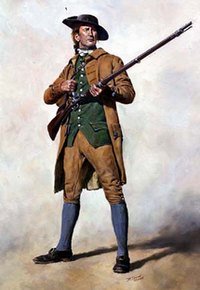
When the founding fathers spoke of “militias,” they were not referring to a bunch of yahoos running around in the woods with paint on their faces outside of state control.

They were referring to a citizen army under state control.

So is “militia” just the old-time word for what our army is today?

No.

A standing or “regular” army is one made up of professional, full-time soldiers like the US Army, the Marines, the Navy, and the Air Force. And it’s permanent, meaning you don’t disband the army when the fighting is done.

A militia back in those days was something completely different.

The problem of a standing army

The founding fathers knew they needed to provide for the common defense, but they saw standing armies controlled by a central government as an immediate threat to the liberty the new union sought to preserve.

Why would they think that?

Easy. History was littered with case after case where standing armies had become a law unto themselves and oppressed the populace. One glaring example is what happened to the Roman empire. It suffered centuries where this faction and then that faction of the army was in control, and it brought nothing but a continual procession of civil wars and bloodshed.

History also showed that even if the military didn’t take over, kings and queens were happy to wield standing armies to impose their will and oppress the people. Remember: the world then was ruled by monarchies. The founders had never seen a standing army wielded by any other type of power.

So the founders didn’t want to give a president or any other central authority that power. They feared doing so would only pave the way to the ruin of the new nation they sought to form.

So if you don’t have a standing army, how do you defend your country?

The fyrd

The founding fathers thought they saw a solution in a tradition of duty that went back hundreds of years in England. In the days when the Saxons ruled England, the kings and dukes would muster and deploy the fyrd to help them fight their wars.

The fyrd was made up of all able-bodied free males between certain ages, regardless of their vocation. It was their duty to provide their own arms and defend the land when called by their leaders. So this was an army made up of farmers, tanners, smiths, tailors, etc.

But the fyrd wasn’t a standing army. Nor was it populated with full-time soldiers. This citizen army was to be called out when needed, and when the crisis was over, it was disbanded, and the men went back to their vocations.

The militia scheme

The founders took this idea and tweaked it. Back in the Saxon days, the king controlled the fyrd. In this new scheme, the United States would rely on a fyrd (which they called a militia), but the powers to control it would be split between the president, Congress, and the States.

First, Congress, not the president, was the only authority that could declare war and summon the state militias. So the president would be the commander in chief when the militia was active. But the minute Congress decided to end a war and disband the militia, that army dissolved, leaving the president as commander in chief of only the tiny number of troops that had been authorized as the regular army (less than 1,000 at the time).

Second, while the Federal government would provide the weapons the militia would use when it mustered them for war, the state governments would be the ones to appoint the officers and train the soldiers. You can’t run an army without officers. So this would prevent the Federal government from taking control by stacking the army leadership with those loyal to a despot president or Congress.

So the militia was supposed to be the main force that fought our wars, and it was supposed to be temporary. It’s true that Congress did authorize a standing army, but it was tiny. And with this setup, the founders figured we’d have the army we’d need, but we’d avoid the problems standing armies had posed in the past.

So militias, as thought of by the founders in the 1700s, were not groups outside the government’s control. They were temporary citizen armies. And power over them was broken up between the president, Congress, and the States so no one group or person could wield them tyrannically.

1791 and The Bill of Rights

Accordingly, the founders wrote the articles and sections of the Constitution in 1787 to set all of this up. However, many anti-federalists were concerned that the Constitution didn’t go far enough to protect the rights of individuals and limit the power of the Federal government. In fact, many of the founders were so concerned about the issue that they refused to ratify the Constitution as it was.

The only way they’d sign on is with the promise of the Bill of Rights. When they knew that bill was forthcoming, delegates from nine of the original thirteen states ratified the Constitution. The delegates of two other states waited until the document was produced. The final two (North Carolina and Rhode Island) waited until 1791 when the Bill of Rights, which includes the second amendment, was passed.

So let’s look at the language of the Second Amendment in light of what we know about the fear the founders had of standing armies.

“A well regulated Militia being necessary to the security of a free State, the right of the people to keep and bear Arms shall not be infringed.”

Why did they include this? It was not because they wanted the citizens to be able to hunt or protect themselves with guns. They figured that was a given. They included this amendment because they concluded that an armed citizenry would make it impossible for tyranny to arise.

Noah Webster, a Federalist, stated the idea this way when trying to persuade Pennsylvania to ratify the Constitution:

“Before a standing army can rule, the people must be disarmed; as they are in almost every kingdom of Europe. The supreme power in America cannot enforce unjust laws by the sword; because the whole body of the people are armed, and constitute a force superior to any bands of regular troops that can be, on any pretense, raised in the United States. A military force, at the command of Congress, can execute no laws, but such as the people perceive to be just and constitutional; for they will possess the power, and jealousy will instantly inspire the inclination, to resist the execution of a law which appears to them unjust and oppressive”

So the second amendment was included in the Bill of Rights because enough of the founders feared that the Constitution could be read in a way that would allow the Federal government to disarm the populace. Disarming the populace would open the way to a standing army under Federal control. And that would open the way to tyranny.

When all was said and done, the founders separated the power of the military in this way:

  • Only Congress could declare war and muster the militia
  • Only Congress could finance it
  • There would be no standing army to speak of
  • Only the states could appoint officers to the militia
  • The government was forbidden to infringe on the rights of individuals to keep and bear arms

So what happened?

Militias didn’t work

The problem is the militia didn’t work well enough to actually provide for the common defense.

It didn’t work during the Revolutionary War. The republic had to create the Continental Army. That army was supported by the militias, but the colonists found they couldn’t rely on the militias alone. They had to have the regular army to fight the British.

After the war, the Continental Army was disbanded, but the militias simply weren’t good enough to face the threats the new nation faced, and George Washington himself openly lamented it. The troops took a licking in 1791 at the battle of St. Claire’s and then time and again during the War of 1812.

Heck, militias didn’t even work in the days of the fyrd. In those days, the Saxon and Norman kings relied on their house warriors (their standing army) and mercenaries for most of the work. They only supplemented with the fyrd.

1792

After the defeat in 1791, the early leaders concluded they needed a regular army with the training and skill it possessed. So in 1792 Congress authorized the creation of the First Legion of the United States, a standing army of 5,190 men. The legion was renamed “The United States Army” in 1796.

In 1792 Congress also passed the Militia Acts. The acts were written to expire in two years. But Congress wrote another in 1795 to replace them. These laws authorized the president to called out the militia “whenever the United States shall be invaded, or be in imminent danger of invasion” and “whenever the laws of the United States shall be opposed or the execution thereof obstructed, in any state, by combinations too powerful to be suppressed by the ordinary course of judicial proceedings, or by the powers vested in the marshals by this act.”

So a mere five years after the Constitution was first ratified, and a year after the Bill of Rights, Congress dramatically increased the size of the nation’s standing army and gave the President the authority to call out the militia! It’s clear that right from the beginning the militia scheme started showing some cracks.

Today

The First Legion was small. But it grew again in 1808, and then again during the war of 1812. And it continued to grow slowly, then ballooned in the 1900s until we now have more than a million troops in the armed forces of the US.

The National Guard is what the militias of the 1800s transformed into in the early 1900s, but, wouldn’t you know it, the National Guard is now mostly under the control of the Federal government too.

What does this mean?

It means we now have the most powerful standing army the world has ever known and almost no militia. It means our military is a complete 180 of what the founders envisioned.

I’m not saying it’s bad. I love our military.

I’m merely pointing out that militias back then meant a certain thing and the founders wanted them for a certain reason. And that we have completely replaced that arrangement with the exact opposite.

As for tyranny, we still have armed citizens. Maybe this is enough to deter tyranny as Webster claimed. Although the disparity between what the citizens can arm themselves with now and what the regular army has is nothing like it was in the 1700s. So maybe there are other laws and aspects of our culture that have prevented it. Maybe it’s both.

Either way, it’s important to understand what the original militias were, why the founders wanted them, and what the second amendment was all about.

More

Helpful articles

US Constitution – Provisions for the military

Here are all of the parts of the original seven articles of the Constitution that deal with the military.

Article 1 – The Congress
Section 8

This section gives Congress seventeen powers. Six of these have to with the common defense. Those military powers granted are:

  • To declare War, grant Letters of Marque and Reprisal, and make Rules concerning Captures on Land and Water;
  • To raise and support Armies, but no Appropriation of Money to that Use shall be for a longer Term than two Years;
  • To provide and maintain a Navy;
  • To make Rules for the Government and Regulation of the land and naval Forces;
  • To provide for calling forth the Militia to execute the Laws of the Union, suppress Insurrections and repel Invasions; [notice there are only three cases that warrant the calling forth of the militia]
  • To provide for organizing, arming, and disciplining, the Militia, and for governing such Part of them as may be employed in the Service of the United States, reserving to the States respectively, the Appointment of the Officers, and the Authority of training the Militia according to the discipline prescribed by Congress;
Section 10

This section prevents the States from doing thirteen things. Three of these have to do with the military.

“No State shall, without the Consent of Congress, lay any Duty of Tonnage, keep Troops, or Ships of War in time of Peace, enter into any Agreement or Compact with another State, or with a foreign Power, or engage in War, unless actually invaded, or in such imminent Danger as will not admit of delay.”

Article 2 – The President
Section 2

“The President shall be Commander in Chief of the Army and Navy of the United States, and of the Militia of the several States, when called into the actual Service of the United States;”

Article 4 – The States
Section 4

“The United States shall guarantee to every State in this Union a Republican Form of Government, and shall protect each of them against Invasion;”

Share

Similar Posts

  • Good Stuff! Two books, a movie, and a dinner

    Are you ready for a story that’s heroic and inspirational? And poignant. And action-packed. And all true.

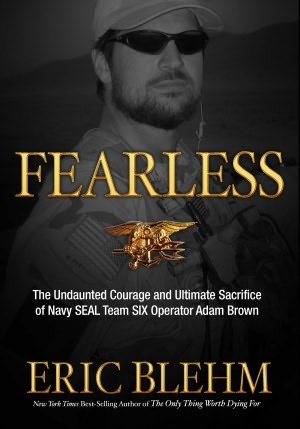
    I just finished Fearless: The Undaunted Courage and Ultimate Sacrifice of Navy SEAL Team SIX Operator Adam Brown by Eric Blehm. And wow. I can’t tell you how happy I am to have read this book.

    It tells the story of Adam Brown who was killed while on assignment in 2010. But this book isn’t about a special operations battle in Afghanistan, although the battle is detailed. It’s not a war book. Although it tells about many episodes in the life of a Navy SEAL operator. No, this book starts when Adam was a kid.

    It like the story of Louis Zamperini that’s told in Unbroken by Laurel Hillenbrand (and, yes,the film adaptation missed so much of the story, including the most important part,that if you haven’t read that book, you are missing out on an absolute treat). In this one, Brown starts out as a boy with bright promise, but after he graduates from high school, he makes a number of bad choices and drives his life right off a cliff.

    You’ll be flipping the pages to see what helps him turn it around and whether he can make the change permanent, or if he’ll lose everything, including the love of his wife and kids. You’ll also be amazed at his grit. It’s a tremendous read. If you can listen to it on audio, you’ll enjoy the narration by Paul Michael. Either way, if you like stories about redemption and triumph amidst struggle, if you like books about special operations forces and elite soldiers, then you’re going to love this book. Highly recommended.

    *

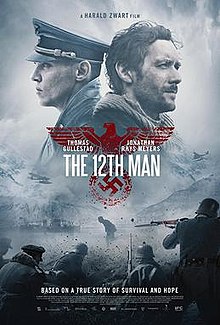
    The 12th Man is a 2017 World War 2 historical drama based on the true story of Jan Baalsrud. He and eleven other Norwegian resistance fighters set off from the UK on board a fishing boat with six to seven tons of TNT to sabotage some German military facilities.

    However, their mission falls apart soon after reaching Norway. A German warship attacks. The resistance fighters set fire to the TNT on their boat and jumped into the water just off shore. Eleven of the fighters are caught by the Germans. The twelfth, Jan Baalsrud, gets shot in the toe, but still runs across land and manages to elude immediate capture by swimming across the fjord, in the dark, in the freezing, winter water.

    Yeah, and that’s just the beginning. The story is about his attempt to get to the safety of Sweden, a neutral country. I watched this with my teenage daughter, and we were riveted with the suspense and action. And we were amazed at what this guy endured.

    You will have to read English subtitles during a large parts, but we found that after a few minutes, we really didn’t notice it. It was a great date night. If you like war movies and action, I think you’ll love this movie.

    *

    Tonight I ate a dish that instantly became one of my favorites. My oldest daughter and her husband found it. They love it and shared it with Nellie. And since it was her night to cook, she decided to give it a try. My first bite was wow.

    It’s a baked casserole, a cross between lasagna and spaghetti, called “MillionDollar Spaghetti” from tastesbetterfromscratch.com. Just click on the link the get the recipe.

    Now, here’s the thing: you can use spaghetti pasta, or you can make it totally low carb by replacing the pasta with cooked spaghetti squash like we did. The low carb version was awesome. I can’t wait to heat up the leftovers tomorrow.

    By the way, here’s a quick way to cook spaghetti squash.

    First, cut the squash in half lengthwise. The easiest and safest way I’ve found to do this is to place the uncooked squash on a cutting board. Next, get a big knife and set it along the line you want to cut. Finally, rap the spine of the blade smartly with a thick stick or long block of wood until the knife cuts through all the way. Using a knife this way is called batoning because you’re using a baton, a stick. It’s a slick and safe way to cut a hard squash.

    Once you have cut the squash in half, scrape out the seeds with a large spoon.

    Next, pour about a quarter cup of water into the hollow of the squash, and then turn the squash hollow-side down on a plate or microwave dish. Microwave the half on high for five to six minutes. It’s done when you can easily pierce the outside with a fork.

    Remove the plate with hot pads and use a fork to scrape out the cooked squash. Voila! Cooked spaghetti squash in less than 10 minutes.

    You can also just bake the halves in the oven for 40 minutes on 375 degrees. Baking gives the squash a slightly richer flavor. In this method, you brush the halves with olive oil and sprinkle with salt and pepper then put the sides face-down on a baking sheet. Again, it’s done when you can easily pierce the outside with a fork.

    *

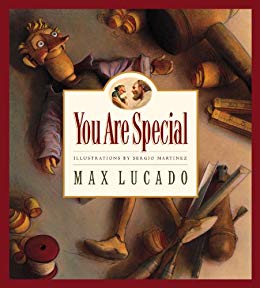
    And here’s one more because it’s Christmas. I attended a young women’s meeting for my local congregation not too long ago. As part of the program, one of the leaders read a picture book called You Are Special by Max Lucado.

    It’s about these small wooden people called Wemmicks who stick gold stars or gray dots on one another. The pretty or talented ones always get stars. The others, like Punchinello, get the ugly gray dots. And then one day Punchinello finds a happy Wemmick that has no dots at all. In fact, no dots stick to her. How does she manage it?

    It’s a great little tale with an important insight. After hearing it, I knew I needed a copy of the book to read to all my grown up kids. 

    Share
  • Gun Runner a finalist for the Dragon Award

    I’m happy to report that GUN RUNNER, the science fiction, action adventure novel that Larry Correia and I wrote, is a finalist for this year’s Dragon Award for Best Military Science Fiction or Fantasy Novel.

    The award is part of Dragon Con, the massive multimedia convention held annually in Atlanta, Georgia. The winners will be announced at the con which takes place over Labor Day weekend.

    Lots of great books on the list.

    You can see all the finalists here .

    Share
  • Impeachment might not be what you think it is

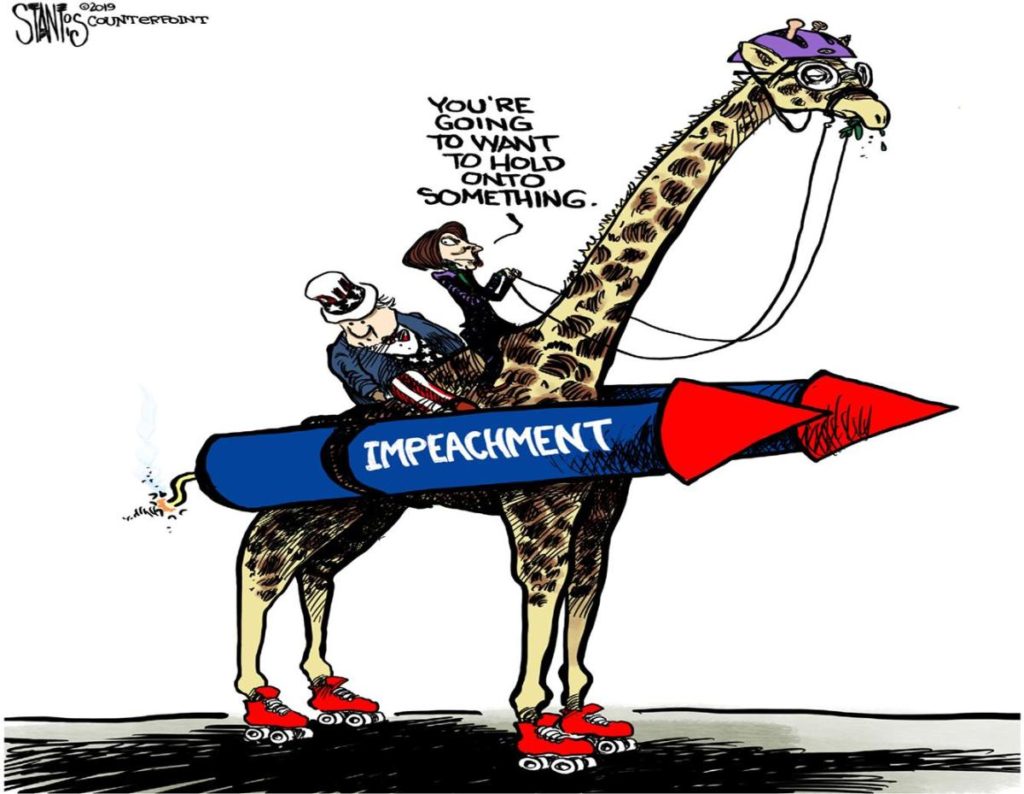
    I’ve come to realize I didn’t understand the process of impeachment and the standards by which it is conducted. Here are a few key things I’m betting most of us didn’t know. Some of them will surprise you.  

    First, the process has three steps:

    1. The Congress starts an investigation, which can be conducted by any part of that body—the House, Senate, a special counsel, etc.
    2. The House leadership decides on whether to vote on “articles of impeachment.” The articles need only a simple majority to pass. If they do pass, the person is impeached. However, the articles of impeachment are not a conviction; they are a formal allegation of wrongdoing. The analog to this in the criminal justice system is an indictment.
    3. The Senate then holds a trial to decide if the allegations are true with both sides bringing witnesses, evidence, cross-examination, etc. The chief justice presides when the president is impeached. If two-thirds of the senators deem the allegations true, then the person is convicted and removed from office and may be barred from holding future positions. If the super majority isn’t reached, the person is acquitted of the charges.

    There are two big questions in all of this. First, what standard of proof is used for passing the articles and then convicting the person of the allegations?

    It appears that the standard of proof required for impeachment and conviction is left to the discretion of each individual representative and senator. There is no standard defined. So while some may use the standard of beyond a reasonable doubt, others may not.

    Second, what can someone be impeached for?

    According to the constitution they can be impeached for “Treason, Bribery, or other high Crimes and Misdemeanors.” However, the phrase “high Crimes and Misdemeanors” is not defined in the Constitution itself. 

    The most authoritative explanation of what “high crimes and misdemeanors” are appears to be a document written by the staff of the House Judiciary Committee. The latest version of this was written in 2015 and is called “Impeachment and Removal.”

    According to the Wikipedia article on impeachment, “While this document is only staff recommendation, as a practical matter, today it is probably the single most influential definition of “high Crimes and Misdemeanors.””

    A key take away from that house committee report is that not all crimes are impeachable offenses and not all impeachable offenses are crimes. So what are grounds for impeachment? Well, it’s a bit vague.

    In 1788, Alexander Hamilton argued in the Federalist Paper 65 that impeachment was for “the misconduct of public men, or in other words from the abuse or violation of some public trust.” The House Committee report expounds on that, including the following general grounds:

    • “Constitutional wrongs that subvert the structure of government, or undermine the integrity of office and even the Constitution itself”
    • “Abuse of the particular powers of government office or a violation of the “public trust””

    The report goes on to say the following.

    “Congressional materials have cautioned that the grounds for impeachment “do not all fit neatly and logically into categories” because the remedy of impeachment is intended to “reach a broad variety of conduct by officers that is both serious and incompatible with the duties of the office.” Nonetheless, congressional precedents reflect three broad types of conduct thought to constitute grounds for impeachment, although they should not be understood as exhaustive or binding: (1) improperly exceeding or abusing the powers of the office; (2) behavior incompatible with the function and purpose of the office; and (3) misusing the office for an improper purpose or for personal gain.”

    But the report doesn’t give much definition beyond this, just a few examples of what individuals have been impeached for since the founding of the country. What does all of this mean?

    I think the Wikipedia article sums it up well.

    “Several commentators have suggested that Congress alone may decide for itself what constitutes a “high Crime or Misdemeanor”, especially since the Supreme Court decided in Nixon v. United States that it did not have the authority to determine whether the Senate properly “tried” a defendant. In 1970, then-House Minority Leader Gerald R. Ford defined the criterion as he saw it: “An impeachable offense is whatever a majority of the House of Representatives considers it to be at a given moment in history.””

    Impeachment is a political remedy, not a criminal justice or civil justice one. And given the vague definition of grounds for impeachment and the lack of any required standard of proof, what this all means, unfortunately, is that the process, especially in our current climate, is going to be rife, not with objectivity, but partisan politics. On both sides. 

    Here’s more for the curious.

    Share
  • Harry Reid’s Chickens

    Are we all wearing Coke bottle glasses with this government shut down?

    First, it seems silly to me when reporters ask Americans who is causing the shut down. It’s like, duh, if either party just gave into the other party’s demands, we wouldn’t have the issue. Which means that BOTH parties are causing the shut down.

    Second, it seems a lot of folks have forgotten that this is precisely what should happen.

    What?

    Yes, our government is designed to allow these types of things.

    But, John, isn’t that just asinine?

    No. It’s not an oversight. I think it’s smart. Even if it causes some pain.

    Let me explain what it seems some in the media and elsewhere are forgetting.

    This is not a nation that belongs to a government. It’s not a nation owned by some lord or entity. This is a nation of individuals who decided to band together because we thought that banding together would allow us to protect our lives, liberty, and pursuit of happiness better than if we stood alone individually.

    This is a nation of individuals who said, you know, we think we can figure things out better together ourselves than having someone dictating to us what we’re going to do. We’ll get together and talk. We’ll argue. We’ll persuade. We’ll try to convince each other of our individual ways of thinking. And when enough of us are convinced that we should do something, we’ll act.

    We’ll set up a process for talking and making decisions that ensures everyone can be heard. It would be great if we could get 100% agreement on everything, but we know that’s not realistic. At the same time, we don’t like the idea of forcing our will on others. So we’ll make a compromise; we’ll set up the rules for making decisions so it requires that a good majority of us are in agreement before we can take action, especially on matters that are important to a lot of us.

    Finally, we’ll make sure no individual or group can take control and deprive us of this way of living. We did the monarch thing, and we’re done with that. We will not bow to any king ever again. We’re going to be very careful about this one item because a lot of bad things begin to happen when any one person or group gets too much power.

    So we set up the rules and started working together this way. And the basic premise under all of this is that we would respect each other’s free will. We’re a land of liberty. We’re a land where we get together and agree on a course of action. Not one where we impose our will on others.

    One of the main methods we used to ensure that no individual or group could take control of the rest of us and that a good majority of us must agree before taking a course of governmental action was to distribute the power to make and enforce rules. We did this in a wide variety of ways. We did this because power’s a slippery thing and easily abused. Furthermore, because we knew no system is perfect, we also set up a system of checks and balances so that if one person or group abused their power, we could stop them and force them to remember to respect the freewill that the rest of us have.

    So what has caused this shutdown?

    It’s very simple.

    A lot of Americans do not agree with Obamacare. By most polls, it’s a majority of Americans. They were not listened to when it was being developed. They were not listened to when it was made law. They feel it was passed, not with open discussion, but a lot of chicanery. They feel it’s not some minor regulation, but a very big thing that will infringe on their rights to live how they want to live.

    Now, it might be that all their fears are unfounded. It might be that Obamacare is going to usher in utopia. Many signs suggest it’s not going to do anything of the sort. But let’s just say it is the finest piece of legislation ever. Let’s say is a celestial piece of governing.

    That isn’t enough.

    It’s not nearly enough.

    Because this is not a nation that belongs to any group. We are a nation of individuals who have banded together, agreeing that we will talk things out amongst ourselves and only act when a good majority of us agree on a course of action. This is a nation that tries to tread lightly on each other’s liberty.

    But many of the folks in Washington back in 2009-2010 forgot this and forced this thing called Obamacare upon the rest of us; in doing so, they violated one of the basic agreements of our compact. If they had followed the underlying intent of our union, they would not have done what they did. They would have crafted legislation that a good majority of us could get behind.

    In 2010, those of us who protested this use of power voted in new folks into the House of Representatives to deal with the matter. In fact, when given the chance, Americans (both Republican and Democrat) in the heavily Democratic state of Massachusetts voted Republican Scott Brown into office, hoping to stop this legislation in the Senate before it became law. But Harry Reid didn’t listen. He didn’t care. He and Pelosi and Obama weren’t interested in allowing a full national discussion. He and the others were more concerned with getting their way. And so he used a parliamentary trick to force it through.

    This shut down is about one group of people forcing their will on the rest of us. It’s about using the checks and balances designed into the system to correct such errors. It’s about the chickens of some poor decisions coming home to roost.

    I know the shut down has caused issues. It’s a partial shutdown; 13% of the government. I think 87% is still funded and running. Still, I know it’s causing some pain.

    But none of that pain needs to occur. Everyone wants to fund cancer research. Everyone wants to help poor single mothers. Those things aren’t the issue. The issue is that not everyone agrees with Obamacare.

    If you’re a supporter of Obamacare, let me ask you this: if the tables were turned, what would you do?

    Would you not stare at the folks trying to force their will on you and say, hey, come on. We’re adults here. We all agreed that we wouldn’t do anything unless a good majority of us were convinced it was the right course of action. Let’s get together and come up with something a good majority of us can get behind.

    If you’re an opponent of Obamacare, you too should recognize that a good portion of your fellow citizens are clamoring to change the way things are. They’ve been clamoring for some time. Should you force your will on them? Or should you sit down and listen and try to come up with something that addresses the points we can agree on?

    I don’t know if the folks many of us voted to go to Washington will stick to their guns and correct this. I hope they do. And I hope that those on both sides who have forgotten one of the basic tenets of our social compact will wake up and remember we are banded together, not to game the system to get what we want, but to act on only what a good majority of us want.

    Share
  • |

    All you need is a little beating and robbery

    Mrs. Brown, my wife, teaches language arts for the 7th and 8th grades as well as reading comprehension. She’s big on reading. She wants to provide every opportunity for kids to not only get good at it, but also learn to love it.

    And so her walls are lined with bookshelves full of awesome books teens love. She reads the first chapters of books to her classes to let them sample various stories. She features their book reports. She has them paste the covers of the books they’ve read on pages displayed around the classroom. And the school’s awesome librarian supports with her own programs.

    The 7th and 8th grade students at Rich Middle School are marinated in a big celebration of reading.

    In Mrs. Brown’s class, it’s fairly straight forward to get an A on reading, which is a huge part of your grade—all you’ve got to do is read.

    But how much reading do they need to do? How do you track it? And what books should they read?

    Check this out.

    First, she tests each student to see what his or her reading speed is.

    Next, she takes the number of hours they’re supposed to be reading each week for homework (I think it’s 2 or 2.5), then does the math to get a feasible reading word count for the trimester for each student. She may adjust it a bit, depending on the student’s ability.

    Third, she presents that number to the student, and the two of them set a word count goal for the trimester. Talk about an individualized goal.

    If you want to get an A in reading, all you have to do is reach that word count goal.

    How do you know how many words a book has?

    The Accelerated Reader program provides that information.

    But how does she know that they’ve read the books?

    She uses the Accelerated Reader tests. And if there isn’t one, the student can write a report.

    And what books do the students read?

    Any dang book they like.

    I love this. The kids get to select their own books and just read, read, read.

    Another part of this is that she pings each student once a week to ask them what book they’re reading, what page they’re on, and what they think of the book. This weekly check-in provides the more frequent accountability students of that age need.

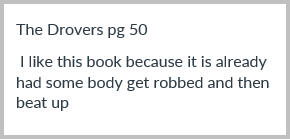
    Yesterday, she received this report from one of her 8th grade boys who is reading Prey, the first book in The Drovers series.

    Oh, yeah.

    I’ll take that any day (grin).

    Rock on, budding reader.

    Share

3 Comments

  1. As always, you sow the research, I reap the benefits of harvest. Very interesting read; well written.

    You should seriously think about writing as a profession 🙂

    Be well, John.

  2. Anyone halfway familiar with the history of our war to kick the British out of our country will know that it was quite common for young men to be part of their town”s local militia. They trained, practiced, drilled, worked on their marksmanship skills, reloading at speed, and then carried their own rifles and muskets into battle, often being hit and killed immediately or slowly dying of infections after their wounds. Men as young as fifteen were often in the militia, and went to battle with their Dads, uncles, big brothers, cousins, best friends.

Comments are closed.