Good Stuff! Easy WFPB

If you’ve decided to try the whole-food, plant-based lifestyle (WFPB) to lose weight or lower your risk of certain diseases, you will immediately find there’s a bit of a learning curve.

That’s because the food culture in the United States is geared towards foods that are animal-based and processed—cheese, meats, sugar, flour-based products, chips, candy, etc. In fact, WFPB is such a large change, you might wonder if you’ll be eating anything other than cardboard.

I can happily report that WFPB eating is satisfying and delicious.

Let’s review the general guidelines. With WFPB there are three things to avoid or minimize.

  • Added sugar (and artificial sweeteners)
  • Flour-based products
  • Animal-based products (meat, dairy, eggs)

And there are five things you eat. The main four include:

  • Legumes
  • Grains (as close to whole kernel as you can get it)
  • Vegetables
  • Fruits (natural form, not canned)

The fifth category is some added fat on the side. That includes things like a tablespoon of mayo, peanut butter, oil, avocado, etc. Or it could be an ounce of nuts or seeds.

We’ve found it easiest to compose a meal by simply thinking about the five categories and filling in the blanks. If you don’t include one of the main four groups in a meal, that’s fine. Just be sure you’re not excluding it all the time.

There are dozens and dozens of delicious meals. Over the next months I’ll be sharing some of those we love. Let’s start with the base.

The base

Grains

Our InstaPot has been a huge help with grains. It makes them so easy to cook. You can make them in a batch and enjoy them over the course of a few days.

Wheat

  • 2 cups food storage wheat berries (Yes! Finally a use for all those bags of food storage wheat in the basement!)
  • 5.5 cups water (or use vegetable stock if you want it savory)
  • ½ tsp salt
  • Cook for 35 minutes on high pressure followed by immediate pressure release. Drain if necessary.

Rye berries, oat groats, pearled barley, brown rice

  • 2 cups grain
  • 2.5 cups water (or vegetable stock if you want it savory)
  • ½ tsp salt
  • Cook for 22 minutes on high pressure followed by 10 minutes of natural pressure release. Drain if necessary.

When you want the grain as a savory dish, use vegetable broth or stock. It gives the grain a wonderful flavor. It’s total magic. You can get cartons at the grocery store for under two bucks. 

For rice, we love the Lundberg wild rice mix. Lundberg also happens to be California rice which doesn’t have the high levels of arsenic that rice from the Southern United States has.

Legumes

Lentils

  • 1 cup brown or green lentils (do not use red for this)
  • 2 cups vegetable broth (the broth is the magical ingredient)
  • ½ tsp salt
  • Cook for 15 minutes on high with 10 minutes of natural pressure release. Drain if necessary.

For other beans, we just purchased them in the can. They’re cheap and easy. Pinto, black, white, black-eyed peas, etc. You might find it easiest to start with pinto and garbanzo beans.

Fruits

Easy. Just get whole fruits. You can also get the frozen berries and cherries.

Vegetables

Easy. Just get a variety of veggies and salad.

Nuts and seeds

Easy. Get whole almonds, pecans, walnuts, etc. Whatever you like. Try to get them raw. You can heat them up in a pan on the over before you eat. Stove-roasted pecans are tasty.  

Added oils

Olive oil, avocado oil, coconut oil. You’re not going to be using a ton. If you want to use mayo and salad dressing, do it. Again, you’re not going to be using much.

Spices

Use all you want—cinnamon, ginger, basil, etc. Also use mustard, soy sauce, hot sauce. Balsamic vinegar is great on many things.

Recipes

With meal recipes we mix and match. Here are some meals we like.

Grain Bowl

For 1 person.

  • 4-6 oz of grain
  • 6 oz of berries, cherries, or 1 whole fruit
  • Some almond milk
  • Some spices like cinnamon or pumpkin pie spice or ginger (could do fresh ginger if you like it), or cocoa.
  • 1 oz of nuts, 1 tablespoon of peanut butter, or 1 tablespoon of coconut cream
  • Heat in microwave if desired

Great for breakfast. Using different fruits and spices gives it lots of variety from day to day.

Homemade Costa Vida Salad

For 1 person.

  • 4-6 oz beans
  • 3-4 oz salad greens (you will need a big bowl)
  • Some mango salsa
  • 1 tablespoon Ranch dressing or may
  • 2 or 3 tablespoons of balsamic vinegar
  • Salt and pepper to taste

Just mix it all up and enjoy. You can add cooked rice if you want and other sautéed veggies. You can also add rosemary leaves and turmeric for the health benefits.

Other tips

Here are some other things we’ve found.

  • Broccoli tastes the best, hands down, when cooked in a steamer.
  • Cabbage is great when steamed and stir fried with soy sauce, ginger, garlic powder, and onion powder
  • Succotash is tasty, especially if you make it with some small cubes of potato.
  • You can substitute lentils for ground beef in many meals. We’ve done it with stuff green peppers, shepherd’s pie, and many others, and our picky, teenage daughter actually likes it.
  • Some corn added to beans for a burrito or chili gives it a nice sweet flavor.
  • Sautéed mushrooms are great with onion powder, garlic powder, and thyme.
  • Garbanzos go really well with peanuts.

We’re not fanatics about this. But I’d say we’ve been able to get 90% of the way to a WFPB lifestyle. And we’re enjoying the food. In fact, the longer we eat this way, the tastier it becomes.

For about two years, we ate a diet high in vegetables and animal-based foods (meat, dairy, and eggs). We were diligent, but didn’t see the results we hoped for. Four months ago, we switched over to WFPB. I recently had some blood work done. After four months of eating this new way, I’ve dropped about fifteen pounds. My total cholesterol is down from 214 to 188. My blood sugar levels went from 107 to 83. And my blood pressure has improved. And that’s after just four months with some days of holiday eating mixed in. I can’t wait to see what happens after eating this way for a year.

If you want to hear the research behind this to consider the evidence yourself, I recommend the following:

  • The China Study: The Most Comprehensive Study of Nutrition Ever Conducted (Revised and Expanded) by Colin T. Campbell, PhD
  • Whole: Rethinking the Science of Nutrition by Colin T. Campbell, PhD
  • How Not to Die: Discover the Foods Scientifically Proven to Prevent and Reverse Disease by Michael Greger, M.D.
  • How Not to Diet: The Groundbreaking Science of Healthy, Permanent Weight Loss by Michael Greger, M.D.

You can get all of them from your local library. If they don’t have the books there physically, ask the librarian how to use their Overdrive account to check out an ebook or audio book version online.

Share

Similar Posts

  • Good Stuff! Two fun family and party games

    There’s nothing quite like the laughter and fun a good family or party game creates. And we discovered two games this summer that have brought hours of pleasure.

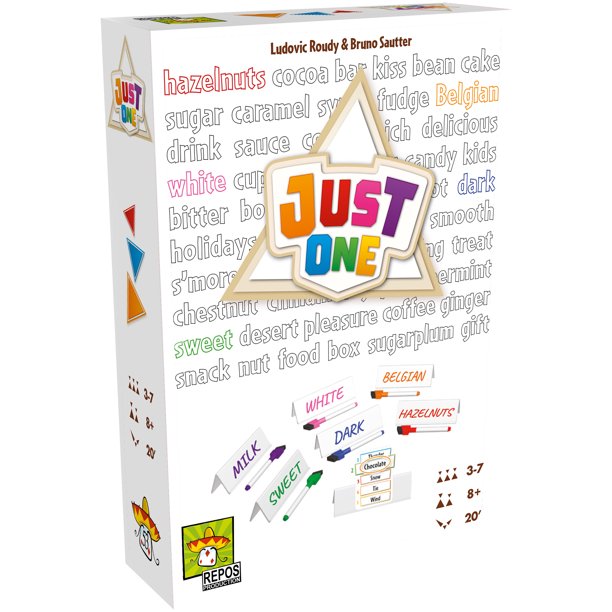
    The first is Just One. It’s for 3 to 7 players and takes about 20 minutes to finish.

    Now, I was skeptical of this game at first because it’s a cooperative party game.

    I mean, come on. Cooperation?

    No teams?

    No competition?

    What were we going to do—hold hands and sing Kumbaya?

    I was fully expecting to be bored out of my mind. Boy, was I wrong. There was suspense, laughter, and loads of fun.

    There are 13 rounds in each game. In each round, one player blindly selects the number of a word on one of the game cards. The other players each write a one word clue to help that player guess the word. However, if two or more players write down the same word, they have to remove that clue.

    So you’re trying to come up with one-word clues the others won’t that still help the guessing player. Some clues lead the guessing player off onto funny tangents. Others are just funny. And then there’s the suspense of whether someone else wrote your word and whether the player will be able to guess it from the clues that are left.

    Your goal is to guess all 13 words selected. And there’s a little score card that ranks what it means if you get 13, 12, 11, etc.

    As an aside, it’s crazy to me that the score card provided motivation. But it did. It was a delightful little brain hack.

    One Word is a quick, fun game. We’ve played it with a few as 3 and as many 8 players and had a ball each time. We are so happy to have it in the family game closet.

    The next is Fish Bowl. It’s for 4+ players. What this game does is take favorites like Taboo, One Word, and charades and mixes them together in a competitive game between two teams.

    Here’s how you play it. Each person writes up 5 to 7 different words or phrases on separate slips of paper, folds the papers, and puts them in a bowl. Then you do 3 rounds.

    Round 1 is like Taboo, where you can describe, but can’t say or act out the word or phrase on the paper. You select a team to go first. One person on the team selects the papers from the bowl and then tries to describe the word or phrase. The team has 30-45 seconds (you decide) to guess as many of the words as possible. When the time is up, it’s the other team’s turn. Back and forth you go, selecting a new team member each turn to give the clues, until there are no more slips of paper in the bowl. Then you count the number of slips each team got and move to round 2.

    In round two, you put all of the slips of paper back into the bowl. The team that went second in the first round starts this one. This time the person giving clues gets to share one word. That’s it. And the team has to guess it. Again, the team has 30-45 seconds to guess as many as they can.  Then it goes to the next team. And you switch back and forth just like you did in round 1, and when the slips of paper are gone, each team counts up their score.

    In round 3, you put all of the slips of paper back into the bowl. The time the person giving the clues has to act them out. No words allowed. You run this round just like you did the first two with  30-45  second turns, switching back and forth between the teams until all the papers are gone. At that point, the teams  total their scores for this round and then for all 3 rounds together to see which team won.

    If you don’t want to use paper, you can play a version online.

    Either way, it’s another fast, fun game. In fact, we played it last night. And laughed and laughed when one daughter was trying to get the other to guess “sling” and nailed her teammate in the head trying to act out a rock hitting Goliath.   Movies are great. But sometimes what you need is some delightful game fun. And I’m betting you’ll love these.

    Share
  • Good Stuff! 2 Sauces You Don’t Want to Miss

    What have the Dutch got that we ain’t got?

    Well, besides signs like this.

    geenhondenpoepopdestoep

    Which is frequently accompanied by the words “Geen Honden Poep Op De Stoep”(no dog poop on the sidewalk).

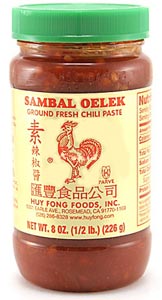
    I’ll tell you what they have—easy access to sambal oelek (SAHM-bal OO-lek). Sambal oelek is Indonesian for “dang good chili paste.”


    SambalOelek

    And why I started this post with the dog sign, I don’t know. Probably not the best lead in for food. But put that out of your mind now.

    You have avoided the dog, and are now sitting down to a delicious meal. And it’s been made even more delicious because you used sambal oelek. “Sambal” means something like “condiment” or “sauce.” There are a lot of different sambals, of course.  Oelek refers to a type of Indonesian stone mortar and pestle used to grind things. So a rough translation is ground sauce.

    And this sauce/paste is awesome. Now, I’m not a spicy foods guy. In fact, whenever we eat out, and I’m asked how spicy I want my food, I always choose mild. I hate super spicy food. But sometimes a little spice can transform a dish.

    You want to perk up your stir fry? Sambal oelek.

    You want to refresh your scrambled eggs? Sambal oelek.

    You want to try a new kind of PBJ? Sambal oelek.

    A spicy PBJ? Oh, baby.

    I was introduced to this BPJ when I was on my mission in the Netherlands. BTW, it’s not by accident I became of fan of Indonesian food while on my mission. Indonesia used to be a Dutch colony, and so there are tons of Indonesians there. For almost a year, I lived in rooms rented out of the houses of Indonesian landladies who cooked our lunches or dinners for us.

    So one day I watched one of my fellow missionaries spread sambal onto a piece of bread, then follow with peanut butter and a touch of jelly. At the time, I was grossed out. Then I tried it.

    Have you ever had satay? It’s the Thai and Indonesian version of BBQ. It usually comes with this marvelous spicy-sweet peanut butter sauce. If you have, you know you love it. And this, well, this is what you call the sambal PBJ variation of satay.

    If you like Thai, you’ll love this stuff.

    So where did I find it?

    World Market.

    And if you don’t have one close, you can get it on Amazon. Yeah.

    But, wait. There’s another mild hot sauce that you don’t want to miss.

    My two daughters just returned from their missions. One went to Kentucky. At the end of her mission, she was teamed up with one Sister Barajas from Mexico and assigned to work Spanish-speaking folks. And Sister Barajas introduced her to Cholula.

    Cholula

    Heavenly Cholula. Not too spicy. No weird taste like Tobasco.

    You want to perk up your stir fry? Cholula.

    You want to refresh your scrambled eggs? More Cholula.

    You want to try a new kind of PBJ? I don’t know. I haven’t tried that yet. But it’s good on steamed veggies. Good just about anywhere you want a fine little zing.

    Where can you find it?

    Walmart.

    How easy is that.

    If you like mild spice, the little bottle with a wooden top is going to become your friend.

    Okay, so what if you don’t like sauces?

    cafe_zupas

    How about a great soup and sandwich. Here’s the freebie recommendation. If you live close to a Cafe Zupas (Arizona, Idaho, Nevada, Utah), try to new Roasted Veggie and Quinoa soup along with a sandwich. I had the California Turkey. It was delicious. It comes with a little bit of French bread and a chocolate dipped strawberry.

    Life is good.

    Share
  • Is Sad Puppies the right strategy?

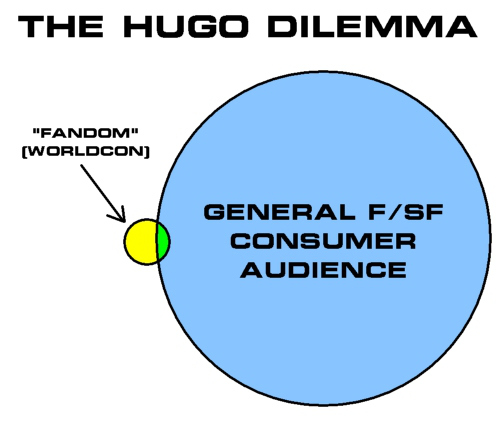
    There are a number of great science fiction and fantasy authors who feel that the Hugo awards have become irrelevant because the folks voting–only those who are members of Worldcon–do not represent science fiction and fantasy fandom.

    Brad Torgersen describes it with this Venn diagram.

    hugo_dilemma

    But this is not only about the fact that the voting block is not a statistically valid sample of fandom. It’s also a campaign against what Larry, Brad, and many others see as a politically correct shibboleth in parts of the publishing community that they feel short shrifts authors who do not toe the liberal political line.

    Two years ago, Larry Correia decided to give this issue a lot of attention. He did this by asking his fans to purchase a Worldcon membership and then consider a list of authors he thought were very good but didn’t necessarily reflect the prevailing values of the traditional Worldcon audience. Last year he repeated the effort and created a shirt-storm (I like that image so much better than the one that includes flying poops). This year, Brad is carrying the banner. Read Larry’s post Sad Puppies 3: The Slatening? to see this year’s slate of alternative folks and a summary of why these guys are doing this.

    I’m friends with Larry and Brad. And I do not like the Should Police coming out and telling me I should or must include more X in my stories and less of Y, whatever that X and Y may be.

    But, I’m wondering if storming the Hugos is the right way to do this.

    Yes, the Hugo award has a lot of brand equity. But must the Hugo represent fandom?

    Is Sad Puppies attempting to storm the castle and force upon Worldcon something Worldcon members don’t care for?

    Let’s go back to the original issue that Sad Puppies is trying to shine a light on.

    Reader Kim wants more of X and less of Y in his or her books.

    But instead of saying, “Geez, where in the crap do I find books with more of X and less of Y?”

    Instead of trying to get with a bunch of folks and saying to suppliers, “Hey if someone would write more of X and less of Y, we’d buy it! Look at this market that’s dying for product!”

    Instead of developing the More X and Less Y website dedicated to helping readers who like that find their books.

    Instead of that, Kim says, “Gosh darn it! All books should have more X and less of Y. And if they don’t, they’re, they’re, they’re bad, and bad for you, and probably make kids smoke! And we should make all stories conform.”

    And the mandated “should” is where things get all tangled up. That should is what Sad Puppies is speaking out against.

    So instead of trying to stomp out differing opinions or requiring all authors to write stories with some allotted amount of XY content, would it not be more productive to simply work with our wonderful free market to try to create a new silk road (or pave the existing one fit only for camels) that connects readers who like XY stories with authors who are happy to write them?

    I think it would.

    At the same time, this same argument could be applied to the Hugos. Instead of trying to force Worldcon members to change their ways, why not let them like the stories they like, but create a fresh new award that seeks a broader base? It would require work to build its brand equity, but maybe that’s a more effective long-term strategy.

    It’s kind of like the New York Times best seller list. There are many problems with that list, including, but not limited to, the fact that it can be gamed. But instead of trying to change it, USA Today came up with something much better. Yes, “NY Times Best Seller!” still has huge brand equity. But USA Today is gaining on it. And as the market learns more and more about the difference between the lists, USA Today’s will only grow in luster.

    I suppose it’s true that you sometimes do indeed need to storm the castle. And maybe this one needed some barbarians to show up and sack it. But I wonder if it’s time to pivot. I’m wondering if in this case the best long-term strategy wouldn’t be to simply build an armored division of M1-Abrams with air and sea support and make the castle irrelevant. Maybe this is something to think about for next year.

    Share
  • Good Stuff! Three Days in Moscow

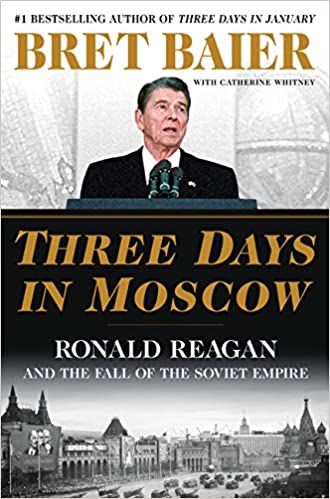
    Book cover, Three Days in Moscow

    I just finished Three Days in Moscow: Ronald Reagan and the Fall of the Soviet Empire by Bret Baier. It’s a New York Times bestseller that takes you into the world of Ronald Reagan, his rise to power in politics, and his role in ending the Cold War. And it does in a personable way with gentle humor throughout.

    I enjoyed the fascinating behind-the-scene insights about the personalities involved and the clarity about what really happened. And how the book brings Reagan to life, as if he’s almost there. Along the way you’ll also get insight into Mikhail Gorbachev, the assassination attempt on Reagan, and more.

    Baier is the chief political anchor for Fox News. In 2001, he became the station’s chief Pentagon correspondent and ended up traveling to Afghanistan 11 times and Iraq 13 times. In 2007, he became the station’s chief correspondent to the White House. More importantly, Baier seems to be one of the few journalists these days who is simply trying to get and report facts instead of spin. And that’s exactly what he’s done here.

    If you like biographies or history, if you want to know how the U.S.A. and the U.S.S.R. stepped back from decades of mutually assured destruction, if you want to get a view into how diplomacy is done, then I think you’ll love this book. And you’ll probably love it even more if you can listen to the audio book version, read by Baier himself, which also includes a recording of Reagan’s speech to the students at Moscow State University. I listened to it via the Overdrive account my public library provides. Baier’s reading was terrific.  

    Share
  • Good Stuff! The Highwayman by Alfred Noyes

    Alfred Noyes (1880-1958) wrote poetry that thundered and sang. It’s the kind of stuff that begs to be read aloud. And I want to share with you one of my favorites–“The Highwayman.” I love it for the sound, the story, and the awesome images (note all the color).

    All you need to know is that back in the 1600s and 1700s, a highwayman was a robber, often on horseback, who held up travelers. And that when it mentions “priming,” it’s talking about the charge of powder used to ignite a musket.

    For maximum pleasure, let me suggest you start Loreena McKennitt’s killer ballad version I’ve embedded at the end, then scroll back up and read along as she sings.

    THE HIGHWAYMAN
    By Alfred Noyes

    The wind was a torrent of darkness among the gusty trees.
    The moon was a ghostly galleon tossed upon cloudy seas.
    The road was a ribbon of moonlight over the purple moor,
    And the highwayman came riding—
    Riding—riding—
    The highwayman came riding, up to the old inn-door.

    He’d a French cocked-hat on his forehead, a bunch of lace at his chin,
    A coat of the claret velvet, and breeches of brown doe-skin.
    They fitted with never a wrinkle. His boots were up to the thigh.
    And he rode with a jewelled twinkle,
    His pistol butts a-twinkle,
    His rapier hilt a-twinkle, under the jewelled sky.

    Over the cobbles he clattered and clashed in the dark inn-yard.
    He tapped with his whip on the shutters, but all was locked and barred.
    He whistled a tune to the window, and who should be waiting there
    But the landlord’s black-eyed daughter,
    Bess, the landlord’s daughter,
    Plaiting a dark red love-knot into her long black hair.

    And dark in the dark old inn-yard a stable-wicket creaked
    Where Tim the ostler listened. His face was white and peaked.
    His eyes were hollows of madness, his hair like mouldy hay,
    But he loved the landlord’s daughter,
    The landlord’s red-lipped daughter.
    Dumb as a dog he listened, and he heard the robber say—

    “One kiss, my bonny sweetheart, I’m after a prize to-night,
    But I shall be back with the yellow gold before the morning light;
    Yet, if they press me sharply, and harry me through the day,
    Then look for me by moonlight,
    Watch for me by moonlight,
    I’ll come to thee by moonlight, though hell should bar the way.”

    He rose upright in the stirrups. He scarce could reach her hand,
    But she loosened her hair in the casement. His face burnt like a brand
    As the black cascade of perfume came tumbling over his breast;
    And he kissed its waves in the moonlight,
    (O, sweet black waves in the moonlight!)
    Then he tugged at his rein in the moonlight, and galloped away to the west.

    He did not come in the dawning. He did not come at noon;
    And out of the tawny sunset, before the rise of the moon,
    When the road was a gypsy’s ribbon, looping the purple moor,
    A red-coat troop came marching—
    Marching—marching—
    King George’s men came marching, up to the old inn-door.

    They said no word to the landlord. They drank his ale instead.
    But they gagged his daughter, and bound her, to the foot of her narrow bed.
    Two of them knelt at her casement, with muskets at their side!
    There was death at every window;
    And hell at one dark window;
    For Bess could see, through her casement, the road that he would ride.

    They had tied her up to attention, with many a sniggering jest.
    They had bound a musket beside her, with the muzzle beneath her breast!
    “Now, keep good watch!” and they kissed her. She heard the doomed man say—
    Look for me by moonlight;
    Watch for me by moonlight;
    I’ll come to thee by moonlight, though hell should bar the way!

    She twisted her hands behind her; but all the knots held good!
    She writhed her hands till her fingers were wet with sweat or blood!
    They stretched and strained in the darkness, and the hours crawled by like years
    Till, now, on the stroke of midnight,
    Cold, on the stroke of midnight,
    The tip of one finger touched it! The trigger at least was hers!

    The tip of one finger touched it. She strove no more for the rest.
    Up, she stood up to attention, with the muzzle beneath her breast.
    She would not risk their hearing; she would not strive again;
    For the road lay bare in the moonlight;
    Blank and bare in the moonlight;
    And the blood of her veins, in the moonlight, throbbed to her love’s refrain.

    Tlot-tlot; tlot-tlot! Had they heard it? The horsehoofs ringing clear;
    Tlot-tlot; tlot-tlot, in the distance? Were they deaf that they did not hear?
    Down the ribbon of moonlight, over the brow of the hill,
    The highwayman came riding—
    Riding—riding—
    The red coats looked to their priming! She stood up, straight and still.

    Tlot-tlot, in the frosty silence! Tlot-tlot, in the echoing night!
    Nearer he came and nearer. Her face was like a light.
    Her eyes grew wide for a moment; she drew one last deep breath,
    Then her finger moved in the moonlight,
    Her musket shattered the moonlight,
    Shattered her breast in the moonlight and warned him—with her death.

    He turned. He spurred to the west; he did not know who stood
    Bowed, with her head o’er the musket, drenched with her own blood!
    Not till the dawn he heard it, and his face grew grey to hear
    How Bess, the landlord’s daughter,
    The landlord’s black-eyed daughter,
    Had watched for her love in the moonlight, and died in the darkness there.

    Back, he spurred like a madman, shouting a curse to the sky,
    With the white road smoking behind him and his rapier brandished high.
    Blood red were his spurs in the golden noon; wine-red was his velvet coat;
    When they shot him down on the highway,
    Down like a dog on the highway,
    And he lay in his blood on the highway, with a bunch of lace at his throat.

    . . .

    And still of a winter’s night, they say, when the wind is in the trees,
    When the moon is a ghostly galleon tossed upon cloudy seas,
    When the road is a ribbon of moonlight over the purple moor,
    A highwayman comes riding—
    Riding—riding—
    A highwayman comes riding, up to the old inn-door.

    Over the cobbles he clatters and clangs in the dark inn-yard.
    He taps with his whip on the shutters, but all is locked and barred.
    He whistles a tune to the window, and who should be waiting there
    But the landlord’s black-eyed daughter,
    Bess, the landlord’s daughter,
    Plaiting a dark red love-knot into her long black hair.


    Share
  • Good Stuff! Wonder, Darkest Hour, Sea Wolves

    I had seen a lot of good reviews of Wonder. My wife told me a lot of her students enjoyed the book. But I thought it was going to be a heavy topic, full of sadness and heart-wrenching drama. I’m happy to report that while Wonder does indeed have some difficult moments, it’s also full of humor. And triumph.

    It’s a story about Auggie, a boy with a rare medical deformity that has put him through multiple surgeries. His parents have homeschooled him, but now that he’s at the age where he could go to middle school, they feel it’s time for him to navigate the world. The perfect time, right?

    But it’s not just about Auggie. The film is also about Auggie’s sister, her former best friend, and Jack, Auggie’s classmate. We get to see their stories as well, and they are woven into a wonderful, poignant story.

    You’ll laugh and wince and cry and cheer. You’ll enjoy Julia Roberts and Owen Wilson, who do a wonderful job as Auggie’s parents. And you’ll enjoy the children and teens. Me, my wife, my married daughter, and my teen all loved this film. I will be watching it again. If you want a great movie to watch as a family, I think you’ll love this.

    *

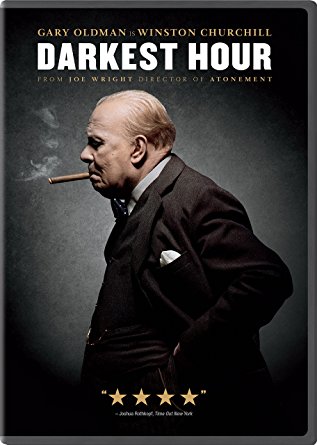
    As soon as I saw the preview for the Darkest Hour, I knew I had to see it. And, boy oh boy, this is yet another movie I can’t wait to watch again.

    The phrase “The Darkest Hour” is used in Britain to refer to the time when the United Kingdom appeared to be under direct threat of invasion from Germany at the beginning of World War 2. Germany had launched its attack on France, Belgium, and the Netherlands and had smashed their armies, sweeping all before them. The bulk of the British army was trapped at Dunkirk and looked like it would be annihilated.

    The British government was split between those who saw no path to victory and wanted to make a peace treaty with Hitler and those who wanted to resist him. The opposition party in parliament forced Neville Chamberlain to resign. And the only man they’d accept in his place is Winston Churchill. But Churchill was not the lion we think of him as today. He had a poor reputation among many of the leaders of his party and was not someone they wanted to elevate.

    So the film starts with the ouster of Chamberlain. We then get to watch how Churchill deals with the catastrophe of what’s happening just across the channel and all the voices pressuring him to make peace.

    There’s humor, suspense, and a number of one-liners that we all began repeating to each other immediately after the film ended. You get a feel for what it must have been like at the time and why so many wanted to sue for some peace treaty with the monster across the channel. You also get to see a slightly different picture of Churchill as a man. I particularly loved the exchanges between him and his wife.

    If you are interested in World War 2 or Britain in even the slightest degree, you simply must see this film.

    *

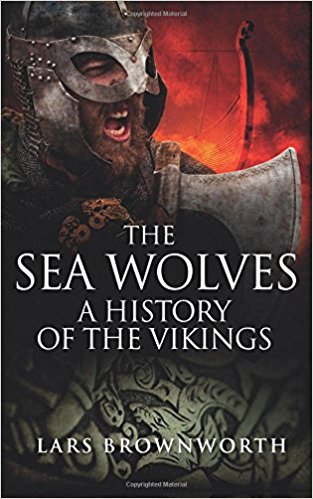
    I have now listed to the audio book of The Sea Wolves by Lars Brownworth twice.

    Yes, it’s that good.

    In this book, Brownworth tells the history of the Vikings. And he tells the history the way history should be told, bringing to life the old Norse world of epic poets, sea kings, and raiders, including Ivar the Boneless, Eric Bloodaxe, Harald Hardrada, Rollo the Walker—all the major figures.

    And Brownworth does it in a way that helps you understand how their dominance was possible and what their effect on the wider world was. Did you know, for example, that Russia comes from the word “Rus”, which was the name for the Swedish Vikings that started that nation?

    What? Russia was started by the Vikings?

    Yes.

    Read or listen to the book. You’ll learn that plus a whole bunch more that will make you look at that time in a different light.

    And if you want to get the other side of the tale, let me recommend reading Bernard Cornwell’s historical fiction series that starts with The Last Kingdom. The series tells the story of the invasion of the Danes during King Alfred’s rule from the point of view of Uhtred of Bebbanburg. It’s a terrific series.

    By the way, I do not recommend the TV series based on the books—too much sex for my tastes. But the books are fabulous. As are the audio versions. I’ve listened to six of them so far, and they have provided hours of enjoyment and interesting insights about the time and the events that took place.

    Share