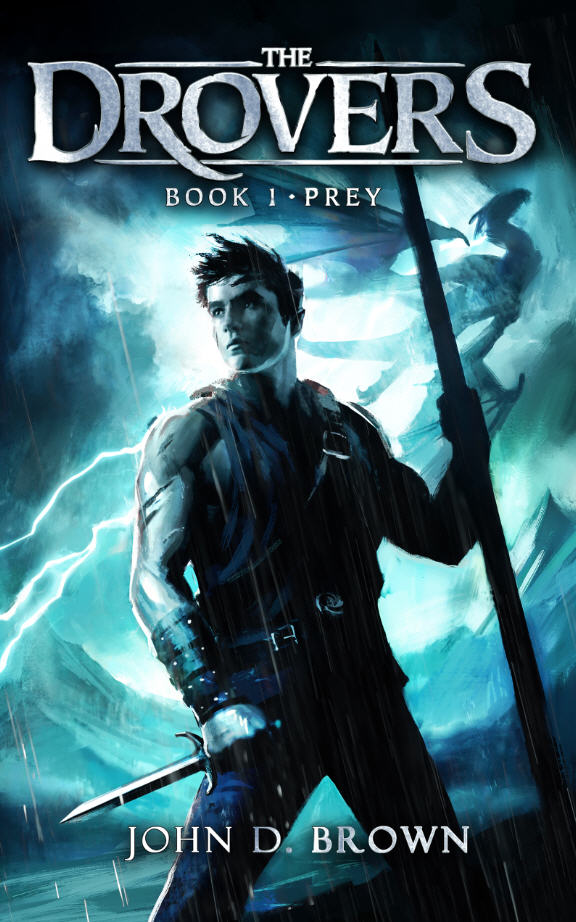

Similar Posts
The book trade is a . . . trade
James Dawson, YA author, feels it’s somehow wrong to hold back on cussing in his fiction. He wrote an article about this in the UK Guardian called “Why Teens in Books Can’t Swear.” He thinks it’s unrealistic. He thinks it’s about gate-keeper censorship. You know, parents wanting to steer their children towards certain experiences and away from others.
People.
Dawson’s approach to the whole problem is wrong-headed. This isn’t about the virtues and vices of fiction. Or about gatekeepers, especially in today’s ebook world. Or what experiences parents want to provide their children. And it’s not about art reflecting reality. Reality includes trips to the toilet, and yet we somehow fail to include realistic bum wiping in so many of our tales. Good heavens, have we betrayed our artistic integrity? No. We’ve just naturally chosen to include things that appeal to us and leave out others that don’t. Every book is an exercise in hundreds of such choices.
The fact is that Dawson’s forgetting that a fundamental aspect of the book trade is the trade. The buyer trades his or her money for a product (the book) that provides a service (the entertainment, thrills, chills, etc. of the reading experience) he or she values. A customer preferring one kind of experience over another isn’t censorship (the horror, the horror). It’s choice.
As an author, you make your offer. If folks like it, they buy it. If not, they don’t. Nobody owes you a purchase.
This means that in any business, and selling fiction is a business, the most sensible way forward is to offer your intended buyers something they are likely to value. Something they’re going to like. Something they want. If your buyer is thirsty and wants water, offer him a cold glass of water, not a waffle iron. And if you can’t bear to develop anything but waffle irons, then, by all means, develop waffle irons. Just make sure you offer them to the folks looking for . . . waffle irons.
This business of making offers also means that we package our products and services so that customers can easily tell what’s in the box. You don’t want someone to purchase your box thinking it contains breakfast cereal when in reality it’s a bunch of bolts.
Yeah, writing is an art. But offering it in trade to others is also a basic economic act.
Good Stuff! Factfulness by Hans Rosling
Are things really bad as they seem on the news?
Are they getting worse?
Do we actually have an accurate picture of what’s going on in the world?
The answer is no. Not even close.
The normal American’s view is completely skewed. And negative. And that’s because the news is prone to be overly dramatic.
We think we’re learning what’s going on by watching the news, but we actually getting an incredibly skewed view. And that view is wrong.
In his book Factfulness: Ten Reasons We’re Wrong About the World and Why Things Are Better Than You Think, Hans Rosling identifies a number of things we get wrong, but also the 10 reasons why, and how to avoid our tendencies to skew the data.
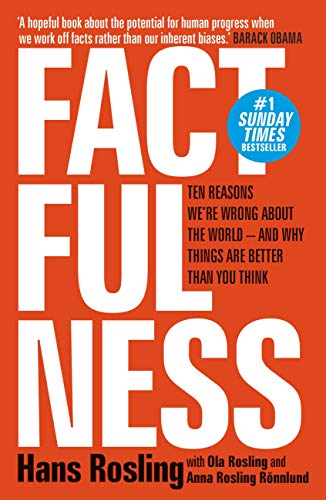
It’s a fascinating book.
For example, Rosling wanted to see how well we understand the scientific projections of how our population will grow. After all, a lot of people think we’re headed for an overpopulation nightmare.
In 1950 there were fewer than one billion children (aged 0-14) in the world. By 2000 there were almost two billion. How many do UN experts think there will be in 2100?
- 4 billion
- 3 billion
- 2 billion
What do you think the right answer is?
If a bunch of chimpanzees had to answer the question above, each would choose an answer randomly. And 33% of them would get it right.
But when you ask humans the question, most of them get it wrong. Most of them, in fact, do worse than the chimpanzees. It’s not even close.
Rosling asked 12,000 people in 14 countries were asked this question, among others. Here’s how many got it right in various countries.

To be clear, no chimps were tested. That bar is in there just for comparison. But if they were, that’s how they’d do.
So how is it possible that humans do so spectacularly worse than the chimpanzees?
It’s not because chimps are secretly studying world population stats and hatching schemes. It’s because we humans think we know something, but, in reality, what we think we know is wrong.
And in this case, we think they know that the population is going to keep growing and growing and growing.
But it’s not.
The right answer above is C—there are 2 billion children now, and there will be 2 billion in 2100.
The world has hit the peak number of children it will ever have at any time.
There are around 6 billion people on the earth today. As those 2 billion children get older, the UN experts project the total population to fill out and grow to 11 billion in 2100 and then level off.
That means there is no overpopulation nightmare on the horizon.
Can this be true?
Read Rosling’s book.
Well, what about literacy levels? Poverty? Racism? Wars?
And what about the news—don’t we see the world going to pieces every night?
If you want an eye-opening experience, read Rosling’s book. He delivers all the insights with clarity, expertise, and humor.
Best of all, when you’re done, you’ll have a set of tools to help you correct the picture.
And while you’re waiting for the book, why not watch Rosling in action in this TED talk where he shows the data on population.
Indie Thoughts: When an author should self-publish and how that might change
From publishing consultant Mike Shatzkin:
For a number of reasons, the belief here is that most of the time for most authors who can get a deal with an established and competent house, their best choice is to take it.
Sounds reasonable, but then we get to the money quotes.
The strength of the traditional publishers and the traditional deals is directly related to the amount of the market that is served by inventory in stores. When that proportion was “nearly all”, the power allocation was “nearly all” to the traditional publishers.
***
Self-publishing and new-style digital-first publishing can grow more to the extent that the book-in-store share of the market shrinks more. But while that’s happening, the big publishers are also adding to their capabilities: building their databases and understanding of individual consumers (something that all the big houses are doing and which the upstarts seem not to believe is happening, or at least not happening effectively), distributing and marketing with increasing effectiveness in offshore markets, and controlling more and more of the global delivery in all languages of the books in which they invest.
It will compound the pressure on the alternative players if Amazon continues to grow its global market share for ebooks. The bigger the percentage of the market that can be reached by self-publishers with one stop at Amazon, the less interest they’ll have in picking up smaller chunks of the market with additional deals and the more powerful will be any incentives Amazon cares to offer for making the title exclusive to them.
Link to the rest at The Shatzkin Files, and thanks to Passive Guy for the original link.
Shatzkin’s discussion of the amount of the market served by inventory in stores is right on. But his “best choice” conclusion doesn’t follow.
Why?
Because the question for each author has to be which stores will I be in, what kind of floor space will I have, and how long will I be there? And in many cases the answers to those questions do not compete well with indie options.
For example, a lot of in-store sales come from the drug store, grocery store, airport, Walmart, Costco type venues. But it’s rare than an author getting an average deal will see the light of day in those places. Those are reserved for bigger sellers. And not very many of those. So unless you’re getting a big deal, you can’t count that floor space.
Poof. Tens of thousands of venues are now no longer part of the equation.
So you are now left with whatever number of stores the publisher can get you into at Barnes&Noble (a max of 675 stores), Books-a-Million (max of 200 stores), Hastings (max of 149 stores), non-chain stores, etc. I think the total number of book stores in the USA is around 10,000 or so. But publishers won’t get you into all of them. Some don’t carry your type of book: they’re used books stores, or kids book stores, or Christian book stores. And even if it’s a store like Barnes&Noble, you probably won’t get into all their stores. So how many stores will you actually be in?
Next, you have to wonder where you’ll appear in the stores you do get into. Will you be face-out somewhere prominent? Or will you have two copies spine-out in the back? If you’re spine-out, that’s just reduced the value of the floor space publishers offer you yet again.
Finally, how long will you be there? If you sell your two copies in a store, are you done at that store? Will your books be there longer than 12 weeks? Will they be there even 8 weeks?
James Patterson can sell millions of books because he has multiple copies in tens of thousands of stores with great display. And he’s usually there for more than just a handful of weeks. If you have two books spine-out in each of 500 stores for eight weeks, how well are you going to do?
Here’s some math on author revenue and units sold. Is selling 1,000 books with the royalties and contract terms offered really worth it? What about 4,000 books? 7,000? Are you going to be in enough stores with a decent placement to get those numbers?
If you’re going to be in thousands and thousands of stores with good placement, and the terms of the contract are reasonable, then, good golly, working with a publisher looks great. But if you’ve got a book that’s good enough to make an editor somewhere want to buy rights to it and the publisher is offering to put you spine-out in a little over a thousand stores with all sorts of contract crap, then Shatzkin’s “best choice” is really a poor one. In those situations my money is on going indie.
EDIT: It seems there are about 12,700 book stores in the USA. But that includes big-box stores, which I think are the Walmarts and Costcos.
Good Stuff! TruContain, Johnny Walker, Great British Baking Show
I love the sunny winters we get up at Bear Lake. I hate the snow that my car brings into the garage. Because the snow melts, and the water runs to the bottom corners of the garage and pools there, creating a huge mess until I get out there with my cement squeegee.
Who wants to continually be moving crap in and out of the garage so you can squeegee it? And in the winter when it’s freezing?
Not me.
For years I’ve wanted to do something about it, but what can you do after the concrete of your garage is poured?
Well, this year, after the first big storm, I got sick and tired of traipsing through the water and mud and cleaning all that crap up. So I put my massive Google-fu skills to work. And, lo and behold, I discovered a product called TruContain.

It’s a car mat for your garage. It’s made of thick vinyl and has raised edges.
I bought one.
The UPS man delivered it not many days later.
The installation instructions were simple. Two steps. The perfect number for me to manage. Step one was to let it warm up in the house for twenty-four hours so it was easier to unroll. I did that. Step two was to unroll and position it in the garage where we park our car. That took about a minute. So far so good.
No soon after the mat was deployed, we had another snow storm. The van went out for daily driving and came back with an undercarriage covered in ice and snow. We parked the van on the mat. The ice and snow melted. And the mat caught it and contained it.
I was delighted.
The next day the van went out for another day’s use and came back all covered in snow and ice again. The snow and ice melted, along with a bunch of dirt. And the mat caught it again!
I was whooping for joy.
I’m still whooping for joy because my garage is dry!
If we get a lot of water on the mat, I’ll use the shop vac to suck it up. I took out five gallon of dirty, cold water the first time. Five gallons that would have flooded my garage! If there’s not too much water on the mat, I’ll drag the mat out with a helper and dump the water on the lawn.
I love my TruContain garage mat.
If you have winter water mess in your garage, you’ll want to consider it. I got mine from the manufacturer garageflooringllc.com.
One word of advice. If you get one, don’t get one bigger than you need. If it’s too big, then the mat will stick out from the sides of the car, and when you go to step out, you’ll be stepping out into your mini garage lake.
#
I enjoy books about Army Rangers, Navy SEALS, Special Forces soldiers, etc. Almost all of them are written from the point of view of the operators. But I just found and enjoyed one, not about the operators, but about a guy who helped them in Iraq.
The book is called Code Name: Johnny Walker and was written by the guy the SEALs called Johnny Walker with the help of Jim DeFelice.
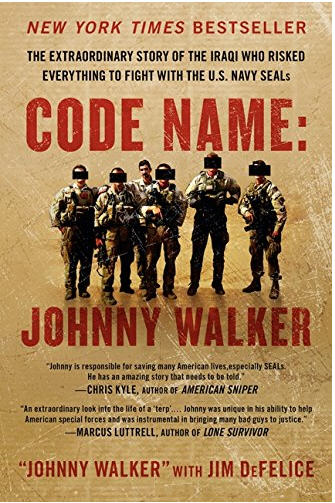
Who is Johnny Walker?
He was a resident of Mosul and was what they called a “terp”, an interpreter who went with the SEALs on their missions. He went on hundreds and hundreds of missions with them. And he offers a fascinating glimpse into what life was like in Iraq during the Iraq War for those Iraqis who helped the coalition forces.
The SEALs appreciated his service. I know this because a host of them have blurbed his book. Furthermore, they helped him eventually immigrate to America. That’s how grateful they were for his service.
If you like these types of books and would enjoy new insights, I think you’ll really enjoy the book. Johnny Walker does swear a bit. But I tend to take people as they are. And it was well worth time I spent listening to him.
#
For Christmas my daughter received a number of seasons of The Great British Baking Show. It’s a competition baking show. I’d heard about it before, but I’d seen episodes of American competition cooking shows and didn’t enjoy them at all.
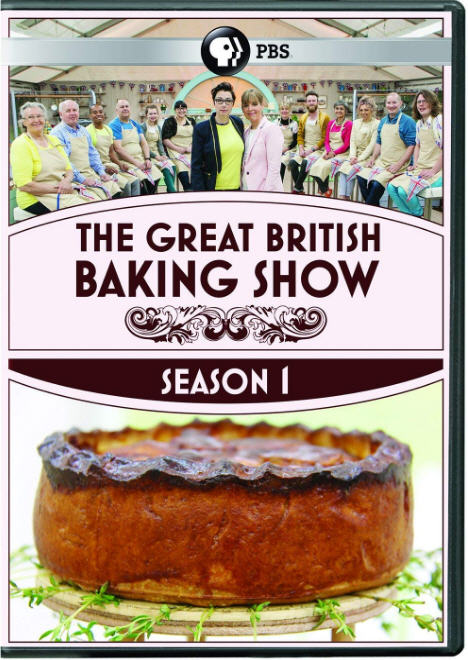
However, my daughter said this was nothing like the American shows, that it was awesome, and it was so awesome she wanted to the DVDs for Christmas so she could watch the episodes again. I needed to give it a try, she said. So I gave it a try.
I’m happy to report that I and my family have are enjoying the heck out of her DVDs.
The British folks that are competing in the challenges are down-to-earth and interesting. Some of them are funny. The tips about baking are interesting. And, best of all, the British show makers know how to create suspense.
They start each season with a group of twelve amateur bakers. Two professional bakers give them a baking challenge with a time limit and then judge the bakes. After a series of three challenges, the pros name a star baker for that series and then also announce who was at the bottom of the pack and will be leaving the show. If you like cooking or have ever found yourself watching a cooking program all the way through, I think you’ll really enjoy these fun, British bakers.
Good Stuff! A clear-eyed view of the Founders
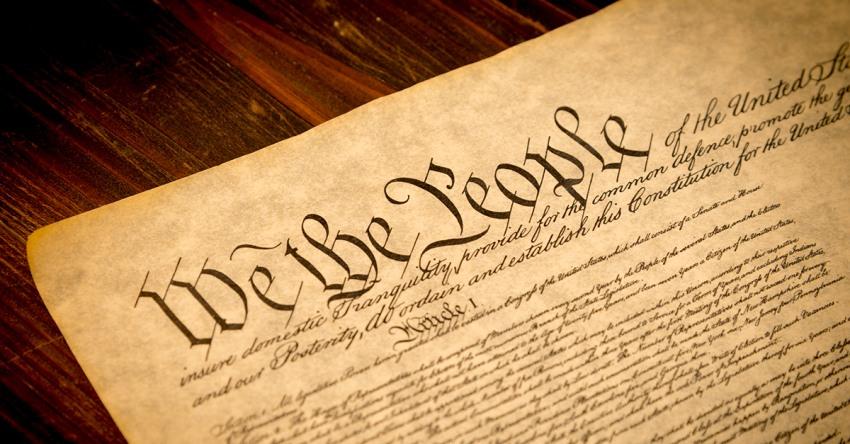
When it comes to politics, we frequently talk twice as much as we should and listen half as much as is deserved. With our mouths open so much of the time, we fail to get the facts. And this often leads us to paint things in hyperbolic black or white.
One area where we seem to do this regularly is with the Founding Fathers. Depending on our side, we label the Founders as devils or demigods and the constitution as a wicked document or holy writ.
Is it possible both sides are distorting the truth?
Joseph Ellis, one of the nation’s foremost scholars of American history, suggests that we are. He has written an excellent article for the online Encyclopedia Britannica called “Founding Fathers” that points out both the amazing things the Founders achieved with the birth of this nation and some of their most egregious failures.
I don’t know about you, but I find clarity a good thing. I think it helps us have more productive conversations. If you agree with me, I think you’ll enjoy the clarity Ellis brings to the Founders and the nation they set up. Read his article here.
For my part, I think the Founders set up an awesome system. Not because it was perfect at birth, but because it was a system that got enough right to allow us to get where we are today. Look at how far we’ve come on so many fronts! And it got enough right to allow us as a nation to get even better in the future.
Just consider what the Founders implemented that was in no government at that time. The ideals of individual liberty, the separation of powers, the ability for a huge swath of citizens to elect their leaders, the ability to change the constitution itself, the separation of church and state, and the engine of democratic capitalism that has lifted more people out of poverty than anything else the world has seen.
The Framers didn’t create the Constitution in a vacuum, but nowhere in the world had anyone set anything up that went so far. There was nothing like it, no real examples to follow. And many thought it would fail, just as France’s attempt in their revolution failed just a few years later.
As for things they got wrong. Well, they themselves soon recognized the way we elect the president and vice president didn’t work and adjusted it. Their idea that political parties wouldn’t form was wrong. Their idea of a militia for common defense didn’t work (see my writeup here). Their compromise on slavery was a festering sore that came to a head before the Union was 100 years old. Their treatment of the Indians was awful. Their reasons for excluding women and those not owning land was bone-headed.
So, yes, they got some things wrong. Some of them held some beliefs that we find appalling today. And the nation has not implemented their stated ideals as well as we might have hoped. However, the Founders got so many things right. And what’s more, they did it as men living in the times they lived, having grown up with the beliefs and values of that time, not those of 2019!
While we as a nation have progressed from some of their failures (thank heavens), in other ways the Founders may be are our betters. There are a great many lessons to learn from them, both from their successes and failures. One is their humility—they knew what they’d created wasn’t perfect. Let’s not imagine that we or our ideas are perfect either.
If you’re at all interested in politics, I recommend Ellis’s article and its view of the Founders. Read it article here.
Good Stuff! Easy WFPB
If you’ve decided to try the whole-food, plant-based lifestyle (WFPB) to lose weight or lower your risk of certain diseases, you will immediately find there’s a bit of a learning curve.
That’s because the food culture in the United States is geared towards foods that are animal-based and processed—cheese, meats, sugar, flour-based products, chips, candy, etc. In fact, WFPB is such a large change, you might wonder if you’ll be eating anything other than cardboard.
I can happily report that WFPB eating is satisfying and delicious.
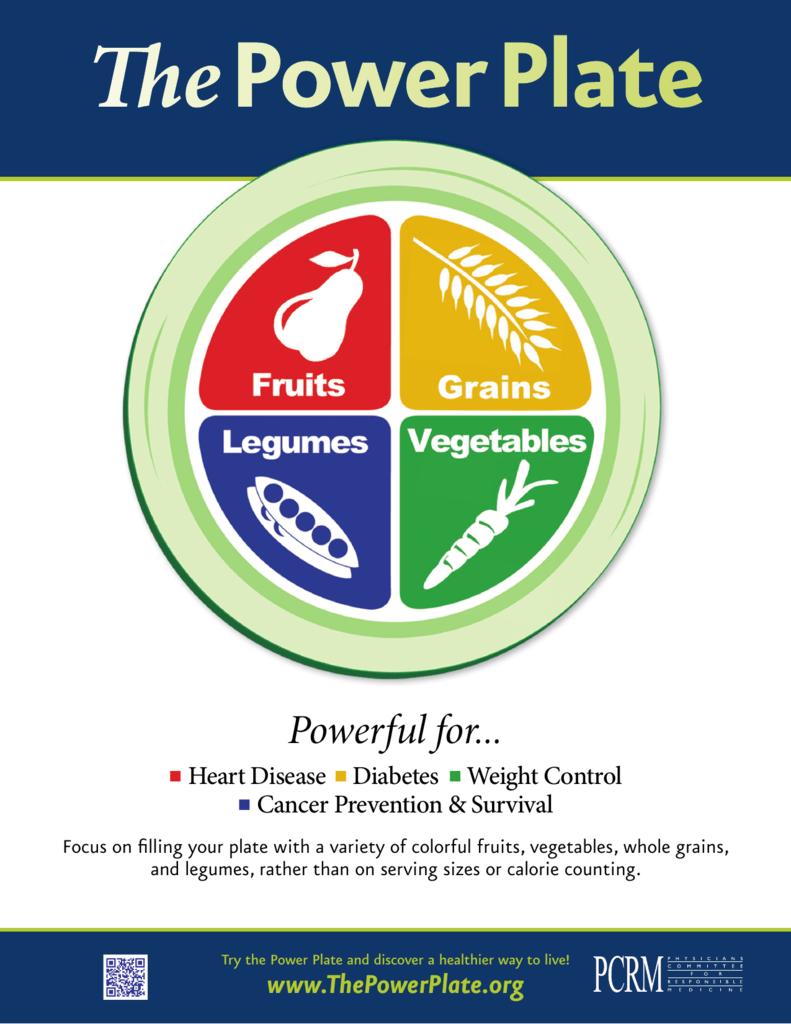
Let’s review the general guidelines. With WFPB there are three things to avoid or minimize.
- Added sugar (and artificial sweeteners)
- Flour-based products
- Animal-based products (meat, dairy, eggs)
And there are five things you eat. The main four include:
- Legumes
- Grains (as close to whole kernel as you can get it)
- Vegetables
- Fruits (natural form, not canned)
The fifth category is some added fat on the side. That includes things like a tablespoon of mayo, peanut butter, oil, avocado, etc. Or it could be an ounce of nuts or seeds.
We’ve found it easiest to compose a meal by simply thinking about the five categories and filling in the blanks. If you don’t include one of the main four groups in a meal, that’s fine. Just be sure you’re not excluding it all the time.
There are dozens and dozens of delicious meals. Over the next months I’ll be sharing some of those we love. Let’s start with the base.
The base
Grains
Our InstaPot has been a huge help with grains. It makes them so easy to cook. You can make them in a batch and enjoy them over the course of a few days.
Wheat
- 2 cups food storage wheat berries (Yes! Finally a use for all those bags of food storage wheat in the basement!)
- 5.5 cups water (or use vegetable stock if you want it savory)
- ½ tsp salt
- Cook for 35 minutes on high pressure followed by immediate pressure release. Drain if necessary.
Rye berries, oat groats, pearled barley, brown rice
- 2 cups grain
- 2.5 cups water (or vegetable stock if you want it savory)
- ½ tsp salt
- Cook for 22 minutes on high pressure followed by 10 minutes of natural pressure release. Drain if necessary.
When you want the grain as a savory dish, use vegetable broth or stock. It gives the grain a wonderful flavor. It’s total magic. You can get cartons at the grocery store for under two bucks.
For rice, we love the Lundberg wild rice mix. Lundberg also happens to be California rice which doesn’t have the high levels of arsenic that rice from the Southern United States has.
Legumes
Lentils
- 1 cup brown or green lentils (do not use red for this)
- 2 cups vegetable broth (the broth is the magical ingredient)
- ½ tsp salt
- Cook for 15 minutes on high with 10 minutes of natural pressure release. Drain if necessary.
For other beans, we just purchased them in the can. They’re cheap and easy. Pinto, black, white, black-eyed peas, etc. You might find it easiest to start with pinto and garbanzo beans.
Fruits
Easy. Just get whole fruits. You can also get the frozen berries and cherries.
Vegetables
Easy. Just get a variety of veggies and salad.
Nuts and seeds
Easy. Get whole almonds, pecans, walnuts, etc. Whatever you like. Try to get them raw. You can heat them up in a pan on the over before you eat. Stove-roasted pecans are tasty.
Added oils
Olive oil, avocado oil, coconut oil. You’re not going to be using a ton. If you want to use mayo and salad dressing, do it. Again, you’re not going to be using much.
Spices
Use all you want—cinnamon, ginger, basil, etc. Also use mustard, soy sauce, hot sauce. Balsamic vinegar is great on many things.
Recipes
With meal recipes we mix and match. Here are some meals we like.
Grain Bowl
For 1 person.
- 4-6 oz of grain
- 6 oz of berries, cherries, or 1 whole fruit
- Some almond milk
- Some spices like cinnamon or pumpkin pie spice or ginger (could do fresh ginger if you like it), or cocoa.
- 1 oz of nuts, 1 tablespoon of peanut butter, or 1 tablespoon of coconut cream
- Heat in microwave if desired
Great for breakfast. Using different fruits and spices gives it lots of variety from day to day.
Homemade Costa Vida Salad
For 1 person.
- 4-6 oz beans
- 3-4 oz salad greens (you will need a big bowl)
- Some mango salsa
- 1 tablespoon Ranch dressing or may
- 2 or 3 tablespoons of balsamic vinegar
- Salt and pepper to taste
Just mix it all up and enjoy. You can add cooked rice if you want and other sautéed veggies. You can also add rosemary leaves and turmeric for the health benefits.
Other tips
Here are some other things we’ve found.
- Broccoli tastes the best, hands down, when cooked in a steamer.
- Cabbage is great when steamed and stir fried with soy sauce, ginger, garlic powder, and onion powder
- Succotash is tasty, especially if you make it with some small cubes of potato.
- You can substitute lentils for ground beef in many meals. We’ve done it with stuff green peppers, shepherd’s pie, and many others, and our picky, teenage daughter actually likes it.
- Some corn added to beans for a burrito or chili gives it a nice sweet flavor.
- Sautéed mushrooms are great with onion powder, garlic powder, and thyme.
- Garbanzos go really well with peanuts.
We’re not fanatics about this. But I’d say we’ve been able to get 90% of the way to a WFPB lifestyle. And we’re enjoying the food. In fact, the longer we eat this way, the tastier it becomes.
For about two years, we ate a diet high in vegetables and animal-based foods (meat, dairy, and eggs). We were diligent, but didn’t see the results we hoped for. Four months ago, we switched over to WFPB. I recently had some blood work done. After four months of eating this new way, I’ve dropped about fifteen pounds. My total cholesterol is down from 214 to 188. My blood sugar levels went from 107 to 83. And my blood pressure has improved. And that’s after just four months with some days of holiday eating mixed in. I can’t wait to see what happens after eating this way for a year.
If you want to hear the research behind this to consider the evidence yourself, I recommend the following:
- The China Study: The Most Comprehensive Study of Nutrition Ever Conducted (Revised and Expanded) by Colin T. Campbell, PhD
- Whole: Rethinking the Science of Nutrition by Colin T. Campbell, PhD
- How Not to Die: Discover the Foods Scientifically Proven to Prevent and Reverse Disease by Michael Greger, M.D.
- How Not to Diet: The Groundbreaking Science of Healthy, Permanent Weight Loss by Michael Greger, M.D.
You can get all of them from your local library. If they don’t have the books there physically, ask the librarian how to use their Overdrive account to check out an ebook or audio book version online.
2 Comments
Comments are closed.
I just bought it! Can’t wait to start!
Awesome. I hope you enjoy the tale.