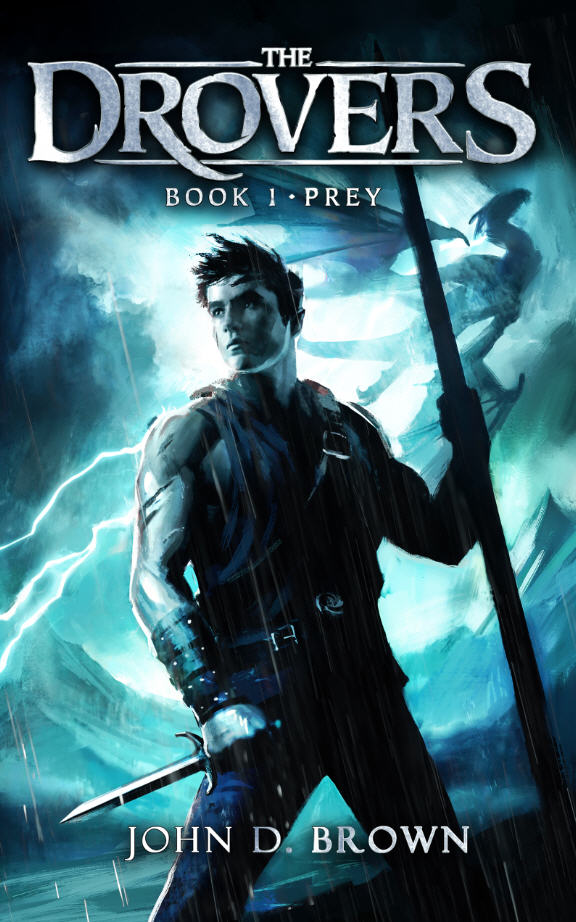
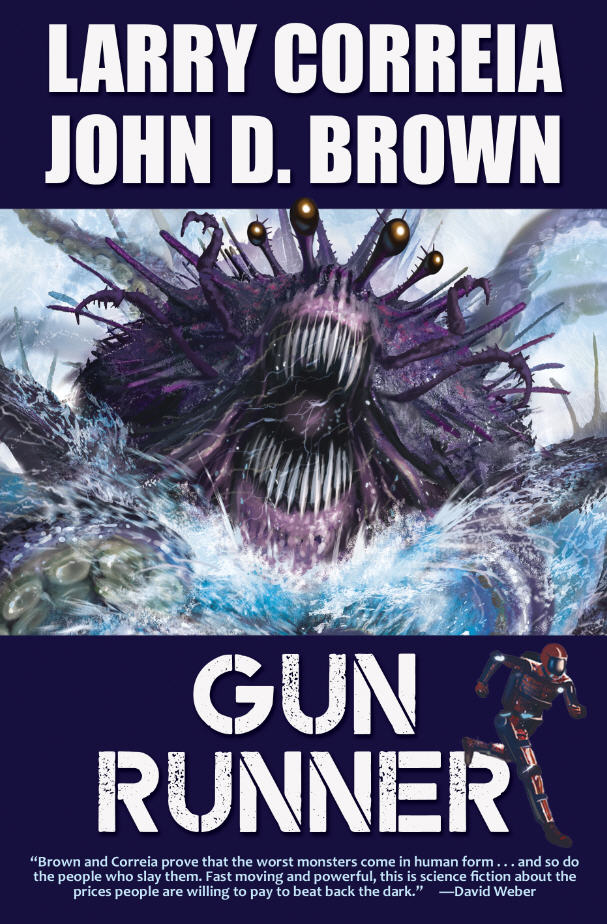
Larry Correia and I on Blades and Blasters Podcast talking about Gun Runner

Larry and I went on the Blasters and Blades podcast to talk about fantasy, science fiction, and working together on Gun Runner. I also shared my weirdest experience on a book tour (hint: Reptoids from the Hollow Earth). It was a fun show.

Podcast: https://anchor.fm/blasters-and-blades/episodes/Episode-9-Larry-Correia–John-D-Brown–Running-Down-the-Guns-etdli3

YouTube: https://youtu.be/ujQj-crWe-8

Share

Similar Posts

  • Conservative Republican Amnesia

    If you ask the “conservative” talking heads–Limbaugh, Beck, Hannity, etc.–who THE best conservative president of the last 100 years was, they will say Ronald Reagan. If you ask their dogs, they will bark “Ronald Reagan.” Their gerbils will say other things, but everyone knows you can’t trust rodents. Ask the regular conservative Wanda and Mack (Jane and Joe is so cliche), and they’ll give you the same response as the dogs and people. Ronald Reagan is the guy we conservatives and Republicans have been taught to worship.

    Except, when presented with a candidate as conservative as Reagan, no, probably more conservative (I’m talking Mitt Romney), many of these “conservatives” get out their inquisitional torches. Which is a big reason why the GOP primaries are as fluid as they are at this point.

    As a side note, have you noticed that these talking heads and the mainstream media either have a hobby horse they ride above all else (Rush Limbaugh and his anti global warming crusade) or they seem to promote some flavor-of-the-day litmus test for each election. In one election, they’re going on and on about homosexual marriage. The next election, it’s a talking head approved stance on Taliban bombing. The next, it’s the fact that budgets must be balanced. They line the candidates up and then start whacking them based on these flavor-of-the-day tests. It’s like going to buy a car and focusing all your attention on the steering wheel.

    Anyway, I think many of us have forgotten what THE so-called best conservative president of the last 100 years looked like. If Ronald Reagan were to run today as John Smith, the conservative talking heads would drop him like a hot potato.  You don’t believe me? Well, let’s see how he stacks up.

    1.      ILLEGAL IMMIGRATION

    1. Reagan signed in amnesty for 3 million illegal aliens. The south-west-east-north-of-the-border kind, not the ones with green antennas.
    2. Talking Head Response: After crapping a brick, they would proclaim that John Smith, aka Ronald Reagan, is a pro illegal immigration RINO and must be thrown out!

    2.      ENVIRONMENTAL REGULATION

    1. A few weeks ago Rush Limbaugh told a caller that Romney is not conservative because of his stance on man-made global warming (Romney says he doesn’t know, but there seems to be evidence men contribue; women, of course, never to contribute to such things–they’re too smart), which Limbaugh thinks will lead to big-government regulation of emissions etc.
    2. YET AS GOVERNOR, Reagan established the Air Resources Board to battle California’s worst-in-the-nation smog problem. In a 1984 radio address to the nation, Reagan took credit for the strong action he took in California to combat smog, saying: “I’m proud of having been one of the first to recognize that States and the Federal Government have a duty to protect our natural resources from the damaging effects of pollution that can accompany industrial development.”
    3. THEN AS PRESIDENT, he signed, with great pride, what many consider THE most successful environmental treaty of all time – the Montreal Protocol in 1987, which regulates emissions. Back in those days Ozone depletion was the Global Warming. Reagan believed it, despite folks questioning the science and was happy to regulate.
    4. In the 1987 State of the union he said: “We are also developing proposals that make use of market incentives to control air pollution caused by sulfur dioxide and nitrogen oxide emissions and the causes of acid rain.”
    5. What?! A cap and trade like program? Yes, putting Bush in charge. In 1990, the first Bush Administration successfully pushed through legislation establishing a cap-and-trade program to reduce acid rain—the program Reagan started!
    6. Talking Head Response: John Smith is a total pro-environmental regulation RINO, please queue Al Gore singing “Burning Ring of Fire”

    3.      ABORTION

    1. Reagan signed a permissive law that allowed abortions. Since that law went into effect more than 2,000,000 abortions have happened in the Golden State.
    2. Reagan says he failed to see how it would be abused. He blamed his own inexperience, stating that had he been in office longer he would have realized that the bill was wrong.  He blamed doctors for misinterpreting the bill. President Reagan stated his prolife position by saying: “Abortion on demand now takes the lives of up to one and a half million unborn children a year. Human life legislation ending this tragedy will someday pass the Congress, and you and I must never rest until it does.”  BUT he never introduced a bill to ban abortion or amend what he’d done. Not in California, nor as president.
    3. Furthermore, today’s conservative inquisitors would point to his Supreme Court appointments. He appointed the moderate Sandra Day O’Connor.  Anti-abortion groups were livid, fearing, rightfully as it turned out, that Mrs. O’Connor would not vote to overturn Roe v Wade.  He appointed Justice Anthony Kennedy who had a long history of supporting expanded rights of privacy, gay rights, and preserving a woman’s right to choose.
    4. Talking Head Response: actions speak louder than words–John Smith is a pro-choice RINO

    4.      UNIONS

    1. Reagan was a union president 8 times in a row.
    2. Reagan, aka John Smith, also had lots of troubling connections to the Teamsters, who endorsed him, and who suddenly saw less investigation of their leaders for corruption. This is during the Jimmy Hoffa organized crime years.
    3. Talking Head Response: choke, ack, sputter–Smith is a pro-union gangsta RINO!

    5.      GUN CONTROL

    1. It was Governor Ronald Reagan of California who signed the Mulford Act in 1967, “prohibiting the carrying of firearms on one’s person or in a vehicle, in any public place or on any public street.” Yeah, he aimed to stop the Black Panthers et al, but affected all gun owners.
    2. Twenty-four years later, Reagan was still pushing gun control. “I support the Brady Bill,” he said in a March 28, 1991 speech, “and I urge the Congress to enact it without further delay.” He was right with Clinton on that issue.
    3. The Brady Bill, for the first time ever, instituted federal background checks on firearm purchasers in the United States.
    4. NRA spent millions fighting it, when it pass they mounted cases in a number of states wanting to have it overturned as unconstitutional.
    5. Talking Head Response: anti-gun RINO!

    6.      FISCAL POLICY

    1. As Governor, Reagan signed into law the largest tax increase in the history of any state up till then. Meanwhile, state spending nearly doubled.
    2. As President he continued. While he did cut taxes his first year, he signed into law tax increases of some nature in every year from 1981 to 1987. Furthermore, the debt increased to nearly $3 trillion, roughly three times as much as the first 80 years of the century had done altogether.
    3. Talking Head Response: tax and spend RINO!

    7.      RELIGION

    1. Smith, aka Reagan, let Nancy’s astrologer affect his schedule
    2. Talking Head Response: troubling devilishness (scary for evangelicals everywhere!), even if he only did it to make Nancy feel peace

    Reagan the RINO? Are you kidding? And yet Reagan would be hounded out of the Republican party if he ran today. The talking heads would sound the warning long and loud, which is a shame.

    On the other hand, I’m not saying we need another Reagan. Clones never pan out–hasn’t anyone seen Multiplicty with Michael Keaton?! And despite the recent zombie craze, I don’t want one in the White House, even if the world would be a better place if said zombie should eat Vladimir Putin’s brains out. I tire very quickly of Reagan worship. Or any other politician worship. As good as Reagan was, I disagree with a number of things he did. What I am saying is that those who want to get another president “as good as Reagan” had better know what such a president looks like. And it ain’t the caricature that’s being held up today by many conservatives, especially the talking heads, who seem to gloss over the facts of history.

    Share
  • A Response to John Scalzi

    The best way to change someone’s mind: use the skills you learned writing fiction.

    John Scalzi recently wrote a post about White Privilege.  You know: the idea that Straight White Males (SWMs) have all the cards stacked in their favor.  It’s called “Straight White Male: The Lowest Difficulty Setting There Is.” I assume he wrote it to help SWMs have more sympathy for those who aren’t SWM.

    It’s a noble cause.  Not as noble as true love, but that’s so rare–not one couple in a century has a chance at true love (at least when you live in Guilder).

    The problem is that Scalzi’s post is a great 101 on how To NOT Win Friends and Influence People.  Actually, that’s not right.  He will win new friends and increase his influence among those who are like-minded.  But if he was hoping to win over those who didn’t already see things his way, I don’t think he’s going to be very successful.

    His posts generated hundreds of comments. When you look at the comments, you’ll see that the vast majority of them are folks arguing Scalzi’s side with smug condescension and other folks arguing points against Scalzi with an equal lack of tact.

    In short, it’s a classic online bring-your-guns-to-the-party event.

    Alas.

    Except I must admit such events can be a lot of fun if you’re on the side with greater numbers.  Furthermore, there is sometimes a tremendous pleasure to be had in being provocative.  Sometimes we simply must publish something with teeth in it.  And maybe that’s what Scalzi was trying to do. 

    But if not, here’s where Scalzi’s post went admirably wrong.  And it has everything to do with principles that underlie influence as well as writing fiction.  You see, when you’re writing fiction and you want someone to root for your character, you do not turn to the reader and insult him. Insults don’t bring readers into your world.

    Equally as important, telling, or demanding someone feel a certain way towards someone else, will fail every time you try it. You cannot demand (or whine) that a reader must feel sympathy and admiration for the character.  Why?  Because emotions don’t respond to demands.  They just don’t.  It’s like trying to freeze water by seasoning it with pepper. 

    The advice “Show, don’t tell” works in real life as well as it works in fiction.

    Emotions are automatic.  If someone presents the right stimulus, we WILL feel the desired emotion in response.  We don’t experience a sympathetic change of heart when someone gets in our face and demands we feel sympathy.  We do feel that change when we see the antecedents which prompt the emotional response in us.  Show me.  Make me believe.  And the response is automatic.  

    This is what happened with Uncle Tom’s Cabin and the movie Ghandi and the TV series Roots and the more recent movie Believe in Me and the novel Les Miserables and thousands of others.  It’s what happens every day when someone in one group meets someone in another group they feel some distrust for and begins to build a friendship. 

    Show the antecedents, help folks identify, and you’ll move millions.  Get up and rant at someone, and all you’ll get is the bird.  And applause from the true believers.

    Scalzi claims that if you feel offended by his post then you’re hypersensitive because all he was doing is pointing out the facts.  Um, no.  Jim Hines is trying to establish potential facts.  You could try to verify those.  You could try to separate out causation from correlation.  But Scalzi is not doing that. He’s telling all SWM that they are playing on the kiddy version of the life video game.  Your life is so easy.  Everything is rigged for you.  You’re playing the baby version.  And because of that everyone else’s life is so much harder.

    No, he didn’t say those words exactly. But there is this thing call connotation. There is this thing called tone.  And no matter how hard you try, you’re can’t separate the non-verbal communication from the message. 

    Everyone knows that some people have it harder in life and some have it easier. Like, duh.  I think we all learn that when we showed up to the first grade.  So what’s the point of telling all the SWM’s reading his blog that they are playing the dweeb version of life, the one with training wheels?

    Furthermore, instead of helping all of us pampered SWMs identify with our brothers and sisters, he tries to erect more boundaries that would push us apart by giving all of us another way to discriminate and another reason to be resentful.

    Lowly, pampered SWMs at the bottom.  Gays, people of color, and women farther up. 

    So now we’re going to go around with a My Life’s Harder Than Yours number?  The opinions of those with low numbers will have less weight.  How could they have anything as worthwhile to say when their life has been so easy?  Those with higher numbers will have more weight. 

    A whole new group calculus will have to be developed and standardized.  And it will have to go beyond which shade of brown your skin is (yes, White people really are just a lighter shade of brown), your gender, and sexual orientation.  Because those who are handicapped, by birth or by accident have it really rough too.  We’d have to figure out if they had it more or less rough that someone who was gay, and would that change if that gay person lived in San Francisco versus Laramie, Wyoming?  A geographical element!  And what about those with idiot parents who teach their kids to take meth and don’t get them to school or beat them in alcoholic rages or who are never around?  I wonder what score that would bring.  And what about the kids who grow up with grandpa molesting them?  And what about the short, the fat, the plain?  What about those with glasses?  Those who are runty bully targets?  Or those with a minority religion.  What about those born with AIDS? 

    Are we sure it’s a good idea to start ranking ourselves, using color, gender, and sexual preference to tag our status? 

    Wait, haven’t we already tried that?

    When someone comes up to you at a party and condescends, when they’re always one-upping you with a “you think you’ve got it hard you haven’t seen squat” line, what is your response?  Even if it is legit.  What about when they get in your face for someone else?  Does that change your default response?

    It’s the same at internet parties and gatherings.

    So.

    Lesson 1: If you want to influence someone, don’t start by insulting them and continue by talking down to them. If you want to have a good time with like-minded friends, then, by all means, skewer.

    Lesson 2: Remember “show, don’t tell” to win someone’s affection.  Present the person’s story, and the reader will feel respect, trust, sympathy, sorrow, regret, and admiration automatically (okay, you’re right, some of that depends on the reader).  Tell or demand, and none of that will occur.

    Lesson 3: Don’t raise barriers between two groups when you want members of one group to identify with members of another.

    Here’s a better way. 

    Tell me a story about a real gay black woman.  Make me love her.  Make me care.  Tell me a story about her I can sympathize with.  Just show me the woman.  Make it about her, not her group category.  Or tell me a story about a Mexican man who is just trying to provide for his children in America.  Or tell me about a sympathetic SWM who goes to Asia or Polynesia and finds the cards stacked against him.  Stories like this abound.  

    In fact, why don’t you drop the whole “SWM” business.  If you want me to identify, to experience-take (yes, that official jargon), it’s probably best not to slap SWM on me and set me in one corner and slap GBM on someone else and set them in another.  Help me identify.  Focus on how we are alike. When you do discuss the differences, magnify those things that are wonderful and unique, or eccentric and unique, or goofy and unique, or weird and unique, or whatever, but make it positive.  And when you must talk about old or continuing grievances between two groups, do so with respect, with a desire to calm, not enflame.

    Lest you think I don’t know what I’m talking about, I grew up working in a family business where employees were White, Black, Hispanic, Tongan, and Japanese.  Male, female, homosexual, heterosexual.  And we were a big family.  My father and mother held out big welcoming arms.  I have Whites and Blacks in my biological family.  I hope my daughters find great men to be their husbands.  And if they happen to also be Indian or Puerto Rican or Black or Asian or Maori or Scottish or Southern or whatever, I would think it was grand.  It’s possible I might experience some of that mild “other group” anxiety that sometimes comes when you meet someone that’s not just like you.  But I know it’s possible to get beyond that by seeing what’s common, building friendships, and celebrating and laughing at and with the differences.

    My father, God rest his soul, liked to quote Edwin Markam.  I thought it fitting.

    He drew a circle to keep me out,

    A thing of scorn, and a thing to flout.

    But love and I had the wit to win:

    We drew a circle that took him in.

    You want to laugh with the like-minded?  Draw the first kind of circle.  You want to win hearts and minds?  Draw the bigger one.
    Share
  • |

    Indie Thoughts: Publishers know profit, but haven’t tapped best seller lists

    In The Business Rusch: Generational Divide Kris Rusch points out that the new on-demand and long-tail market for books has changed the duration of the opportunity a book has to be successful, but that it seems the industry still isn’t recognizing this in how they measure success.

    The problems come from the fact that those of us who run things—people in our forties, fifties, and sixties—use metrics that were developed by our parents for their world, that tightly controlled Mad Men world where everyone was expected to be the same, not just in what they wore or bought but in what they listened to or watched or read as well.

    The bestseller list?

    It measures velocity. (A good essay on this topic, “The Meaningless Metrics of Fame,”  came from Mike Briggs, husband of Patricia Briggs, earlier this week. I’ve also dealt with it.)

    Reviews?

    They only want new books, and then only at the time of release.

    Brick and mortar bookstores?

    They only have room for the latest releases, and then only the ones that are the most popular with their customers (whoever those folks might be).

    Books have come late to this fight. Books have been available on demand for only about four years now, in the U.S. In other countries, there’s been even less time.

    And we’re all still fighting over meaningless metrics, to use Mike Briggs’ term, because those metrics only measure things that were important around the water cooler, not things which are important now.

    What’s important now?

    She goes on to say:

    The publishing industry isn’t even talking about new metrics. That idea hasn’t occurred to traditional publishing, and indie (or self) published writers are constantly seeking validation from the old system—trying to figure out ways to game the bestseller lists or to get a fantastic review from somewhere that has old-world prestige . . . But at some point, traditional publishers are going to have to develop new ways to figure out which products sell well and which ones don’t. All of their systems—from sales figures (which measure books shipped not books sold) to bestseller lists to critical acclaim—are based on the old models.

    Kris is a very experienced with publishing, but her last point conflates internal accounting with marketing. Publishers DO know which products sell.

    The primary measure of success in a financial enterprise s not new. It’s been around for 100’s of years. And on demand and long-tail markets don’t change it.

    The measure is how much a product or service contributes in profit to the bottom line. You take revenues, minus expenses, and that’s the contribution that product (a book in this instance) makes to your total profit. Or to covering your fixed costs.

    Booksellers have measured the success of their books with actual or estimated profits for quite some time. Publishers already know which books sell well and which don’t. No accountant in the world is going to report books shipped as the measure of success. And they don’t. The very fact that publishers have a profit and loss statement and show returns on royalty statements demonstrate that. They look very closely at actual and estimated profits. And to they do this by channel, which is reflected in a small way when they break out ebooks on royalty reports. This is all basic accounting.

    Here’s an example. Until Ender’s Game the movie, Ender’s Game the book hadn’t appeared on any best seller list since it was first released. And its release was 30 years ago! Yet over the years Tom Doherty touted its sales numbers many times. Tom knew that book was gold. Of course, he did. Because he doesn’t use best seller lists to tell him what’s selling well. He knows those lists are marketing devices. He has the real data in house. Why would he need a list to tell him anything?

    And Tom isn’t going to use books shipped either. Tor may report those numbers to Publishers Weekly for marketing purposes, but he will always multiply that number by an expected return rate to estimate sales. He wants to do that. Because books shipped is meaningless to the bottom line and everyone knows it, including the auditors.

    Publishers are well aware of the long tail. They see it with books that have been rotated out of the brick and mortar channels but are still selling in the online ones. They report it in their annual statements. They know the online channels work differently from the brick & mortar ones.

    The measure of success is still the same as it ever was—how much profit is this property contributing to our bottom line?

    Marketing, however, is a whole other ball of wax.

    What the long tail and on-demand allow are marketing campaigns that are impossible in the brick & mortar channel. In brick & mortar you have a limited time to advertise (roughly 8-15 weeks). After that period, most books are rotated out of the store. This means that any marketing for those brick & mortar buyers MUST coincide with the period when the books are in the stores.

    But the online channels open up all sorts of other opportunities. You can market forever. And the contribution margin is always positive. The online and POD costs are easily recouped with each sale. (Publishers are well aware of this profit potential; this is why we have so many making grabs for backlists.)

    And I see publishers taking advantage of these new marketing methods. This last week I saw publisher books not currently stocked by brick & mortar retailers on BookBub, BargainBooksy, and Book Sends. And the industry isn’t totally focused on new books for reviews. I just had a large newspaper agree to look at my book that was published four months ago. Still, Rusch is right when she says that the publishers haven’t adapted one of their biggest marketing tools to take advantage of the new opportunities–they haven’t done anything with the best seller lists.

    Amazon has lead the way in creating new ways of marketing books to different types of readers with their best seller lists. These lists create the excitement of discovery.

    But every one else is still reporting weekly sales on the big lists.

    If I were a publisher, I’d be asking USA Today to provide more than just the weekly view of the top 150 books. And USA Today is THE list to watch because their numbers are not based on units shipped to a sample of stores, but actual sales. Here are some lists that readers would be interested in.

    1. Most anticipated this week: based on pre-order totals
    2. Most anticipated this month: based on pre-order totals
    3. Hot new releases: based on weekly numbers
    4. Hot new releases for the month: based on monthly numbers
    5. Books with legs: last 3 months; I know it needs a different name (grin)
    6. Best sellers of the last 12 months: annual total of units sold
    7. Best sellers of the last 18 months: total units
    8. Contenders: for each of the lists above show the next 150 books (I always want to see the next 100 books after the top 100 on Amazon’s lists; why not show readers the top 300?)
    9. Movers: for each of the lists above show those that have the biggest rise in percentage sales and meet some unit minimum (you don’t want to feature books with 2,000% increase because they went from selling 1 unit to 20), even if they don’t break the best seller lists
    10. Genre: allow all of this to be sliced by genre.

    Let the reader select the view they want to see!

    Avid readers will gravitate towards the shorter time periods. Those that read fewer books will gravitate towards the longer periods. Everyone who wants to discover something new will go to the contender and mover lists.

    This is about marketing. Not publishers measuring success.

    And then armed with those numbers guess what the publishers will do? They will go back to the brick & mortar venues and pitch to have some of these same books carried in the stores for the first time (some publisher books are printed digital first) or carried again.

    Share
  • |

    Get great writing tips, for cheap!

    The annual Life, The Universe, and Everything writer’s conference is being held this year February 11-13. It’s chock full of panels and presentations from working authors. And this year you don’t have to live within driving distance of Provo, Utah to go because they’re doing it all online (thank you, Covid).

    I will be delivering two hour-long presentations. The first is about plot, where you learn the John Brown Story Framework that makes plotting so much easier. Heck, it makes story much easier. The second is for folks new to self-publishing and is called Indie Publishing 101.

    If you’re a new writer or looking to hone your craft, you will want to check it out.

    Share
  • |

    Your single biggest challenge writing novels

    I’m about to put together a brand-new novel writing boot camp, but before I do that I want to know what would be most helpful to YOU.

    So if you want to write novels, my question to you is this…

    When it comes to writing novels, what’s YOUR single biggest challenge, frustration, or concern?

    Please CLICK THE LINK to tell me.

    Click here.

    As a thank you, those that answer the question will get a seat at a virtual, 1-hour training session I’m putting on where you discover 3 key principles of keeping your readers hooked.

    I look forward to the insights.

    You’re awesome ?

    Share