24 Hours in Ancient Rome

One of the best tricks for building fantasy worlds is to start with real history. Tolkien did it. George R.R. Martin did it. I do it too. In The Drovers, I draw, in part, on the cultures around the Black Sea. 

This is why I read a lot of “daily life” books. And I found one that is unlike anything else I’ve read. 

It’s called 24 Hours in Ancient Rome by Philip Matyszak. 

Instead of dry lists of facts, it gives you twenty-four stories — one for each hour of the day — told through the eyes of Romans: a watchman, a baker, a carter, a senator, a slave girl, a mother with a sick child, and plenty more. 

Each short chapter drops you right into their lives. I couldn’t put it down. By the end, I felt like I’d actually walked the streets of Rome. And I kept telling my family, “Did you know this? Did you know that?” 

If you love history, or if you’ve ever wondered what daily life in Rome really felt like, I think you’ll enjoy this one. 

A big thanks to those who responded to the last email with castle recommendations: John E, John D, Nikki, Tom, and Robert. Skipton, Bamburgh, Mad King Ludwig’s places, Carnarvon, Carcassonne, and many more, including some in Japan if I ever get over there. I now have a terrific list, and want to visit as many of these as I can. 

And thanks to those who sent me their first names and told me how much they enjoy the books. (We luvs to hear that, Precious.) 

I will also say this: there are some fascinating people on this newsletter list. Of course, when I sit down with anyone, I find they’re fascinating in their own way. I’m honored to have you here. 

Here’s to books that make the past feel like an adventure—and the present feel richer for it. 

Sincerely, 

—John 

Share

Similar Posts

  • Good Stuff! The Chosen

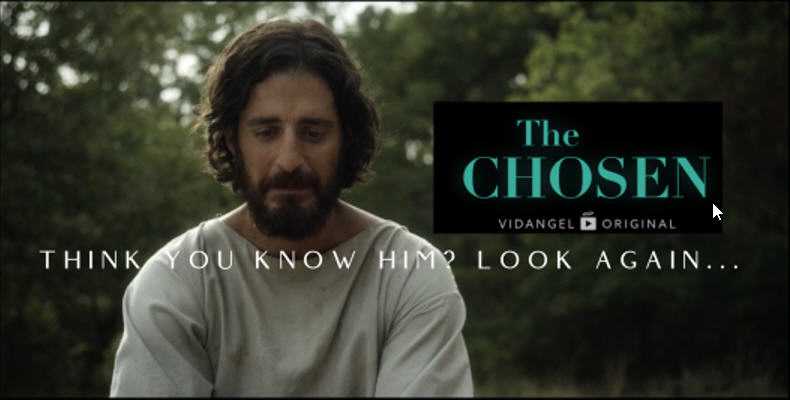
    Nellie and I stumbled onto a new TV series that we are really enjoying. It’s made us laugh, think, and feel. It’s called The Chosen and is based on the life of Jesus Christ, but it’s not like any Jesus series I’ve seen before.

    Now I have to admit that when I first saw ads for this, I wasn’t interested. It’s not that I don’t like videos about scriptures. There are some I love. It’s just that the purpose of so many of them is to illustrate a scripture instead of tell a story. And there’s nothing wrong with that. It’s just that when I’m looking for a drama, I want to watch a drama.

    But this series is different. They have taken a historical fiction approach, which means that while they adhere as closely to the facts as we know them, they don’t limit the story to those facts. And so they imagine people, events, and motives that are plausible, and then tell a story. A great example of this type of storytelling is Gerald N. Lund’s bestselling The Work and The Glory series about a family in the early 1800s who join The Church of Jesus Christ of Latter-day Saints. Or Michael Shaara’s bestselling The Killer Angels about the battle of Gettysburg in the United States Civil War.

    The Chosen focuses on stories about characters surrounding Jesus and those who plausibly could have met him. It also imagines Jesus as more than a sober Lord. He laughs, jokes, engages with children. It is a reimagining of the familiar that makes the story fresh again and leaves you wondering and pondering.

    It’s created by Dallas Jenkins, an evangelical Christian, and produced and distributed by VidAngel Studios, run by Latter-day Saints. And their love of and delight in the subject show. I can’t wait to see the next episode. You can watch it right now for free. Go to the VidAngel site or to https://studios.vidangel.com/the-chosen/. Or you can watch it on YouTube with ads.

    If you like religious fiction, if you like a good drama, if you’re interested in knowing more about the life and times of Jesus Christ, then I think you’ll love this.

    Share
  • Impeachment might not be what you think it is

    I’ve come to realize I didn’t understand the process of impeachment and the standards by which it is conducted. Here are a few key things I’m betting most of us didn’t know. Some of them will surprise you.  

    First, the process has three steps:

    1. The Congress starts an investigation, which can be conducted by any part of that body—the House, Senate, a special counsel, etc.
    2. The House leadership decides on whether to vote on “articles of impeachment.” The articles need only a simple majority to pass. If they do pass, the person is impeached. However, the articles of impeachment are not a conviction; they are a formal allegation of wrongdoing. The analog to this in the criminal justice system is an indictment.
    3. The Senate then holds a trial to decide if the allegations are true with both sides bringing witnesses, evidence, cross-examination, etc. The chief justice presides when the president is impeached. If two-thirds of the senators deem the allegations true, then the person is convicted and removed from office and may be barred from holding future positions. If the super majority isn’t reached, the person is acquitted of the charges.

    There are two big questions in all of this. First, what standard of proof is used for passing the articles and then convicting the person of the allegations?

    It appears that the standard of proof required for impeachment and conviction is left to the discretion of each individual representative and senator. There is no standard defined. So while some may use the standard of beyond a reasonable doubt, others may not.

    Second, what can someone be impeached for?

    According to the constitution they can be impeached for “Treason, Bribery, or other high Crimes and Misdemeanors.” However, the phrase “high Crimes and Misdemeanors” is not defined in the Constitution itself. 

    The most authoritative explanation of what “high crimes and misdemeanors” are appears to be a document written by the staff of the House Judiciary Committee. The latest version of this was written in 2015 and is called “Impeachment and Removal.”

    According to the Wikipedia article on impeachment, “While this document is only staff recommendation, as a practical matter, today it is probably the single most influential definition of “high Crimes and Misdemeanors.””

    A key take away from that house committee report is that not all crimes are impeachable offenses and not all impeachable offenses are crimes. So what are grounds for impeachment? Well, it’s a bit vague.

    In 1788, Alexander Hamilton argued in the Federalist Paper 65 that impeachment was for “the misconduct of public men, or in other words from the abuse or violation of some public trust.” The House Committee report expounds on that, including the following general grounds:

    • “Constitutional wrongs that subvert the structure of government, or undermine the integrity of office and even the Constitution itself”
    • “Abuse of the particular powers of government office or a violation of the “public trust””

    The report goes on to say the following.

    “Congressional materials have cautioned that the grounds for impeachment “do not all fit neatly and logically into categories” because the remedy of impeachment is intended to “reach a broad variety of conduct by officers that is both serious and incompatible with the duties of the office.” Nonetheless, congressional precedents reflect three broad types of conduct thought to constitute grounds for impeachment, although they should not be understood as exhaustive or binding: (1) improperly exceeding or abusing the powers of the office; (2) behavior incompatible with the function and purpose of the office; and (3) misusing the office for an improper purpose or for personal gain.”

    But the report doesn’t give much definition beyond this, just a few examples of what individuals have been impeached for since the founding of the country. What does all of this mean?

    I think the Wikipedia article sums it up well.

    “Several commentators have suggested that Congress alone may decide for itself what constitutes a “high Crime or Misdemeanor”, especially since the Supreme Court decided in Nixon v. United States that it did not have the authority to determine whether the Senate properly “tried” a defendant. In 1970, then-House Minority Leader Gerald R. Ford defined the criterion as he saw it: “An impeachable offense is whatever a majority of the House of Representatives considers it to be at a given moment in history.””

    Impeachment is a political remedy, not a criminal justice or civil justice one. And given the vague definition of grounds for impeachment and the lack of any required standard of proof, what this all means, unfortunately, is that the process, especially in our current climate, is going to be rife, not with objectivity, but partisan politics. On both sides. 

    Here’s more for the curious.

    Share
  • Good Stuff! La Brea, Bingham’s, Aggie Lemon Custard

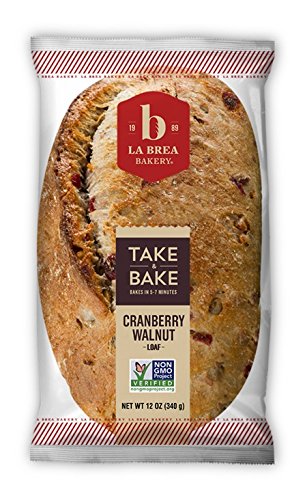
    I have cut my consumption of bread to almost nothing. And so when I want a slice, I’m not going to waste it on run-of-the-mill sandwich bread. I want something delicious. And the best bread we’ve found is the La Brea Bakery bread that’s sold at Smith’s and other Kroger food stores.

    Our favorites are the cranberry walnut loaf, the toasted sunflower honey loaf, and the pecan raisin loaf. These breads are made the old-fashioned way with a substantial crumb and a crackly, chewy crust that’s a joy to eat. And unlike the bread from a chain bread company that will remain unnamed, these loaves are actually fully cooked.

    We just got two loaves today on our trip to Logan. We came back home, cut a few slices, popped them in the toaster, buttered, and ate with some chicken noodle soup. Pure bread heaven.

    #

    With that bread you might want some bratwurst. Not grocery store brats. Real brats. If so, I found the spot to get them (thank you, Larry Correia). There’s a gem of a butcher’s shop in Morgan, Utah called Bingham’s Custom Meats. It’s clean, well-lit, and nice-smelling. The people there are friendly. And they have over thirty different flavors of brats.

    Bratwurst, by the way, comes from German. It’s made up of two words. “Brat,” which means finely chopped meat, and “wurst,” which means sausage. At Bingham’s they don’t add nitrates or any other preservatives. Their recipes are pork mixed with various sets of spices.

    So far I’ve tried nine of their flavors, and they’ve all been delicious. They’re great for a low-carb diet. A Bingham’s brat and a bunch of cooked vegetables makes an awesome lunch. If you want, you can also just slit the casing and cook the sausage patty or stir fry style.

    #

    I’ve also cut my consumption of sweets. Which means if I eat something, I want it to be worth it. And so it gives me great pleasure to report my discovery of a wonderful flavor of Aggie ice cream at the USU Creamery—it’s called lemon custard.

    I know. Lemon ice cream?

    And when I say ice cream, I mean ice cream. This is not a sherbet. And let me tell you right now, this ice cream is amazing. It’s amazing all by itself. It’s amazing with a banana, which they sell at the creamery. Furthermore, for a little fun, if you combine it with the regular Aggie chocolate, the two together taste like a Tootsie Roll. No lie.

    I had it last month, and the month before, and I can’t wait for another date with the wife to go enjoy another scoop.

    Share
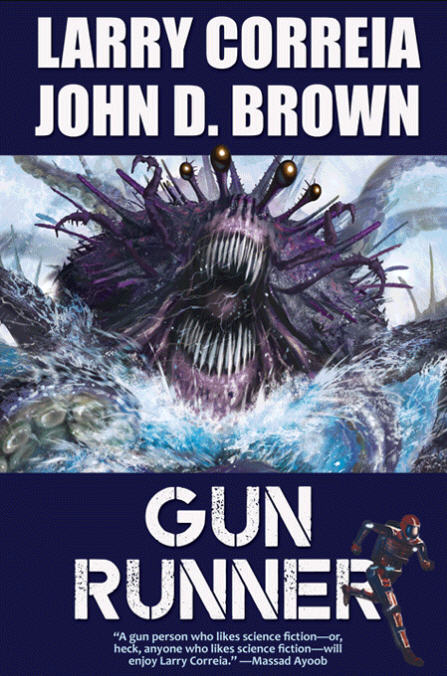
  • Gun Runner is out today!

    Gun Runner on Amazon! Order here!
    Autographed copies available from Uncle Hugo’s here!
    Podcast discussion with the authors here!

    The is 100% Brown and Correia, which means it’s action-packed, full of fun characters, and none of that navel gazing business.

    It’s about a guy named Jackson Rook who works on a crew that smuggles weapons. They’re active in a righteous cause, helping the oppressed peoples of various planets stand up for themselves against the whoresons with the money and power.

    But then Jackson learns something about the current job that turns his gut. And he begins to think they might just be working for the wrong team.

    Will he be able to set things right when just about everybody and everything on the godforsaken planet called Swindle wants to kill him or turn him back into the monster he once was?

    Read to find out.

    If you like action and science fiction, I think you’re going to love this book.

    Share
  • No, You Did Not Get a Mandate

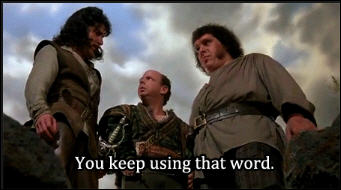
    “Mandate” is one of the stupidest words used in politics today.
    You keep using that word

    A mandate is an order, a command from the boss. A requirement.

    Some restaurant owners mandate their employees wash their hands after using the bathroom. I personally like restaurant owners who mandate that.

    States mandate that people who drive cars have car insurance. I like that mandate as well.

    But do political representatives receive mandates?

    When a politician wins an election, does he or she receive a mandate from the people?

    For example, when Obama spanked John McCain in 2008, and the Democrats swept into power, did they have a mandate from the American people to enact certain legislation?

    Obama had 52.9% of the voters behind him. McCain had 45.7% of them.

    Many Democrats at the time claimed a mandate from “the American people.” But if you know some elementary school maths, you’ll quickly recognize that 52.9% is nowhere close to 100%. Or 90%. Or even 70%.

    52.9% is close to, well, 50%. That’s half. As in half a pizza. Here’s a visual for the maths-impaired.

    Half a pizza

    Clearly, 52.9% is nowhere close to “the American people” or “voters.”

    But this was lost on politicians who had the brain capacities of gerbils. They thought the elections magically evaporated the will of 45.7% of the people. They though the other half had suddenly disappeared. They thought government by and for the people meant government by and for half the people.

    Hold on, John. In the Senate, Democrats won 57 seats, Republicans 41. In the House it was 257 to 178, or 59% to 41%.

    Yeah, like I said. About half.

    But such maths were beyond them. And so they began to push through legislation that only half the country wanted. Sometimes much less than half, as in the case of Obamacare.

    They weren’t governing America. They weren’t leading America. They were leading half and oppressing the other half because they had “won the election.”

    So, my fellow Americans, should winning an election give you the right to force something onto the other half of the populace they don’t want?

    Is this what America is all about? Is that the freedom from tyranny we celebrate every fourth of July?

    The Republicans won a great victory in this year’s election, taking back the Senate and expanding their seats in the House. In the Senate, it will probably be 53 to 45. In the House, 244 to 184.

    But does this mean the American people have clearly given them a mandate to enact certain legislation? Does it mean they’re supposed to ignore the other half of the country and ram legislation down their throats they don’t agree with?

    I’m a true blue conservative. Or true red, or whatever the color is. After the last six years, I never want to have legislation rammed down my throat again. And I’ve also come to the realization that I never want to do that to the other guy.

    America hasn’t given the Republicans a mandate. Nor, as President Obama recently claimed, have they given Washington a mandate to “get stuff done.”

    Getting stuff done is exactly the problem.

    We don’t want you to get stuff done.

    We want you to get stuff done that the vast majority of us agree on!

    But, John, does that mean you want us to compromise on our principles?

    No. I don’t want to compromise. I’m not interested in going along to get along. But I’m also not interested in a representative government that fails to represent HALF of us.

    Here’s my proposal. Let’s go back and start over.

    Let’s get rid of Obamacare and put something in its place that at least 60-65% of us can agree on. Maybe 70% of us. It won’t be a liberal weed dream. It won’t be a right wing vision of glory. But whatever gets enacted will be something all of us agree are good things.

    And it will force us to win others to our way of thinking if we want to get the rest of the stuff we think is so splendid.

    But, John, what if folks can’t agree?

    Then we don’t enact. This forces us to use persuasion. It forces is to think win-win. It forces us to behave like a nation that loves freedom.

    Immigration. Do we want an American where the president acts like a tyrant and forces something down half of our throats? Or do we want to enact something 65-70% of us can agree on?

    The budget. Let’s roll back all the nonsense and get a spending plan that 65-70% of us can agree on.

    What about the 30%? I don’t want to oppress them, but 100% ain’t never gonna happen. Let’s be practical. Besides, requiring a large majority means Washington will be at least by and for most of the people. And that’s better than what we have today.

    So, do we have a mandate? If anything, I would hope the mandate would be to do stuff that represents America, not one party.

    Edit 11/10/2014

    And today I find this–an explicit example of the gerbil-brain thinking I reference above. This fine fellow is one of the architects of Obamacare, explaining that the law was written in a way to bamboozle the American voter. What we need in Washington is honest debate and persuasion. Not duplicity and lies. I’m appalled. This is the get-stuff-done-I-have-a-mandate mentality. Not the get stuff done that most of us agree on approach. These folks have completely misunderstood the purpose of government.

    Share
  • | |

    30 books you should read before you die

    An avid reader friend of mine began reading through the books in a list called “100 books you must read before you die.”

    She got to Jack Kerouac’s On The Road and went to Facebook and posted the following: “I don’t get the appeal. It’s about a group of boys/men who are irresponsible, drunks, whoring around taking advantage of others and being enabled by their women. Why is this a classic and why should I have wasted my time on it? Can some of my literary friends explain? I hated a brave new world and the handmaid’s tale too.”

    Is the book a classic?

    Should she read it before she dies?

    Is it really that important?

    Let me share an edited version of my response and then provide my list of 30 books you should read before you die.

    *

    Annette, the unfortunate truth is that these lists of “classics” are a sham because there is no objective criteria for determining literary excellence.

    Or maybe I should say that measuring quality in the arts isn’t like measuring the unambiguous, objective score of a baseball game. After books exhibit a certain level of proficiency, it becomes increasingly difficult to distinguish the quality of one book from another, especially because much of this depends on a reader’s interests and subjective experience of the story.

    When it becomes hard to rank performances, people rely on other measures. One of the most powerful is social networks.

    So if two readers find two different books that blow them away, one of the books might get all the attention because the one book gets picked up by a news service (The New York Times) or a platform (the Oprah Book Club effect) or some other social network of influence. A lot of the so-called literary classics only appear on various lists because they tapped into the academic network, which kept them alive far longer than they would have lasted otherwise.

    On The Road is simply a book that made a stir among some circles in the 1950s. That’s it.

    Was it more important or of higher quality than Exodus? The Chronicles of Narnia? Lord of the Rings? A Town Like Alice? All published in the 1950s as well.

    It depends.

    If you’re wanting to understand the 1950s beat culture, it would be an important book.

    But if you’re wanting to understand fantasy writing of the time, it wouldn’t.

    If you’re wanting to read a book that’s had a huge impact on popular culture, well, LOTR beats On The Road like a dog.

    Some people have the feeling that the so-called classics have some inherent medicinal value because someone put them on a list and called them classics.

    Nope. They’re just stories. Some of which can shed light on the issues and interests of a part of the culture in a given period. But if you’re not interested in that specific sub-culture, who cares?

    And if you’re reading to be entertained, moved, uplifted, or educated—which ones do that best for Annette is for you to decide.

    So all that to say I wouldn’t devalue your reaction to the book ?

    *

    I’m now going to give you my list.

    But it’s not going to be a list of titles. Nor will it focus on a book’s impact on some sub-culture of a given period.

    It’s going to be a real list. One that focuses on what so many of us go to stories for.

    1. The one that makes you weep.
    2. The one that makes you giggle and snort.
    3. The one that reminds you of what it’s like to fall in love.
    4. The one that gives you hope.
    5. The one that you begin to read more and more slowly because you don’t want it to end.
    6. The one that scares the soup out of you.
    7. The one that you can’t put down, even though you need to wake up early in the morning.
    8. The one that makes you wish you lived there.
    9. The one that’s so good that when you close it, you immediately start to read it a second time.
    10. The one that gives you and your child hours of pleasure together.
    11. The one that gives you a sacred, spiritual experience.
    12. The one that makes you reread some of the lines because the turns of phrase are just so delicious.
    13. The one that gives you courage.
    14. The one that takes you on an awesome adventure.
    15. The one that makes you want to be a better person.
    16. The one that bores you to tears (just so know you how good the others are).
    17. The one that introduces you to a different culture that delights you.
    18. The one that makes you think.
    19. The one that lingers with you for days.
    20. The one that gives you lovely insights.
    21. The one that inspires you to love your spouse more.
    22. The one that introduces you to the sorts of people you normally don’t like and makes you actually like them.
    23. The one that delights you with its characters.
    24. The one that whisks you away to a different historical period.
    25. The one that inspires you to give your children a hug.
    26. The one that gets your adrenaline pumping.
    27. The one that sparks all sorts of ideas in your head.
    28. The one that makes you wonder and start imagining what it would be like to be there.
    29. The one that blows your freaking mind.
    30. The one that makes you stand up in your living room and cheer.

    We could do more than 30, couldn’t we?

    Like the one that makes you think people from a different time period are just like us. And the one that makes you think people from that same period are completely alien.

    But I think we’ll stop. That there above is a list.

    Those are 30 books I think everyone will want to read before they die.

    Share