No, You Did Not Get a Mandate

“Mandate” is one of the stupidest words used in politics today.
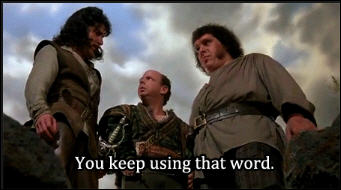
You keep using that word

A mandate is an order, a command from the boss. A requirement.

Some restaurant owners mandate their employees wash their hands after using the bathroom. I personally like restaurant owners who mandate that.

States mandate that people who drive cars have car insurance. I like that mandate as well.

But do political representatives receive mandates?

When a politician wins an election, does he or she receive a mandate from the people?

For example, when Obama spanked John McCain in 2008, and the Democrats swept into power, did they have a mandate from the American people to enact certain legislation?

Obama had 52.9% of the voters behind him. McCain had 45.7% of them.

Many Democrats at the time claimed a mandate from “the American people.” But if you know some elementary school maths, you’ll quickly recognize that 52.9% is nowhere close to 100%. Or 90%. Or even 70%.

52.9% is close to, well, 50%. That’s half. As in half a pizza. Here’s a visual for the maths-impaired.

Half a pizza

Clearly, 52.9% is nowhere close to “the American people” or “voters.”

But this was lost on politicians who had the brain capacities of gerbils. They thought the elections magically evaporated the will of 45.7% of the people. They though the other half had suddenly disappeared. They thought government by and for the people meant government by and for half the people.

Hold on, John. In the Senate, Democrats won 57 seats, Republicans 41. In the House it was 257 to 178, or 59% to 41%.

Yeah, like I said. About half.

But such maths were beyond them. And so they began to push through legislation that only half the country wanted. Sometimes much less than half, as in the case of Obamacare.

They weren’t governing America. They weren’t leading America. They were leading half and oppressing the other half because they had “won the election.”

So, my fellow Americans, should winning an election give you the right to force something onto the other half of the populace they don’t want?

Is this what America is all about? Is that the freedom from tyranny we celebrate every fourth of July?

The Republicans won a great victory in this year’s election, taking back the Senate and expanding their seats in the House. In the Senate, it will probably be 53 to 45. In the House, 244 to 184.

But does this mean the American people have clearly given them a mandate to enact certain legislation? Does it mean they’re supposed to ignore the other half of the country and ram legislation down their throats they don’t agree with?

I’m a true blue conservative. Or true red, or whatever the color is. After the last six years, I never want to have legislation rammed down my throat again. And I’ve also come to the realization that I never want to do that to the other guy.

America hasn’t given the Republicans a mandate. Nor, as President Obama recently claimed, have they given Washington a mandate to “get stuff done.”

Getting stuff done is exactly the problem.

We don’t want you to get stuff done.

We want you to get stuff done that the vast majority of us agree on!

But, John, does that mean you want us to compromise on our principles?

No. I don’t want to compromise. I’m not interested in going along to get along. But I’m also not interested in a representative government that fails to represent HALF of us.

Here’s my proposal. Let’s go back and start over.

Let’s get rid of Obamacare and put something in its place that at least 60-65% of us can agree on. Maybe 70% of us. It won’t be a liberal weed dream. It won’t be a right wing vision of glory. But whatever gets enacted will be something all of us agree are good things.

And it will force us to win others to our way of thinking if we want to get the rest of the stuff we think is so splendid.

But, John, what if folks can’t agree?

Then we don’t enact. This forces us to use persuasion. It forces is to think win-win. It forces us to behave like a nation that loves freedom.

Immigration. Do we want an American where the president acts like a tyrant and forces something down half of our throats? Or do we want to enact something 65-70% of us can agree on?

The budget. Let’s roll back all the nonsense and get a spending plan that 65-70% of us can agree on.

What about the 30%? I don’t want to oppress them, but 100% ain’t never gonna happen. Let’s be practical. Besides, requiring a large majority means Washington will be at least by and for most of the people. And that’s better than what we have today.

So, do we have a mandate? If anything, I would hope the mandate would be to do stuff that represents America, not one party.

Edit 11/10/2014

And today I find this–an explicit example of the gerbil-brain thinking I reference above. This fine fellow is one of the architects of Obamacare, explaining that the law was written in a way to bamboozle the American voter. What we need in Washington is honest debate and persuasion. Not duplicity and lies. I’m appalled. This is the get-stuff-done-I-have-a-mandate mentality. Not the get stuff done that most of us agree on approach. These folks have completely misunderstood the purpose of government.


Share

Similar Posts

  • Good Stuff! A clear-eyed view of the Founders

    When it comes to politics, we frequently talk twice as much as we should and listen half as much as is deserved. With our mouths open so much of the time, we fail to get the facts. And this often leads us to paint things in hyperbolic black or white.

    One area where we seem to do this regularly is with the Founding Fathers. Depending on our side, we label the Founders as devils or demigods and the constitution as a wicked document or holy writ.

    Is it possible both sides are distorting the truth?

    Joseph Ellis, one of the nation’s foremost scholars of American history, suggests that we are. He has written an excellent article for the online Encyclopedia Britannica called “Founding Fathers” that points out both the amazing things the Founders achieved with the birth of this nation and some of their most egregious failures.

    I don’t know about you, but I find clarity a good thing. I think it helps us have more productive conversations. If you agree with me, I think you’ll enjoy the clarity Ellis brings to the Founders and the nation they set up. Read his article here.

    For my part, I think the Founders set up an awesome system. Not because it was perfect at birth, but because it was a system that got enough right to allow us to get where we are today. Look at how far we’ve come on so many fronts! And it got enough right to allow us as a nation to get even better in the future.

    Just consider what the Founders implemented that was in no government at that time. The ideals of individual liberty, the separation of powers, the ability for a huge swath of citizens to elect their leaders, the ability to change the constitution itself, the separation of church and state, and the engine of democratic capitalism that has lifted more people out of poverty than anything else the world has seen.

    The Framers didn’t create the Constitution in a vacuum, but nowhere in the world had anyone set anything up that went so far. There was nothing like it, no real examples to follow. And many thought it would fail, just as France’s attempt in their revolution failed just a few years later.

    As for things they got wrong. Well, they themselves soon recognized the way we elect the president and vice president didn’t work and adjusted it. Their idea that political parties wouldn’t form was wrong. Their idea of a militia for common defense didn’t work (see my writeup here). Their compromise on slavery was a festering sore that came to a head before the Union was 100 years old. Their treatment of the Indians was awful. Their reasons for excluding women and those not owning land was bone-headed.

    So, yes, they got some things wrong. Some of them held some beliefs that we find appalling today. And the nation has not implemented their stated ideals as well as we might have hoped. However, the Founders got so many things right. And what’s more, they did it as men living in the times they lived, having grown up with the beliefs and values of that time, not those of 2019!

    While we as a nation have progressed from some of their failures (thank heavens), in other ways the Founders may be are our betters. There are a great many lessons to learn from them, both from their successes and failures. One is their humility—they knew what they’d created wasn’t perfect. Let’s not imagine that we or our ideas are perfect either.

    If you’re at all interested in politics, I recommend Ellis’s article and its view of the Founders. Read it article here.

    Share
  • Why I think the 10,000 hour idea is bogus

    Here’s the idea popularized by Malcolm Gladwell in Outliers and Geoff Colvin in Talent is Overrated: put in 10,000 hours of deliberate practice (as opposed to mindless practice) into the area of your choice, and you will succeed. 10,000 hours is more important than anything else.

    10,000 hours.

    The idea that deliberate practice makes perfect and leads to success seems to make a lot of sense.

    Except I don’t think the data holds up.

    First, there’s a huge survivorship bias in the 10,000 hour idea.

    Both Gladwell and Colvin based their stuff on Anders Ericsson’s research. I contacted Mr. Ericsson and asked him if there were any studies that weren’t correlational. Any that took similar groups of schlubs and showed that deliberate practice is what took them to elite levels of performance.

    He said no there weren’t, but graciously sent me some files to help. Here’s the money quote in those files:

    “The main focus of deliberate practice was to explain individual differences among those individuals who had had access to all necessary training and practice opportunities. I proposed those factors which could explain the performance differences within groups of expert musicians who had accumulated over ten years of instruction and mentoring by skilled teachers.”

    These were not studies designed to look at those who became elite and those that didn’t and figure out what made the difference. All he did was look at performance differences between experts. Which means there are huge issues using his research to make claims about what leads to expertise.

    Big issue one: he has no idea what kind of practice any of these folks had before he met with them. It’s all self-reported. There were no controls to verify the amounts of “deliberate” practice the musicians had in the long years up to the time he studied them.

    Big issue two (and just as important): he’s looking at experts. It’s all after-the-fact.

    He took a bunch of successful people and looked at their current work habits and speculated about their reports of earlier practice. Hum, they’ve put in a lot of hours. And these guys doing better seem to be doing a specific type of practice. But he did NOT look at a cohort of people who all started out at the same time, track their progress, and then identify factors that made the difference between those who became elite, those who became so-so, and those who ended up in the mud pit.

    But somehow his stuff got twisted into the idea that if you’re starting out and just put in 10,000 hours of deliberate practice, you’ll be successful just like those big guys!

    Big issue three. Ericsson did not study, and Gladwell and Colvin do not address, the factor of early success. Especially in writing and other tournament-style endeavors where rejection plays a huge role.

    So many people quit because the effort is not worth the reward. What you have left then are a bunch of people who persevered, but was it the hours they put in that led them to the top? Or did they have a lot of hours because they hung in there?

    And did they hang in because they had early success?

    And did they have early success because of luck or some natural aptitude or advantage like birthday that seems to factor so heavily in Canadian hockey (I think Gladwell talked about that in the same book–right birth date means you’re older compared to the other kids and therefore seem to have “talent” when it’s just a few months more physical development, which makes a big difference when you’re young) or some parent who had expertise and gave them a leg up against the other kids in their cohort?

    You see the effect of success in reading. My wife works as a 7th and 8th grade language arts teacher. The studies have shown that kids, in general, need to have about 94% comprehension rate to stick with reading. Below that they start to feel failure, get frustrated, and quit. In most cases, reading a super hard book will decrease motivation. Which then leads to less practice. And less skill. They’ve found that kids will work down around an 89% comprehension rate, a struggling range, if they have support. Below that the failure rate leads them to self select out of reading.

    Where in all these studies was self-selection included? Nowhere. Motivation, early success, quitting: disregarding those is a huge oversight.

    And all of these issues are compounded, especially for artists buying into the 10,000 hour idea, by the fact that even if you do get some skillz, that’s a completely separate thing from being noticed.

    Duncan Watts did a fascinating study about cumulative advantage reported in the NY Times here: http://www.nytimes.com/2007/04/15/magazine/15wwlnidealab.t.html?_r=0

    Basically he took a bunch of songs with varying quality and wanted to see how social influence (download counts) affected which songs rose to the top. He put the same set of songs in 8 discrete and separate online environments to see which songs would be most popular. His finding:

    “In all the social-influence worlds, the most popular songs were much more popular (and the least popular songs were less popular) than in the independent condition. At the same time, however, the particular songs that became hits were different in different worlds, just as cumulative-advantage theory would predict. Introducing social influence into human decision making, in other words, didn’t just make the hits bigger; it also made them more unpredictable. . .

    . . . When we added up downloads across all eight social-influence worlds, “good” songs had higher market share, on average, than “bad” ones. But the impact of a listener’s own reactions is easily overwhelmed by his or her reactions to others.”

    So even if your stuff is good, that does not mean it will be popular.

    And when you meet failure after failure after failure . . .

    You’ve got to practice well to get better, to offer more awesome gifts. But you’re not going to practice without the motivation. Motivation is the KEY to learning. And early success is a key part to motivation.

    Another piece of data that seems to belie the 10,000 hour claim is that when you do some simple math and look at surveys of writers breaking in, 10,000 hours starts to look very odd indeed.

    Let’s say you’re a poopy-slow writer and can only get 250 words in per hour. In 10,000 hours will you have written 2.5 million words or about twenty-five 100k novels.

    25 novels?

    Hey, you say, you can’t be typing the whole time.

    Okay, let’s be super conservative with these numbers. What if you spend about half that 10,000 hours writing and the other editing and doing pre-draft work? That’s still 12.5 finished novels.

    That sounds like Brandon Sanderson. Except it’s not. Remember, he sold number 5 or 6.

    Furthermore, the problem is that from all the surveys I’ve seen, writers who break into the old traditional publishing system aren’t averaging 12.5 novels. They aren’t averaging 5 or 6. They’re averaging 3-4, with a lot selling their first or second.

    Hello, Stephenie Meyer and JK Rowling. And a lot of indie authors.

    Jim Hines reports from a survey of authors he conducted:

    “I also asked how many books people had written before they sold one to a major publisher. The average was between three and four. Median was two. I was surprised, however, to see that the mode was zero. 58 authors sold the first novel they wrote.” More at: http://www.jimchines.com/2010/03/novel-survey-results-part-ii/

    10,000 hours? A million words?

    I don’t think so.

    Gladwell scoffs at this 10,000-hours-will-make-you-a-success reading of his original writings on the matter: http://www.newyorker.com/online/blogs/sportingscene/2013/08/psychology-ten-thousand-hour-rule-complexity.html.

    But this is precisely the message so many have taken from the studies. Just put in the time and you’ll become great because the practice is more important than any natural aptitude . . . or early success.

    I don’t think it is.

    John, what in the Sam Hill are you doing? Trying to depress everyone and tell them they can’t succeed?

    No.

    What I’m saying is that we must practice and improve our craft. That’s a given. But we cannot expect that alone to make us successful. Especially not as artists. We can’t expect that 10,000 alone will make our work super popular.

    Working hard WILL increase the probability of success (what’s that saying?–the harder I work, the luckier I get).  But as writers we’ve got to realize that there’s no guarantee of popularity. Or even expertise.

    So what are we left with?

    Nothing, and maybe everything. Because there is passion. There is sharing. And if you can tap into that and rejoice in the sharing that does occur, it might well be the best reward. Bricks of gold in the basement and your name on everyone’s lips must be awesome. But a memory of walking a number of afternoons with a daughter in the hills and telling (sharing) a fine tale to that audience of one might just be worth more than all the gold bricks in China.

    (Yes China, not Fort Knox. You didn’t hear?–we had to ship everything over before we could get another loan.)

    The bottom line is this: there’s no guarantee of success. Not even with 10,000 hours.

    Share
  • No Apology: Chapter 1 – The Pursuit of the Difficult

    WE MUST FACE OUR CHALLENGES OR DIMINISH

    Romney starts the chapter with a quote his dad used to recite to him: “the pursuit of the difficult makes men strong.” Romney states that over the years, he’s come to believe that this idea applies to more than individuals—it applies to businesses and nations as well.

    He maintains that America has always faced great challenges. He cites a few examples from America’s history and states that there really hasn’t been a time when we were free of challenges. It seemed, after Reagan and Bush had presided over the fall of the Soviet Union, many thought “peace and prosperity were here to stay—without threat, without sacrifice.” Of course, that proved untrue.

    America has faced great challenges in the past and faces huge challenges now. He believes we will “remain the leading nation in the world only if we face our challenges head on.” If we do not face and overcome them, we will become “the France—still a great country, but no longer the world’s leading nation.”

    The question is: what’s so bad about that?

    The answer is that some other nation or nations would fill the power vacuum. Romney poses the fundamental question: “what nation or nations would rise, and what would be the consequences for our safety, freedom, and prosperity?”

    FOUR GLOBAL STRATEGIES FOR WORLD POWER

    Romney suggests that there are a number of nations and groups who are “intent on replacing America as the world’s political, economic, and military leader.” He states that there are, in fact, “four major strategies currently being pursued to achieve world leadership.”

    The first global strategy to achieve world power is the one represented by the United States. It is a strategy based on two fundamental principles: economic freedom and political freedom. Those nations that follow this strategy have become economic powerhouses and account for more than 60% of the world’s GDP. They are also the countries who have given humankind the most freedom.

    The second global strategy is the one pursued by China. Its fundamental principles are free enterprise and authoritarian rule. He spends a couple of pages discussing how well Chinese enterprise is doing. Then he believes China is intent on becoming stronger than the United States.

    The third main global strategy is the one pursued by Russia. It’s fundamental principles are authoritarian rule and controlling energy. “By controlling people and energy, Russia aims to reassert itself as a global superpower.” He then explains how this could be possible.

    The fourth main strategy for global power is the one pursued by the violent jihadists, who count many foreign leaders in their numbers. Their strategy is based on conquest and compulsion through a variety of tactical means.

    Of these four strategies in competition today only one is founded on freedom. Romney then suggests that we can be confident that our children and grandchildren will be free ONLY IF the economic and military strength of America and the West endure. He suggests that our superpower status is not inevitable. “Three other global strategies, each pursued by at least one state or major actor, are aggressively being pursued to surpass us, and in some cases, to suppress us. The proponents of each are convinced they will succeed. And world history offers us no encouragement.”

    Because of this, he believes that “our primary objective as a nation must be to keep America strong. I am convinced that every policy, every political initiative, every new law or regulation should be evaluated in large measure by whether it makes us stronger or weaker” because “our freedom, security, and prosperity are at stake.”

    OBAMA’S DRAMATIC SHIFT IN FOREIGN POLICY

    Romney next maintains that president Obama has introduced a foreign policy that “is a rupture with some of the key assumptions that have undergirded more than six decades of American foreign policy.”

    He states that when World War 2 ended, America executed a “dramatic and profoundly meaningful shift in our relationship with the rest of the world.” Previously we had guarded our own hemisphere and attempted to stay isolated from the affairs of Europe and Asia. But we found with WW1 and WW2 that “our vital interests could not be secure in the face of threats to the cause of freedom elsewhere. At the dawn of the nuclear age, a third world war was unthinkable; it would mean the destruction of humankind.” So the president and leaders of both parties “shifted America’s foreign policy. America took on the task of anticipating, containing, and eventually defeating threats to the progress of freedom in the belief that actively protecting others was the best way to protect ourselves.”

    This new order had three main pillars:

    1. “Active involvement and participation in world affairs”
    2. “Active promotion of American and Western values including democracy, free enterprise, and human rights”
    3. “A collective security umbrella for America and her allies”

    He talks about how all the presidents, Democrat and Republican, followed this new strategy. But President Obama is engineering a dramatic shift away from it based on his own underlying attitudes.

    Obama envisions an America that arbitrates disputes rather than advocate ideals. This is one of the reasons why he apologized to countries around the globe for American arrogance, trying to placate our enemies. This is also why it seems he has undercut many allies, including Israel, Poland, and Columbia. To be an arbitrator, you need to be equidistant from both sides. Not advocating for one or the other.

    Another one of Obama’s assumptions is that “America is in a state of inevitable decline.” He, therefore, considers it futile to fight it; instead, it’s his job to help us manage our decline. Romney suggests Obama believes maintaining a dominant America is “a bad idea even if it were possible.”

    Of course, Romney fundamentally disagrees with that assessment.

    GETTING BACK ON TRACK

    Romney suggests several things we can do to get back on track:

    • Treat our allies like allies
    • Strengthen the American economy
    • Increase our defense spending
    • Remind ourselves that the most attractive thing about us is our ideas—so we should “encourage democracy where we can, give aid and comfort to those who want it, and not undermine those who already have it”

    Undergirding all of this, Romney suggests, “must be a certain conception of the goodness and greatness of America.” This “doesn’t mean America is a perfect country. We have made mistakes and committed grave offenses over the centuries.” But we should recognize that “No nation has shed more blood for more noble causes than the United States. Its beneficence and benevolence are unmatched by any nation on earth, and by any nation in history.”

    Romney concludes by saying that he believes America is “destined to remain as it has been since the birth of the Republic—the brightest hope of the world” but only IF we face our challenges head on and work to keep America strong.

    MY RANDOM COMMENTS

    First, I don’t know if I’m going to have the time to capture each chapter in such detail. We’ll see.

    Second, I found the discussion of the four strategies insightful. Particularly because it put in explained a number of questions I had about why Putin’s Russia does what it does. It also gave me insight into China, which I thought was still mostly economically socialistic.

    I found the explanation of America’s shift in foreign policy in the 20th century interesting. As well as the shift Obama has made. I think I need to understand Obama better. Does he really think this? The actions and speeches Romney cites certainly are suggestive. Has anyone seen the movie 2016? It sounds similar.

    It might appear the book will continue allocating space for attacking Obama, but I believe the six pages in this thirty-page chapter form probably the biggest appearance Obama makes in the book.

    It’s clear that Romney’s business experience, especially as a consultant, has influenced how he sees things. The whole talk of strategy and challenges and competition reminds me of Michael Porter.

    Porter is a Harvard professor and founder of Monitor, a strategy consulting firm that has been hired by corporations and countries. He is claimed to be the most cited author in business and economics. According to Wikipedia “He is generally recognized as the father of the modern strategy field, and his ideas are taught in virtually every business school in the world. His work has also re-defined thinking about competitiveness, economic development, economically distressed urban communities, environmental policy, and the role of corporations in society. . . his main academic objectives focus on how a firm or a region can build a competitive advantage and develop competitive strategy.”

    The idea that America is competing with other nations is, of course, true. But I don’t think I’ve ever heard anyone running for president claim that their central goal, the goal any president should have, is to keep America strong because of the competitive threats we face. The talk is usually all focused on this issue or that without the broader picture I found here. I found Romney’s central tenet clarifying and refreshing. The rest of the book is going to be about how to keep our competitive advantages and strength.

    Comments, observations, or issues from anyone who has read the chapter?

    Share
  • Good Stuff! Two books, a movie, and a dinner

    Are you ready for a story that’s heroic and inspirational? And poignant. And action-packed. And all true.

    I just finished Fearless: The Undaunted Courage and Ultimate Sacrifice of Navy SEAL Team SIX Operator Adam Brown by Eric Blehm. And wow. I can’t tell you how happy I am to have read this book.

    It tells the story of Adam Brown who was killed while on assignment in 2010. But this book isn’t about a special operations battle in Afghanistan, although the battle is detailed. It’s not a war book. Although it tells about many episodes in the life of a Navy SEAL operator. No, this book starts when Adam was a kid.

    It like the story of Louis Zamperini that’s told in Unbroken by Laurel Hillenbrand (and, yes,the film adaptation missed so much of the story, including the most important part,that if you haven’t read that book, you are missing out on an absolute treat). In this one, Brown starts out as a boy with bright promise, but after he graduates from high school, he makes a number of bad choices and drives his life right off a cliff.

    You’ll be flipping the pages to see what helps him turn it around and whether he can make the change permanent, or if he’ll lose everything, including the love of his wife and kids. You’ll also be amazed at his grit. It’s a tremendous read. If you can listen to it on audio, you’ll enjoy the narration by Paul Michael. Either way, if you like stories about redemption and triumph amidst struggle, if you like books about special operations forces and elite soldiers, then you’re going to love this book. Highly recommended.

    *

    The 12th Man is a 2017 World War 2 historical drama based on the true story of Jan Baalsrud. He and eleven other Norwegian resistance fighters set off from the UK on board a fishing boat with six to seven tons of TNT to sabotage some German military facilities.

    However, their mission falls apart soon after reaching Norway. A German warship attacks. The resistance fighters set fire to the TNT on their boat and jumped into the water just off shore. Eleven of the fighters are caught by the Germans. The twelfth, Jan Baalsrud, gets shot in the toe, but still runs across land and manages to elude immediate capture by swimming across the fjord, in the dark, in the freezing, winter water.

    Yeah, and that’s just the beginning. The story is about his attempt to get to the safety of Sweden, a neutral country. I watched this with my teenage daughter, and we were riveted with the suspense and action. And we were amazed at what this guy endured.

    You will have to read English subtitles during a large parts, but we found that after a few minutes, we really didn’t notice it. It was a great date night. If you like war movies and action, I think you’ll love this movie.

    *

    Tonight I ate a dish that instantly became one of my favorites. My oldest daughter and her husband found it. They love it and shared it with Nellie. And since it was her night to cook, she decided to give it a try. My first bite was wow.

    It’s a baked casserole, a cross between lasagna and spaghetti, called “MillionDollar Spaghetti” from tastesbetterfromscratch.com. Just click on the link the get the recipe.

    Now, here’s the thing: you can use spaghetti pasta, or you can make it totally low carb by replacing the pasta with cooked spaghetti squash like we did. The low carb version was awesome. I can’t wait to heat up the leftovers tomorrow.

    By the way, here’s a quick way to cook spaghetti squash.

    First, cut the squash in half lengthwise. The easiest and safest way I’ve found to do this is to place the uncooked squash on a cutting board. Next, get a big knife and set it along the line you want to cut. Finally, rap the spine of the blade smartly with a thick stick or long block of wood until the knife cuts through all the way. Using a knife this way is called batoning because you’re using a baton, a stick. It’s a slick and safe way to cut a hard squash.

    Once you have cut the squash in half, scrape out the seeds with a large spoon.

    Next, pour about a quarter cup of water into the hollow of the squash, and then turn the squash hollow-side down on a plate or microwave dish. Microwave the half on high for five to six minutes. It’s done when you can easily pierce the outside with a fork.

    Remove the plate with hot pads and use a fork to scrape out the cooked squash. Voila! Cooked spaghetti squash in less than 10 minutes.

    You can also just bake the halves in the oven for 40 minutes on 375 degrees. Baking gives the squash a slightly richer flavor. In this method, you brush the halves with olive oil and sprinkle with salt and pepper then put the sides face-down on a baking sheet. Again, it’s done when you can easily pierce the outside with a fork.

    *

    And here’s one more because it’s Christmas. I attended a young women’s meeting for my local congregation not too long ago. As part of the program, one of the leaders read a picture book called You Are Special by Max Lucado.

    It’s about these small wooden people called Wemmicks who stick gold stars or gray dots on one another. The pretty or talented ones always get stars. The others, like Punchinello, get the ugly gray dots. And then one day Punchinello finds a happy Wemmick that has no dots at all. In fact, no dots stick to her. How does she manage it?

    It’s a great little tale with an important insight. After hearing it, I knew I needed a copy of the book to read to all my grown up kids. 

    Share
  • |

    Science Fiction and Fantasy beat Thrillers?!

    “More than 50% of all traditionally-published book sales of any format in the US now happen on Amazon.com.”

    That’s just amazing. But I found something even more amazing this week.

    Author Earnings released a report this week of their analysis of a million titles on Amazon. Data Guy, the tech guy behind the software gathering the information and crunching it, posted this graph in the comments.

    Do you see the amazing thing?

    AE-2016-06-genre-units

    Well of course you do, I gave it away in the title of the blog. Science fiction and fantasy sell MORE units than thrillers.

    More.

    What?!

    For, like, ever I thought SFF was a tiny portion of the market. Not so, my friends.


    Some may say, well, but this only represents Amazon. What about the channels traditional publishers sell through? Author Earnings explains a way to account for that in their report. Basically just double the size of the purple and red bars. If you do that I think thrillers might just edge SFF out. But it doesn’t dwarf it by any means.

    Furthermore, for an indie author, I don’t worry about those other channels because they’re not really a viable option for me. My world is selling online. And the online market for SFF is the SECOND BIGGEST MARKET after Queen Romance.

    Oh, BTW, next book in the queue is volume 1 of Lord of Bones. It’s going to start with something like this.

    The four men did not leave. Instead, they spread out just a bit in shallow semi-circle in front of Blaze.

    Four of them. One of him. There was definitely going to be blood.

    “You don’t want to do this,” Blaze said.

    The big one drew his sword and swung it a bit to loosen his shoulders.  “Oh, but we do. Because you’re not handing over the blackmeal. And we’re not leaving without it.”

    No, he was not going to hand that over. Couldn’t. Not if he valued the lives of his wife and boy.

    Two of the others drew their swords. The fourth brought his staff up and laid it on his shoulder in a two-handed grip.

    The big one would be the obvious target to take first. But Blaze knew that would be a mistake. The big one was there just to focus his attention. To fix Blaze in place. And then the silent one would slice him up the side.

    The man with the skinny face said, “Old man, the vultures will be picking your eyes out before lunch.”

    Blaze said, “Well, if you’re so determined, let’s not keep them waiting.” And then he rocked forward.

    I’ve not forgotten the Dark God series. I will finish it, but I need to get this smaller volume of Lord of Bones out.

    Share
  • Good Stuff! TruContain, Johnny Walker, Great British Baking Show

    I love the sunny winters we get up at Bear Lake. I hate the snow that my car brings into the garage. Because the snow melts, and the water runs to the bottom corners of the garage and pools there, creating a huge mess until I get out there with my cement squeegee.

    Who wants to continually be moving crap in and out of the garage so you can squeegee it? And in the winter when it’s freezing?

    Not me.  

    For years I’ve wanted to do something about it, but what can you do after the concrete of your garage is poured?

    Well, this year, after the first big storm, I got sick and tired of traipsing through the water and mud and cleaning all that crap up. So I put my massive Google-fu skills to work. And, lo and behold, I discovered a product called TruContain.

    It’s a car mat for your garage. It’s made of thick vinyl and has raised edges.

    I bought one.

    The UPS man delivered it not many days later.

    The installation instructions were simple. Two steps. The perfect number for me to manage. Step one was to let it warm up in the house for twenty-four hours so it was easier to unroll. I did that. Step two was to unroll and position it in the garage where we park our car. That took about a minute. So far so good.

    No soon after the mat was deployed, we had another snow storm. The van went out for daily driving and came back with an undercarriage covered in ice and snow. We parked the van on the mat. The ice and snow melted. And the mat caught it and contained it.

    I was delighted.

    The next day the van went out for another day’s use and came back all covered in snow and ice again. The snow and ice melted, along with a bunch of dirt. And the mat caught it again!

    I was whooping for joy.

    I’m still whooping for joy because my garage is dry!

    If we get a lot of water on the mat, I’ll use the shop vac to suck it up. I took out five gallon of dirty, cold water the first time. Five gallons that would have flooded my garage! If there’s not too much water on the mat, I’ll drag the mat out with a helper and dump the water on the lawn.  

    I love my TruContain garage mat.

    If you have winter water mess in your garage, you’ll want to consider it. I got mine from the manufacturer garageflooringllc.com.  

    One word of advice. If you get one, don’t get one bigger than you need. If it’s too big, then the mat will stick out from the sides of the car, and when you go to step out, you’ll be stepping out into your mini garage lake.

    #

    I enjoy books about Army Rangers, Navy SEALS, Special Forces soldiers, etc.  Almost all of them are written from the point of view of the operators. But I just found and enjoyed one, not about the operators, but about a guy who helped them in Iraq.

    The book is called Code Name: Johnny Walker and was written by the guy the SEALs called Johnny Walker with the help of Jim DeFelice.

    Who is Johnny Walker?

    He was a resident of Mosul and was what they called a “terp”, an interpreter who went with the SEALs on their missions. He went on hundreds and hundreds of missions with them. And he offers a fascinating glimpse into what life was like in Iraq during the Iraq War for those Iraqis who helped the coalition forces.

    The SEALs appreciated his service. I know this because a host of them have blurbed his book. Furthermore, they helped him eventually immigrate to America. That’s how grateful they were for his service.

    If you like these types of books and would enjoy new insights, I think you’ll really enjoy the book. Johnny Walker does swear a bit. But I tend to take people as they are. And it was well worth time I spent listening to him.

    #

    For Christmas my daughter received a number of seasons of The Great British Baking Show. It’s a competition baking show. I’d heard about it before, but I’d seen episodes of American competition cooking shows and didn’t enjoy them at all.

    However, my daughter said this was nothing like the American shows, that it was awesome, and it was so awesome she wanted to the DVDs for Christmas so she could watch the episodes again. I needed to give it a try, she said. So I gave it a try.

    I’m happy to report that I and my family have are enjoying the heck out of her DVDs.

    The British folks that are competing in the challenges are down-to-earth and interesting. Some of them are funny. The tips about baking are interesting. And, best of all, the British show makers know how to create suspense.

    They start each season with a group of twelve amateur bakers. Two professional bakers give them a baking challenge with a time limit and then judge the bakes. After a series of three challenges, the pros name a star baker for that series and then also announce who was at the bottom of the pack and will be leaving the show. If you like cooking or have ever found yourself watching a cooking program all the way through, I think you’ll really enjoy these fun, British bakers.

    Share