James Maxey loved met and loved a woman named Laura. She told him she had breast cancer. He didn’t care. Later when the disease advanced, he offered to marry her. She turned him down, but not because she didn’t love him back. The disease progressed.
His posts about this experience are tender and poignant. When you read them you will rejoice. You will sorrow. And you will think about life.
He begins like this:
She was dying when I met her. We met through online personal ads, and she wrote me saying that she liked the philosophy I had sprinkled through my post. I don’t even recall what it said, really–something about finding humor and hope even in down times, I think. And she told me she’d been through some down times. She’d fought breast cancer, her husband had left her when she was diagnosed with the disease. This might send other people into a spiral of despair and self-pity that they could never pull out of. But, she hadn’t surrendered to her worries and woes. She bested them, and went on to live a terrific life. She had gotten a butterfly tattoo–it was her symbol of transformation. The time of her cancer and her divorce were when she had been drawn into her cocoon. But she’d emerged with wings.
Here are the five I would read. They’re short. So take some time. Savor them.
When you finish, you might then want receive a free book of his in exchange for a donation (of any size; yes, even for just one buck), to the Susan G. Komen Breast Cancer foundation. To make a donation vist his Books for Breast webpage.
Then live and love while the sun shines. And be glad.
Almost everyone reading this knows what they like in a car. We know what we want a car to do. We can talk about acceleration, voom-voom styling, and handling. Some of us could talk about how engines and transmissions and tires all work together to create those things. We could get really technical.
But how many of us could then go manufacture a tire? Or the paint we’re going to put on the car? How about a windshield?
No?
Well, what about one little bolt? Just a little bolt. Can you do it?
There’s a difference between knowing what a thing is supposed to do, how it works, and actually building it. A lot of people can talk about the first two topics and have no idea at all about the third.
It’s the same with stories.
There are three things we have to learn to write killer stories.
What a story is supposed to do.
How the 5 parts of story—character, setting, problem, plot, and text–do that
How to come up with and develop a story idea in the first place
We authors talk a lot about the second thing. You have books and blogs galore on dialogue, plot, characters, structure, grammar, world-building, setting—you name it. Heck, the big series I wrote last year about the key conditions for reader suspense was all about how story works.
Some of us talk about the first thing. And really there’s no point in blathering on about the how-to’s if we don’t know the what-for’s, which is why I tried to highlight one of the core what-for’s in my series on suspense.
But as important as those two things are, none of it matters if we don’t know how to put it to use. We’re not reviewers or editors. We’re creators. We’re writers—the ones that invent the story in the first place. And let me tell you, knowing how a story works and how to invent one are two very different things.
I didn’t know the principles of invention when I was first starting out. And that gap in my knowledge was one of the things that held me back for years. In fact, I almost gave up my dream of writing stories because of it.
Very early in my attempts to start a career I wrote a story that won an award and $2,000. I was flown out to Cocoa Beach, Florida for a week-long workshop with amazing pros. Was published. And then I went home, finished another story (yea!), and proceeded not be able to finish another thing for five years.
Five years.
FIVE. YEARS!
And I tried.
After five years of failure you begin to wonder if maybe you didn’t get the wrong memo (what am I doing at this empty warehouse?). Your family begins to wonder that as well. You realize life is short and there are a lot of other things you could be spending your time on. You begin to think that only an idiot would spend more time on this. And you’d probably be right.
Unless, of course, you realize that what’s keeping you back isn’t a manifestation of cosmic will. Rather, it’s just a lack of understanding.
That’s what happened in my case. Just a few days before I gave up on all my dreams, the light was turned on for me. I learned some key, but simple, principles of invention that I hadn’t known. You can read the whole story here. After I learned these principles, my production took off like a rocket.
And so what I want to do in this series is share those principles with you. Hopefully, this will unleash your abilities. You might find a huge audience for your stories. You might find only the family dog will stick around to listen to them. The popularity of your stories is a separate matter. But you can’t even find out how big your audience will be if you don’t know how to finish.
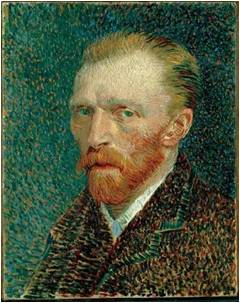
So let’s start. A lot of people think that creativity is about passion. When they think of creativity, they think of someone like this.
Look at him. Brushed velvet jacket. Beard. Rakish devil-may-care hair. And that gaze. Look at that gaze! It’s full of passion. It’s coming off him in waves. In fact, we all know his inner world is a vast tempestuous sea of passion that sends ideas crashing in great surges onto the rocky beaches of his soul. And those earthly forces cannot be contained. No, he must write them, write them, write them. That’s the face of a man who will channel fire onto the written page because if he didn’t, he would surely burn.
Or maybe not.
Maybe creativity is about being like this guy.
Hello, Malcolm Gladwell. Look at him. There are so many ideas in that great blaze of brains they trip over themselves trying to get out. There are so many they kinked his hair with their electric heat. Oh, fecund mind!
Or maybe not.
Maybe creativity is all a function of being blessed.
Or maybe it’s about alcohol (or some other chemical). After all, isn’t that how Ernest Hemmingway did it?
Booze Makes Ernie Reel Smart
Or it’s about being mentally unstable.
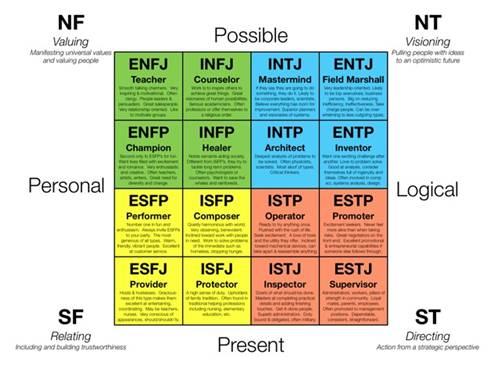
Or it’s about having the right personality type. I remember the day of woe when I learned that I was an ENFJ but that the “natural” writers were all ISFPs!
Alas, me being a blockhead was all scientific
Or it’s about being eccentric.
Patrick Rothfuss shows us the key is crazy beardage and an Alice in Wonderland chair
Or it’s none of that. It’s about being born to it.
I wrote my first novel when I was six
Right? All of those things are what creativity is about. And if, as so clearly demonstrated by those pictures, you don’t have passionate hair, well then, forget about it. Except here’s Larry Correia, a New York Times bestseller, who has no passionate hair whatsoever.
I keep guns in my basement
Huh?!
How could that be?
Here’s how. All those ideas above about creativity–they’re rubbish. Creativity has nothing to do with passion or hair or whether you wear Argyle socks.
Nothing.
Let me show you the face of creativity.
That is Warren Ellis. Warren is my brother-in-law, except when he’s not (do not ask me to explain this). One day our fridge started to drip. The freezer would cycle through its normal thawing, and all the water would drip down into the fridge and soak up our egg cartons and pool in the vegetable crispers. It was a mess.
We defrosted the freezer we weren’t supposed to ever have to defrost, but the problem persisted. So we called Warren because he fixes things.
Warren came to our house, looked the fridge over. He declared that the freezer’s drain tube was plugged. We thought up a few ideas for cleaning it out, none of which were any good, then Warren asked if we had an air compressor. We did and hauled it in.
Warren plugged it in, let it build up the pressure, and then held the compressor nozzle to the bottom end of the tube. The compressed air went in. The obstruction flew up and out and landed on the counter. The obstruction was a fat fly that had crawled in there, gotten stuck, and died.
We poured a quart of water into that freezer, and it all flowed down into the catch pan at the bottom. Warren fixed our freezer with an air compressor.
Folks, that is creativity.
What did Warren have? He didn’t have passionate hair; I can tell you that. No. He had an objective. He knew basically how fridges worked. And he came up with a couple of options to fix the issue.
Let’s look at another example. Here’s Ed Smylie.
Ed was like Warren. He ran into some problems. Actually, the astronauts in Apollo 13 ran into some problems. Ed was tasked to help solve them. One of those problems was the fact that the astronauts were running out of air.
Ed and the others designed the solution in two days. The ground crew relayed the instructions to the flight crew. The lunar module’s CO2 scrubbers started working again, saving the lives of the three astronauts on board. Of the experience, Ed said that he knew the problem was solvable when it was confirmed that duct tape was on the spacecraft. “I felt like we were home free”, he said. “One thing a Southern boy will never say is: I don’t think duct tape will fix it.”
Ed and his crew saved the day. The made a round peg fit into a square hole. How did he come up with such a creative solution?
Ed had an objective. He knew how the CO2 scrubbers and the shuttle worked. He knew about duct tape. He came up with options.
Let’s look at a few more examples of this. I know you’ve seen some of these.
That is creativity. So is this.
And this . . .
And this . . .
Or this, if you don’t need to go so fast . . .
Smaller size, for trolling
And this . . .
And this, which is officially called a Bumper Dumper . . .
Do you really want to dig?
These fine folks had a goal. They knew the basics of how things worked. They came up with some solutions.
That’s all there is to creativity. Three things. You need to have an idea of what you’re trying to do. You need to have a basic knowledge of how things work. And you have to know how to come up with some solutions to meet your objective.
Not so mystical, is it?
But I can hear some of you complaining. Writing is different. It’s a whole other world. It’s Fiction, which is so significant we must capitalize it. It’s passion. It IS mystical. This is a matter of the heart. It’s not a fridge or space ship or some dumb hotdog roast. You cannot compare these things.
Except I can because they’re the same. It doesn’t matter if you’re trying to invent a different recipe like the folks at Cook’s Illustrated, or decorate your house, or come up with a way to keep the squirrels out of your bird feeders, or make people weep in a movie theater.
What I’ve found is that when we have troubles coming up with ideas, we probably don’t know what our objectives are. Or we probably lack some understanding of how fiction works. Or we don’t know the principles of generating options.
And so we conclude it’s a mystery. It’s arcane lore.
But it just ain’t so. Can you create a redneck toilet? Then you can write a story.
Now, it’s true that a lot of people feel their way through this. They don’t know what they’re doing, but they do it. I did that. Remember: I won an award. But then I couldn’t repeat it. Couldn’t find that groove I’d stumbled into.
I don’t want to stumble around hoping to get lucky. I want to make a living at this. And if I’m going to make a living, I need to produce. Regularly. I can’t be bumbling around, hoping to create something by accident.
The good news is that we don’t have to create by accident. We can create on purpose. There are principles to invention. When we learn them, our productivity will shoot through the roof.
Finding a solution to Apollo 13’s issues might seem impossible to us. But they weren’t impossible to Ed Smylie because Ed had an objective; he knew how things worked up there; and knew how to come up with options.
My intent is that when you finish this series, you’ll know what Ed Smylie knew, except for stories.
No, I’m not coming out of any closet. I’m talking the annual Technology, Entertainment, Design (TED) forum. It started out (in 1984) as a conference bringing together people from those three worlds. Since then its scope has become ever broader.The annual conference now brings together the world’s most fascinating thinkers and doers, who are challenged to give the talk of their lives (in 18 minutes).
For example, here’s Richard Dawkins’ “Queerer than we can suppose: the strangeness of science.”
Or how about Howard Rheingold’s “Way-new collaboration”There is, if done well, very few things as stimulating as an excellent speech. Thank you TED for providing a way to revive this marvelous genre by sharing it on the internet.
Go to TED. But beware: you may end up unable to stop listening to one fascinating idea after another.
On Writing Excuses someone talked about writing an epic fantasy in a limerick. I figured I’d give it a go. Of course, it’s a slight cheat, but epic nevertheless.
A tiny man with a ring
Said I’ll save the world from this thing
He traveled to Mordor
But in very short order
Was trounced by the chatty bling bling
With the current financial “crisis” I kept wondering what went wrong. Read this article on the AIG mess from the guys at the Motley Fool. That explaination of the AIG mess is very interesting. The other part of this current financial mess, the loaning-of-money-to-people-who-were-idiotic-credit-risks and the making-me-foot-the-bill-for-someone-else’s-assumption-of-ridiculous-risk, those two parts torque me.
So why am I posting this in the Zing and Writers categories?
Because it IS zing to me. You could write a high-finance thriller about this. You could write about a character who leveraged himself silly and is about to lose it all–in a smaller sense. You could write, hey, wait a minute. I just read a book about something similar–THE CHAIRMAN by Stephen Frey. It’s a 2.5/5 star book. Good enough that I had to finish it. Although not good enough to make my recommendation list.
The point is that stories are about problems and conflicts. And this understanding of the insurance industry provides some fertile ideas for both problems and conflicts.
And since I can’t get the blasted link to work, here’s the full deal.
AIG’s Failure Is So Much Bigger Than Enron
By Andrew Sullivan, CFA
September 17, 2008 Comment (54) Recommend (124)
Enron — reviled, fraudulent Enron — destroyed more than $60 billion of shareholder value.
AIG (NYSE: AIG), which the government just took over, has destroyed $180 billion already — and it almost brought down our entire financial system.
We don’t know money
Which is ironic, given AIG’s old television commercials, in which the giant letters “A I G” displayed on the screen while text flashed underneath that culminated in the following phrase — all in capital letters:
WE KNOW MONEY
There were no smiling couples, young children at play, or lounging retirees. No, AIG was above that — it was better than that.
But here’s a news flash, AIG: You don’t know money.
If you did, you’d have realized a few things. Insurance is terribly simple, as long as you follow the Three Rules:
Price your risk correctly.
Invest conservatively so you can pay out claims when they come due.
Don’t do anything else.
Sit back and collect the spread. That’s it, folks.
Seriously, that is it. Ask Warren Buffett, and he’ll probably tell you that if you follow those three rules, you’ll be fine. You won’t be the biggest or fastest grower, but you’ll be absolutely fine.
The problems come when you get greedy and aren’t satisfied with the spread. And your greed can lead to certain actions that aren’t stated anywhere in the rules, including:
Diversifying into fast-money proprietary trading.
Leveraging your company 11-to-1.
Neither of these is a goal of a well-run insurance company, yet AIG embraced both with open arms.
Diworsifying
But AIG self-destructed not because it screwed up in its insurance business. It didn’t fall into the trap of mispricing risk, as so many other insurers over the years have done. It also invested premiums fairly conservatively. So it followed Rules 1 and 2.
Where it slipped up was in Rule 3. See, the folks at AIG thought they were so smart at insurance that they could start other capital-markets businesses … including proprietary asset management in things such as commodities, currencies, energy, interest rates, and the selling of default swaps on collateralized debt obligations (CDOs).
This strategy worked beautifully — for a while. AIG created a separate business segment called Financial Services to trade in the aforementioned assets. This business had $204 billion in assets at year-end 2007, up from $60 billion in 1998.
Operating income surged from $900 million in 1998 to $4.4 billion in 2005. Some of the moves it made were brilliant, such as the purchase of ILFC, an aircraft-leasing business. But the other trading businesses were the Medusa that turned the whole company to stone.
Let me make one thing clear: Proprietary trading isn’t bad, in and of itself. Warren Buffett engages in it. But just like atomic weapons in the wrong hands, proprietary trading can do a lot of damage. The problem is when you start to get aggressive and don’t heed proper risk — when you start to speculate instead of invest.
And there’s one other critical ingredient for disaster.
The “L” word
As in “leverage,” the sharp knife in corporate seppuku dramas. Leverage is, by my estimation, the No. 1 reason why companies fail.
And compared with its peers, AIG had one of the sharpest knives around. Here’s how its leverage (assets to equity) stacked up against other insurance operations as of December 2007:
AIG: 11 to 1.
Markel (NYSE: MKL): 4 to 1.
Berkshire Hathaway (NYSE: BRK-B): 2 to 1.
Montpelier Re (NYSE: MRH): 2 to 1.
Travelers (NYSE: TRV): 4 to 1.
White Mountains Insurance (NYSE: WTM): 4 to 1.
Chubb (NYSE: CB): 4 to 1.
I would love it if someone gave me a rational, believable explanation of why leveraging your equity 11-to-1 is a good thing for an insurer. The sole job of an insurance CEO is to ensure that his or her company stays in business; the CEO’s job has nothing — absolutely nothing — to do with growing profits every year in a steady, smooth line.
Surprises in insurance are almost always negative, so simply staying solvent is the overriding priority. A company can do just that by following the Three Rules.
Two years ago, a few of my Fool colleagues had an interesting conversation with Chris Harris, the chief investment officer at reinsurer Montpelier Re. Harris noted that Montpelier invested its float primarily in U.S. Treasuries, Fannie and Freddie bonds (back when they were considered safe), and the like.
When asked why he didn’t invest more aggressively, Harris said the company believed that it got all the risk it could handle on the other side of the fence, insuring against megacatastrophes.
Even if you disagree, as an investor you have to recognize the judiciousness in this way of managing one’s business. An insurer that has to pay big claims from hurricanes Ike and Gustav and Typhoon Sinlaku — and additionally worry about the rapid decline in its investment portfolio as a result of the higher level of risks it has taken on — has a big problem.
That insurer, folks, is AIG. And that big problem is now yours and mine.
This really is bigger than Enron
The edifice Hank Greenberg built has all come crashing down. Apparently, AIG didn’t realize that almost 40 years of 15% growth multiplied by a big fat zero equals just that: zero. It didn’t consider that its leverage left it exposed to a liquidity crisis, and it didn’t consider that its non-insurance businesses could bring down the whole company.
In all fairness, management did not realize how much exposure it had to CDOs backed by subprime loans. This may or may not be true, but Buffett has famously stated that each one of these prospectuses has something like 15,000 pages, so it’s unlikely they were gone through in any great detail.
But investing in things you don’t know is a huge risk, right? And that risk was compounded by having so much leverage. The fact is, the more leverage you have, the more careful you must be with the investments you hold, because your own capital structure is that much riskier.
AIG did nothing of the sort. And so even though it has a rock-solid, wonderful insurance franchise, its greed and lack of care in its investing decisions took down one of the world’s great companies.
What a shame. What a shame for all of the investors who lost billions thinking that this company was conservative. What a shame for taxpayers like you and me. What a shame for the United States’ reputation as a beacon of financial stability and conservatism.
For Fool.com’s continuing coverage of this week’s events, check out “The Biggest Financial Story of the Past 50 Years.”
Andrew Sullivan has no financial interest in any of the companies mentioned. Montpelier Re is a Motley Fool Hidden Gems selection. Markel and Berkshire Hathaway are Motley Fool Inside Value recommendations. Montpelier Re and Berkshire Hathaway are Motley Fool Stock Advisor picks. The Motley Fool owns shares of Berkshire Hathaway and has a disclosure policy.
I have read few books more interesting than Temple Grandin’s Animals in Translation: Using the Mysteries of Autism to Decode AnimalBehavior.
In it she describes her world of autism and how it helped her a perspective into animals unlike any other expert in the field. She can literally see what we block out. It’s part of what helped her make a huge impact on the meat packing industry.
And it’s had an impact on her. When she was visiting her grandparents once in Arizona, she saw a squeeze chute in operation on a ranch. She saw the cattle calm, for the most part, in the chute. “Watching those cattle calm down,” she says, “I knew I needed a squeeze chute of my own.” So when she got back home she built a human-sized one with the help of her teacher. “I got through my teenage years thanks to my squeeze machine and my horses.”
Grandin is not a vegetarian activitst (she eats meat herself) or a brutal slayer. She has taken the middle ground between the fantatics that want to prevent the consumption of all meat, on one hand, or totally disregard the life of animals on the other. She writes, she says, “because I wish animals could have more than just a low-stress life and a quick, painless death. I wish animals could have a good life, too, with something useful to do. I think we owe them that.”
Temple has dozens and dozens of insights into animals, which she shares here. You’ll learn about rapist roosters and the problem of one-trait breeding, whether prediators find it “fun to kill a groundhog” (yes, she says, they do), whether animals have true cognition, and so many other things it’s impossible to list them here. I was fascinated on every page. If you have anything to do with animals, you’re going to LOVE this book.
Get the book. Read it. In the meantime, watch a 27 minute interview of Temple by Doug Fabrizio on Utah NOW. I caught this on TV flipping through the channels and couldn’t look away. This is a fascinating interview of a fascinating woman.
 James Maxey loved met and loved a woman named Laura. She told him she had breast cancer. He didn’t care. Later when the disease advanced, he offered to marry her. She turned him down, but not because she didn’t love him back. The disease progressed.