Similar Posts

  • More 10-to-20’s

    I just posted this in one of the comments sections and realized it would be useful to everyone.

    There’s another part to this that has to do with text. There will be more 10-to-20’s that go along with it. But I think I’ll be trying to create that presentation as a video for the site. We’ll see. Right now I’ve got to finish CODG. But when you finish the ones I assigned, I suggest you add these.

    1. BEGINNINGS. Go to the bookstore or library and pick up 10 to 20 random fiction books off the shelves and then sit down with them. Pick up each and read the first two pages. Note which ones pull you in and which resist you. Identify the cause. Then see what patterns you can find.

    2. 3 GRUNTS. Find 10 to 20 short stories or chapters from different books. Read them over three or four days. Do NOT read them looking for problems, but just as you would any book you’d picked up for enjoyment. While reading make a note of any section where your interest flags, the writing or story is unclear, or you just don’t believe it. These bumps are what Orson Card calls the three reader grunts. They occur when a story is unclear, unbelievable, or boring (i.e. you grunt huh? come on? or who cares?). When you’ve finished, look for the patterns that caused this response in you. ***This is one of the key things we did in Card’s boot camp that made me feel like the mists were being parted*** 

    3. ENDS. Look at the endings to 10 to 20 novels or short stories that you’ve read. Identify which you enjoyed the most and which you did not. Look for causes. See what patterns emerge.

    4. SMALL BEGINNINGS AND ENDS. Do the beginnings and ends analysis 10 to 20 chapters and then 10 to 20 scenes.

    Of course, you can look at anything this way–plot turns, magic systems, aliens, settings, dialogue exchanges. Get 10 to 20 of them. Identify which are interesting to you and which aren’t. And then try to see the patterns. But I’d recommend you start with those above.

    Share
  • “A Few Things Writers Can Learn from Harry Potter” by Cheryl Klein

    Klein (isn’t that a lovely photo with the arch, the girl, and the color? It feels Potterish and is perfect for Klein) is a senior editor at Arthur A. Levine Books, an imprint of Scholastic Inc. (Levine is the guy who purchased Potter in the US), and the continuity editor for the U.S. editions of the Harry Potter books. A “continuity editor” is responsible for ensuring that the world an author creates remains as consistent as possible through multiple books. A senior editor, on the other hand, finds likely books and acquires them for publication.

    Please look at this list of best selling books of all time. Rowling’s success is simply AMAZING. And Klein looks, as an editor, at some reasons why she feels Potter did so well. Of course, there are other factors like the fact that it was a book the whole family could enjoy and the wonder she created with things like quidditch and every flavor beans etc. But the points she makes here are marvelous. Take some time to think about and digest what Klein has to say. For more essays, here’s her website: http://www.cherylklein.com/.

    Share
  • |

    Wowser sequence in Life season 1 episode 3

    I just started watching Life, the NBC series. I’ve enjoyed the first four episodes. In fact, episode three has one of the most brilliant sequences I’ve ever seen.

    Here’s the setup. Charlie Crews is a detective who was sent to jail for a murder he didn’t commit. Being a cop in prison made him a target for many many beatings. Eleven years later they found none of the DNA at the murder site was his. So they released him, and, as settlement for damages, gave him a bunch of money, and allowed him to be a cop again. He’s been partnered up with Dani Reese. Nobody really wanted him, but she’s had problems of her own and got stuck with him. Crews had a car in the first episode, geeked out about GPS and handsoff telephone (stuff his missed in prison), but the ex-con lawyer Crews has put up in his mansion ran it over with a tractor. He’s been riding the bus. In this sequence, Crews and Reese are looking for a guy named Manny Umaga who carjacked a man and his wife then shot the wife. In this sequence they go find where he is and then go get him.

    Watch it and then read my comments below. It runs from minute 15:49 to 21:15.

    1. Surprise. You walk into a dangerous car shop. What are you expecting? You know you’re going to meet hard characters. They’re not going to want to talk to you. There’s some danger and so a bit of suspense. So we meet some hard characters. I was still surprised by the particulars of Buscando Maldito–his neck tattoos and hat. Wonderful and new (at least to me). But before we can have a confrontation–surprise–Crews sees the car of his dreams. Then we get that wonderful exchange between him and Maldito and El Repitito. Total humor. Totally unexpected. Then Maldito suggests a posse? Not only is he willing to talk, but he suggests he goes with them? When going to get Umaga, more surprises. Flash bangs? Big honking Samoan running? Busts down the door? Takes Crews by the neck? Crews pulls his own knife? Surprise after surprise after surprise.

    2. Characters. Loads of interest factors (see my post on character). Maldito and Repitito have fabulous eccentricities. Crews displays his own interesting reaction to the car. Surprising, but logical (BTW, in a later scene you see him driving the car!) Then we see his prison background coming up with the knife. Love his backstory. And did you notice how strong Reese is, taking none of Maldito’s crap?

    3. Dialogue. Did you notice how the first few times Reese says anything to Maldito he doesn’t respond to her question? Total avoidance of on-the-nose dialogue, talking cross-purpose.

    4. Soundtrack. The way they bridged the two scenes with that music was fabulous. And the music itself. Wow. BTW, that’s “No Nadie” by Edgard Jaude, Rafael Torres, & Andres Ayrado.

    5. Conflict. Between the Maldito and Crews about the car, between Maldito and Reese, between Umaga and Crews. Then Crews and Reese (with the knife).

    I think I watched this a dozen times. Loved it.

    Share
  • |

    Will readers completely die off?

    For many years people have been predicting the death of literature because the stats on the reading public  show fewer and fewer books are being sold because fewer people are reading. For an author it’s a bit depressing. However, you might find this article provides some hope: http://www.newsweek.com/id/136961.

    Generation R (R Is for Reader)
    The book business may be flat, but there’s at least one bright spot: the booming sales of books for teens–and no, it’s not all Harry Potter… Contrary to the depressing proclamations that American teens aren’t reading, the surprising truth is they are reading novels in unprecedented numbers. Young-adult fiction (ages 12-18) is enjoying a bona fide boom with sales up more than 25 percent in the past few years, according to a Children’s Book Council sales survey…”

    If that trend holds, it means we’ll have a fine wave of readers to replace all of us who die off, and then some. Someone praise JK Rowling for Hogwarts and for awakening pleasure reading in the hearts of children (and adults).

    And take it as a lesson. The future is in the next generation. Perhaps reading provides just as much entertainment as anything else. The kids just have to discover it.

    Hopefully, Nellie will be doing her part to awaken that joy in the hearts of the marvelous youth of our small town. As I wrote before, she’s going to be following the steps of Nancie Atwell who has done amazing things for 20+ years up in Maine.

    http://www.amazon.com/Middle-Understanding-Writing-Learning-Workshop/dp/0867093749
    http://www.c-t-l.org/about.html

    It’s all about reading and writing for the intrinsic joy of reading and writing. Only 15 minutes of her 65 minute class will be spent in traditional lecture. The rest is for the kids to read and write. This isn’t study hall. It’s rigorous. And again, it follows the principles I learned in my last 20 years of teaching and learning how to write.

    I cannot wait to see what happens this fall!

    Share
  • What Makes a Great Villain?

    GENUS & SPECIES

    I think there are a few facets to the question posed in the title. But before we get to that, I think we need to define what a villain is.

    A villain is a type of antagonist. Every story has an antagonist, someone or something that opposes the hero or heroine, even if it’s the setting as in Jack London’s “To Build A Fire” or the hero himself as in Jim Carrey’s Liar Liar. But usually the antagonist is another character in the story.

    Antagonists vary in many ways. One way that’s important to the story is how sympathetic they are. The spectrum runs all the way from those who generate fear and loathing to those who generate just a little less sympathy than the hero. Note: we can never feel more sympathy for the antagonist; the moment we do, they become the hero in our eyes. The definition of the antagonist is the person we’re rooting against, the person who is working against the person we’re rooting for.

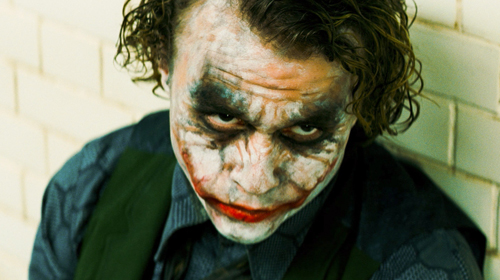
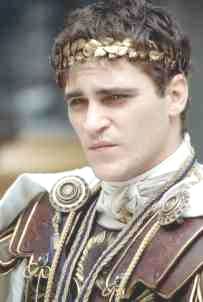
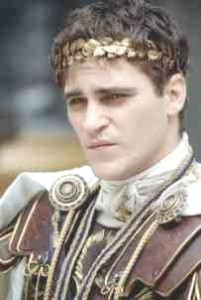
    So a villain is a species of antagonist that generates fear and loathing in the reader. It doesn’t matter if they think they have good reasons for their acts. We still feel they are evil and dangerous. Examples include: Darth Vader, Sauron, the kidnapper in Mel Gibson’s Ransom, Commodus in Gladiator, or the Joker in The Dark Knight.

    So here’s what I’ve noticed about effective villains.

    VILLAINS & STRUCTURE

    1) In a villain/hero story situation, the villain is key because the hero is reacting to the villain’s plan. It’s a total threat/danger plot.

    2) So the villain has to be active. He’s the one who WANTS something. He’s the one that starts the whole story. A weak villain isn’t going after this thing whole-hog or doesn’t have the power to do it or has no urgency and will.

    3) Strong villains are ruthless AND powerful. Villains also need to have some brains–we need to be worried for the hero, remember? We have to know that they’re they type of person  that will take you out if you get in their way. Even if they have a well-spun way of making themselves sound ethical. But villains go beyond other antagonists in that we fear and hate them. They are evil.

    4) The hero needs to be the underdog in the relationship, meaning less powerful, two steps behind, not as easily ruthless etc.  The bigger the plan the more high stakes and high concept the story becomes. But it’s the villain’s plan that drives it. And they will be taking steps to counter the hero, will probably be two steps ahead most of the story.

    5) As always, as with any character, the villain’s plan and motives have to be believable. Even if they are evil. The minute a villain becomes too far-fetched, they lose their power.

    CHARACTER INTEREST

    In addition to the role villains play in the story, there are a number of other things that make them interesting. However, these things are not anything new or different. They’re the same things that make any character (or person) interesting.

    – Larger-Than-Life Attributes (as in experience, power, skill, success, position, or behavior)
    – Eccentricities and Particularities
    – Outrageousness
    – Humor
    – Beauty
    – Surprise (as in against type details, reactions, motivations, or backstory)
    – Inner Conflicts (as in the “ethical” dilemmas they find themselves in)

    While danger and threat draws the attention, rouses interest, and can be sufficient to make a villain memorable, I think the factors mentioned above have a wonderful effect.
    THE CORE QUESTION

    The root question when considering villains is what pushes readers toward the fear and hate of others?

    Of course, it’s relative. But there are qualities that engender these feelings in us. Selfishness, brutality, sadism, madness, cruelty, a complete disregard for others AND the power to carry their wishes out. It’s someone who poses huge, immediate, specific threats to me or those I care about and does it without any concern or with relish. The more intense these factors, I think the more we move along the spectrum towards fear and hate.

    So people say the best villains are those who are the hero’s of their own story and with whom we can empathize. I don’t think this is accurate. The Joker in the Dark Knight was a great villain and may have been the hero of his own story, but never in a million years would I empathize with him. It’s true we can smpathize more with people who agonize and resist horrible acts. And some antagonists do show scruples. But not every story demands that type of antagonist. Sometimes what’s needed is someone who kills grandma horribly and says “so what” or “it was fun”–and engenders fear and hate.

    One last point. “Villain” is a reader attributed characteristic, i.e. the reader is the one who labels the character. This means the person has to be a villain in the READER’S eyes, not necessarily a villain in the eyes of the culture in the story. For example, In Not Without My Daughter the hero subverted and violated the dominant story culture, and I cheered for her. The guy who was sustaining the moral order of the story culture was the villain.

    ROOTING

    From what I can tell, all rooting response is based on some innate sense of justice, of what’s appropriate in a situation. For whatever reason, we feel discomfort when undesireable things happen to good or innocent people. We also feel discomfort when desireable things happen to bad people. The reason why we root for someone is because they have a lack of happiness or a threat to their happiness AND we belive they deserve better. I can’t see anything else we based that deservingness upon except some inner sense of justice.

    It doesn’t mean the deserving person is a goodie two-shoes. It just means that in the context of the story and what’s happening, we think the scales of justice tip, if only slightly, to the hero’s side.

    Some may argue this, but I don’t think it’s possible to root for someone or against someone without a moral judgment. It’s true that not every antagonist needs to or does act immorally. In fact, the antagonist might be doing the right thing, the moral thing, in his or her particular situation, and it just happens to oppose the hero’s desires. The key however, is that the story guides the reader to feel the hero should win at the antagonist’s expense. And that it’s right for the hero to do so. That “rightness” is based on a moral stance of what’s good and desireable in the given situation. The farther along the spectrum of antagonists we move towards villany, the more clear that moral stance becomes.


    Share
  • |

    Why you can’t popularize literary fiction, part 2

    I voiced my opinions on the TC Boyle message board. Needless to say, I’m probably too aggressive in my stance. But a guy over there said: “(easy,chewable,harmless pages) shouldn’t be the goal of any writer with even the tiniest self-respect.”

    Here’s my response.

    —-

    I don’t know any of these successful authors who don’t have self-respect because I don’t know any of them who try to write based on what they think will sell. Everyone of them that I know writes from passion. And I know some NY Times Bestsellers. They might look at 10 projects they have passion for and choose one that might be more marketable. But the passion comes first.

    I don’t know how anyone could spend the amazing number of hours it takes to finish a novel unless they have passion for the project. In fact, I wonder if it’s possible to create something that’s actually sellable without it. Everyone’s always talking about these hacks out there with metal brains writing for money. But after all the writers I’ve met, I’ve yet to find one. In my experience they’re as scarce as the yeti.

    So my intent wasn’t to say you can write for love or money, but not both. My intent was to say that I believe most MFA programs have made themselves irrelevant to the greater stream of literacy in the country. The teachers have passion for fringe genre and teach their students how to entertain that fringe reader. And if they DO have passion for the types of fiction most readers want, such enjoyment is always talked about as some form of slumming. There’s an apology or at least a statement making it clear they know such fiction is not something you bring to the table where serious writers work.

    But this isn’t true. Serious writers, passionate writers work in those genres. And they deliver excellent work. By that I do NOT mean they deliver the tropes of literary fiction in drag. What they deliver doesn’t appeal to the fringe markets. But it’s excellent, nevertheless, because it delivers exactly what the people go to those stories for.

    Share