
Similar Posts
The average American reads 17 books per year
Americans and Reading
The Pew Research Center has just published their findings on reading in America. It’s called “The Rise of E-reading“. There’s a LOT of fascinating information in the report. Here’s a taste:
- Americans 18 and older read on average 17 books each year. 19% say they don’t read any books at all. Only 5% say they read more than 50.
- Fewer Americans are reading books now than in 1978.
- 64% of respondents said they find the books they read from recommendations from family members, friends, or co-workers.
- The average reader of e-books read 24 books (the mean number) in the past 12 months; the average non-e-book consumer read an average of 15.
Building an Audience
I also want to recommend this week’s post by Kris Rusch on Audience. She has a number of interesting things to say about the dream of being a best seller and building an audience. The money quote comes as she refers to a post by Tracy Hickman:
“The point here is that you do not have to feel as though you are in competition with the entire world. You don’t NEED the entire world to be a successful writer. What you need is an audience—just enough of an audience, mind you—who reads your words, is changed by them and wants to come back for more.”
An audience. More importantly, an audience that reads and “is changed by” your words. Not an audience who loves them, not even an audience who likes them. An audience who is changed by them, and because of that experience, “wants to come back for more.”
Simple. Important. Usually forgotten.
She talks about lots more. Read the whole thing.
My thoughts?
First, there’s no need for authors or readers to worry about wading through “crap.”
According to Pew, readers only read 15 or 24 books a year on average. That’s not a lot of books.
More importantly, it takes about 3 seconds to get a lead for a good book. You hear something from a friend or family member, you look at the USA Today best sellers list, you browse a few books at a store or online, you read a blog and suddenly you’ve found a book.
Readers fill up their book reading slots much more quickly than they can ever empty them. That’s why we all have years of reading in our queues.
It doesn’t matter that there are millions of other books out there, a good majority of which might have been written by monkeys. There’s no need for authors to worry that readers will have to wade through a mountain of crap to find a good book. They don’t need to because they have leads for good books coming out their ears.
Second, people purchase books that friends, family, and co-workers love.
Which means that when you deliver a great experience to one person, it’s going to ripple out. It’s probably not going to be linear. It’s probably going to ripple out like viruses do into different population pockets. Or seeds do into different environments. It will run through one pocket, make a jump to one or more others, or it may not jump at all. Some pockets are big, some are small.
The way to keep a virus going is to release it in a lot of places where it’s likely to thrive or in places that a lot of people travel through. And as Kris points out, writing is all about repeat business–making sure you have a stream of good product (something I hope to rectify with my own writing this year).
Bottom line: the best way to build your writing business is to simply write the best book you can, and keep them coming.
Third, the market is BIG.
If you read Rusch’s and Hickman’s articles, you’ll see that even the mega sellers only reach a fraction of those who read. This is reinforced by the statement made by Thomas McCormack, former CEO of St. Martin’s that you can read here. So just because 100,000 people read one book doesn’t mean 100,000 others won’t read mine.
Moreover, e-books and online shopping are broadening distribution. Brick and mortar stores only have so many slots for books. Every 8-12 weeks they rotate the old books out (like 12 weeks is old) and replace them with the new ones, unless, of course, your book is selling very well and gets “modeled” at the store. The point is: when you only display a few books at a time, those books will get bigger sales numbers. This happens because there isn’t anything else to purchase.
But you don’t have that limitation with e-books and online shopping. Nothing rotates out of the store. Sure, things rotate on and off the best seller lists. But the books are always there. With an ever growing selection, there won’t be as many mega sellers. Publishers Weekly discusses this trend in their 2011 Facts & Figures articles, which list best-seller numbers (make sure you click through to the Trade Paperback article as well). The same thing has happened with TV station viewership with the explosion of channels, DVDs, and online streaming. Same thing happened with music.
What this means is each author has a better chance of getting his or her books to those who will love them. We’ll still have best-sellers. But we’ll also have a lot more medium sellers as well. And that’s great for authors everywhere.
Dr. Horrible’s Sing-Along Blog
I enjoyed Joss Whedon’s movie Serenity as well as many of the TV episodes of Firefly which featured the same characters and world. So when I saw Whedon had put up another movie called Dr. Horrible’s Sing-Along Blog and made it available over the internet, I had to watch it. And then watch it again, and again.
I loved the characters. I couldn’t get some of the songs out of my mind. Some of the plot turns simply delighted. Here’s a preview.
And here’s where you can watch it right now for free. It’s only 42 minutes long. Give it 4 minutes (literally). If you’re not hooked, let me know right here. I’d give it a PG-13 for some language and thematic stuff.
Good Stuff: 8 Awesome Movies
Summer is a great time to catch up on great movies you haven’t seen because sometimes the movies that are released to the theaters during this time are contenders for the dud award.
I shall leave films such as Transformers: The Franchise Could Have Been So Cool or Pirates of the Caribbean: Johnny Depp Is Now Acting Really Weird nameless.
Instead of watching duds, try a couple of these fantastic movies, all of which are based on true stories.
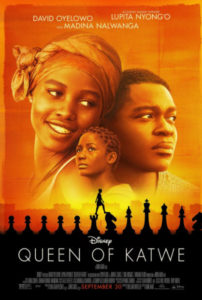
Queen of Katwe. A tremendous film based on the true story of depicts Phiona Mutesi, a girl growing up in the slums of Katwe, a city in Uganda, who gets a chance to break out of that life with chess. You will come away having laughed and cheered and been touched in a poignant way. Highly recommended.
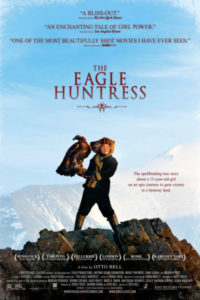
The Eagle Huntress. A fascinating documentary about the first girl in Mongolia to compete as an eagle hunter—these are folks who capture and train golden eagles to hunt game like fox or rabbit. You’ll be introduced into a new and interesting culture that triggers you to think about your own.
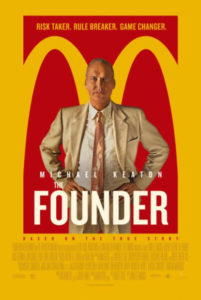
The Founder. Ever wonder how McDonald’s got started? No, neither had I. Who cares, as long as the food is good, right? Well, if you’re like me, you’re in for an eye-opener. This tells the story of how Ray Kroc started McDonald’s, except, hint, he didn’t. Kroc is played by Michael Keaton. He’s one of my favorite actors, and I loved his performance. This story will fascinate you, and then make you think, and then make you really appreciate folks like Dave Thomas of Wendy’s.
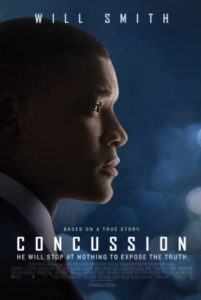
Concussion. An engrossing, suspenseful film about the true story of Dr. Bennet Omalu and the tie between football and brain degeneration. Omalu was working as a forensic pathologist (one who figures out the cause of death) in Pittsburg, Pennsylvania. In 2002, Omalu performed an autopsy on Mike Webster, a former NFL star who played for the Pittsburg Steelers and is considered by some to be one of the best centers in NFL history. And his worked opened up a can of worms the NFL wanted to quash. I loved this film.
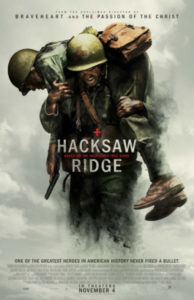
Hacksaw Ridge. This one is based on the true story of Desmond Doss, a Seventh-day Adventist who did not believe in killing, but wanted to support his country and all those going to war. So he goes into World War 2 as a medic and is sent to the Pacific theater. His first engagement is the Battle of Okinawa. And, oh my holy heck, what he did during that battle is nothing short of amazing. There’s one part of the film in boot camp that seemed out of place. Really, some dude back in the 1940s was going to do pull ups in the barracks naked (nothing but a bum is shown in the film)? But then I recall that growing up in the 70s and 80s that we guys showered in communal showers. And that wasn’t a big deal. And earlier than that, swimming at the swimming hole often meant shucking your clothes and jumping in. So who knows? We have a similar funny scene in Mulan, but for some reason that one felt more organic. This one felt tacked on. It was a gag for humor and then, thankfully, Mel Gibson, who directed this, got on with the awesome story of Doss.
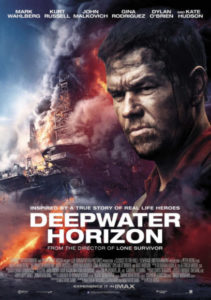
Deepwater Horizon. This one is based on the true story of the Deepwater Horizon, an oil rig in the Gulf of Mexico that encounters a catastrophe. The details of how such rigs work and the issues involved are fascinating. But what will really get you is the heroism of the captain and crew.
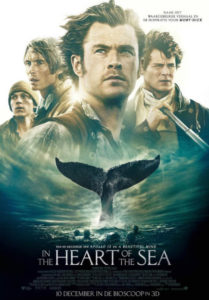
In the Heart of the Sea. This is based on the true story of the whaleship Essex that was sunk in the Pacific in 1820 by a sperm whale and what the few that survived did to remain alive. Back in the 1700s and early 1800s, sperm whale oil, which was contained in the whale’s large head, was highly prized for lamps because it burned bright and odorless. It was also a great lubricant. Later the oil was replaced with kerosene and other and petroleum-based lubricants, but in those days there was a whole industry dedicated to harvesting it. I watched this with my teenage daughter, and we both found it a powerful tale.
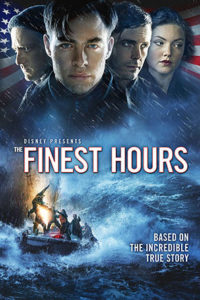
The Finest Hours. This last one is based the book The Finest Hours: The True Story of the U.S. Coast Guard’s Most Daring Sea Rescue by Michael J. Tougias and Casey Sherman. It chronicles the 1952 United States Coast Guard rescue, in a dinky boat, of the crew of the SS Pendleton, a big tanker, after the ship split apart during a nor’easter off the New England coast. The movie was thrilling and heroic.
And after you watch all of those, if you want some more great films based on true stories, well, you won’t go wrong with Tom Hanks in Sully or Captain Phillips or Bridge of Spies.
Interview with Author Kelly Barnhill
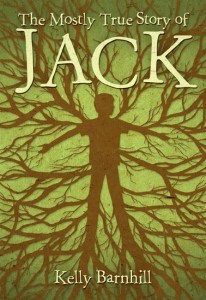 Kelly Barnhill is a writer, teacher and Mom from Minneapolis. Her fiction has appeared in Postscripts, Weird Tales, Clarkesworld and other publications. She’s also published a number of high-interest science books for children. They have wonderful titles like Sewers and the Rats That Love Them, Blood-Sucking, Man-Eating Monsters, Sick, Nasty Medical Practices, and The Wee Book of Pee. She states that “I’ve had like nine million jobs before this, including being a janitor, a park ranger, a wildland firefighter and a bartender (among others).” Kelly’s first novel, The Mostly True Story of Jack, will be published this year. I had the opportunity to interview her about the book and writing, and have to say I had a delightful time. Enjoy!
*
JB: I have to start by saying I love the title of your book. It raises all sorts of questions in my mind. Was that part of the inspiration of the story or was it something you had to arrive at after a lot of hard work?
KB: On the first question: Oh my. Titles. This title is the culmination of a whole lot of blood, sweat and tears. Okay, that’s not entirely true. Neither blood nor sweat, just tears – mine specifically. This book was originally called The Boy Without A Face, then Jack Be Quick, then The Curious Face in the Cornfield, then Uprooted, then the House at the Far Edge of Town, then the A Child of Earth and Magic, then…..oh lord, I can hardly remember.
The thing is, I typically don’t have a problem naming pieces. The title usually comes when I’ve untangled the first knot of text and the beating heart of the story is just starting to assert itself. This time, not so much. I was stymied from the beginning. I asked my kids their opinions, my agent, my agent’s assistant, every editor I’ve ever heard of. I asked my students, my Sunday School kids, kids on the block, kids at the park.
But that’s the thing when you have a title that doesn’t work – no amount of wanting it to be right will make it right. So I was bound to struggle and I was bound to hate – well, everything – because I just hadn’t hit on the right one yet. Until I did. And the fussing stopped (much to the great joy of everyone involved).
JB: (laughing) That’s hilarious. I can see the desperate author hounding some kid on a swing. Of course, it shows persistence. And I’m betting it isn’t just a title that’s defied you. Have you run into plot or character snags that have been especially troublesome? If so, what do you do as a writer, how do you approach that?
KB: Oh, clearly. I am one of those authors who does absolutely no planning before starting a project. Instead, I’ll get a little knot of text stuck in my head (usually when I’m out for a run) – something pleasing to the ear or gentle in the mind’s eye. And then I spend a whole lot of time figuring out the story behind it. What that means is that when I begin, I typically don’t know what exactly I’m writing. Is this a short story? A novel? A children’s book? A poem? It takes me a while to figure that out.
Insane, you might say. Absolutely barking mad, you might mutter.
Well, obviously, says I. But it’s fun.
Anyway, I did a lot of select-all-deletes over the course of this novel (sometimes, deletes to the tune of 300 pages), retaining the characters, retaining the little bright spots that I managed to scrawl onto some note cards, but recomposing largely from memory, and re-engaging with the story in a fresh, new place.
It’s a process I can’t really recommend. Except that I do. Whole-heartedly. There’s something thrilling about entering into a manuscript that doesn’t have any mistakes in it yet. Of course, it typically doesn’t have any words in it either at that point, but never mind.
Along the way I’ve had to remove some fairly major characters, which forced me to completely re-imagine and recompose the book (again), but as I did so, the story was better, the writing was better, and I learned a lot doing it. So, I don’t like to call them “snags”. I like to call them “learning opportunities”. (Okay, fine, I also call them “throw-my-computer-in-the-creek-while-shouting-obscenities moments” but that’s not very nice to talk about.)
JB: Kelly, I have to say, to find a simmering joy in the dreaded select-all-delete (folks, she’s wild, WILD!) Although I will say that starting a new project is always a thrill for me as well. So maybe we’re not too far apart, although I do enjoy my planning. So, what was the knot of text that started this story? Is it even there anymore? And how did it develop into the fantastic magic that’s at the heart of the tale? (Folks, as an aside, I have to tell you that the magic in this book is unlike anything I’ve read.)
KB: Okay, you asked for it. Here is the original page. I’ll make the letters green, just because:
Outside the house, a girl stood on the darkening street looking up. Her hands were shoved deep in the pockets of her ratty cut-offs, and her red-brown curls struggled out of the long braid that hung down the length of her back. Her bike lay on its side on the ground, the front wheel still slowly spinning around and around, until it finally stopped.
Two boys walked slowly down the quiet street, their sneakered feet scarcely whispering against the pavement. One boy wore a bright orange seed cap over his even brighter blonde hair. He smiled at the girl as they approached. The other boy was very tall and he walked with a limp. Half of his face was obscured in a red knot of scars that bloomed over his skin like roses. He kept his eyes on the ground and did not speak. He never spoke. Both boys stood next to the girl. The boy with the cap tilted his chin towards the attic.
“That kid get in today?” he asked, his eyes on the silhouette of the stranger in the window.
“Yep,” the girl said.
“Think he knows?” He turned to face the girl. His face, handsome and tan from so much time out of doors, shone in the last weak rays of the orange and pink sky.
“How could he?” she asked. She reached over to the boy on her left, who was taller than her, though his pronounced slouch made it difficult to tell. She put her arm around his shoulder, and he, in turn, laid his face, bad side down, good side up, on hers. Only when they stood like this, could people see that they were brother and sister. “But he will,” she said.
I wrote this while on a positively lovely run through Fort Snelling State Park in Minnesota. Well, that’s not exactly true. I thought it while I was running. I wrote it when I got home. But that’s how a lot of stories start for me – a bit of fluff twists into a thread and thickens to a cord and winds into a knot. And then I have a hell of a time figuring out where the thing leads.
Now, that actually wasn’t everything that led me to JACK. There was another bit that I can’t find anywhere that was a conversation between a kid and his mom as they drove in a rental car towards a farm house in Iowa, where the kid would be staying while his parents worked through the details of their divorce. I didn’t realize that the kids on the street would occupy the same story as the kid in the car. Indeed, I had no idea that the kids on the street were talking about the kid in the car. I also had no idea that I was writing a book with magic in it either. That was a surprise.
But to answer your earlier question, neither the conversation nor the bit about the kids looking at the house are in the book anymore, though little images and descriptions have drifted into the later drafts and taken root. That’s the magic of revisions – every cut is necessary, and every cut hurts, but something new always grows. And sometimes the bits of your novel that once were broken and wobbly and weak transform into some very pretty bits of fiction. It’s the transformation that gets us every time – or me, anyway. Honestly, it’s why I keep coming back to the page: I like change.
And as far as the magic at the heart of the story – I can’t really say. I think that the magic was simply there, waiting for me to find it. Everything I know about the strange history of that town, the terrible events that happened in the past and the necessity for Jack and his friends to set things right – I only discovered those things by accident. I discovered them because I cared about Jack, and cared about his loneliness and his lack of place, and I wanted to understand him. (And yes, I totally get it that he’s not real, but in the end that doesn’t really matter, does it? I’m a mother, and a child in need is a child in need.)
(Did I even answer your question? Why is it that every question sends me tumbling in all directions? I think I might be a dreadful interviewee. Maybe you should ask me easier questions. Like about darning socks.)
JB: (laughing) You’re a wonderful interviewee. I love these answers. And I think my readers will appreciate very much what you’ve shared. In fact, I’m betting they’d want me to keep asking questions for quite some time, but I’ll limit myself to two more. First, the prose of your book has a flow to it. I haven’t pinpointed what it’s doing yet (I have noticed some parallelisms), but the prose is compelling. Just picks you up and carries you along. Is that flow important to you? Do you labor over it, or is it just something you enjoy, maybe seek out in other authors, and, therefore, seems to come naturally? Tell us your thoughts on this.
KB: Oh, John, I am so glad you asked me this question! (Also, that you noticed, because I worked really hard on it!)
Let me back up before answering that, though, because I think it’s really hard to separate how a writer builds text and uses words from how they think. There are people on earth – lots of them – who are visual thinkers. I am not one of them. In fact, I am not a visual thinker at all. Even now, when my house is quiet and my kids are at school, it is difficult for me to call up a mental image of their faces – but the texture and timbre of their voices is with me all the time. And it’s always been like that for me as a reader – I’m much more attracted to books with a strong aural sensibility. I like prose that is rhythmic and rich. I think language works best when it is a sensual experience – not just in what it evokes (though that’s clearly important) but how it feels in the mouth, how it feels in the ear.
Now I think part of the reason for this is that, as a little girl, I was a delayed reader. And when I started reading, I was stuck in the bottom group (they never tell you you’re in the bottom group, but oh! As children we know. We know!). This is not to say I wasn’t experiencing and engaging with stories. Every night my dad read to us – first the Grimm stories, then Narnia, then Tolkein, then Dickens. I also had a little fisher-price record player (that I bought at a garage sale with my own money, so of course I thought it was awesome) and a bunch of dramatized books on records – Treasure Island, 20,000 Leagues Under the Sea, Watership Down, Call it Courage, Anne of Green Gables, and some others that I can’t remember.I would listen to those things so often that my siblings threatened to throw my record player out the window. So I’d lock myself in the closet and listen some more. And even now, I love stories out loud. My husband and I read to one another every night, I read to my kids, and I read my own work out loud as I revise, over and over and over again.
My book sounds the way it does because I’ve read that thing out loud, cover to cover, approximately nine million times. Actually, that might be a conservative estimate. I want my stories to feel like a whisper on the skin, an insistent voice that you can’t shake. Now, mind you, I’ll probably never actually reach that goal, but it’s good having a target, anyway.
JB: Wow. That’s lovely. You know, I’m not a style over substance guy, but I like sound. I’m attracted to prose that sings, even if it’s softly. This seems to be what you’re suggesting you look for. Not prose that necessarily stands up and shouts for people to look at it. But prose that, well, as you said, is a whisper on the skin. Oh, there’s a whole interview right there. In fact, I think, if you’ll agree, I’m going to have you back, maybe around the time Jack comes out to discuss that. In the meantime, I see you have a whole bunch of projects slated to come out. The Final Exile of the Insect King is another killer title. But Iron Hearted Violet is the one coming out next after Jack. Tells us about that one or anything else you think readers should know about. And since Jack is a ways off, tell us which of your published stories you’d suggest readers try while they’re waiting. I see a whole bunch you’ve linked to on your site.
KB: Thanks John! This has been really fun, and I’d love to pop back over to your corner of the internets around launch-time (August 2! Mark your calendars!).
Anyone who is interested in reading any of my fiction online can head over to my blog for a list of links (www.kellybarnhill.com). And any of you who are interested in buying some pretty cool collections could check out Sybil’s Garage #7, which has my story “The Dead Boy’s Last Poem” or Apex’s recent anthology Dark Faith, which has my story “Hush”. Another story that I feel pretty good about is called “The Taxidermist’s Other Wife”, which appeared on Clarkesworld in December. That particular story came from an experience I had up in northern Minnesota (about ten miles south of the Canadian border), when I was teaching a fiction workshop to a bunch of hockey-playing high school seniors. One boy was telling me that it took him over an hour each way to get from home to school and back again. He said he’d been doing that for the last six years, ever since his town closed down the school. I asked him if all the kids in his town had to make the same kind of crazy commute, and he said, “Those of us who’re left, sure. There’s not many of us anymore. You kill the school, you kill the town. Everyone knows that.” The idea that the lifeblood of a town is bound up in its school – and indeed, that a town can be killed, stuck with me, and transformed into an odd, mournful little piece. There is a deep love as well as a devastating sorrow that binds the people of my beautiful (and very cold) state to the land that surrounds them – and I feel that this story is the closest I’ve ever come to actually pinning those twin emotions down onto the page.
As for Iron-Hearted Violet – that has been a devilishly tricky book to write, but I’m pretty happy with it. How to describe it? Hmmm. It’s the story of a girl who unwittingly releases an imprisoned, wicked god, and must sacrifice all that she knows and all that she loves in order to stop it from enslaving her – and every – world. There are banned stories and dragons with missing hearts and a grieving girl and friendship and a magic book and sleeping gods and a multitude of universes gathering in great foamy waves and crashing against the shore. Mostly, getting the language and tone just right was incredibly tricky, and I went through something like a million drafts, so for me to say that I’m feeling happy with it is a pretty big deal.
JB: Well, that gives us all some great things to try out. I’m personally looking forward to Jack.
*
John Sez: now there is someone who just loves to write. I love her sense of adventure in discovering the story and her willingness to generate a lot of stuff to get to the final story. And the sound of her prose. Not that all books have to have this, but it is nice. Furthermore, Kelly was just enjoyable to talk to. That fun voice comes out in her blog. She’s going to be someone to watch. In the meantime, for the rest of us, it’s back to work.
LINKS
Good Stuff! Crossnet and Bang!
Today I have some good fun coming your way.
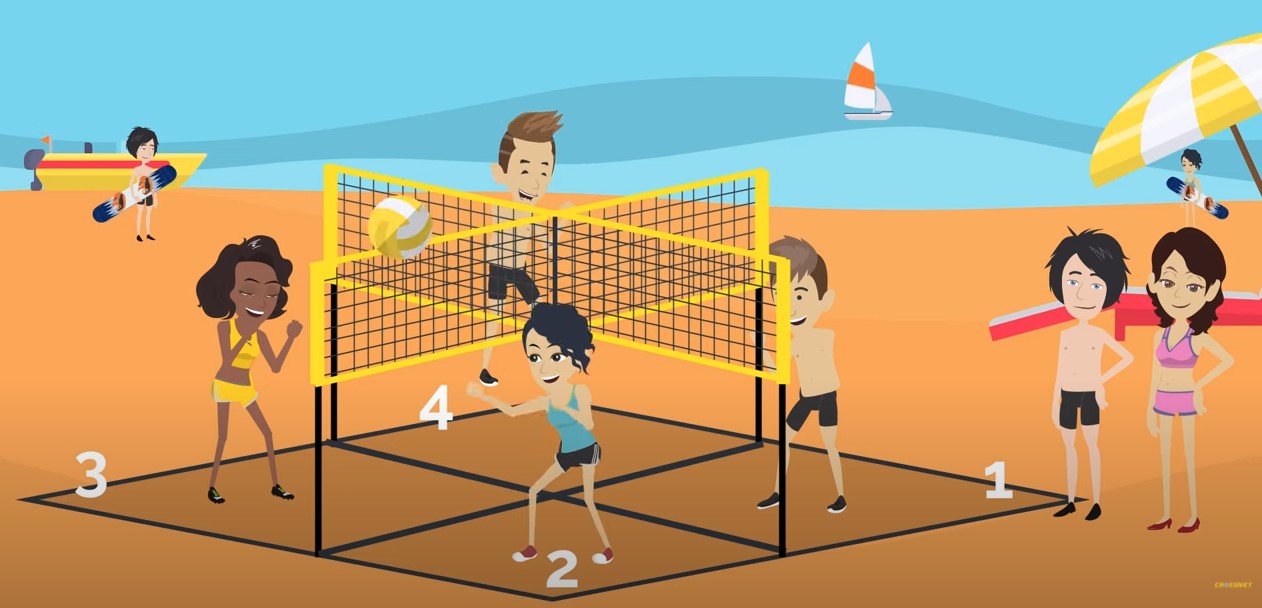
The first is a game called Crossnet. It’s a mixture of volleyball and the playground game four square, and it’s a blast.

You can have one person per square or two people. And just like four square, those wanting to play line up by square one, waiting for someone to get out.
We did it with a huge group. Our line always had 12-15 people in it, but you never waited long because the games moves fast. We laughed, teased each other, and had a great time.
The other great thing was that we could play it with folks of all ages. We had folks from 55 all the way down to 8 playing. And they all enjoyed it.
If you’re wondering what to do for the next family reunion or group activity, I think you’ll love Crossnet.
*
The next fun activity is a shootout card game called Bang!

It’s played with 4-7 people. Each player is delt a unique Wild West character with special abilities and a role card. Some of the roles are on the side of law and order. Some are on the side of the outlaws.
As you play you shoot it out, try to figure out who the outlaws are, get life points back, acquire guns, steal cards from each other, avoid the dynamite, and more.
The game moves quickly. You can be done in less than 30 minutes, which is perfect for a family or date night. It’s one of our favorite family games.
If you’re looking for a new, fun, quick game to play, give Bang! a try.
I think you’ll be pleased you did.
The Sing-Off, Sam’s Salmon, The Englishman Who Went Up A Hill
One of the best TV programs this fall
 American Idol was good until the judges became irrelevant and annoying. Or maybe I was just tired of the format. I didn’t think I’d watch another singing show. But I tuned into the opener for The Sing-Off on NBC last week, and holy harmonies, Batman–it was wonderful.
Ten of the best a’capella groups in the country compete for a $100,000 prize and a recording contract with Sony Music. Unlike American Idol, the groups represent a wide range of ages—from kids in high school to older adults—and backgrounds. They don’t use any instruments, just their voices, to sing incredible arrangements of modern songs with percussion, bass, and lovely vocals. This ain’t no choir music. And unlike American Idol, the judges actually have interesting and useful things to say. Also unlike American Idol, the judges eliminate the groups until three are left. Only then do the rest of get to call in and vote.
We were glued to the TV watching each episode. The programs are all two hours long, but move like lightening. Our favorite groups at this point are Committed and The Backbeats.
This whole show runs a total of three weeks, one episode each on Monday and Wednesday. It started last week, continues this, and finishes next week. Some of you might be depressed, feeling you’ve already missed it.
Not so! You can watch all of the full episodes online at www.nbc.com/sing-off/ (with fewer commercials). Then tune in for the grand finale. I can’t wait.
Are you kidding? From a can?
 Canned tuna fish is one of those un-meats. It doesn’t taste like fish. It doesn’t taste like chicken. I guess the all-white albacore is okay. But tuna’s not one of those spectacular foods I crave.
So you’d think, as I strolled the isles of Sam’s Club, that I would have passed up the canned Member’s Mark Atlantic Salmon. But one of my wild culinary urges, the ones that rarely pan out, overtook me.
I purchased a pack of five, seven-ounce cans for $11.88. I brought the pack home put it on the shelf and didn’t dare open it. What was I thinking?
Canned salmon? Canned meat?! When was the last time you had a steak out of a can?
It couldn’t be good.
Of course, my sensible hesitations only last so long. I broke down one afternoon when the cupboards were bare. I saw the salmon and thought that it might go well with a salad and baked potato.
I opened the can. It was pink, like the trout I used to catch and immediately fry when I went camping as a boy. I tasted it. And it tasted like . . . fish. Real fish. The light delicious taste of those trout I caught so many years ago.
I enjoyed a wonderful meal that day and have had several repeats since. Boneless, skinless filets in water, packed with omega-3 fats, all grown on fish farms in Chile.
Great movie set in Wales
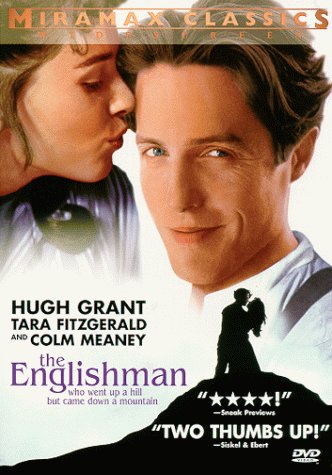
 I enjoy Hugh Grant as an actor. I loved him in Sense & Sensibility with Emma Thompson, one of my most favorite movies ever. And so I was curious about another movie with Grant that received two thumbs up from Siskel and Ebert. It’s called The Englishman Who Went Up A Hill And Came Down A Mountain.
The setup is unusual. In 1917, with the war still raging in Europe, two English cartographers visit the small South Wales village to measure what is claimed to be the “first mountain inside of Wales.” The villagers are proud of their “mountain,” but become alarmed when the Englishmen measure it and find it’s not a mountain but a hill. The villagers are determined not to lose their status. Especially not to two Englishmen. What follows is good humor, drama, and a bit of romantic comedy. I think you’ll fall in love with the characters. It’s a wonderful tale. And it’s on DVD.
As a little bonus, here are the opening lines, given to us by two narrators.
“Narrator: For some odd reason, lost in the mists of time, there’s an extraordinary shortage of last names in Wales. Almost everyone seems to be a Williams, a Jones, or an Evans. To avoid widespread confusion, Welsh people often add an occupation to a name. For example, there was Williams the Petroleum, and Williams the Death. There was Jones the Bottle, and Jones the Prize Cabbage… which described his hobby and his personality. Evans the Bacon, and Evans the End of the World. But one man’s name was a puzzle, and it wasn’t until I was 10 years old that I asked my grandfather about the man with the longest and most enigmatic name of all.
“Grandfather: The Englishman Who Went Up a Hill but Came Down a Mountain? Now there’s a long name for you. And a long story. You are not going to fidget, are you? For this is a story… an epic story. Yes, epic.”

2 Comments
Comments are closed.
Where did you find this? It looks pretty darned funny.
So quicktime site. I can’t wait to watch it.