Good Stuff: 8 Awesome Movies

Summer is a great time to catch up on great movies you haven’t seen because sometimes the movies that are released to the theaters during this time are contenders for the dud award.

I shall leave films such as Transformers: The Franchise Could Have Been So Cool or Pirates of the Caribbean: Johnny Depp Is Now Acting Really Weird nameless.

Instead of watching duds, try a couple of these fantastic movies, all of which are based on true stories.

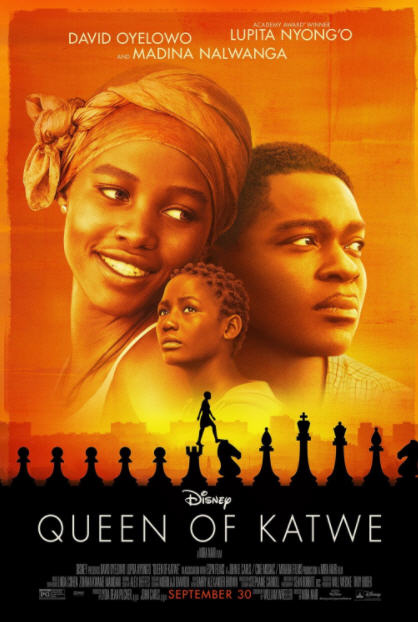
Queen of Katwe. A tremendous film based on the true story of depicts Phiona Mutesi, a girl growing up in the slums of Katwe, a city in Uganda, who gets a chance to break out of that life with chess. You will come away having laughed and cheered and been touched in a poignant way. Highly recommended.

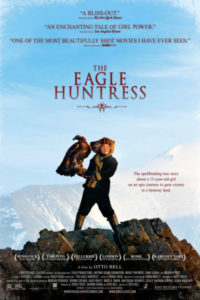
The Eagle Huntress. A fascinating documentary about the first girl in Mongolia to compete as an eagle hunter—these are folks who capture and train golden eagles to hunt game like fox or rabbit. You’ll be introduced into a new and interesting culture that triggers you to think about your own.

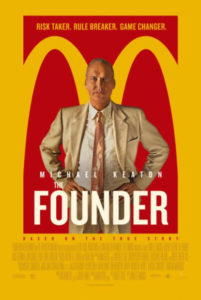
The Founder. Ever wonder how McDonald’s got started? No, neither had I. Who cares, as long as the food is good, right? Well, if you’re like me, you’re in for an eye-opener. This tells the story of how Ray Kroc started McDonald’s, except, hint, he didn’t. Kroc is played by Michael Keaton. He’s one of my favorite actors, and I loved his performance. This story will fascinate you, and then make you think, and then make you really appreciate folks like Dave Thomas of Wendy’s.

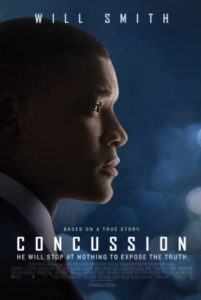
Concussion. An engrossing, suspenseful film about the true story of Dr. Bennet Omalu and the tie between football and brain degeneration. Omalu was working as a forensic pathologist (one who figures out the cause of death) in Pittsburg, Pennsylvania. In 2002, Omalu performed an autopsy on Mike Webster, a former NFL star who played for the Pittsburg Steelers and is considered by some to be one of the best centers in NFL history. And his worked opened up a can of worms the NFL wanted to quash. I loved this film.

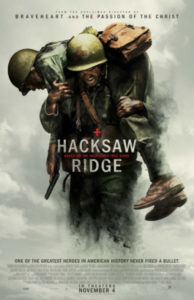
Hacksaw Ridge. This one is based on the true story of Desmond Doss, a Seventh-day Adventist who did not believe in killing, but wanted to support his country and all those going to war. So he goes into World War 2 as a medic and is sent to the Pacific theater. His first engagement is the Battle of Okinawa. And, oh my holy heck, what he did during that battle is nothing short of amazing. There’s one part of the film in boot camp that seemed out of place. Really, some dude back in the 1940s was going to do pull ups in the barracks naked (nothing but a bum is shown in the film)? But then I recall that growing up in the 70s and 80s that we guys showered in communal showers. And that wasn’t a big deal. And earlier than that, swimming at the swimming hole often meant shucking your clothes and jumping in. So who knows? We have a similar funny scene in Mulan, but for some reason that one felt more organic. This one felt tacked on. It was a gag for humor and then, thankfully, Mel Gibson, who directed this, got on with the awesome story of Doss.

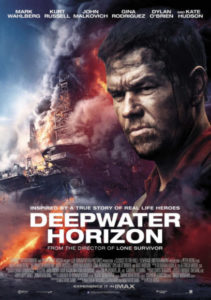
Deepwater Horizon. This one is based on the true story of the Deepwater Horizon, an oil rig in the Gulf of Mexico that encounters a catastrophe. The details of how such rigs work and the issues involved are fascinating. But what will really get you is the heroism of the captain and crew.

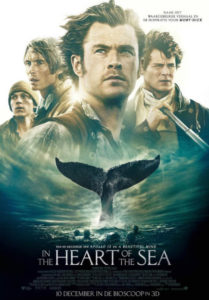
In the Heart of the Sea. This is based on the true story of the whaleship Essex that was sunk in the Pacific in 1820 by a sperm whale and what the few that survived did to remain alive. Back in the 1700s and early 1800s, sperm whale oil, which was contained in the whale’s large head, was highly prized for lamps because it burned bright and odorless. It was also a great lubricant. Later the oil was replaced with kerosene and other and petroleum-based lubricants, but in those days there was a whole industry dedicated to harvesting it. I watched this with my teenage daughter, and we both found it a powerful tale.

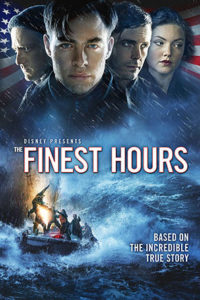
The Finest Hours. This last one is based the book The Finest Hours: The True Story of the U.S. Coast Guard’s Most Daring Sea Rescue by Michael J. Tougias and Casey Sherman. It chronicles the 1952 United States Coast Guard rescue, in a dinky boat, of the crew of the SS Pendleton, a big tanker, after the ship split apart during a nor’easter off the New England coast. The movie was thrilling and heroic.

And after you watch all of those, if you want some more great films based on true stories, well, you won’t go wrong with Tom Hanks in Sully or Captain Phillips or Bridge of Spies.

Share

Similar Posts

  • Diary of a Wimpy Kid by Jeff Kinney

    I had business in Vegas and decided it was time to take the family to Zion’s National Park. We could drive down from the northern tip of Utah (Laketown) to the southern tip (St. George) together. Then I’d take a rental to Vegas, do my business, and hook up again with the fam to hike the canyons for two-days. (Hiking Kolob, folks, was incredible, but that’s another post.)

    So I ask Nellie what she’s got to read to me as we drive down. She pulls out Diary of a Wimpy Kid by Jeff Kinney and says all the kids in her classes said she had to read it. 

    I think, hey, it’s got pictures. Any book with pictures gets one shot at the very least.

    I’m happy to say I can’t tell you how many times she had to wait so I could stop laughing. We almost wrecked only once. And if I’m going to wreck I’d rather do it while laughing than asleep. Kenny has written and illustrated a wonderful, fun book. And now we have a new word in the family vocabulary–“Fregley.”

    What is that? You’ll have to read to find out.

    Share
  • Interview with Author Bradley Beaulieu

    Bradley P. Beaulieu just had his first novel released on April 1st. It’s called The Winds of Khalakovo and is the first of three planned books in The Lays of Anuskaya series publishehd by Night Shade Books. In addition to being an L. Ron Hubbard Writers of the Future Award winner, Brad’s stories have appeared in various other publications, including Realms of Fantasy Magazine, Orson Scott Card’s Intergalactic Medicine Show, Writers of the Future 20, and several anthologies from DAW Books. His story, “In the Eyes of the Empress’s Cat,” was voted a Notable Story of 2006 in the Million Writers Award. His agent is Russell Galen.

    Brad is a software engineer by day, wrangling code into something resembling usefulness. He is also an amateur cook. He loves to cook spicy dishes, particularly Mexican and southwestern. He lives in Racine, Wisconsin with his wife and two children. As time goes on, however, Brad finds that his hobbies are slowly being whittled down to these two things: family and writing. In that order . . .

    I recently had the opportunity to interview Bradley. Among other things, we talked about how he broke in and how he comes up with his ideas. He also convinced me to use his picture method, which I’m finding very handy on my current thriller project.

    ***

    JOHN: In your novel an elemental spirit attacks an incoming windship, murdering the heir to a kingdom. The person believed to be behind this is a child, an autistic savant. This sounds like Orson Card tale (grin). Did you come up with this character first, the magic, or something else. Tell us the genesis of the tale and this character in particular.

    BRADLEY: The genesis of the book is actually from a series of postcards of fine art that I picked up in Edinburgh, Scotland. (I posted about it on my website if you’re curious to learn more.) I used that artwork to first generate and then crystallize my thoughts about the book. Initially, I tried not to let any one thing rule the brainstorming I would do from time to time. I didn’t even know who the main characters were at first. I was quite taken by the picture of the three sisters, though, and I knew right away, the moment I laid eyes on the original in the National Gallery, that they would play a major part in the novel.

    But in the end it was the picture of the boy with the flaming brand that kept leaping out at me, calling for attention. The artist is Godfried Schalcken, and the piece is called A Boy Blowing on a Firebrand to Light a Candle. This character eventually became Nasim, the autistic savant. As I was studying the characters, I began to realize that this boy was not going to be a point-of-view character, but he was going to be a prime mover. In the end, he embodies much of what Winds is about. The story truly does revolve around him and his unique powers.

    The brand that he holds in the painting also came into play. I didn’t know what the magic was going to be about. I hardly had a single preconception about the book going in. I just wanted the artwork to speak to me, to advise me as to what the story was going to be–from the characters to the world to the magic. The boy blowing on the brand got me to thinking about elemental magic, and I realized that Nasim was one who could do this without even thinking. It came as naturally to him as did breathing. That’s a difficult place to put a character, however. As a writer, you have to be careful of all-powerful things, and so I needed something to balance Nasim’s abilities. And this, of course, is where his disconnection from the world came from. Nasim, as written in the book, is often lost. He has difficulty relating to others in even the smallest of ways. This both limited his power and made him in some ways more dangerous and more scary than a calculating villain, simply because of the unpredictability.

    I’d be remiss if I didn’t also mention Rehada, who started out as a somewhat minor character but grew into the most complex and perhaps the most compelling of my three main characters. Rehada came from Andrew Geddes’ Hagar. It’s another beautiful painting, filled with emotion. I was drawn to the fact that she was crying. I wondered why. I spent a lot of time answering that one question. After knowing that her people were essentially pacifists, I realized that Rehada was not. She felt she had betrayed her people and their ways because she had taken to the path of violence. It was from this, from that one single tear, that the entirety of the Maharraht–the fanatical splinter group that came to embrace violence as a means to an end–was born.

    By this point, I understood that I wanted there to be an aristocracy of some kind, and I fairly quickly landed on a culture that was modeled loosely after Muscovite Russia. I don’t remember why, exactly. It might have been that the other artwork reminded me of Russian Czars a bit, but I think the biggest driver here was that I definitely didn’t want something that was centered around western Europe, because frankly that’s been done to death. I wanted something more unique, and I’d always sort of like the mystique and darkness that seemed to hover around that time period in Russia. They’ve always seemed like a hard people, a people that would do whatever it took to survive, but in the same light, they took time to live life fully when they could.

    Given that I had the loose guidelines of the aristocracy, the peace-loving, indigenous Aramahn, and finally the will of the Maharraht to do whatever it took to regain the islands as their own, it created a crucible from which the story flowed fairly easily. I spend a lot of time building my worlds so that the conflicts within them come naturally, and that was definitely the case here.

    JOHN: The description of the world and your process for getting into the story is fascinating. From the article on your site it sounds like using images was a new technique for you. Is that correct? And if it is, was your process previously to have some other physical object of which you’d ask questions?

    BRADLEY: Yes, using artwork as a starting point was a new technique for me. I had no idea if it was going to work or not. An interesting thing came up when I was doing it, though. One of the things I learned at a few of the workshops I’ve been to (Writers of the Future and Orson Scott Card’s Literary Bootcamp) was to create stories in very little time using a few unrelated things as starting points. One unanticipated result of having restrictions in some areas (such as the elements involved in the story) is that it opens your mind in other areas. You’re forced to become more creative in some ways because certain avenues have been closed to you. I think it was the same with the portraits I used to represent the characters.

    Before that, in the previous three novels I’d written, I didn’t really have any specific brainstorming techniques. I would start with a premise and perhaps a loose idea of the characters and a mood, and I would go from there, trying to stay true to those things as the story evolved and grew. Although part of the problem with those early stories was that I was young in my craft, I also think my brainstorming wasn’t very efficient. I think, as I alluded to above, that there were too many possibilities. I had trouble narrowing the story down, and it led to stories that were ok, but nothing great. Too often they became a bit generic. Nothing really stood out.

    So while the artwork I used is one of a great many possible brainstorming techniques, I like the idea of challenging yourself with restrictions in order to force the story to stretch and bend in unpredictable ways.

    JOHN: Wow. That’s a striking insight. I think I’ve found the same thing occurs when I run workshops or do my own brainstorming, but I don’t know that I’ve ever crystallized it the way you have. (See folks, this is why I love these interviews.) So I see _The Winds of Khalakovo_ will be published by Night Shade books. You’ve had quite a few short stories published, but this is your first novel. How did you make the sale? Did you have an agent? Was the editor someone you knew? Gives us a bit of the story behind this.

    BRADLEY: As you said, I’d been making steady progress throughout the years in short story sales. I had attended a number of workshops, and I think my name had at least some recognition by editors, either from short stories I’d published or personal connections I’d made at conventions. As an aside, some people will say that you shouldn’t go and sell yourself at conventions. If an opportunity comes up, they say, and an editor or agent asks you what you’re working on, go ahead and take advantage of it. I don’t doubt that that’s good advice for some. Just not for me. I believe that editors and agents are at cons not just to meet with their authors and speak with agents, but to see who’s coming up in the field. They’ll get to know a certain percentage of the newcomers from their short sales, or even novel sales, but they can’t read everything. They can’t even read a small percentage of the fiction that comes out each year. So, frankly, it’s up to me to make them aware of who I am.

    Now, that doesn’t mean you should be pushy. You should be friendly and businesslike. Keep things short and sweet and as casual as you possibly can. And that’s exactly what I tried to do. I approached Jeremy at World Fantasy in San Jose (2009) and told him I had an epic fantasy that he might like. I pitched it as “The Song of Ice and Fire meets Earthsea.” He asked me if I had an agent. I said no. Night Shade doesn’t normally take unagented mss (and I should probably ask Jeremy some day if he gets annoyed that I tell this story), but he said he liked the cool pitch and said to send it his way. Roughly five months later, I got an email from Jeremy, offering to publish the book. 

    At that point, I moved quickly to find an agent, and believe me, agents will move quickly as well if you tell them you have an offer on the table. That doesn’t mean they’ll be clamoring to sign you up. It just means you have their attention. I was lucky enough to be picked up by Russell Galen of the Scovil Galen Ghosh Literary Agency. Russ and I are simpatico on a number of levels, and to be frank, as an agent he kicks serious ass, so I feel honored and blessed to be under his wing.

    JOHN: What a great breaking in story. And you’re right, Galen is tops. So to give my readers perspective, did you approach a lot of editors this way? Or was Jeremy at Night Shade one of a select few? And did you encounter any annoyance? I know my editor, David Hartwell at Tor, doesn’t much like to be approached at cons. But obviously, that’s not the case with all editors.

    BRADLEY: Well, I had not approached anyone else for Winds. However, I had previous novels, and I’d approached a variety of agents and editors over the years. Not scads of them, mind you, but a number of them, and there were more agents I spoke to than editors because the general rule of thumb is that you can approach and/or query multiple agents at the same time, whereas editors you typically ask for exclusives, even at the partial stage. I was also careful about who I approached, and when. I went to the Pikes Peak Writers Conference for several years. They had pitch sessions there, where you can sit down with an acquiring agent or editor and talk to them about your novel. I certainly took advantage of this, but I also wasn’t afraid to approach them outside of those sessions. At conferences in particular, I think the invited guests are open to being approached at the bar, at the dinners, and at the parties. Again, though, I tried to keep things as casual as I could, and I kept the pitch short and sweet so that they could determine quickly whether it was a project that interested them. Most often I got a “Sure, send me 50 pages” type of answer, but I got a few requests for fulls by doing this as well.

    Conventions are another beast. It’s a looser environment than a conference, so I was much more choosy about when I approached agents and editors. I’ve never encountered annoyance, but I’ve certainly felt stiffness from those who perhaps would rather not be approached. I learned from this early on and adjusted my approach. I would try to meet them first and strike up a conversation and see where it went. Often, if you can just be humans with one another, the subject of what you write and what projects you might have ready will come up. Try to take that approach, because there’s nothing to put off an editor that already keeps unknown writers at arm’s length than the smell of desperation. In the words of Monica Geller, keep it breezy.

    JOHN: Well, I’m excited for you. Night Shade is a great publisher. So I have one more question: what’s next?

    BRADLEY: I’m contracted for two more books, so that’ll occupying my time for a little while yet. But I’ve started brainstorming the next project. (I like to let things germinate for quite a while, so it’s important for me to get my hindbrain working on these as early as possible.) I have two possibilities that I’m mulling over. The first is a science-fantasy called The Days of Dust and Ash. Think Nausicaä of the Valley of the Wind meets The Coldfire Trilogy. I’m excited about this story, because it’s a departure from what I’ve written in the past, though it will still be fantastic and wide in scope. The story focuses on a young girl who is summoned from the dust, a global consciousness that was created as the last great age of technology fell under a nanite plague.

    The other is called From the Spices of Sanandira. I sold a novella with the same title to Beneath Ceaseless Skies last year, and it will be appearing sometime this spring. It’s a story that springs from Sanandira, a large desert oasis known for its caravan trade and spice bazaars. It’s got a strong Thousand and One Nights feel to it. The novel is not so much an expansion of the novella as it is a re-imagining of it. It will probably focus on a pair of twins: one boy, one girl. The sister is sold to one of Sanandira’s famed assassin rings at a young age. The boy (the protagonist) finds his sister by happenstance years later, and because of this chance meeting is drawn into the world of intrigue his sister walks every day.

    ***

     JOHN SEZ: I just love hearing how other authors work. As I said before, after this interview I decided to use the image technique myself on my current thriller project. Images of people and places and thing. I’m finding it helpful to help the story come to life. I also think Bradley’s breaking in story illustrates one key thing: work. And that’s exactly what I need to do right now 🙂
    Share
  • Amano, Jason’s Deli, and The Hunger Games

    The first time I tasted real chocolate was when I was a teenager in Switzerland. Up until then, I’d only eaten American Hershey nastiness or the left over chocolates at my grandma’s that she’d poked the bottoms out of and passed over. You know what I’m talking about: those yummy mystery fillings with weird chewy bits that make you wonder if the chocolates weren’t designed by toddlers with too much food on their plates. As you can see, I didn’t have a high opinion of the stuff.

    But in the thin oxygen altitudes of the Swiss Alps, I lost my mind and let my sister convince me to try a big flat bar of Swiss milk chocolate with her. We broke off two little pieces. I prepared myself to yak, picked up my piece, and put the chunk in my mouth. She took a bite of hers, and we immediately looked at each other in surprise. We then proceeded to gobble the rest of that large bar and one other before we realized what we’d done. It was so smooth and creamy, so rich, so . . . hallelujah!

    After the heavens closed and I came back to my body, I decided maybe chocolate wasn’t such a bad thing after all. Still, nothing I could find in the States compared, and so the chocolate dream faded. Then I married a girl who came with a special IV that fed chocolate directly to her bloodstream. Needless to say, I’ve had plenty of opportunity to eat all manner of chocolate since then. I’ve even learned to appreciate dark chocolate.

    I found that there is chocolate that you eat as a snack (chocolate biscotti with milk), chocolate that can make a meal (chocolate cheesecake with strawberries), and chocolate that’s meant to be savored. We recently found one of the latter. And it’s not a Swiss concoction. It’s made in, of all places, Orem, Utah.

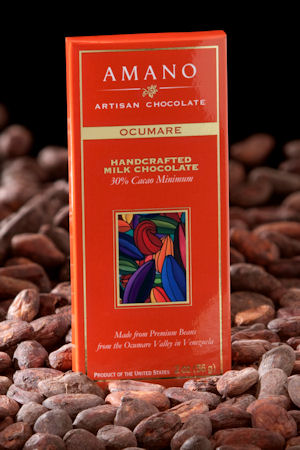
    The company is called Amano Artisan Chocolate. According to the company’s website: “In 1996 while on his honeymoon, the founder of Amano, Art Pollard decided that there had to be better chocolate than what was being produced in the United States or that of numerous imported varieties. Thus began his search for the ultimate chocolate, which is not bland or flat, but has superior flavor and texture.”

    Of course, my wife and I had to give it a try. I can report that it’s lovely. I prefer the rich milk chocolates; she likes the darks. Again, this isn’t chocolate meant for eating. It’s chocolate meant for savoring. You want to take it slow. Let the taste linger and the secondary flavor notes have their moments. Besides, you won’t need to devour it. My wife, who is about as hooked as any junkie, can get her daily fix of joy with just one little square. If you’re a chocolate lover, you’ll want to give it a try. You can order from their website at www.amanochocolate.com or visit their outlet store in Orem.

    *

    Because we live where we do, we have to travel two gazillion miles each year for shopping, movies, and to watch our kids play sports. After a few trips, burgers make me want to gag. Which is why I’m so happy I found a fabulous fast food soup and sandwich joint. It’s called Jason’s Deli.

    No, it’s not THAT kind of deli—one of those narrow little places full of weird smells and coolers displaying things not meant for human consumption. This is a soup and sandwich shop. Tall ceilings. Lots of tables. Yummy smells. And food that is reasonably priced and delicious.

    I just dragged my wife to the one in Orem this last weekend. She got a Mediterranean Chicken on flatbread with hummus and loved it. I ordered my favorite, their California Club—sprouts, avocado, cheese, and tender meat on a flaky croissant. I always get it with the vegetable soup and fruit, which comes with a small bit of dipping yogurt. And if I’m really hungry, I get a piece of their strawberry shortcake made with real whip cream, not the canned stuff. When you tire of all the same old joints, go to Jason’s Deli. They have locations in Layton, Salt Lake, Murray, and Orem. You can find addresses at www.jasonsdeli.com.

    *

    A week ago Friday, I brushed my teeth, sat down on my bed, and thought I’d read a chapter or two of a book and then go to sleep. At two o’clock a.m. when my wife came home, I was still reading. She got ready for bed. I moved into the bathroom and told myself I would read just one more chapter. Just one. At four o’clock a.m., I finished the book.

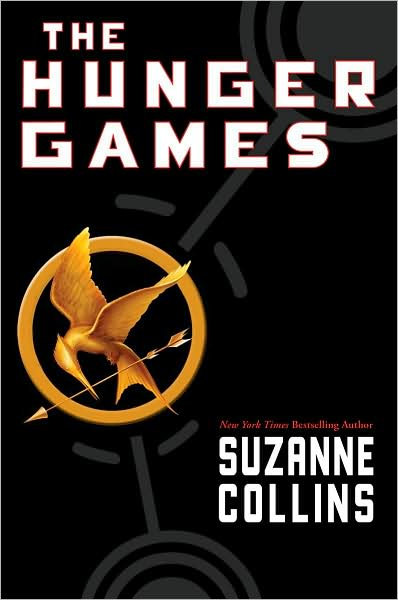
    Folks, The Hunger Games by Suzanne Collins is delicious ride from start to finish. It’s about sixteen-year-old Katniss Everdeen, who lives in a post-apocalyptic world in the country of Panem where North America once stood. In the book, the Hunger Games are an annual televised event where the government of Capitol chooses one boy and one girl from each conquered district to fight until only one is left alive. The games exist to remind the districts they have no hope of any rebellion. The problem is that Katniss’ younger sister, who couldn’t hurt a fly, gets chosen to fight. So Katniss volunteers to take her place. But Katniss’ troubles only multiply. Not only are most of the other 23 fighters bigger than she, but they include a young man from her community who has been nothing but kind to her.

    The book is written to young adults, but this is one of those stories like Twilight and Harry Potter that will please adults as well. It delivers moments of wonder, tenderness, and humor. There’s a love subplot. But it’s the poignant suspense that will literally prevent you from putting the book down.

    I loved this book so much, I immediately read it again as an author to see how she pulled it off and found myself having an even more powerful experience the second time. It’s a best-seller and is going to be made into a movie. But don’t wait. I’m not. There are two more books in the series. And both are in the mail (thank you, Amazon). Here’s to two more joyful (and sleepless) nights.

    Share
  • The Righteous Mind by Jonathan Haidt

    After this year’s presidential election I emailed my sister, a smart, super-competent, true-blue, bleeding-heart, save the weeds and snails liberal, who volunteered to do campaign work for Hilary Clinton in Colorado during the 2008 Democratic primaries and, of course, voted loudly for Obama in this last election.

    “Are you kidding me?” I asked. “How can anyone who doesn’t have a carrot for a brain want more of the same? I don’t get it. Obama? How can so many Americans be that gullible? I’m totally baffled.”  And that puzzlement wasn’t rhetorical. I was seriously baffled.

    “Are you kidding me?” she replied. “Mitt Romney? How could anyone vote for Mitt Romney?  Talk about baffled.”  She went on a rant listing all of Romney’s supposed deeds and positions of sooper evil and stupidity. Then she questioned how anyone could support that Hitler in his Mormon clothes.

    Okay, she didn’t say “Hitler,” but she did claim he was “evil” and “despicable.” And when I think of evil, my first thought is always of folks like Mitt Romney.

    Vicente Carrillo Fuentes, leader of the Juarez drug cartel, which is responsible for hundreds of gruesome murders each year and . . . Mitt Romney. Oh, yeah. They’re like brothers. In fact, wasn’t Romney’s dad born in Mexico? And, hey, one of Romney’s sons even knows Spanish. That boy wasn’t on a church mission there. No, he was making connections with the jefe!

    Sonia Montoya-Cadena, the one who ran a human trafficking ring in Denver exploiting young girls for sex and . . . Mitt Romney. Yeah, Romney’s just like that. If he could run slave brothels, he’d do it in a minute to make a buck. In fact, doesn’t Bain Capital own a couple of slave brothels in Greenland?

    I wanted to unload. I was prepared to destroy her with fiery analysis of the first order.

    Thundering analysis.

    Mountain crushing logic.

    She was so freaking blind.

    Except,

    She had never actually considered what I had to say in any of my previous emails. It never mattered how powerfully vast my brilliant logic was. She’d demonstrated wax ear time and again. All of my intellectual might never made a dent in her liberal force field. I brought blood and thunder, and it always seemed to bounce off her like bullets made of styrofoam.

    Nevertheless! Clinton? Obama? Save the gerbils?

    I made a comment that sent Smart Sister into DEFCON 5. Foolish me. Eventually, her liberal ire cooled and she decided to order comrade Putin to stand down and not push the big red button.

    Meanwhile, I started to think.

    I noted that if things didn’t change, the Republicans wouldn’t be winning the presidency any time soon. If they couldn’t beat Obama when the economy was in the tank, then there really was no hope. Which meant we are going to end up like Greece, with continuing inflation (which is not only an intentional, government-led annual pay cut on the disgustingly rich, filthy rich, and annoyingly rich, but also on the middle class, poor, destitute, and various and sundry hoboes everywhere), huge debt, stupid taxes, ridiculous health care, Soviet-style redistribution, blah, blah, blah.

    I asked myself, like all Republicans did, what could we conservatives do differently? Follow Obama’s example and improve our operations to get the vote out? Build up a conservative La Raza? Do the right thing with the children of illegals? Get someone willing to land more blows on the opposition (Romney could have decimated Obama in debates two and three, but he didn’t; he totally failed to define his opponent).

    Maybe it was in the messaging. Maybe what we needed to do was develop something that actually changed minds.

    At this point a faint ding sounded in the distance in my mind. A small light bulb suddenly flipped on and illuminated a dark cubby of my mind.

    Hadn’t I just read about studies showing how a soap opera in Mexico, a radio play in Tanzania, and sitcoms in America actually changed viewer attitudes and behaviors about literacy, HIV, and abortion? Didn’t I already know about the power of concrete and vivid storytelling? Not sermon-telling, but storytelling.

    Why, yes. Yes, I did.

    Had I not witnessed the use of storytelling on U.S. television for, what, fifteen years by those wanting to build sympathy for homosexuals? (A good thing, even if I disagree with some of the gay agenda.) And the cheapening of sex by others? (A bad thing.) And the clearly conscious promotion of many other attitudes and beliefs via various media programs?

    I determined there was something to this.

    If people were going to vote for fiscal responsibility in Washington, something like this was going to have to be done. It wasn’t going to happen in flame wars.

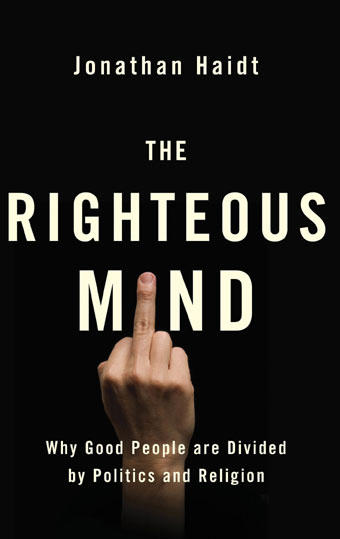
    About this same time I was browsing through the recent Radio West programs. I saw one called “The Righteous Mind.”  It was an interview of Jonathon Haidt about his new book The Righteous Mind: Why Good People Are Divided by Politics and Religion.

    Hey, wasn’t that addressing my question?

    The program blurb states: “Monday, our guest is the social psychologist Jonathan Haidt, whose latest book sets out to explain the root causes of the divisions in our society. At the heart of his argument is the idea that the human mind is designed to “do” morality. But when we separate into tribes – say political affiliations or religious denominations – we focus on different moral foundations. Haidt joins us to explain why he says we need the insights of liberals and conservatives to flourish as a nation.”

    I listened. And loved the program.

    Haidt shared a number of deliciously insightful things about how our mind works and how we choose our affiliations. He shared so many insights that I immediately requested his book at my library. The library ordered a copy for their collection. I, of course, was first in line to read it. I just finished the book.

    It’s one of the best books I’ve read all year.

    Haidt explains why my sister and I were both baffled by people who voted for the opposition candidate. He explains how human morality works. How our reason does not lead us to make the judgments we do, but instead more often acts like a lawyer to justify our positions to others.

    As soon as he explained that I saw how I had done that time and time again. For example, in this election cycle I blamed Obama for the economy. In the Bill Clinton re-election I vigorously argued that the President doesn’t have any effect on the economy and is lying if he takes credit for it. I’m not saying that Obama didn’t do things that might have hampered the recovery, but how did I know his actions exacerbated our problems? What evidence did I really have?

    Haidt explains that there are six basic moral bases then points out which ones drive liberals, conservatives, and libertarians, and how we can use that knowledge to disagree more constructively. He provides strong insights into how our reason and intuitions and judgments work, the evolutionary function of our morality, and how our wiring for group affiliation affects it.

    I didn’t agree with some of his conclusions. He sometimes takes his points too far. For example, he seems to suggest that people in cities are pre-disposed to be liberal. And that’s why they live there. Um, no. That’s not why they live there. They live in cities because that’s where the jobs are. The agricultural revolution made sure of that, remember? In his effort to explain the smaller biological basis of our beliefs, he also downplays the larger effect our families and groups have. But despite these excesses, he shares so many fresh and exciting ideas that they don’t matter. And he shares them all in such a fun and clear way that I couldn’t help but stay up late a number of nights reading this book.

    Do you know how much I wanted to trash Obama to my sister?  That Soviet-style central planner.  That drunken sailor spender.  That choom wagon pot head.

    And yet, you and I also know that will never work. I now know better why. Because of Haidt, I think I see a better way. I certainly see how I have done exactly what drives me mad about those who have drunk the opposition candidate’s Kool-aide. I see that I have my own conservative force field that deflects liberal bullets (and perhaps even blinds me to the truth sometimes). And why I need to watch my reason, that cunning lawyer part of my brain, as well as my intuition.

    Haidt, a liberal, has given me, a conservative, a great gift. I intend to use it. If you are interested in the two taboo topics of politics or religion, if you enjoyed Malcolm Gladwell’s book Blink or the Heath brother’s Made to Stick, if you want to find a better way to influence than flame wars (as fun as they can sometimes be), then I think you will enjoy the wonders Haidt shares in his fine book.

    Don’t just take my word for it. Listen to the Radio West program http://radiowest.kuer.org/post/righteous-mind for a taste of what awaits you.

    Share
  • Gandhi & Waiting for Superman

    Enthralling History

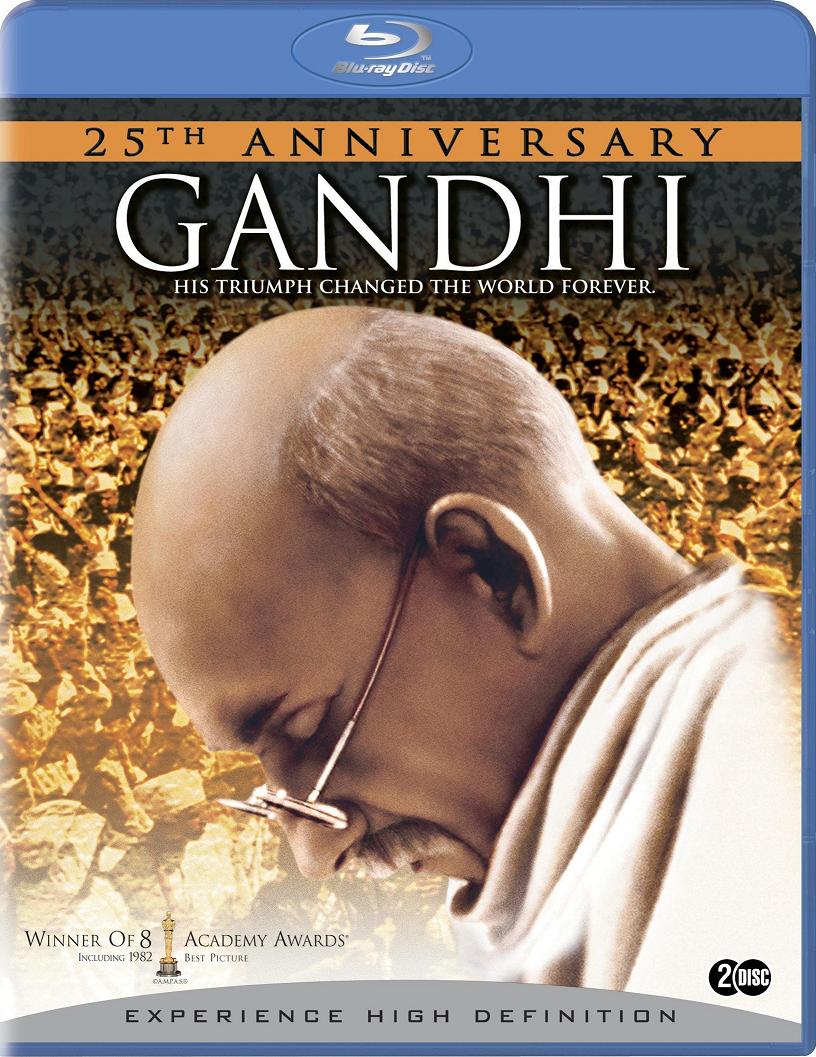
    The miracle of Netflix means that no movie or television show becomes unavailable. And there are so many produced over the last fifty years that are so very good. I recently re-watched the 1982 Gandhi with my family and have to say it is one of those fabulous movies that’s amazing every time I watch it. Not once did the production feel dated. And even though I’d already seen it, I found myself enthralled with the events and the character played so well by Ben Kingsley. No wonder it won eight Academy Awards.

    The movie portrays the last 50 years of Mahatma Gandhi’s life. It starts in 1893, when Gandhi, educated in the UK, is thrown off a South African train for being an Indian and traveling in a first class compartment. Gandhi decides to start a non-violent protest campaign for the rights of all Indians in South Africa. Quite an undertaking in those years. He’s arrested and finds himself in a number of dicey moments, but ultimately brings change.

    Gandhi is then invited back to India, where he is considered a national hero. Leaders there urge him to take up the fight for India’s independence from the British Empire. Gandhi agrees and mounts a non-violent campaign of unprecedented scale. Nothing of this magnitude has ever happened in the recorded history of the world. Which is why it’s a rough road all the way to the end.

    There’s suspense and humor and heartbreak in this movie. But it goes far beyond entertainment. This movie will move you. It has power to change. This movie is what history should be. If you haven’t seen Gandhi, or haven’t seen it in a while, let me recommend you get it this week and sit down with friends or family to enjoy a wonderful experience.

    Education and Teachers Unions

    I find it interesting that teachers in Utah, one of the most conservative states in the union, send almost three million dollars each year to the National Education Association. That’s the $165 in NEA dues for each of the roughly 18,000 union members in Utah. This is interesting because the NEA, the largest labor union in the United States, is one of the biggest supporters of the Democratic party.

    For example, the NEA spends roughly 85-90% of its direct candidate donations on Democrats. The NEA is quick to point out that those direct candidate donations do not come out of the three million Utah teachers send to them, but from additional donations to one of their political action committees. It’s illegal, in fact, to contribute directly to candidates with money received from union dues. However, there are a lot of other ways to support candidates and causes in addition to direct donations. 

    Mike Antonucci, a teacher’s union observer, explains just how that works in his article “How Much Does the NEA Spend on Politics”. The upshot is that the NEA can spend as much as they want on politics with their dues. And the lion’s share of that spending goes toward liberal causes. ACORN, for example, has been a beneficiary of NEA grants.

    Now, I don’t see anything wrong with that. People should be able to donate to whatever cause they think is important. The NEA has just as much right to make their voice heard as anyone else. I just think it’s interesting that so many conservatives have been led to donate their cash to these causes. And it’s not just in Utah. About 60% of NEA members identify themselves as conservative or independent. And yet they donate to these liberal causes via the union. What’s even more ironic is that most of them probably do not personally donate anything close to that to conservative candidates and causes. It’s not like teachers have tons of extra cash.

    It’s a neat trick to get conservatives to donate so much money to liberals. And perhaps some teachers feel it’s the price they have to pay for the services they want from the union. I would think it would be better to start another union, but that’s me. However, this is not the only kink teachers unions have introduced into the education system.

    I’m not going to argue that teachers unions are evil. These unions arose in a time when female teachers were heavily discriminated against. They do some good things. But mixed in with the good is, well, you’ll have decide for yourself if it smells.

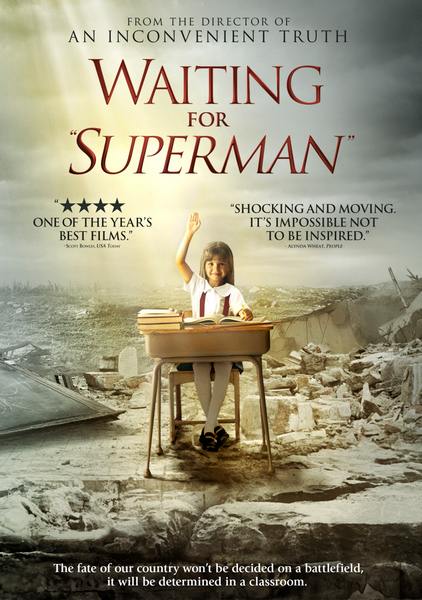
    A great place to begin is with the documentary Waiting for Superman. You should know this movie came out of the gate with a huge strike against it in my mind–it’s produced by Davis Guggenheim, the same guy who did An Inconvenient Truth. Good grief, that’s all I wanted was another two hours of Chicken Little running around saying “sky is falling, the sky is falling!”

    But I didn’t find any of that in the film. For example, the film doesn’t say all American schools are awful. It doesn’t say teachers are terrible. Contrary to what the movie’s critics claim, including the NEA and its many state and local affiliates, the film doesn’t suggest charter schools or standardized testing are the silver bullet answers to our issues. I simply didn’t encounter the sensational propaganda others claimed would be there.

    No. What the film does is examine some of the issues in our current system, which put so many children at a disadvantage, and the role the teacher unions play. It does not, as some critics claim, go on to suggest any solutions. It presents a problem, experienced by real parents and children right now, then poses a question: what can be done?

    I found it eye-opening and thought-provoking. I think it’s a must-see. If you have children or grandchildren in school, if you’re one of our many fine teachers or school administrators, you’ll want to watch this movie and then ask yourself that same question. What can be done? What works? What’s best for the children? And does the current way our unions operate work in any way against those interests? For those who elect not to go into immediate union-attack or union-defense mode, I think this film will introduce some valuable points to the discussion about education.

    Share
  • Laff and Learn

    My daughters have introduced me to Studio C, a comedy program that started with The Divine Comedy troupe on the BYU campus who all growed up and were given a gig on TV. They do these  hilarious skits.

    Like “Drivers Ed”

    And “Blind Date“.

    And “Shoulder Devil”.

    I hope you enjoy them as much as I do.  BTW, Studio C airs weekly on BYUtv.

    My oldest daughter introduced me to Olan Rogers. Who is crazy.  Here’s “Ghost in the Stalls”

    If you loved that, I think you’ll enjoy “Midnight Claw”  

    Sock slouch . . .

    Next is John Branyan’s brilliant “Three Little Pigs”. My family and I have been enjoying this for months.

    Finally, here’s something to think about. You know I enjoyed Jonathan Haidt’s book The Righteous Mind. Matt Wolfe pointed it out his TED talk to me. The one that preceeded his book. If you’re conservative, like I am, this talk will, at times, annoy you.  But the ideas behind it are great.

    If you want to be equally enlightened but less annoyed, let me suggest you watch Bill Moyer’s interview of Haidt instead.


    Share

One Comment

  1. Wife and I watched :The Finest Hours” (on Netflix) last night. Great movie and great story!

    If you have a big screen, you almost need Dramamine! Recommended!

Comments are closed.