“Like Diamond Tears From Emerald Eyes” by Eric James Stone

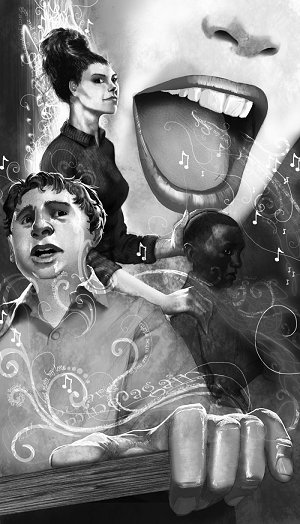
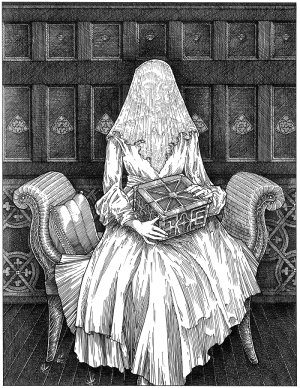
Take a runty warrior and a slow-witted wizard who have been contracted by a veiled bride willing to pay diamonds to anyone who would fetch an oh so precious box from the castle of a dead wizard. A castle from which no adventurers have returned. Well, except for Thogar the Mighty. Of course, he’s now Thogar the One-Armed Madman. But let’s not quibble.

At first blush you might think, whopee, another fantasy quest. But this isn’t another quest. This is an Eric James Stone quest, and it’s full of surprises.

I was fortunate enough to hear Stone read his story at CONduit this May. He takes his listener on a ride full of humor and adventure. Then, if you’re like me, he will make your heart lurch. I loved this story down to the last line which is pure poetry.

You can find it in issue 13 of Orson Card’s Intergalactic Medicine Show.

Share

Similar Posts

  • Why I’m gonna purchase Correia’s MONSTER HUNTER ALPHA on Monday

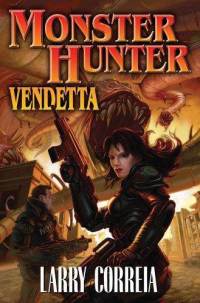
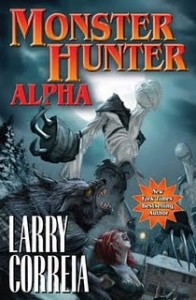
    I’m going to be purchasing MONSTER HUNTER ALPHA by Larry Correia on Monday.  Here’s why.

    Reason #1: Correia delivers the goods

    I read MONSTER HUNTER INTERNATIONAL.  I ended my review of MHI saying Correia was going to be a writer to watch.  Well, for those of you who haven’t been watching, not only did Correia  sell tons of copies of MHI, he also made the New York Times best seller list with his second book AND sold TV rights to the MHI series to a major TV producer.

    Why would his books generate such a response? Because they’re so dang fun. That’s why. And Correia isn’t just a flash in the pan one-trick pony. Far from it, as demonstrated by Reason #2 below.

    I told you in my review of INTERNATIONAL that I don’t read books that don’t suck me in. I don’t give them 70 pages to warm up and get going.  I don’t care who wrote the book. I don’t care if the author is a big lug with guns. I don’t care if he has status and money or friends who can put the hurt on me. I don’t care if the author is my girl’s godmother and brings me Walker Shortbread Rounds (which are evil cookies that exert mind control). If the book bores me, I put it down. That doesn’t mean that books which bore me aren’t wonderful. Sales and numerous reader exclamations of delight and satisfaction attest to the the fact that many are. It’s just that I’m a reader of little patience. I love it when a book starts with a bang and keeps me hooked. And Correia’s books do exactly that.   

    Reason #2: Correia’s getting better

    I read MONSTER HUNTER VENDETTA recently.  I should have reviewed it, but I’ve been so freaking busy I barely have time to shave or appear in public because I’ve begun to look like the Unabomber. But here’s the deal with VENDETTA–it’s better than INTERNATIONAL.  

    Yes. Better.
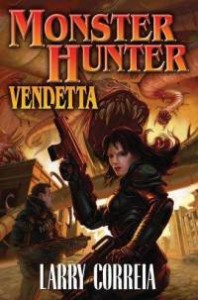
    Well, expect for maybe the opening paragraphs. The quote and first few paragraps that opened INTERNATIONAL are hard to beat. This doesn’t mean the opening of VENDETTA is weak. Heck, no. VENDETTA trounces the openings of most novels and steals their lunch. And then it continues to delight all the rest of the way through. It’s just that it didn’t quite deliver the same jolt as MHI. But 500 or 503 watts, what’s the difference?

    So with VENDETTA, are there guns? Yes.

    Monsters? Check.

    Action? There’s action galore.

    It appeals to my testosterone right off the bat (even though Larry reports that a good number of his readers are women). But there are guns, monsters, and action in a lot of stories that stink. What Correia does is not only give us great action, but he also gives us wonderful new situations.  For example, you will never see the scene set in the ghetto of Birmingham, Alabama that appears here in any other book. Never. It’s a Correia original. But even more important than great new situations, is that he gives us a first-person narrator who is delightful to be around. I’m talking about Owen Zavasta Pitt, the accountant monster hunter. His responses to the situations he gets in just make me laugh, as do a number of the responses of the other characters. My only wish is that Correia would tone down some of his language just a bit.  It is possible even when writing about military characters.  But you can’t have everything, and Owen’s such a loveable lug, I overlook it.  Hey, maybe Milo will help him out on that as the series progresses.

    Furthermore, Pitt isn’t the only character who I find delightful or interesting.  In VENDETTA there is also Holly, Agent Franks, and G-Nome, one of Correia’s best yet. Of course, there’s also the Doctors Nelson, the former hunter Carlos, Melvin the troll, and Earl Harbinger who have their own moments to shine. As do Owen’s dad and brother. And Dorcas, MHI’s secretary with the plastic leg. Heck, I even like Susan.

    So how many is that–eleven already? How many wonderful characters do most authors give you in one book? Two or three?

    And that’s one of the things that is is better with VENDETTA than INTERNATIONAL.  In INTERNATIONAL, as good as it was, some of the characters just didn’t get the stage time they needed to shine. But here Correia declutters his scenes so we’re not trying to focus on too many people. The result is that those we do focus on each have the their moments and lines. The other thing I noticed was that Correia deftly orients us to each new situation. For those of you who are writers, let me suggest you look at Correia’s technique in VENDETTA for introducing characters and settings. 

    Another good thing: he wipes out a Girls Gone Wild camera crew in the first chapter. Anyone who does that gets a few points in my book.

    VENDETTA doesn’t attempt to become bigger in scope than INTERNATIONAL (as if it could). Instead, it feels like another episode in a great tale. And I’m happy with that because it promises more to come. I’m back with characters I like and situations that make me laugh and magic crap that evokes some oohs and aahs and every now and again makes me wish I’d come up with it for my own use.

    Finally, VENDETTA leavens the humor and action with a couple of poignant moments. I’m thinking of a chapter with Carlos, another scene with Owen’s dad, and one with G-Nome.

    As you can see, VENDETTA’S packed with goodness.

    With ALPHA, I’m expecting to hook up with at least one of the gang for more exploits and laffs. Will Correia get even better? I have no doubt he will. But who cares–he’s already delivering great stuff.  

    Reason #3 Did I mention that Correia makes me laugh?

    Just didn’t want to forget that. Furthermore, I swear I read somewhere that laughter increases your health and makes you live longer. So not only am I getting a great read, I’m extending my days upon the land.

    Reason #4 Monday is a special day

    Not any old Monday. But the 25th of July.

    Why is this special?

    Because it’s the first day of the first week of the book’s release.

    Now I know I’m going to buy this book sometime. But buying it in the first week lets me do something I might not be able to do at some other time.

    Because Correia has given me hours of pleasure, I figure I can tip him for his good service by helping him make the best seller list again.  And a book has the best chance of making that list in the first week of release. (For those of you interested in how that works, Larry gives a good explaination here.) Making a best seller list does all sorts of good things for an author, and, as a result, that author’s readers.

    So Monday’s my day to leave the tip on the table and tell the owner to keep up the good work.

    The New York Times list is a good one. But I’d like to see him on the USA Today list, which measures sales so much better than any other list out there. My fingers are crossed.

    For those of you who are Correia fans or who have been putting off giving his stuff a go, now’s the time to either get MHI and begin the series or ALPHA and continue the delight.

    EDIT: After I posted, I couldn’t wait and just went ahead and processed my order. Pre-orders will count in that first week, and after writing this I couldn’t resist. Looking forward to more hours of laughter and some great characters.
    Share
  • Animals Make Us Human by Temple Grandin

    Which animals do you think have a better life: family dogs or cattle on ranches?

    Think about it. Cattle get branded and tagged and slaughtered. Some live only a year or two. Meanwhile, Fido gets the run of the house, a spot in front of the couch, and chew toys.

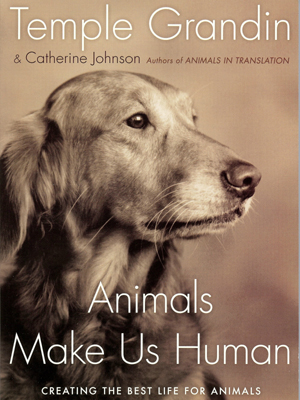
    You might be surprised to know that many cattle have it better than pampered family pets. That’s the claim Temple Grandin makes in her fascinating and practical book Animals Make Us Human: Creating the Best Life for Animals.

    Grandin is not a beef industry lobbyist working smoke and mirrors PR to make ranchers look good. She’s a practical, down-to-earth, get-your-hands-dirty animal scientist who has revolutionized the beef industry and had an impact on many others. She isn’t a vegetarian, and has no intention to become one. But she does love animals. And her insight and research has made the lives of millions of animals better.

    When people ask her how she can work in the beef industry instead of being an activist against it, she says that all things die. It’s the cycle of life. She has no problem eating animals. In fact, she believes that our relationship with the animals we use for food is symbiotic–mutually beneficial. But she also believes that if we’re going to raise them, or keep them as pets, we need to give these animals a quality life.

    So what do animals need for a quality life? Should we give our cattle rubdowns? Let our dogs roam through city streets? What do our cats and pigs and horses need? Is it freedom?

    Her answer, surprisingly, is that focusing on freedom really isn’t a good guide for trying to give animals a good life. Not because freedom is a bad thing, but because it’s too confusing. Instead, she believes that we should be basing animal welfare on the core, or what she calls the “blue ribbon,” emotion systems in the brain. The key systems are SEEKING, RAGE, FEAR, PANIC, and PLAY.

    The rule is simple: avoid stimulating the negative emotions; do stimulate the positive ones. In the book she shares what she knows about how to do that for dogs, cats, horses, cows, pigs, chickens and other poultry, wildlife, and animals in zoos.

    Grandin is always fascinating, and with her trademark style of stories and practical insights, she shares what the research and her more than 30 years of practical hands-on experience working with animals has taught her. You’ll learn why your chickens need a place to hide, even if you’ve fenced out every fox and skunk with thirty feet of concrete; what makes pigs happy; why clicker training is so successful with horses; why you might want to consider the color of your cat’s fur; why leaving your dog locked in the house with food and plenty of toys may actually be very stressing. You’ll even learn to look at zoo habitats differently. Each chapter focuses on a different animal and how to avoid the negative and stimulate the positive blue ribbon emotions. This is not touchy-feely fluff. It’s not the ranting and raging of someone who thinks the planet would be better of without humans. It’s the insights of someone who is rigorously scientific, down-to-earth practical, and passionate about animals.  

    In her own words: “Everyone who is responsible for animals needs a set of simple, reliable guidelines for creating good mental welfare that can be applied to any animal in any situation.” Read her book to find out what she suggests these should be. If you own pets or raise animals, I think you’ll love this read. If you’d like to sample the first chapter, you can at Grandin’s website:  http://www.grandin.com/

    Share
  • “Somewhere My Love” by Stephen Mark Rainey

    The latest issue of Intergalactic Medicine Show just hit the net. Of course, I don’t have time to read. But how can I help myself when Mark Rainey’s “Somewhere My Love”  starts with this line: “She lived in our town’s one and only haunted house.”
    What a hook!

    And soon I found myself reading a wonderful story about a boy and a teacher, who happens to be a witch.

    But the kind of witch Rainey writes about is not some gal with warts and a black hat. Nor is she some kind of Alice Hoffman Practical Magic type.

    She’s a Rainey witch.

    And this tale is about a boy caught in her class in school. I loved it. It evoked perfectly how some teachers affect us boys. I haven’t read any of the other stories in this issue yet. But I can still say the measley $2.50 subscription for issue 12 is worth it if only so you can read this one story. Besides, even if you don’t have time to read it, scroll down on the TOC and you’ll see you don’t have to–you can listen to Scott Card read the thing to you.

    Share
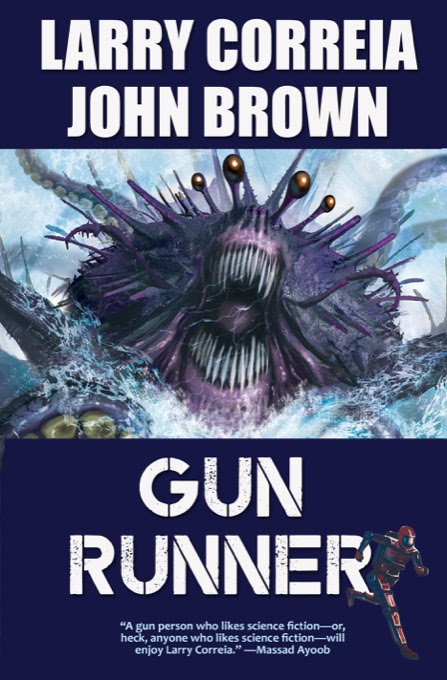
  • Your Chance to Win a Signed Copy of Gun Runner

    Gun Runner, the action-packed sci-fi novel I wrote with Larry Correia, comes out in February. But we already have copies.

    And I’m happy to announce that this week you have a chance to WIN A STACK OF FIVE SIGNED SCI-FI AND FANTASY NOVELS that includes Gun Runner.

    Even if you don’t win, you can still get copies at Uncle Hugo’s that were signed by both Larry and I! You can pre-order one now, and get it shipped to you as soon as they’re available in February.

    Uncle Hugo’s is one of those rare indie bookshops that specializes and knows their customers. They’re the oldest independent science fiction bookstore in America.

    Share
  • |

    Animals in Translation by Temple Grandin + Interview

    I have read few books more interesting than Temple Grandin’s Animals in Translation: Using the Mysteries of Autism to Decode Animal Behavior.

    In it she describes her world of autism and how it helped her a perspective into animals unlike any other expert in the field. She can literally see what we block out. It’s part of what helped her make a huge impact on the meat packing industry.

    And it’s had an impact on her. When she was visiting her grandparents once in Arizona, she saw a squeeze chute in operation on a ranch. She saw the cattle calm, for the most part, in the chute. “Watching those cattle calm down,” she says, “I knew I needed a squeeze chute of my own.” So when she got back home she built a human-sized one with the help of her teacher. “I got through my teenage years thanks to my squeeze machine and my horses.”

    Grandin is not a vegetarian activitst (she eats meat herself) or a brutal slayer. She has taken the middle ground between the fantatics that want to prevent the consumption of all meat, on one hand, or totally disregard the life of animals on the other. She writes, she says, “because I wish animals could have more than just a low-stress life and a quick, painless death. I wish animals could have a good life, too, with something useful to do. I think we owe them that.”

    Temple has dozens and dozens of insights into animals, which she shares here. You’ll learn about rapist roosters and the problem of one-trait breeding, whether prediators find it “fun to kill a groundhog” (yes, she says, they do), whether animals have true cognition, and so many other things it’s impossible to list them here. I was fascinated on every page. If you have anything to do with animals, you’re going to LOVE this book.

    Get the book. Read it. In the meantime, watch a 27 minute interview of Temple by Doug Fabrizio on Utah NOW. I caught this on TV flipping through the channels and couldn’t look away. This is a fascinating interview of a fascinating woman.

    Source:Temple Grandin on Utah NOW

    Share
  • Gandhi & Waiting for Superman

    Enthralling History

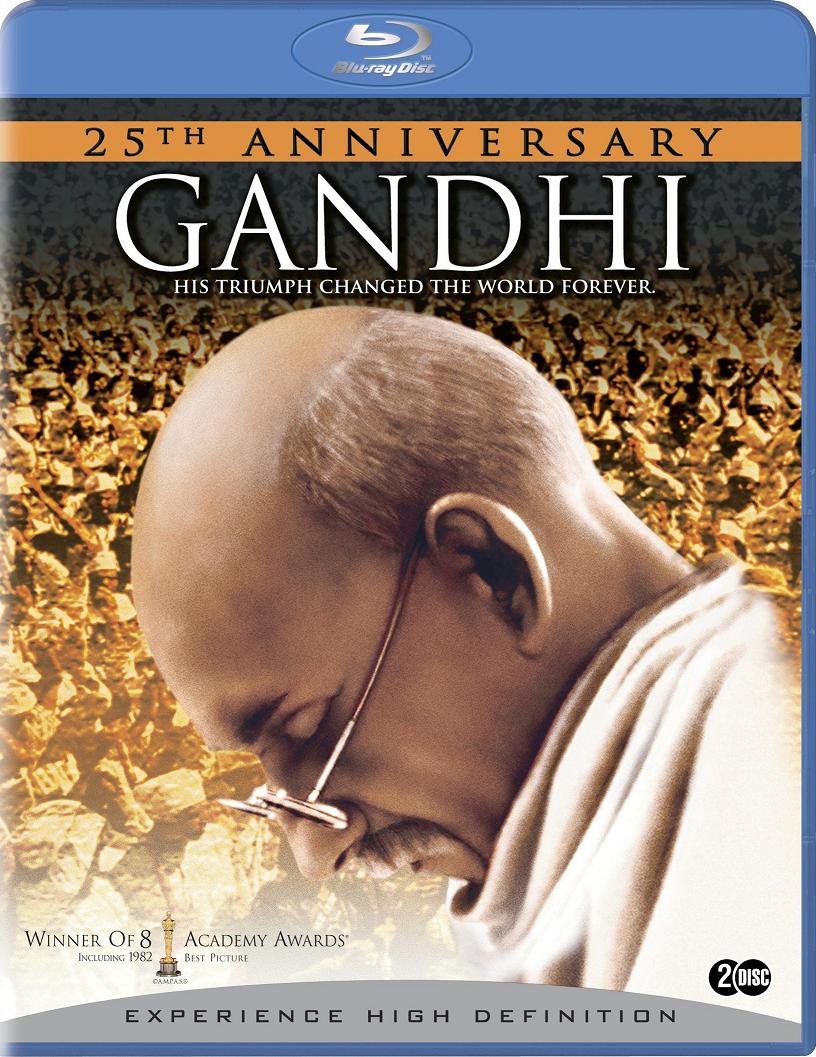
    The miracle of Netflix means that no movie or television show becomes unavailable. And there are so many produced over the last fifty years that are so very good. I recently re-watched the 1982 Gandhi with my family and have to say it is one of those fabulous movies that’s amazing every time I watch it. Not once did the production feel dated. And even though I’d already seen it, I found myself enthralled with the events and the character played so well by Ben Kingsley. No wonder it won eight Academy Awards.

    The movie portrays the last 50 years of Mahatma Gandhi’s life. It starts in 1893, when Gandhi, educated in the UK, is thrown off a South African train for being an Indian and traveling in a first class compartment. Gandhi decides to start a non-violent protest campaign for the rights of all Indians in South Africa. Quite an undertaking in those years. He’s arrested and finds himself in a number of dicey moments, but ultimately brings change.

    Gandhi is then invited back to India, where he is considered a national hero. Leaders there urge him to take up the fight for India’s independence from the British Empire. Gandhi agrees and mounts a non-violent campaign of unprecedented scale. Nothing of this magnitude has ever happened in the recorded history of the world. Which is why it’s a rough road all the way to the end.

    There’s suspense and humor and heartbreak in this movie. But it goes far beyond entertainment. This movie will move you. It has power to change. This movie is what history should be. If you haven’t seen Gandhi, or haven’t seen it in a while, let me recommend you get it this week and sit down with friends or family to enjoy a wonderful experience.

    Education and Teachers Unions

    I find it interesting that teachers in Utah, one of the most conservative states in the union, send almost three million dollars each year to the National Education Association. That’s the $165 in NEA dues for each of the roughly 18,000 union members in Utah. This is interesting because the NEA, the largest labor union in the United States, is one of the biggest supporters of the Democratic party.

    For example, the NEA spends roughly 85-90% of its direct candidate donations on Democrats. The NEA is quick to point out that those direct candidate donations do not come out of the three million Utah teachers send to them, but from additional donations to one of their political action committees. It’s illegal, in fact, to contribute directly to candidates with money received from union dues. However, there are a lot of other ways to support candidates and causes in addition to direct donations. 

    Mike Antonucci, a teacher’s union observer, explains just how that works in his article “How Much Does the NEA Spend on Politics”. The upshot is that the NEA can spend as much as they want on politics with their dues. And the lion’s share of that spending goes toward liberal causes. ACORN, for example, has been a beneficiary of NEA grants.

    Now, I don’t see anything wrong with that. People should be able to donate to whatever cause they think is important. The NEA has just as much right to make their voice heard as anyone else. I just think it’s interesting that so many conservatives have been led to donate their cash to these causes. And it’s not just in Utah. About 60% of NEA members identify themselves as conservative or independent. And yet they donate to these liberal causes via the union. What’s even more ironic is that most of them probably do not personally donate anything close to that to conservative candidates and causes. It’s not like teachers have tons of extra cash.

    It’s a neat trick to get conservatives to donate so much money to liberals. And perhaps some teachers feel it’s the price they have to pay for the services they want from the union. I would think it would be better to start another union, but that’s me. However, this is not the only kink teachers unions have introduced into the education system.

    I’m not going to argue that teachers unions are evil. These unions arose in a time when female teachers were heavily discriminated against. They do some good things. But mixed in with the good is, well, you’ll have decide for yourself if it smells.

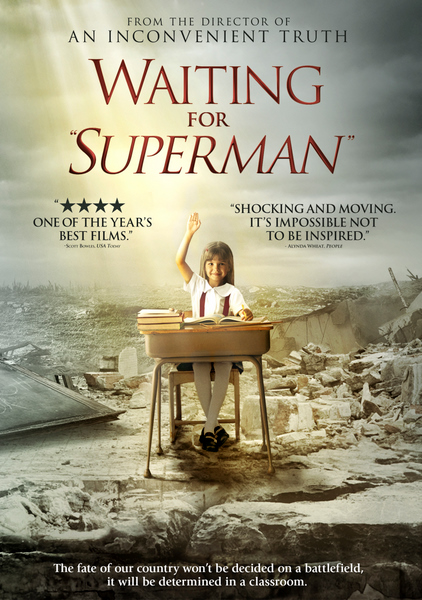
    A great place to begin is with the documentary Waiting for Superman. You should know this movie came out of the gate with a huge strike against it in my mind–it’s produced by Davis Guggenheim, the same guy who did An Inconvenient Truth. Good grief, that’s all I wanted was another two hours of Chicken Little running around saying “sky is falling, the sky is falling!”

    But I didn’t find any of that in the film. For example, the film doesn’t say all American schools are awful. It doesn’t say teachers are terrible. Contrary to what the movie’s critics claim, including the NEA and its many state and local affiliates, the film doesn’t suggest charter schools or standardized testing are the silver bullet answers to our issues. I simply didn’t encounter the sensational propaganda others claimed would be there.

    No. What the film does is examine some of the issues in our current system, which put so many children at a disadvantage, and the role the teacher unions play. It does not, as some critics claim, go on to suggest any solutions. It presents a problem, experienced by real parents and children right now, then poses a question: what can be done?

    I found it eye-opening and thought-provoking. I think it’s a must-see. If you have children or grandchildren in school, if you’re one of our many fine teachers or school administrators, you’ll want to watch this movie and then ask yourself that same question. What can be done? What works? What’s best for the children? And does the current way our unions operate work in any way against those interests? For those who elect not to go into immediate union-attack or union-defense mode, I think this film will introduce some valuable points to the discussion about education.

    Share