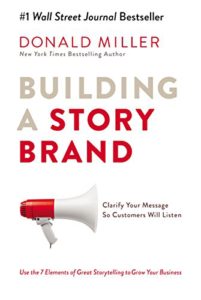
The Good Guy by Dean Koontz

Good_Guy_Dean_KoontzSo let’s say you’re in a bar and a guy shows up, mistakes you for someone he was meeting, and you play along. Just for fun. You’ll let him know his mistake sooner or later. But then he slides a manila envelope to you and says, “Half of it is there. Ten thousand. You’ll get the rest when she’s gone.”

Would you say, “Sorry, dude. I’m not your hit man”? A woman’s life is on the line.

In Dean Koontz’s The Good Guy, Tim Carrier is too astonished to react. The man leaves. Carrier opens the envelope. There’s ten thousand in cash and a 5×7 of the woman. She’s Linda Paquette who lives in Laguna Beach.

A few minutes later the actual killer shows up. Makes the same mistake. What do you do?

Carrier plays along, tells the man that he’s decided not to go through with it and to take the ten thousand as a “kill fee.” The man leaves. Carrier goes to alert the woman. But very soon the killer and those who hired him realize the mistake. And now they’re after both Carrier and the original target.

The Good Guy was a wonderful story of action and suspense. It’s also a love story. Koontz portrays a deadly and frightening killer. But he also includes lots of banter between Carrier and Paquette. Both have secrets which are interesting to learn. And then at the end of the book, when you think it’s all about a kill, Koontz twists it. Then he twists it again. I loved this story and enjoyed the characters immensely. But the book went beyond mere entertainment. It’s a book that also makes you think about how you live.  

I should be working hard on draft 3 of Curse of a Dark God. But every now and again I need a break. I’m glad I took this one with Koontz.

Share

Similar Posts

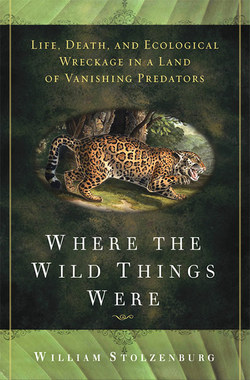
  • Where the Wild Things Were by William Stolzenburg

    I live among ranchers in northern Utah, people whose livelihood walks around on four legs. People who can lose thousands of dollars of future income if they lose one good cow or calf. People who think one of the dumbest things to happen in recent times in the West is the reintroduction of wolves to Yellowstone. Now, I don’t agree with them, but I do think they have good cause.

    Contrary to what people will tell you, wolves do not kill just for food. Wolves kill because they like killing. If you don’t believe me, then believe Temple Grandin, an expert on animals, who asks the question in her Animals in Translation: “Is it fun to kill a groundhog?” 

    She reviews a number of studies done on animals and answers with an unequivocal yes, predators love to kill. In fact:

    “Animals like having their predatory killing circuits turned on, and will turn them on themselves if you show them how. When you think about what predatory killing is all about, of course it ought to feel good, because predatory killing means dinner. Killing a mouse feels good to a cat the same way finding a luscious ripe banana feels good to a primate.” (p138)

    What this means is that when wolves come to kill sheep, they don’t just kill one old and decrepit ewe. No, they do what they did on a neighbor’s land a few miles from my home. They maim and kill five or six. Not because two wolves were that hungry, but because it was fun and they could.

    Sheep are like popcorn to wolves. Compare them to elk or other wild animals. The reason why wolves tend to indeed eliminate the young, weak, and old in the wild is that those poor specimens tend to run a bit slower than their brethren. In the wild, slow means dead. For the wolf, it’s hard work to run down an elk or buffalo. And if you’re a hungry son-of-a-gun, you’re not going to go chasing after another dinner while there’s fresh meat in front of you because the rest of the pack will eat it before you get back. And you ain’t going to catch one on your own anyway. But sheep aren’t elk. Cattle aren’t elk. They’re bred for meat, not sprinting. Sheep are easy meat. And the wolves can’t help themselves.

    But even if the wolves exercise restraint and eat just one, that’s cash. That’s clothes for the kids. That’s a mortgage. That’s heat. And it’s a danger for children as well (adults I don’t worry about: who cares about a few devoured adults?). My girls like to hike. And while I’m sure wolves will usually stay away, a sick or starving wolf will risk humans just as sick and starving mountain lions do. You get a different mindset about predators when you live up where I do. When they’re not something you see caged up in the zoo or on PBS.

    For all these reasons and others, I couldn’t wait to read Where The Wild Things Were by William Stolzenburg. Folks, the book is fabulous–well-written and interesting from page one to the very end. The key point is that predators play a huge role in maintaining a healthy diversity of both plant and animal life in any given ecosystem. Stolzenburg begins with starfish and moves through otters, killer whales, jaguars, mountain lions, and wolves. Along the way he reveals just how important killing is.

    Yes, killing is critical to life as we know it.

    Because without it, the most dominant herbivores will end up eating all the food. And this will end up killing off most of the other herbivores. It will kill off the great variety of flora in any given system. It can turn a paradise into a hell as Stolzenburg illustrates with the islands of Lago Guri in Venezuela. 

    Of course, some people think the answer is to bring back all the big predators. The rewilding supporters want to populate the West not only with wolves, but also lions (African), jaguars, cheetahs. Heck, they salivate at the idea of giant Pleistocene bears that can run faster than a horse (yeah, I want one of those up where the Boy Scouts camp).  I think it’s good the wolves are back in Yellowstone. But I don’t want packs of wolves eating my friend’s herds and daughters (of course, maybe a few Boy Scouts are okay). Still, I believe there has to be another alternative. What that is I don’t know. But we all need to think about it. We do. And great way to start is by reading Stolzenburg’s book.

    Share
  • Good Stuff! Unbroken by Laura Hillenbrand

    hillenbrand-unbroken-4

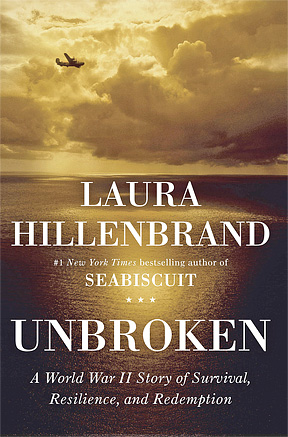
    Unbroken by Laura Hillenbrand is the finest book I’ve read in some time.

    It’s tells an engrossing and true World War 2 story about Louis Zamperini, who started out in life as a steal-and-run trouble-maker. He was a kid who’d try the patience of Job. His mother tried to reform him to no avail. His father administered spankings, but physical punishment seemed to have no effect. Louis was constantly in trouble with neighbors, school mates, cops, teachers, store owners.

    Louis’s older brother thought Louis would succeed if he were to just receive some positive attention. He thought track, a very popular sport at the time, was just the ticket. Louis loved his brother. In 9th grade he tried running, but the workouts chafed, and then one day he had an altercation with his parents. Louis figured the train would take him away from all his problems. So he ran away, hopped a boxcar, and very quickly learned the freedom of the rails wasn’t freedom at all. It sucked.

    When he returned home, defeated, he decided to submit to his brother’s plan. This time it was just what the doctor ordered. Louis ran like mad. He broke records. He got a scholarship to USC and broke more. Louis ran in the 1936 Olympic Games. He didn’t win, but he would the next time they came around. However, the world was in turmoil back then, and Germany and Japan had their own plans which changed Louis’s life forever. He became a bombardier in the Pacific theater.

    And that’s where I’m going to stop. The story that awaits you is truly amazing. And Hillenbrand brings it to life with surprising and powerful details. From start to last, I was enthralled. And towards the end, just when I thought the story was over, it took a turn that lifted it from being just another WW2 story with plenty of action to a tale that goes right to the heart of what it means to live. I wept, not for Louis’s pain, as awful as that was, but for something far more vital.

    When I first saw the book, its sepia-washed cover turned me away from the tale. But with so many folks talking about it, I thought I’d give the first pages a go. I was delighted, but didn’t make it a priority. Not long after that, my 10th grade nephew told me how much he enjoyed it, and that prompted me to go back (and I’m so glad I did). It’s not that this is a kid’s book or that my nephew has the maturity of an older man. He’s definitely got some reading chops, but it’s not about an advanced writing style either. What is enthralling old and young alike is Zamperini’s story and Hillebrand’s skills in telling it.

    How much do I like this book? I’m reading it again, slowly this time, so I can savor every word. Let me recommend you do yourself a favor. If you read one book this year, make it Unbroken.

    Share
  • Good Stuff! Science as Storytelling

    I know the word ‘atheist’ presumes a lot, but it’s just an easier way of describing someone with a rational mind.

    Joe Konrath, a self-avowed atheist, awesome fighter for authors, and leader in the indie author movement, said that almost a year ago in his Konrants post.

    My response then was the same as it is now—right, the rest of us run around eating socks and wondering if there really are gerbils under the hoods of our cars.

    Shoot, wouldn’t it be great if we could get us one of them rational minds?

    In the comments of that post, I had a very interesting conversation with Joe about God, belief, and evidence. Joe brought up a number of valid points about the errors we can make when we formulate beliefs using something other than science.

    However, he didn’t point out the errors we can make when we formulate beliefs based on science. He didn’t want to talk about the limits of science. What he wanted to focus on was the claim that if God existed, we should not only be able to observe things about him, her, or it, but we should also be able to subject those observations to the scientific method.

    If we couldn’t do that, Joe claimed, then there was no rational basis for believing in God. God did not exist until he was proven to exist. And the only way to do that was by using science.

    So here’s the question: is Joe right?

    To answer that, we first have to understand what science is. And what it is not.

    And I’m happy to report that earlier this year I read probably the best article explaining what science is that I’ve ever read. It’s called “Science as Storytelling” and was written by Barry R. Bickmore, a professor of Geological Sciences at BYU, and David A. Grandy, a professor of Philosophy at BYU with a strong interest in the philosophy of science.

    Hold on, John. Is this some anti-science thing?

    Not at all.

    In fact, it’s just the opposite.

    They wrote the first version of this article help students with simplistic views of science and who tended to “dismiss scientific conclusions that challenge their preconceived notions—especially those connected with religious or political views.” They also wrote it to help scientists who are not religious, downplay the supernatural, or “share in certain inaccurate views of the nature of science.”

    What they have fashioned is a way to “help science students (and professors) gain a more productive view of both the nature of science and the science-religion interface.” And, as good scientists, they put their theory to the test and found that their approach was indeed effective at both secular and religious colleges.

    So, is Joe right? Is science the only way to prove or disprove God?

    Let me suggest you read the article. Let me suggest that this is the most productive way of talking about the issue that I’ve found. As you read, you might want to look for the answers to the following questions:

    • What makes science different from things like astrology?
    • Does science have any blind spots?
    • Is science fiction because its stories change?
    • Is it possible for natural phenomena to exist upon which you can do no science?
    • Under what circumstances could science prove the existence of a God?

    If you’re interested in science or religion, I think you will love this article. Not only because it clarifies and reaffirms science, but it also because it helps us understand its limits.

    I would, of course, be interested in your responses to it. And in another post perhaps we can talk about how we’re supposed to proceed about a subject when we can’t do science.

    Share
  • Good Stuff! StoryBrand

    Folks running for office, especially our wonderful citizens running for local county offices, business owners, and any of the rest of us who what to persuade people to listen, I’ve got something for you.

    I will bet that most of you aren’t aware that you’re muddling your message and losing votes, sales, and converts to your causes.

    Of course, maybe you’re way ahead of me. I thought I knew what I was doing. I have a master’s degree in business, spent a few years in business consulting, have created a few small startups, and currently am a product manager for large software company. Despite all of that, I had somehow missed something vital. Something simple and powerful. Something that has a dramatic effect on sales, votes, and converts. On getting people to even listen to what I had to say.

    And I’m not alone. I saw another company struggling with it this weekend.

    On Saturday I went and watched the latest Marvel movie at a theater in Logan. One of the pre-movie video ads was for a local company called Conservice. I don’t know how many thousands of dollars they spent on the ad they played. Or how much they spent on the many other ads we’ve seen over the years. But when it finished, I turned to Nellie and said, “I still don’t know what that company does or why I should care.”

    “I know,” she said. “I know.”

    We were both baffled. After years of seeing their ads, we still have no idea what they do, how it would make our lives better, or what action we should take to use their service.

    They have wasted thousands and thousands of dollars on their marketing.

    There’s another local company that advertises during those pre-movie slots. It’s called ARS. I saw one of their ads this weekend as well. But it only reminded me of what I already know. I know exactly what they do, how it would make my life better, and what action to take.

    If you have a flood, fire, or plumbing backup—whatever—they clean it up. “Got a mess? Call ARS.” That’s their one-liner.

    If I ever have a mess, I will call ARS. I will never call Conservice. I have no idea what they do.

    What’s the difference here?

    Clarity.

    And what generates that clarity?

    A complete focus on the customer. The ARS ads are all about the customer and their problems and needs.

    The Conservice ads, on the other hand, are all about Conservice. We’ve been in business for x years. Here’s what our building looks like. Here’s a worker planting a bush. Blah, blah, blah.

    The ARS ads are all about me, the guy in the theater seat, the thing I want and the problem I have. ARS features me as the hero in my own story. They present themselves as the helper—the Yoda or Gandalf or Haymitch who helps the hero get what they want. You got a mess? We’ll help you.

    The difference in the power of the two ads is night and day.

    Of course this means it’s been verified that I’m a dolt. After all the years in business and education, I should have known this. But the surprising truth is that I’m not alone.

    I look at the marketing we do at the billion-dollar company I work for and see this same issue everywhere. Millions of dollars spent on muddles. I look at company websites on the internet and see more muddles. I recently listened to pitches by many of our local citizens running for office and saw the same thing. It seems this communication muddle afflicts a lot of us.

    About five years ago, when I began investigating an idea for a new company, I came across the Lean Startup method pioneered by a guy at Stanford and began to see the light. But a few months ago, the curtains were completely pulled aside to let in the sunshine. And wow! What a revelation.

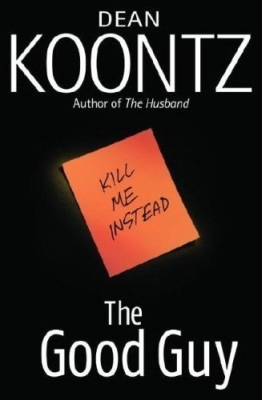
    If you want to get people to listen, you have got to hear what Donald Miller has to say. He’s consulted with thousands of companies on how to clarify their message so people will listen. His framework and method make clarifying your message so easy.

    He calls it the StoryBrand framework, and it’s brilliant. What it does is help you clarify your message so that a customer or voter or whoever will know within three seconds:

    1. What you offer
    2. How it will make their life better
    3. And what action they should take if they are interested

    But it goes beyond that. It helps you actually define what you should be offering in the first place. It’s a powerful product development tool. I’ve started using this in all my business efforts. And in my training and presentations.

    For example, I just used it to develop a presentation I delivered at a huge writer’s conference last week. The results were that after the presentation, I had a line of people wanting to thank me. I had people telling me I made them cry. Others wanted to give me a hug. They were grateful. I had people tell me it was the best presentation of the conference.

    This was not because I’m brilliant. I’m a dolt, remember. It’s because I used the StoryBrand framework to focus on those people. Their needs. Their problems. Their aspirations.

    If you’re running for office, if you have a business, if you want to persuade anyone to do anything, then let me recommend you listen to this guy and learn about this framework.

    Get the revelation. Get out of the muddle. And get people to listen.

    And when you’ve finished the Miller stuff above, read How to Write Copy That Sells by Ray Edwards, the guy who has partnered with Miller. It’s all about clarifying your message as well.
    Share
  • Good Stuff! The future, Service Depot, Bear Lake ice cream shops

    Huge changes are coming to our world soon.

    They’re going to affect your health, wealth, and job. They’re going to take us back into space and make us live longer. They are changes that almost blow the mind. And they’ve already begun.

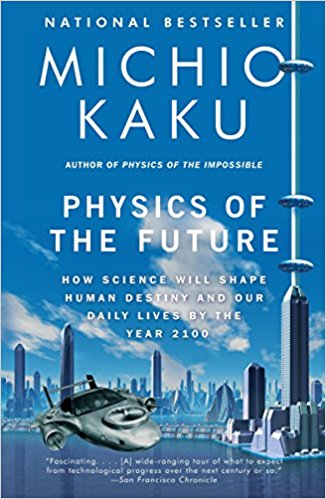
    Michio Kaku is a world-renowned physicist that has always been fascinated with all sorts of science. And in Physics of the Future, he looks at what’s currently happening in computing, robotics, biotechnology, medicine, energy, and engineering, and explains how it’s going to affect our daily life between now and 2030, 2030 to 2070, and 2070 to 2100.

    The insights are awesome. The book’s a feast. Page after page.

    Did you know, for example, that there are parts of our DNA that have genes for certain traits, but those genes are turned off? For example, humans have genes for growing fur all over our bodies, but they’re turned off. Snakes have genes for legs that have been turned off. Chickens, one of the distant progeny of the dinosaurs, have genes for growing tooth buds in their beaks (imagine the grandchildren being chased by one of those bad boys). There are many more such dormant genes, and in the not too distant future, we’ll be able to turn them on.

    Did you know that today we can regrow organs? So far scientists can grow skin, blood, blood vessels, heart valves, cartilage, bone, noses, and ears from your own cells. They’ve be able to grow windpipes and bladders. Imagine damaging your eye and being able to grow a new one that your body won’t reject.

    Did you know that we’ve already been able to hook people up so they can move objects with their minds?

    And what about computers and robots? Many futurists fear the robots will become smarter than us and take over the world. Will they? Kaku explains why this isn’t likely with the technology we currently have and what really makes up intelligence.

    These are just a couple of the dozens of thrilling topics Kaku explores. And he makes it all so easy to understand and entertaining.

    A new world is coming, full of perils and exciting opportunities. An Kaku gives us an intelligent sneak peek.

    If you wonder what our world will be like in the near future, if you enjoy science and technology, if you want to be informed, then you will love this book. When you finish it, you can then move onto his book The Future of Humanity, which delves deeper into what we can expect in the near future in space. You can then move to The Future of the Mind, in which he explores in more detail what we can expect in understanding, enhancing, and empowering our minds.

    *

    I’m not a handy man. I’d like to be one. I respect folks who know how to fix things immensely. But I have a million other things on my plate and don’t have the time to learn how to be one. And so when our oven and gas range started having problems, I was staring at spending around $2,000 to replace it.

    But then I found Service Depot in Logan, Utah. They do handyman, appliance, HVAC, and plumbing repairs. I called them. They send out someone all the way to Bear Lake to look at the issue and give me a bid. He was clean-cut and smiling. When I invited him in, he stopped to put booties on to make sure he didn’t track dirt into my house. We arranged an appointment, and a few days later another fellow who was equally clean-cut and pleasant to deal with showed up and fixed the range for about one-fourth of what it would have cost to replace it.

    These folks were prompt to respond, friendly, and bootied. If you need repairs done around your house, my experience with them was great.

    *

    If you enjoy ice cream and are in the Utah Bear Lake area, I have two recommendations. For soft-serve shakes and cones, you can’t do better than Zipz in Garden City. Some soft-serve is icy and thin. Not enjoyable at all. But Zips uses a soft-serve ice cream with a higher fat content, which makes it deliciously smooth and creamy. And when you add flavors—oh baby! We recently went there as a family and got shakes. They have a lot of different flavors, but I got the Nutella and pretzel mix and floated up a bit toward heaven. If you like chocolate at all, you have to try that shake.

    The other place is in Laketown. The Sinclair gas station turned their old car wash into a hard ice cream shop called, ta-dum, The Car Wash Ice Cream Shop. It’s bright and clean. The youth scooping the ice cream there are smiling and friendly. And they have a flavor called Coconut Castaway that’s scrumptious. Think of a Mounds chocolate bar, but in ice cream. More heavenly floating. What makes it even better are the reasonable prices.

    If you’re in the mood for ice cream, if you want to get a bit closer to heaven, then do yourself a favor and get yourself to one of these shops.

    Share