Good Stuff! StoryBrand

Folks running for office, especially our wonderful citizens running for local county offices, business owners, and any of the rest of us who what to persuade people to listen, I’ve got something for you.

I will bet that most of you aren’t aware that you’re muddling your message and losing votes, sales, and converts to your causes.

Of course, maybe you’re way ahead of me. I thought I knew what I was doing. I have a master’s degree in business, spent a few years in business consulting, have created a few small startups, and currently am a product manager for large software company. Despite all of that, I had somehow missed something vital. Something simple and powerful. Something that has a dramatic effect on sales, votes, and converts. On getting people to even listen to what I had to say.

And I’m not alone. I saw another company struggling with it this weekend.

On Saturday I went and watched the latest Marvel movie at a theater in Logan. One of the pre-movie video ads was for a local company called Conservice. I don’t know how many thousands of dollars they spent on the ad they played. Or how much they spent on the many other ads we’ve seen over the years. But when it finished, I turned to Nellie and said, “I still don’t know what that company does or why I should care.”

“I know,” she said. “I know.”

We were both baffled. After years of seeing their ads, we still have no idea what they do, how it would make our lives better, or what action we should take to use their service.

They have wasted thousands and thousands of dollars on their marketing.

There’s another local company that advertises during those pre-movie slots. It’s called ARS. I saw one of their ads this weekend as well. But it only reminded me of what I already know. I know exactly what they do, how it would make my life better, and what action to take.

If you have a flood, fire, or plumbing backup—whatever—they clean it up. “Got a mess? Call ARS.” That’s their one-liner.

If I ever have a mess, I will call ARS. I will never call Conservice. I have no idea what they do.

What’s the difference here?

Clarity.

And what generates that clarity?

A complete focus on the customer. The ARS ads are all about the customer and their problems and needs.

The Conservice ads, on the other hand, are all about Conservice. We’ve been in business for x years. Here’s what our building looks like. Here’s a worker planting a bush. Blah, blah, blah.

The ARS ads are all about me, the guy in the theater seat, the thing I want and the problem I have. ARS features me as the hero in my own story. They present themselves as the helper—the Yoda or Gandalf or Haymitch who helps the hero get what they want. You got a mess? We’ll help you.

The difference in the power of the two ads is night and day.

Of course this means it’s been verified that I’m a dolt. After all the years in business and education, I should have known this. But the surprising truth is that I’m not alone.

I look at the marketing we do at the billion-dollar company I work for and see this same issue everywhere. Millions of dollars spent on muddles. I look at company websites on the internet and see more muddles. I recently listened to pitches by many of our local citizens running for office and saw the same thing. It seems this communication muddle afflicts a lot of us.

About five years ago, when I began investigating an idea for a new company, I came across the Lean Startup method pioneered by a guy at Stanford and began to see the light. But a few months ago, the curtains were completely pulled aside to let in the sunshine. And wow! What a revelation.

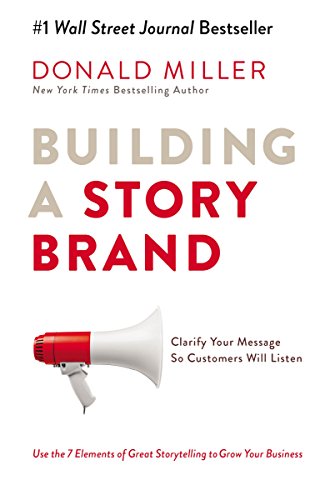
If you want to get people to listen, you have got to hear what Donald Miller has to say. He’s consulted with thousands of companies on how to clarify their message so people will listen. His framework and method make clarifying your message so easy.

He calls it the StoryBrand framework, and it’s brilliant. What it does is help you clarify your message so that a customer or voter or whoever will know within three seconds:

  1. What you offer
  2. How it will make their life better
  3. And what action they should take if they are interested

But it goes beyond that. It helps you actually define what you should be offering in the first place. It’s a powerful product development tool. I’ve started using this in all my business efforts. And in my training and presentations.

For example, I just used it to develop a presentation I delivered at a huge writer’s conference last week. The results were that after the presentation, I had a line of people wanting to thank me. I had people telling me I made them cry. Others wanted to give me a hug. They were grateful. I had people tell me it was the best presentation of the conference.

This was not because I’m brilliant. I’m a dolt, remember. It’s because I used the StoryBrand framework to focus on those people. Their needs. Their problems. Their aspirations.

If you’re running for office, if you have a business, if you want to persuade anyone to do anything, then let me recommend you listen to this guy and learn about this framework.

Get the revelation. Get out of the muddle. And get people to listen.

And when you’ve finished the Miller stuff above, read How to Write Copy That Sells by Ray Edwards, the guy who has partnered with Miller. It’s all about clarifying your message as well.

Share

Similar Posts

  • Good Stuff! Mike Loades on Swords and Bows

    Mike Loades is an expert on medieval fighting. He brings energy and, not just bookish learning, but insights from hands-on use. I loved the five-part Weapons That Made Britain television series for which he was the host and chief consultant. And so I looked to see if there was anything else he’d done. I found he’d written two books, which I am so happy to have read.

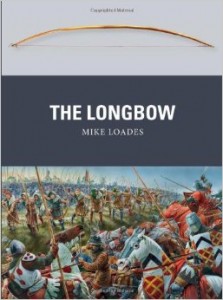
    The Longbow is not just a book about the longbow. It’s about its construction and how it impacted the development of armor, and types of armor, and the wood used for the bow, and how to make arrows, and what the various points were for, and how people trained, and then cared for the bows, and how it was used in war. And, again, the insights are not just bookish ones. He’s walked the battlefields. He’s used bows for years. He’s performed tests with them. It is a 80-page book that carries a monstrous bang for the buck and one of the best purchases I’ve made for my library. I loved it.

    MikeLoades_TheLongBow

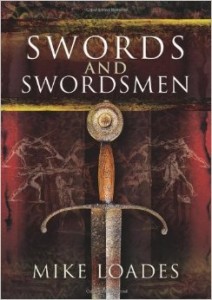
    Of course, after that experience, I had to get his Swords & Swordsmen. This book is almost 500 pages long, and I was rapt reading each page of it. Instead of focusing on one version of this weapon, Loades discusses exemplars of various types of swords through time, starting with the sword of Tutankhamun in Egypt all the way through the swords of J.E.B. Stuart and G.A. Custer in the American Civil War. There are 15 chapters all discussing different eras and swords that provide a mountain of insight. The love Loades has for and the practical experience he has with the topic shines through on every page. Just as with The Longbow, you’ll learn about use, construction, the interplay with armor, and much more. Heck, I got the ideas for at least three novels reading this book. I loved it as much as I loved the first.

    MikeLoades_SwordsAndSwordsmen

    If you enjoy military history and arms and armor, you will love these books. Guaranteed.

    While you’re waiting for them to arrive in the mail, treat yourself to five hours of fascinating video below.

    Weapons That Made Britain E01 – The Sword

    Weapons That Made Britain E02 – The Longbow

    Weapons That Made Britain E03 – The Lance

    Weapons That Made Britain E04 – The Shield

    Weapons That Made Britain E05 – Armour

    Share
  • Gladwell, Dish Cloths, and Higher Technology for Tuna

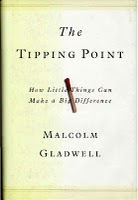
    The Tipping Point by Malcolm Gladwell

    After reading Made to Stick, I decided to read the book that inspired it—The Tipping Point: How Little Things Can Make a Big Difference by Malcolm Gladwell. I’d read Blink and Outliers by the same author and found both fascinating.  I’m happy to report The Tipping Point is just as good. In it, Gladwell examines what conditions cause ideas, behaviors, messages, and products to spread like outbreaks of infectious disease. 

    In the book he shares a number of situations and studies, including the sudden drop in crime in New York city in the 1990’s (which started by attacking graffiti in the subway), the dramatic popularity of the Blue’s Clues TV program with pre-schoolers, Paul Revere’s success in rousing the citizens along his route (versus the almost total failure of the other guy who rode that night), the resurgence of Hush Puppies shoes, syphilis in Baltimore, Columbia Record’s amazingly effective golden box ad campaign, and a dozen other outbreaks.  From all of these, he extrapolates three rules of social epidemics—The Law of the Few, The Stickiness Factor, and The Power of Context.  

    The arguments Gladwell presents are thought-provoking and powerful, but what makes him such a treat to read is how he writes.  Like the best science writers (in fact, I think he IS one of the best), he tells great stories with interesting characters.  He puts the reader on the edge of the seat with mystery, insight, and humor. He makes things that could be incredibly complex seem like first grade math. It’s as if he’s standing right there with you chatting about the subject. Moreover, he does all this from page one.

    Here’s what I mean. I left the book out on the kitchen table one night after reading a few chapters.  The next morning Super Wife came down to quickly eat breakfast and get herself to a meeting.  She made the mistake of opening the book to glance at the first page. Twenty-five minutes later she came up for air and realized she was going to be late and dashed out the door. The writing is pure mind control.  And I loved every minute of it.

    If you’re at all interested in advertising or how fads and movements start, if you want to affect the behavior of customers or local teens, if you just like to read how things work, I think you’ll love this book.

    Sunflower Dish Cloths

    I used to suffer along with subpar dish cloths.  There were the dish cloths with mesh on one side that were so small you had to rinse them after every wiping stroke.  There were the hand cloths made of terri that belonged in a bathroom but were repurposed and were far too big. Then were the cloths that had some slippery crap in the thread that refused to soak up water.  And there were the crocheted things that I think we should have put out of their misery when we first got them. Folks suggested we go to sponges. So we did sponges and had similar results.

    Oh, woe, woe, woe.

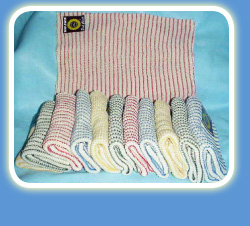
    Then a kind and loving friend gave us a set of mystery cloths that were incredible.  They were large enough that we didn’t need to rinse with every wipe.  They had this fantastic weave that was open, yet absorbent, and dried quickly.  And the weave had enough of a texture that you could use it to scrub.  We received those back in 1999.  They lasted us for years and gave us much kitchen cleaning joy.  But, alas, like all of mortality, those brave cloths finally began to give up the ghost. 

    My problem was that I didn’t know who had made those cloths and where I could get more.  We looked all over and couldn’t find them.  And then, at this year’s Garden City Raspberry Days craft fair, we saw them nestled amidst all the kitsch!  We bought as many as we could afford, and went our way rejoicing, fully expecting these to last us until we have grandchildren.  Maybe we’ll pass them down as priceless heirlooms.  Maybe some day they’ll be featured on Antique Roadshow.  Maybe they’ll be resurrected with us and become the official dish cloth of the Millennium when the world is renewed (it could happen).

    If you’re sick and tired of sponges and crappy dish cloths, let me suggest you pick up some Sunflower Dish Cloths made by Sangamon Mill. You can order them in bulk at http://www.sangamonmill.com/ , or in smaller quantities online from places like Amazon.

    Everiholder’s Veggie & Tuna Press & Strainer

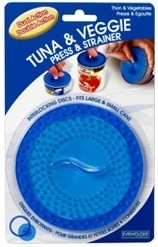
    Do you eat tuna? If so, you know the biggest pain is draining the can. But you don’t have to suffer along any longer using the lid, which doesn’t do a good job at all anyway.  There’s a better solution, which Super Wife discovered. It’s called the Tuna and Veggies Press and Strainer by Evriholder: http://www.evriholder.com/Tuna-Veggie-Press.asp.  With this little blue piece of higher technology you easily and quickly press all the juices away, and nothing slips out the sides. We love our.  You can order it online, although Super Wife found it at our local evil empire Wal-Mart store.

    That’s it for now.  In the next review, I’m going to reveal two killer recipes over which all who partake will salivate and drool—Chocolate Éclair Cake and Dill Potato Salad.

    Share
  • The Husband by Dean Koontz

    TheHusband_DeanKoontzYou’re name is Mitch Rafferty. You’re a gardener. You have no past as a cop, spy, or Navy SEAL–you’re just a plain old petunias and begonias guy. You’re working in someone’s yard when you get a call on your cell phone. You answer. And the guy on the other end has your wife.

    He tells you that you will get him two million dollars or you’ll never see her again.

    You’re lost. This has to be a sick prank. You’re just a gardener. You know peat moss and mulch. You don’t have two million. Heck, you have, at the most, $11,000 in the bank. You tell him this. He tells you he knows.

    Then your wife screams over the phone. The wife who you love, who makes  you whole. They let her talk. It’s not just one man. And then, just to show you that they’re serious, they kill a complete stranger who is walking a dog across the road. They shoot him in the head. You know they’re watching you. You look around and can’t see where the sniper is hiding.

    You’re a gardener. They have your wife. If you go to the cops, they kill her. If you don’t deliver, they kill her. What do you do?

    That’s the premise of Dean Koontz’s The Husband. I listened to this on audio book, read by Holter Graham, and, folks, I don’t think a book has gripped me like this in a very long time. And that despite some quirks in the reader’s presentation. I’m coming to respect Koontz as a writer more and more. I can’t recommend this book highly enough. Go get it. Read it. Do it before they make the movie.

    Share
  • Dr. Horrible’s Sing-Along Blog

    I enjoyed Joss Whedon’s movie Serenity as well as many of the TV episodes of Firefly which featured the same characters and world. So when I saw Whedon had put up another movie called Dr. Horrible’s Sing-Along Blog and made it available over the internet, I had to watch it. And then watch it again, and again.

    I loved the characters. I couldn’t get some of the songs out of my mind. Some of the plot turns simply delighted. Here’s a preview.

    And here’s where you can watch it right now for free. It’s only 42 minutes long. Give it 4 minutes (literally). If you’re not hooked, let me know right here. I’d give it a PG-13 for some language and thematic stuff.

    Share
  • Good Stuff: Mexican Hummus

    I have been giving a new way of eating a go for the last few months. It’s high-fat, medium-protein, low-carb (HFLC).

    Zoinks!?

    High freaking fat, you exclaim. Has he gone mad!

    Well, possibly.

    One thing I do know is that I’ve lightened the load my godlike thighs have to carry by about twenty pounds, which is a nice thing. Oh, and by the way, I’ve paired this with intermittent fasting.

    Horrors!

    Yes, it is Halloween. Or was a few days ago.

    In a few more months, when I’ve given this method a good long test, I’ll explain exactly what this is all about. But I’ll tease you by saying that it seems the scientific community isn’t immune to bias and jumping the gun. Not even close. We’d like to think they are, all those men and women in their white lab coats, but they aren’t. In fact, there are a number of doctors and researchers right now demonstrating that the advice we’ve been getting about fat and carbohydrates since the late 1970s was wrong. Like 180 degrees wrong.

    Let me point you to some presentations you can watch about this right now.

    “The Two Big Lies of Type 2 Diabetes” by Jason Fung, MD

    “Reversing Type 2 diabetes starts with ignoring the guidelines” by Sarah Hallberg, MD

    “Therapeutic fasting” by Jason Fung, MD

    Okay, so with that lead up, who’s up for a delicious, high-fat meal? Here’s one of my favorites.

    I call it “Mexican Hummus.” I found it in Always Hungry? By David Ludwig, MD, PhD. He calls it “Cheesy Pinto Bean Dip.” Which isn’t a bad name, but isn’t inspiring. You might call it modern refried beans, but that sounds like something out of a can or glopped onto the side of your dish. But Mexican Hummus, that has some class. A little zip.

    Whatever you call it, it tastes great.

    Use as a dip for red, orange, or yellow bell peppers cut into strips. Or eat it as a side. I like it with baked chicken thighs. It’s also good with fajita veggies—sautéed peppers and onions cooked with lots of butter, salt, and a bit a chili powder—and some slices of avocado.

    MEXICAN HUMMUS

    1. Mix the following in food processor for 30 seconds or until smooth
      1. 1 C cooked pinto beans, drained and rinsed
      2. 4 tsp extra-virgin olive oil
      3. ¼ C water
      4. ½ tsp chili powder
      5. ¼ to ½ tsp salt
    2. Mix in ¾ C shredded cheddar cheese (you want cheddar cause it melts well)
    3. Heat in microwave or on stove until cheese just melts. Stir.

    HOMEMADE CHILI POWDER

    I don’t like the chili powder you get in the stores—it’s too strong, overwhelms everything I put it into, and gives me heartburn. So I found a recipe that’s awesome and make my own.

    Mix the following together. Choose the amounts in the ranges shown based on your tastes.

    • 2 tablespoon paprika
    • ¾  to 1½ teaspoon onion powder
    • 1½ to 2 teaspoon dried oregano
    • ½  to 1 teaspoon cumin
    • 1½ t garlic powder (optional)
    • ½ to 1½ teaspoon cayenne (optional, I put in barely a pinch; I do NOT like it spicy)

    HERB-ROASTED CHICKEN THIGHS

    This has got to be the easiest recipe on the planet for chicken.

    • 6 to 8 bone-in, skin-on chicken thighs (about 2 pounds)
    • 1 tablespoon extra-virgin olive oil
    • 1 to 2 teaspoons dried herb blend (Italian herb mix, poultry mix, lemon chicken mix, or chili powder above)
    • ½ to ¾ teaspoons of salt
    • ¼ teaspoon ground black pepper

    Instructions.

    1. Preheat oven to 350 degrees
    2. Grease a 9×9 inch baking dish with butter or some extra-virgin olive oil
    3. Put chicken skin side up in baking dish
    4. Brush with the olive oil
    5. Sprinkle on the herb blend, salt, and pepper
    6. Bake for 45 minutes.
    7. If you want, you can baste a couple of time through the cooking by spooning the juices in the baking dish over the thighs.

    Bon appetite.

    Share
  • |

    Writing Update: Curse, trebuchets, CONduit, book industry, & Robinson Wells

    As of 5 PM this last Saturday I have finished 15,000 words of the climax of Curse of a Dark God. I think I have another 10,000 to go and the book will be done. I’m so close to the end of this draft! So don’t let the progress bars fool you. The ending is coming together fabulously–lots of spectacle, big reveals, and major heroics. At least, I think so.
    While working on this, I had to spend a number of hours finding out how strong a wind must be to pick up humans and stones. I also needed to know the destructive forces of various classes of tornados and hurricanes. Why would I need to know such things? I write fantasy, for Leroy’s sake!

    (Yes, that’s good English; I’m a writer, and one of my prerogatives is to make up silly versions of common expletives using the names of friends and enemies.)

    Here’s why: I just can’t write if I don’t believe in what I’m writing. And when I’ve got monsters (skir) that can generate winds that will be used in a siege, well, I had to know the terminal velocities of what these creatures could throw, and what that might mean for fortress defense. I had to know the limitations and ramifications.

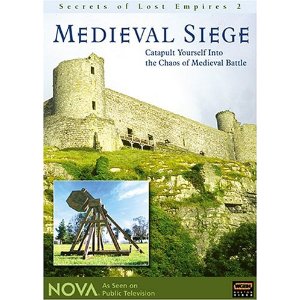
    I won’t rehearse all the fascinating details (and it WAS fascinating), but all that research did lead me to a wonderful documentary. It’s called Secrets of Lost Empires 2: Medieval Siege and was produced by Nova in 2000. You can get it on Netflix or Amazon.  In the film, fifty carpenters worked day and night to create and test what they dubbed “the fourteenth century version of the atom bomb”–the trebuchet (tre-byou-SHAY). The trebuchet as the most popular throwing machine in Europe during the middle ages. If you love the history of medieval war, you’ll love this film. You might want to add to it a reading of the excellent Ancient and Medieval Siege Weapons by Konstantin Nossov, which you can get via the inter-library loan program.

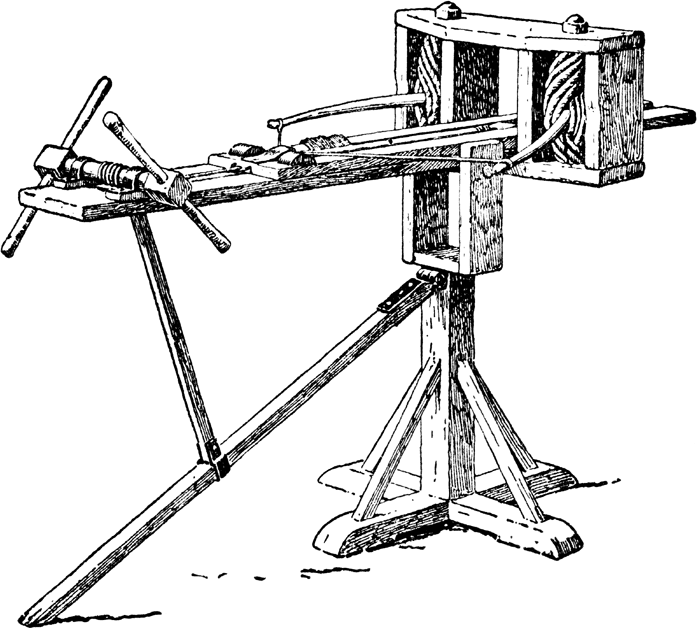
    I’ll share two cool factoids for you history fans. “Catapult” means “shield-breaker,” “cata” meaning break or penetrate and “pelta” being the name of the shield used by the Greek light infantry. The original catapults were NOT big spoons–they sped arrows and balls along a track like a crossbow. However, instead of using the spring force of a bow, they used torsion-springs, which is what you get when you twist fibers that want to be straight. In the case of catapults the fibers were ropes made out of animal sinews or hair (horse or human, a woman’s hair being considered the best) and soaked in oil. Click on the image to see a larger picture. 

    A modern example of a torsion-spring are those balsa wood airplanes with propellers attached to a rubber band that’s hooked to the belly of the plane. To fly them, you rotate the propeller round and round, twisting the rubber band. Then you let the propeller go. Because the rubber wants to be straight, it reverses the twist, spinning the propeller the opposite way you twisted it. 

    You might think these torsion-spring engines were weak. But one catapult was reported as being powerful enough that an arrow shot from it broke through a shield, and the armored warrior standing behind it, at a distance of 400 yards! Hence, the name.

    The other factoid is that “trebuchet” comes from the French term meaning to overthrow. If you saw Return of the King, you’ll recognize them as the engines used on the towers of Minas Tirith. Trebuchets are simply an evolution of the staff sling. When it came to breaking castle walls, there was nothing more effective until the cannon appeared. Of course, in my book I use them a bit differently. You’ll see.

    One funny thing. I watched the movie with my oldest who was just as fascinated with the engines as I was. When she was telling my wife about the film, she kept referring to trech-uh-butts. Which, I guess, is as fair an attempt at “trebuchet” as any. However, my wife kept picturing buttocks and couldn’t figure out what the heck my daughter was talking about–“You were watching what with your father?!”

    The French make things so hard . . .

    ***

    The Monday after CONduit I left for work in Mexico and then Vegas. I didn’t get back until this week. So I just wanted to say I had a great time at the con. Loved chatting with all the folks there.

    It was great to see the Larry Correia, Paul Genesse, Jessica Day George, Isaac Stewart (and his brother Dan), Mette Harrison, Eric James Stone, Darren Egget, Julie Frost, Sandra Tayler, LE Modesitt, Josh Perkey, Nicole (whose husband is an Orem cop and I lost his number), Daniel Who-I-Sacrificed-to-My-Editor, and the Dungeon Crawlers Radio guys.

    It was also nice to speak with Julie Wright who was one of the initial judges for the Whitney Awards. She’s always nice to chat with, but this time it was especially nice since she said reading Servant of a Dark God was like eating chocolate. I’ll take chocolate praise any day.

    I also met new author Janci Patterson who just sold a YA with a great premise. It’s called SKIP and is about a young girl whose parents are divorced. The girl has to go stay with her dad who lives in a trailer and is a bounty hunter. I’m a sucker for bounty hunter stories. Especially this one, because she goes out with him and falls in love with one of the guys her dad has to haul in. I’ve slaughtered the pitch, but I got that good old writer’s envy when she told me about it. Can’t wait to read it.

    I also got to see Barbara Hambly. I was at LTUE when she was there like 20 years ago. We loved her stuff. She suddenly dropped out of the writing scene in the early 90’s and now I know why–it appears Del Rey dropped all their midlist authors except for Anne McCaffery and someone else. Hambly was one of the causalities.

    ***

    After Hambly’s main address, I sat with a few authors and had a brief discussion about the book industry where it was suggested the industry was shrinking–fewer readers, fewer sales, doom, doom, doom. But that is exactly opposite all the data I’ve seen.

    1. Book sales have an annual average growth over the last seven years of 1.1%, adult paperbacks are growing 2.9% http://www.publishers.org/main/IndustryStats/indStats_02.htm or http://www.publishers.org/main/IndustryStats/documents/S12009Final.pdf . Now, this doesn’t show units sold. So it could be that they sold fewer units for more money per unit. Still, it shows at the very least that $$$ aren’t shrinking.
    2. The New Book Titles report here shows an increase in the number of titles: http://www.bowker.com/index.php/book-industry-statistics — 80% increase from 2002 to 2009.
    3. Reading rates are actually on the rise: http://johndbrown.com/2009/03/literary-reading-rates-on-the-rise/
    4. Finally, I contacted Bookscan for their numbers for an ALA conference I did last summer. This is just juvenile fiction, but the numbers are in units. Now, I don’t know if they added more sources to their database and so that caused a rise, but I explained to them what I was trying to do—see trends over time—and this is the data they provided. According to their numbers, more juvenile books are being sold now than in 2004. Click on the graphic below. This means we have more and more readers rising up through the ranks! One author asked how much of that was Rowling and Meyer. During that period books by those authors accounted for an average of 7-10% of all juvenile fiction. Bookscan categorizes “juvenile” as everything for kids. That means from Go, Dog Go up through what we consider Young Adult. R&M accounted for an average of 33-36% of what Bookscan categorizes as science fiction, fantasy, or magic within the juvenile mega-category. What all that means is the growth is across the whole category, not just with their books.

    So I’m very sanguine about the book industry’s prospects. Today’s youth seem to be able to play computer games AND read in great quantities.

    ***

    Finally, one last bit of news. Robinson Wells was the one of the main ones to start the Whitney Academy and the Whitney Awards. Well, he just got some fabulous news. Here’s the announcement from Publishers Marketplace: “Robison Wells’ YA debut dystopian thriller VARIANT, a modern-day LORD OF THE FLIES, set at a boarding school where not everything is as it seems and every day is a fight for survival, in a significant deal, in a three-book deal, to Erica Sussman at Harper Children’s.”

    For those of you who don’t know, here are the PM deal categories.

    • “nice deal” $1 – $49,000
    • “very nice deal” $50,000 – $99,000
    • “good deal” $100,000 – $250,000
    • “significant deal” $251,000 – $499,000
    • “major deal” $500,000 and up

    Oh, baby. Someday. Someday. Of course, I’m nothing but happy for Mr. Wells!

    Links

    Share