|

Superstars Writing Seminar DVDs

Aspiring authors, I wasn’t able to attend, but heard from a few who were that the Superstars Writing Seminar in Pasadena with Eric Flint, Brandon Sanderson, Dave Wolverton, Rebecca Moesta, and Kevin J. Andersen was EXCELLENT. 

See clips of parts of the videos here (still a lot of good info): http://www.youtube.com/view_play_list?p=2F211054CBD822A8

Purchase the full recordings on DVD or MP3 here: www.writerscanon.com

Topics include:

  • Econ 201 for Writers: Economics of Commercial Publishing
  • Inside Editors: How editors look at manuscripts, novels & short fiction
  • Dirty Secrets: What you need to know about being a Professional Author
  • From Slushpile to #1 New York Times Bestseller in 4 Years
  • Intellectual Property: How to Exploit Yours
  • Balancing Acts: Writing World & Real World
  • Agents: the A Word
  • Networking for Writers
  • Self-Promotion for Authors
  • Novel Contracts
  • Self-Publishing: Realities & Pitfalls
  • Pitching the Big Proposal
  • Two Heads Are Better than One: Collaborative Writing
  • New Media: Using It to Get an Edge
  • E-Publishing
  • Movies, TV and Authors
  • Anatomy of a Major Book Release
  • Myths of Publishing
  • Eleven Tips to Increase Your Writing Productivity
Share

Similar Posts

  • Work hard for 45 minutes, then take a break

    My first semester in college I earned a GPA of, ta dum, 0.68.  How do you earn such amazing grades? Well, I’ll tell you: the super secret strategy is to get an F in everything except ballroom dance. In that you get an A.

    I couldn’t squeeze any juice out of my textbooks, but I sure could fox trot.

    And I wasn’t partying. Dope and beer bongs were never for me. I wasn’t skipping class. I was lugging this huge valise around with every textbook I had. I think it weighed something like forty pounds. I was stitting in classes looking studious and taking notes. Well, except for physics which started early. 7:30 a.m. if I recall. What kind of a nut job takes a class at 7:30 a.m.? I did. I tried really hard to stay awake. I know I saw the professor shoot a gorilla with a tennis ball once. But the rest of the time I was in la la land catching z’s.

    A 0.68, and I was in the honors program.

    Obviously, I didn’t know how to go about learning. I’m glad the university didn’t give up on me. They put me on probation and told me I had to take a class on studying. A class on how to take the reponsibility for learning into my own tentacles. A class that shared techniques that actually helped.

    One of the techniques was taking breaks. You were to work hard for 30 or 45 or 50 minutes and then take a break. Why? Well, because studies had shown that someone who, for example, was going to study for two hours could learn more by taking a ten or fifteen minute break in the middle than someone who worked the whole two hours.   Spending more time on studying actually meant you learned less.

    I’ve found this method applies to more than just reading textbooks.  It also applies to writing. My practice is to set a time for 45-50 minutes. My goal is to write as hard and fast during that period as I can. To be totally focused on the task at hand. And then, when the timer dings, to literally get up out of my chair, walk about, and take a break. Then come back at the top of the next hour and start another 45 minute session.

    But I’m not the only one doing this. A lot of folks use this method. Author Annie Bellet writes about her use of it in The Quest for Productivity and shares some of the reasons why it helps her. Read what she says there. If you haven’t done a 45/15 or 48/12 session, give it a go. See if you don’t actually get more done in less time.

    Oh, btw, as for my grades, not only did I NOT drop out (or get kicked out) and become a hobo living in a trailer by the river, I ended up getting a 3.8 in my masters of accounting program. I think it’s safe to say I figured that school thing out. 🙂

    Share
  • The main thing about villains

    The main role of villains and antagonists in stories is to generate suspense, anxiety, and fear in the reader. They make it possible for us to worry that the hero will not be able to avoid a significant threat or remove a lack. There are other effects–mystery, poignancy (about the human situation like in Les Mis). But those are secondary.

    For the main things to happen the villain has to be a credible, significant, and immediate threat…all the way through the book until he or she is smushed or wins.

    If he’s not credible, the reader realizes there is no real threat. If the threat is not significant, who cares? If it’s not immediate, again, who cares?

    So how do we make a villain like that? We make him or her smart, powerful, a few steps ahead of the hero, and dedicated to doing something we root against (because it’s just plain wrong or because we love our hero and want the best for him and the villain is pitted against him). He has to be able to put the hero on his heels most of the way through the book, and our poor hero is scrambling to adjust.

    You can have all sorts of villains–liked by many or few, kooky or calculating, eccentric or plain, noble or sadistic–just as long as they remain significant, immediate, and credible threats. The minute they lose threat status, the game’s over because at that point fear, anxiety, and suspense in the reader vanish.

    Share
  • The Last Apprentice, Path Finder

    The Last Apprentice

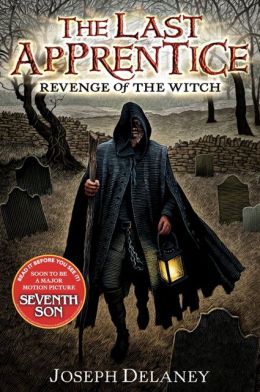
    Revenge of the Witch by Joseph DelaneyMy wife is always telling me I need to write a young adult or middle grade adventure series. One that’s directed at boys.

    Not because we have something against girls. We have four daughters, and my wife is adamantly pro-woman. But she finds very few books for her sixth-, seventh-, and eighth- grade male readers. I haven’t done a count, but I’m pretty sure that most YA is targeted at females. And this isn’t just me. I remember visiting a Barnes & Noble in Arizona with my voracious-reader nieces a few years ago and riding the escalator to the YA section. They told me that they called it the “girl-book section” because they figured that basically 90% of it was indeed for girls.

    Anyway, I think writing such an adventure would be a blast. I can already think of a number of near future or fantasy settings that would rock. But the time constraints I have right now just won’t allow me to start another series. Nevertheless, we sat down the other day and listed out all of the authors and books we knew that had a more male focus.

    For about the twentieth time she told me about Joseph Delaney’s The Last Apprentice series. It’s about a boy who apprenticed to the county Spook who is someone that takes care of witches, ghasts, ghosts, etc.  Her students love the stories. She loves them. She has bought the first ten volumes for her classroom. Why the heck wasn’t I reading them?

    Well, for starters, I just don’t like books about witches. And the first book in the series is called Revenge of the Witch. I don’t know what it is. Witches aren’t as bad a zombies–I am SO bored with zombies; I just don’t get the appeal. But even if they’re better than creatures that make no sense at all to me, I just don’t like spooky horror all that much. I loved to be scared, startled, and filled with dread. But not with witches.

    Witches? The gals with pointy hats?

    No.

    But this was, as I said, like the twentieth time she’d brought it up. We were driving over to Logan (that’s the big city for us), and stopped at the library, and we went over to the YA section. Unfortunately, they didn’t have volume one. But I did see many other volumes on the shelf and figured I needed to see what the competition was doing. So I perused. A few night later we went to her classroom, and there was volume one. The one about the witch.

    I sighed and opened it and began to read. And when I finished chapter one, I realized I kind of liked it. It was like the old Life cereal commercials—hey, Mikey!—and I wanted to read more. And so I took it home, read the whole book, and was delighted with the story. I liked it so much I promptly borrowed volume two, Curse of the Bane, from my wife’s classroom and read it as well. And I liked that one so much I checked out the third.

    The story is about Thomas Ward, the aforementioned apprentice. In book one, he is forced to face down some witches. But it’s Alice, the girl with pointy shoes, who made the story for me. Adding her as a character transformed it from a run-of-the-mill booger man story, into something special. No, I’m not going to give you a peek at the plot. Just know that this is the book where Thomas starts his apprentice, has to deal with that new life (and I thought Delaney captured that so well), and makes some apprentice mistakes that he then has to fix.

    In book two, we get to meet Alice and Thomas again, but this time they have to face down a different creature. And again, while the adventure is all cool, it’s the interactions with Alice that put it over the top.

    Having praised the books, I will say that I think Delaney has something against priests and religion in general because he paints it all with a negative broad brush. It’s too bad. Not only is such a view inaccurate, but showing the good and bad could add so many delicious dimensions to the tale. Maybe we’ll see that in later books. But even if we don’t, book two was still a great read.

    I’m looking forward to book three. If you’re in the mood to try something new, something about a young man and young girl that doesn’t revolve around romantic smoldering, something that a guy would like to read, let me recommend you join me in reading the volumes of The Last Apprentice.

    Pathfinder

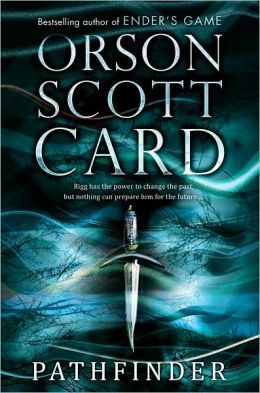
    Pathfinder by Orson Scott CardI was once in a discussion about religion with a friend who happens to be an atheist and fellow science fiction and fantasy writer. He’s a great guy. The blog posts he wrote about the passing of the woman he loved who was lost to cancer were poignant and wonderful–full of beauty. I read them and wanted to be a better man. Still, he and I disagree about God.

    I remember telling him that science fiction is the one genre that makes God more plausible than any other. At least, it makes my view of God more plausible.  Now, I do not want to talk religion in this essay. But it’s just hard for science fiction to leave the idea of creation and Adam and Eve alone. Witness the many stories over the years about these very things.

    Heck, even the recent movie Oblivion has references—are not Jack and Victoria much like Adam and Eve? Just think about it. Their paradise together as a team, the knowledge, the fall. The echoes are simply marvelous.

    Well, I just read another science fiction tale that provided a wonderful opportunity to think about these things. It’s Orson Scott Card’s novel Pathfinder. Now, the story isn’t about God. It’s not a biblical allegory. It’s not dressed-up doctrine. It’s a tale about a boy named Rigg with special abilities on a quest to find his real family and who he is. Along the way we meet some interesting people, especially one character named Loaf who leavened the whole tale. So there’s an interesting adventure and speculations about faster-than-light travel. But one of the chief delights for me was the questions and ideas this story raised in my mind about the creation of our own world—“Garden,” the name of the world, just begged for it.

    For example, a long-time staple of science fiction is the idea of terraforming—changing face of the flora, fauna, atmosphere, and climate of the planet to be hospitable to your species. If you believe in a God that is more a being of advanced technology than one of unknowable fantasy, doesn’t that present a new and interesting way of viewing the creation story? It does for me, and Pathfinder sparked ideas about this.

    The book also led me to think about life. First, Card has these characters called “Expendables.” They’re robots, but not really. They’re artificial intelligence. But not really. The way Card presents the expendables, you don’t think of silicon and steel and gears. You think of biology.

    You think of mosquitoes.

    You think about the fact that if we humans use intelligent machines, surely God must use intelligent machinery. So what kind of intelligent machinery does God employ? (Dude, that idea is just pregnant with stories!)

    Are viruses and bacteria machines? Are mosquitoes and beetles (please, let there be no mosquitoes in heaven)?

    The book prompts me to wonder. It prompts me to look at the life about me on our wonderful world with new eyes. It prompts me to think differently about some of my core definitions. In fact, there are some exchanges between a character and an expendable where they talk about the difference between humans and expendables and the definition of what it means to be human, especially given evolution.

    This is a book about an adventure, but also a book about ideas, which is as it should be. Science fiction is the one genre, more than any other, that marries character and plot with exploration of ideas. If you’re looking for an interesting tale that will make you think about our world differently, give Pathfinder a try.

    Share
  • Indie Thoughts: Lessons from Heather Justesen

    From Heather Justesen, who writes clean romance.

    Two years ago I was working full-time for peanuts (seriously, it didn’t even cover the mortgage–and we didn’t live in a palace.) I quit to write full-time before I went completely insane. By December 2012 I had replaced my c-store income. By April 2013 I earned enough to pay ALL of our bills. Since then I’ve been the primary wage earner for our family, allowing my husband to close the business that was sucking all of the life out of him, and for us to move halfway across the country. He does bring in some money still, but even in my worst month we can pay all of the bills from my writing income. I’ve sold (real sales, not counting freebies) over 60K books in the past eighteen months. I’ve got audiobooks for most of my indie titles and I’m starting to see sales into bookstores. I would have to have one heck of an offer to even consider a traditional publisher’s contract. I’m very happy the way things are.

    * * * *

    Kevin, don’t lose hope. I have books that sell in the single digits every single month despite great reviews. And I have books in a different genre that sell really well every month (not blockbuster well, not top 100 well, but enough for us to get by on.) I didn’t do it with the first or second book, or the fourth book, I had nine books out before I started to make pay-the-bills money, and most of the money, even now that I have 18, comes from a single series. The others make very little [emphasis added]. Maybe give the genre a twist and try something a little different, but still in your general area of interest. Try a different genre that interests you, or just hang on and keep writing. Get feedback, learn more, and keep working at it. I wrote for nearly a decade before I had a book good enough to be in print (before Kindle really took off, or I had enough trust in myself to go it alone, so it was with a small press.) This is a craft, you can’t learn it overnight and success rarely comes overnight[emphasis added].

    Having three books out making six figures a month is crazy good, and definitely not the norm, and yeah those kinds of numbers can be discouraging, but a lot of the other stories here show that it can come. Most people who persevere eventually start to make decent money in indie publishing if they’re doing everything else right. Your covers are pretty good, so try changing up the descriptions and see if that helps. And keep writing.

    More on The Passive Voice.

    A series, lots of product, and an audience that has been under-served for years.

    Share
  • Generating Story 8: Creative Q&A part 2

    I realized I needed to blather a bit more on this topic to warn you against something before I bring the other authors on.

    You’re going to be tempted.  You’re going to be tempted to seek for some Holy Grail list of magic development questions.  Some of you are going to be tempted to compile some big old honking list of “the questions that will produce a killer story every time and all I have to do is ask them.”

    That list doesn’t exist. If you seek for it, you’re going to waste a lot of time and end up having to fight killer rabbits and fetch shrubberies for weird knights.

    Don’t fall for it.

    But, John, didn’t you say there were core questions?

    I did.  You need answers for those.  But you need to also understand that a writer will ask a great number of development questions when writing a specific novel, some of which he might only ask once.

    Last year I was out on the forum at CodexWriters.com and one writer asked the rest of us how we approached developing our stories.  He was looking for some kind of development map, e.g. I have this piece of the story, now I need to develop the rest–how does one go about that? 

    That discussion led directly to this series on getting and developing story ideas. My thoughts then were that you need to define and understand the basic elements of story.  Knowing the key story principles behind each element leads us to a handful of core development objectives and questions.  But–

    I DO NOT think there’s a comprehensive must-do list. 

    Why?

    Because it’s been my experience that no two stories are exactly the same, and so no two stories require the exact same questions. And even if stories are similar, questions and techniques don’t always produce the same results each time. One question or technique might prove fruitful one time, but it might be unfruitful the next, or even unnecessary.  So the point of this is NOT to get a checklist of a hundred questions that will lead you to generate the whole story in your mind before you write.

    The goal is to develop the six parts. Use the questions you need to develop those parts.

    Look at the many setting and character profile question lists that float around. As I’ve used those, I always run out of steam because while some of those questions are interesting and helpful, quite a few of them just don’t apply to the project at hand. They bore me. Maybe I felt a spark of life with one question, but instead of following it as the way into the story, the whole checklist format suggests I need to move on to the next one and fill in the blanks.

    But my goal isn’t to fill in blanks. My goal is to make the story come alive in my mind, to make the character come alive, to develop someone sympathetic, deserving, and interesting (if he’s the hero).

    So while I think looking for productive questions is important, and I DO think there are some core questions that need to be answered every time, I think a person will be more productive if they step back and identify the key things they want in the story, the scene, the particular character.  This means we’ll have some standard questions and techniques based on how stories work, but it also means we’ll learn how to do the creative Q&A process on the fly, following the zing for the current project, coming up with questions that we could never predict we’d use. 

    And we’ll use the objectives for the six core parts as the guide then build upon them.

    For example, when finishing up my last draft of Curse of a Dark God, I wrote the opening to a big battle chapter. I know that for things to be clear to the reader, I need to set the stage, have a hook, give the what, why, where, etc. I need to transport them as best I can. Those are my objectives. The questions, while not formally stated, flowed from them–what are some options for a good hook, how do I want to set the scene, etc.

    These are fairly standard objectives/questions. They’re story fundamentals. And there weren’t a lot of them. You can get overwhelmed with too many niggling objectives and criteria. I’ve found it’s best to focus on KEY things. To ask myself–what are the Pareto factors, the handful of things that really have the biggest effect in story with character, plot, scene? Once I identify those factors I can easily turn them into questions.

    So I had those handful of objectives. But I had some others that were very specific to that scene that I probably won’t use in any other scene ever.  And I couldn’t have really even known about them until I got to the point where I was writing the scene.

    For example, one was how to introduce the Dogman of Toth and his pack of maulers in a way that makes the reader say “ho-lee crap those guys are screwed!” Another one was how to introduce the kitemen in a cool way. Another was based on a feeling I was getting from my Spidey-sense that the scene I was writing was going to undercut a later one if I made the hero’s objective to kill one certain character. So I had to ask, what is the right progression of these scenes? Who should the hero attack here so it feels right, like a progression?  Another objective was to make this whole battle scene awesome, thrilling. That’s certainly something I’ll want to do with other battle scenes. But not on all scenes.

    With the very next scene I was asking–how can I make this scene tender and heart-breaking? These ad hoc questions about the Dogman and kitemen and the story progression are all great questions flowing from objectives, but they were for that one particular scene.

    So I think there are some core objectives or principles of how character, setting, problem, plot, and text work. These are based on key story factors. I listed those out in the last post and in my series on suspense. You can make a “standard” list of objectives and questions out of these. For example, one of those key objectives is for the reader to care about the hero. Another is to find him interesting. I can indeed translate these core objectives into some standard POWER QUESTIONS that might be put on a list.  Along with some core questions, there are favorite techniques (tools) we each use to help us work up what we need and get into a story, scene, character, problem, etc.

    But I think a lot of writing is using the creative Q&A on the fly because it’s just impossible to think up all the objectives and questions you’ll encounter before you get into it. 

    Have I said that about twenty times now in this post?

    Let me suggest you not try to develop everything up front before you begin to draft.  Some development questions occur when you’re sketching or outlining. Others when you’re in details of draft mode. It’s a mistake to try to get it all up front in some list.

    The key, I think, is to have our handful of CORE development objectives/questions and ALSO expect to use the QA process along the way. This allows us to move forward in the creation without needing to develop everything up front, which is impossible (no, it really is impossible), and then step back and formulate questions when the need arises, based on our objectives of the moment, and use any number of methods to generate the answers until we have something that rocks.

    But John, how do you know when you’re ready to move forward?

    For me I need to have generated the story concept–the basics of the character, setting, and problem.  When I have that, I’m usually beginning to “see” things, although certainly not everything.  Often I’ve envisioned a couple of moments or scenes.  Maybe some dialogue, etc.  When I get to this point, I’m able to write a Story Setup statement.  And then I generate a sketch of the plot with a working outline.  I DON’T have all the details, but the story’s alive enough in my mind to proceed. 

    Sometimes I begin to draft what I sketched and find out it doesn’t work.  And sometimes I have to draft to get my story concept. Eloise McGraw (I love her book The Moorchild) usually found she had to draft seven chapters before she really knew what the story was about. That’s fine. The key isn’t to use a certain set of tools in a specific sequence. The key is to get to the point where you understand the story you’re telling. If I can do that with a bit of sketching and a little drafting, great.  If I need to do a bit more exploratory drafting to have the story come to life in my mind, that’s fine too.  The key is to know what I need to know about the story and work until I know it. This is writing that’s based on objectives, on principles, not on procedures.

    So there ARE core questions you’ll need to answer for every story.  But it’s also true that you will be hunting mythical rabbits if you look for a secret magic question procedure that lists all the questions you need to ask, EVAR!  Having said that, I’ll now let these other authors finally get a few words in edgewise.

    For more in this series, see How to Get and Develop Story Ideas

    Share
  • “A Few Things Writers Can Learn from Harry Potter” by Cheryl Klein

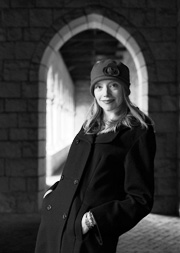
    Klein (isn’t that a lovely photo with the arch, the girl, and the color? It feels Potterish and is perfect for Klein) is a senior editor at Arthur A. Levine Books, an imprint of Scholastic Inc. (Levine is the guy who purchased Potter in the US), and the continuity editor for the U.S. editions of the Harry Potter books. A “continuity editor” is responsible for ensuring that the world an author creates remains as consistent as possible through multiple books. A senior editor, on the other hand, finds likely books and acquires them for publication.

    Please look at this list of best selling books of all time. Rowling’s success is simply AMAZING. And Klein looks, as an editor, at some reasons why she feels Potter did so well. Of course, there are other factors like the fact that it was a book the whole family could enjoy and the wonder she created with things like quidditch and every flavor beans etc. But the points she makes here are marvelous. Take some time to think about and digest what Klein has to say. For more essays, here’s her website: http://www.cherylklein.com/.

    Share

One Comment

Comments are closed.