Donald Rumsfeld, The King’s Speech, Aquatic Ancestor Apes & Talking Bacteria

Donald Rumsfeld
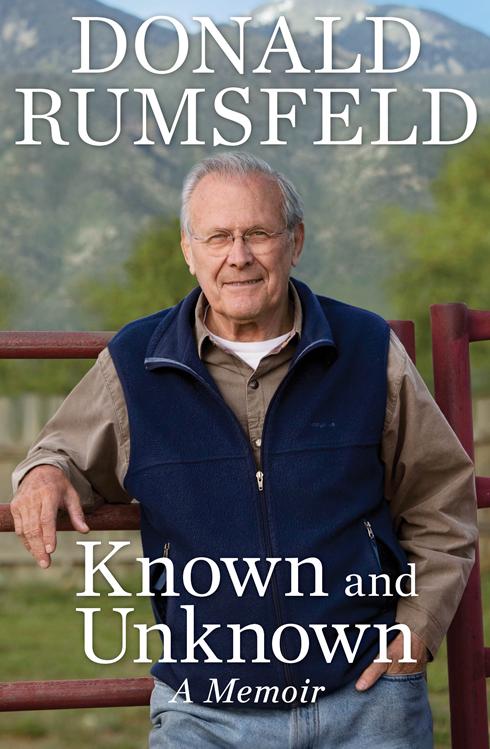
I just finished Known and Unknown, a fat memoir by Donald Rumsfeld, and enjoyed every page.  Rumsfeld served as the Secretary of Defense under George W. Bush.  But Rumsfeld’s service didn’t start there. He was a Navy pilot, an assistant to a congressman during the Eisenhower days, and, in the early 60’s, a four-term congressman from Illinois.  He held various positions in the Nixon White House in the late 60’s and early 70’s, including ambassador to NATO.  He was Chief of Staff and Secretary of Defense when Ford took over from Nixon.  Reagan tapped him to be a special envoy to both the Middle East after the Beirut bombing and to the Law of the Sea treaty discussions.  He was the president of Searle, a pharmaceutical, as well as General Instrument, the company that pioneered HDTV.  Only after all that, did George W. Bush bring him on as Secretary of Defense.

When writing novels, I try to create characters worth knowing, either because of their interesting personality or skills or because of the events they take part in. Donald Rumsfeld is just such a character, except he’s no fiction.

In his memoir he shares insider information on everything from Watergate to 9/11 to the war in Iraq. What emerges is a fascinating look into many of the most important events in the last forty years.  You’ll get insight into some of the issues experienced in various White House administrations and see what really was going on with waterboarding, Guantanamo, Abu Ghraib, hurricane Katrina and many other of the hot button issues in the Bush years. There are some laugh out loud moments where his understated humor shines through. There are also parts where he reveals some of his differences with others that worked with him in the various administrations, including issues with Nelson Rockerfeller, Colin Powell and Andy Card. But in everything he writes he’s fair and restrained and attempts to present the facts accurately. This is no attempt to settle scores.  Just a wonderful read.

If you are interested in politics at all, I think you’ll enjoy this book. Moreover, I think you’ll come out a little wiser, maybe a little better person, for having spent a few hours with Donald Rumsfeld.  

The King’s Speech
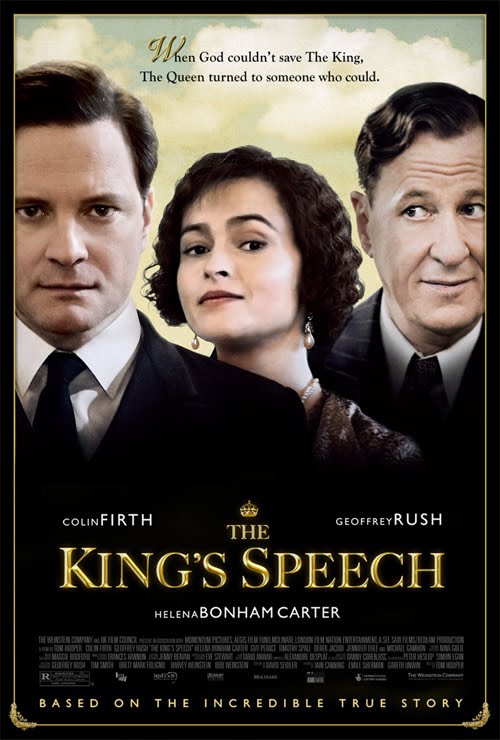
I do not watch many r-rated movies.  They are usually too vulgar or pornographic for my prissy tastes. However, I did my research on The King’s Speech, and having heard so many glowing reviews, Nellie and I rented it.

It was wonderful.

The movie tells the story of prince Albert Frederick Arthur George of Britain who did not ever expect to inherit the throne and did not want to, in part because of his stammer. Can you imagine having to be a public figure like a king and have to deal with something like that? Most of us dread the thought of public speaking. Can you imagine having to try with a stammer?

But Albert’s lot was not to live the sheltered life. He became king when his brother abdicated the throne because of improprieties in his personal life. The day before the abdication, Albert went to London to see his mother, Queen Mary. He wrote in his diary, “When I told her what had happened, I broke down and sobbed like a child.” That is not the entry of a power-hungry man.

He assumed the throne in 1936, when England ruled over almost a quarter of the world’s population. Three years later in 1939 WW2 broke out and Britain’s king needed to be able to address the people.

In the movie, Colin Firth plays Price Albert. Geoffery Rush (Captain Barbossa in Pirates of the Caribbean) plays Lionel Logue, the unorthodox Australian speech therapist to whom Albert’s wife turns for help. The script is wonderful and the star-studded cast is spot on. There are moments of humor and poignancy and triumph. I was caught up in this movie as much as any I’ve seen.

If you like English dramas, you’ll enjoy this one. And the profanity, the reason for the r-rating, is not there to depict casual vulgarity. It was part of a technique used by the therapist. In the end, you’ll overlook it and find yourself on pins and needles, rooting for this fine man.

Aquatic Ancestor Apes & Talking Bacteria

I’ve written about TED before. The annual TED (technology, entertainment, design) conferences, in Long Beach/Palm Springs and Edinburgh, bring together the world’s most fascinating thinkers and doers, who are challenged to give the talk of their lives (in 18 minutes or less). The folks at TED record these speeches and put them up for free on their site for the rest of us to watch. And I just watched two dandies.

The first is by Elaine Morgan who says we evolved from aquatic apes (sigh, just when you think you’ve found grandpa Eddy hanging out in the trees, you learn he’s an imposter). Morgan is a Welsh writer for television and also the author of several books on evolutionary anthropology. In the speech she describes the reasons why it makes sense that humans had aquatic ancestors. Along the way, she illustrates key principles of science, including why science by consensus is no science at all. Her manner is so delightful and engaging I think I could listen to her for hours, preferably around the dinner table. Watch her right now. She just might convince you.

The second speech was given by Bonnie Bassler, an American molecular biologist, who has been part of the team that discovered key insights into how bacteria talk. It appears that bacteria do not invade a host and start doing damage. No, they wait until their numbers are sufficient that they have a chance of surviving. They coordinate defense and mount attacks as a group. Who would have thought? Knowing how this works is not only interesting all by itself, but it has stunning implications for medicine and fighting infection. Bassler is a fascinating and enthusiastic presenter. Among other things, you’ll end up seeing that humans are more bacteria than you could imagine. Watch her.

Share

Similar Posts

  • Shadow and Bone

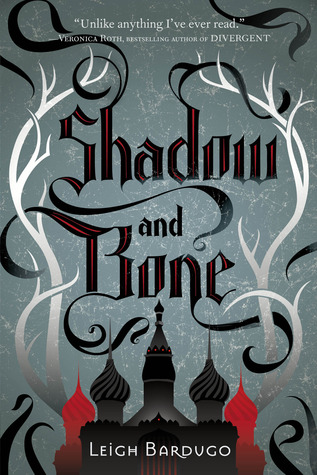
    Last year someone recommended Shadow and Bone by Leigh Bardugo to me. I noted the recommendation and then promptly forgot it because my reading queue is two years long. But this last week my wife brought some books home from the library, and there, sitting on top, was Bardugo’s book.

    I opened it. Page one listed the orders of magic. I was immediately drawn to the names. They were Grisha, “soldiers of the second army, masters of the small science.” They had divisions of corporalki, etheralki, and materialki, who are the order of fabrikators.

    I don’t know what it is, but I love, not steampunk (well, I don’t know if I don’t love steampunk because I really haven’t read any, but I do think dirigibles are vastly overrated), but the mixture of machinists and engineers and magic set in the late 1800’s, the time period when Sherlock Holmes was running about. It’s something I can’t resist.

    And “fabrikators”? Russian? Oh, baby.

    Most epic fantasies are set in some kind of old German or English medieval setting. Nothing wrong with that. We luvs them, Precious. But something different is nice as well. Recently, Peter V. Brett and Saladin Ahmed have given us fantasies with a Middle Eastern flavor. But I haven’t read an epic fantasy with a Russian flair since C. J. Cherryh’s Rusalka series. And here on page one I’ve got magic and machinists and all these Russian sounding terms.

    Awesome.

    I turned the page. The opening paragraph of the prologue pulled me right in, and I was off and running, soaking up this little snippet about an orphaned boy and girl who, fast-forward in the next chapter, are now in the army. Not the second army that’s made up of Grisha, but the first army that’s made up of soldiers with rifles who have to slog through mud and march while a handful of Grisha of the second army roll by in a carriage.

    Alina, the girl who is now working with the army’s cartographers, and Mal, who is a tracker, are heading with the troops toward the Unsea, the Shadow Fold, this darkness that cuts the country in two and is full of these horrors called volcra. They enter the Shadow Fold, are attacked, and Alina unconsciously calls forth a powerful magic.

    Of course, she can’t reproduce it, but it’s a magic that might be used to banish the Fold forever. The rest of the book is about Alina avoiding assassination, trying to learn how to summon her magic, and being pulled into a surprising and terrible plot. It’s also about her and Mal. Yes, there’s a love story here, but this is NOT a romance where everything focuses on her feelings and his feelings and touches and sighs and unbounded quivering.

    This is an epic fantasy, remember? Those books that delight readers with dark lords and magic? Well, there’s plenty of that here, plus secrets and a number of delicious plot twists. There are escapes and chases and battles. And, yes, that love story that isn’t overblown but feels very real indeed.

    Epic fantasies come in lots of different sizes. This isn’t one of those huge doorstop epics with twenty sprawling plotlines. This focuses on one point of view and one storyline, which means you are able to enter the story very quickly, much like the epics by Hambly and McKinley and so many others.

    It’s a terrific read. Give it a go. If you enjoyed Vin in Brandon Sanderson’s Mistborn and Cinna and Katniss in Hunger Games, then I think you’re going to love Shadow and Bone. I’m certainly looking forward to the next volume.

    Share
  • “Scatter and Return, the Eyes of the Princess” by Willow Fagan

    I wasn’t meaning to read this story. I drifted over from Codex (an online writers group I belong to) and thought I’d check the opening, nothing more. But the voice and the story were so compelling that the next thing I knew I was halfway through and had to finish.

    There are a few things in this story I don’t know if I like. But I’m not going to mention them here and prejudice you because the narration was fabulous. The story situations compelling. The dry understatement, the mixture of the mundane and fantastic, the oddness of the tale—all lovely and delicious. But that’s not all. There was something else with the cadence of the writing that drew me. And the solution the golem finds in the end, oh my gosh, it was wonderful.

    It’s free, dang it, so follow this link and enjoy.

    Share
  • How to Get Rich: Spend

    No, really. It’s true. You just have to spend smartly. And in a special way.

    Over the course of your life, if you make what the average American does, more than a million dollars will flow through your hands.  And yet so many of us don’t feel rich.  That’s because money is like the Gingerbread Man.  Turn your back on it, and it’s out the door, rudely taunting everyone as it flies by.  And then it gets eaten by a fox. Such a waste.

    But it doesn’t have to be.

    Let me share with you THE best method I’ve found for managing my money.  It takes tons of anxiety out of spending and saving.  And, if you’re a Dave Ramsey fan, it is the one thing upon which everything else he teaches depends.  If you’re not a Ramsey fan, it doesn’t matter. After getting a job, this is the first thing you must do to get rich.

    Here’s the big secret. It has three parts:

    1)     Decide how much you’re going to spend on various things BEFORE you spend it

    2)     Make what you have left in each spending category EASY to track

    3)     Manage the things you can’t foresee

    To do the first two parts, you’re going to create a special kind of spending plan. We won’t use the term “budgeting” because “spending” is so much more fun, and because that’s what we’re going to do anyway. To understand how to do this, you need to watch three videos.

    Before you do, please know I earned a Masters degree in accounting.  I’ve used Quicken for more than twenty years.  Neither of those things has helped me manage my money like this simple method.  If you’re looking for a better way to manage your money, this is it.

    First, watch this video to get an overall idea of how this method works.

    Note: you can use actual envelopes and cash for everything if that makes you happy, but you really don’t need to.  The idea is to think of pre-allocating your monthly income to categories of expenses AND then having an easy way to track what’s left.

    Now, watch this bubba explain how he does it.

    But John, didn’t he say the same thing?

    Basically, but he has a fun accent. Besides, it’s good to see another example. And please note again: you don’t have to use actual envelopes and cash, although many swear by them.

    Finally, watch this one. No, it’s not just another repeat. There are some additional important ideas illustrated here.

    This video brings up the idea of why simply tracking an overall account balance isn’t very helpful. It also shows you WHY envelope categories are–they make it immediately apparent how much money you have to spend for a thing.  If you just use Quicken to track what you spent (looking in the past), you’ll run into troubles.  Let me tell you, I know this from experience. We use Quicken, and have for years, and plan use it for some time to come because it makes taxes and bank reconciliation a snap.  But Quicken only tracks what you spent.  Tracking, as important as it is, is not the key to success.  The key is pre-allocating BEFORE you spend.  And then tracking so you know what you have left in that category.  And making that tracking EASY.

    The final thing you have to do is manage the things you can’t foresee because things rarely go exactly to plan. Unexpected things ALWAYS come up. Your daughter will crash the car. Your husband will get appendicitis. You will forget that you had a $200 school sports expense.

    Okay, fine. Things happen. But how do you manage them if you can’t foresee them?

    If it’s really small, you simply adjust your plan. For example, if you need $30 more in food, you can transfer it from fuel if you have some extra there.

    You manage larger things by building up an emergency fund. Ramsey suggests starting with a $1,000 emergency fund and then trying to get two to three months of living expenses—about $10,000 to $15,000 for most people. Unexpected things WILL happen and cost your money. So build up some cushion to take care of them.

    Finally, you manage the really large things by getting proper insurance. This is what insurance is for. The types of insurance you need include (1) homeowner’s or renter’s, (2) auto, (3) medical, (4) long-term disability, (5) long-term care (for those 60 and older), and (6) life insurance. You may add true identity theft insurance as well.

    Okay, so that’s the overview.  If you want to try this, here’s how you do it.  It’s fairly easy. 

    STEP 1: get your head straight

    Resolve that you will NOT use credit for anything. You will not spend any money you don’t have.  You will not put another dime on a credit card, and this despite the fact that the plastic devil companies are begging you with offers almost every day to sign up for their cards. (Hum, I wonder how they afford all that junk mail.) If your monthly bills are greater than your income, then we have to fix that first.  But the new law of the land is zero new debt.

    Next, always remember to allocate your money to these categories first—shelter, food, adequate clothing, and adequate transportation.  This means if you have a crunch month, you would NOT pay credit card bills before food, even if you work for Visa.

    STEP 2: get your blank sheet & pencil

    Get out a piece of paper and pencil (not a pen) or open an Excel spreadsheet.  Whoa, that was an easy step.

    STEP 3: list your monthly income

    List your expected monthly income at the top from all sources.

    STEP 4: list your spending categories

    List your spending categories. You’re going to split them into two groups.

    The first group goes right below your income and includes all of your recurring monthly expense/spending categories. Not the amounts you spend. Just the categories. Things like mortgage, electricity, phone, groceries, dining, etc. Make sure you include some entertainment/fun money.

    The second group goes below your recurring monthly expenses and includes all of your major annual periodic expense/spending categories. Things like Christmas, vacation, clothing, kids back to school stuff, etc. And things you want to save for—a couch, iPhone, car, etc. Your emergency fund goes here as well.

    If you need help thinking up categories, use these Ramsey resources: Monthly cash flow plan forms and Monthly allocated spending plan form.

    STEP 5: Fund your categories

    Decide how much you will spend in each category this month.  You should have 0 dollars when you get to the bottom of the sheet.  Spend (allocate) every dime BEFORE you start the month.  You’re going to do this at the beginning of each month.  And you will probably have to adjust it a couple of times during the month.

    You will probably have categories that don’t get any money this month.

    You will also have categories that get money, but you won’t spend any of it this month.  These are your periodic expenses.  Your goal is to have the cash up front to pay for them, so you have to save for them.  Remember, you are NOT going to take on any new debt. 

    For example, if you’re saving up for Christmas, you allocate some money for that out of this month’s funds and TRANSFER it to savings.  Then it will be there when you need it.  You could draw the cash out and put it in an actual envelope, but you don’t have to.  Just as long as you keep a record of the total amount in savings and what it’s all supposed to be for, i.e. total savings in July = $1,000: $500 for back to school, $200 for Christmas, and $300 for my trip with kids to Six Flags in 2013.

    STEP 6: mark the “watch” categories

    Some of the categories you need to watch closely, and some you don’t. The ones you need to watch closely will be your “envelope watch” categories. 

    The categories you don’t need to watch as closely are those that are automatically taken out of your account each month.  And those you will write a check once a month for.  These things include mortgage, car payment, electricity, etc.  These are NOT categories you need to use actual envelopes for.  You can track it on paper or in the spreadsheet. Not much happens with these categories. 

    But there are other categories that you’re going to be spending throughout the month, and it’s easy to over spend if you don’t track them.  Groceries, dining, entertainment, gasoline, a specific vacation, etc. are all categories that you make multiple purchases with each month and are flexible/discretionary and need to be watched closely.  So while everything is tracked in a category/envelope on paper or on the computer, you’ll track these with either a real envelope and cash or a virtual one using that free software you saw in the third video or a piece of paper with a running category balance in your wallet.

    STEP 7: have fun and spend!

    Now go out and spend!

    Before spending, check your envelope.  Do you have enough money?  If you do, spend and be happy.  If not, save up for it or find a way to save money in another category and adjust so that you’re still spending the same total amount.  Never spend what you don’t have.

    If you feel you need something not planned for, well, you have to get it later OR transfer something out of another envelope.  I just make myself wait a day or three, and usually the urge to buy, Buy, BUY! goes away, and I see I don’t “need” it right now.  Or maybe a more affordable option presents itself.

    If the kids want something, and you feel guilty you can’t give it to them, just tell them what’s in the envelope/category, and tell them they can save for it or choose something else in that category that will fit with what you have left.

    If you’re tracking envelopes virtually or using the paper balance in your wallet, you MUST update your envelope AFTER every purchase so you don’t spend more than you have. If you find you just can’t seem to remember to do this, go to the cash method.

    That’s it! 

    Of course, that’s not quite it because even though it’s easy, if you haven’t done this before, it might take some adjustment.  Give yourself a month or three to get it down.  Because when you do, it WILL produce great results and peace. It’s doing that for us. 

    If you feel you need more info, I suggest you read Dave Ramsey’s Complete Guide to Money.  Here’s the first chapter to sample: Complete Guide To Money sample chapter.

    Happy spending.

    EDIT: here’s another video to watch: http://www.youneedabudget.com/.  Then read about the method: http://www.youneedabudget.com/method. This one highlights the idea that you need to make sure you realize that things will happen that you cannot foresee. No plan survives contact with the enemy.

    Share
  • How to be a hero in your own house

    I have four daughters.

    My four daughters have long hair.

    That long hair finds its way into our drains. (Yes, despite our telling them to get it into that thing called a waste basket.)

    Said hair might flow down the pipes. But said hair does not. Life is not that easy. Instead, some evil house spirit catches the hair just as it begins its voyage and turns it from a luscious thing of beauty into a gunky demon of drain death.

    You would think that Drano could defeat this black magic. But Drano gets its butt kicked every time. Drano is in the pee-wee league against this thing. Drano is like a kitten. And gunk demons don’t listen to kittens.

    So for the last few years, we’d blast with Drano and then still have to stand up to our calves in water when we took a shower. Or wait as the sink decided it might finally slowly empty and leave soap scum, whiskers, and toothpaste on the sides for everyone’s viewing pleasure. And then we had to do the slow clean (I hate the slow clean).

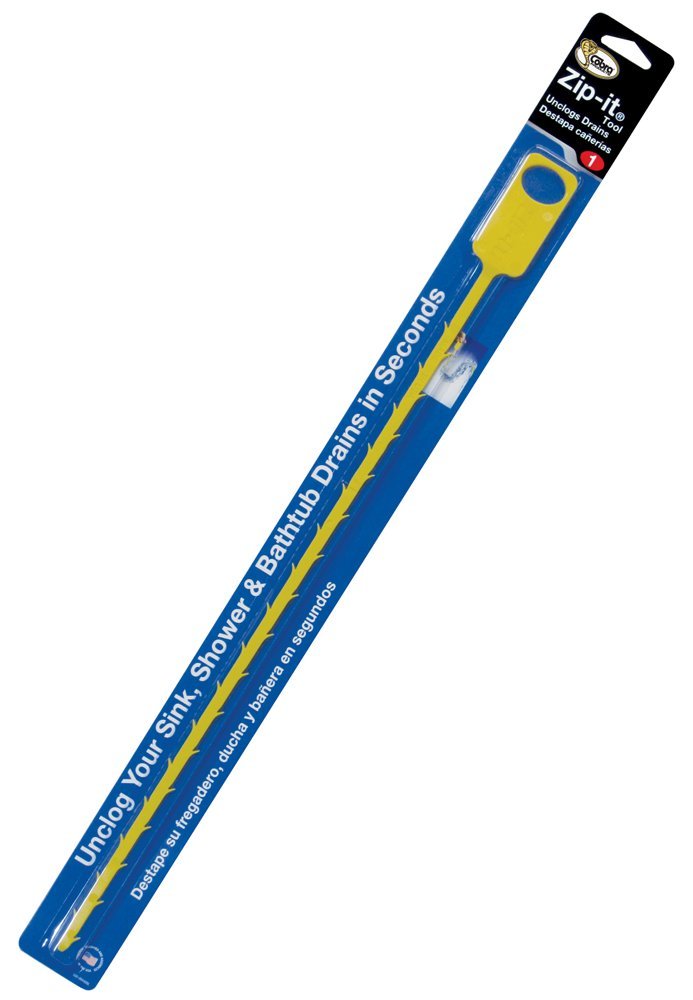
    Recently, I was strolling along in a hardware store and saw this.

    Zip-it drain cleaning tool

    Click on the picture. Get a good look. I bought ye handy yellow flex sword. And I did verily slay the monster lurking in every drain in our  house.

    I am the MAN!

    If you have drain issues, let me suggest you be the hero and buy your own sword. It’s called the Zip-It drain cleaning tool. If you’re a weird-o, in addition to being the hero, you can also use it to draw forth disgusting things to scare nieces and nephews with. Just saying.

    Share
  • Good Stuff! Those looking to seal their asphalt in Ogden, Logan, and Bear Lake areas

    AndersenAsphaltFolks with asphalt driveways and parking areas, I have something you’ll be interested in.


    I have a nice long driveway, about 5,500 square feet of asphalt. We hadn’t touched it since 2005 when it was installed. But asphalt doesn’t last forever. If it’s not periodically sealed, it weathers and cracks, and then the water gets in and undermines the whole structure, and soon you get pot holes and alligator cracks and the thing becomes a mess. Last year some small cracks began to show, and we knew we couldn’t put it off any longer.

    I called a number of places for quotes and availability. And the person who gave me the best quote and quickest turnaround was Caden Andersen of Andersen Asphalt. The name will sound familiar because that’s the Caden that grew up in Rich County. He and his brother took over his grandfather’s long-standing business.

    And I am happy to report that they did an excellent job at an excellent price. They came and cleaned the whole thing with wire brooms (although I power washed it before they came), filled the cracks with hot tar, then sealed everything with two coats. Their service was friendly and prompt. And they went the extra mile. There were some large cracks in the city’s road right before you turn off into our driveway. They filled those cracks with tar as well for no extra charge. The result is a beautiful driveway that’s going to last for quite some time.

    They have two locations right now, one in Cokeville, Wyoming and the second in South Ogden, Utah. If you live within an hour or two of either of those places and need to seal some asphalt, I highly recommend you give Andersen Asphalt a call.

    Share