Similar Posts
I Am Not A Serial Killer by Dan Wells
 You can scare the crap out of me (Aracnaphobia), and I will love you forever. You can make me bite my nails in terrible suspense (Wait Until Dark, The Village) or throw supernatural at me (Poltergeist) and I will sing with praise. But the moment you do gruesome, the moment you start showing me entrails and organs, my discomfort level shoots through the roof.
And this is why I would not have finished I Am Not A Serial Killer by Dan Well’s if I had just picked it up off a shelf–because the main character is the son of a woman who owns a mortuary. We get to see him help process a mutilated body very early in the book, pumping fluids in etc., and Wells knows his craft so I was THERE. I’m sure it’s not too gruesome for some, but I just have issues with organs. I don’t know why. I also have an issue with clowns.
Clowns are, by far, the scariest things around. And this is not because I read the book IT by Stephen King as a wee lad because I didn’t. It’s because they’re painted vessels of evil. End of story. They’re perfect examples of the freakazoids that lurk in the uncanny valley.
Anyway, I’d heard Wells read a portion of this book that had all of us in the room crying because we were laughing so hard. So I read on, telling myself I had to at least get to that part. And I am so very happy I did.
I Am Not A Serial Killer is young adult story about a good-hearted teen named John Cleaver who is a sociopath with all the traits shared by serial killers. John’s in counseling, but more importantly, he is convinced he can prevent himself from becoming a serial killer by keeping rules he’s made for himself like not watching people for too long and complimenting someone when they make him angry. Such rules, he hopes, will keep him from feeding compulsions he won’t be able to resist. The problem is a real serial killer has come to town (but unlike any you’ve seen before). And John may be the only one who can stop him. Will he let go of his rules to save the town? Or will he keep his monster asleep while others die around him?
It’s a fascinating situation (without a clown in sight, may the writing gods be praised). And Wells takes the reader on a journey through it that includes mystery, dread, and humor. In the hands of some other author, that would be enough. But Wells does more than entertain us. He gives us things to think about. He gives us great characters to boot–come on, when was the last time you read a book where the hero was a likeable sociopath? And most of the gruesome is up front anyway.
Read this book. Skim the body processing if you must. But you simply don’t want to miss the rest. It was a fabulous read and I recommend it highly.
The US version comes out in March of 2010. But you can get the UK version now on Amazon UK, Borders UK, etc. The links are all here on Well’s site.
Good Stuff! Mr. Holmes and 13 Hours, the book
Earlier this month I watched Mr. Holmes.
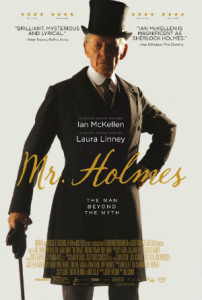
It left me with this fine peace. With this feeling of goodness and light, in spite of, or probably because of, a number of poignant moments. It also surprised me.
To write a story like this, to give people this kind of gift…
What a wonderful, powerful thing.
Now, it was not a thriller. It’s not an episode of Sherlock or Elementary. It’s not a murder mystery. It reminds me of Saving Mr. Banks most, but also of Miss Potter, maybe even The King’s English. It has that kind of tempo.
Basically, Sherlock Holmes is a much older man. He’s retired. And there’s a case he’s trying to solve. But, again, this isn’t a murder mystery. This story is about Sherlock himself and wisdom and the beauty of change whenever it occurs.
The story lingered with me, and I avoided reading or watching anything else for a few days to savor it. Give yourselves a treat. Watch this wonderful story.
*
The book 13 Hours: The Inside Account of What Really Happened in Benghazi was the answer to so many questions.
 Want really happened in Benghazi?
What we’re we doing there?
Who are the brave men who tried to save the ambassador?
It was also a thrilling read in the tradition of Marcus Luttrell’s Lone Survivor. As such, it purposely avoids the political aspect of the incident. It’s not about what the officials of the United States government did, said, or knew, or the political firestorm that ensued.
It’s not a hit piece on Clinton and Obama, nor is it any kind of defense. Instead it simply documents the events on the ground in those last 13 hours, relying most heavily on what the five American security contractors who rushed to give aid said happened. Those men–two former Marines, two former SEALs, and a former Army Ranger—teamed up with Mitchell Zuckoff, the writer, to simply set the record straight.
I couldn’t put the book down. Not only because the book’s well-written and the characters and situation are compelling, but also because of the insight it shared into some key dynamics within Libya itself. For example, it helps you understand why the revolt against Muammar Gaddafi centered in Benghazi, not Tripoli. It also touches on some of the currents inside these Muslim-majority countries close to the epicenter of Sunni extremism—Egypt and Saudi Arabia–so volatile. And it shares details, large and small, as only those who experience such things first hand can.
If you want a fascinating account of really happened on the ground in Benghazi, get this book.
Flaming Gorge, Ticket to Ride, Thai Evergreen
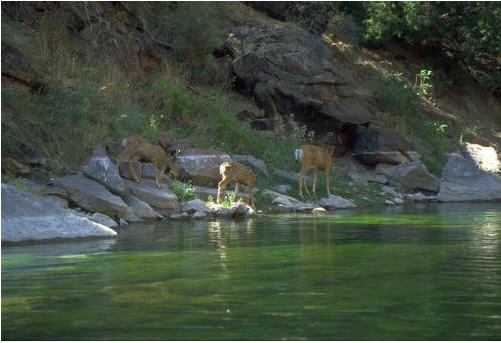
I want to tell you about a river that is emerald green, clear enough to see the rocks on the bottom sixteen feet below as well as the trout, and provides a wonderful family getaway. I’m talking about the Green River just below the Flaming Gorge dam in north-eastern Utah.

Yes, that picture’s of the Green River. Yes, it’s that beautiful and that clear in the calmer parts, of which there are many.
We just ran the seven mile stretch that starts just below the dam and goes down to the Little Hole campground with our four girls (ages 6 – 15) and had a ball. During our trip we saw otters swimming up the river not more than six feet from our raft, a herd of mountain sheep off the side of the road, fish and more fish, a snake a long as a man with a light silvery skin mottled with black rectangles, and two osprey (one that dove under the water to get a fish and a second flying about twelve feet over our raft with a fish in its clutches). We ran some class II rapids. This time of year they weren’t scary to me, but provided plenty of thrills and stress for the kids. The water was warm enough to swim in, but cold enough to give you a shock. And it was so CLEAR. Of course, there were spots too deep to see the bottom. But there were plenty where you could see the river plants, rocks, and aquatic life. And all of it in that emerald hue.
The girls were in the water inbetween every set of rapids. We packed a cooler and so stopped a number of times. Once to check out a waterfall, another time to snack, another to play on a sandbar, yet another to chase those otters, a bathroom break (outhouses provided by the park service), another time to swim.
The Flaming Gorge area features the beautiful landscape seen in Southern Utah–red rock, pines, junipers. People come from all over to run the river and fish. We didn’t fish this time, but there were plenty of anglers who had rented boats. Still, it didn’t feel crowded at all. There were long stretches where we had the gorge to ourselves. Next time I think I’m going to bring a book (in a waterproof ziplocok) and we’ll spend a little more time on one of our stops to sit and relax.
Some tips:
- Bring a cooler. You’ll want to put in along the river and enjoy the gorge. There’s no hurry to finish.
- Bring good water shoes that have a sole with traction and netting to keep gravel out. (I got a pair at Wal-Mart that made the whole ride wonderful.) Also bring a hat and sunscreen. If you wear a cotten tee-shirt and quick drying shorts you’ll enjoy the ride even more.
- We stayed at the Flaming Gorge Resort the night before our run. It’s been around a while and the condos showed it, but it wasn’t bad. The condos had a kitchen. And the restaurant had large servings of good food.
- You might also want to bring a way to transport the raft inflated. We put ours on top of the minivan and had no problem taking it to and from the rental shop. However, I wished I had learned the trucker’s knot. The knots I tied cinched up into nasty snags that proved very difficult to untie.
- Bring two vehicles or a bicycle. The businesses there charge close to $50 to shuttle your car the 9+ miles between the launch below the dam and Little Hole. That was outrageous to me. Next time we’ll bring a bike, lock it up by Little Hole, and have one of us bike back for the car. Or you can park half way inbetween at Dutch John after you’ve launched your raft and make the hour walk down. Of course, if you’re an early riser, the rental shop in Dutch John offers a $20 shuttle from Little Hole to the Dam, but only at 8:30 AM and 9:30 AM.
*
While in Provo this year for the Freedom Festival I purchased Ticket to Ride (European version). I wanted to do more than walk around or swim at the pool with the family. It was an excellent purchase and recommendation from the folks at Games People Play in the Orem mall. Of course, the kid at the store had played everything in the store and knew just where to steer us. It only took a few minutes to figure out how to play and everyone from the 6 year old to both Nellie and I had fun. It’s so fun we’ve played it a number of times since we got back.
*
Both Nellie and I learned to love Indonesian food during the years we spent in the Netherlands. Alas, not many Indonesian restaurants around. In search of something similar while living the in the San Francisco area, we found Thai food.
Ah, that dream within a dream.
And now we found yet another Thai restaurant in Utah with excellent food. So good my two oldest daughters get cravings to go back. The first is Thai Evergreen in Orem, Utah. It looks like a family owned operation and is. And their food is delicious. Four family’s went while at this year’s Freedom Festival, which meant we ordered quite a variety of food. Everything I tasted was delicious.
The next is Kamin in Logan, UT. Again, wonderful. Nellie and I have eaten there a number of times and never leave unsatisfied.
The Veggie from Outer Space & The Mentalist
 I’ve been trying to increase my intake of vegetables and fruits because you are what you eat, and I think I’d like to look like a broccoli—long, sturdy, and with a lot of bushiness on top. So we’ve enjoyed our weekly box of fruits and veggies from the Bountiful Baskets co-op that we pick up in Garden City each Saturday.
And we’ve enjoyed the surprises. Because someone else orders the produce, we never know quite what we’re going to get. Of course, this also means we sometimes get things we don’t normally seek out. Take cauliflower, for instance. We received a number of heads three or four weeks in a row back in October.
Cauliflower?
Who eats cauliflower? You ever hear anyone say: “Cauliflower’s on—let’s make a run to Brigham City to get some,” or “LaVern, I believe I’m going to knock back another floret,” or “It’s a party! You bring the chips and soda, I’ll bring the cauliflower?”
No. We don’t hear those things because cauliflower is just weird. It’s the stuff that nobody eats on the vegetable tray. It looks like some growth spore from the planet Xenon. In fact, I want to know who started the rumor that aliens had big eyes and spindly limbs. That’s all propaganda. The aliens are already living among us, and cauliflower is their freaky pupal metamorphosis growth stage!
Or, at least, that’s what I thought. Then I ate a serving of creamy mashed cauliflower at Ruby Tuesday’s and gained a testimony of both Ruby Tuesday’s and the weird white cousin of cabbage.
So when we received our surprise veggie, did I despair or use it for target practice on the idiot orange tom cat that comes around our house? No. I went to search for that Ruby Tuesday’s recipe. And through the miracle of the internets, I found it. Or something close enough for government work.
Here it is. Enjoy.
CREAMY MASHED CAULIFLOWER
- 1 head cauliflower
- ¾ C water
- 1 T corn starch
- 1/3 C heavy cream
- 1 t granulated sugar
- ¾ t salt
- Pepper to taste
- 1/8 t garlic powder
- 1/8 t onion powder
- Divide the head of cauliflower into florets that are all roughly the same size. Steam or microwave until cauliflower is tender (we pressure cook it). Drain and toss it into a bowl of ice water to bring the cooking process to a screeching halt.
- Put florets into a food processor along with ½ C water. Puree on high speed until smooth, but with some small bits for texture. Or you can simply mash it like you do potatoes.
- Pour all the puree into a medium sauce pan. Dissolve the corn starch in the remaining ¼ cup of water and add to the puree.
- Add the cream, salt, pepper, garlic powder, and onion powder to the mixture and stir. Set the saucepan over medium heat and cook, stirring often, for 5-10 minutes, or until thick.
You can experiment and switch the water for milk if you’d like, or if you don’t have cream. Leftovers are delicious. Of course, if I end up lumpy and round, you know it’s the cauliflower’s fault, or the alien’s that has set up shop in my chest cavity, whichever’s the truth.
For those who haven’t tried Bountiful Baskets, go to bountifulbaskets.org for more info. For those who wonder if cauliflower has any nutritional value at all, here’s the wikipedia on its goodness:
“Cauliflower is low in fat, high in dietary fiber, folate, water and vitamin C, possessing a very high nutritional density. As a member of the brassica family, cauliflower shares with broccoli and cabbage several phytochemicals which are beneficial to human health, including sulforaphane, an anti-cancer compound released when cauliflower is chopped or chewed. Boiling reduces the levels of anti-cancer compounds, with losses of 20–30% after five minutes, 40–50% after ten minutes, and 75% after thirty minutes. However, other preparation methods such as steaming, microwaving, and stir frying had no significant effect on the compounds.
Along with other brassica vegetables, cauliflower is a source of indole-3-carbinol, a chemical which boosts DNA repair in cells and appears to block the growth of cancer cells. The compound also appears to work as an anti-estrogen, appearing to slow or prevent the growth of tumors of the breast and prostate. Cauliflower also contains other glucosinolates besides sulfurophane, substances which may improve the liver’s ability to detoxify carcinogenic substances. A high intake of cauliflower has been found to reduce the risk of aggressive prostate cancer. Cauliflower is also a good source of carotenoids.”
I guess the short version of all that is blah blah blah science says it’s good.
***
 Nellie and I have been enjoying The Mentalist for two years now. It’s a CBS crime thriller mystery series about a “mentalist,” a guy named Patrick Jane, played wonderfully by Simon Baker, who used to be a professional mind-reader and psychic, and a very good one at that, but gave it up and came clean. All psychics, he says in the pilot episode, are either fakes or deluded.
But he was so good at it and made so much money–why would he give it up?
Because a serial killer named Red John murdered his wife and daughter. So Jane has dedicated his life to hunting down and killing the murderer. To do that, he becomes a consultant to the California Bureau of Investigation (CBI) and works with a team of investigators.
Some of the episodes are about the hunt for Red John. Many more are about other cases the team has to solve.
Patrick Jane is the main attraction of the series. His outrageous behavior, acute observation skills, and keen wit all fascinate and delight. As the series progresses, the other characters take on their own interesting personalities as well. Agent Cho, for example, provides many moments of laugh-out-loud deadpan humor.
The series is into its third season, but with the miracle of Netflix you can start at the beginning and watch them all commercial free at your own leisure.
Lone Survivor by Marcus Luttrell
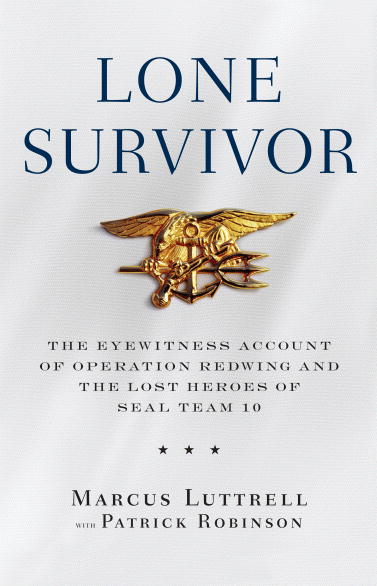
 I’m a sucker for military stories. I wanted to be an ARMY Ranger was I was in my teens. Wanted to go commando. Still regret it to this day that I didn’t. And so when a friend told me about Lone Survivor by Marcus Luttrell with Patrick Robinson, I had to read it.
In June of 2005 four U.S. Navy SEALs took up a position on a godforsaken mountain in Afghanistan close to the Pakistan border. Their goal was to capture or kill a notorious Taliban/al Qaeda leader whose small army had been ambushing and killing Marines. The problem was: three goat herders stumbled upon the SEALs not very long after they got into position.
If the SEALs don’t kill the goat herders, they will almost assuredly alert the Taliban force. SEALs are the best. But four against two hundred doesn’t compute. If they do kill the goat herders, then they’re sure someone will find the bodies. The Taliban will claim US soldiers are killing innocent civilians. And the US media will pick it up. The SEALs were sure they will end up being tried for murder. It wouldn’t be the first time.
The SEALs let the goat herders go. Within hours the Taliban show up. Four SEALs. Two hundred plus Taliban armed with rifles and grenade launchers who have the high position on a mountain with plummeting slopes and very little cover.
Lone Survivor tells the story of Marcus Luttrell, the leader of that SEAL team, his training as a SEAL and then that desperate fight in the mountains. He and the other three SEALs fought ferociously. He was the only one to survive.
I had to force myself not to read this book in one sitting. Not only do you get a great story, but you also get insights into what makes a SEAL and their system of values. You’ll get to know a man who makes you want to stand up for God and country. And you’ll marvel at the courage of those who fight in our armed services.
I loved this book. May God bless the men and women who risk life and limb for all the rest of us. For the rest of us, we can see what they face in this excellent first-hand account.