“Scatter and Return, the Eyes of the Princess” by Willow Fagan

I wasn’t meaning to read this story. I drifted over from Codex (an online writers group I belong to) and thought I’d check the opening, nothing more. But the voice and the story were so compelling that the next thing I knew I was halfway through and had to finish.

There are a few things in this story I don’t know if I like. But I’m not going to mention them here and prejudice you because the narration was fabulous. The story situations compelling. The dry understatement, the mixture of the mundane and fantastic, the oddness of the tale—all lovely and delicious. But that’s not all. There was something else with the cadence of the writing that drew me. And the solution the golem finds in the end, oh my gosh, it was wonderful.

It’s free, dang it, so follow this link and enjoy.

Share

Similar Posts

  • Taggart’s and a Secret

    taggartsgrillMost of the time when you go to hole-in-the-wall restaurant, it’s a hole-in-the-wall.

    But sometimes you strike gold.

    And my youngest daughter and I struck big-time gold last week two miles east of Morgan, Utah, in the canyon between Morgan and Henefer off of exit 108. I’ve driven that stretch many times and never knew anything was off that exit. Literally, if you blink, you’ll think nothing is there.

    But if you do, you will miss out on Taggart’s Grill.

    It’s nestled in some trees up against the northern slope. The first thing that strikes you when you get out of the car is the delicious aroma. Then you notice the peacocks running about. And then you enter the diner and see a display case of tantalizing, large desserts such as cheesecake, carrot cake, and huge pink-frosted cookies.

    The diner itself has a wonderful airy feeling with a high ceiling and lots of windows that offer views of the grove and garden surrounding the diner. There are seats outside in an area with a small waterfall. But we sat inside with the walls of log-cabin wood and the stained glass panels hanging in the windows.

    They serve a variety of dishes from sandwiches and soups to pizza, burgers, and fancy plates of salmon or tenderloin. And while the views and setting is awesome, the food is where they really shine.

    The beef stew was thick and amazing. The battered fries perfect. The sandwiches were wrapped in thick and soft flat bread that was delicious. And speaking of bread, they asked if I wanted a roll with the stew. I said yes. They didn’t bring out a roll–they brought out a small loaf of what appeared to be freshly baked bread. We of course had to try one of the desserts and opted for the
    carrot cake. It was lovely with a hint of almond in the cream cheese frosting.

    The portions were huge and so we took enough home for another meal for three.

    We’re going back.

    I want to try one of their burgers, the halibut, and the BLT.

    If you like great food at a great price and are anywhere near Morgan, don’t blink at exit 108. Just pull off and enjoy an awesome meal.

    *

    Parents of Rich Middle School students, what if I told you that researchers have uncovered a secret activity that teens enjoy that has the side benefit of actually raising their grades in all of their classes.

    But that’s not all. This one secret thing will help them get better jobs years in the future.

    It will help them make more money.

    And they won’t even know that it’s doing this for them. They won’t care. Because they won’t be doing it for the grades or money. They’ll be doing it for the enjoyment it brings. They’ll be doing it just because they like to do it.

    One little surprising thing.

    And it’s backed up by lots and lots of research.

    Do you want to know what this activity is?

    Do you want to open up opportunities for your child?

    If you do, come to the meeting Mrs. Brown is having at 7:00 p.m. on Wednesday, October 12 at the Rich Middle School.

    We will reveal all there.

    Share
  • 1491, 1493, and Greek Gods

    New Revelations About America
    A common idea taught about the Indians (and, yes, it appears when you can’t simply refer to their tribe, most prefer that term to “American Indian,” especially those in South and Central America) is that they lived in such harmony with the land, that they trod so lightly upon it, that the landscape showed hardly any sign of their passing. This is, after all, what we were shown in Disney’s Pocahontas and James Cameron’s more recent Avatar, isn’t it?  

    Many of us were also brought up to believe that there really weren’t that many Indians around anyway.  They were subsistence societies. There certainly were no cities comparable to those in Europe at the time. And especially not in places like the Amazon or Boliva.

    We were taught that the Indians traveled here by walking to America across the Bering Strait land bridge that stretched from Russia to Alaska during the ice age around 10,000 BC. When they arrived, the proceeded to eat a tremendous amount of meat, killing off all the mega fauna like mammoths.

    We were taught other things. But it appears that many of these things have recently been shown to be false. Sometimes dramatically so.

    For example, the Indians transformed their landscapes, tens of thousands of square miles of it, very often through burning, but also through other ingenious ways.

    There were far more Indians in 1491 than most folks know. Recent research suggests that Central Mexico was the most densely populated place on earth at the time, “with more than twice as many people per square mile than China or India.” The total population of the Americas in 1491, by some estimates, was between 90-112 million people, meaning that MORE people lived in the Americas than in Europe.
    Finally, it appears that the Indians were here twenty to thirty thousand years ago. They were here when Europe north of Paris was still uninhabitable and mostly covered by glaciers!

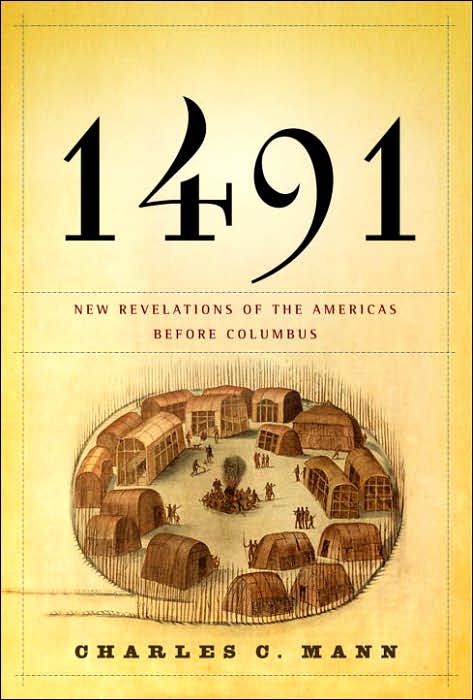
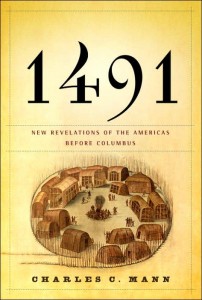
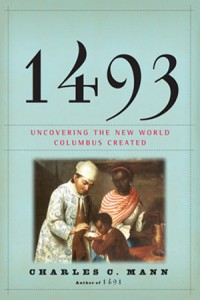
    Charles Mann describes these and a number of other fascinating findings in his book 1491: New Revelations of the Americas Before Columbus. He relays the information in such an engaging style that I found myself picking the book up at every chance. When I was finished, I wanted more.

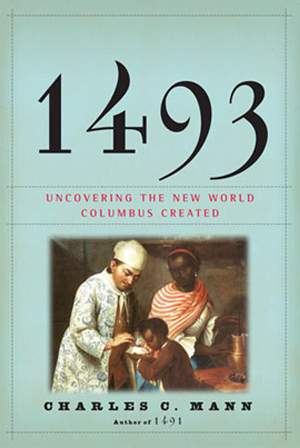
    Luckily, in 1493: Uncovering The New World Columbus Created Mann continues his history lesson. Except instead of focusing on the surprising things we’ve learned about the Indians in the last two decades, he focuses on the surprising impacts, both biological and financial, of linking the Western and Eastern hemispheres together. It’s the biggest event in the world, Mann suggests, since the dinosaurs died. Mann suggests that Columbus didn’t discover a new world–his voyage created one.

    The first part of the book examines the effect of the exchanges across the Atlantic (microbes  and tobacco). The next part focuses on the effect of the exchanges across the Pacific (silk, corn, and pirates). The third part shows the role of the exchange in the Agricultural and Industrial revolutions (potatoes, guano, and rubber).  The final part examines the consequences of the huge shift in populations caused by the Atlantic slave trade (Maroons, mixed-marriages, and freedom). As with 1492, the insights are both surprising and fascinating.

    If you like history, if you liked Guns, Germs, & Steel, then I think you will love these two books.

    EDIT: I just ran across a fabulous Doug Fabrizio Radio West interview with Charles Mann about 1493 called  The World Columbus Created.  Listen and enjoy!

    Divine Yogurt
    For years eating a serving of sweetened yogurt was like eating a box of Milk Duds (20 grams of sugar) or a Milky Way candy bar (35 grams of sugar). Yes, the sweetened yogurts have that much sugar. The only way to avoid eating literally like a kid in a candy store was to purchase plain yogurt and add some fruit or a squirt of honey. And, no, I will not consider eating yogurt sweetened with Splenda or Nutrasweet.  Artificial sweeteners make me gag. As far as I’m concerned, they are abominations that ruin the taste of everything they touch.

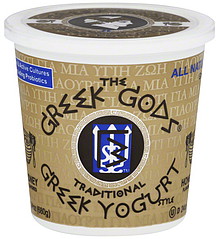
    So for many years I enjoyed my mix of plain yogurt and various add-ins. However, to my joy, I recently discovered a sweetened yogurt with only 15 grams of sugar (about as much as you find in a large banana) that tastes divine. It’s sweetened with real sugar and honey. And the mouth feel is sooooooo smooth. I’m sure this is because, unlike all the other yogurt manufacturers, these guys realized that, duh, fat actually makes things taste good and isn’t the  evil thing we’ve made it out to be. In just two bites it became my favorite sweetened yogurt. It’s called The Greek Gods Traditional Greek Yogurt. I’ve found another version—the vanilla honey—that only has 5 grams of sugar.

    Be aware that despite its name, this yogurt does NOT have the high protein content of other Greek style yogurts such as Brown Cow Greek Yogurt with 23 grams. Furthermore, not all the flavors have the low sugar content. Their blueberry and strawberry flavors, for example, have 35 grams. So check the labels first, and then treat yourself to yogurt that will have you savoring every bite.

    When I eat yogurt, it will still mostly be the plain Greek style with mixers. But when I want a special treat, you know I’ll be getting some from The Greek Gods.

    EDIT: 9/6/12 I now feel like Jerry Seinfeld in the episode when they found out the fat free frozen yogurt really wasn’t fat free. All the other yogurts I was looking at had serving sizes of 1 cup. The Greek Gods folks thought 1/2 a cup was the right size. That means that this super amazing low sugar yogurt had 30 grams of sugar per serving! It’s like eating a Snickers! I’m so disillusioned. Alas.
    Share
  • | |

    30 books you should read before you die

    An avid reader friend of mine began reading through the books in a list called “100 books you must read before you die.”

    She got to Jack Kerouac’s On The Road and went to Facebook and posted the following: “I don’t get the appeal. It’s about a group of boys/men who are irresponsible, drunks, whoring around taking advantage of others and being enabled by their women. Why is this a classic and why should I have wasted my time on it? Can some of my literary friends explain? I hated a brave new world and the handmaid’s tale too.”

    Is the book a classic?

    Should she read it before she dies?

    Is it really that important?

    Let me share an edited version of my response and then provide my list of 30 books you should read before you die.

    *

    Annette, the unfortunate truth is that these lists of “classics” are a sham because there is no objective criteria for determining literary excellence.

    Or maybe I should say that measuring quality in the arts isn’t like measuring the unambiguous, objective score of a baseball game. After books exhibit a certain level of proficiency, it becomes increasingly difficult to distinguish the quality of one book from another, especially because much of this depends on a reader’s interests and subjective experience of the story.

    When it becomes hard to rank performances, people rely on other measures. One of the most powerful is social networks.

    So if two readers find two different books that blow them away, one of the books might get all the attention because the one book gets picked up by a news service (The New York Times) or a platform (the Oprah Book Club effect) or some other social network of influence. A lot of the so-called literary classics only appear on various lists because they tapped into the academic network, which kept them alive far longer than they would have lasted otherwise.

    On The Road is simply a book that made a stir among some circles in the 1950s. That’s it.

    Was it more important or of higher quality than Exodus? The Chronicles of Narnia? Lord of the Rings? A Town Like Alice? All published in the 1950s as well.

    It depends.

    If you’re wanting to understand the 1950s beat culture, it would be an important book.

    But if you’re wanting to understand fantasy writing of the time, it wouldn’t.

    If you’re wanting to read a book that’s had a huge impact on popular culture, well, LOTR beats On The Road like a dog.

    Some people have the feeling that the so-called classics have some inherent medicinal value because someone put them on a list and called them classics.

    Nope. They’re just stories. Some of which can shed light on the issues and interests of a part of the culture in a given period. But if you’re not interested in that specific sub-culture, who cares?

    And if you’re reading to be entertained, moved, uplifted, or educated—which ones do that best for Annette is for you to decide.

    So all that to say I wouldn’t devalue your reaction to the book ?

    *

    I’m now going to give you my list.

    But it’s not going to be a list of titles. Nor will it focus on a book’s impact on some sub-culture of a given period.

    It’s going to be a real list. One that focuses on what so many of us go to stories for.

    1. The one that makes you weep.
    2. The one that makes you giggle and snort.
    3. The one that reminds you of what it’s like to fall in love.
    4. The one that gives you hope.
    5. The one that you begin to read more and more slowly because you don’t want it to end.
    6. The one that scares the soup out of you.
    7. The one that you can’t put down, even though you need to wake up early in the morning.
    8. The one that makes you wish you lived there.
    9. The one that’s so good that when you close it, you immediately start to read it a second time.
    10. The one that gives you and your child hours of pleasure together.
    11. The one that gives you a sacred, spiritual experience.
    12. The one that makes you reread some of the lines because the turns of phrase are just so delicious.
    13. The one that gives you courage.
    14. The one that takes you on an awesome adventure.
    15. The one that makes you want to be a better person.
    16. The one that bores you to tears (just so know you how good the others are).
    17. The one that introduces you to a different culture that delights you.
    18. The one that makes you think.
    19. The one that lingers with you for days.
    20. The one that gives you lovely insights.
    21. The one that inspires you to love your spouse more.
    22. The one that introduces you to the sorts of people you normally don’t like and makes you actually like them.
    23. The one that delights you with its characters.
    24. The one that whisks you away to a different historical period.
    25. The one that inspires you to give your children a hug.
    26. The one that gets your adrenaline pumping.
    27. The one that sparks all sorts of ideas in your head.
    28. The one that makes you wonder and start imagining what it would be like to be there.
    29. The one that blows your freaking mind.
    30. The one that makes you stand up in your living room and cheer.

    We could do more than 30, couldn’t we?

    Like the one that makes you think people from a different time period are just like us. And the one that makes you think people from that same period are completely alien.

    But I think we’ll stop. That there above is a list.

    Those are 30 books I think everyone will want to read before they die.

    Share
  • Good Stuff: Poldark, Monk, and the cure for dragon feet

    For all of you longing for just one more season of Downton Abbey, I’ve found a new series from the BBC I think you’ll enjoy (thank you Duane Robinson for the recommendation).

    It’s called Poldark and is set in the late 1700s in Cornwall, that little southwestern leg of England that juts out into the Atlantic. The dark-haired and handsome Ross Poldark returns to England after having fought in the American War of Independence and finds that his father has died, and he’s inherited the estate. Except the estate is in ruins.

    The house, which is a long way from being anything grand, is a mess and being inhabited by the deceased father’s last two servants. A man and a wife who are equal parts louts and lushes. The land isn’t producing. The mine is closed. And Poldark has very little money.

    By the way, when we think of British aristocracy, we most often think of dances and fine clothing and large tracts of lands. We seldom think of mines. But Cornwall has been mining tin for a very long time, and so were its lords. In fact, Cornwall was known outside of the Isles anciently, and some historians suggest that Cornwall was probably selling tin to the seafaring Greeks and Phoenicians many hundreds of years B.C.

    So our young and handsome lord has come home to a mess and very little money. But he immediately sets about trying to repair things. And what unfolds is a wonderful story with love, action, humor, injustice, and villains plotting Poldark’s downfall.

    We loved Downton in part for the refinement and high society (and Lady Grantham’s hilarious one-liners). However, Poldark isn’t about the top of the aristocracy. It’s about a man almost at the bottom. And many of those of the lower class who are his friends. There’s a refreshing earthiness about it even while you still have scenes of the high society and all that goes with it.

    We just finished the first season and are hooked. In fact, I stood up and cheered at the end of the last episode we watched. So if you love English historicals, you’re going to enjoy Polkdark.

    *

    The humorous detective series Monk debuted in 2002 and ran for eight seasons. It was a huge hit. But because I’m a cave dweller I didn’t get to it until now. But, boy, I’m happy I did.

    If you haven’t seen it yet, you’re in for a treat. Monk is one of those brilliant detectives like Patrick Jane in The Mentalist or Sherlock Holmes who sees all sorts of details that so many others miss. But unlike those guys, Monk has obsessive-compulsive disorder plus a number of phobias.

    And so he can’t just walk in and stun everyone with his brilliance because at any moment he might get sidetracked straightening pictures or moving lamps or trying to avoid germs. In one funny scene he’s being chased on foot by someone intent on killing him, and he can’t help but touch the poles as he runs by. However, he’s not all helpless because he’s hired a female nurse, Sharona Fleming, to help him. And the interaction between the two of them adds another enjoyable dimension.

    And so you get to experience all the awe of watching someone like Sherlock solve crimes plus laugh along the way. I couldn’t help but laugh out loud during a number of episodes.

    If you like The Mentalist, Elementary, or Psych, I think you’ll really enjoy Monk.

    *

    This last review is for all of you who have dragon feet.

    That’s what I had until two months ago. Dry dragon feet. So dry and with such sharp and jagged calluses that I regularly wore the area on my sheets around my feet to shreds. Nellie’s side of the sheets were nice and smooth. My side, after a year or two, looked like the dog had attacked it.

    The calluses were so bad I periodically sanded them off with 400 grit sandpaper.

    I also got stress cracks in the winter, which I tried to heal with band-aides and Neosporin. And that worked a decade ago. But the stress cracks were just getting more frequent and longer-lasting. This last winter I had three that stayed for weeks and weeks.

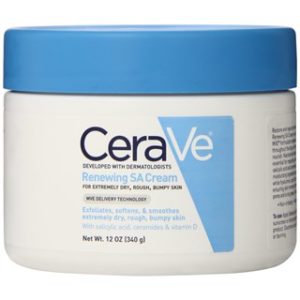
    And so when I went into my dermatologist for my annual skin cancer check, I asked him if there was anything to be done. He said, “Get CeraVe cream with SA, salicylic acid. It has to have SA.”


    After the appointment, I promptly drove to Walmart and walked down to the cosmetic aisle and purchased a little tub of CeraVe Renewing SA Cream. And I began to use it that night, putting socks on after I applied it. I applied it every morning and night.

    And, miracle of miracles, a few weeks later my feet were normal human feet again. The calluses were gone. The stress cracks gone. The pain gone. My sheets love me. My wife loves me. I’m saving money on sand paper.

    Folks, if you have dragon feet and want to be human again, let me suggest CeraVe with SA.

    Share
  • Good Stuff! 2 Sauces You Don’t Want to Miss

    What have the Dutch got that we ain’t got?

    Well, besides signs like this.

    geenhondenpoepopdestoep

    Which is frequently accompanied by the words “Geen Honden Poep Op De Stoep”(no dog poop on the sidewalk).

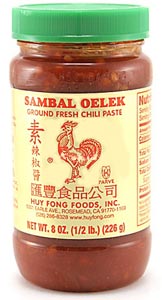
    I’ll tell you what they have—easy access to sambal oelek (SAHM-bal OO-lek). Sambal oelek is Indonesian for “dang good chili paste.”


    SambalOelek

    And why I started this post with the dog sign, I don’t know. Probably not the best lead in for food. But put that out of your mind now.

    You have avoided the dog, and are now sitting down to a delicious meal. And it’s been made even more delicious because you used sambal oelek. “Sambal” means something like “condiment” or “sauce.” There are a lot of different sambals, of course.  Oelek refers to a type of Indonesian stone mortar and pestle used to grind things. So a rough translation is ground sauce.

    And this sauce/paste is awesome. Now, I’m not a spicy foods guy. In fact, whenever we eat out, and I’m asked how spicy I want my food, I always choose mild. I hate super spicy food. But sometimes a little spice can transform a dish.

    You want to perk up your stir fry? Sambal oelek.

    You want to refresh your scrambled eggs? Sambal oelek.

    You want to try a new kind of PBJ? Sambal oelek.

    A spicy PBJ? Oh, baby.

    I was introduced to this BPJ when I was on my mission in the Netherlands. BTW, it’s not by accident I became of fan of Indonesian food while on my mission. Indonesia used to be a Dutch colony, and so there are tons of Indonesians there. For almost a year, I lived in rooms rented out of the houses of Indonesian landladies who cooked our lunches or dinners for us.

    So one day I watched one of my fellow missionaries spread sambal onto a piece of bread, then follow with peanut butter and a touch of jelly. At the time, I was grossed out. Then I tried it.

    Have you ever had satay? It’s the Thai and Indonesian version of BBQ. It usually comes with this marvelous spicy-sweet peanut butter sauce. If you have, you know you love it. And this, well, this is what you call the sambal PBJ variation of satay.

    If you like Thai, you’ll love this stuff.

    So where did I find it?

    World Market.

    And if you don’t have one close, you can get it on Amazon. Yeah.

    But, wait. There’s another mild hot sauce that you don’t want to miss.

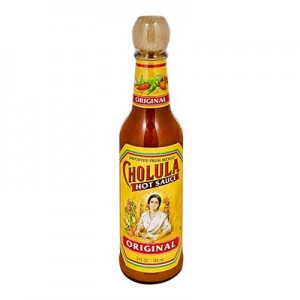
    My two daughters just returned from their missions. One went to Kentucky. At the end of her mission, she was teamed up with one Sister Barajas from Mexico and assigned to work Spanish-speaking folks. And Sister Barajas introduced her to Cholula.

    Cholula

    Heavenly Cholula. Not too spicy. No weird taste like Tobasco.

    You want to perk up your stir fry? Cholula.

    You want to refresh your scrambled eggs? More Cholula.

    You want to try a new kind of PBJ? I don’t know. I haven’t tried that yet. But it’s good on steamed veggies. Good just about anywhere you want a fine little zing.

    Where can you find it?

    Walmart.

    How easy is that.

    If you like mild spice, the little bottle with a wooden top is going to become your friend.

    Okay, so what if you don’t like sauces?

    cafe_zupas

    How about a great soup and sandwich. Here’s the freebie recommendation. If you live close to a Cafe Zupas (Arizona, Idaho, Nevada, Utah), try to new Roasted Veggie and Quinoa soup along with a sandwich. I had the California Turkey. It was delicious. It comes with a little bit of French bread and a chocolate dipped strawberry.

    Life is good.

    Share
  • The Profiler, Almond Milk, and Uncle Sam

    Real crime 

    It’s 1990. You’re a housewife, homeschooling your children, and renting a room upstairs to a young man to make ends meet. There are a few odd things about the young man, but you overlook them. Then one day a woman is strangled on a jogging path near your home, and your first thought is that the young man living in your house has something to do with it.

    What do you do?

    Pat Brown found herself in this exact situation. She voiced her suspicions to her husband, but it was all too farfetched. However, the nagging thought wouldn’t let her go, and she soon uncovered evidence that made the young man a strong suspect.

    She took the evidence to the police, but they dismissed her as a bored housewife with an overactive imagination. She evicted the young man, but it would be six years before the authorities would finally bring him in for questioning.

    Dismayed and frustrated, Brown started down a path that would lead to her become a professional criminal profiler, assisting police departments and victims’ families by analyzing both physical and behavioral evidence to make the most scientific determination possible about who committed a crime.

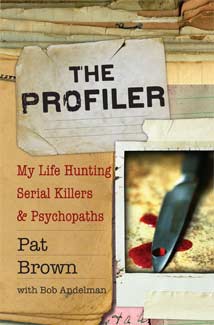
    In The Profiler: My Life Hunting Serial Killers and Psychopaths Brown tells about what happened with that young man and her journey to becoming a profiler, then she opens a number of other cases she’s worked on, giving the reader a behind-the-scenes look at how profilers work, and how their methods bring new investigative avenues to light. She also brings home very clearly just how many murders go unsolved. It’s an absolutely fascinating read.

    Milk that doesn’t moo

    I used to think soy milk was either for the lactose intolerant or hippies. And so I always avoided that milk section of the grocery store. But, having embarked on a new way of eating that I’ll explain in another column, I was induced to approach the alternative milk shelves. I purchased a carton of soy milk, but then I saw cartons of something even more strange: almond milk.

    Puzzling. I knew, of course, that almonds did not have udders. So nobody was out there hooking them up to tiny milking machines. And they were nuts, so it’s not like you can squeeze them to make them release their tasty juices. Instead, I learned that almond milk is made by finely grinding almonds together with water. I thought this was something new, invented perhaps by a Californian who’d had too much weed, but it appears many Medieval European recipes called for almond milk, and it has always been a popular beverage in the Middle East. So almond milk has been around for some time.

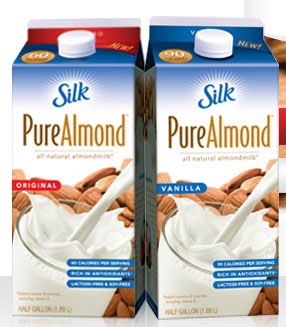
    But I didn’t know any of this. I just knew I loved almonds and that they provide all sorts of goodies for the human body. Besides, I have a hard time resisting adventures. So along with the soy, I picked up a carton of Silk’s PureAlmond regular, vanilla, and chocolate milk.

    The soy was okay, but it left a weird zingy taste in my mouth. Furthermore, soy contains estrogen. I’m sure it’s a fine product, but I live with four daughters and don’t need any more estrogen. And I certainly don’t need it mutating me in any, um, feminine ways. So I put the soy aside and gave the almond milk a go.

    It was delicious. I love the vanilla and regular flavors the best. In fact, I like it so much I only drink cow’s milk when the last drop of almond milk is gone, and I try to make sure that never happens. Some might worry that I’ll deplete my calcium stores, but not so. Almond milk actually has MORE calcium than cow’s milk along with vitamin D that allows the body to absorb the mineral. It also has 50% of the RDA of vitamin E, of which cow’s milk has none. But that’s all technical vitaminy stuff. It wouldn’t matter if the milk itself didn’t taste so dang good.

    The American breakfast

    I love cereal. We have our standard favorites as a family, but I also like to get a box of something new when we shop. I recently saw, perched up on the top shelf at Wal-Mart, boxes of  Uncle Sam.

    What the heck? Was this a Tea Party product? I know Utah is conservative, but come on. And what kind of nut sings “The Stars and Stripes” for breakfast?

    Well, I might.

    So I promptly snagged a box and read that it’s been around since 1908, thus making it politically neutral. Then I read the ingredients. It’s a simple cereal made of wheat berries that are steamed, rolled, and toasted to provide killer whole grain nutrition. Those wheat flakes are then mixed with flax seeds (omega 3’s anyone?). That’s it.

    I purchased a box, felt patriotic, and then gave it a try when we got home. I’ve been buying it regularly ever since. It’s slammed with 10 grams of fiber and 7 grams of protein, and goes great with Silk’s vanilla almond milk and a piece of fruit.

    Share