2 Great Cook’s Country Recipes

Yeah, I know–I should be writing. But I promised you two wonderful recipes from my experiments with the Cook’s Country June/July 2011 issue. There were a whole bunch of other recipes we tried that worked out well, but these were our favorites and good enough to get me to subscribe.

By the way, I found these recipes were not only tasty, but they were great to do on a date (in this case, with my daughters). Why just eat when you can enjoy the time together as well?  Besides, two people working together make these recipes a breeze.

Chocolate Eclair Cake

Chocolate, vanilla pudding, whipped cream, and graham crackers–baby, is this good!  I found I liked the cake best with HALF of the pudding and whip cream mixture. You’ll see the half amounts in parentheses. That way I got a taste of the pudding, graham, and ganache in every bite. The directions make it look like there’s a lot of steps, but they all go quickly.

INGREDIENTS

Pudding Mixture

  • 1 ¼ C sugar (1/2 + 1/8 C)
  • 6 T cornstarch (3 T)
  • 1 tsp salt (1/2 tsp)
  • 5 C whole milk (2.5 C)
  • 4 T unsalted butter cut into chunks (2 T)
  • 5 tsp vanilla (2.5 tsp)

 Whip Cream Mixture

  • 2 T water (1 T)
  • 1 ¼  tsp unflavored gelatin (1/2 + 1/8 tsp)
  • 2 C heavy cream (1 + ¼ +1/8 C)

Graham Crackers

14 ounces of Nabisco Honey Maid graham crackers

Ganache topping

  • ¾ C  heavy cream
  • 1 C semisweet chocolate chips
  • 5 T light corn syrup

 DIRECTIONS

 Make Pudding

  1. Combine sugar, cornstarch, and salt in large saucepan
  2. Wisk milk into sugar mixture and bring to boil over medium-high heat, scraping bottom with rubber spatula.
  3. Immediately reduce heat to medium-low and continue to cook and scrape until thick bubbles appear on surface, about 4-6 minutes
  4. Take off heat and wisk in butter and vanilla.
  5. Transfer hot pudding to large bowl and place plastic wrap directly on surface.
  6. Refrigerate for about 2 hours until cool.

 Make Whip Cream Mixture

  1. Stir water and gelatin together and let sit for 5 minutes.
  2. Microwave until gelatin dissolves and mixture gets bubbly around the edges, 15-30 seconds
  3. Whip 2 cups of cream on medium-low for about 1 minute, until foamy.
  4. Increase to high and whip for 2 minutes, until soft peaks form
  5. Add gelatin mixture and whip for 1 minute, until stiff peaks form

 Combine Pudding and Whip Cream Mixture

  1. Wisk one-third of whipped cream into chilled pudding.
  2. Fold remaining whipped cream into pudding.

 Layer Pudding Whip Cream Mixture with Graham Crackers

  1. Line bottom of 13 x 9 inch baking dish with a layer of graham crackers. Break and cut crackers if you have to.
  2. Top the bottom layer of crackers with ½ of the pudding whip cream mixture
  3. Place another layer of crackers over the pudding.
  4. Top that layer with the rest of the pudding whip cream mixture
  5. Place one last layer of crackers over the second layer of pudding whip cream mixture

 Make Ganache and Pour Over

  1. Microwave chocolate chips, ¾ C cream, and corn syrup in bowl 1-2 minutes, stirring occasionally.
  2. Cool for 10 minutes to room temperature
  3. Cover top layer of graham crackers with glaze
  4. Refrigerate cake for 6 – 24 hours. Then serve.


Dill Potato Salad

A potato salad with a perfect dill zing. Everybody in the Brown household loved this. Super wife especially loved it because she does not like eggs. Please note that there’s fresh dill used in all three parts. So when you shop, make sure you get enough for all three.

 INGREDIENTS

 Dill Vinegar

  • ¼ C white wine vinegar
  • 1 T minced fresh dill

 Boiling Mixture

  • 1 disposable coffee filter
  • ½ C coarsely chopped dill leaves and stems
  • 3 pounds Yukon Gold potatoes (don’t get any other type), peeled and cut into ¾ inch pieces
  • 1 T salt

 Dressing

  • ½ C mayonnaise
  • ¼ C sour cream
  • 1 T Dijon mustard
  • ½ tsp salt
  • ¼ tsp pepper
  • 2 T minced fresh dill
  • 3 scallions (green onions) green parts only sliced thin

 DIRECTIONS

 Make Dill Vinegar

  1. Combine vinegar and 1 T minced dill in bowl and microwave until steaming, 30-60 seconds
  2. Cool at room temperature for 15-20 minutes

 Boil Potatoes

  1. Place chopped dill inside disposable coffee filter and time with thread.
  2. Put potatoes, dill sachet, and salt into large pot with enough water to cover the potatoes by 1 inch.
  3. Bring to boil on high heat then reduce heat to medium and simmer until potatoes are tender, 10 minutes

 Cool and Soak Potatoes

  1. Drain potatoes thoroughly and throw away dill sachet
  2. Drizzle 2 T of the dill vinegar over hot potatoes and gently toss until evenly coated
  3. Refrigerate until cooled, 30 minutes. This allows the Yukon potatoes to suck up the dill vinegar.

 Make dressing and Combine with Potatoes

  1. Wisk mayonnaise, sour cream, remaining dill vinegar, mustard, salt, and pepper until smooth
  2. Add dressing to cooled potatoes
  3. Stir in scallions and 2 T minced dill.
  4. Cover and refrigerate to let flavors meld, 30 minutes.
  5. Serve with salt and pepper to taste.

 EDIT 9/7: Somehow I deleted four of the dressing ingredients when I posted. They’ve been added back 🙂

Share

Similar Posts

  • Brown’s Breakfast Burrito, The Way Back

    The Way Back

    GULag is the acronym for the government agency that administered the main Soviet forced labor camp systems in the early 1900’s. In Romanized Russian that’s “Glavnoye upravlyeniye ispravityel’no-trudovih lagyeryey i koloniy” which means “Chief Administration of Corrective Labor Camps and Colonies.”  The term “Gulag” quickly morphed to represent the camps themselves, which housed a wide range of convicts and many political prisoners.  It’s also come to stand for the repressive Soviet system with its arrests, interrogations, transport in unheated cattle cars, forced labor, destruction of families, years spent in exile, and early and unnecessary deaths.

    The Gulag was a meat grinder. An estimated 1,053,829 people died in the Gulag from 1934 to 1953.

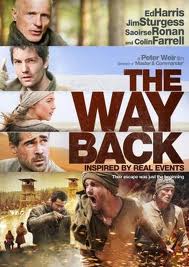
    Some of those camps were in Siberia, one of the most remote and harsh places on earth. Sawomir Rawicz was one of those who claimed to have escaped such a camp in Siberia. He wrote about it and his subsequent 4,000-mile walk to freedom in India in The Long Walk. That story inspired Peter Weir to write and direct The Way Back, which tells the story of a group of men who attempt to escape out of Siberia, across the Mongolian wastes, and into India.

    The film stars Ed Harris (who is interesting in anything he does), Colin Farrel (also starred in Ondine), Mark Strong (the villain in Sherlock Holmes), Saoirse Ronan (the fabulous lead in Hanna), and Jim Sturgess (the boyfriend in One Day). One of the group is an outright murderer. The others are all political dissidents—a teacher, priest, businessman, artist, etc. I found the performances honest and believable. But it wasn’t just the characters–the screenwriters subtly used syntax and word choice to transport the viewer.

    But more important than the believability were the various tensions and stories contained within the escape plot. Each of the men, and the lone girl, has a story, and the film gives space for the stories to be told. As for the lone girl: Ronan was amazing in Hannah.  She’s amazing here. Furthermore, the role she played here leavened the whole film with something it wouldn’t have had otherwise.

    The story will surprise you, make you shed a tear, think, and laugh. When you’re finished, you’ll talk about it. It’s that kind of a film. If you like dramas with action and suspense, I think you’ll like this film.

    As always, use KidsInMind.com to see if it contains things you might find objectionable.

    Brown’s Breakfast Burrito

    How about a meal that’s so good you’ll want to slow way down to savor each bite? A breakfast that will keep you full until lunch? A tasty repast that isn’t loaded with mind-numbing calories? Let me suggest the John Brown breakfast burrito. It’s full of succulent umami, bursts of piquant pepper, healthy mushrooms, and lots of filling protein. And it only takes about 10 minutes to prepare. The recipe below makes one burrito. Scale it up to feed more.  

    VEGGIES

    • 1/4th red bell pepper, chopped into small pieces
    • ½ to 1 cup of mushrooms, sliced
    • Dash of thyme

    EGGS

    • 2 eggs (120 calories)
    • 1 T milk or half-and-half
    • Salt
    • Pepper
    • Dash paprika
    • Dash garlic powder
    • Dash onion powder

     THE REST

    • Pam cooking spray
    • 1 tortilla (150 calories)
    • 1 ounce of Jimmy Dean Premium Pork sausage (90 calories)

    If you don’t have one of the spices, don’t freak out. It will still taste great. But the spices really take it to the next level. Here are the instructions. 

    1. Start with your veggies. Spray pan with Pam and sauté peppers for two minutes on medium high heat. Add mushrooms. Give them a spray of Pam and dash with salt. Cover until the mushrooms sweat (release their water).
    2. Next is the sausage. While mushrooms are cooking, start your sausage frying.
    3. Finish veggies. Uncover mushrooms. Just before you finish them, sprinkle with a dash of thyme. When the spice becomes fragrant (its smell rises up in delicious glory from the pan), remove the veggies from the pan and cover to keep them warm.
    4. Cook eggs. Turn heat down to medium low. Beat eggs, milk, salt, pepper, paprika, garlic powder, and onion powder.  Spray pan you used for veggies with Pam, then cook your scrambled eggs on medium low heat, stirring and scraping the whole time. And keep it on medium low—no browning or burning of eggs allowed! Cook until the eggs glisten with the last bits of moisture. Remember: you don’t want dry desert eggs. You want soft succulent ones.
    5. Assemble the glorious concoction. Put the veggies, scrambled eggs, and sausage in your tortilla and wrap it up smartly. (What does “smartly” mean? I don’t know, but it sounded good, didn’t it?)
    6. Go to heaven and return singing. This means you eat your breakfast burrito, but you do it savoring each bite. This is food meant to be enjoyed, not gobbled.

     As for calories, I estimate about 360 for the main ingredients. Veggies really don’t count in my book. Come on! Nobody gained weight eating turnips. But I’ll round it up to 400 just to be safe. Add in a glass of water and a piece of fruit and you’ve got a 450 calorie breakfast that starts your day off with delight, gratitude, and the joy of redemption. It could also make those you cook for kneel down upon the floor in well-deserved homage. And that’s always a nice thing for the cook.

    Share
  • Good Stuff! Two movies, a book, and a shovel

    We’re going to start with the shovel because it’s been dumping snow this year, and I know there are some folks out there who want a quicker way to clear the snow from their driveways and walks. And, boy, do I have something for them.

    I think it’s safe to say that the Brown family clears more snow by hand than the average American family. We have a driveway and street that together are a little over a tenth of a mile long. Here’s a picture.

    We clear that lovely stretch of road by hand with shovels. (Yes, we are crazy; more on that below.) Most of the time we have it cleared long before any city plow shows up. But we love our city plows because they can do the heavy work at the edges on the bottom two-thirds. And they do all the work on that bottom part when it gets really heavy and deep. We love our neighbors with tractors who’ve come to our rescue as well.

    Still, we do most of the clearing.

    We began our mad shoveling craze for one simple reason: we couldn’t get to our house when it snowed. And it was a pain in the neck to hike that tenth of a mile.

    Part of the problem is that we live on a hill, and there are a couple of steep stretches. Another part of the problem was that we had not availed ourselves of this higher technology called snow tires. We thought all-weather tires would do just as fine.

    Wrong. Big wrong. They don’t even come close.

    With all-weathers, on a hill, you have to keep the road clear. As in to the blacktop. Because once you build up even a small layer of snow, you’ll get slick patches, and then the all-weathers do nothing but spin.

    But we didn’t discover that until a few years into it. And by that time, we’d learned that shoveling such a long drive was not only good exercise, but it also was a great way to teach our four girls how to work hard and not fear projects that seemed daunting.

    I know some of you are thinking, dude, why not purchase a snow blower, or a pickup or four-wheeler with a plow?

    Because snow blowers at the time, much less four wheelers and pickups, were out of our budget. Because I’d much rather spend the money on a family trip somewhere fun. Because why spend the money when you can line up as a family and create your own Brown Family Snow Blade and give your kids stories to tell their kids about living in the Gulag?

    Anyway, it’s what we do. Fast forward now to this year. Three of our daughters have grown up and gone off to college. Nellie, my youngest daughter, and I can usually still get it done. But this year’s record snows kicked our butts. Royally.

    Now, we’ve tried all sorts of shovels. I can guarantee, if it was at a store for sale, we’ve tried it. We’ve used brooms. We’ve used all sorts of configurations of girl, woman, and dad power. After all that experimentation, we found a standard push shovel to be the best for general snow and a square garden shovel to be the ticket for ice. But this year our trusty tools weren’t cutting it.

    So, after one long day on the driveway, I went on line looking for a better shovel. And after looking at quite several contraptions, I found The Snowcaster.

    You can see it in action below. It’s basically a plow. One made for a human to push.

    When I saw it, I thought this thing had to be better than pushing shovels. So I ordered it and assembled it. The curved blade of incredibly hard plastic rises 9 inches above the ground and is three feet long. Its nifty design allows you to simply flip it to change the direction of the blade.

    After using it these last six weeks on multiple snows of everything from ten inches of powder to three inches of watery slush, I will simply say that it’s amazing. It’s so good, I ordered a second unit.

    The Snowcaster does have a limit—you’re not going to plow three-feet of snow with it. You’re not going to plow a build-up of two feet. If you’ve got a lot of wet snow over a large area, you will break a sweat. And sometimes you’ll still need a shovel to toss snow at the edges. But for moving large quantities of snow out of the way on asphalt or concrete, it’s the best thing I’ve found to date.

    If you are like me and don’t want to purchase a machine just yet, have snow to move, and want to dramatically reduce the time it takes to move it while providing some fun for the kids, I think you’ll love The Snowcaster. I ordered mine directly from the company here: https://thesnowcaster.com/. The model I chose was the 70SNC. I wouldn’t suggest the long model unless you rarely get snows above three inches. I say this because on some days with lots of snow the three-footer was about all I could push.

    Okay, onto the movies. I have two excellent ones to recommend. Both of which are based on true-life events.

    The first is Denial, a British-American historical drama, that tells the story of how Deborah Lipstadt, a holocaust scholar, was taken to court for libel in Britain by David Irving, a man who claims the Holocaust never happened. In America, you’re always innocent until proven guilty. However, in Britain, with libel, the burden of proof is upon the defendant. So how do you prove you weren’t slandering someone? The movie was thrilling and fascinating. And gave you something to think about afterwards. If you enjoyed Woman in Gold, you’ll enjoy this.

    The next is Hidden Figures, an American biographical drama, that tells the story of female African-American mathematicians at NASA. These women were employed as computers—that was their official job title. Of course, this was before electrical computers and calculators, and what they did amazes me. The story is about the USA struggling to catch up to the Russians in the space race, and how four of these women helped while dealing with deep-seated prejudice against Blacks and females. It is full of humor, poignant moments, and surprises. It’s one of the best films I’ve seen these last few years. I don’t know what to compare it to. All I know is that you will laugh, be amazed, become outraged, and cheer.

    Lt. General Michael T. Flynn. Flynn is a former director of the Defense Intelligence Agency and Assistant Director of National Intelligence and is now our National Security Advisor. If you want to understand how he is likely to advise the president about our war against radical Islam, let me recommend his book The Field of Fight. In the book, Flynn describes his background as an intelligence officer and how critical good intelligence is in this fight. He then describes his take on who the radical Islamist enemy is and how he thinks we can win the war against them. He shares several surprising insights that only someone with his experience can and reveals as well how good and smart leaders can disagree about strategy. One of his main points is that we will never win the war by killing bodies—this is an ideological war, much like the war we fought against communism. For those wanting to get past news blurbs and hear the man speak for himself at length, I think you’ll find this book interesting.

    And because, Dear Reader, you read all the way to the end, I will give you two more movie recommendations. Moana is a great, fun, family film. La La Land is an enjoyable musical romance that will probably break your heart. It did mine.

    Share
  • |

    JB Speculates: eBooks, Book Contracts, Agents, and Libraries

    I’ve looked in the crystal ball I hide under my desk and caught a glimpse of what ebooks will change in the next few years. Specifically I saw what will happen to:

    • Book Contracts
    • Literary Agents
    • eBook Aggregators and Libraries

    After showing me the vision, the ball thanked me for shopping at Walmart. Weird.

    PRINT ONLY CONTRACTS

    The only reason to have a print publisher is to get distribution you cannot obtain on your own, or to get it more cheaply than it would cost you if you tried to get it on your own. That’s it. Now, it’s true publishers have excellent art departments and story editors. But you can contract out cover art, copy editing, formatting, and even story editing yourself.

    Distribution is the main thing publishers offer that you can’t get anywhere else.

    BTW, when I’m talking about distribution, I’m talking mostly about getting the books out to places people can see and purchase them. For example, publishers can get your book into hundreds or thousands of books stores all at the same time–Barnes & Noble, Hastings, Walmart, Costco, indie book stores, airport book stores, grocery stores, drug stores, etc. Publishers can get you display in those stores so consumers see your book. One form of that are the racks and new book displays. Another is one that Scholastic does so well, i.e. displaying and selling titles in tens of thousands of classrooms with its book catalogs. A single author just can’t do that. 

    It’s also true publishers can convince some platform venues, that would never look at a self-pubbed author, to spotlight your book.  For example, it’s unlikely a self-published author will be able to convince Booklist, Publishers Weekly, and Library Journal, which have huge platform for library book purchasers, to review a book.  But publishers have no problem getting their stuff in there. Likewise, it’s often much easier for publishers to get endorsements from other authors or people with platform than it is for a single author.  Of course, there are so many places that have some kind of platform, that publishers don’t have a lock on them all, e.g. Goodreads and Amazon reader reviews.  But for the sake of simplicity, let’s just look at the distribution end.  

    Because 90% of book sales are still hardcopy, the only way to have HUGE sales numbers, right now, is through a print publisher. I’m talking about the numbers you see in the Publishers Weekly top selling books, where you have to sell at least 100k copies in hard back, 500k copies in mass market, to even make the list.

    Publisher’s lock on this ability will erode. We can see signs of this in the USA Today Top 150 already. I consider this to be the most accurate picture of what truly is selling the most. Here’s why. And ebooks are starting to be the best selling format for a number of books. On that list, they add up sales of a title in all formats and then list the best-selling format. So when you see an (E) at the end of the listing, you know it’s selling more ebooks than any other format. E’s are starting to pop up all over and we’re still in the early adopter stage for ebooks and ereaders.

    So what does this mean?

    If I put on my author business slacks (why does it always have to be hats we change?), I’d be crazy to turn down a publisher that wanted to offer me monster distribution. A bird in the hand is worth two in the bush. You offer me $500k now, I’m taking the money and running all the way to the bank and then the $6.99 Indian all-you-can-eat buffet.

    Of course, I’m not likely to get that kind of an offer. We new writers are more likely to get an offer for, what were Hines’ numbers? $6k – $12k? And for that the publisher will want all our ebook rights and will tie them up for years and years and years. And then they’ll try to give us a fraction of what we could get selling directly. Furthermore, they don’t provide such books the same push to garner platform spotlight. They don’t spend the money to give them the prime display in bookstores. This means the difference between what they bring to the table for us smaller authors and what we can do on our own is much less. And the ebook has narrowed that even further.

    How much further? Well, how many books would you have to sell to make that advance of $6k – $12k? If you’re selling your books for $2.99 for the Kindle, you get about $2.00 a book. That means you’d have to sell 3k-6k copies of an ebook to earn as much as that average advance. 

    Do you think you can sell 3k – 6k copies of an ebook at $2.99?

    Some authors will be able to do this. Some won’t. If you wanted to do that in three years, you’d have to sell about 150-350 books per month. For a more in depth comparison between traditional publishing and self-publshing ebooks, see Dean Smith’s blog on cash flow.  

    Maybe you don’t think you can make those numbers. But maybe you can. The point is that if you think you can, then you can make as much on your own as you can with a publisher. This means there is absolutely no financial reason on earth to take the publisher’s deal. None. Now, if you have non-financial reasons, that’s another thing, but when looking at dollars and cents, it’s fairly clear the publisher’s ability to put you into their distribution channels isn’t worth what it will cost you. Especially since the ebook is forever and may keep selling for years to come AND because the market for ebooks is still in the early adopter phase–it’s only going to grow massively over these next years.

    But this doesn’t mean paper publishing is dead. It’s not. Nor will it be for some time. Just because SOME authors can make as much in the ebook market on their own as they can with a publisher through their distribution channels doesn’t mean all of them can. Furthermore, publishers with distribution have something to offer even those who successfully publish ebooks themselves.

    Let’s say you have an ebook series that starts to sell well for you, 1,000 per month. That’s $2k per month, $24k per year. If a publisher wanted to buy the rights to that from me, they would have to pay me MORE than $70k as an advance. MORE. Because I can make that on my own in three years selling it myself. In fact, since ebooks are forever, I have to look at the present value of all of those years of sales. That income stream is going to be a LOT MORE than $70k, even if we think sales will taper off after five or six years.

    How many big publishers are going to want to pay that?

    Probably none. Or, at least, I suspect those deals will be few and far between. But there is money to be made in paper, even if that market is shrinking. There will be some smaller publishers who, for the right price, will offer paper distribution. And if they can get me distribution that I couldn’t get myself for paper, or do it at a lower cost, then I’d want to sell them paper rights. Why not?

    And so what I see in the crystal ball are some authors, the ones who do well selling ebooks, being able to sign contracts with publishers that sell paper rights only. I know the big publishers probably won’t go for that in the near term, but smaller publishers will see the value and step up to the plate.

    AGENTS

    What about agents? Are they going to die?

    I think if we remember that literary agents are SALES agents, then their future becomes clear. The only reason to get a sales agent is because doing so makes my property worth more (same reason for getting a publisher, btw). If, by letting them focus on sales and letting me focus on getting more product out the door, I make more money than I would if I tried to do BOTH the selling and the producing, then I want an agent.

    I want to sell as many rights as I can to as many people as possible–gaming, film, audio, foreign, merchandise, etc. I’d be a fool to say, well, no, I’ve got this little ebook gig going. I’m not going to sell any of these many other rights to anybody. No, I’m just going to let them sit in my basket and earn me nothing. Let them go to waste.

    !?

    A good agent should be able to sell more than I could on my own because they have a better ability to reach AND close editors AND other people that are in the market for purchasing rights to my property. They’ll also allow me to sell more because all the time I would have spent selling, I can now use to create more product. So not only do I have more books, and therefore rights, to sell, I can hopefully sell them for a better price and terms than I could on my own.

    I’d be a fool not to increase my revenue. I’d be a fool not to have a good agent.

    So as long as there are people who want to purchase these non-ebook rights, and an agent can make a sale I couldn’t or can make it for less than what it would cost me to do it on my own, then agents will be useful. Because of this, because we’ll always have more than ebook rights to sell, I don’t see a role for good agents ever going away.

    EBOOK AGGREGATORS & LIBRARIES

    When more and more people begin reading ebooks what happens to the libraries?

    Ebooks cost less. So a lower price per book would simply allow libraries to purchase more books and expand the collection. But wait, they don’t need rooms and rooms to hold all the paper. You can store the world’s library in one computer room. Shoot, this means that housing the collection on a server instead of on the shelves would cost less. This would allow for an even bigger collection. But why maintain a server and manage your own collection if you can network to the collection down the road?

    In fact, what if there were a mega service with millions of titles you could subscribe to? That would be even cheaper. Then you wouldn’t have to pay book purchasing agents or IT folks to keep your server running.

    Enter the ebook aggregators–the Netflixes of ebooks (I know somebody somewhere is working on this business plan; is it you?)

    I’m betting the whole library system goes national. I’m betting you’ll have some government aggregators, but they’ll probably be dwarfed by the private companies. You’d subscribe to the aggregator’s service just as you do Netflix today and many university libraries currently subscribe to electronic periodical collections.

    The aggregators will probably charge users as Netflix does for a certain number of books checked out at the same time. If a large entity like a library wanted to subscribe, I bet the aggregator would charge access to the collection based on number of users at the library. The library would pass some of that fee onto patrons. The rest of the fee would be paid by the community’s tax dollars, just as those tax dollars pay for the current collections. You might even have device manufacturers coupling subscriptions with purchase of the product as incentives to buy their devices.

    When the aggregators step in, we suddenly end up with a different mix of distribution channels that will coexist:

    1. Author –> ebook retailer (Amazon Kindle, B&N Nook, etc.) –> reader
    2. Author –> subscription aggregator –> reader
    3. Author –> subscription aggregator –> public and school libraries –> reader
    4. Author –> publisher –> subscription aggregator –> then option 2 or 3 above
    5. Author –> publisher –> current distribution channels

    Surprised by #5? Well, the current distribution channels are not going away until every book can be read on an ereader and everyone who reads has and wants to read on such a device. That’s going to take some time, if it happens at all.

    Why would readers buy individual titles ala distribution channel 1 above? Some people just want to own. Other readers will be happy to purchase the books because they don’t want to wait for a checkout slot to open up, e.g. I already have my allotted number of books checked out and I really want this one on hand all the time because it’s Suzie’s favorite. Other readers will want to customize a book with highlights, margin notes, links, etc. just as many of us like to mark up paper texts. We’ll need our own copy for that. Still, I think the bulk of reading will move to the subscriptions. For example, right now I purchase DVDs I love, even though I can get them from Netflix. But the number of DVD’s I own are a fraction of those I watch. Most TV and film I watch once and it goes back to Netflix until I want to see it again. And this checking out becomes even easier where there’s nothing physical to send through the mail.

    Please note: there will probably be some form of gatekeeping with the aggregators. I doubt they will carry every scrap of anything ever written. They’ll carry a lot of stuff, but not every written word. Furthermore, when you have hundreds of thousands of titles, you’ll need mechanisms for helping your subscribers find great content suited to their tastes. A lot of “people who read this read that,” review services, etc.–the next generation of Netflix recommendations, Goodreads reviews, and Pandora like tools. 

    Aggregators won’t be the only gatekeepers, however. The key is in getting notice. And there will be many places with platform that will be able to shine a spotlight on a book. Think about all the places you find out about movies today—radio movie programs, TV movie reviews, Rotten Tomatoes, Newspaper Reviews, Yahoo viewer and critic review summaries, Kids-in-mind, and on and on. Look at all the ways you find music. There will be just as many ways to find books.

    As far as paying authors, I suspect aggregators will pay authors each time a book is checked out, or, if it’s a must-have name author, they will pay to list the title plus a per use payment.

    So that’s the future I saw in my strange little ball. Feel free to comment or add your own thoughts.
    Share
  • Basic Economics, Avatar: the Last Airbender

    How to not be duped by political blarney

    Karl Marx was not a scientist. Nor was Adam Smith before him. They were philosophers. Theorists. Idea men. That’s what all economists in those days were. They had little tested knowledge, and so which economic system was best was all a matter of opinion.

    But things are now much different. Nations and local governments tried the various theories. And we’ve seen the results. We now have a whole century of data. Furthermore, economists now are scientists. They use scientific methods and deal with tested knowledge. Sure, there are still controversies, just as there are in any science, but the basic principles of economics today are NOT matters of opinion.

    For example, we know what happens when governments impose price controls in all their many varieties—rent caps, minimum wages, laws against price gouging, and medical care cost limits. These last few years we’ve seen a dramatic demonstration of what happens when they meddle with the prices of home loans. We know what happens when they impose tariffs or give subsidies to special groups like farmers or steel producers. We know what happens when they create barriers to people entering a market to compete, like they’ve done with immigrants. We know what taxes do.

    The unfortunate thing is that many of these principles seem to be ignored by our politicians. And by those who vote them in. And so we can have a Congress pass massive health care legislation that will cause health care shortages just as similar laws caused shortages in other countries. This is how we have a president who in a recent speech to the U.S. Chamber of Commerce suggested, in good Marxist fashion, that it was business owners who kept the American workers down by hoarding all the profits. Has he not looked at the data which shows that huge profits invite more competition, which tries to get ahead of the leader by cutting prices, which allows the American workers to get more for less, thus raising their standard of living?

    In the 1980’s and 1990’s India and China began to make fundamental changes to their economic policies, doing the things that have been proven to work. Suddenly, the economies of those nations started to grow. It’s estimated that 20 million people in India rose out of poverty in a decade. In China, more than a million people rose out of poverty EACH MONTH.

    But this seems lost on a number of politicians. Don’t let it be lost on you. We have critical elections coming up. One of the best things we can do is educate ourselves about these basic economic principles so we can cut through all the political blarney. I haven’t found a better, more enjoyable book on the subject than Basic Economic Principles: A Common Sense Guide to the Economy by Thomas Sowell. Sowell is an economist and Senior Fellow on Public Policy at the Hoover Institution at Stanford University. His book is written for the general public and so foregoes dry charts and theoretical ho-hum for lots of real-life examples and straight-forward explanations. There are times when I wish he would have gone into more detail on a few subjects, but what he lacks in depth in a handful of areas, he makes up with breadth. Furthermore, the way he presents the topic was interesting enough to make me stay up late a number of nights well past my bedtime. 

    Great family entertainment

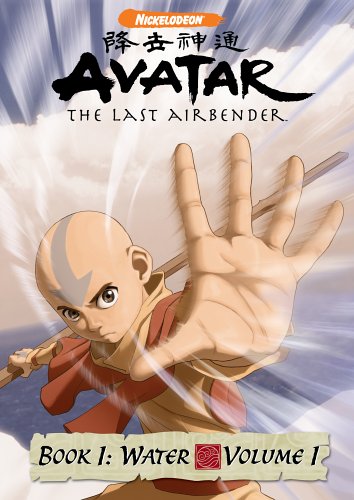
    Do you want some fun family entertainment that includes laughs, wonder, and moments of poignancy? Something you can watch and enjoy with the kids? Then let me recommend the animated TV series Avatar: The Last Airbender. This is NOT the movie Avatar by James Cameron with all the big blue people Nor is it the movie The Last Airbender, based on the TV series, which many fans disliked. This is the original. The one that millions love.

    Through the miracle of Netflix, I started watching it with my girls a few months ago. And we’ve all been sucked in. It’s unlike any “cartoon” I’ve seen. In fact, you can’t call it a cartoon just as you can’t call The Incredibles or Lion King cartoons. This is great story telling. Furthermore, instead of it being a bunch of unconnected episodes, this series is telling a long story. It ran for three years on Nickelodeon and includes more than sixty 22-minute episodes.

    The series follows the adventures of the main protagonist Aang and his friends, who must save the world by ending the destructive war with the Fire Nation. Aang’s world is divided up into four nations—Air, Earth, Water, and Fire. In each nation are “benders” who can powers with the element of that nation. So Air Benders can fly and create huge winds; Fire Benders can generate and throw fire; Water Benders can create ice and waves.

    So it’s fantasy, and all of that is cool, but it’s the characters that we enjoy the most. We quote and laugh at some of their lines. And then there are the episodes with true dramatic moments.

    Avatar has been nominated for and won many awards, including the Annual Annie Awards, the Genesis Awards, the primetime Emmy awards and a Peabody Award. It’s excellent entertainment.

    Share
  • The MT Sandwich, To A Dying Girl, Bloody Jack

    you-MOM-ee

    I used to move along the salad bars, looking at the mushrooms, and think: they’re vegetable Styrofoam! Who ever thought eating mushrooms was a good idea? My answer, of course, was it must have been some starving dude lost in the woods who found they were easier to chew on than bark.

    Such were the days of my ignorance. Because while raw mushrooms are fairly bland, sautéed or grilled mushrooms are worthy of a passionate, say it slowly, “oh my freaking heck” (hey, I live in Utah).

    I now love mushrooms. And I’ve found they very easily replace tasty meats. Probably because they have loads of the fifth basic taste—umami (you-MOM-ee)—just as meats do. I know some of you are thinking, “hold on, didn’t I learn that the tongue can only taste four things?” That’s indeed what you learned. But you were wrong. In 1985 scientists discovered we have a fifth taste, popularly referred to as savoriness, that’s been sitting on the tongue with the sweet, sour, bitter, and salty all along. In fact, humans get their first experience with it in momma’s milk.

    But cooked mushrooms not only taste good, they are also actually good for you. They help safeguard against cancer, boost the immune system, supply hard to get nutrients, and can help you cut calories and saturated fats by, as I said before, moving some of the meat off the plate.

    With all this goodness it’s hard not to see new opportunities for consumption. And indeed I found one. I love a good BLT (bacon-lettuce-tomato sandwich, for any troglodytes who read this column), especially when the bacon is crispy and the tomatoes have some sass or a little feta cheese to accompany them. But one day while partaking of some of my fungus friends, my mind was expanded, and I thought: why not replace the bacon with some sautéed mushrooms? Why not, indeed?

    I replaced. I partook. And rejoiced. Then I ate my MT (mushroom-tomato) for lunch three more days in a row (I also found if you must have crispiness, two Sun Chips added to the top of the sandwich do the trick nicely).

    Do not disdain the fungus. Cook the little guys up and devour them with some well placed oohs and aahs on an open-faced MT.

    “To A Dying Girl”

    Clinton F. Larson was a poet who taught at BYU. I remember him coming in to read during one of my classes, but he soon retired, and I was never able to take any of his classes. How sad I am that I could not learn from him because he had much to teach, as evidenced by some of his poems. Here’s one of my favorites.

    To a Dying Girl

    How quickly must she go?

    She calls dark swans from mirrors everywhere:

    From halls and porticos, from pools of air.

    How quickly must she know?

    They wander through the fathoms of her eye,

    Waning southerly until their cry

    Is gone where she must go.

    How quickly does the cloudfire streak the sky,

    Tremble on the peaks, then cool and die?

    She moves like evening into night,

    Forgetful as swans forget their flight

    Or spring the fragile snow,

    So quickly she must go.

     -Clinton F. Larson

    The first reading fills the mind with vivid images and a sense of beauty and sorrow. Subsequent readings deepen the feeling. Especially when we reflect a bit on the three images he evokes of passing from life into death. First, the black swans arise to fly south for winter: graceful, beautiful, and dark as death. They’re the girl’s own harbingers, maybe her guides, coming from mirrors, reflecting in the depths of her eye. The second image presents fleeting grandeur and beauty with the stunning cloudfire that often awes us as the sun sets. Isn’t death the time we most value life? The time when, like cloudfire, it burns in glory and beauty and then is gone? The last image presents another image of passing, but not one of loss. It’s not a transition to blackness or cold or bitter loneliness, but of winter passing to spring. Of a fecund beginning.

    Of course, there are other things the lines and images evoke. This isn’t a poem to be wrapped up in a tidy bow. Poetry is meant to be felt, not dissected like a dead animal. In the end, that’s what Larson delivers: sorrow, loss, and hope all wraped in the music of his rhythm and words. Beautiful.

    A Great Read

    Sometimes a book’s beginning is so good you can’t not purchase it. Here’s one that forced my hand.

    “My name is Jacky Faber and in London I was born, but, no, I wasn’t born with that name. Well, the faber part, yes, the Jacky part, no, but they call me Jacky now and it’s fine with me. They also call me Jack-0 and Jock and the Jackeroe, too, and, aye, it’s true I’ve been called Bloody Jack a few times, but that wasn’t all my fault. Mostly, though, they just call me Jacky.

    “That wasn’t my name, though, back on That Dark Day when my poor dad died of the pestilence and the men dragged him out of our rooms and down the stairs, his poor head hanging between his shoulders and his poor feet bouncin’ on the stairs, and me all sobbin’ and blubberin’ and mum no help, she bein’ sick, too, and my little sister, as well.

    “Back then my name was Mary.”

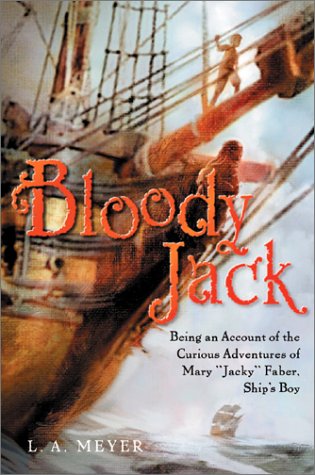
    The book is a historical novel by L. A. Meyer called Bloody Jack. It tells the tale of Mary Faber, who is orphaned in London in the early 19th century and survives only by joining a street gang and then, posing as a boy, the crew of a ship. On board, she has to hide who she is and avoid the many perils of ship life.

    The book is delightful, transporting the reader to the time and place with excellent details and a style that evokes the speech and times. There’s humor, danger, adventure, and an interesting cast of characters. I recommend it highly. If you end up loving it as I do, you’ll then be happy to know this is only Jack’s first adventure.

    Share

6 Comments

  1. I’ll have to try the Dill Potato Salad as soon as I can get some fresh dill. I think I’ll try a used milk strainer/filter instead of the coffee filter. (I have a milk cow.) Thanks for sharing.

  2. I bet cheese cloth would do just fine too. We don’t drink coffee, but where I live, cheese cloth was an hour away 🙂 Good luck. You’re going to love it.

  3. psst? There’s something off about the dressing list of ingredients. The make it part talks about mayonnaise, sour cream, mustard, but they’re not in the ingredients?

  4. Am I missing something very fundamental here, or is this whole post a giant copyright violation?

  5. You can’t copyright the mixtures of ingredients. Only the text used to explain them. This is my text, not theirs. In fact, the Chocolate Eclair Cake is my recipe variation. So there’s no violation. Even if I copied the text for these two, it would probably fall under fair use. So I don’t think we’re in any violation here. More importantly, I am providing excellent advertisement for their product.

Comments are closed.