Similar Posts
The Profiler, Almond Milk, and Uncle Sam
Real crime
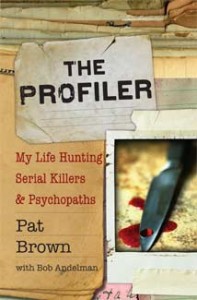 It’s 1990. You’re a housewife, homeschooling your children, and renting a room upstairs to a young man to make ends meet. There are a few odd things about the young man, but you overlook them. Then one day a woman is strangled on a jogging path near your home, and your first thought is that the young man living in your house has something to do with it.
What do you do?
Pat Brown found herself in this exact situation. She voiced her suspicions to her husband, but it was all too farfetched. However, the nagging thought wouldn’t let her go, and she soon uncovered evidence that made the young man a strong suspect.
She took the evidence to the police, but they dismissed her as a bored housewife with an overactive imagination. She evicted the young man, but it would be six years before the authorities would finally bring him in for questioning.
Dismayed and frustrated, Brown started down a path that would lead to her become a professional criminal profiler, assisting police departments and victims’ families by analyzing both physical and behavioral evidence to make the most scientific determination possible about who committed a crime.
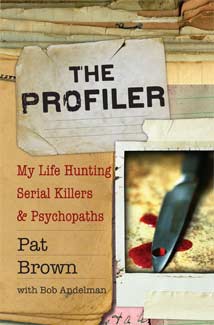
In The Profiler: My Life Hunting Serial Killers and Psychopaths Brown tells about what happened with that young man and her journey to becoming a profiler, then she opens a number of other cases she’s worked on, giving the reader a behind-the-scenes look at how profilers work, and how their methods bring new investigative avenues to light. She also brings home very clearly just how many murders go unsolved. It’s an absolutely fascinating read.
Milk that doesn’t moo
 I used to think soy milk was either for the lactose intolerant or hippies. And so I always avoided that milk section of the grocery store. But, having embarked on a new way of eating that I’ll explain in another column, I was induced to approach the alternative milk shelves. I purchased a carton of soy milk, but then I saw cartons of something even more strange: almond milk.
Puzzling. I knew, of course, that almonds did not have udders. So nobody was out there hooking them up to tiny milking machines. And they were nuts, so it’s not like you can squeeze them to make them release their tasty juices. Instead, I learned that almond milk is made by finely grinding almonds together with water. I thought this was something new, invented perhaps by a Californian who’d had too much weed, but it appears many Medieval European recipes called for almond milk, and it has always been a popular beverage in the Middle East. So almond milk has been around for some time.
But I didn’t know any of this. I just knew I loved almonds and that they provide all sorts of goodies for the human body. Besides, I have a hard time resisting adventures. So along with the soy, I picked up a carton of Silk’s PureAlmond regular, vanilla, and chocolate milk.
The soy was okay, but it left a weird zingy taste in my mouth. Furthermore, soy contains estrogen. I’m sure it’s a fine product, but I live with four daughters and don’t need any more estrogen. And I certainly don’t need it mutating me in any, um, feminine ways. So I put the soy aside and gave the almond milk a go.
It was delicious. I love the vanilla and regular flavors the best. In fact, I like it so much I only drink cow’s milk when the last drop of almond milk is gone, and I try to make sure that never happens. Some might worry that I’ll deplete my calcium stores, but not so. Almond milk actually has MORE calcium than cow’s milk along with vitamin D that allows the body to absorb the mineral. It also has 50% of the RDA of vitamin E, of which cow’s milk has none. But that’s all technical vitaminy stuff. It wouldn’t matter if the milk itself didn’t taste so dang good.
The American breakfast
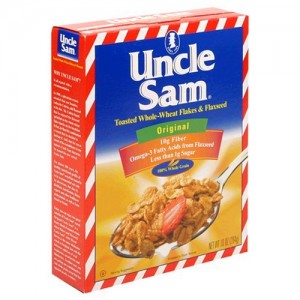 I love cereal. We have our standard favorites as a family, but I also like to get a box of something new when we shop. I recently saw, perched up on the top shelf at Wal-Mart, boxes of Uncle Sam.
 What the heck? Was this a Tea Party product? I know Utah is conservative, but come on. And what kind of nut sings “The Stars and Stripes” for breakfast?
Well, I might.
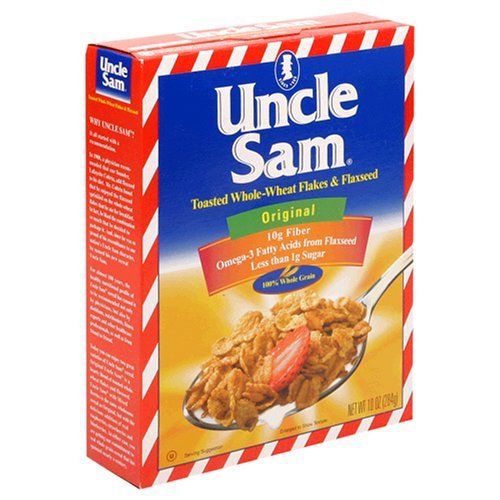
So I promptly snagged a box and read that it’s been around since 1908, thus making it politically neutral. Then I read the ingredients. It’s a simple cereal made of wheat berries that are steamed, rolled, and toasted to provide killer whole grain nutrition. Those wheat flakes are then mixed with flax seeds (omega 3’s anyone?). That’s it.
I purchased a box, felt patriotic, and then gave it a try when we got home. I’ve been buying it regularly ever since. It’s slammed with 10 grams of fiber and 7 grams of protein, and goes great with Silk’s vanilla almond milk and a piece of fruit.
Good Stuff! Grandpa O’s Stories
There are a boatload of characters that live in Rich County, Utah.
One of them is Gary Ogilvie.

If you were to see him at church or waiting in line for a raspberry shake at one of the fast food joints by Bear Lake, you’d just see a pleasant, mild-mannered gentleman.
But Gary has quite the past.
He’s been a police officer down on the Wasatch Front, a sheriff in Rich County, a Utah highway patrol officer, an internal affairs investigator for the Utah Department of Corrections, and an adult probation and parole supervisor. And a miner and many other things.
And, boy, does he have some stories.
Most with him wearing the badge, but others when he wasn’t wearing the badge. For example, Gary was himself hauled in by the cops when he was a teen.
Gary wrote many of his stories down in a journal, and I had the privilege of reading them one day a year or two ago. They were fabulous. Some were funny, some shocking, some poignant.
The good news for you is that Gary has recorded a number of them on YouTube. He did this for his grandkids, but you and I get to benefit.
If you enjoy real life cop stories, many with a humorous twist, and good-humored narrators, then you’re going to love listening to Grandpa O’s Stories over on YouTube.
In fact, I don’t think you’ll be able to listen to just one.
My bet is you’ll want to hear the next and the next.
Interview with Author Judson Roberts
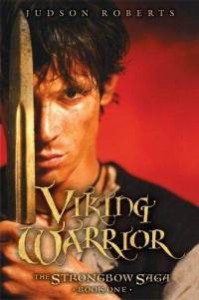 I’m very excited to present an interview I did with Judson Roberts, author of the Strongbow Saga.
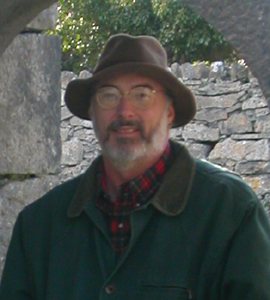
Over his long and varied career, Judson Roberts has been a police officer, federal agent, organized crime prosecutor, and private investigator. He is also reputedly a distant descendant of Rollo, also known as Rolf or Hrolf, the Viking leader who in 911 AD entered into a treaty with the King of the Western Franks and was granted the lands located around the mouth of the Seine River which eventually became known as Normandy, after the Northmen who settled there. He currently lives in Houston, Texas, but is looking forward to moving. (I’d think–what’s a Viking gonna do in landlocked Houston except go crazy?)
Here’s what the scion of Rollo had to say. BTW, you’re going to see how ebooks have changed things so much for authors.
*
JB: Judson, you’ve had quite a rollercoaster ride with publishing these last few years. You were picked up by HarperTeen for a trilogy. Orson Scott Card reviewed the first novel and called it “A well-written, well-researched, exciting, moving historical novel.” But some things didn’t go as planned. Give us the story.
JR: That’s a good way of putting it: some things didn’t go as planned. The whole experience has been a valuable lesson for me, in part about what realistically to expect when dealing with a big publisher, but even more so, that often in life, things that seem like disasters at the time can, in the long run, prove to be opportunities we never could have found otherwise.
My experience with HarperCollins was not a happy one. But before I get into that, I should give a bit of background information. The books that HarperCollins published are the first three volumes of a historical fiction series, set in the world of the Vikings during the 9th century, which I plan to eventually be five books long. I always envisioned the series as adult fiction, and wrote each book as such.
I initially had a very hard time finding an agent. After a year or so of trying, I saw an advertisement about the Maui Writers Conference in Hawaii that said that authors could submit a “resume” consisting of a brief excerpt and a pitch for their current work to the conference-for a fee, of course-and the resume would be circulated to all agents and publishers attending the conference. I gave it a shot, and ended up being contacted by three agents as a result. One was especially eager—she asked me to give her an exclusive look at the full manuscript, but promised to give me her decision within two weeks. In fact, she asked to represent me within a week. Her agency primarily handles children’s and young adult books, but she assured me she also handled some adult fiction and wanted to handle more, so that, and her enthusiasm, won me over.
She ended up being unable to interest any adult fiction editors in the book—at that time, I’d only actually written what is now book 1 of the series, Viking Warrior, although the way that book ends there’s obviously more of the story to come. So she asked if she could try to sell it as YA fiction, I agreed, and not too long after that, she secured a three book contract for the Strongbow Saga with HarperTeen, part of the children’s books division of HarperCollins.
My editor at HarperCollins was very good-whatever I may feel about other divisions of that publisher, I’ve had nothing but good experience with editorial staff there-and was very enthusiastic about the series. She never made me tone the books down in any way—as intended adult fiction, and historically accurate to the period, there are some scenes that are quite violent. She even went so far as to say that she could see the series developing the kind of enthusiasm across different age groups-becoming a cross-over book for teens and adults-whose popularity might last for many years, similar to The Lord of the Rings, and she. That was a bigger vision than I had for the books, but it was certainly an exciting comparison to hear-The Lord of the Rings has been my favorite book since I first read it decades ago in high school. Unfortunately, the marketing side of HarperCollins apparently did not share her vision.
Trouble in paradise initially began with the cover design. Someone in marketing decided that the group of targeted readers (and as it turned out, the marketing side never had any idea of trying to reach adult readers—they worked for the children’s division, after all) least likely to be attracted to a book about the Vikings was teenage girls, so they developed a series of covers, using different samples and focus groups, specifically designed to attract them. The results look a lot like covers for romance novels, though at least without the bare chests.
In the months leading up to the release of book 1, I asked the marketing department what plans they had to get the word out about the new series, and what I could do to help. They responded that their primary focus was going to be libraries, that they’d be pushing the books hard to librarians, using them as a gateway to get the books in front of young readers. They’d also be sending out the typical round of advance review copies prior to release.
The reality was far different. Had it been a test of stealth technology, Viking Warrior’s release would have been a great success, but book releases are not supposed to totally invisible. It was not reviewed in a single major review venue—my agent said she had never, in her entire career, seen a new series being launched in hardback by a major publisher get no reviews at all. I’d suggested a number of specialized venues to send review copies to also—publications specifically targeted at fans of history and historical fiction, reenactors, and the like, and none of them put out reviews, either. Eventually I started contacting a number of these smaller venues, and learned than none had received review copies of my book. It looked like someone on the marketing side made a huge mistake and somehow failed to send out review copies, although HarperCollins has repeatedly refused to admit that had happened.
Eventually a few scattered reviews were received months after Viking Warrior had been released, but by then the damage had been done. I learned a new term: “sell through.” In publishing, that term refers to how many of the copies of a book that are shipped out to distributors and booksellers are actually sold, instead of being returned. The first months after a book’s release are the most carefully scrutinized—publishers want a new book to hit the ground running and sell lots of copies quickly. Needless to say, if no one has ever heard of a book, and its only sales occur when someone just happens to discover it on a bookstore’s shelves (and on the shelves of the children’s books section, in the case of my books) that kind of early momentum does not happen.
The promised campaign to reach out to librarians never happened, either. About two or so or so years after the series first came out, I began periodically receiving emails from school librarians who had belatedly discovered the books, fallen in love with them themselves, and had become eager advocates for the series to their students. Over and over, I’ve heard from these librarians, “Why have I never heard of these books before?” One even confronted a HarperTeen representative at a big library conference, asking why they didn’t publicize the series more, and the rep didn’t even know what books she was talking about. And always, they asked when the next book in the series would be coming out.
That was a painful question. Because the sell through numbers were so low for book 1, each of the next two books had successively smaller printings, and again received little or no support from the publisher. By the time the third book came out, the series was unofficially dead. My editor said that, based on the numbers, there was no way she could persuade HarperCollins to buy the other two books in the series. However, the publisher had the right to buy them locked up with an option clause in the contract, so I was unable to publish them any other way, either. It was not until 2010—after my original editor had moved from HarperCollins to another of the big publishers, and after the decision had been made to start taking the series out of print-that the option clause was released, and I had the unrestricted right to finish my own series.
JB: Oh. My. Heck. Wow, talk about a sucker punch. Body blow, body blow! I knew some of the details from Card’s review, but this just fills me with dismay. How could that happen? I don’t know. Mistakes are made, but geez. I’m sure those must have been a rough couple of years as a writer. Of course, you knew you had a good book. So what happened next?
 JR: There were certainly a couple of grim years in there. I couldn’t write the next book in the series because HarperCollins was keeping it locked up with the option clause of the contract, my sales—and royalty income—were dropping to minimal levels, and my agent—now my former agent—basically said it was all a tough break, and I should just give up on the series and move on to something else. Given that I’d spent years of research developing my base of knowledge and expertise about the Vikings and their time period, that suggestion didn’t sit very well.
What really sustained me as a writer during this period were the emails I received from readers. Understand that when I starting writing this series, my goal was to try to write a story that would have the following attributes, of the novels I’ve read over my lifetime that I’m most enjoyed and that have stuck with me as lasting favorites: I wanted the world the story takes place in to be exotic and different from our own, but so vivid that the reader is swept into it (and since the series is historical fiction, I also wanted it to be as rigorously accurate as possible), and I wanted the characters to become real for the reader, so that readers would become emotionally involved with them. But I truly never anticipated the kind of responses the story seems to be evoking in some people. For example, I had several emails from a major in the Australian Army, stationed in Afghanistan, who said the books are part of his permanent inspirational collection, and that he and his young son both love them. A young man told me the books had helped him during a difficult period when he was going through drug rehabilitation, and recently a young woman wrote to tell me that her cousin, who’d recently returned from a tour in Afghanistan and was deeply disturbed by his experiences there, had enjoyed the books and they’d given him comfort. I’ve been tremendously moved, but also more than a little amazed, at how deeply some readers are connecting Halfdan, the protagonist of the series, and I am resolved to finish the story for them.
I eventually decided to sidestep the option clause by writing a stand-alone historical thriller, which involves some of the characters from the series but not the protagonist, which will in some ways also be a prequel to the series, in that I’m using it to introduce a new character who will play a major role in the final novel of the Strongbow Saga when it’s written. The new novel—its title is The Beast of Dublin—is set in Ireland about five years before the series begins, and part of its plot involves a twist on the Beowulf story. I’m still in the midst of writing that novel—Ireland in the mid-ninth century proved to have horribly difficult history and culture to research and understand, so I’m far behind my planned schedule.
Meanwhile, during 2010 things started to happen. Around the middle of the year I begin hearing about an author named J.A. Konrath and his experiences self-publishing through Amazon’s Kindle e-book store. He had a number of books that had previously been traditionally published but had gone out of print, so he made them available again as e-books, and also self-published some books he’d written that had never sold. He has experimented a lot with pricing, cover designs, etc. and has published his results on a blog he writes, to spread the word about how Amazon has changed the game for authors, giving them a way to make a living through their writing free of the problems inherent in the traditional publishing system. As an experiment and to learn how to create an ebook, I published a roughly 30,000 “first look” preview of The Beast of Dublin for any Strongbow Saga fans who wanted to get a glimpse of what I’m currently writing—almost every email I receive from readers asks when my next book is coming out.
Also around the middle of 2010, I noticed that Amazon had started listing book 2 of my series, Dragons from the Sea, as unavailable. It took months to get HarperCollins to even admit they’d taken that book out of print, and then to respond to a request I sent them that rights to the book be reverted to me, but finally, in October, I owned that book again. While I was waiting for the reversion to come through, I worked with a tremendously talented computer and graphics designer named Luc Reid to create a new cover which does justice to the book, and after the time consuming process of re-editing the book (is any author ever satisfied enough with a finished book to forego a chance to tweak it one more time?) and the excruciatingly slow process of converting it into Kindle format—I do NOT have any skills at computer language or programming—I managed to get the book live in the Kindle store by late October.
In the meantime, HarperCollins took book 1 of the series out of print, so the whole process—request reversion of rights, design new cover, re-edit, and convert to Kindle format, began again. Book 1 of the series, Viking Warrior, did not go live in Amazon’s Kindle store until December 24th. Christmas had been my target date, because Amazon has surprised every analyst and expectation by selling somewhere between seven and eight million Kindles during 2010, many during the months leading up to Christmas, so even the traditional publishers have been expecting to see a huge surge in e-book sales beginning in early 2011.
It’s still early days yet, but so far I’m tremendously encouraged by how my books are moving on Amazon. The total numbers still probably would not impress a big traditional publisher looking for the quick sell-through blitz, but thanks to Amazon’s generous royalty program, I’m starting to see my series produce some meaningful income. In October, when book 2 first went live for part of the month but book 1 was unavailable, I earned barely over $100. During November, despite the fact that book 1 was still unavailable, sales earnings climbed to about $470. In December they jumped to over $800, and if the rate of sales for January keeps up for the entire month like the first two weeks have gone, they’ll easily pass $2,000.
And the earnings alone aren’t the whole story. Amazon’s sales reports reflect that a significant portion of these sales are taking place outside of the U.S., and I’ve begun having contacts from new readers in the U.K., Scandinavia, and even Spain. HarperCollins had insisted on acquiring foreign rights with their contract, but then essentially did nothing with them. Now I have a chance to get the story into overseas markets.
I’m not yet ready to say I’ll never try the traditional publishing route again—I’ll probably at least test those waters with The Beast of Dublin once it’s finished. But I will, without question, self-publish book 4 of the series through Amazon once it is written. There are just so many advantages, not the least of which is that I can get the book to readers within a month or two after I’ve finished writing it, compared to a year or longer via the traditional publishing route. The world we as writers are working in is changing dramatically. I don’t think anyone really knows what it’s going to look like ten years from now, but so far, it’s looking like the changes could be very good for writers.
JB: Hey, I’ll take an extra $1-2k any month (grin). I’m so excited to see this series find its audience. What particularly impresses me is the resonance the books have had with some of your readers. You know, there’s art that entertains, art that gets in your face on purpose, art that enlightens, art that gives solace—I’m sure there are dozens of other things that art does. You mentioned your goals with the book in your response. But do you have another ultimate goal? Or maybe I should say, what’s your view of yourself as an author? What is it you see yourself providing the reader?
JR: I view myself as a storyteller. My goal is to provide readers with entertainment, escape, to touch them emotionally, and maybe occasionally subtly provide a bit of inspiration.
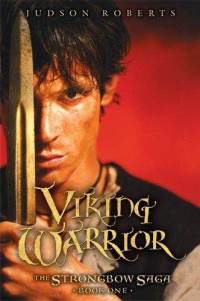
JB: I love it. It’s clear you’re succeeding. I think I have two more questions for you. First, I’d like you to tell my readers about Viking Warrior, the first book in the Strongbow Saga, itself. It should be clear now that it’s a historical, but what’s it about?
JR: The story is set during the mid-ninth century. When it begins in Viking Warrior, Halfdan, the protagonist, is a fifteen year old slave living on the estate of a Danish chieftain. His mother, also a slave, is an Irish noblewoman stolen years ago in a raid, and his father the chieftain whose estate they live on and belong to.
The chieftain is mortally wounded in a raid on England, and is brought home by his son, Harald, to die. The chieftain wants Halfdan’s mother to accompany him on his death voyage to the next world (an actual custom sometimes practiced in Viking society). She cuts a bargain that will cost her her life–if he tries to force her, she will call upon the god of the Christians to curse him and derail his death voyage, but if he agrees to free Halfdan and acknowledge him as his son, she will go willingly.
After the funeral, Harald, now the head of the family, undertakes to train Halfdan in the skills he will need as a free man and a warrior. But Halfdan’s new life is soon shattered by a terrible act of treachery that leaves Harald and most of his followers dead, and Halfdan on the run with the warriors of an enemy chieftain hunting him.
JB: (Folks, if Card’s review and that description doesn’t induce you to read this excellent book, I don’t know what will.) Dude, talk about a setup. I think anyone who is a Bernard Cornwell fan should enjoy this. You’ve mentioned a bit about what books you’re working on, but give us the details about what’s coming next and what’s available right now.
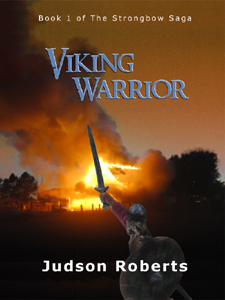 JR: Currently the first three books of the Strongbow Saga series are available, although paper editions of book 1, Viking Warrior, and book 2, Dragons from the Sea, are temporarily out of print. I hope to get a new print edition of Dragons back out within a week or so. It will take a bit longer to get the new print version of Viking Warrior into circulation, because I have to hire someone to set up the print format, and I’m at the mercy of their time constraints. However, for now new and used copies of both are still available–often quite cheaply–on Amazon through affiliated booksellers, and they’re also available as e-books through Amazon’s Kindle store.
I’m currently in the middle of writing the novel I mentioned earlier, The Beast of Dublin, which is set in same the world as the series and includes a number of characters from it, but takes place in Ireland about five years before the series begins and will be a stand-alone historical thriller. As soon as I finish it, I’ll begin writing the fourth book of the Saga–I’ve already got the plot roughly outlined. Over the five books of the series, readers will journey with Halfdan over much of the Viking world. Books 2 and 3 are set mostly in western Frankia–the kingdom that became modern France–and in book 4, Halfdan’s pursuit of his sworn enemy will carry him from Denmark to Sweden and down into Russia.
JB: It looks like you’re going to be keeping busy. Judson, this has been great. I really enjoyed the interview. Thanks so much for taking time out to share your experience with us.
JR: Thank you, John. It was my pleasure. You’re a thorough interviewer.
*
John sez . . . first of all, wow. Talk about a fighter. Bam, bam, bam and the series is on the floor, bleeding and written off as dead. A lot of authors might have given up at that moment and gone onto pole dancing or avocado picking. Not Roberts. He gets back up and finds new distribution and continues to write (this time a cool Beowulf thriller). And, lo, his books are finding their audience–all over the world! Second, I think five years ago Roberts could have only come back under a different name. But now, heck, he’s selling on Amazon. And not just floating around with a book sale every month. He’s in the 2000’s out of hundreds of thousands of books. Holy schnitzel. Look at this ranking as of 1/24/11 5:11 PM my time (the most important time).
Amazon Bestsellers Rank: #2,349 Paid in Kindle Store (See Top 100 Paid in Kindle Store)
- #10 in Kindle Store > Kindle eBooks > Fantasy > Historical
- #16 in Books > Science Fiction & Fantasy > Fantasy > Historical
- #18 in Kindle Store > Kindle eBooks > Fiction > Genre Fiction > Family Saga
A book and series considered dead is selling as well as or better than thousands of other “live” books. Long live the zombies. Ebooks have changed everything. Everything. So much power is shifting to the creators. It’s totally exciting to me.
LINKS
What you need as a storyteller
 One of the most important things I ever learned about telling stories was in Orson Card’s weeklong boot camp where we “workshopped” stories by doing zero workshopping. Zero critiques. In fact, critiques were verboten.
Instead, Card asked us to simply provide a report of what he called the three grunts a reader makes when things aren’t working–where it was boring, unclear, or didn’t ring true.
We were to provide a report of our reader reaction, including parts that really entertained or interested us. NOTHING more.
He compared it to going to the doctor. We were to report our “symptoms.” The writer’s job was to diagnose if it was an issue and prescribe a remedy, if any.
Doing that with 19 stories over three days was amazing. It totally opened up what story was about. And taught me what beta reading was all about. One of the most insightful writing experiences I’ve ever had.
Nowadays when I read, I try my best to simply report. And that’s it. If, afterwards, the writer wants to brainstorm ideas together, that’s fine. But I don’t ever want to diagnose and prescribe because there have been too many books that didn’t work for me that delighted tons of readers. My critique or advice would have been exactly the wrong thing.
All I can do is report my reaction. And then think about what would have fixed it for me.
Kristine Rusch recently wrote a great article about this and other things called “Writing by Committee” in which she suggests a list of things authors need to be successful. Give it a read. I think she makes a lot of good points.
And a few I disagree with. She is quite forceful about writers not acting as first readers. I think that’s bunk. And she says as much in the comments. If a writer can give a reader response instead of a critique, that’s as helpful as a non-writer giving a reader response. I also disagree that you have to toss something and start over if it doesn’t work. If it’s fundamentally broken, sure. But many times a small adjustment gets you back on track. Finally, yes, a story has to be surprising. At the same time, you had better deliver the type of experience you promise your reader. And that’s all defined by genre. You can’t promise your readers a thriller and deliver a romance. That only leads to irritated readers. I believe you have to consider your audience. But these are all quibbles. The article is great.
BTW, please note I used “storyteller” in the title. I did that on purpose. More and more, I find I’m not interested in writing. “Writing” doesn’t seem to convey what I’m after. However, I am interested in telling cracking stories.
I need your insight!
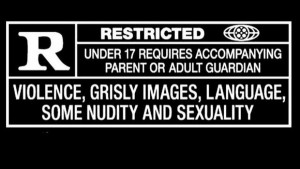 Last year I posted about a service I’m working on to get ratings on books for sex, violence, and language. I posted similar thought about YA books in “Since When Did Young Adult Become The Cure For Cancer?“.
I’m back.
I did lots of customer discovery last August in an effort to see if book ratings is a problem worth solving, i.e., are there lots of avid readers who would love content ratings and sign up? All my interviews were very positive, but I didn’t finish validating our ideas because I had to stop to get books out and because we discovered some things that made us change some of our assumptions. I started up again a few weeks ago, this time with a team.
To continue the project, we need to interview 20-40 avid cleaner romance readers. Folks who probably read just such a book last month.
Why?
The biggest problem startups like this have is assuming they know what the customer values, being wrong, and building something nobody wants. So before we build anything, we need to first understand exactly what readers are doing today to solve this problem and where (and if) they are struggling. If we can validate the need, I think a lot of folks will be very happy having popular clean reads delivered to their email every week.
If you know someone who fits the bill, please send this post to them. They can shoot me an email by clicking the contact link in the menu bar.
If you fit the bill, please contact me.
It would be incredibly helpful to me to hear about how you approach this and ask you a few questions. It won’t take more than 20 minutes, and there’s no need to prepare in advance.
Hope you had a great 4th!
Camille Paglia, Word Ninja
 I think I must disagree with half of everything Paglia says (I’m a Republican, she’s a Democrat). But when you can write like a kung fu master, you have to be read:
Advanced whack-a-mole is clearly needed for that yammering smarty-pants Newt Gingrich, who is always so very, very pleased with himself but has yet to produce a single enduring thought.
Holy schnitzel, that’s what words are for. I’m still laughing and nodding my head. Can I be Camille for a while?
The fact is while Paglia is clearly liberal, she’s not a party lemming. This is one of the things that is so refreshing about her. She’s not afraid to call ’em as she sees them, even if that means roasting her own party or praising the other.
And here: Paglia page.