Good Eating in Rock Springs and Laramie, Wyoming

A few weeks ago, I had to travel to Denver for business.  I elected to drive instead of fly. The weather was glorious, and I had a book on tape—what could be better?  Driving also allowed me to stop into Rock Springs and Laramie and few other spots to do some research for the novel I’m writing.  And while I was tooling around, I found two excellent places to eat.

The first was in Rock Springs.  It’s about five minutes off the freeway, tucked in the downtown area, which means it’s a place locals visit. It’s called Broadway Burger Station.  I walked in, past the tables, and took a swivel seat at the counter. The menu listed sandwiches and soup, but I suspect it’s the burgers most people go for.  These are BIG burgers—1/3 to ½ pound of ground beef.  I almost asked for a kid’s meal.  Not only because the portion was smaller but because they serve the kids meals in a cardboard hot rod car!  How cool is that?

But I went with the basic burger instead. All their burgers come with lettuce, tomato, pickle, onion, and their special sauce. You can also add other things including mushrooms, avocado sauce, bacon, cheese, chili, egg, ham, jalapenos, and pastrami.  I went with the sautéed mushrooms. Then the very nice server tempted me with a hand-dipped malt, and I said yes because I was only thinking of all of you at the time, wanting to provide a complete and honest review.

The place was hopping the whole time I was there, and rightly so. The server brought out my burger, fries, and malt, and, man oh man–the burger with tomato and mushrooms was succulent!  The fries were hot and delicious.  And the malt was made with hard ice cream right before my very eyes.  What’s more, I could have easily shared my meal with Nellie, which means we could have both eaten for a total of ten bucks. Great food, super-friendly service, and reasonable prices. If you’re ever passing through Rock Springs and need a place to chow, go to the Broadway Burger Station on 628 Broadway Street, (307) 362-5858.

On my way back I stopped in Laramie and found a McAlister’s Deli in the shopping strip at 2317 Grand Avenue, (307) 745-3760. This is not the type of deli that you walk into and gag because of the weird meat smells. It’s a soup and sandwich shop. And it’s apparently been doing well. I’d never seen a McAlister’s before, but found out it’s a chain that’s in twenty-two states in the Midwest and South. And Wyoming is currently as far west as you can find one.

They serve hot sandwiches, including one called The New Yorker (corned beef, pastrami, and swiss) and another called The Big Nasty (1/3 pound beef on a baguette).  They have classic sandwiches, grilled sandwiches, and clubs.  I ordered the Cobb Club with turkey, applewood smoked bacon, gorgonzola cheese, avocado, lettuce, tomato, and a light Parmesan Peppercorn sauce served on ciabatta bread. I also ordered a cup of their vegetable soup and a piece of Colossal Carrot Cake.

Dude, it was all delicious. Lovely. And in Laramie of all places. Laramie! All these years I never thought to stop because the town looked so unassuming.  Laramie was just that place where Cowboy fans enjoyed hollering and throwing beer bottles at my favorite football team from the neighboring state.  Of course, I did cut them some slack—I mean, what else can you do when your team gets dominated year after year?  Sing Kumbaya? 

They’re a’running again, Kumbaya . . .

Just a’stomping us, Lord, Kumbaya . . .

Freezing misery, Lord, Kumbaya. Oh, Lord, Kumbaya . . .

Right.  Now I see I’ve misjudged them.  Maybe their football program has been in the doldrums the last few years, but Laramie isn’t a pass-through town.  Next time I’m rolling by on I-80, I’m going to stop again and see what other gems the good folks there have to offer. If you’re in the area, and you love places like Jason’s Deli and Kneaders, stop at McAlister’s Deli. Then take some time to visit the lovely St. Matthew’s cathedral on 3rd street. You can’t miss it: it’s the one with the red doors.

Share

Similar Posts

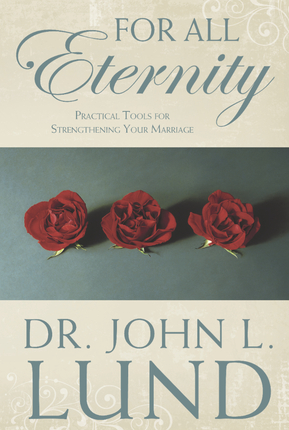
  • Good Stuff: For All Eternity

    This year I was introduced to a little gem of a book that has had a significant and pleasant impact on Nellie’s and my marriage.

    We heard about it from my newlywed daughter and her husband. Now you’d think that two people who, in just a few months, will have been married for twenty-nine years would know all the ropes of this marriage thing. You’d think they wouldn’t come across any real new ideas. But this little book proved that idea wrong.

    This book is For All Eternity by Dr. John L. Lund. At the time of its writing Lund had over forty years of experience as a counselor, college professor, and marriage educator. His focus is in interpersonal communication, and part of his background was working with John Gottman, one of the best marriage researchers of the last few decades.

    In this book, Lund shares what he’s learned with lots of humor and stories. Some of it will be familiar to you, but some of it will be refreshing and new. For example, one belief we frequently cherish is the idea that if someone really loves us, they will know our wants and needs. Their love will somehow endow them with superpowers so that we will never have to communicate our wants. Our loving spouses, if they have any love in them, will be able to discern our wants from the most subtle signs. A nod, a sigh, the wiggle of a nose. And if that doesn’t do it, then surely we will never need to drop more than the merest hint.

    Yeah, wrong.

    Lund explains why the whole notion of “If you have to ask, it doesn’t count” is not only unrealistic, it’s damaging. And that’s just one insight. There are many more. I will let you discover them. But I can tell you that I have found this book so useful and delightful that it will now be one of the two standard books I buy and give as gifts to those who are newly married. I wish I’d had these insights right from the beginning, but better late than never. I’m so happy to have them now.

    A little note. For those who are not members of the Mormon church, Lund is directing his teaching at that crowd. So you will find a sprinkling of quotes in here from church leaders that support what he’s learned in his practice and research. Don’t let that stop you. Mormon or non-Mormon, if you want to improve your marriage, you don’t want to miss this book.

    Share
  • Good Stuff! News of the World and two for the Downton Abbey crowd

    I recently watched a move and two British TV mini-series that were just terrific.

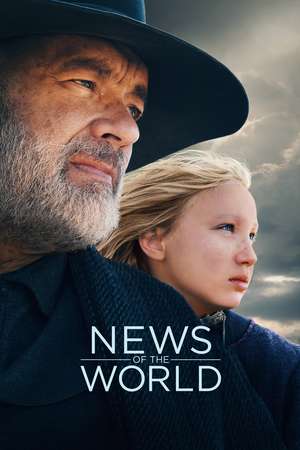
    The movie is News of the World. It’s a Western set in 1870, starring Tom Hanks as Captain Jefferson Kyle Kidd, a former Confederate officer who makes a living traveling from town to town in Texas and reading newspapers to local residents for an admission fee of ten cents.

    After departing Wichita Falls, Kidd comes across an overturned wagon on the road and finds the driver, a black freedman, had been lynched. He also finds the stray, young white girl who only speaks Kiowa (the language of an American Indian tribe), that the freedman has been transporting.

    Kidd learns from the girl’s paperwork that she is Johanna Leonberger, who had been kidnapped and by Kiowa six years earlier. She doesn’t speak English. Doesn’t want to go with Kidd. But Kidd is tasked with getting her to safety. Of course there are all sorts of perils and issues along the way that threaten that goal.

    There’s suspense, action, drama, bad guys, and some poignant moments that will move your heart strings. If you like westerns or Tom Hanks, I think you’ll love this movie. It’s the best western I’ve seen in a long time.

    ***

    Those of you enjoyed Downton Abbey will be very happy to hear that Julian Fellowes, who was the executive producer for that series and wrote many of the episodes, is back and has written two more historical dramas with that same type of feel.

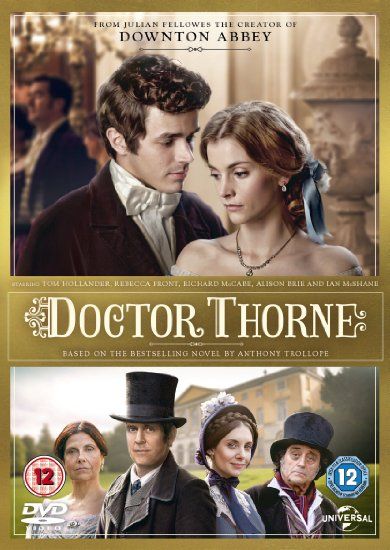
    The first is Dr. Thorne,a three-episode miniseries based on the novel by Anthony Trollope.

    It’s set in the late 1800s. Mary Thorne and Frank Gresham, the only son and heir of the squire of Greshamsbury, fall in love. However, Frank’s parents want him to marry wealth because they have very little to leave their son. Mary is penniless and of suspicious birth. She’s not anything at all that would help Frank in the world. And so the drama begins. You get to enjoy the historical setting, the manners, and romantic suspense.

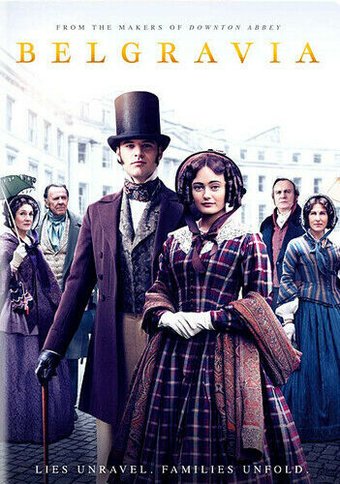
    The second is Belgravia, a six-episode miniseries set in the 1800s and based on the novel by Julian Fellowes himself.

    For you geography buffs, Belgravia is an actual place, an affluent district of London. And the story set there is about two couples. The first, the Richmonds, are part of the aristocracy. The other, the Trenchards, are from the business class.

    The Richmond’s had one child, a son. The Trenchards had one child, a daughter. The two fell in love. But the son was killed in the battle of Waterloo. And the daughter died in childbirth. However, it was an illegitimate childbirth that the Richmonds don’t know about. The Trenchards thought it best, to retain the reputation of their daughter, to have someone else raise him.

    Twenty-five years later, however, both couples still feel the hole those deaths left in their hearts. Mrs. Trenchard feels it’s time to reveal the truth to the Mrs. Richmond. But it does not go as planned. Especially not when the Richmond’s nephew wants the Richmond’s inheritance and is willing to remove all obstacles in his path.

    It’s a story full of manners, heartbreak, suspense, hope, and, well, I won’t tell you the ending. But I will say that if you like these types of historical dramas, you’ll probably love this.

    Share
  • |

    Buffett’s Letter to Berkshire Hathaway Shareholders on 2008

    I got my masters degree in accounting and information systems. While going to school I started an investment club and learned about a man named Warren Buffett.

    Warren Buffett is humble, full of folksy humor, and trades places with Bill Gates as the richest man in the world, depending on the year you’re counting. His annual letters to his shareholders are a delight to read. This year’s is full of wisdom about the current financial crisis. Moreover, within a few minutes of reading you will be able to get some key insights that can help as you evaluate the plans being hatched in Washington and how to prevent this particular type of crisis from happening again. 

    If you’re not that into finance, I recommend reading:


    1. The introduction starting on page 2 and ending on page 3
    2. The “Finance and Financial Products” section starting on page 10 and running through page 12

    Once you’ve read those, if you want to laugh and see Buffet’s humor, skip to page 21 where Buffett talks about the annual meeting of shareholders. Tell me you wouldn’t want to attend.

    The Berkshire Hathaway homepage

    This year’s letter to shareholders (you will click on 2008 because he’s discussing the results of that year)

    Share
  • Where the Wild Things Were by William Stolzenburg

    I live among ranchers in northern Utah, people whose livelihood walks around on four legs. People who can lose thousands of dollars of future income if they lose one good cow or calf. People who think one of the dumbest things to happen in recent times in the West is the reintroduction of wolves to Yellowstone. Now, I don’t agree with them, but I do think they have good cause.

    Contrary to what people will tell you, wolves do not kill just for food. Wolves kill because they like killing. If you don’t believe me, then believe Temple Grandin, an expert on animals, who asks the question in her Animals in Translation: “Is it fun to kill a groundhog?” 

    She reviews a number of studies done on animals and answers with an unequivocal yes, predators love to kill. In fact:

    “Animals like having their predatory killing circuits turned on, and will turn them on themselves if you show them how. When you think about what predatory killing is all about, of course it ought to feel good, because predatory killing means dinner. Killing a mouse feels good to a cat the same way finding a luscious ripe banana feels good to a primate.” (p138)

    What this means is that when wolves come to kill sheep, they don’t just kill one old and decrepit ewe. No, they do what they did on a neighbor’s land a few miles from my home. They maim and kill five or six. Not because two wolves were that hungry, but because it was fun and they could.

    Sheep are like popcorn to wolves. Compare them to elk or other wild animals. The reason why wolves tend to indeed eliminate the young, weak, and old in the wild is that those poor specimens tend to run a bit slower than their brethren. In the wild, slow means dead. For the wolf, it’s hard work to run down an elk or buffalo. And if you’re a hungry son-of-a-gun, you’re not going to go chasing after another dinner while there’s fresh meat in front of you because the rest of the pack will eat it before you get back. And you ain’t going to catch one on your own anyway. But sheep aren’t elk. Cattle aren’t elk. They’re bred for meat, not sprinting. Sheep are easy meat. And the wolves can’t help themselves.

    But even if the wolves exercise restraint and eat just one, that’s cash. That’s clothes for the kids. That’s a mortgage. That’s heat. And it’s a danger for children as well (adults I don’t worry about: who cares about a few devoured adults?). My girls like to hike. And while I’m sure wolves will usually stay away, a sick or starving wolf will risk humans just as sick and starving mountain lions do. You get a different mindset about predators when you live up where I do. When they’re not something you see caged up in the zoo or on PBS.

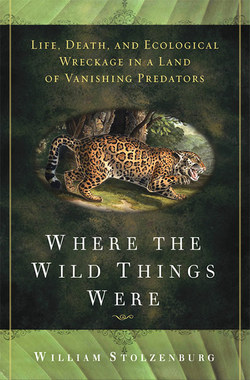
    For all these reasons and others, I couldn’t wait to read Where The Wild Things Were by William Stolzenburg. Folks, the book is fabulous–well-written and interesting from page one to the very end. The key point is that predators play a huge role in maintaining a healthy diversity of both plant and animal life in any given ecosystem. Stolzenburg begins with starfish and moves through otters, killer whales, jaguars, mountain lions, and wolves. Along the way he reveals just how important killing is.

    Yes, killing is critical to life as we know it.

    Because without it, the most dominant herbivores will end up eating all the food. And this will end up killing off most of the other herbivores. It will kill off the great variety of flora in any given system. It can turn a paradise into a hell as Stolzenburg illustrates with the islands of Lago Guri in Venezuela. 

    Of course, some people think the answer is to bring back all the big predators. The rewilding supporters want to populate the West not only with wolves, but also lions (African), jaguars, cheetahs. Heck, they salivate at the idea of giant Pleistocene bears that can run faster than a horse (yeah, I want one of those up where the Boy Scouts camp).  I think it’s good the wolves are back in Yellowstone. But I don’t want packs of wolves eating my friend’s herds and daughters (of course, maybe a few Boy Scouts are okay). Still, I believe there has to be another alternative. What that is I don’t know. But we all need to think about it. We do. And great way to start is by reading Stolzenburg’s book.

    Share
  • |

    Animals in Translation by Temple Grandin + Interview

    I have read few books more interesting than Temple Grandin’s Animals in Translation: Using the Mysteries of Autism to Decode Animal Behavior.

    In it she describes her world of autism and how it helped her a perspective into animals unlike any other expert in the field. She can literally see what we block out. It’s part of what helped her make a huge impact on the meat packing industry.

    And it’s had an impact on her. When she was visiting her grandparents once in Arizona, she saw a squeeze chute in operation on a ranch. She saw the cattle calm, for the most part, in the chute. “Watching those cattle calm down,” she says, “I knew I needed a squeeze chute of my own.” So when she got back home she built a human-sized one with the help of her teacher. “I got through my teenage years thanks to my squeeze machine and my horses.”

    Grandin is not a vegetarian activitst (she eats meat herself) or a brutal slayer. She has taken the middle ground between the fantatics that want to prevent the consumption of all meat, on one hand, or totally disregard the life of animals on the other. She writes, she says, “because I wish animals could have more than just a low-stress life and a quick, painless death. I wish animals could have a good life, too, with something useful to do. I think we owe them that.”

    Temple has dozens and dozens of insights into animals, which she shares here. You’ll learn about rapist roosters and the problem of one-trait breeding, whether prediators find it “fun to kill a groundhog” (yes, she says, they do), whether animals have true cognition, and so many other things it’s impossible to list them here. I was fascinated on every page. If you have anything to do with animals, you’re going to LOVE this book.

    Get the book. Read it. In the meantime, watch a 27 minute interview of Temple by Doug Fabrizio on Utah NOW. I caught this on TV flipping through the channels and couldn’t look away. This is a fascinating interview of a fascinating woman.

    Source:Temple Grandin on Utah NOW

    Share