A Response to John Scalzi

The best way to change someone’s mind: use the skills you learned writing fiction.

John Scalzi recently wrote a post about White Privilege.  You know: the idea that Straight White Males (SWMs) have all the cards stacked in their favor.  It’s called “Straight White Male: The Lowest Difficulty Setting There Is.” I assume he wrote it to help SWMs have more sympathy for those who aren’t SWM.

It’s a noble cause.  Not as noble as true love, but that’s so rare–not one couple in a century has a chance at true love (at least when you live in Guilder).

The problem is that Scalzi’s post is a great 101 on how To NOT Win Friends and Influence People.  Actually, that’s not right.  He will win new friends and increase his influence among those who are like-minded.  But if he was hoping to win over those who didn’t already see things his way, I don’t think he’s going to be very successful.

His posts generated hundreds of comments. When you look at the comments, you’ll see that the vast majority of them are folks arguing Scalzi’s side with smug condescension and other folks arguing points against Scalzi with an equal lack of tact.

In short, it’s a classic online bring-your-guns-to-the-party event.

Alas.

Except I must admit such events can be a lot of fun if you’re on the side with greater numbers.  Furthermore, there is sometimes a tremendous pleasure to be had in being provocative.  Sometimes we simply must publish something with teeth in it.  And maybe that’s what Scalzi was trying to do. 

But if not, here’s where Scalzi’s post went admirably wrong.  And it has everything to do with principles that underlie influence as well as writing fiction.  You see, when you’re writing fiction and you want someone to root for your character, you do not turn to the reader and insult him. Insults don’t bring readers into your world.

Equally as important, telling, or demanding someone feel a certain way towards someone else, will fail every time you try it. You cannot demand (or whine) that a reader must feel sympathy and admiration for the character.  Why?  Because emotions don’t respond to demands.  They just don’t.  It’s like trying to freeze water by seasoning it with pepper. 

The advice “Show, don’t tell” works in real life as well as it works in fiction.

Emotions are automatic.  If someone presents the right stimulus, we WILL feel the desired emotion in response.  We don’t experience a sympathetic change of heart when someone gets in our face and demands we feel sympathy.  We do feel that change when we see the antecedents which prompt the emotional response in us.  Show me.  Make me believe.  And the response is automatic.  

This is what happened with Uncle Tom’s Cabin and the movie Ghandi and the TV series Roots and the more recent movie Believe in Me and the novel Les Miserables and thousands of others.  It’s what happens every day when someone in one group meets someone in another group they feel some distrust for and begins to build a friendship. 

Show the antecedents, help folks identify, and you’ll move millions.  Get up and rant at someone, and all you’ll get is the bird.  And applause from the true believers.

Scalzi claims that if you feel offended by his post then you’re hypersensitive because all he was doing is pointing out the facts.  Um, no.  Jim Hines is trying to establish potential facts.  You could try to verify those.  You could try to separate out causation from correlation.  But Scalzi is not doing that. He’s telling all SWM that they are playing on the kiddy version of the life video game.  Your life is so easy.  Everything is rigged for you.  You’re playing the baby version.  And because of that everyone else’s life is so much harder.

No, he didn’t say those words exactly. But there is this thing call connotation. There is this thing called tone.  And no matter how hard you try, you’re can’t separate the non-verbal communication from the message. 

Everyone knows that some people have it harder in life and some have it easier. Like, duh.  I think we all learn that when we showed up to the first grade.  So what’s the point of telling all the SWM’s reading his blog that they are playing the dweeb version of life, the one with training wheels?

Furthermore, instead of helping all of us pampered SWMs identify with our brothers and sisters, he tries to erect more boundaries that would push us apart by giving all of us another way to discriminate and another reason to be resentful.

Lowly, pampered SWMs at the bottom.  Gays, people of color, and women farther up. 

So now we’re going to go around with a My Life’s Harder Than Yours number?  The opinions of those with low numbers will have less weight.  How could they have anything as worthwhile to say when their life has been so easy?  Those with higher numbers will have more weight. 

A whole new group calculus will have to be developed and standardized.  And it will have to go beyond which shade of brown your skin is (yes, White people really are just a lighter shade of brown), your gender, and sexual orientation.  Because those who are handicapped, by birth or by accident have it really rough too.  We’d have to figure out if they had it more or less rough that someone who was gay, and would that change if that gay person lived in San Francisco versus Laramie, Wyoming?  A geographical element!  And what about those with idiot parents who teach their kids to take meth and don’t get them to school or beat them in alcoholic rages or who are never around?  I wonder what score that would bring.  And what about the kids who grow up with grandpa molesting them?  And what about the short, the fat, the plain?  What about those with glasses?  Those who are runty bully targets?  Or those with a minority religion.  What about those born with AIDS? 

Are we sure it’s a good idea to start ranking ourselves, using color, gender, and sexual preference to tag our status? 

Wait, haven’t we already tried that?

When someone comes up to you at a party and condescends, when they’re always one-upping you with a “you think you’ve got it hard you haven’t seen squat” line, what is your response?  Even if it is legit.  What about when they get in your face for someone else?  Does that change your default response?

It’s the same at internet parties and gatherings.

So.

Lesson 1: If you want to influence someone, don’t start by insulting them and continue by talking down to them. If you want to have a good time with like-minded friends, then, by all means, skewer.

Lesson 2: Remember “show, don’t tell” to win someone’s affection.  Present the person’s story, and the reader will feel respect, trust, sympathy, sorrow, regret, and admiration automatically (okay, you’re right, some of that depends on the reader).  Tell or demand, and none of that will occur.

Lesson 3: Don’t raise barriers between two groups when you want members of one group to identify with members of another.

Here’s a better way. 

Tell me a story about a real gay black woman.  Make me love her.  Make me care.  Tell me a story about her I can sympathize with.  Just show me the woman.  Make it about her, not her group category.  Or tell me a story about a Mexican man who is just trying to provide for his children in America.  Or tell me about a sympathetic SWM who goes to Asia or Polynesia and finds the cards stacked against him.  Stories like this abound.  

In fact, why don’t you drop the whole “SWM” business.  If you want me to identify, to experience-take (yes, that official jargon), it’s probably best not to slap SWM on me and set me in one corner and slap GBM on someone else and set them in another.  Help me identify.  Focus on how we are alike. When you do discuss the differences, magnify those things that are wonderful and unique, or eccentric and unique, or goofy and unique, or weird and unique, or whatever, but make it positive.  And when you must talk about old or continuing grievances between two groups, do so with respect, with a desire to calm, not enflame.

Lest you think I don’t know what I’m talking about, I grew up working in a family business where employees were White, Black, Hispanic, Tongan, and Japanese.  Male, female, homosexual, heterosexual.  And we were a big family.  My father and mother held out big welcoming arms.  I have Whites and Blacks in my biological family.  I hope my daughters find great men to be their husbands.  And if they happen to also be Indian or Puerto Rican or Black or Asian or Maori or Scottish or Southern or whatever, I would think it was grand.  It’s possible I might experience some of that mild “other group” anxiety that sometimes comes when you meet someone that’s not just like you.  But I know it’s possible to get beyond that by seeing what’s common, building friendships, and celebrating and laughing at and with the differences.

My father, God rest his soul, liked to quote Edwin Markam.  I thought it fitting.

He drew a circle to keep me out,

A thing of scorn, and a thing to flout.

But love and I had the wit to win:

We drew a circle that took him in.

You want to laugh with the like-minded?  Draw the first kind of circle.  You want to win hearts and minds?  Draw the bigger one.

Share

Similar Posts

  • YA Books Ratings and Publisher Arrogance (shh, it’s about the $$)

    I’m a bit irked.

    I wish I could talk to a publisher about this. I should talk to a Barnes & Noble corporate book buyer. But since I don’t have one handy, I’ll discuss it with you folks. Maybe I’m up in the night? You tell me.

    Here’s the deal. My wife is 7th and 8th grade language arts teacher. My wife is also a mom who loves books and wants her girls to read until their eyes bong out of their heads.

    So we go to find books for her students and for our girls and, jeez, wouldn’t you know it, but this YA book features masturbation and that one features lots of fine words like F*** and S*** and this one is about giving the guys a blow job (tee, hee, hee).

    Yeah, I know about YA saves. This isn’t about banning this or that content.

    It’s about the fact that I’m a parent. And, geez, I have a certain way I want to raise my kids. My wife is a teacher who needs to provide books to her students that aren’t going to piss some parent off. Why? Because she’s providing a service to that parent. Because she wants to keep her job. And because it’s her job to help parents improve their kid’s reading ability not tell them how to raise a family.

    So why in the Sam Hill can’t publishers rate their books?

    There are millions of their customers who would find this useful.

    Well, here’s one answer I was given by a writer friend I respect.

    Everyone in the industry is really pushing back against the idea of a rating system. Let me see if I can explain why.

    A friend of mine, ZZ [name removed], is the nicest person in the world. Volunteered for years at a prison to help people learn to express themselves by writing. Her older brother was a closeted homosexual for years, contracted AIDS, died too young. She wrote a book recently called [title removed], about a family in the restaurant business (as hers was) who have a “late” baby and the problems it causes for the older teens, one of whom is coming out as gay. It’s a soft, quite, sad, moving book. And it would be part of the “rating” system and banned from a bunch of schools. ZZ also wrote a book a few years ago about teenage pregnancy. Also beautifully written, kind, compassionate. But it would get tagged by schools as “inappropriate.” ZZ feels strongly that there are kids out there who need books, kids in your wife’s school system who need to be told they are not alone.

    I don’t see any way to have a system that distinguishes between books that I see as anchors to kids who need help and those books which I see as genuinely offensive and encouraging bad teen behavior by glorifying it. The only system I know is me recommending the best books I see. And I’d much rather see librarians and school teachers go through books on a case by case basis, deciding whether they personally think it fits the values in their community than to have someone else not attached to the community do the same thing.

    Uh huh.

    If this is accurate, it shows the industry’s stunning lack of creativity AND arrogance. Because if publishers really were listening to parents, they could come up with a solution.

    No, really. They could.

    Why, there’s already one out there. They don’t even have to expend even one creative molecule to find it.  

    Look at the Kids-in-Mind rating system: http://www.kidsinmind.com/. It rates movies 1-10 on sex, violence, and profanity (SVP).

    There’s no age stipulation in their ratings.

    Unlike other rating systems, there’s no “children under 13 not admitted.” No “appropriate for teens.” No recommended range for this or that group or this book is good and that one’s bad.

    It just rates the content and gives it a number. You, as the user, determine what level you’re comfortable with and then find the movies that fit.

    I’m a 4-10-4 on sex, violence, and profanity. You might be a 5-2-9. That’s not good or bad. It’s just what it is. More importantly, the rating allows me as a consumer to EASILY FIND AND PURCHASE THE PRODUCT I WANT.

    I know some folks have never heard of it, but consumer choice is a really cool thing.

    And if I hear about a movie that’s amazingly good, but I see it doesn’t match my normal levels, then I can make an informed choice to watch or not watch. The King’s Speech, for example, is a bit above my normal profanity setting. But this didn’t prevent me from watching the film (it was a fabulous movie, btw). SVP just gave me a couple of pieces of simple data I find useful as I make my choices. Data I’m already looking for.

    If publishers were to use a similar rating system, every librarian could peg the levels they wanted in their school and be done with it. As well as consider special cases. Teachers could peg the level for their classroom. Parents could search and find and buy. And they could guide their kids in their purchases as well.  

    Make it easy for them to go case-by-case. And don’t imagine librarians and teachers and parents are going to read every YA book published to find those that fit with their values. They don’t, can’t, do that now. They won’t in some utopian future. If you give them SVP ratings, it will help them spend their time, case-by-case, on books that they’re likely to buy. Which probably means they’ll buy more.

    Write about homosexuality, rape, whatever. But make it easy on the consumer to see if it’s the kind of product they want to buy.

    Some might say, but themes of homosexuality and rape and child abuse etc. etc. are important and would be automatically excluded!

    No, they won’t.

    You can write a story about those themes that scores low on SVP. You can write about those themes and score high. Themes are outside the SVP scale.

    Some parents, librarians, and teachers may want to avoid some themes. Others would seek them out.

    So, good golly, here’s an idea only a rocket scientist could come up with. OR someone who took the issue a tiny bit seriously and wanted to serve their customer. How about a little box under the SVP rating that contained “sensitive” themes.

    They don’t have to do what Scholastic does with its school catalogs and label them “mature” themes, which might suggest “mature audiences only.” They’re not “mature” themes. They’re not “bad” themes. They’re not “good” themes. They’re just sensitive themes.

    SVP and Sensitive Themes: four little pieces of data consumers would find oh so incredibly helpful.

    But no. The industry can’t be bothered with that. And, consequently, reveals its arrogance and total lack of respect for a HUGE portion of their customers.

    I guess they think librarians are mindless idiots. Never in a million years, if a librarian is tuned into the needs of her community and thinks a book on homosexuality would be important, would she search on that sensitive theme and her SVP ratings. And parents would never do that for sure (do you know how many gun-clinging troglodyte parents there are out there!?)

    I guess the industry thinks because it sits in an office in NY City that it knows everything about raising kids. It knows so much it must dictate to parents how to do it right.

    Yeah.

    Or maybe what this really shows is that the publishers have got a book they want to sell. They want to make a buck. And, dang it, this might hurt sales. Because then people wouldn’t buy things they didn’t want.

    They really don’t seem to care about what many of their customers want. Because if they did, and they realio trulio cared about these sensitive topics and saving the world, then they’d publish books high on the SVP because they’re just sooooo goooood, but they’d also publish books on those topics that are equally as goooood with SVP ratings that the majority of parents and school districts would be comfortable with.

    And they’d let the customer choose what they wanted to purchase.

    Customer choice. Customer service.

    Wow, what revolutionary concepts.

    They even might find that if you delight the customer, they’ll come back for more.

    I know, I know. I’m living in fantasy land; delighted customers coming back for more . . . as if.

    Question is: will the publishers listen?

    We’ll see. I truly hope I’m wrong about their arrogance and disregard towards huge swaths of their customer base. In the meantime, you might want to think about talking to the manager of your favorite book store about this. Strangely enough, books stores have a lot of pull with publishers.

    You also might want to look at Kids-in-Mind. It seems to make a lot in advertising. Looks like there’s money to be made in a review site like that for YA books. I know a lot of people who have said they wished they could just read books for a living. Anyone feeling entrepreneurial? Anyone?

    EDIT

    Two more points.

    First, what’s sensitive for one person may not be for another. But that’s the beauty of this. This only identifies subjects that would be sensitive for reasonable sections of the market. For someone with your reading tastes, you’d say, eh, homosexuality, big deal. That’s not a sensitive subject. For others, they’d say, hum, have to think about it.

    It’s just giving data. A respect and recognition of different tastes. Not a prescription of what someone’s taste should be. Or what people should or shouldn’t feel is sensitive subject matter.

    For this reason, I don’t think publishers would want to use the word “controversial” because that implies controversy. Just sensitive (or some other similar label). Or even “Potentially Sensitive Themes.” This is just giving data about content areas SOME parents might want to know about.

    Second, the SVP is not going to be 100% perfect. But something is much better than nothing. And having some clear standard for rating, whatever it is, pegs things so you can figure out where you are. As long as the raters are fairly consistent, then you can tell if something is close to the type of product you’re interested in. There will be goofs. No doubt about it. Huge goofs would be probably very infrequent because a ten-point scale allows you to make gradual distinctions. But I’ll take some goofs now and again over nothing at all.

    Furthermore, because it’s NOT age-based like the MPAA and prescriptive in the target audience, it’s not telling parents what to do. There is no “good for your kids” and “bad for your kids” rating. Just the level you’re comfortable with.

    Finally, some people object to ratings because “how can you boil a book down to a few numbers?” I don’t think this boils a book down. It’s only a couple of pieces of data about a book. Data parents are already looking for. The cover, recommendations, word-of-mouth, flap, description, buzz–these are all pieces of data as well.

    In fact, you and I exclude many books based on genre labels alone. And yet we don’t worry about a genre labels much. They’re useful pieces of information. Are they always perfect? No. But they’re by-and-large very useful. I don’t see that this is much different. Just another piece of data to help consumers find what they want.

    Share
  • |

    Good Stuff! The actual Christmas story

    It’s interesting how many things we’ve added to the accounts we have in the Bible.

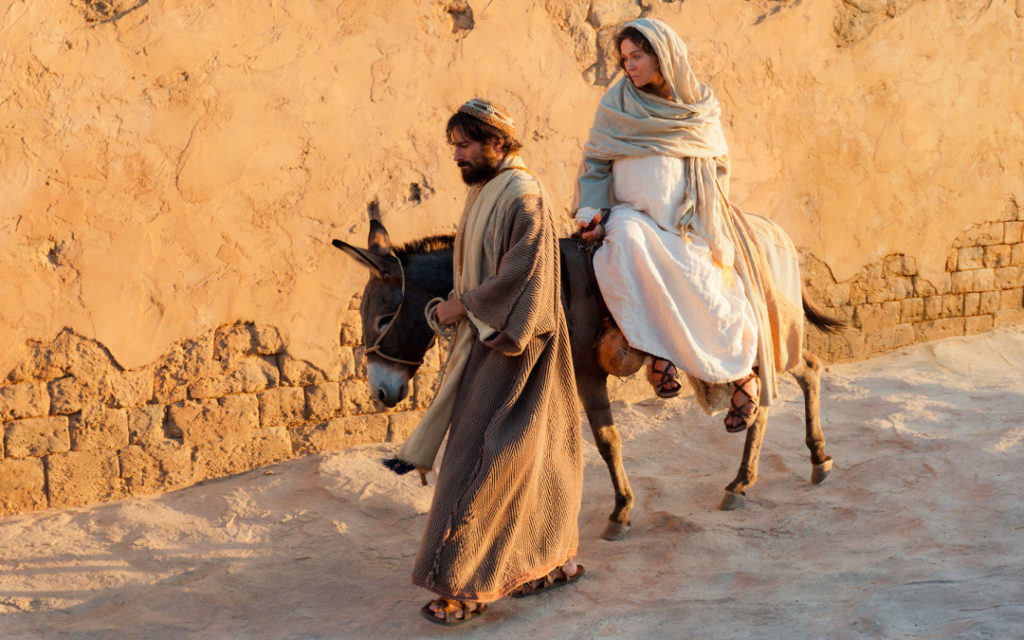
    For example, nowhere does the Bible say that Mary rode a donkey. Mary might have walked. Or rode in a cart. Or gotten piggy back rides. We don’t know. We do know that there is no donkey mentioned in the record.

    It also doesn’t say she had the child the night they arrived.

    It only says she was “great with child” when they made the roughly 80-mile journey from Nazareth to Bethlehem. And that “while they were there” in Bethlehem “the days were accomplished that she should be delivered.”

    So she had the baby sometime while they were there. That could have been during the first hour. But it could have also been a week or month later. We just don’t know.

    It doesn’t mention anywhere the word stable.

    Christ might have been born in a stable, or he might have been born in a cave, or inside the house, or out on the porch, or on the roof (lots of those places had flat roofs where they hung out). We just don’t know. What we do know is that he wasn’t born in a palace. And that they laid him in a manger because there wasn’t any room in the inn. An odd circumstance for a king.  

    Notice as well that there weren’t multiple inns.

    It just says “the inn.” And if you look up that word in the Greek, it’s translated as “guest chamber” in the other spots where it’s used in Luke. So they could have been talking about the one guest room in the house where they were staying. Either way, we don’t have anything that says there was a mean innkeeper who later regretted turning the couple away or that Joseph went door-to-door looking for a place.

    We have no record in the account of three wisemen.

    It just says “wisemen.” So there might have been two of them. Or twelve. We don’t know. And it appears they came sometime after Jesus had been born because they first saw the star of his birth in the east and only then set out to find him. They might have been coming from Persia, hundreds of miles away. Or they could have been living in Bethphage, a mile to the east of Jerusalem. Either way, they didn’t know they should travel to Bethlehem because it says they went and talked to Herod first, in Jerusalem, and asked “where is he that is born King of the Jews?”

    The question freaked Herod out (if you’re the current king, you kind of want to know who else is claiming your throne), and so he gathered all the chief priests and scribes to discuss it, and those guys said the prophecies said it would be Bethlehem. And so Herod met with the wisemen again and told them to go there. And only then did they go down to Bethlehem. So it doesn’t appear the wisemen were there the night of the birth.  

    There’s no record of camels hanging out with the baby either. Or sheep. Or goats. There’s not a lot there. But what is there is interesting.

    Now, I want to go on record stating I have no problem speculating about the event and imagining what it might have been like. I love to do it. Good grief, I write fiction.

    In fact, for many years I figured I needed to get in on the Christmas noun gig. You know what I mean. Every year we get heart-warming books about new Christmas nouns. We’ve had Christmas sweaters, Christmas jars, Christmas boxes, Christmas candles, Christmas carols. This year I see there’s one about Christmas fudge and other about a Christmas train. So I figured I’d do one. Mine would be about the Christmas rat. A little fellow who decided to snuggle up with the babe instead of giving him a nibble. One of these days I will get that hungry rat story written.  

    In the meantime, while there’s a lot of good stuff we’ve added to make the event special, it’s also nice to know what the record actually does say. Whether you’re Christian or not, it’s helpful when dealing with others to know what was recorded about this event that is so significant to the largest religion in the world.

    And so the last bit of good stuff I recommend this month are the two brief accounts we have. The first one is in Matthew 2:1-16 and tells the story of the wisemen. The other is in Luke 2:1-20 and features some shepherds.

    Merry Christmas!

    Share
  • Good Stuff! Two books, a movie, and a dinner

    Are you ready for a story that’s heroic and inspirational? And poignant. And action-packed. And all true.

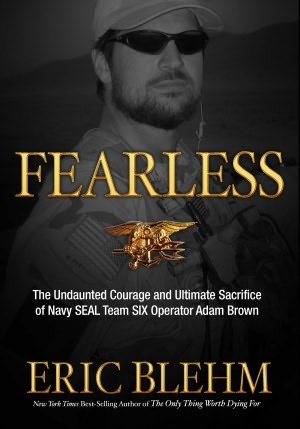
    I just finished Fearless: The Undaunted Courage and Ultimate Sacrifice of Navy SEAL Team SIX Operator Adam Brown by Eric Blehm. And wow. I can’t tell you how happy I am to have read this book.

    It tells the story of Adam Brown who was killed while on assignment in 2010. But this book isn’t about a special operations battle in Afghanistan, although the battle is detailed. It’s not a war book. Although it tells about many episodes in the life of a Navy SEAL operator. No, this book starts when Adam was a kid.

    It like the story of Louis Zamperini that’s told in Unbroken by Laurel Hillenbrand (and, yes,the film adaptation missed so much of the story, including the most important part,that if you haven’t read that book, you are missing out on an absolute treat). In this one, Brown starts out as a boy with bright promise, but after he graduates from high school, he makes a number of bad choices and drives his life right off a cliff.

    You’ll be flipping the pages to see what helps him turn it around and whether he can make the change permanent, or if he’ll lose everything, including the love of his wife and kids. You’ll also be amazed at his grit. It’s a tremendous read. If you can listen to it on audio, you’ll enjoy the narration by Paul Michael. Either way, if you like stories about redemption and triumph amidst struggle, if you like books about special operations forces and elite soldiers, then you’re going to love this book. Highly recommended.

    *

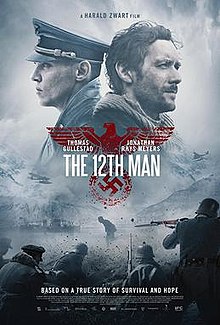
    The 12th Man is a 2017 World War 2 historical drama based on the true story of Jan Baalsrud. He and eleven other Norwegian resistance fighters set off from the UK on board a fishing boat with six to seven tons of TNT to sabotage some German military facilities.

    However, their mission falls apart soon after reaching Norway. A German warship attacks. The resistance fighters set fire to the TNT on their boat and jumped into the water just off shore. Eleven of the fighters are caught by the Germans. The twelfth, Jan Baalsrud, gets shot in the toe, but still runs across land and manages to elude immediate capture by swimming across the fjord, in the dark, in the freezing, winter water.

    Yeah, and that’s just the beginning. The story is about his attempt to get to the safety of Sweden, a neutral country. I watched this with my teenage daughter, and we were riveted with the suspense and action. And we were amazed at what this guy endured.

    You will have to read English subtitles during a large parts, but we found that after a few minutes, we really didn’t notice it. It was a great date night. If you like war movies and action, I think you’ll love this movie.

    *

    Tonight I ate a dish that instantly became one of my favorites. My oldest daughter and her husband found it. They love it and shared it with Nellie. And since it was her night to cook, she decided to give it a try. My first bite was wow.

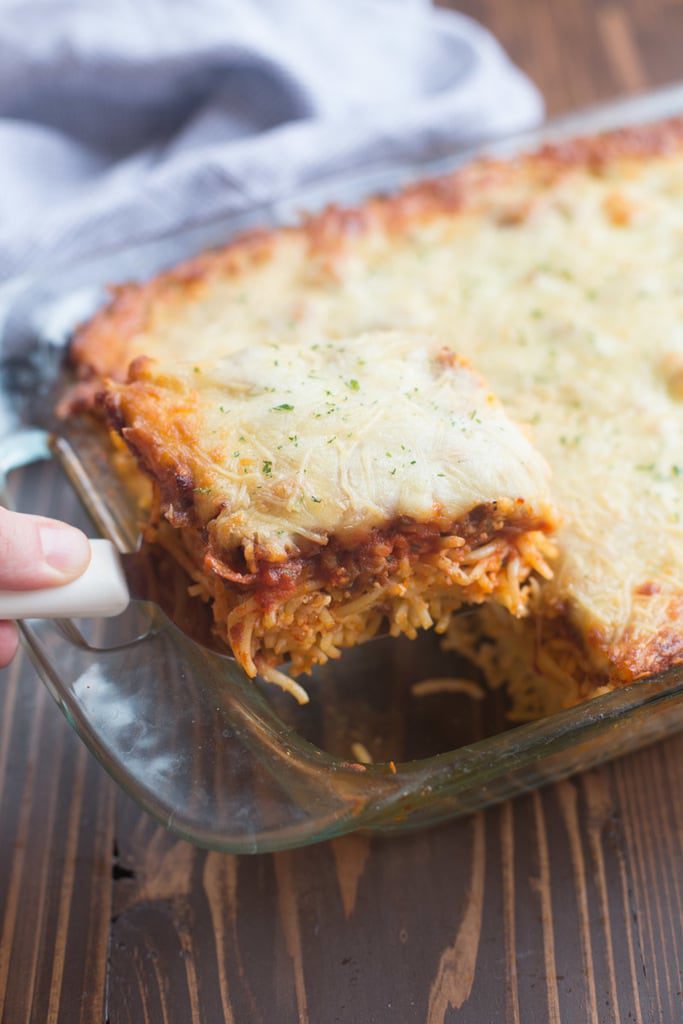
    It’s a baked casserole, a cross between lasagna and spaghetti, called “MillionDollar Spaghetti” from tastesbetterfromscratch.com. Just click on the link the get the recipe.

    Now, here’s the thing: you can use spaghetti pasta, or you can make it totally low carb by replacing the pasta with cooked spaghetti squash like we did. The low carb version was awesome. I can’t wait to heat up the leftovers tomorrow.

    By the way, here’s a quick way to cook spaghetti squash.

    First, cut the squash in half lengthwise. The easiest and safest way I’ve found to do this is to place the uncooked squash on a cutting board. Next, get a big knife and set it along the line you want to cut. Finally, rap the spine of the blade smartly with a thick stick or long block of wood until the knife cuts through all the way. Using a knife this way is called batoning because you’re using a baton, a stick. It’s a slick and safe way to cut a hard squash.

    Once you have cut the squash in half, scrape out the seeds with a large spoon.

    Next, pour about a quarter cup of water into the hollow of the squash, and then turn the squash hollow-side down on a plate or microwave dish. Microwave the half on high for five to six minutes. It’s done when you can easily pierce the outside with a fork.

    Remove the plate with hot pads and use a fork to scrape out the cooked squash. Voila! Cooked spaghetti squash in less than 10 minutes.

    You can also just bake the halves in the oven for 40 minutes on 375 degrees. Baking gives the squash a slightly richer flavor. In this method, you brush the halves with olive oil and sprinkle with salt and pepper then put the sides face-down on a baking sheet. Again, it’s done when you can easily pierce the outside with a fork.

    *

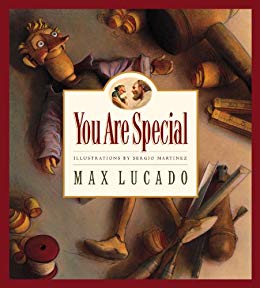
    And here’s one more because it’s Christmas. I attended a young women’s meeting for my local congregation not too long ago. As part of the program, one of the leaders read a picture book called You Are Special by Max Lucado.

    It’s about these small wooden people called Wemmicks who stick gold stars or gray dots on one another. The pretty or talented ones always get stars. The others, like Punchinello, get the ugly gray dots. And then one day Punchinello finds a happy Wemmick that has no dots at all. In fact, no dots stick to her. How does she manage it?

    It’s a great little tale with an important insight. After hearing it, I knew I needed a copy of the book to read to all my grown up kids. 

    Share
  • The MacFarlane (Tor), Correia, Hines Cage Match: Put It In The C Story

    Larry Correia is a big-booted barbarian who likes to fight in a cage. And a lot of us love to watch big-booted barbarians go at it.

    We like demanding matches. We like a little blood and good sportsmanship (of course, sportsmanship in the cage is different than in other venues). And we respect both sides for showing up and giving it their best.

    This last week Larry Correia battled with Alex Dally MacFarlane (and Tor, the silent partner, who thought her new column would be a great idea and has given her their big platform to talk) and Jim Hines. If you didn’t watch the match, here are the links.

    I’ve enjoyed reading the give and take in this fight. For me, the barbarians seem to have landed more blows (and done so with many more funny and memorable one-liners.) But that doesn’t mean Alex Dally MacFarlane shouldn’t crusade.

    And I mean crusade, as in battle.

    Underneath it all MacFarlane wants to change something. She wants to change hearts and minds. A lot of us want to change hearts and minds about various things. A lot of us will show up and risk getting bloody for such things in a variety of settings. Heck, Correia the Barbarian was even willing to spend two years of his barbarian life trying to change hearts and minds in a setting where big boots are not allowed (poor Correia, more sad puppies).

    But here’s the deal.

    If you want to win someone like me, you’re going to do it not by scolding or brow beating me or by mandating something and then trying to back it up with sticks.

    You’re going to do it by writing something so delightul that I cannot but help listen to you.

    You’re not going to tell me what I can’t write.

    You’re not going to tell me what I must write.

    You’re going to model writing that makes me want to write that thing.

    You’re going to be like Tolkien and spawn five decades of writers who want to do nothing more than imagine worlds filled with strange races and wonderous settings and weird talking tree men who have lost their wives.

    You’re going to invite like-minded folks to join you in creating wonders. Or in just having a good old time.  And not worry about other writers inviting folks to their creations, which might be totally different from yours.

    And those wonders and good times are the things that will work the magic.

    Miguel Sabido is a master of entertainment with message. Here’s a great piece in The New Yorker introducing him, his work, and methods. Notice what made his stuff so effective. The new ways of thinking he wanted to offer were never found in the A story. They were never found in the B story.

    Why?

    Because the number one thing the story had to do was suck people in (entertain).

    And so the new thing to consider was in the C story.

    MacFarlane, put it in the C story. And build a Middle-earth. Or a ring world. Or at least some vampires that sparkle.

    In the meantime, I’ve got a barbarian book on the shelf that looks like a mighty good time. I think I’m going to give it a read.

    Share
  • Good Stuff! The Chosen

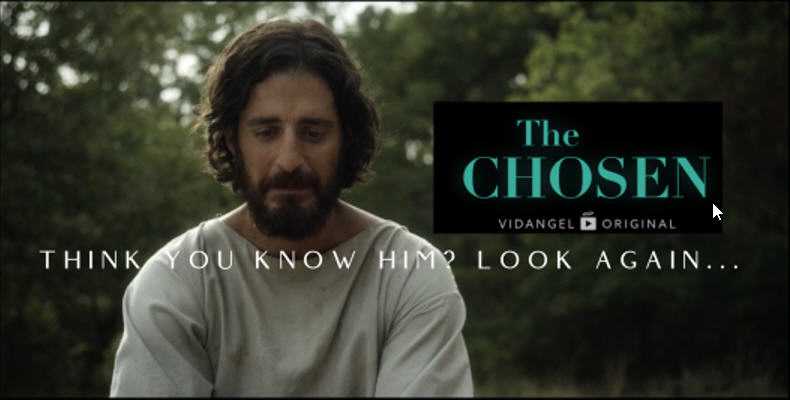
    Nellie and I stumbled onto a new TV series that we are really enjoying. It’s made us laugh, think, and feel. It’s called The Chosen and is based on the life of Jesus Christ, but it’s not like any Jesus series I’ve seen before.

    Now I have to admit that when I first saw ads for this, I wasn’t interested. It’s not that I don’t like videos about scriptures. There are some I love. It’s just that the purpose of so many of them is to illustrate a scripture instead of tell a story. And there’s nothing wrong with that. It’s just that when I’m looking for a drama, I want to watch a drama.

    But this series is different. They have taken a historical fiction approach, which means that while they adhere as closely to the facts as we know them, they don’t limit the story to those facts. And so they imagine people, events, and motives that are plausible, and then tell a story. A great example of this type of storytelling is Gerald N. Lund’s bestselling The Work and The Glory series about a family in the early 1800s who join The Church of Jesus Christ of Latter-day Saints. Or Michael Shaara’s bestselling The Killer Angels about the battle of Gettysburg in the United States Civil War.

    The Chosen focuses on stories about characters surrounding Jesus and those who plausibly could have met him. It also imagines Jesus as more than a sober Lord. He laughs, jokes, engages with children. It is a reimagining of the familiar that makes the story fresh again and leaves you wondering and pondering.

    It’s created by Dallas Jenkins, an evangelical Christian, and produced and distributed by VidAngel Studios, run by Latter-day Saints. And their love of and delight in the subject show. I can’t wait to see the next episode. You can watch it right now for free. Go to the VidAngel site or to https://studios.vidangel.com/the-chosen/. Or you can watch it on YouTube with ads.

    If you like religious fiction, if you like a good drama, if you’re interested in knowing more about the life and times of Jesus Christ, then I think you’ll love this.

    Share
  • |

    The book trade is a . . . trade

    James Dawson, YA author, feels it’s somehow wrong to hold back on cussing in his fiction. He wrote an article about this in the UK Guardian called “Why Teens in Books Can’t Swear.” He thinks it’s unrealistic. He thinks it’s about gate-keeper censorship. You know, parents wanting to steer their children towards certain experiences and away from others.  

    People.

    Dawson’s approach to the whole problem is wrong-headed. This isn’t about the virtues and vices of fiction. Or about gatekeepers, especially in today’s ebook world.  Or what experiences parents want to provide their children. And it’s not about art reflecting reality. Reality includes trips to the toilet, and yet we somehow fail to include realistic bum wiping in so many of our tales. Good heavens, have we betrayed our artistic integrity? No. We’ve just naturally chosen to include things that appeal to us and leave out others that don’t. Every book is an exercise in hundreds of such choices.

    The fact is that Dawson’s forgetting that a fundamental aspect of the book trade is the trade.  The buyer trades his or her money for a product (the book) that provides a service (the entertainment, thrills, chills, etc. of the reading experience) he or she values.  A customer preferring one kind of experience over another isn’t censorship (the horror, the horror).  It’s choice.  

    As an author, you make your offer. If folks like it, they buy it. If not, they don’t. Nobody owes you a purchase.

    This means that in any business, and selling fiction is a business, the most sensible way forward is to offer your intended buyers something they are likely to value.  Something they’re going to like.  Something they want.  If your buyer is thirsty and wants water, offer him a cold glass of water, not a waffle iron.  And if you can’t bear to develop anything but waffle irons, then, by all means, develop waffle irons.  Just make sure you offer them to the folks looking for . . . waffle irons. 

    This business of making offers also means that we package our products and services so that customers can easily tell what’s in the box. You don’t want someone to purchase your box thinking it contains breakfast cereal when in reality it’s a bunch of bolts.

    Yeah, writing is an art. But offering it in trade to others is also a basic economic act.

    Share

6 Comments

  1. I read Scalzi’s post with interest, and didn’t find too much with which to disagree. I came away with more of a “So what?” feeling, because what matters more than the cards we’re dealt is whether we play the hand well. Was I dealt a better hand than some, or even most? I’ll accept that I was. What will it matter if I fritter away those cards? Should I be false to myself and not play the hand to my advantage? I think not. And if I recognize that life need not be a zero-sum game, then if I succeed I can help others do the same.

    Other than a quick Twitter comment, I did not comment on Scalzi’s blog. Nor did I waste any time reading the comments. I can only imagine the snark and vitriol, but they will have to stay in my imagination because life is too short for me to subject myself to that. I find that we indulge ourselves to that extent when we take ourselves and our positions too seriously. I like the lines from The Indigo Girls:

    “And the best thing you’ve ever done for me
    “Is to help me take my life less seriously
    “It’s only life, after all”

    That said, I think you’ve done well to examine what can be more effective ways to make one’s point. If we’re not careful in how we a) relate to one another and b) communicate with one another, we’re likely to find that we’re just (as Switchfoot sings) “adding to the noise.”

    Nicely done!

    Best,
    G

  2. Gray, I like your sentiments about what to do with the cards you’re dealt. That seems so much more productive. And is more at the heart of the matter than what I wrote. Good stuff.

  3. My argument against Scalzi’s essay is there are far more categories than race, sex, and sexual preference. Me, for example, I’m considered the classic SWM when I’ve spent my life in foster care. You want discrimination try growing up with everyone around you who see you as either a rape victim or a potential serial killer. And let’s leave out the fact that I’m actually asexual because most people classify that as either an extension of heterosexuality and evidence that I have trouble with the ladies.

  4. James, yet another category that’s got to be rough. Which just shows that it’s much more productive to deal with people as individuals. Can you imagine the proliferation of groups we’d all have to track when we start thinking it’s a good idea to categorize and rank ourselves by all these factors–race, gender, sexual orientation, handicap, home environment, body type, minority status in geographic region, religion, economic status, and on and on and on? Hundreds, thousands of combinations. I know researchers like to isolate variables. I can see how that’s useful. But on a daily basis I think it’s counterproductive to relate to people that way, e.g. “Hi, I’m John, and, boy, your life is so much easier than mine.”

  5. For me, the reason the WP theory is a con game is that is assumes race drives people – it’s projecting one’s own concerns onto the world. Like a con game, it drags in people to an argument they may want nothing to do with, by arguing that wanting nothing to do with it is proof the theory is correct. It’s semantic and intellectual gibberish, the diabolical cleverness of a grifter. It sounds great but in fact doesn’t even exist outside one’s head.

    Hines stats are more decontextualized nonsense. Where are these stats from, is Hines the researcher, who sourced them? It’s dangerous to attach morality by skin. Creating a moral hierarchy by race, gender and gender preference is simply sad.

  6. Interesting comments, Fail.

    I see a lot of good in talking about outcomes, i.e. can you identify variables that lead people to happier and healthier lives? Can you identify variables that lead to economic success? Etc. That’s going to entail grouping. And some groups are going to have better outcomes overall. It seems to me the best thing to do when you identify outcomes is be very careful not to mistake correlations for causes. And when you do find a true cause, to go to work on the variable to change it. Not stoke resentments.

    I believe group dynamics do play some role. It’s human to group yourself. And it’s human to feel some anxiety sometimes when first dealing with groups you don’t have personal experience with. And because Whites are the majority group in the US, those anxiety issues we have with other groups shows up more. But ALL groups have that. Furthermore, there are many still living who experienced the full-fledged discrimination that was once rampant in America. So group dynamics have played a role and still do. But I think they always will. It’s how you work with that instead of against it.

Comments are closed.