Shadow and Bone

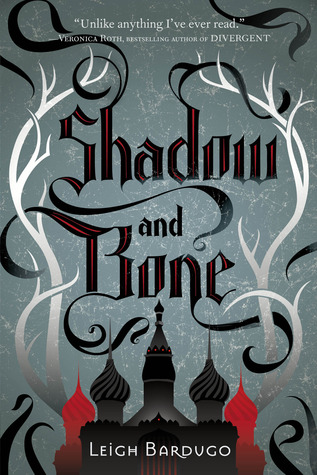
Last year someone recommended Shadow and Bone by Leigh Bardugo to me. I noted the recommendation and then promptly forgot it because my reading queue is two years long. But this last week my wife brought some books home from the library, and there, sitting on top, was Bardugo’s book.

I opened it. Page one listed the orders of magic. I was immediately drawn to the names. They were Grisha, “soldiers of the second army, masters of the small science.” They had divisions of corporalki, etheralki, and materialki, who are the order of fabrikators.

I don’t know what it is, but I love, not steampunk (well, I don’t know if I don’t love steampunk because I really haven’t read any, but I do think dirigibles are vastly overrated), but the mixture of machinists and engineers and magic set in the late 1800’s, the time period when Sherlock Holmes was running about. It’s something I can’t resist.

And “fabrikators”? Russian? Oh, baby.

Most epic fantasies are set in some kind of old German or English medieval setting. Nothing wrong with that. We luvs them, Precious. But something different is nice as well. Recently, Peter V. Brett and Saladin Ahmed have given us fantasies with a Middle Eastern flavor. But I haven’t read an epic fantasy with a Russian flair since C. J. Cherryh’s Rusalka series. And here on page one I’ve got magic and machinists and all these Russian sounding terms.

Awesome.

I turned the page. The opening paragraph of the prologue pulled me right in, and I was off and running, soaking up this little snippet about an orphaned boy and girl who, fast-forward in the next chapter, are now in the army. Not the second army that’s made up of Grisha, but the first army that’s made up of soldiers with rifles who have to slog through mud and march while a handful of Grisha of the second army roll by in a carriage.

Alina, the girl who is now working with the army’s cartographers, and Mal, who is a tracker, are heading with the troops toward the Unsea, the Shadow Fold, this darkness that cuts the country in two and is full of these horrors called volcra. They enter the Shadow Fold, are attacked, and Alina unconsciously calls forth a powerful magic.

Of course, she can’t reproduce it, but it’s a magic that might be used to banish the Fold forever. The rest of the book is about Alina avoiding assassination, trying to learn how to summon her magic, and being pulled into a surprising and terrible plot. It’s also about her and Mal. Yes, there’s a love story here, but this is NOT a romance where everything focuses on her feelings and his feelings and touches and sighs and unbounded quivering.

This is an epic fantasy, remember? Those books that delight readers with dark lords and magic? Well, there’s plenty of that here, plus secrets and a number of delicious plot twists. There are escapes and chases and battles. And, yes, that love story that isn’t overblown but feels very real indeed.

Epic fantasies come in lots of different sizes. This isn’t one of those huge doorstop epics with twenty sprawling plotlines. This focuses on one point of view and one storyline, which means you are able to enter the story very quickly, much like the epics by Hambly and McKinley and so many others.

It’s a terrific read. Give it a go. If you enjoyed Vin in Brandon Sanderson’s Mistborn and Cinna and Katniss in Hunger Games, then I think you’re going to love Shadow and Bone. I’m certainly looking forward to the next volume.

Share

Similar Posts

  • | |

    One of Orson Card’s best essays

    Scott Card recently wrote “Marriage needs lots of humor.” It’s an awful title for one of the best articles of his that I’ve ever read.

    I’m not going to spoil it for you. But I will say that I’ve found that it’s the small things that seem to make the biggest difference in relationships. And this is one of those small things that packs a HUGE punch. But not until this article did I realize it.

    And for you writers who are wanting insights on what makes characters interesting and sympathetic–there’s a little treasure trove here for you as well.

    Enjoy!

    Share
  • “Like Diamond Tears From Emerald Eyes” by Eric James Stone

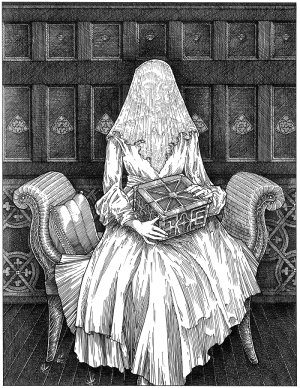
    Take a runty warrior and a slow-witted wizard who have been contracted by a veiled bride willing to pay diamonds to anyone who would fetch an oh so precious box from the castle of a dead wizard. A castle from which no adventurers have returned. Well, except for Thogar the Mighty. Of course, he’s now Thogar the One-Armed Madman. But let’s not quibble.
    At first blush you might think, whopee, another fantasy quest. But this isn’t another quest. This is an Eric James Stone quest, and it’s full of surprises.

    I was fortunate enough to hear Stone read his story at CONduit this May. He takes his listener on a ride full of humor and adventure. Then, if you’re like me, he will make your heart lurch. I loved this story down to the last line which is pure poetry.

    You can find it in issue 13 of Orson Card’s Intergalactic Medicine Show.

    Share
  • The 2009 BBC version of Austen’s Emma

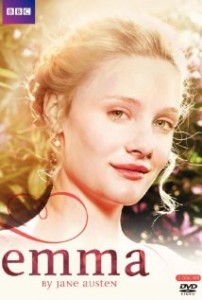
    Emma BBC Romola GaraiYou read some reviewers because they regularly set you back in your chair with keen insight. You read others because their phrasing and voice are so delightful that you find yourself unable not to read, even when they venture forth into exciting areas like soup cans and lug nuts. I, alas, fear I cannot occupy either role when I tell you about the BBC’s 2009 mini-series production of Jane Austen’s Emma.

    I cannot because have no keen insight into acting or film-making or film adaptations. I am not an expert on the late 18th and early 19th century England.  I am not an Austen junkie (although you can be sure I intend to become one shortly).

    Surely, as a writer, I could come up with some kind of amazing assessment. But I cannot because I am speechless. I am filled with a fine joy. I have spent nearly four hours with my wife and two of my lovely daughters watching a delightful tale unfold about the fates of a number of characters–some foolish, some arrogant, some quirky, but most of them splendidly human and noble.

    This. THIS is what I go to story for. To be transported. To laugh. To cry. To hope and fear and feel suspense for another.  To spend time with wonderful characters.  To have lived just a little more while under the story’s sway.

    Gush, gush, gush.

    Such an unmanly thing to do. But to hell with that. I am a man who loves Jane Austen and shoot ’em up thrillers both.

    And if you enjoy Cranford or Pride & Prejudice or Downton Abbey, then you will love this production of Emma too. You will want to own it.

    Romola Garai plays the star role of Emma. I enjoyed every minute she was on the screen. I didn’t know who she was, but it appears she was in the 2006 Amazing Grace with Ioan Gruffudd. I might have to watch that one again just to see more of her work. Mr. Knightly, Emma’s lifelong friend, is played by Jonny Lee Miller who starred in Eli Stone, one of my favorite TV series. I loved watching every minute with him equally as well. There were some other familiar British actors; and more I hadn’t seen before. I thought they all did an excellent job.

    As for the story, it’s about Emma, who believes she has an amazing ability at match making and prognosticating and very soon runs into to trouble because of it. It’s also about kindness, and generosity, and, most of all, love. Of so many varieties.

    If you’re wondering what to watch this next week, order this one now.

    Share
  • Bartimaeus & The Time Traveler’s Guide to Medieval England

    Pure Delight

    One of the most delightful literary characters to appear in the last decade is the cheeky Bartimaeus–a five-thousand-year-old djinni (“genie”) who plays the lead role in Jonathan Stroud’s trilogy The Amulet of Samarkand, The Golem’s Eye, and Ptolemy’s Gate.

    In Stroud’s world, magicians have no magic in themselves, but they do have the lore to summon and enslave demons, who can work magic. There are demons of various levels and powers. The lowest regularly summoned and enslaved are Imps, who can be crude and like to tell outright whoppers, but are good for standing watch and carrying messages. Next come Foliots, which Bartimaeus describes as “cut price djinn.” In the middle of the great chain of beings are the Djinn themselves, whose clever intelligence Bartimaeus extols, followed by Afrits, and finally Marids, who are rarely summoned because they are too strong for any but the most powerful magicians to control. Of Marids, Bartimaeus insightfully reveals that they are “dreadfully full of themselves.”

    In the trilogy, Bartimaeus is summoned and enslaved to do the bidding of a sometimes jerkish young magician who learns to be a better person, despite himself. Of course, along the way the magician sends Bartimaeus in great peril, which he eludes with cunning, sardonic wit, and many good one-liners. I read the first book, loved it, then listened to all three read by Simon Jones, who makes these stories even better. The sad news is that I finished them. I simply wasn’t ready to let Bartimaeus go.

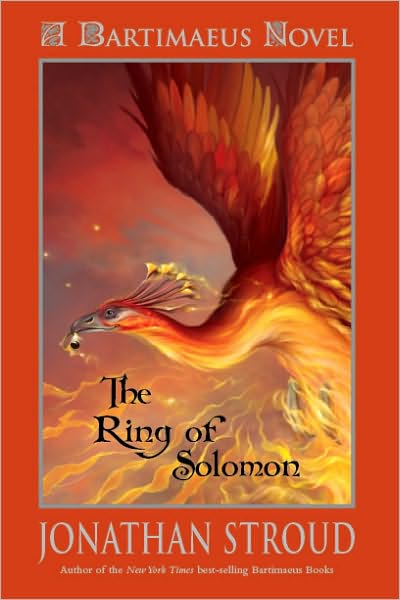
    Which is why I was so happy to find that Stroud recently released a fourth book: The Ring of Solomon, which is a stand-alone prequel to the trilogy. The family and I just finished listening to it, and it is every bit as good, if not better, than the first three.

    This story is set in biblical times where King Solomon has risen to uncontested power because of his possession of an all-powerful ring which allows him to summon hordes of powerful demons in a blink. Bartimaeus is enslaved to one of Solomon’s magicians.  A mean man, who Bartimaeus catches in a mistake and escapes, principally by devouring him. But Solomon doesn’t take kindly to that, and orders Khaba, a sinister and cruel magician, to summon him back to make an example for the other demons.

    Meanwhile, the Queen of Sheba, having denied Solomon’s marriage proposal three times, is sent an extortion threat.  Angry and frightened, she sends Asmira, a young woman and loyal captain of the guard, to Jerusalem to assassinate Solomon.

    Bartimaeus and Asmira hook up and find themselves in quite a pickle as they attempt to solve their problems. The story provides lots of humor, adventure, peril for both Bartimaeus and Asmira, and a number of surprising turnarounds. It also, in its own way, makes a comment on leadership, loyalty, and zealotry.

    You’ll find it in the middle-grade section of your bookstore, but don’t let the placement fool you into thinking it’s not for adults. Like the best stories, it offers something for everyone. It’s a perfect blend of insight and entertainment and had my whole family, oldest to youngest, spellbound for the duration as we listened to it riding in the car. This is one of my favorite books this year. And if you want to really indulge yourself, listen to the audio book read by Simon Jones.

    Travel to Medieval England

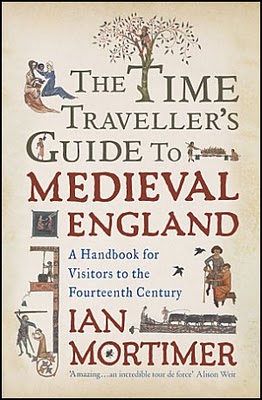
    I love learning new things about places and peoples, even if it’s a place I’ve “been” to before, which is why Ian Mortimer’s The Time Traveler’s Guide to Medieval England intrigued me. The first page convinced me to buy to book. And I’m so happy I did.

    I’ve read my fair share of interesting and well-written texts on this subject, including, among others, Life in a Medieval City and Life in a Medieval Village by Frances and Joseph Gies, Standards of Living in the later Middle Ages by Christopher Dyer, The Medieval Castle by Philip Warner, Daily Life in the Middle Ages by Paul B. Newman, and Power and Profit: The Merchant In Medieval Europe by Peter Spufford. All engrossing reads. What sets Mortimer’s book apart is that he not only approaches the topic as a travel guide that leads to you interesting sights and shares fascinating tidbits about the place, but he also helps you imagine how it would be, as a 21st century person, to actually travel there.

    For example, where would you go if you got sick? What happens if you’re robbed, where do you report the crime, and should you? Where might you get food and would it be something you’d find palatable? How will you get from place to place? Why kind of entertainment can you expect? And what can you wear without offending your hosts?

    Mortimer focuses on the fourteenth century England, since this period comes closest to the popular idea of the medieval times. He tackles the topics of the landscape, people, the Medieval character, basic essentials, what to wear, traveling, where to stay, what to eat and drink, health and hygiene, the law, and what to do. And he does it all in a chatty, clear, and informative manner, with a bit of humor thrown in for spice.

    Each page was a delight, and I found myself feeling like I was there. Furthermore, I learned a number of things that I hadn’t picked up in my previous readings. I’m tempted to quote all sorts of interesting tidbits he shares about the age, but I’ll refrain. If you are at all interested in the Middle Ages, I think you’ll love this book.

    Share

2 Comments

Comments are closed.