Washington Irving, Family, & Writing

How do writers juggle writing and family?

One of my heroes is Mary Higgins Clark who, as a single mom, started a career. She got up very early, wrote for 1-2 hours in the morning, and became a mega-seller.

I have four girls. And a full-time job. When the first two were little my wife was working and I was Mr. Mom going to school. Then we switched.

Here’s my experience. While I love writing, my stories do not run to me and give me wonderful strangling hugs after school like my youngest. While I laugh at the humor I come up with in my stories and enjoy it, it cannot replace the uncontrollable giggling I experience when I go on dates with my second. While writing lifts me, it does not fill my office with notes and wallpapers of love like my oldest. And writing never drags me out to play ghosts in the graveyard or hide and seek–daughter #3. Nor will my stories and novels be there for me when I’m old.

While writing is incredibly fulfilling, my wife, kids, and other relationships are a joy it cannot replace.

What all this means is that I try to recognize that I can’t let family and writing compete. They can’t be equal priorities. Family comes first. But this doesn’t mean I don’t write. I block out times to write. These are my writing times. I get up early to make time for this. I don’t watch a lot of TV. I don’t read a million blogs, nor, alas, can I read fiction at the level I used to. I make time. But I also make blocks when I just forget writing (even though it can be hard).

Specifically, here’s my average work week.

5:00 AM rise, wake and get centered for the day
6:00 AM work (“work” is my day job and writing)
6:30 AM family and breakfast
7:30 AM go to work (at home). Try to get in 7-8 hours at day job and 2 hours writing. When I did commute I wrote for 1 hour during lunch and 1 hour in the morning before I went to work. Then I’d take a 2 hour block on Thursdays.
5:30 PM family etc.
9:30 PM bed

On Saturdays I get a few more hours writing. Sunday I forget everything but family.

With the new book contract I have to become a bit more creative. But if it ever comes down to sacrifice the last 2 years of my oldest being at home and writing, well, the books will go.

When my writing plans meet reality, I try to adjust and find other slots for writing. It wasn’t easy in the beginning, but it’s become much easier. And I don’t worry about what I might have accomplished in writing if I’d just had the extra time. Such what-if’s, I’ve found, are almost always poisonous. And who the heck cares? Because while I want to write wonderful stories, I think the greatest loss I think I might experience at the end of my life (believing in an after life or not) is looking back and seeing that I traded the opportunity for wonderful relationships for a rapidly mouldering spot on the shelves.

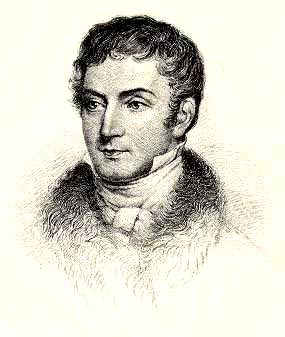
Washington Irving wrote a funny and wonderful piece on this mouldering in his “The Mutability of Literature” in THE SKETCHBOOK OF GEOFFERY CRAYON. I recommend every writer read this to put life and writing into perspective.

Share

Similar Posts

  • Read and report for effect, not rule compliance

    At a recent writer’s conference I was on a panel and someone asked what the pros and cons of writing groups were.  Writing groups can save AND kill your writing. So beware.

    Workshop Benefits

    Writing groups are great for:

    • Encouragement
    • Deadline motivation
    • Having fun with other authors
    • Getting a chance to think about and discuss craft
    • Testing your work

    The benefits listed above can all be huge helps to a writer. However, there are two traps that many individuals fall into. You want to avoid both of these because they are plagues that can not only infect, but kill your writing.

    Workshop Plague 1: submitting for fixes instead of effect

    The first problem occurs when a writer forgets that the purpose of sharing your work with the group is NOT to have them tell you what to do. It’s to test your product on readers who are likely to be in the audience for that particular type of story (please note the last part of that sentence as well).

    But in many groups this isn’t what happens. The writer submits his work and then hopes it does well. If it does, he purrs and goes his way rejoicing. If it doesn’t, he figures the group will tell him what to do to fix it. In such groups the readers often arrive with a list of “you shoulds” or “I woulds.”

    • The dialogue here is clunky, you should…
    • These characters are stereotypes, I would…
    • You have infodumps here, here, and here: you should…

    This all sounds great, right?

    Wrong.

    This tells a writer very little that’s worthwhile. What was the problem all these shoulds and woulds are trying to fix? You can’t tell. And not knowing the problem, you don’t know if the fix is really going to work. In fact, the suggested fix might be completely wrong for the story. You are the story designer. YOU have to figure out what’s really wrong and then select the right fix.

    Case in point: at this conference another author told of a time her editors came back and said the novel needed to be shorter. It was too slow. In reality, the novel was too short. The real fix was to make it longer. She was skimming the surface of the story in summary and needed to go deeper. She made it longer, and the story worked. But if she had been looking for fixes instead of symptoms she would have done the exact wrong thing for her story.

    The most productive thing a writer can hear is what effect the text was having on the reader. Was the reader bored, lost, or feeling it was made up? Or was the reader surprised, intrigued, fascinated, freaked out? In short, did it do what the story was supposed to do to the reader?  An accurate report of the reader experience is invaluable. But a list of shoulds and woulds by the Fixits is not. You want symptoms, not diagnoses and presecriptions.

    Of course, when you understand the symptoms, you can very easily open it up to the group for suggestions on ways to fix it. Sometimes brilliant solutions arise from such discussions. Sometimes they don’t. Othertimes, they simply provide a way for the writer to work it out in his own mind. But in the end, YOU as writer have to do what’s right for the story you feel in your gut.

    One time to be especially careful of this is when you submit revisions of a story to the same group. Here’s why: when someone says a revision lacks blood and vitamins, it may be this is actually the case. But it also might simply be a case of diminishing returns, e.g. the first ice cream cone you eat is great, the second okay, the fourth begins to make you sick. Would the movie you just saw on Friday night be just as powerful if you saw it again on Saturday? And then again on Monday? I know it’s not exactly what’s happening, but it’s similar. After reading a manuscript multiple times, a reader sometimes can see nothing but the stitching.

    Furthermore, a reader will often get revision ideas that jazz them about the story only to find the author was jazzed about some other revision idea. And that can often disappoint. And if this multiple revision reading goes through multiple cycles, I’ve found it becomes harder and harder for the reader to avoid becoming a director of sorts, the author trying to perform to their taste. I done this far too often to people feeding me multiple revisions. 

    There’s an easy way around this one: simply avoid submitting any individual story to the same set of readers more than once.  However, I don’t want to suggest you should NEVER submit revisions to the same set of readers. Orson Card submits all his work, originals and revisions, to his wife Kristine. I submit mine to my wife and editors. Many writers have trusted readers. Just be aware that submitting multiple revisions can very easily lead to our chasing someone else’s opinion instead of writing the story we feel in our guts.  Tread with caution.

    Workshop Plague 2: reading for rule compliance instead of effect

     The second problem occurs when you have readers who have forgotten that the ONLY thing that matters is effect. Many times writers will build a list of writing rules as they learn the craft. And they will forget that the rules are, by themselves, meaningless. Please see my post on Rules vs. Objectives. These well-meaning folks come, not with an accurate report of their reading experience, but with a list of your rule violations.

    So instead of hearing that the story immediately pulled the reader in but that by page four the reader’s mind was wandering, the reader points out that you started the story with dialogue and you shouldn’t do that. Or that you used said-bookisms, which was a very flabby and naughty thing to do. Or that you had more than one point-of-view in the chapter. Or that you chapters were too short or too long. Or whatever it is that that particular reader has in their rule book.

    This kind of feedback is worthless. I don’t care if my story started with dialogue. What I want to know is if it pulled the reader in. And when I say “reader” I mean  one who is looking for a story, not for rule infractions. What you want is an accurate report of the reading experience. That’s it. Both the good and the bad.

    Here’s an example of what I try to do when I read and report. It’s not the only way, but it illustrates what I’m talking about.

    1. I read the story as a normal reader. No pencil or pen in hand. I’m just thinking: okay, I hope this is good.
    2. I read until I’m bored, lost, or (hopefully) turn the last page in delight. Some folks may wonder why I wouldn’t read to the end of everything I’d agreed to report on. Simple. If I’m bored or lost I’m OUT of the story and cannot judge the effect of what follows as a reader. Maybe I’m bored because of the craft. Maybe I’m bored because I’m not in the audience for that kind of story. If this is the case, my experience doesn’t matter. You wouldn’t give a romance to a thriller reader and then expect them to love it, would you? Well, authors are no different. Just because we write doesn’t mean we automatically love everything (please see my blog Is 90% of Everything Crap). 
    3. I write up my experience, making sure I accurately report who and what I was interested in, what delighted me, what bored me, where I was lost, or didn’t believe etc. I’m also very particular to clearly separate  the things that had a big effect on my experience versus those that had a small one. For example, some confusion in an exchange of dialogue might be a small thing. Confusion in a whole chapter is a big thing. As a writer I don’t want a laundry list. I want to get a sense of proportion. And I want to know if the reader generally enjoyed the story or not. It’s one thing to know the story is busted. It’s another to know that it works, but has a few paint spots.  
    4. If I did not read through to the end, I do so now. Or maybe I skim. Just to get an idea of the whole story.
    5. Then I ask myself what I think this story was trying to do. What kind of an experience, what kind of delights was it offering up to the reader? Suspense, delightful characters, romance, wonder, cool textual pyrotechnics, etc.
    6. Having an idea of what the story was trying to do, I see if I can’t diagnose the problems and think of some ways to fix them.
    7. Finally, I give my report to the writer. I include #3. Then I add #5 and #6, stating that here’s “what I think the root of my issues were and some ideas that might help.”

    You might do it differently. Just make sure you focus on accurately reporting your experience reading for effect, not rule compliance. Once you have a number of reports you can see what’s working and what isn’t. If one out of ten people has an issue with a certain part, I may or may not ignore it, depending on my own judgment. However, if four to seven of them have an issue, I’m probably going to fix it.

    So writing groups can be wonderful. Just be careful to avoid these two plauges as if they were, well, plagues.

    Share
  • How author Rachel Aaron wrote a novel in 12 days

    Well, not quite. It was 15.

    First read her essay “How I Went From Writing 2,000 Words a Day to 10,000 Words a Day”.  Now read about her 12 day triumph in “12 Days of Glory”.

    Amen on the pre-writing! I’d be lost without it. LOST. Sketching out scenes beforehand makes them SO MUCH EASIER to write. I can focus on the delivery, characters, dialogue, etc. instead of the events. It frees my creativity to focus on other things. Sketching out a novel beforehand does the same for the whole book. I have a simple sketch of the scene I’m going to write today. There’s no dithering about what to write. I KNOW what I need to write. So I do another more detailed sketch, the pre-writing for the scene before I jump into the day’s work. When I get the scene in my mind, the draft comes so much more quickly.

    Amen on time! I’ve found my mind is like a furnace: it takes time to get hot, and if I only dedicatetake small chunks of time, I’m forever warming it up. When I get 3-4 hours a day, I far more productive on a per hour basis than when I only get one.

    Amen on enthusiasm! There’s nothing worse than trying to write something that bores me. I can’t do it. And her little method for reviewing scenes is very similar to what I do.

    Great posts, Rachel! Now I just need to get back into my dedicated time groove.

    Share
  • Indie Thoughts: How To Sell Loads of Books

    From Russell Blake.

    This does not represent the only way to do things, but it’s my way, and is the synthesis of everything I’ve learned over the last 23 months of self-publishing:

    1) Pick one genre that’s popular and with which you are extremely familiar, and then write in that genre. Stick to it. Don’t hop around. It confuses your potential readers and muddies who you are in their minds, and will hurt your sales. If you want to write different genres, use a pseudonym, and if you like, let your readers know that moniker is you. But stick to one name, one genre, because you’re building your brand, and brand building is a function of clarity – clearly communicating what you do, and what your product is.

    2) Write a series. Why? Because readers like series, and you want to give readers what they like. Or you won’t sell as much. You can try stand-alone – I have – but my series outsell my stand-alone books 4 to 1. Once you have at least three books in the series, make the first one free. Earn your income from the rest, but give readers a whole novel to decide whether they like you or not.

    3) Write a lot. By that I mean try to write at least 3 novels a year. Don’t bother with short stories or novellas (40K or under) if you’re writing fiction – erotica, romance and non-fiction reportedly to do better with short form, but I don’t know from personal experience. Write 60-90K installments in your series, and release them AT MINIMUM every four months. Every three months would be better. Every two, better still. Momentum breeds success, and readers have short memories. The current market is a hungry animal, and you need to feed it, or risk being forgotten by the time your next one releases. Sorry. It’s the truth. And don’t start whining about how X famous author only puts out one book every Y years. If you’re Dan Brown and you sell tens of millions of novels each whack, then do whatever the hell you like. If you aren’t, listen up, or chock your strategy up to, “Become the next Dan Brown” and stop reading this drivel.

    . . . .

    5) Allocate time every day to write, and be disciplined. I suggest minimum one hour per day, or 1000 words. I actually ignore that and shoot for 5000-7000 a day when writing a novel, but that’s just my approach, and it’s not for everyone. My point is that you must be disciplined about your writing and develop that muscle. If you don’t make it a habit, you won’t write enough to put out one novel every four months, and you’ll already be way behind the curve.

    6) Allocate time every day to market. I recommend a 75%/25% writing to marketing mix. So spend an hour writing every day, and fifteen-twenty minutes marketing (social media, blogging, interviews, message boards like this). Two hours writing, half hour to forty minutes marketing. And so on.

    . . . .

    13) Price competitively and intelligently. Look at your genre. Where are most books priced? Are you undervaluing/underpricing your work? Price to sell, but don’t go cheap, no matter what Locke or Hocking did years ago. Use low prices occasionally to move product, as promotional pricing. But price your product consistently with the rest of your peers. Over time, you can increase prices, if your product warrants it and your readership is willing to pay it. My advice here is don’t price too low, or too high.

    . . . .

    19) Have realistic goals. Look at what the average person does in their first year, and their second. That’s average. It ain’t pretty. If you want to be different than average in a good way, you need to do something better/different, and you need to make your own luck. Don’t get bummed because you haven’t been an overnight sensation. I sold $300 of novels in November, 2011, after six months of 15 hour days and seven releases. In December, 2011, I released five novels I’d been working on for months, to create a massive Xmas surge. I leaped to $1450. With a dozen books out. That’s not exactly a ton for the big Xmas season. But I continued writing as though my work was in hot demand. And I kept investing in my product, losing money, until it turned the corner and I started making decent money in Jan of 2012.

    20) Book selling is a retail business, and retail businesses are promotions intense. You’re only going to be as good as your last, and next, promotion. Promotions are a necessary fact of life in retail. You have to generate noise – the product won’t do it by itself. There are millions of books out there. Yours are just more books. Figure out how to get some visibility. I won’t advise you on how – there are plenty of ‘experts’ that will charge you $5 for a book on what worked two years ago. Simply put, it’s constantly changing, so you need to experiment and push the envelope, share information with others and stay ahead of the curve. But if you aren’t promoting, you’re stalling. In business you’re either shrinking, or growing. If you aren’t promoting, chances are you aren’t growing.

    There are 28 tips in all at “How to Sell Loads of Books.”

    Share
  • Is Amazon’s game totalitarianism?

    nazi_flagAmazatzi?

    Franklin Foer and Scott Turow recently made comments which suggest Amazon is in the process of ushering in a totalitarian book economy.

    Is Bezos, as Hitler was in the 1930s, biding his time, playing a long game, one that will lull the masses into a false sense of bookish security? Are we appeasing him, letting him take over the continent bit by bit? Is the blitzkrieg less than a decade away?

    If you listened to a recent Intelligence2 debate, you would have heard Foer-Turow claim that, yes, that’s exactly where we are headed. On the other side of the debate were Joe Konrath and Matthew Yglesais, arguing that Amazon is the reader’s friend.

    Konrath and Yglesais made some good points. But they left the central Foer-Turow argument standing like a citadel. It was left standing because much of what they had to say, as good as it was, frittered around the edges or went off into beer land.

    But the Foer-Turow argument is not a citadel. It’s a house of crackers.

    Here’s why: publishers, authors, readers, and entrepreneurs all have brains. And somehow, in their threat assessment, Foer-Turow forgot that.

    How could they forget something so fundamental?

    Well, their argument went like this.

    1. Amazon right now provides an amazing service that’s far and above anything any other bookseller currently provides. They have made more books more accessible to more readers than anyone else ever in history. Readers, of course, love this. But this is a bad thing.
    2. It’s bad because Amazon is becoming a monopoly–it already has 41% of all new book and 67% of all e-book sales, and in many divisions of those markets it has even more.
    3. If Amazon were an enlightened ruler like Aslan, okay. But Amazon is a business, and as a business it only cares about its profits. And the way to make profits is buy low and sell high. So when Amazon finishes consolidating its hold on the market, it will force publishers and authors to take less of the pie.
    4. In fact, Foer-Turow claim Amazon wants to not just reduce the share of the pie publishers get, it wants to kill off the publishers and take their share of the book pie completely. In addition to being very poor manners, this is bad for three other reasons.
    5. First, authors of non-fiction books that take a long time to research will never be able to get the money they need to do that research. Publishers are the only ones who can give them that money, which they do in the form of an advance.
    6. Second, few authors of fiction will be able to afford good editing, marketing, and book design, and so the many voices that could have been heard will be stifled, or never rise out of the crap to their true potential.
    7. Third, and this is the nefarious Nazi part, if Amazon is the only place you see books, they can control which books you see, which means they will exert enormous control over our culture because they will be able to suppress some books, and therefore the ideas in those books, and promote others. Foer-Turow claim Amazon has already done this.
    8. Finally, because it’s a business and has a goal of profit, when Amazon covers the land, it will probably eventually charge readers more. In fact, it may charge them a lot more. It can’t avoid it; it’s a business.

    So Amazon is taking over more and more book territory. When it’s taken over enough territory to be unassailable, it will then proceed to ruin our culture because its model of book selling will suppress quality non-fiction and fiction alike. And then it will gouge readers.

    Sounds depressing.

    Sounds like Orwell’s 1984 or global warming.

    The only problem is that there is a big honking flaw in all of that.

    Like BIG and HONKING.

    And I’m not talking about the issues like the idea that publisher advances are the only way non-fiction writers can be funded, or that publishers are the only way the vast majority of fiction writers can obtain quality book covers, marketing, and editing. Or that one internet site has the power to put a choke hold on ideas.

    No, it’s about something else.

    You need to know I’m not an Amazon groupie. Nor am I a hater of publishers. I am a businessman. I’m looking for good partners. And I recently wrote a post pointing out that it’s delusional for authors to think Amazon is their BFF with pinky rings. They are just, at the moment, a great indie partner. But their interests and mine are not perfectly aligned. Our love is definitely not written in the stars.

    So I’m not here to stand up for Amazon. I’m here to say that the scenario Foer-Turow paint is fantasy.

    Why?

    Because they’ve set up a chess board and assumed that Amazon is the only player.

    Monopoly

    How does a monopoly stay a monopoly?

    The government either legislates it. Or the company maintains their position by force. Or they own something that nobody else can get. Or the barriers to entering that market are so high nobody can get in to play. In all these scenarios, if people want the goods, they are forced to interact with the monopolies.

    But has the government given Amazon a legal monopoly?

    Um, nope. No charters here to be the only fur trappers in the West.

    Does Amazon have an army of thugs who are going to beat people up and make them join Amazon Prime?

    No. Well, maybe that’s what the drones are for, but they haven’t rolled them out yet.

    Do they own something nobody else can get, like a piece of land? Are they sitting on the world’s largest reserves of cheap book oil?

    Nope. They’ve got a great website and excellent logistics. But websites really aren’t that hard. And if we’re talking ebooks, you don’t need logistics.

    What about the barriers to entry?

    The big advantage Amazon has is that they usually have the lowest book prices around, the biggest selection (you can find almost any book you want there in any format it’s available in), and are incredibly convenient, providing samples, reviews, recommendations, and easy checkout. And they have the crowds.

    It’s hard to get crowds. It’s hard to get all that content. It’s hard to beat their prices. Those are some dang good barriers that keep new guys out.

    And Foer-Turow figured that’s all set. In stone.

    Human Beings

    But what happens if publishers have brains and are actually headed up by, like, real humans who aren’t just going to roll over and play dead? What would such folks do should Amazon keep killing off more and more of them and stealing their pie?

    Amazon doesn’t own the rights to their books. As soon as any contract ends, publishers could simply say, we’re done. Our books will no longer appear in your store. If you’re faced with extinction or something else, what do humans normally do?

    Amazon’s advantage is being the everything store. You can find every book imaginable there. So what happens when shoppers go there and can’t find the most popular books of our time? How long do they stick with Amazon when the shelves are empty? Anyone think about why Amazon kept selling Hachette books even when they were having contract disputes?

    What happens if indie authors have brains and are real humans who aren’t going to roll over and play dead either? What would such folks do should Amazon keep squeezing more and more profits out of them? Could such folks pull their books (like many bestselling indies have from Kindle Unlimited), form a co-op, and create their own site?

    What if everyone was talking about this awesome book that was all the rage, but it wasn’t stocked by Amazon? It was stocked on the indie site, and Apple, and all the others. How would that affect shoppers?

    What happens if there are real human entrepreneurs out there or real humans leading other businesses, and they were all wanting to make a buck, and they see Amazon charging readers a ton and swimming in easy dollars? What happens when they see those tempting profits?

    Do you think they might offer disgruntled publishers and authors better terms? Do you think they might give better deals to price-gouged readers?

    So is Amazon going to kill publishers? Only if the humans have left the building.

    Will they kill authors? Only if authors let them.

    Will they gouge readers? Not when other folks see there’s money to be made by undercutting them.

    Amazon is playing in a global market with the likes of Alibaba, Google, Apple, Walmart, etc. Amazon is playing in an internet economy where college students can come up with an idea and become billionaires. Equally important, Amazon owns nothing that somebody else can’t recreate. They have no legal monopoly. They have no army of thugs. What they have is a lot of content, a well-known URL, logistics for the hard copies, and good prices.

    But what they do not have is a marketplace where everyone else involved is absent a brain.
    Share