Advice to new writers

Recently a fellow writer brought up this post by author Kameron Hurley. He has a lot of interesting things to say (and some cool covers in his sidebar). A Steve Martin quote features prominently: “Be so good they can’t ignore you.”

That sounds like excellent advice, doesn’t it?

Until you start to think about it.

Are there authors out there who strive to be just okay? That set goals to be mediocre?

“Marge, keep the kids away! Bring me no lunch. Because today, do or die, I am determined to write a middling tale about lukewarm characters with a so-so plot!”

!?

I believe our writer of measley aspirations just might just be a strawman.

Be good enough they can’t ignore you, Martin says.

Wow, sounds good. Except let’s test it out. Let’s take some of the least-ignored authors of our day.

For millions of readers J. K. Rowling is NOT a great writer. And neither is Harper Lee. Or Steven King. Or Orson Card. Or Brandon Sanderson. Or Lee Child. Or Nora Roberts. Or whomever. Insert whom you will–the vast majority of the reading public ignores or eschews them.

The vast majority of the reading public is not moved by them in the least.

Stephenie Meyer is a great writer for some. She gave them such a moving experience they dress up and relive it all at balls. She’s a horrible writer for others. Most people haven’t read her or gone to see her movies.

The Bible is THE most life-changing, most moving book that millions have read. For others it’s a piece of trash.

It seems that following Martin’s advice is a really good way to lose a lot of time galavanting after shrubberies only to then have your throat ripped out by the Rabbit of Caerbannog.

Woe is me, for I should have stayed home with my lovely wench and lovely children and eaten more peas and read about sparrows. Zounds, but the blood my mother gavest me, at nine-month cost, now flows silently onto the sterile rocks. . .

You can create great product, stuff made with extraordinary skill, and still not be Great because you’re earth-shattering stuff speaks to and shatters only a small portion of readers.

I say forget greatness!

Just sing. And revel in the singing. And the new songs your voice can carry as your skill grows. And share that reveling with all who enjoy such singing.

Because it’s not about greatness. It’s about the song.

And then go home and enjoy the laughter and coversation of the woman/man at your hearth, the children/cats at your feet, and the lovely taste of the fresh green peas.

(Dear me, I believe I just equated children with cats. And yet, does it not sound just right?)

John, you ask, what about goals? What about being all you can be? Are you saying it’s okay to schlub your way through life and writing?

You must choose your own path. But I would never say don’t have goals. Nor would I say don’t try to write the best book possible . . . for the particular type of story you’re trying to tell.

I think we all benefit by singing our types of songs to the very best of our ability and then trying to enlarge that ability as much as we can.

That generates more joy in the giver and the receiver.

But the quest to be Great so some amorphous “they” (who is they?) can’t ignore you seems foolish. It disregards the idea that it’s impossible to write great books for all audiences. But that’s not its only problem. It also seems to be all about the writer, and not the sharing. Me-me-me is, ultimately, such a hollow prize.

It seems to me that it’s so much better to quest after singing, not to be noticed, but to deliver a service that I and the reciever can both rejoice in together. And then to increase that joy.

Share

Similar Posts

  • “The Art of Suspense” by Ken Follett

    I heard this a few years ago and LOVED it. Ken Follett is a master of suspense. Notice how he starts by talking about the emotion produced in the reader and getting readers emotionally involved in a story. He knows exactly what effect he’s trying to product. He also talks about how to determine whether an idea is good enough for a novel. And all this as he describes the interesting form and history of the thriller.

    Here are the parts of his speech.

    1 Introduction 10 Agatha Christie
    2 Erskine Childers 11 Dashiell Hammet
    3 John Buchan 12 Dennis Wheatley
    4 E Phillips Oppenheim 13 Mickey Spillane
    5 Zane Grey 14 Ian Fleming
    6 William Tufnell Le Queux 15 After Bond
    7 Joseph Conrad 16 Thomas Harris
    8 The standard thriller 17 Q&A
    9 The psychological thriller

    “The Art of Suspense” by Ken Follett–enjoy!

    Share
  • Indie Thoughts: What drives book sales?

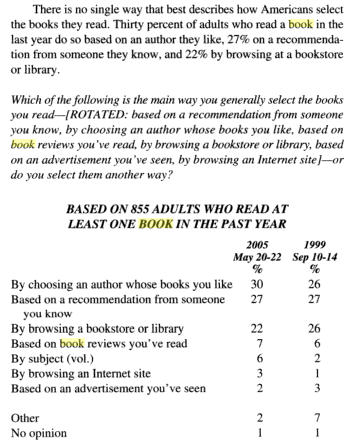
    gallup-poll-how-readers-select-booksWhat are the biggest factors influencing which book a person will read next?

    Many surveys have been conducted over the years to answer just that question. I’ve pasted one on the right and summarize the results of others here. One factor sits at the top of almost all of those surveys. Did you look at those other surveys? According to these surveys, folks tend to buy books by authors they already like.

    This phenomenon is called a lot of things. One of the most common is “brand loyalty.” Some might be wondering how you define a brand and what could be branded in publishing. KKR has a great piece here that answers those questions.

    So brand loyalty. How does it develop? Well, any time you please readers, their loyalty grows and inches them toward the loyal fan end of the spectrum. Your brand may not have the power of a Dean Koontz because you don’t have near the number of loyal customers as Koontz, but you still have a brand. And people who like your stuff are going to be loyal to some degree, but not the same degree.

    I think that last point is important to remember: readers that know and like your brand won’t all have the same degree of loyalty.

    You have hard-core fans who are totally dedicated to you and make an effort to know what’s happening. You’ve pleased them so much, your brand is gold to them.

    You have others who will buy your book the minute they hear it’s out, but don’t make an active effort to keep up to date on things.

    There are others who will mark it to be read when they hear about it, but don’t make a big effort to get it unless it’s convenient.

    You have others who like your stuff but are still in that period where they like but haven’t yet committed to being a fan. That sometimes may take a few books.

    That’s how it was with me and Lee Child. I read the first and liked it. Some time later I saw another and was predisposed to like it. I read that one and liked it too. I wasn’t a Child fan yet. But then I read the third. And that’s when I became a true fan. I’m not hard-core. But I now read everything he puts out within a few months of the release.

    From what I can see, branding and brand loyalty matter no less in publishing than they do in any business where you’re relying on repeat customers.

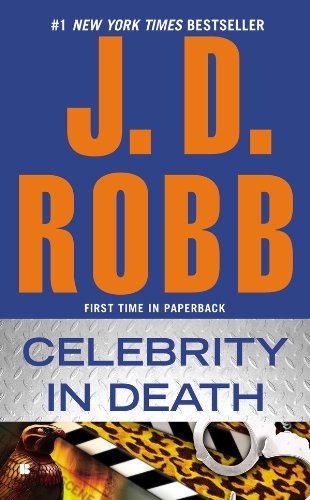
    JD Robb Celebrity in DeathI see the effect of brand loyalty all over. It was the force behind the dramatic explosion of sales when it was revealed that Robert Galbraith, the author of The Cuckoo’s Calling, was J.K. Rowling. It was the force behind the midnight book store events when Stephanie Meyer would release a Twilight book (and the Twilight balls). And other similar events with many other authors. It’s the reason why publishers make the names of a lot of authors so prominent on the cover. Good grief, sometimes that’s all you need. Look at some of the Nora Roberts or JD Robb covers. On many of those the name, the brand, takes up 75% of the cover. You can see customer loyalty blossoming in reviews on GoodReads and Amazon and elsewhere where readers say in essence, “I loved this author and I will be looking for the next book.”

    Building a base of loyal customers is they goal in businesses that rely on repeat sales. Because not only do those folks come back for more, but the also tell other folks about the product.

    Go back an look at those surveys. What was usually the number two reason someone selected a book?

    Word of mouth.

    Word of mouth comes in many forms. Recommendations from folks you know. Recommendations from other influencers–folks like Rush Limbaugh or review sites you frequent. Recommendations from some other type of social influence mechanism like a bestseller list on Amazon.

    The key takeaway for me is that top two factors driving book sales all stem from a loyal customer base. Which means building that base should be one of my main goals as a writer.

    So how do you do that?

    The same way everyone else in a repeat customer business does it. At a general level, you:

    1. Create a product (a book in this case) that’s likely to delight a certain set of consumers (readers).
    2. Let those consumers (readers) know about it.
    3. Make it enticing for them to give it a try.
    4. Make it easy for those who liked it to know when they can get another.
    5. Get more product (another book that’s similar to the last) out the door so your repeat customers can come back for more.

    I’ll be sharing more of my ideas about aspects of those five steps in upcoming posts. And I’ll be wanting to hear what you’ve found that works. Because ultimately we’re all testing various strategies. And the more we share with each other, the more we’ll each benefit.

    While you’re waiting, you might want to look at an awesome book on customer loyalty called The Loyalty Effect by Frederick F. Reichheld.

    Share
  • The Secret to Getting Great Story Ideas

    The Secret To Getting Great Story Ideas Passion GuyLast week I spent a lovely day with the League of Utah Writers at their annual writing conference. I presented “The Secret to Getting Great Story Ideas” which was about how to stop generating great story ideas by accident and start generating them on purpose, whenever you need them. I promised the folks I’d post my PowerPoint and notes. You’ll find them below.

    The Secret To Getting Great Story Ideas 2015 LUW – Presenter Notes

    The Secret To Getting Story Ideas 2015 LUW – Slides

    For those wanting more details, you’ll find the same idea in my series on getting ideas. Here’s the first post: “Can You Create a Redneck Crapper”.

    Share
  • How Inequity and Deservingness Propel Readers Through Story

    Inequity and deservingness are two of the main factors that keep readers reading. If we want to write killer stories, we need to know how they affect readers. A few years ago I wrote an essay on this and thought it probably too technical for most folks’ taste. But I passed it on to a recent attendee of the killer workshop and he found it helpful. In fact, when he watched Pride & Prejudice shortly after reading the essay, he saw how these factors dramatically affected his rooting interest. So I’m thinking others will find it useful as well. 

    In order to understand it you must first read George Saunders’ short story “The Bohemians.” You’ll find it here in The New Yorker, January 19, 2004. It would probably be rated PG for some profanity.

    Now if the story doesn’t pull you in, stop reading. Because the essay probably won’t make any sense to you. You’ll only be able to understand it if the story works for you. But if it does, then ask yourself what the main character’s problem was and what drew your interest? Then read my essay, “How Inequity Evokes Reader Interest.”

    Please note “The Bohemians” does present a character with a problem, and the story cycle applies, but not in the straight-forward manner it does with most stories. BTW, if you’ve ever read Patrick Rothfuss’s excellent Name of the Wind, you’ll see inequity is what shapes the story there as well. If you haven’t read it, I recommend you give it a go.

    I’ll be interested to see your responses to Saunders’ story, my essay, and/or Rothfuss’s novel.

    Share
  • |

    Wowser sequence in Life season 1 episode 3

    I just started watching Life, the NBC series. I’ve enjoyed the first four episodes. In fact, episode three has one of the most brilliant sequences I’ve ever seen.

    Here’s the setup. Charlie Crews is a detective who was sent to jail for a murder he didn’t commit. Being a cop in prison made him a target for many many beatings. Eleven years later they found none of the DNA at the murder site was his. So they released him, and, as settlement for damages, gave him a bunch of money, and allowed him to be a cop again. He’s been partnered up with Dani Reese. Nobody really wanted him, but she’s had problems of her own and got stuck with him. Crews had a car in the first episode, geeked out about GPS and handsoff telephone (stuff his missed in prison), but the ex-con lawyer Crews has put up in his mansion ran it over with a tractor. He’s been riding the bus. In this sequence, Crews and Reese are looking for a guy named Manny Umaga who carjacked a man and his wife then shot the wife. In this sequence they go find where he is and then go get him.

    Watch it and then read my comments below. It runs from minute 15:49 to 21:15.

    1. Surprise. You walk into a dangerous car shop. What are you expecting? You know you’re going to meet hard characters. They’re not going to want to talk to you. There’s some danger and so a bit of suspense. So we meet some hard characters. I was still surprised by the particulars of Buscando Maldito–his neck tattoos and hat. Wonderful and new (at least to me). But before we can have a confrontation–surprise–Crews sees the car of his dreams. Then we get that wonderful exchange between him and Maldito and El Repitito. Total humor. Totally unexpected. Then Maldito suggests a posse? Not only is he willing to talk, but he suggests he goes with them? When going to get Umaga, more surprises. Flash bangs? Big honking Samoan running? Busts down the door? Takes Crews by the neck? Crews pulls his own knife? Surprise after surprise after surprise.

    2. Characters. Loads of interest factors (see my post on character). Maldito and Repitito have fabulous eccentricities. Crews displays his own interesting reaction to the car. Surprising, but logical (BTW, in a later scene you see him driving the car!) Then we see his prison background coming up with the knife. Love his backstory. And did you notice how strong Reese is, taking none of Maldito’s crap?

    3. Dialogue. Did you notice how the first few times Reese says anything to Maldito he doesn’t respond to her question? Total avoidance of on-the-nose dialogue, talking cross-purpose.

    4. Soundtrack. The way they bridged the two scenes with that music was fabulous. And the music itself. Wow. BTW, that’s “No Nadie” by Edgard Jaude, Rafael Torres, & Andres Ayrado.

    5. Conflict. Between the Maldito and Crews about the car, between Maldito and Reese, between Umaga and Crews. Then Crews and Reese (with the knife).

    I think I watched this a dozen times. Loved it.

    Share

3 Comments

  1. I think the problem is that too many people think about quality from a reader’s point of view, rather than the writer. Here’s an example:

    There are two authors. Both authors write a book of middling quality. Both authors take the time to edit their book, give it to trusted peers and improve it with feedback. Both authors submit the book to an agent or publisher and somehow manage to accomplish the improbable. Both books are published, selling fairly well but not quite earning out for the author to get royalties.

    Author 1 throws himself headfirst into his next book, going through the same process that got him his publishing deal. He publishes a second book, slightly better written than the first. He edits, revises, submits and publishes. He continues this process with each subsequent book, improving ever-so-slightly with each new book he writes. At the end of his life, he has written nearly 50 books, some of which are considered to be staples of the genre, some of the most excellent books written in that vein.

    Author 2 edits, cuts, and revises his book, now slightly improved from the original. He decides it’s still not enough, and goes through the same process dozens of times, each time creating a slightly tighter plot, more believable characters, and catching potential plot holes with each subsequent edit. He does this for the next 50 years, at which point he finally decides that he’s done all he can. The rights to the book have long ago reverted to him, and he republishes the book and then dies. His book is fantastic, perfectly paced and generally considered to be one of the greatest stand-alone works in the genre.

    Which author would you be more interested in reading? The man with 50 books, each slightly better than the last, or the man with 1 book that is 50 times better than the first time he wrote it? As a reader, you can have your cake and read it, too. Simply read both. But as an author, I can almost promise you that you want to be author 1. He’s had a much more satisfying life, telling new stories that excited and interested him at the time he wrote them, and his overall ability to write is almost certainly greater than author 2 on his deathbed. And at the end of the day, writing as a career is a business, and author 1 probably has a lot more cash to show for what he’s done than a guy who only wrote a single book, no matter how good. Professional authors will always value quality, but quantity is what puts bread on their table. Toiling in obscurity is not a good way to feed your family or pay the rent. Sure, not every book you write is going to win an award, but they are going to provide you with food and shelter, and let you improve your craft and continue to write for a living. Quality is something to strive for with every book, but not something that should keep you from submitting a story once you’ve been through the editing process and fixed the things that need fixing.

    In short, as an author I want to write like Poe and get paid like Sanderson, but I (like most others) would gladly settle for something in between the two.

    Sorry for the long rant.

  2. Great thoughts, Bryce! I’d much rather be author A as well. And the great thing about writing is that nobody will ever master it all. So we all might as well get used to the fact that we’re going to die before we can learn it all. So write the best you can today and share, and then write something new (“new” being the key word) the best you can tomorrow.

  3. Good article and good post by Bryce. I read article after article from some authors trashing “The Hunger Games” or “Harry Potter” and the likes. They complain they don’t follow the rules.

    And they don’t. And thank goodness I realized this early enough so I have a better chance at writing a book that entertains rather than one that a literature major says is right on. I read Elmore Leonard and was entertained. A follow the dots writer would trash him.

    Learn the rules but then try to write in a way that people enjoy reading. And if no one trashes it, you probably didn’t entertain enough. I’d rather write for the reader who actually enjoys a good story rather than the reader who reads with a highlighter to make notes where you got it wrong.

Comments are closed.