Brown Family Christmas Fun — I Hope

I like paintball.

My wife and girls do not. Something about bruising and pain.

We could get pantywaist nerf guns. We do have some PVC marshmellow shooters. But a man wants something with a bit more kick.

I think I’ve found it. They’re called AirForce BlowGuns. Like PVC guns, you power them with your own breath. Unlike a lot of those guns, these seem to have some power.

Watch the video here to see them in action: http://www.indiegogo.com/projects/airforce-blowguns-toy-foam-dart-gun

We just ordered six. I really, really hope this one funds.

If you’re looking for some family fun on Christmas morning, maybe this is it.

Share

Similar Posts

  • |

    Since when did young adult fiction become the cure for cancer?

    Meghan Cox Gurdon wrote an opinion piece for the Wall Stree Journal called “Darkness Too Visible” in which she complained that it was hard to find young adult fiction these days that isn’t filled with coarse, dark material–profanity, pederasty, mutilation, etc. She claims that “contemporary fiction for teens is rife with explicit abuse, violence and depravity” and wonders “why is this considered a good idea?” She concludes by saying:

    So it may be that the book industry’s ever-more-appalling offerings for adolescent readers spring from a desperate desire to keep books relevant for the young. Still, everyone does not share the same objectives. The book business exists to sell books; parents exist to rear children, and oughtn’t be daunted by cries of censorship. No family is obliged to acquiesce when publishers use the vehicle of fundamental free-expression principles to try to bulldoze coarseness or misery into their children’s lives.

    This, of course, sent hordes of folks into a frenzy of posts sneering at Gurdon’s so-called prissy sensibilities, decrying censorship, and extolling the virtues of young adult literature and dark material in particular. For example, Mary Elizabeth Williams in a Salon piece called “Has young adult fiction become too dark?” rolls her eyes, then deigns to wade into what’s she thinks is an obviously juvenile argument to apparently show Gourdon how “stupid” she really is. Williams concludes:

    One of the terrific side effects of an obviously click-baiting piece of editorial twaddle like Gurdon’s is that it reminds people how many fellow passionate readers there are in the world. That incendiary WSJ piece promptly sparked a tear-jerkingly beautiful twitter #YA saves trend full of heartfelt reactions and links to outstandingly reasoned, article responses from well-read adults and teens on the value within so much of YA literature and its downright lifesaving effects.

    Williams suggests fiction doesn’t have the power to lead people into bad behaviors. After all, she assures us, “an entire generation of women managed to devour the ‘Flowers in the Attic’ series without having sex with their brothers.” No, according to Williams (and all the #YAsaves folks), YA fiction only saves lives. And she provides a link to prove it.

    But Williams misses the mark. Completely. This isn’t about whether fiction has power to influence us in good and bad ways. There’s a huge body of research on media effects which clearly proves fiction’s power for both. Nor is it about the theraputic uses of dark material.

    The heart of the matter revolves around a rather mundane thing–customer service and marketing.

    Gurdon and those parents she describes in her article want a certain type of entertainment. For years, YA fiction has provided that type of entertainment. But things have changed, and the YA label isn’t reliable to them any more. It’s like someone who has purchased steel cut oatmeal for years is now suddenly bringing the bags home to find them filled with sardines or, horrors, Twinkies.

    We can argue the merits of sardines and Twinkies. And a hundred other foods. We can argue the merits of certain types of stories for certain types of readers. And my metaphor above–maybe you think using Twinkies is unfair; maybe you would have wanted me to use something like Triscuts or Wheat Thins. But that’s all beside the point.

    The real problem here is that the publishers have ignored a significant segment of the market who want to buy books but can’t find the types they’re interested in. Either the covers and blurb material don’t help them find what they’re looking for, sometimes misleading them, or the publishers have simply made the mistake of not thinking about this segment of the reading market.

    The fix is easy. (1) Produce more books for these folks. (2) Label your books in a way that makes it easy for the consumer to find what they want. They’re not asking for censorship. They’re asking for a nutrition label that lets them know what they’re getting. Publishers can do what the movie and gaming industries have done with rating systems that prominently display on the cover. Or use some other method. This isn’t a moral issue, it’s simply a matter of helping the right customers find your good or service. It’s a matter of good marketing and branding.

    And I would think, with the upheavals in the book industry today, that publishers and booksellers would want to do whatever they could to boost sales. Surely it doesn’t help to turn customers away because your package is confusing them.

    In the meantime, the battle will rage and this simple practical core of the issue will be lost in the fires and clouds of smoke produced by the arguments extolling and excoriating the virtues and vices of fiction.

    Share
  • The Veggie from Outer Space & The Mentalist

    I’ve been trying to increase my intake of vegetables and fruits because you are what you eat, and I think I’d like to look like a broccoli—long, sturdy, and with a lot of bushiness on top. So we’ve enjoyed our weekly box of fruits and veggies from the Bountiful Baskets co-op that we pick up in Garden City each Saturday.

    And we’ve enjoyed the surprises. Because someone else orders the produce, we never know quite what we’re going to get. Of course, this also means we sometimes get things we don’t normally seek out. Take cauliflower, for instance. We received a number of heads three or four weeks in a row back in October.

    Cauliflower?

    Who eats cauliflower? You ever hear anyone say: “Cauliflower’s on—let’s make a run to Brigham City to get some,” or “LaVern, I believe I’m going to knock back another floret,” or “It’s a party! You bring the chips and soda, I’ll bring the cauliflower?”

    No. We don’t hear those things because cauliflower is just weird. It’s the stuff that nobody eats on the vegetable tray. It looks like some growth spore from the planet Xenon. In fact, I want to know who started the rumor that aliens had big eyes and spindly limbs. That’s all propaganda. The aliens are already living among us, and cauliflower is their freaky pupal metamorphosis growth stage!

    Or, at least, that’s what I thought. Then I ate a serving of creamy mashed cauliflower at Ruby Tuesday’s and gained a testimony of both Ruby Tuesday’s and the weird white cousin of cabbage.  

    So when we received our surprise veggie, did I despair or use it for target practice on the idiot orange tom cat that comes around our house? No. I went to search for that Ruby Tuesday’s recipe. And through the miracle of the internets, I found it. Or something close enough for government work.

    Here it is. Enjoy.

    CREAMY MASHED CAULIFLOWER

    • 1 head cauliflower
    • ¾ C water
    • 1 T corn starch
    • 1/3 C heavy cream
    • 1 t granulated sugar
    • ¾ t salt
    • Pepper to taste
    • 1/8 t garlic powder
    • 1/8 t onion powder
    1. Divide the head of cauliflower into florets that are all roughly the same size. Steam or microwave until cauliflower is tender (we pressure cook it). Drain and toss it into a bowl of ice water to bring the cooking process to a screeching halt.
    2. Put florets into a food processor along with ½ C water. Puree on high speed until smooth, but with some small bits for texture. Or you can simply mash it like you do potatoes.
    3. Pour all the puree into a medium sauce pan. Dissolve the corn starch in the remaining ¼ cup of water and add to the puree.
    4. Add the cream, salt, pepper, garlic powder, and onion powder to the mixture and stir. Set the saucepan over medium heat and cook, stirring often, for 5-10 minutes, or until thick.

     You can experiment and switch the water for milk if you’d like, or if you don’t have cream. Leftovers are delicious. Of course, if I end up lumpy and round, you know it’s the cauliflower’s fault, or the alien’s that has set up shop in my chest cavity, whichever’s the truth. 

    For those who haven’t tried Bountiful Baskets, go to bountifulbaskets.org for more info. For those who wonder if cauliflower has any nutritional value at all, here’s the wikipedia on its goodness:

    “Cauliflower is low in fat, high in dietary fiber, folate, water and vitamin C, possessing a very high nutritional density. As a member of the brassica family, cauliflower shares with broccoli and cabbage several phytochemicals which are beneficial to human health, including sulforaphane, an anti-cancer compound released when cauliflower is chopped or chewed. Boiling reduces the levels of anti-cancer compounds, with losses of 20–30% after five minutes, 40–50% after ten minutes, and 75% after thirty minutes. However, other preparation methods such as steaming, microwaving, and stir frying had no significant effect on the compounds.

    Along with other brassica vegetables, cauliflower is a source of indole-3-carbinol, a chemical which boosts DNA repair in cells and appears to block the growth of cancer cells. The compound also appears to work as an anti-estrogen, appearing to slow or prevent the growth of tumors of the breast and prostate. Cauliflower also contains other glucosinolates besides sulfurophane, substances which may improve the liver’s ability to detoxify carcinogenic substances. A high intake of cauliflower has been found to reduce the risk of aggressive prostate cancer. Cauliflower is also a good source of carotenoids.”

    I guess the short version of all that is blah blah blah science says it’s good.

    ***

    Nellie and I have been enjoying The Mentalist for two years now. It’s a CBS crime thriller mystery series about a “mentalist,” a guy named Patrick Jane, played wonderfully by Simon Baker, who used to be a professional mind-reader and psychic, and a very good one at that, but gave it up and came clean. All psychics, he says in the pilot episode, are either fakes or deluded.

    But he was so good at it and made so much money–why would he give it up?

    Because a serial killer named Red John murdered his wife and daughter. So Jane has dedicated his life to hunting down and killing the murderer. To do that, he becomes a consultant to the California Bureau of Investigation (CBI) and works with a team of investigators.

    Some of the episodes are about the hunt for Red John. Many more are about other cases the team has to solve.

    Patrick Jane is the main attraction of the series. His outrageous behavior, acute observation skills, and keen wit all fascinate and delight. As the series progresses, the other characters take on their own interesting personalities as well. Agent Cho, for example, provides many moments of laugh-out-loud deadpan humor.

    The series is into its third season, but with the miracle of Netflix you can start at the beginning and watch them all commercial free at your own leisure.

    Share
  • Good Stuff! The Highwayman by Alfred Noyes

    Alfred Noyes (1880-1958) wrote poetry that thundered and sang. It’s the kind of stuff that begs to be read aloud. And I want to share with you one of my favorites–“The Highwayman.” I love it for the sound, the story, and the awesome images (note all the color).

    All you need to know is that back in the 1600s and 1700s, a highwayman was a robber, often on horseback, who held up travelers. And that when it mentions “priming,” it’s talking about the charge of powder used to ignite a musket.

    For maximum pleasure, let me suggest you start Loreena McKennitt’s killer ballad version I’ve embedded at the end, then scroll back up and read along as she sings.

    THE HIGHWAYMAN
    By Alfred Noyes

    The wind was a torrent of darkness among the gusty trees.
    The moon was a ghostly galleon tossed upon cloudy seas.
    The road was a ribbon of moonlight over the purple moor,
    And the highwayman came riding—
    Riding—riding—
    The highwayman came riding, up to the old inn-door.

    He’d a French cocked-hat on his forehead, a bunch of lace at his chin,
    A coat of the claret velvet, and breeches of brown doe-skin.
    They fitted with never a wrinkle. His boots were up to the thigh.
    And he rode with a jewelled twinkle,
    His pistol butts a-twinkle,
    His rapier hilt a-twinkle, under the jewelled sky.

    Over the cobbles he clattered and clashed in the dark inn-yard.
    He tapped with his whip on the shutters, but all was locked and barred.
    He whistled a tune to the window, and who should be waiting there
    But the landlord’s black-eyed daughter,
    Bess, the landlord’s daughter,
    Plaiting a dark red love-knot into her long black hair.

    And dark in the dark old inn-yard a stable-wicket creaked
    Where Tim the ostler listened. His face was white and peaked.
    His eyes were hollows of madness, his hair like mouldy hay,
    But he loved the landlord’s daughter,
    The landlord’s red-lipped daughter.
    Dumb as a dog he listened, and he heard the robber say—

    “One kiss, my bonny sweetheart, I’m after a prize to-night,
    But I shall be back with the yellow gold before the morning light;
    Yet, if they press me sharply, and harry me through the day,
    Then look for me by moonlight,
    Watch for me by moonlight,
    I’ll come to thee by moonlight, though hell should bar the way.”

    He rose upright in the stirrups. He scarce could reach her hand,
    But she loosened her hair in the casement. His face burnt like a brand
    As the black cascade of perfume came tumbling over his breast;
    And he kissed its waves in the moonlight,
    (O, sweet black waves in the moonlight!)
    Then he tugged at his rein in the moonlight, and galloped away to the west.

    He did not come in the dawning. He did not come at noon;
    And out of the tawny sunset, before the rise of the moon,
    When the road was a gypsy’s ribbon, looping the purple moor,
    A red-coat troop came marching—
    Marching—marching—
    King George’s men came marching, up to the old inn-door.

    They said no word to the landlord. They drank his ale instead.
    But they gagged his daughter, and bound her, to the foot of her narrow bed.
    Two of them knelt at her casement, with muskets at their side!
    There was death at every window;
    And hell at one dark window;
    For Bess could see, through her casement, the road that he would ride.

    They had tied her up to attention, with many a sniggering jest.
    They had bound a musket beside her, with the muzzle beneath her breast!
    “Now, keep good watch!” and they kissed her. She heard the doomed man say—
    Look for me by moonlight;
    Watch for me by moonlight;
    I’ll come to thee by moonlight, though hell should bar the way!

    She twisted her hands behind her; but all the knots held good!
    She writhed her hands till her fingers were wet with sweat or blood!
    They stretched and strained in the darkness, and the hours crawled by like years
    Till, now, on the stroke of midnight,
    Cold, on the stroke of midnight,
    The tip of one finger touched it! The trigger at least was hers!

    The tip of one finger touched it. She strove no more for the rest.
    Up, she stood up to attention, with the muzzle beneath her breast.
    She would not risk their hearing; she would not strive again;
    For the road lay bare in the moonlight;
    Blank and bare in the moonlight;
    And the blood of her veins, in the moonlight, throbbed to her love’s refrain.

    Tlot-tlot; tlot-tlot! Had they heard it? The horsehoofs ringing clear;
    Tlot-tlot; tlot-tlot, in the distance? Were they deaf that they did not hear?
    Down the ribbon of moonlight, over the brow of the hill,
    The highwayman came riding—
    Riding—riding—
    The red coats looked to their priming! She stood up, straight and still.

    Tlot-tlot, in the frosty silence! Tlot-tlot, in the echoing night!
    Nearer he came and nearer. Her face was like a light.
    Her eyes grew wide for a moment; she drew one last deep breath,
    Then her finger moved in the moonlight,
    Her musket shattered the moonlight,
    Shattered her breast in the moonlight and warned him—with her death.

    He turned. He spurred to the west; he did not know who stood
    Bowed, with her head o’er the musket, drenched with her own blood!
    Not till the dawn he heard it, and his face grew grey to hear
    How Bess, the landlord’s daughter,
    The landlord’s black-eyed daughter,
    Had watched for her love in the moonlight, and died in the darkness there.

    Back, he spurred like a madman, shouting a curse to the sky,
    With the white road smoking behind him and his rapier brandished high.
    Blood red were his spurs in the golden noon; wine-red was his velvet coat;
    When they shot him down on the highway,
    Down like a dog on the highway,
    And he lay in his blood on the highway, with a bunch of lace at his throat.

    . . .

    And still of a winter’s night, they say, when the wind is in the trees,
    When the moon is a ghostly galleon tossed upon cloudy seas,
    When the road is a ribbon of moonlight over the purple moor,
    A highwayman comes riding—
    Riding—riding—
    A highwayman comes riding, up to the old inn-door.

    Over the cobbles he clatters and clangs in the dark inn-yard.
    He taps with his whip on the shutters, but all is locked and barred.
    He whistles a tune to the window, and who should be waiting there
    But the landlord’s black-eyed daughter,
    Bess, the landlord’s daughter,
    Plaiting a dark red love-knot into her long black hair.


    Share
  • | |

    One of Orson Card’s best essays

    Scott Card recently wrote “Marriage needs lots of humor.” It’s an awful title for one of the best articles of his that I’ve ever read.

    I’m not going to spoil it for you. But I will say that I’ve found that it’s the small things that seem to make the biggest difference in relationships. And this is one of those small things that packs a HUGE punch. But not until this article did I realize it.

    And for you writers who are wanting insights on what makes characters interesting and sympathetic–there’s a little treasure trove here for you as well.

    Enjoy!

    Share
  • |

    Radiolab’s “Parasites”

    Radio and TV have incredible power. But until the last decade they were always constrained by time and signal power. You had to listen when the station broadcast it, and you had to listen where you could pick up the signal. 
    Living out in the boonies we don’t get good radio or TV reception (no I don’t subscribe to satellite). Which is why the internet is so wonderful.

    You can listen and watch almost anything when you want from almost any location–yes, even in Laketown, UT, Boonie Central. Millions listen to music, conservative talk, or libral talk (NPR) via the internet. I enjoy all three depending on my mood. But there’s so much more out there than music and blah blah blah, as much as I love it. For example, you can listen to the British BBC. You can listen to the Dutch. See what’s going on in Australia. Doesn’t matter that they are a number time zones away and all asleep when I’m working. I love the internet.  

    One of the best programs I’ve heard in the last six months is the three-part “Parasites” presented by Radiolab. In a fascinating hour they address the following questions:

    • Parasites: are they evil, or are they awesome?
    • Should you get infected with hookworms?
    • Can parasites exercise mind control over their hosts?

    Along the way they tell a number of amazing stories. Listen now. You won’t be able to stop.

    Get zinged, Baby!

    Share
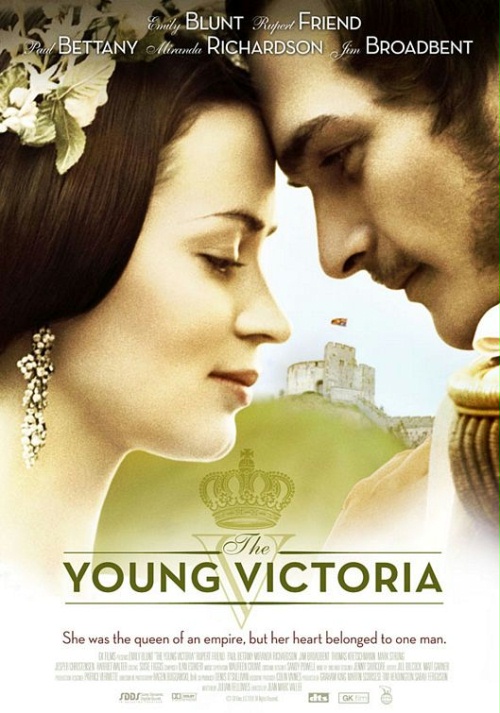
  • The Young Victoria

    Being a crass American I have always considered the current British royalty as nothing more than very expensive mascots. What function do they really serve besides acting as some kind of high-society-reality-show soap opera? 

    Not that this is bad. If the British want to spend their money on queens, princes, and princesses, who am I to oppose them? After all, we Americans have kept the stellar Survivor series going for ten seasons. And when it finally ends, we’ll probably replace it with something else of supreme value like World’s Biggest Belchers or Kids Who Eat Boogers. At least the Royal Family has some modicum of class. Still, the point is that I’m not disposed to feel much sympathy for state-supported rich folk. So when I tell you I just watched and loved The Young Victoria, it should tell you something.

    The movie was sublime. A large part of it was because the story left me edified, left me wanting to be a husband–a friend to my wife–as good as the Albert portrayed in that film. Compare this to Killers which could have been so good, but devolved into dumb sex jokes and dumber action, which then only got worse. When that one ended, I staggered out of the theater having lost half my brain.  The Young Victoria, on the other hand, enlarged my soul.

    The movie is a romantic dramatization of some of the events preceding and following the coronation of  Alexandrina Victoria (Queen Victoria), focusing on her early reign and romance with Price Albert in the 1830s. She was only 18 when her uncle, the King, died and the crown fell to her. Some suggested she was too young and should sign her powers over to a regent. Others wanted to use her as a puppet. The question was: would she fall prey to the political aspirations of others? I will let you watch the movie to find out.

    Emily Blunt does a wonderful job as Victoria. I loved her in the Jane Austen Book Club as well. She’s supported by a great cast, including Rupert Friend as Prince Albert, Mark Strong (the villain in the recent Sherlock Holmes and Robin Hood) as the domineering Sir John Conroy, and Paul Bettany as the dubious Lord Melbourne.

    When recently compiling my list of favorite movies of the decade, I lamented the dearth of good love stories. Well, I just found one. This movie was golden.  If you love Jane Austen, you’re going to love this show.

    (BTW, the Royals actually do perform a number of worthwhile tasks. Read this wiki on the British Royal Family. You may also want to read this on Victoria after you watch the movie.)

    Share

2 Comments

  1. Wow John, I wasn’t expecting much, but now I’m like, How many do I think I can talk my wife into letting me get?

Comments are closed.