|

You’re invited to join the novel writing workshop pilot

I am developing an online novel writing course and am looking for folks to pilot it with me and give me feedback. I’m thinking I want to limit it to 10-12 folks.

It’s free and will probably take two or three months to complete. If you join, your job will be to do the work. And there will be work. I’m thinking 10-15 hours of work per week. Please don’t ask to join if you don’t want to make this commitment. I only want folks who are serious and ready to give this a shot. In addition to the work, you’ll need to report your experience with the course as we go, sharing with me where you get stuck, what’s confusing, what’s helpful, what does and doesn’t advance your skill. In fact, if at some point the course just isn’t providing you any value, you are welcome to drop. That’s good feedback too.

It’s going to be a blended format that includes self-paced work and some type of weekly online meeting. I will be guiding the class. At the very least, we’ll meet and chat at my site. I don’t know if we’ll do a live meeting or not. Still working that out.

I struggled for many years, trying to figure this stuff out, then had a number of epiphanies during Orson Card’s boot camp and continued from there. Of course I still have lots to learn. But I want to share what I have.

I love teaching and have been teaching in one form or another for the last 20 years. I’m currently an education program manager at a large software firm. What this is all means is that I’m trying to build a course that guides folks through a process that will help them learn to WRITE novels. Not just talk about them.

So this is not a series of lectures with quizzes that test your ability to recall, although I will quiz you.

It’s not a course with an end goal of teaching you what I’ve learned about the concepts and principles of plot, character, and setting, although you will need to learn that.

This is about increasing your ability to get ideas, develop them, and then write.

It’s about doing the work. It’s about production. It’s about finishing product. And having a good time doing it.

If you already feel comfortable with your ability to finish novels, this is NOT the course for you.

You can learn more about the course here by clicking The Path in the On Writing menu.

Probably the only other thing you need to know is that the class is a PG-13’ish class. While the stories can deal with intense and adult themes, as the teacher, I’m not interested in working with stories with explicit or detailed sex or lots of language of the sort that would earn a movie rating more restrictive than PG-13.

Remember, this is a pilot. Even though I’ve taught about writing for a number of years to various audiences, there might be some rough spots. We might find we need to change the work requirements or activities or any number of things.

If you’re interested, click on the Contact link on the menu of my site, and shoot me an email.

Edit 1/30/15: I’m getting a number of excellent questions about the time commitment and schedule. Let me answer them here.

The gap I’m trying to fill

First, you have to understand that I am not interested in talking about novels and writing novels. I’m interested in helping folks finish novels. That’s a big gap I see in most writing instruction. It’s the gap I had. There was nobody to help me move from the theory to the writing, and writing all the way to the end. So this isn’t a class about novels. It’s a class where I hope to help you learn a number of techniques for developing and finishing one. And to learn those techniques, you have to actually use them. Which means you have to develop and finish a novel 🙂

So why 10 hours as a minimum?

If you’re a slower writer, it’s going to take you around 50 hours to develop and write a novel of 25,000 words. That’s the size of one of Louis L’Amour’s smaller novels (which we call sometimes call “novellas” today). It’s the size of some smaller romances. A lot of indies are writing serials around this size. If you want to write a 50k book, it’s probably 100 hours, maybe more. A 75k novel? 150-200 hours. The development and first draft of a 100k novel? 200-300 hours.

These are not exact times. Some writers are faster. But you get the picture. Writing a novel is a big project. And I’ve found that it’s just too hard to get any traction on less than 10 hours per week. When you spend much less time than that, you spend most of your time just trying to remember what the story is about. I’ve found it’s best to keep your writing engine hot, or at least warm.

So will these 10 hours be in meetings?

No. I don’t want to have a lot of meetings. That’s the beauty of online. We will have deadlines. But you should be able to complete you work during the times that suit you best.

What’s the course schedule?

I can’t give you an exact schedule. I haven’t timed everything. Figuring that out is part of what we’re doing in this course. But I do know what I want you to learn and how I hope to help you learn it. We’ll just have to see how far we get with each weekly 10-hour chunk.

Share

Similar Posts

  • NEWS: Cover Artist Selected for SERVANT and CURSE

    After reviewing almost 100 applications, we have selected an artist to do the covers for SERVANT and CURSE. His name is Giorgio Grecu Shards, and he lives in the UK. You can see his gallery here: http://shards.cghub.com/images/.

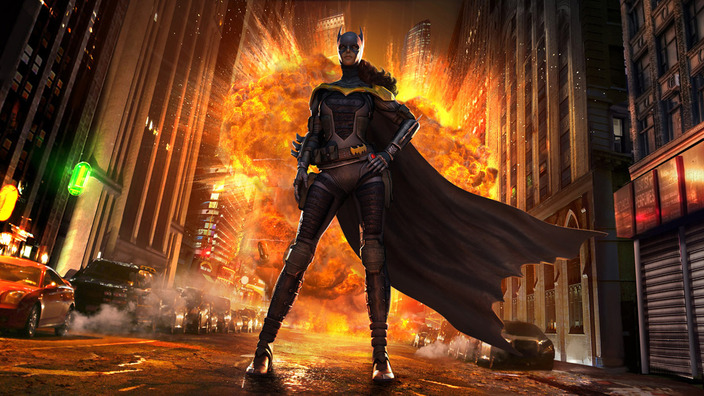
    Some of my favorite pieces of his include these. 

    BatGirl by Shards
    BatGirl by Shards

     And this

    Dancer by Shards
    Dancer by Shards

    There were quite a number of others who we gave serious consideration, including Shen Fei, ThuyNgan, Nusha Amini, and Nick Greenwood. In the end, we felt Giorgio could pull off the feel the best. We’re very excited to have made the selection and come to the agreement. Right now we’re targeting October-November for the release of both books. I’ll keep you posted as the cover art shapes up.

    Share
  • World-building the history of a place

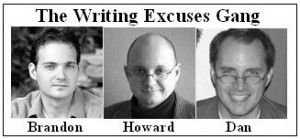
    writing-excuses-the-guys2-300x139The Writing Excuses guys have posted another good podcast: this one on world-building a history.

    I wanted to add a few comments. You’ll notice that a lot of the blurbs for my novel mention my world-building, so I guess it’s a strength in my writing. However, I don’t write huge world building documents in the pre-draft stage. I do write some history, of course. But I don’t think it would take up more than a few pages. A lot of world-building happens in draft.

    It seems to me there are two levels of “history” and a lot of it can be done on-the-fly.

    1. There are small hints of CHANGE in places and people.

    Dave Wolverton taught me this one. You come upon an orchard in the woods that’s gone wild and is overgrown. It takes two lines to describe it and it gives a strong feel of past. The reader wonders who was there, what happened. Maybe you tell them. Maybe you don’t. You mention that the village Knight used to be fat but is wasting or vice versa. I find I can do these types of things usually on-the-fly as I’m writing. And I don’t need to know much about them. I just ask myself if anything has changed with the location or characters in the current scene.

    A few touches of CHANGE throughout the novel give a strong sense of history.

    2. There are events, groups, and individuals who impact or impacted your characters and their community in large ways.

    There was a war with a neighboring country not five years ago. Your characters have to travel through that land, or maybe half the male population went to war and never came back. Or perhaps your character lost his sister in a drowning he could have prevented. Or he lost her to slavers. Or perhaps there is a secret police (like the Roman couriers) who arrived two years ago.

    Again, many of these things can be thought up on the fly as you look for conflict and the stories of a place and community. However, I’ve found that it helps to ask a few key questions in the pre-draft stage to lay some (NEVER ALL) the groundwork.

    — What kind of conflicts do these nations and groups have?
    — What events have had a large impact on my character and his community? They can be terrible or wonderful events.
    — Who in the community are my characters friends and enemies? What’s the history?
    — What are the local and regional stories of events (or people) that were eccentric, odd, mysterious, dangerous, or revolutionary?

    I never get all my answers up front. But I will get some. And then as I write I just keep in mind that it’s neat to indicate change every once in a while and to briefly bring up stories from the past that relate to the current matter at hand in the present story.

    Finally, I really like the idea the Writing Excuses guys brought up of sharing multiple explanations for an event (multiple histories) when it fits and to include more than one cause, although I’m pretty sure the 80/20 rule applies to causation.

    Share
  • |

    The average American reads 17 books per year

    Americans and Reading

    The Pew Research Center has just published their findings on reading in America. It’s called “The Rise of E-reading“. There’s a LOT of fascinating information in the report. Here’s a taste:

    1. Americans 18 and older read on average 17 books each year. 19% say they don’t read any books at all. Only 5% say they read more than 50.
    2. Fewer Americans are reading books now than in 1978.
    3. 64% of respondents said they find the books they read from recommendations from family members, friends, or co-workers.
    4. The average reader of e-books read 24 books (the mean number) in the past 12 months; the average non-e-book consumer read an average of 15.

    Building an Audience

    I also want to recommend this week’s post by Kris Rusch on Audience. She has a number of interesting things to say about the dream of being a best seller and building an audience. The money quote comes as she refers to a post by Tracy Hickman:

    “The point here is that you do not have to feel as though you are in competition with the entire world. You don’t NEED the entire world to be a successful writer. What you need is an audience—just enough of an audience, mind you—who reads your words, is changed by them and wants to come back for more.”

    An audience. More importantly, an audience that reads and “is changed by” your words. Not an audience who loves them, not even an audience who likes them. An audience who is changed by them, and because of that experience, “wants to come back for more.”

    Simple. Important. Usually forgotten.

    She talks about lots more. Read the whole thing.

    My thoughts?

    First, there’s no need for authors or readers to worry about wading through “crap.”

    According to Pew, readers only read 15 or 24 books a year on average.  That’s not a lot of books.

    More importantly, it takes about 3 seconds to get a lead for a good book.  You hear something from a friend or family member, you look at the USA Today best sellers list, you browse a few books at a store or online, you read a blog and suddenly you’ve found a book. 

    Readers fill up their book reading slots much more quickly than they can ever empty them.  That’s why we all have years of reading in our queues.

    It doesn’t matter that there are millions of other books out there, a good majority of which might have been written by monkeys. There’s no need for authors to worry that readers will have to wade through a mountain of crap to find a good book. They don’t need to because they have leads for good books coming out their ears.

    Second, people purchase books that friends, family, and co-workers love.

    Which means that when you deliver a great experience to one person, it’s going to ripple out. It’s probably not going to be linear. It’s probably going to ripple out like viruses do into different population pockets. Or seeds do into different environments. It will run through one pocket, make a jump to one or more others, or it may not jump at all. Some pockets are big, some are small.

    The way to keep a virus going is to release it in a lot of places where it’s likely to thrive or in places that a lot of people travel through. And as Kris points out, writing is all about repeat business–making sure you have a stream of good product (something I hope to rectify with my own writing this year).

    Bottom line: the best way to build your writing business is to simply write the best book you can, and keep them coming.

    Third, the market is BIG. 

    If you read Rusch’s and Hickman’s articles, you’ll see that even the mega sellers only reach a fraction of those who read. This is reinforced by the statement made by Thomas McCormack, former CEO of St. Martin’s that you can read here. So just because 100,000 people read one book doesn’t mean 100,000 others won’t read mine.  

    Moreover, e-books and online shopping are broadening distribution. Brick and mortar stores only have so many slots for books. Every 8-12 weeks they rotate the old books out (like 12 weeks is old) and replace them with the new ones, unless, of course, your book is selling very well and gets “modeled” at the store.  The point is: when you only display a few books at a time, those books will get bigger sales numbers. This happens because there isn’t anything else to purchase.

    But you don’t have that limitation with e-books and online shopping. Nothing rotates out of the store. Sure, things rotate on and off the best seller lists. But the books are always there. With an ever growing selection, there won’t be as many mega sellers.  Publishers Weekly discusses this trend in their 2011 Facts & Figures articles, which list best-seller numbers (make sure you click through to the Trade Paperback article as well). The same thing has happened with TV station viewership with the explosion of channels, DVDs, and online streaming. Same thing happened with music.

    What this means is each author has a better chance of getting his or her books to those who will love them. We’ll still have best-sellers. But we’ll also have a lot more medium sellers as well. And that’s great for authors everywhere.

    Share
  • See You at LTUE on Friday

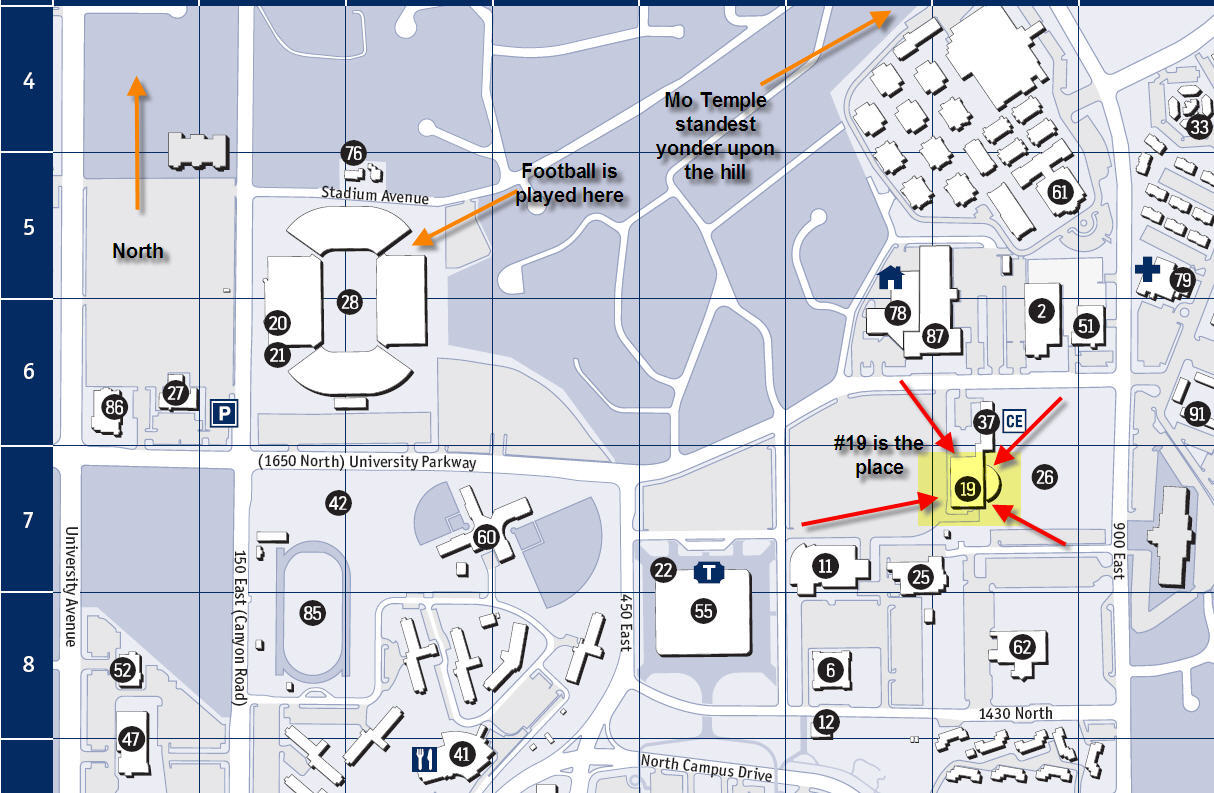
    My schedule has changed. You can see the updates below. As I said before, LTUE is one of the best writing conferences around. There are going to be quite a few authors there sharing tips on craft and the business of writing. BTW, it’s NOT going to be held in the Wilkinson Center as it has been in the past, but in the Conference Center on the NORTH side of campus. See map below. Find the full schedule here.

    Romance vs. Story with Romantic Elements: Injecting romance into saving the world

    • Panel 
    • John Brown (Moderator),  Ami Chopine, Stacy Whitman, Lynn Kurland
    • FRIDAY: 12 pm – 1 pm

    Plotstorming from Character: In some cases the plot of a book drives the characters. However, characters that instead drive the plot can make for a more compelling story. In this hour, we focus on how to grow your plot from your main characters.

    • Presentation
    • Paul Genesse (I want to hear what Paul has to say; I think this will be interesting)
    • FRIDAY: 3 PM – 4 PM

    How to Get and Develop Killer Story Ideas

    • Workshop 
    • John Brown & Larry Correia (oh, yeah–it’s the dynamic duo)
    • FRIDAY: 6 PM – 7 PM

    Lessons on Story from THE HUNGER GAMES (and let me tell you, there are a lot of good lessons)

    • Presentation
    • John Brown
    • FRIDAY: 7 PM – 8 PM

    Click the map to see details

    Share

3 Comments

Comments are closed.