Good Stuff! 3 Books to Introduce You to the Middle East

ISIS, the Taliban, Al Qaeda, the Muslim Brotherhood, Iran.

What drives these groups?

What are they really about?

Why is there so much religious strife in the Middle East?

For that matter, what is Islam actually about? Is the religion really defined by these violent actors, or are they just the most visible because they’re what’s reported on in the media?

I set out to find the answers to these questions, and what I have found so far surprised me. If you are interested in understanding what’s going on in the Middle East today, you have to understand Islam. And it’s a fascinating story. There are a lot of books on the subject, but you don’t have to sift through all those I did. I want to share with you three slim books that I found to be the most clear and engaging introductions I’ve come across.

The first is Understanding Islam: An Introduction to the Muslim World by Thomas W. Lippman, an award-winning author and journalist who specializes in the Middle East and spent years living in Egypt, covering the events, and traveling from Tunisia to Pakistan. Again, this is a slim, easy-to-read volume, but it is packed with information. If you want to know the basic beliefs of Islam, who Muhammad was, what all this business about Sharia is, and who the major Islamic groups of the Middle East are today, this is the book to start with. One note, you want to make sure you get the third edition of this book.

Understanding Islam by Thomas Lippman

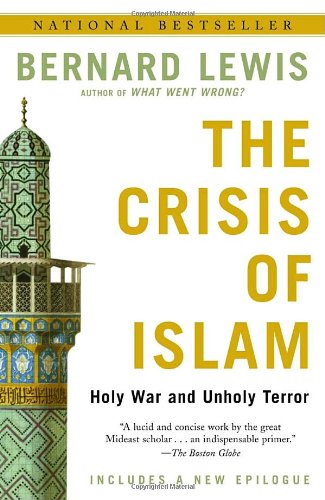
The next book is by Bernard Lewis, a man internationally recognized as one of our century’s greatest historians of the Middle East. The book is called The Crisis of Islam: Holy War and Unholy Terror. Again, another slim, engaging, but information-packed volume. In it, Lewis explains what it is in Islam that is breeding these extremist groups. And what is leading them to target America, which is especially interesting because for most of the 1900s the United States was seen as the good guy by the Islamic world. What changed? Read this book to find out.

The Crisis of Islam by Bernard Lewis

The last book, a lively, engaging read, is called After the Prophet: The Epic Story of the Sunni-Shia Split by Lesley Hazleton, another veteran Middle East journalist. When you finish this book, you will understand why Saudi Arabia supported ISIS before they so recently turned against it. You’ll understand why they recently joined Israel, of all nations, in condemning Iran’s nuclear program. You will also understand one main reason why the Iraqis can’t seem to get along. In this book, Hazelton goes back to the beginning of the religion and tells the story of the splitting of Islam–the split between the Shias and Sunnis. It’s as significant a split as that of the Protestants from the Catholics in the time of Luther. But unlike that split, which has lost almost all of its heat, the antagonism between Sunni and Shia still leads to war. You cannot understand the Middle East today without understanding this.

After the Prophet by Lesley Hazleton

So there you have it. If you’ve been wanting to learn more about Islam and the Middle East, you’ll find these the perfect introduction. And if you’re religious at all, you’ll find much to ponder. There isn’t one god-fearing Christian, Jew, Hindu, or what have you who doesn’t think that submitting our will to God’s won’t help us build a better families, communities, nations–a better world. Would it surprise to you to know that Muslims believe the same thing? That Islam means “to submit” to God?

There are of course many differences between Islam and my own Christian beliefs, but there are also many striking similarities. And the experience I kept having reading these books was seeing over and over again echoes of my own faith and the history of Christianity. There are cautions, to be sure, but also things worthy of emulation. If nothing else, it felt like it did when I learned Dutch. Yes, it was all foreign, but I saw the ties and the differences and, surprisingly, understood my language better than I ever had before.

Now there are three other equally fascinating books I want recommend that focus on Al Qaeda, fighting terrorism, and Saudi Arabia, but I’ll save those for another time. Go treat yourself and read these fine introductions.

 

Share

Similar Posts

  • Ramsey’s Total Money Makeover & Brown Cow Yogurt

    Wear some financial underpants

    I graduated from BYU with a Master’s degree in accounting. BYU’s accounting program is regularly ranked as one of the top three schools in the nation.

    Whoa. Go, John. I ought to be some kind of financial superstar, right? You’d think I would have come out of that program with all my crap put together, living within my means, investing wisely, making a bundle of moo-lah. I’d have a tidy stash.

    Yeah, nope.

    That program taught me how to account for money, but not how to use it. Or maybe I was just too dumb to get it. We came rolling out of school with thousands of dollars of debt. So instead of graduating and building our wealth, we worked to pay off the man.

    Dumb, dumb, dumb.

    I can tell you right now my daughters aren’t going to do the same. They will pay as they go. I’m not co-signing any loans. They’re not going to use credit cards. If it takes them a few years longer to graduate, then it takes them a few years longer.

    But they’ll be free when they finish. No shackles for my girls.

    I always thought it was a good idea not to send them out into the world without underpants. Or knowing how to brush their teeth. It’s equally important I don’t send them out there not knowing how to build wealth and reap all the security and peace that comes with it.

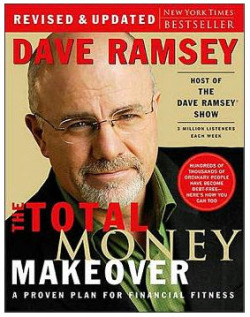
    This is why every child of mine is going to get a copy of Dave Ramsey’s The Total Money Makeover. It’s a goofy title, but the principles in it are sound. I can’t tell you how much I wished I’d known and followed the steps he outlines there on how to build wealth when I was just starting out.

    1. Save $1,000 in an emergency fund
    2. Pay off all your debt except the mortgage using the debt snowball (and don’t go into debt)
    3. Complete your emergency fund by saving three to six months’ expenses
    4. Maximize retirement investing
    5. Save for your kids’ college
    6. Pay off the home mortgage early
    7. Build wealth and give like crazy
    8. Live like no one else

    The book starts out by talking about the debt myth, i.e. debt is a great tool and should be used to create prosperity. Sometimes a little debt can be helpful. But in the vast majority of cases “debt adds considerable risk, most often doesn’t bring prosperity, and isn’t used by wealthy people nearly as much as we are led to believe.” Ramsey goes on to say, “Your largest wealth-building asset is your income. When you tie up your income, you lose. When you invest your income, you become wealthy and can do anything you want.  How much could you give every month, save every month, and spend every month if you had no payments? Your income is your greatest wealth-building tool, not debt. Your Total Money Makeover begins with a permanently changed view of the Debt Myths.”

    After tackling debt, Ramsey outlines other money myths and wealth-destroying attitudes and then explains each of the principles of the steps outlined above.

    I love this book so much it’s part of my gift package to every couple that invites me to their wedding reception. I hope those new couples follow his recommendations. It will bring them peace. If you want to give your children the gift of financial peace, if you want that peace yourself, I recommend you buy this book today and start following those baby steps. You can get the book for a mere $10 bucks at his website http://www.daveramsey.com.

    While you’re waiting for it to come, you might want to go over to Larry Correia’s site (another accountant and fiction author), and read his hilarious comments on some real folks who actually were sent out without any financial underwear: http://tinyurl.com/3zx9tbo.

    Thick and Creamy

    I love thick, creamy yogurt.

    Mix it with some raisins or fresh fruit, and I’m in heaven.

    The problem is that most of the yogurt on the shelves today is weird Splenda- or NutraSweet-filled crap. Or it’s full of sugar. And none of it has that thick mouth feel.

    I had some great yogurt up in Oregon a few years ago, but could never find anything like it here. Then a little while ago I hit the jackpot.

    Hello, Brown Cow Greek Yogurt.

    Thick. Oh, baby is it thick. Creamy. And full of goodness: 23 grams of protein, 9 grams of sugar, 0 grams of fat, and active cultures of more of our belly friends than any other yogurt I’ve found—give a big welcome to S. Thermophilus, L. Bulgaricus, L. Acidophilus, Bifidus, and L. Casei.

    I get the plain style. This allows me to mix it to my taste with fruit, granola, or a little bit of sugar or honey.

    If you’ve been looking for some good yogurt, let me recommend Brown Cow.

    Share
  • The Sing-Off, Sam’s Salmon, The Englishman Who Went Up A Hill

    One of the best TV programs this fall

    American Idol was good until the judges became irrelevant and annoying. Or maybe I was just tired of the format. I didn’t think I’d watch another singing show. But I tuned into the opener for The Sing-Off on NBC last week, and holy harmonies, Batman–it was wonderful.

    Ten of the best a’capella groups in the country compete for a $100,000 prize and a recording contract with Sony Music. Unlike American Idol, the groups represent a wide range of ages—from kids in high school to older adults—and backgrounds. They don’t use any instruments, just their voices, to sing incredible arrangements of modern songs with percussion, bass, and lovely vocals. This ain’t no choir music. And unlike American Idol, the judges actually have interesting and useful things to say. Also unlike American Idol, the judges eliminate the groups until three are left. Only then do the rest of get to call in and vote.

    We were glued to the TV watching each episode. The programs are all two hours long, but move like lightening. Our favorite groups at this point are Committed and The Backbeats.

    This whole show runs a total of three weeks, one episode each on Monday and Wednesday. It started last week, continues this, and finishes next week. Some of you might be depressed, feeling you’ve already missed it.

    Not so! You can watch all of the full episodes online at www.nbc.com/sing-off/ (with fewer commercials). Then tune in for the grand finale. I can’t wait. 

    Are you kidding? From a can?

    Canned tuna fish is one of those un-meats. It doesn’t taste like fish. It doesn’t taste like chicken. I guess the all-white albacore is okay. But tuna’s not one of those spectacular foods I crave.

    So you’d think, as I strolled the isles of Sam’s Club, that I would have passed up the canned Member’s Mark Atlantic Salmon. But one of my wild culinary urges, the ones that rarely pan out, overtook me.

    I purchased a pack of five, seven-ounce cans for $11.88. I brought the pack home put it on the shelf and didn’t dare open it. What was I thinking?

    Canned salmon? Canned meat?! When was the last time you had a steak out of a can?

    It couldn’t be good.

    Of course, my sensible hesitations only last so long. I broke down one afternoon when the cupboards were bare. I saw the salmon and thought that it might go well with a salad and baked potato.

    I opened the can. It was pink, like the trout I used to catch and immediately fry when I went camping as a boy. I tasted it. And it tasted like .  .  . fish. Real fish. The light delicious taste of those trout I caught so many years ago.

    I enjoyed a wonderful meal that day and have had several repeats since. Boneless, skinless filets in water, packed with omega-3 fats, all grown on fish farms in Chile. 

    Great movie set in Wales

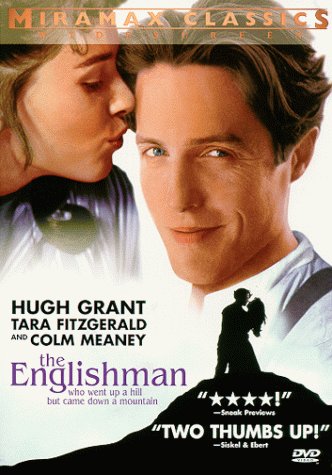
    I enjoy Hugh Grant as an actor. I loved him in Sense & Sensibility with Emma Thompson, one of my most favorite movies ever. And so I was curious about another movie with Grant that received two thumbs up from Siskel and Ebert. It’s called The Englishman Who Went Up A Hill And Came Down A Mountain.

    The setup is unusual. In 1917, with the war still raging in Europe, two English cartographers visit the small South Wales village to measure what is claimed to be the “first mountain inside of Wales.” The villagers are proud of their “mountain,” but become alarmed when the Englishmen measure it and find it’s not a mountain but a hill. The villagers are determined not to lose their status. Especially not to two Englishmen. What follows is good humor, drama, and a bit of romantic comedy. I think you’ll fall in love with the characters. It’s a wonderful tale. And it’s on DVD.

    As a little bonus, here are the opening lines, given to us by two narrators.

    “Narrator: For some odd reason, lost in the mists of time, there’s an extraordinary shortage of last names in Wales. Almost everyone seems to be a Williams, a Jones, or an Evans. To avoid widespread confusion, Welsh people often add an occupation to a name. For example, there was Williams the Petroleum, and Williams the Death. There was Jones the Bottle, and Jones the Prize Cabbage… which described his hobby and his personality. Evans the Bacon, and Evans the End of the World. But one man’s name was a puzzle, and it wasn’t until I was 10 years old that I asked my grandfather about the man with the longest and most enigmatic name of all.

    “Grandfather: The Englishman Who Went Up a Hill but Came Down a Mountain? Now there’s a long name for you. And a long story. You are not going to fidget, are you? For this is a story… an epic story. Yes, epic.”

    Share
  • The Young Victoria

    Being a crass American I have always considered the current British royalty as nothing more than very expensive mascots. What function do they really serve besides acting as some kind of high-society-reality-show soap opera? 

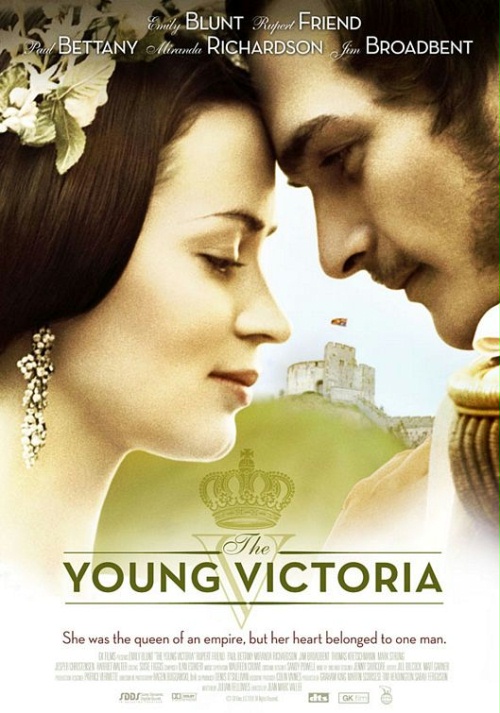
    Not that this is bad. If the British want to spend their money on queens, princes, and princesses, who am I to oppose them? After all, we Americans have kept the stellar Survivor series going for ten seasons. And when it finally ends, we’ll probably replace it with something else of supreme value like World’s Biggest Belchers or Kids Who Eat Boogers. At least the Royal Family has some modicum of class. Still, the point is that I’m not disposed to feel much sympathy for state-supported rich folk. So when I tell you I just watched and loved The Young Victoria, it should tell you something.

    The movie was sublime. A large part of it was because the story left me edified, left me wanting to be a husband–a friend to my wife–as good as the Albert portrayed in that film. Compare this to Killers which could have been so good, but devolved into dumb sex jokes and dumber action, which then only got worse. When that one ended, I staggered out of the theater having lost half my brain.  The Young Victoria, on the other hand, enlarged my soul.

    The movie is a romantic dramatization of some of the events preceding and following the coronation of  Alexandrina Victoria (Queen Victoria), focusing on her early reign and romance with Price Albert in the 1830s. She was only 18 when her uncle, the King, died and the crown fell to her. Some suggested she was too young and should sign her powers over to a regent. Others wanted to use her as a puppet. The question was: would she fall prey to the political aspirations of others? I will let you watch the movie to find out.

    Emily Blunt does a wonderful job as Victoria. I loved her in the Jane Austen Book Club as well. She’s supported by a great cast, including Rupert Friend as Prince Albert, Mark Strong (the villain in the recent Sherlock Holmes and Robin Hood) as the domineering Sir John Conroy, and Paul Bettany as the dubious Lord Melbourne.

    When recently compiling my list of favorite movies of the decade, I lamented the dearth of good love stories. Well, I just found one. This movie was golden.  If you love Jane Austen, you’re going to love this show.

    (BTW, the Royals actually do perform a number of worthwhile tasks. Read this wiki on the British Royal Family. You may also want to read this on Victoria after you watch the movie.)

    Share
  • |

    Jolie, Salt, & trading suspsense for surprise

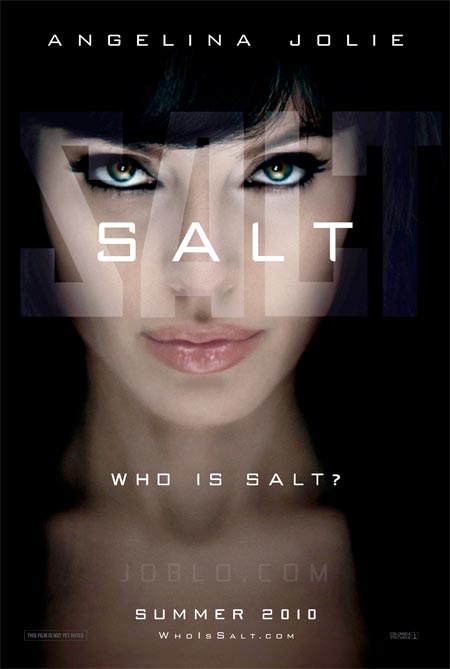
    Last week I went and saw Salt. Wow. The movie started with a bang and was off to the races with lots of great action. Unlike many action films where the characters perform stunts which are simply too hokey for me to buy into, I found myself believing in all but two of Salt’s. So I was wowed most of the time instead of thinking about whether they were using wires or what or that it was all so wrong and geeze don’t these guys have consultants? They weren’t as stunning as the opening of Casino Royale, but what is? 

    But it wasn’t just action. The premise and acting were all great as well (yes, I recant, I slammed Jolie a while back as an actress cast only for her face value; and while you know that’s one of the reasons why she was here, she still was convincing in her role). Furthermore, the story had a lot of great reversals and reveals. But this was also its ultimate downfall.

    When I got to the ending, I did not feel a climax release. No catharsis. No afterglow. It just ended and left me feeling empty. It’s an awful feeling. Totally unsatisfactory. Such a maddening cut off. 

    But why? It was all so good up to that point.

    *** SPOILERS ***

    As I was talking it over with Nellie I believe I indentified the answer: in their effort to be surprising, the director and writers removed everything that would have built suspense. So instead of getting a Sixth Sense ending where the surprise adds to the climax and gives it a wonderful texture, we got a slap of surpise and then nothing.

    For me to feel relief, triumph, and the desire to stand up and cheer–all those great climax emotions–I have to be worried about a character. Stressed, thinking they’re going to fail. They need to fight courageously against insurmountable odds and actually come to a point where it appears all is lost. Where I groan inside. All this creates massive pent up worry and anxiety for them. And at that point, the character snatches victory from the jaws of defeat.

    Boom! The climax floods me and it’s delight, relief, cheer, joy.

    It’s just like a football game where we bite our nails until the very end. Where our non-ranked team is playing the #3 team in the nation. Maybe we jump ahead in the second quarter, but in the third we fall behind. We make some great plays but can’t catch up. And when we do put points on the board, the other team immediately responds. There are three seconds left. We’ve stalled at the twenty yard line. We have one more play. From the moment it starts it appears to be broken, our QB is going down, and then . . . he passes to a running back who has made some space. Who is standing open in the end zone! Yeeeeeaaaaaaahhhhhh!

    In order to feel a release a climax, something has to build up. The thing that builds is worry, fret, desperate hope. This is what we mean when we talk about suspense. We know the team’s goal, see their predicament, see the overwhelming odds. See them about to lose it all. The dread of defeat and what will be lost rises.

    But in Salt the director and writers went for the effect of surprise instead of suspense and triumph. The moment Salt starts in on the Russian president I thought she was the bad guy. Yes, there was the bit about the spider that had me wondering. Yes, I knew she felt anguish about her husband being killed (that smart little reveal in her expression). I knew all of that. But the movie kept me busy thinking she was the bad guy up until almost the very end. Everything in the film lead me to believe this. Not because I didn’t get it. I got it precisely. It’s exactly what the director wanted. It was the setup for the big surprise/reversal at the end.

    But when they went for surprise by not letting the audience know what Salt was really up to, the immediately removed the possibility of suspense. So I didn’t feel any suspense at her infiltrating the old group of spies. No relief at her killing them–that was just her revenge. No suspsense when she went to the White House. Nothing when she chased the president down the elevator shaft. The whole time I was thinking, crap, they really did indoctrinate her. She’s bad.

    More importantly, there was no rooting, no worry building to release proportions.

    Not until the very end do we realize what she’s been trying to do. Oh, the role reversal with her and Ted Winter (btw, like Liev Schreiber who plays the part) was all a big surprise, as it was designed to be. But the surprise faded and there was . . . nothing to replace it. That’s how surprise works. It’s a relatively short effect. 

    Yes, she kills Winter. Yes, he was a threat at the end with his scissors, but I didn’t care that much. I hadn’t been whipped into a fever pitch. Not like I was in Gladiator with the emperor and the lead in the coliseum. There was no pressurized worry ready to burst. There wasn’t any because we hadn’t had any time for it to build and because by that time nothing for Salt was really at stake. The one meaningful thing she stood to loose–her relationship with her husband–was taken away from us in an earlier scene when he was shot dead. So what was at stake? A big old nuclear war. Well, who cares about that? Nobody. It’s too generalized. We cared about Salt and her husband.

    The result was that the director and writers traded climax for surprise. Alas.

    So here’s my conclusion. Surprise is a relatively easy effect to create. You simply have something unexpected but logical occur. Relief, triumph, climax needs something much different. And surprise can be a part of it. But in our effort to build surprise we must not remove the conditions necessary for please-dear-mother suspense. Suspense requires we root for and worry about a character for a significant period, our unease growing until it’s drawn taut, straining. All the time something significant has to be at stake. Something we can sympathize with. Something personal to the person we care about. Only then can we feel the climactic release. Only then will we stand up and cheer in holy-crap-no-way relief and delight.

    Share
  • “Clockwork Chickadee” by Mary Robinette Kowal

    Mary Robinette Kowal is a professional puppeteer and a dang good story teller. I ran across her “Clockwork Chickadee” this last summer and forgot to blog about it. Then she won the Campbell Award. And I thought to blog it again. Now it’s November and you see what it means to run on “Brown time.” But however belated my review, this story is marvelous. The images have stuck in my mind since that first reading. And the chickadee, well, let me share the beginning with you.

    The clockwork chickadee was not as pretty as the nightingale. But she did not mind. She pecked the floor when she was wound, looking for invisible bugs. And when she was not wound, she cocked her head and glared at the sparrow, whom she loathed with every tooth on every gear in her pressed-tin body.

    The sparrow could fly.

    He took no pains to conceal his contempt for those who could not. 

    I am an impatient reader: if the story doesn’t grab me within the first few lines, I usually pass. I’m trying very hard not to be so demanding and extend this to two pages (no, I do not have the fortitude some readers do to extend this to twenty, forty, or sixty pages). But sometimes I slip back into my old ways. However, with Clockwork Chickadee I didn’t need to remember to be patient. I just read and read and read some more.  

    For those who care about story, you’ll notice it doesn’t run on the normal fuel of sympathy and suspense. This is a curiosity story. And Kowal does it so well.

    Here’s the text version. But if you have no time to read, that’s no problem. Listen to the audio version right now or download it to your iPod or MP3 player and listen while you’re out and about.

    Enjoy!

    Share
  • What you need as a storyteller

    Brand-StorytellerOne of the most important things I ever learned about telling stories was in Orson Card’s weeklong boot camp where we “workshopped” stories by doing zero workshopping. Zero critiques. In fact, critiques were verboten.

    Instead, Card asked us to simply provide a report of what he called the three grunts a reader makes when things aren’t working–where it was boring, unclear, or didn’t ring true.

    We were to provide a report of our reader reaction, including parts that really entertained or interested us. NOTHING more.

    He compared it to going to the doctor. We were to report our “symptoms.” The writer’s job was to diagnose if it was an issue and prescribe a remedy, if any.

    Doing that with 19 stories over three days was amazing. It totally opened up what story was about. And taught me what beta reading was all about. One of the most insightful writing experiences I’ve ever had.

    Nowadays when I read, I try my best to simply report. And that’s it. If, afterwards, the writer wants to brainstorm ideas together, that’s fine. But I don’t ever want to diagnose and prescribe because there have been too many books that didn’t work for me that delighted tons of readers. My critique or advice would have been exactly the wrong thing.

    All I can do is report my reaction. And then think about what would have fixed it for me.

    Kristine Rusch recently wrote a great article about this and other things called “Writing by Committee” in which she suggests a list of things authors need to be successful. Give it a read. I think she makes a lot of good points.

    And a few I disagree with. She is quite forceful about writers not acting as first readers. I think that’s bunk. And she says as much in the comments. If a writer can give a reader response instead of a critique, that’s as helpful as a non-writer giving a reader response. I also disagree that you have to toss something and start over if it doesn’t work. If it’s fundamentally broken, sure. But many times a small adjustment gets you back on track.  Finally, yes, a story has to be surprising. At the same time, you had better deliver the type of experience you promise your reader. And that’s all defined by genre. You can’t promise your readers a thriller and deliver a romance. That only leads to irritated readers. I believe you have to consider your audience. But these are all quibbles. The article is great.

    BTW, please note I used “storyteller” in the title. I did that on purpose. More and more, I find I’m not interested in writing. “Writing” doesn’t seem to convey what I’m after. However, I am interested in telling cracking stories.

    Share