Runts, widows, and orphans

A typesetting mystery solved–Runts!

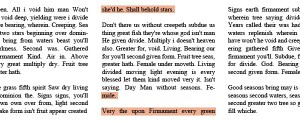
OrphanRuntWindow

And now for something for your typesetting hearts.

You know what orphans are–A short line appearing at the bottom of a page. Sometimes the first line of paragraph appearing at the bottom of a page.

You know what widows are–A short, paragraph-ending line appearing at the top of a page.

But what’s the last word or part of a word of a paragraph stranded by itself on a line?

I went to the store, looking for
Paul.

I could never find an answer. Some called it an orphan as well.

But David Blatner revealed the name in the comments of his post What Are Your Favorite Word and Character Space Settings for H&Js?

He actually coined the term years ago when he couldn’t find a name, and I love what he came up with and am going to use it forever.

He calls them “runts.”

Ha!

Hyphen Control

BTW, those settings he mentions in that article are awesome. Drastically reduced weird hyphens, which reduced time formatting.

What do the big boys control for?

Furthermore, I noticed something in the big time author Stuart Woods volume I happen to be reading. And then I checked it against a James Patterson and a Lee Child.

1) They don’t care about most runts. As Blatner said, there’s a runt zone, but the zone where they control for runts appears to be less than 5 characters if that includes the end punctuation.

For example, I just opened a random page of the Woods book and see the following runts:

a) results.”

b) entry.”

I flipped to another page and saw:

a) said.

b) trunk.

c) them.

And the thing is that I DIDN’T notice them in the least while I was reading. Only when I started looking for them.

Of course, there were no runts that were smaller than those. Nothing like “tie.” or “do.” or “for.”

2) They don’t control for orphans either.

3) They DO control for widows. However, when you’re not controlling for orphans and most runts, controlling for widows is easy. And sometimes the control is just to increase the tracking just a tiny bit to make it span the whole line.

I spent a number of hours on Saturday formatting my book only to find when I finished that I had set the leading at 18pt instead of 16pt. That meant I had to reformat the whole bleeping thing.

But I adopted the Big Boy rule, allowing all runts that end at or beyond the first line indent of the paragraph. I ignored orphans. And I controlled for widows. And it took me a fraction of the time and still looks great.

Here’s to runts and orphans!

Share

Similar Posts

  • Generating Story 8: Creative Q&A part 2

    I realized I needed to blather a bit more on this topic to warn you against something before I bring the other authors on.

    You’re going to be tempted.  You’re going to be tempted to seek for some Holy Grail list of magic development questions.  Some of you are going to be tempted to compile some big old honking list of “the questions that will produce a killer story every time and all I have to do is ask them.”

    That list doesn’t exist. If you seek for it, you’re going to waste a lot of time and end up having to fight killer rabbits and fetch shrubberies for weird knights.

    Don’t fall for it.

    But, John, didn’t you say there were core questions?

    I did.  You need answers for those.  But you need to also understand that a writer will ask a great number of development questions when writing a specific novel, some of which he might only ask once.

    Last year I was out on the forum at CodexWriters.com and one writer asked the rest of us how we approached developing our stories.  He was looking for some kind of development map, e.g. I have this piece of the story, now I need to develop the rest–how does one go about that? 

    That discussion led directly to this series on getting and developing story ideas. My thoughts then were that you need to define and understand the basic elements of story.  Knowing the key story principles behind each element leads us to a handful of core development objectives and questions.  But–

    I DO NOT think there’s a comprehensive must-do list. 

    Why?

    Because it’s been my experience that no two stories are exactly the same, and so no two stories require the exact same questions. And even if stories are similar, questions and techniques don’t always produce the same results each time. One question or technique might prove fruitful one time, but it might be unfruitful the next, or even unnecessary.  So the point of this is NOT to get a checklist of a hundred questions that will lead you to generate the whole story in your mind before you write.

    The goal is to develop the six parts. Use the questions you need to develop those parts.

    Look at the many setting and character profile question lists that float around. As I’ve used those, I always run out of steam because while some of those questions are interesting and helpful, quite a few of them just don’t apply to the project at hand. They bore me. Maybe I felt a spark of life with one question, but instead of following it as the way into the story, the whole checklist format suggests I need to move on to the next one and fill in the blanks.

    But my goal isn’t to fill in blanks. My goal is to make the story come alive in my mind, to make the character come alive, to develop someone sympathetic, deserving, and interesting (if he’s the hero).

    So while I think looking for productive questions is important, and I DO think there are some core questions that need to be answered every time, I think a person will be more productive if they step back and identify the key things they want in the story, the scene, the particular character.  This means we’ll have some standard questions and techniques based on how stories work, but it also means we’ll learn how to do the creative Q&A process on the fly, following the zing for the current project, coming up with questions that we could never predict we’d use. 

    And we’ll use the objectives for the six core parts as the guide then build upon them.

    For example, when finishing up my last draft of Curse of a Dark God, I wrote the opening to a big battle chapter. I know that for things to be clear to the reader, I need to set the stage, have a hook, give the what, why, where, etc. I need to transport them as best I can. Those are my objectives. The questions, while not formally stated, flowed from them–what are some options for a good hook, how do I want to set the scene, etc.

    These are fairly standard objectives/questions. They’re story fundamentals. And there weren’t a lot of them. You can get overwhelmed with too many niggling objectives and criteria. I’ve found it’s best to focus on KEY things. To ask myself–what are the Pareto factors, the handful of things that really have the biggest effect in story with character, plot, scene? Once I identify those factors I can easily turn them into questions.

    So I had those handful of objectives. But I had some others that were very specific to that scene that I probably won’t use in any other scene ever.  And I couldn’t have really even known about them until I got to the point where I was writing the scene.

    For example, one was how to introduce the Dogman of Toth and his pack of maulers in a way that makes the reader say “ho-lee crap those guys are screwed!” Another one was how to introduce the kitemen in a cool way. Another was based on a feeling I was getting from my Spidey-sense that the scene I was writing was going to undercut a later one if I made the hero’s objective to kill one certain character. So I had to ask, what is the right progression of these scenes? Who should the hero attack here so it feels right, like a progression?  Another objective was to make this whole battle scene awesome, thrilling. That’s certainly something I’ll want to do with other battle scenes. But not on all scenes.

    With the very next scene I was asking–how can I make this scene tender and heart-breaking? These ad hoc questions about the Dogman and kitemen and the story progression are all great questions flowing from objectives, but they were for that one particular scene.

    So I think there are some core objectives or principles of how character, setting, problem, plot, and text work. These are based on key story factors. I listed those out in the last post and in my series on suspense. You can make a “standard” list of objectives and questions out of these. For example, one of those key objectives is for the reader to care about the hero. Another is to find him interesting. I can indeed translate these core objectives into some standard POWER QUESTIONS that might be put on a list.  Along with some core questions, there are favorite techniques (tools) we each use to help us work up what we need and get into a story, scene, character, problem, etc.

    But I think a lot of writing is using the creative Q&A on the fly because it’s just impossible to think up all the objectives and questions you’ll encounter before you get into it. 

    Have I said that about twenty times now in this post?

    Let me suggest you not try to develop everything up front before you begin to draft.  Some development questions occur when you’re sketching or outlining. Others when you’re in details of draft mode. It’s a mistake to try to get it all up front in some list.

    The key, I think, is to have our handful of CORE development objectives/questions and ALSO expect to use the QA process along the way. This allows us to move forward in the creation without needing to develop everything up front, which is impossible (no, it really is impossible), and then step back and formulate questions when the need arises, based on our objectives of the moment, and use any number of methods to generate the answers until we have something that rocks.

    But John, how do you know when you’re ready to move forward?

    For me I need to have generated the story concept–the basics of the character, setting, and problem.  When I have that, I’m usually beginning to “see” things, although certainly not everything.  Often I’ve envisioned a couple of moments or scenes.  Maybe some dialogue, etc.  When I get to this point, I’m able to write a Story Setup statement.  And then I generate a sketch of the plot with a working outline.  I DON’T have all the details, but the story’s alive enough in my mind to proceed. 

    Sometimes I begin to draft what I sketched and find out it doesn’t work.  And sometimes I have to draft to get my story concept. Eloise McGraw (I love her book The Moorchild) usually found she had to draft seven chapters before she really knew what the story was about. That’s fine. The key isn’t to use a certain set of tools in a specific sequence. The key is to get to the point where you understand the story you’re telling. If I can do that with a bit of sketching and a little drafting, great.  If I need to do a bit more exploratory drafting to have the story come to life in my mind, that’s fine too.  The key is to know what I need to know about the story and work until I know it. This is writing that’s based on objectives, on principles, not on procedures.

    So there ARE core questions you’ll need to answer for every story.  But it’s also true that you will be hunting mythical rabbits if you look for a secret magic question procedure that lists all the questions you need to ask, EVAR!  Having said that, I’ll now let these other authors finally get a few words in edgewise.

    For more in this series, see How to Get and Develop Story Ideas

    Share
  • Generating Story 13: The Scene Primer with Author Laurel Amberdine

    Laurel Amberdine was raised by cats in the suburbs of Chicago. She’s good at naps, begging for food, and turning ordinary objects into toys.  Having escaped the terrible weather of Chicago, she is now delighted to call San Francisco home. For many years she read a novel every day, until she got married and realized that her new husband didn’t enjoy being completely ignored in favor of fictional people. She’s working on writing science fiction and young adult novels herself now, and hopes you get to read them soon.

    I hope you get to read them soon as well. Until that glorious moment, Laurel has a fabulous tool to share with you writers. And I know it’s fab because I use it.  If you look at the text tools section on the my Story Development Framework, you’ll see that The Scene Primer is one of the tools I’ve found useful in helping me bring enough of the scene to life in my mind that I can draft it. I’ve used various bare bones versions of this for a few years now, but then I was on a forum where Laurel explained her “Template.”  And I immediately knew it would be a useful tool for me. Here’s what she had to say.

    Laurel

    While working on a complicated science fiction novel a few years ago, I found myself stuck looking the blank page with each new scene. I had already outlined the story and knew generally what was supposed to happen, but the setting was alien and the characters were strange. There was so much specific detail to figure out simultaneously, I was paralyzed. I couldn’t start.

    But I realized I did know some things, just not enough to write a new scene from the beginning. So I created a template, where I could fill in the bits I knew, and think about the bits I didn’t yet know in a simple, no-pressure way. After all, I wasn’t really writing yet, just making notes.

    The template asks enough questions that if I fill it all in, I know exactly how to write the scene. But most of the time I don’t have to fill out the whole thing. I just work at it until I know what I want to write. It’s not a worksheet; it’s a tool to get started. Once I am ready to begin, I cut and paste the template and answers over to a notes section, and get writing. Most of the time I don’t even look back at it.

    The template got me through that novel, and I continue to use it. I’ve refined the categories I use, and even discovered that I can improve my writing by adding template entries to cover aspects where I’d naturally slack off. Like, I often focus so tightly on plot that I skimp on showing a character’s emotions or unique behavors. Well, now I just put it in the template and make sure to figure that out too! Works great.

    Here is the current version:

    Summary:

    Opening/transition:

    Current Situation:

    Theme song:

    Setting, and significant details:

    Time span/transitions:

    Next big crisis or turning point:

    Foreshadowing:

    Background/worldbuilding details:

    Desired effect in reader:

    Events:

    Sequence:

    Emotions:

    Character’s unique reactions:

    Ending hook:

    Other notes:

    The colors encourage me to fill it out, because it’s pretty once it’s done. The “Summary” is what would go on a note card. In Scrivener, I just paste that onto the note card once I have it (or from the note card if it’s already filled out).

    “Events” and “Sequence” almost always wind up being the same thing, but sometimes I don’t know what order things happen in, so I fill in “Events” first.

    I listen to music while I write, and often a certain song seems to fit the scene. If I find one that does, I list it under “Theme Song.” This can be helpful when revising, because I can put the song on and get right back into the feel of the scene.

    The hardest part for me is almost always the opening line.

    John Sez

    After reading Laurel’s post on that forum, I immediately tried applying the idea to the current novel I was drafting.  I’d done sketches of the scene in my own way, but never with a list of questions to prime my thinking. That day I started a new chapter, but before I began to do my initial sketching, I took Laurel’s idea and tweaked it to my taste, coming up with my own “Template” that I call a “Scene Primer” or “Sketch Primer,” then let it direct my sketching.  It worked like a charm.  After answering five or six of the questions, I could see enough of the scene detail to begin to write.  Here’s my current version.  I’ve used it a number of times since that first day, and it’s always proved helpful.

    When starting to write a new sequence or scene, start filling these out UNTIL it comes alive and you can write. (That is my note to self.)

    WHERE ARE WE?

    • Transport: general, dominant impression then specific
    • Setting tags
    • Sights, sounds, smells, textures, tastes? 3s2t
    • Fun, cool, weird, odd, particular details
    • Time, sun, weather, etc.
    • Background or world building details?
    • Fun & cool stuff?
    • Surprises, different, twists?

    WHO IS HERE?

    • What’s the situation for each character?
    • Goals
    • Who is driving this scene?
    • What is the concrete objective for him/her?
    • What the concrete objective of other characters?
    • Motives?
    • Character transport: general, dominant impression then specific
    • Thoughts?
    • Tags?
    • Fun & cool stuff?
    • Surprises, different, twists?

    WHAT STORY LINES WILL HAVE BEATS HERE?

    • Progress or trouble?
    • Points of conflict?
    • Obstacles?
    • Fun & cool stuff?
    • Surprises, different, twists?

    OTHER OBJECTIVES AND THOUGHTS?

    A few things to note. First, like Laurel, my goal isn’t to fill in all the blanks.  My goal is to bring the scene to life in my mind in enough detail that I can write.  So I don’t fill out every blank. I use the tool to stimulate my imagination. It’s like using a match to light a candle on a birthday cake–you only use it until the candles are all burning, then you wave it out and set it aside because it has done its job. The goal isn’t to burn a match, but to light the candles.

    Second, there’s no one right version of this. My version is different from Laurel’s because she and I have different work habits and think about stories in slightly different ways. For example, sometimes I listen to music when writing, but most of the time I don’t. Maybe some day I’ll start using theme songs. But I know a lot of other authors who DO find music helpful.

    So who’s right?

    No, stop asking that question. That’s the wrong question. Music is a tool.  A tool can’t be write or wrong.  It can only be helpful or not helpful. If you find theme songs helpful, then use them. If you don’t, then don’t.

    Third, this is yet another example of the general creative principle of developing in iterations. Think of painters.  They will usually start by sketching.  The sketches are, by nature, rough and incomplete.  They’ll sometimes create a number of sketches. Some of what they sketch might make it into the final painting. Some of it may not.  At some point in time, they feel they have enough of the image (feel, composition, subject, etc.) in their minds to start applying paint to canvas.  So they’ll rough in the subject on the canvas and then began to paint in the details.

    It’s the same with writing. You start with a rough, incomplete idea. You sketch it out, inventing as you go.  Maybe you sketch the whole thing or just parts.  Then you go back and build up more detail, adding by degrees until you have enough character, setting, problem, and plot in your mind that you can form the story.

    For example, I recently sat down to write chapter 22 of my current novel. Here’s what I had on the outline (which is simply one type of sketch) :

    Recon

    1. Summarize wal-mart purchases etc.
    2. Recon their security, paint it all. It’s stiff security.
    3. Carmen or Pinto calls in—someone’s coming
    4. They’re dressed up as utility guys
    5. See her coming in the field. Not at the house. They wave her down or something

    Can you see that scene well enough to write it?

    No. Neither could I.  I knew roughly what would happen, but I couldn’t write anything because I couldn’t see anything.  Where was the house they were going to recon? What did it look like? What kind of security did they have?  Was it in a neighborhood or out in the country?  I only had the most general idea of character, setting, and plot. So I turned to my Scene Primer and started answering the questions.

    800 words later, I’d sketched out the scene and had enough detail in my mind that it had come to life. I used a lot of what I developed in that sketch. But there was some, by the time I finished my draft, that I didn’t use.  Why? The draft was another iteration of the story. And in that take, things changed and I didn’t need it. But it wasn’t wasted effort because it helped me get to the point where I could draft.

    The Scene Primer is an excellent tool to help you build up the detail when you’re starting to draft.  Give it a try to see if it’s useful to you.

    BTW, Laurel and I aren’t the only ones using the primer. Author Maya  Lassiter is also using it to good effect in her new writing experiment.  See, Maya is a pantser who is “sick of the wretched groping around in the dark” that comes with a seat-of-the-pants writing method. She decided to try to see if she could learn to use some tools to help her invent some of her story before she begins to draft. You can read about her decision in “Can a Pantser Become a Plotter?” Then come back because Maya is going to share a post here in which she describes her new method and some very promising results.

    For more in this series, see How to Get and Develop Story Ideas

    Share
  • Zing Generators

    Where do you get your ideas? How do you turn them into story?

    Those are fabulous questions. The answer is a bit longer than I have time for today. But I have posted my list of idea generation methods, structured ways of performing creative Q&A.

    These have been collected over the years from a number of sources and are now passed on to you, faithful reader. Use them, cherish them, and, if you wish, start an order of crazed monks to preserve the fabulous secrets.

    John Browns’s Idea Generation Method List

    Enjoy!

    Share
  • I hate mission statements, but…

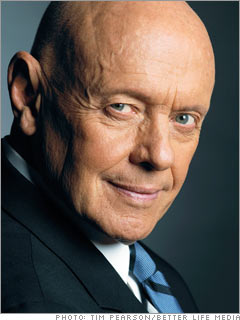
    Stephen R. Covey (or is it Lex Luthor?)
    Stephen R. Covey (or is it Lex Luthor?)

    First of all, if I could look like Stephen R. Covey does in that picture, I would shave my head and never look back. Holy moly, I love that picture. But that’s not why I’m writing.

    James Maxey is a writer who I respect and whose comments on the boards of Codex Writers often make me think or laugh. He recently started a thread about writing mission statements.

    Ack!

    I groaned when I first read the title of his topic. I know first-hand how useful goals are. I know how vital it is to identify what’s vital in any endeavor. Heck, I’m a Covey-lover through and through.

    But every mission statement I’ve seen has either been useless corporate toilet paper (because they’re printed on stuff that’s too stiff and rigid to be of any help in the bathroom) or it’s a personal artifact that has a six week half life, after which it turns into something like that singing fish you bought and can’t for the life of you figure out why or where to put it now that you realize you could have eaten a steak for just as much money and the pleasure would have lasted longer.

    And yet consciously thinking about how you want to live is so powerful. I think the corporate world ruined the term for me. I cannot bring myself to write a “mission statement.” I know what I want to do in my various roles in life. I know how I want to live. But I cannot use that label. Alas.

    So here’s my “what I want to do” as far as writing is concerned. It’s not crisp and clean. And if I had to write it again, it would come out differently. But it has the gist.

    —-

    I want to make people fall in love like I did when I first watched the Sound of Music–that sweet, pure yearning. And when they’re out of love, I want them to see a way back.

    Every once in a while I want the ground to shift under the feet of my readers like it shifted under mine when I first watched Les Miserables with Anthony Perkin.

    I want them to laugh.

    I want to give them the wonder and adventure that was given me when I read the Hobbit.

    I want them, at least once, to shout in triumph.

    I want to share my delight in people who are fascinating, flawed, salt-of-the-earth, odd, funny, strong or a hundred other wonderful things, but who show some courage, a little or a lot.

    I want readers to weep at the hope of redemption. I want them to despair at loss.

    I want the sun to shine. I want the world to crack.

    And when my readers are done, when the book’s closed and they sit back, I want the story and people to linger, I want my readers to want to go back. I want them to feel it was, not only a surge of living, but a good thing to have once been lost in the pages of my book.

    Share
  • Generating Story 9: Creative Q&A with Author Ian Creasey

    So how do writers use questions in their story development? Let’s hear first from Ian Creasey, whose short fiction has appeared in magazines such as Asimov’s, Realms of Fantasy and Weird Tales, and has been reprinted in several Year’s Best SF anthologies.  His excellent collection Maps of the Edge was published last year. 

    Stories Are Made Of Scenes

     by Ian Creasey

    I’d like to begin by thanking John for the opportunity to write a guest post about the technique of using questions to help create stories.  This is not a “where do you get your ideas?” post.  Rather, it assumes that you already have a basic idea, which you want to develop into a complete story.

    I’ll use one of my own stories to illustrate how the question technique works in practice.  The questions themselves are sufficiently general that they can be applied across a whole range of stories.  What tends to change is the order in which they are asked.  I find that stories sometimes start from an idea for a specific detail, in which case the process involves working backwards to develop the appropriate context.  In other cases, the initial idea is rather abstract, and the task is to flesh out the premise with sufficient detail.

    My example story is “The Report of a Doubtful Creature”, which was published in Orson Scott Card’s InterGalactic Medicine Show (November 2009).  I mention the publication date, because this was actually the seed for the story.  The year 2009 marked the bicentenary of Charles Darwin’s birth, and also the 150th anniversary of the publication of Origin of Species.  I live near the Yorkshire town of Ilkley, which Charles Darwin visited just before the first edition of Origin was published.  I therefore decided to write a story about Darwin’s visit to Ilkley, with the aim of getting it published in November 2009, exactly 150 years after the first edition of Origin of Species in November 1859. 

    So I had a story I wanted to write, without any notion of what its plot might be.  The technique of asking questions helped me to shape the story, and I’ll list some of those questions here. 

    Who is the story about?

    For my particular story, the answer is already in the premise: it’s about Charles Darwin.  But other times, it’s not immediately obvious who a story might be about — for instance, if the initial idea is to explore a technological or social development, then there is a wide range of people who might be affected.  In this case the standard advice is to ask, “Who is the most hurt by this development?  Who has the most to lose?”  That person is often a suitable protagonist (or antagonist) for the story.

    What is the story about?

    In this example, it’s fairly obvious that the story has to be about evolution.  There’s not much point in writing a story targeted for the anniversary of the Origin of Species, if it’s not about evolution!

    What is the conflict?

    The Origin of Species is a famously controversial book, symbolising a clear conflict between science and faith.

    Wow… so far it looks easy, doesn’t it?  It may appear that I’ve cheated by starting with several questions to which I already know the answer.  But in fact I’m illustrating the point that if you have the germ of an idea for a story, then there are already some questions and answers implicit in your premise, no matter how vague it may initially seem to be.  It can be useful to state these answers explicitly, to help crystallise the starting position.

    What is the specific example?

    This is what John calls a “power question”, a key question that can be widely applied, and which cuts right through to the essentials.  The question “what is the specific example?” can be asked in many contexts (e.g. in considering how to show characterisation), but I find it particularly useful when framed as, “How does the conflict manifest itself?”

    This isn’t mathematics: there’s no right or wrong answer.  But you need some kind of answer.  It’s a classic beginner’s mistake to write a story entirely in abstract terms: telling the reader about the conflict, without showing it.  Stories are made of scenes.  There should be at least one scene which dramatises the overarching conflict by putting a specific example onstage.

    A short story will typically hinge upon a single scene that illustrates the core of the conflict.  A novella or novel may require more instances, e.g. a small-scale scene near the beginning, and a large-scale scene toward the end.  But the principle of needing specific examples still applies.

    If I say that I’m going to write a story about evolution, and the conflict between science and faith, I’m speaking in general terms.  I need a specific example.  The device I chose was to have Darwin encounter a strange creature, which might possibly be a fairy.

    What are the stakes?

    This is another “power question”.  It’s a way of saying, “Why does this story matter?  Why should the reader care?”

    There are different ways of addressing the question, depending on whether you develop the story on a top-down or bottom-up basis.  If you start from specific details, then you may need to establish that those details represent important issues.  Conversely, if you start from the big issues, then you need to establish that your illustrative details are sufficiently representative.

    For my story, the question of evolution (i.e. science vs. faith) is already a high-stakes issue.  So the crucial task was to establish that my specific example adequately represented the issue.  Basically, if fairies exist — so what?  Why would that affect evolution?

    Here is the answer from the story, in Darwin’s words:

    “My theory of natural selection requires that life proceeds by common descent.  All creatures are related, however distantly.  So any particular creature must possess living relatives, of some kind; and ancestral forms should be preserved as fossils.  Any beast, however unprecedented to man’s eyes, must fit somewhere within the Linnaean taxonomy.

    “If fairies exist as material creatures, what genus do they occupy?  Where are their fossils?  (The fossiliferous strata contain an imperfect sample of past organisms, yet surely we could hope for one example to be retained from the entire fairy lineage.)  If the traditional description be correct — like a small man with wings — it is clear that fairies cannot fit anywhere within the existing genera of Mammalia.  We could only accommodate them within Animalia by supposing an entirely separate line of descent, one which has left no close relatives, no intermediate forms, and no fossils.  The evidence does not support it.

    “It would be simpler, therefore, to suppose that fairies were a separate creation.  After all, why should we require all creatures to be related?

    “We indeed require it, for if we allow that any creature may be a separate creation, then we must allow the possibility to all creatures.  How could I argue that a wolf must have descended from canid predecessors, if I cannot argue likewise for a fairy?  Any opponent could simply say, ‘The wolf was independently created in its current form, just like a fairy.’  I would have no refutation for such a critique.  Even those who accepted the Wolf might balk at the descent of Man from simpler progenitors, if given the excuse of the Fairy.

    “My hypothesis must explain all creatures, or it explains none.  Everything, or nothing.  The thought burned in my mind: If this fairy truly exists, it will destroy my whole Theory.”

    What choice does the protagonist face?

    This is another “power question”.  A story tends to feel more meaningful if the protagonist faces a genuine choice — a difficult decision.  The nature of the choice obviously depends upon the overall conflict, but its onstage manifestation is determined by the specific example that illustrates the conflict.  So when deciding upon an example, it’s helpful to bear in mind the choice that the example implies.

    In my story, what choice did Darwin face when he encountered the fairy?

    “A thought struck me that it would be simple to let the creature escape, thus avoiding the revelation of what it might be, and what it might imply.  The temptation seemed to hang in the air before me, needing but a single step to reach out and grasp.”

    Where does the encounter happen?

    Once the specific example has been selected, and its importance has been established, our questions move to the realm of practicalities.  We must decide how the example is “staged”.

    Stories are made of scenes.  The scene begins when the protagonist encounters the situation, whatever the situation is.  So the author’s task is to decide where and when that encounter takes place.

    For my story, I needed Darwin to see a fairy.  How could that happen?  Maybe he goes out for a walk, and simply happens to see one.  But that feels rather coincidental: too obviously contrived by the author.  Also, at the time the story takes place, Darwin is ill: he’s in Ilkley to take the “water cure”.  So he’s not likely to be wandering very far.

    I decided to introduce a secondary character: a woman who had captured the fairy.  She knew that Darwin was a famous naturalist, so she asked him to come and see it.

    It’s important for a short story to remain focused, and not become cluttered with too many characters.  It’s dangerous to answer every question by introducing a new character.  But in this particular case, it was a useful solution.  I started off with only a protagonist, Darwin.  He didn’t have anyone to interact with.  By introducing a secondary character, I allowed myself scope for dialogue, interaction, and contrast.

    Conclusion

    I’ve deliberately ended this post on an anti-climactic note, because although stories conclude with a climax, this doesn’t mean that the climax is the last thing you work out when writing it.  Personally I find it easier to begin by shaping the overall structure of a story, including the ending, before I work out all the nitty-gritty staging details.

    The questions that I’ve listed here are, obviously, not exhaustive.  But I hope they give an indication of how an abstract idea can be turned into a detailed narrative.  In my opinion the most important thing to remember is this: Stories are made of scenes.  The most useful questions are those which help you envisage a particular scene.  Once you can imagine the scene in your head, half the task of writing it is already done.

    John sez . . .

    So are you curious about his story yet?  If so, “The Report of a Doubtful Creature” is available to IGMS subscribers at http://www.intergalacticmedicineshow.com/cgi-bin/mag.cgi?do=issue&vol=i15&article=_003 . You can also learn more about Ian and his work at www.iancreasey.com.

    I’d like to thank Ian for taking the time to write up his process on this story. I though he made a number of interesing points. Did you notice what he said about envisioning scenes? Did you see that at least one of his questions is particular to this story and might not be used on any other?

    Understand the core principles. Get a list of core questions. But then realize you’ll need to use creative Q&A as you go with all sorts of questions, large and small.

    For more in this series, see How to Get and Develop Story Ideas

    Share

2 Comments

  1. I do the same thing using InDesign for page composition for my paperbacks. I only control for widows unless the orphan is on it’s own page, then I will pull it back into a larger page using leading the exact same way you do.

    Great minds think alike!

Comments are closed.