Do you regularly sit through meetings that seem to accomplish nothing?
Meetings where people drone on and on and on.
Meetings where people discuss and no decision is ever made.
Meetings that always slide off topic.
Meetings that should never have been held in the first place.
In many cases, the reason these meetings stink is because those organizing them are not aware there’s any other way to hold a meeting. But there is. I was fortunate enough to have been exposed to it just out of college while working for a business consulting firm in San Francisco. (And why they didn’t teach this in my business degree I will never know!)
After learning the simple and powerful principles, I was eventually paid to plan and facilitate meetings for clients. In some of these meetings they were making incredibly important decisions. I remember a client flying me and a colleague from San Francisco to Delaware for two days of meetings.
You might be groaning at the thought. But they paid thousands of dollars to have us come and facilitate. And when we were done, the energy in the room was palpable. A number of those that were involved were astounded and said they’d never been involved in such productive sessions. They’d accomplished more in the hours we were there than in months of other meetings. They were happy and grateful we’d come.
Think of that—happy and grateful for a meeting that went on for hours!
When meetings are done right, the collaboration and synergy can be amazing. Now, you may think that some secret handshake is required to learn how to do this. Or that it’s only for those with some special knack. Or that it’s only for high-powered jobs. If you do, you’d be wrong.
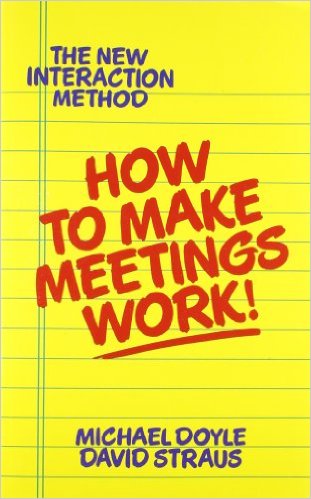
And that’s because you can learn the principles all for a few bucks. They’re laid out in perfect clarity in How to Make Meetings Work by Michael Doyle and David Straus. This is the book that was the source of our training sessions all those years ago. And I reread it every few years to brush up. The principles work in everything from a family council to a board meeting to class settings. I know because I’ve used the ideas in all of them. And when I fail to take just a few minutes to prepare, that’s when the meeting becomes, well, just another (yawn) meeting.
If you hold meetings of any kind and want to improve them, give this book a try. I think you’ll be happy you did.
That long hair finds its way into our drains. (Yes, despite our telling them to get it into that thing called a waste basket.)
Said hair might flow down the pipes. But said hair does not. Life is not that easy. Instead, some evil house spirit catches the hair just as it begins its voyage and turns it from a luscious thing of beauty into a gunky demon of drain death.
You would think that Drano could defeat this black magic. But Drano gets its butt kicked every time. Drano is in the pee-wee league against this thing. Drano is like a kitten. And gunk demons don’t listen to kittens.
So for the last few years, we’d blast with Drano and then still have to stand up to our calves in water when we took a shower. Or wait as the sink decided it might finally slowly empty and leave soap scum, whiskers, and toothpaste on the sides for everyone’s viewing pleasure. And then we had to do the slow clean (I hate the slow clean).
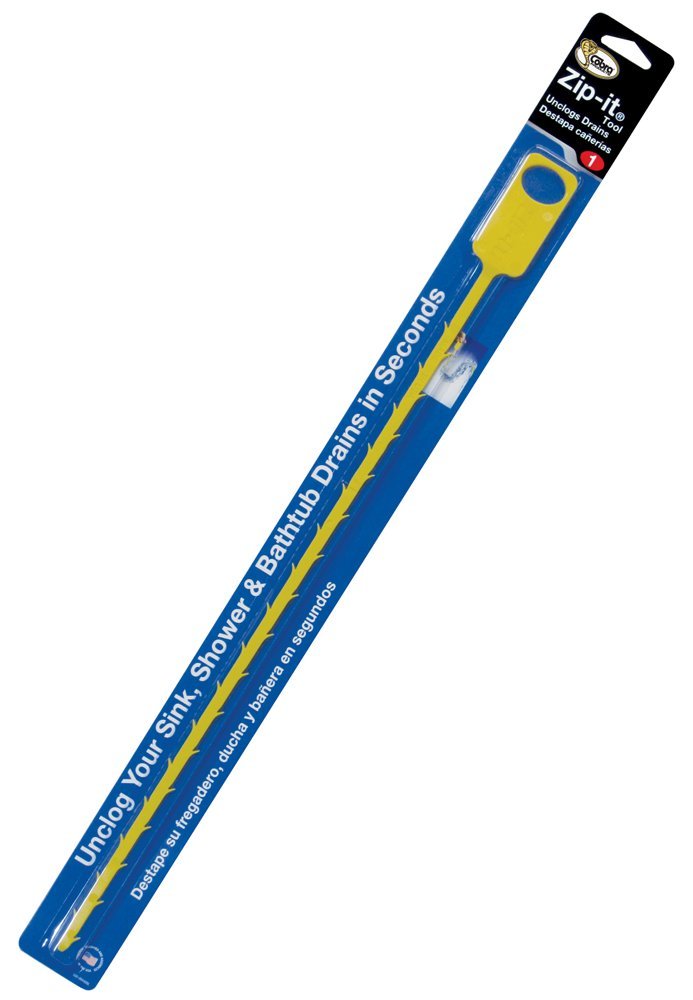
Recently, I was strolling along in a hardware store and saw this.
Click on the picture. Get a good look. I bought ye handy yellow flex sword. And I did verily slay the monster lurking in every drain in our house.
I am the MAN!
If you have drain issues, let me suggest you be the hero and buy your own sword. It’s called the Zip-It drain cleaning tool. If you’re a weird-o, in addition to being the hero, you can also use it to draw forth disgusting things to scare nieces and nephews with. Just saying.
Why I didn’t read Humphrey Carpenter’s J.R.R. Tolkien: A Biography long ago is a mystery. I owned the book when I was a teen (and stupidly gave it away in my 20’s). But maybe the long wait was inevitable. Back then I wanted more hobbits and sweeping saga, not biography. Luckily, that’s not the case today.
Folks, this is a marvelous read. I’m sure part of the reason I have not read a biography with more interest is because I love The Lord of the Rings so much. But I think there much more to it than that.
Tolkien had a story life as a child and young man. Not story as in wonderful and easy, but as in hard. He was orphaned early, forbidden to see his love when he found her. So Tolkien’s life is compelling on its own, not just because he’s famous.
Furthermore, Carpenter writes, not a dry list of facts, but a narrative full of particular and interesting details, transporting you back to the very times and places Tolkien lived in. He also transports you, if only lightly, into the mind of the man and some of his opinions. You’ll learn why Mordor is not Nazi Germany. How the batmen of WW1 found their way into his work. And that Frodo was originally named Bingo (can you imagine?). Carpenter also attempts to point out cause and effect as he sees it, to sum up key factors in Tolkien’s life, but without being glib. Carpenter writes all this with such clarity and grace I found myself carried along.
If you’re a fan of Tolkien’s work, don’t miss this book. Get a copy. Find a favorite tree, if you can. And then read.
Take a runty warrior and a slow-witted wizard who have been contracted by a veiled bride willing to pay diamonds to anyone who would fetch an oh so precious box from the castle of a dead wizard. A castle from which no adventurers have returned. Well, except for Thogar the Mighty. Of course, he’s now Thogar the One-Armed Madman. But let’s not quibble.
At first blush you might think, whopee, another fantasy quest. But this isn’t another quest. This is an Eric James Stone quest, and it’s full of surprises.
I was fortunate enough to hear Stone read his story at CONduit this May. He takes his listener on a ride full of humor and adventure. Then, if you’re like me, he will make your heart lurch. I loved this story down to the last line which is pure poetry.
No, really. It’s true. You just have to spend smartly. And in a special way.
Over the course of your life, if you make what the average American does, more than a million dollars will flow through your hands. And yet so many of us don’t feel rich. That’s because money is like the Gingerbread Man. Turn your back on it, and it’s out the door, rudely taunting everyone as it flies by. And then it gets eaten by a fox. Such a waste.
But it doesn’t have to be.
Let me share with you THE best method I’ve found for managing my money. It takes tons of anxiety out of spending and saving. And, if you’re a Dave Ramsey fan, it is the one thing upon which everything else he teaches depends. If you’re not a Ramsey fan, it doesn’t matter. After getting a job, this is the first thing you must do to get rich.
Here’s the big secret. It has three parts:
1) Decide how much you’re going to spend on various things BEFORE you spend it
2) Make what you have left in each spending category EASY to track
3) Manage the things you can’t foresee
To do the first two parts, you’re going to create a special kind of spending plan. We won’t use the term “budgeting” because “spending” is so much more fun, and because that’s what we’re going to do anyway. To understand how to do this, you need to watch three videos.
Before you do, please know I earned a Masters degree in accounting. I’ve used Quicken for more than twenty years. Neither of those things has helped me manage my money like this simple method. If you’re looking for a better way to manage your money, this is it.
First, watch this video to get an overall idea of how this method works.
Note: you can use actual envelopes and cash for everything if that makes you happy, but you really don’t need to. The idea is to think of pre-allocating your monthly income to categories of expenses AND then having an easy way to track what’s left.
Now, watch this bubba explain how he does it.
But John, didn’t he say the same thing?
Basically, but he has a fun accent. Besides, it’s good to see another example. And please note again: you don’t have to use actual envelopes and cash, although many swear by them.
Finally, watch this one. No, it’s not just another repeat. There are some additional important ideas illustrated here.
This video brings up the idea of why simply tracking an overall account balance isn’t very helpful. It also shows you WHY envelope categories are–they make it immediately apparent how much money you have to spend for a thing. If you just use Quicken to track what you spent (looking in the past), you’ll run into troubles. Let me tell you, I know this from experience. We use Quicken, and have for years, and plan use it for some time to come because it makes taxes and bank reconciliation a snap. But Quicken only tracks what you spent. Tracking, as important as it is, is not the key to success. The key is pre-allocating BEFORE you spend. And then tracking so you know what you have left in that category. And making that tracking EASY.
The final thing you have to do is manage the things you can’t foresee because things rarely go exactly to plan. Unexpected things ALWAYS come up. Your daughter will crash the car. Your husband will get appendicitis. You will forget that you had a $200 school sports expense.
Okay, fine. Things happen. But how do you manage them if you can’t foresee them?
If it’s really small, you simply adjust your plan. For example, if you need $30 more in food, you can transfer it from fuel if you have some extra there.
You manage larger things by building up an emergency fund. Ramsey suggests starting with a $1,000 emergency fund and then trying to get two to three months of living expenses—about $10,000 to $15,000 for most people. Unexpected things WILL happen and cost your money. So build up some cushion to take care of them.
Finally, you manage the really large things by getting proper insurance. This is what insurance is for. The types of insurance you need include (1) homeowner’s or renter’s, (2) auto, (3) medical, (4) long-term disability, (5) long-term care (for those 60 and older), and (6) life insurance. You may add true identity theft insurance as well.
Okay, so that’s the overview. If you want to try this, here’s how you do it. It’s fairly easy.
STEP 1: get your head straight
Resolve that you will NOT use credit for anything. You will not spend any money you don’t have. You will not put another dime on a credit card, and this despite the fact that the plastic devil companies are begging you with offers almost every day to sign up for their cards. (Hum, I wonder how they afford all that junk mail.) If your monthly bills are greater than your income, then we have to fix that first. But the new law of the land is zero new debt.
Next, always remember to allocate your money to these categories first—shelter, food, adequate clothing, and adequate transportation. This means if you have a crunch month, you would NOT pay credit card bills before food, even if you work for Visa.
STEP 2: get your blank sheet & pencil
Get out a piece of paper and pencil (not a pen) or open an Excel spreadsheet. Whoa, that was an easy step.
STEP 3: list your monthly income
List your expected monthly income at the top from all sources.
STEP 4: list your spending categories
List your spending categories. You’re going to split them into two groups.
The first group goes right below your income and includes all of your recurring monthly expense/spending categories. Not the amounts you spend. Just the categories. Things like mortgage, electricity, phone, groceries, dining, etc. Make sure you include some entertainment/fun money.
The second group goes below your recurring monthly expenses and includes all of your major annual periodic expense/spending categories. Things like Christmas, vacation, clothing, kids back to school stuff, etc. And things you want to save for—a couch, iPhone, car, etc. Your emergency fund goes here as well.
Decide how much you will spend in each category this month. You should have 0 dollars when you get to the bottom of the sheet. Spend (allocate) every dime BEFORE you start the month. You’re going to do this at the beginning of each month. And you will probably have to adjust it a couple of times during the month.
You will probably have categories that don’t get any money this month.
You will also have categories that get money, but you won’t spend any of it this month. These are your periodic expenses. Your goal is to have the cash up front to pay for them, so you have to save for them. Remember, you are NOT going to take on any new debt.
For example, if you’re saving up for Christmas, you allocate some money for that out of this month’s funds and TRANSFER it to savings. Then it will be there when you need it. You could draw the cash out and put it in an actual envelope, but you don’t have to. Just as long as you keep a record of the total amount in savings and what it’s all supposed to be for, i.e. total savings in July = $1,000: $500 for back to school, $200 for Christmas, and $300 for my trip with kids to Six Flags in 2013.
STEP 6: mark the “watch” categories
Some of the categories you need to watch closely, and some you don’t. The ones you need to watch closely will be your “envelope watch” categories.
The categories you don’t need to watch as closely are those that are automatically taken out of your account each month. And those you will write a check once a month for. These things include mortgage, car payment, electricity, etc. These are NOT categories you need to use actual envelopes for. You can track it on paper or in the spreadsheet. Not much happens with these categories.
But there are other categories that you’re going to be spending throughout the month, and it’s easy to over spend if you don’t track them. Groceries, dining, entertainment, gasoline, a specific vacation, etc. are all categories that you make multiple purchases with each month and are flexible/discretionary and need to be watched closely. So while everything is tracked in a category/envelope on paper or on the computer, you’ll track these with either a real envelope and cash or a virtual one using that free software you saw in the third video or a piece of paper with a running category balance in your wallet.
STEP 7: have fun and spend!
Now go out and spend!
Before spending, check your envelope. Do you have enough money? If you do, spend and be happy. If not, save up for it or find a way to save money in another category and adjust so that you’re still spending the same total amount. Never spend what you don’t have.
If you feel you need something not planned for, well, you have to get it later OR transfer something out of another envelope. I just make myself wait a day or three, and usually the urge to buy, Buy, BUY! goes away, and I see I don’t “need” it right now. Or maybe a more affordable option presents itself.
If the kids want something, and you feel guilty you can’t give it to them, just tell them what’s in the envelope/category, and tell them they can save for it or choose something else in that category that will fit with what you have left.
If you’re tracking envelopes virtually or using the paper balance in your wallet, you MUST update your envelope AFTER every purchase so you don’t spend more than you have. If you find you just can’t seem to remember to do this, go to the cash method.
That’s it!
Of course, that’s not quite it because even though it’s easy, if you haven’t done this before, it might take some adjustment. Give yourself a month or three to get it down. Because when you do, it WILL produce great results and peace. It’s doing that for us.
If you feel you need more info, I suggest you read Dave Ramsey’s Complete Guide to Money. Here’s the first chapter to sample: Complete Guide To Money sample chapter.
Happy spending.
EDIT: here’s another video to watch: http://www.youneedabudget.com/. Then read about the method: http://www.youneedabudget.com/method. This one highlights the idea that you need to make sure you realize that things will happen that you cannot foresee. No plan survives contact with the enemy.
I’ve been trying to increase my intake of vegetables and fruits because you are what you eat, and I think I’d like to look like a broccoli—long, sturdy, and with a lot of bushiness on top. So we’ve enjoyed our weekly box of fruits and veggies from the Bountiful Baskets co-op that we pick up in Garden City each Saturday.
And we’ve enjoyed the surprises. Because someone else orders the produce, we never know quite what we’re going to get. Of course, this also means we sometimes get things we don’t normally seek out. Take cauliflower, for instance. We received a number of heads three or four weeks in a row back in October.
Cauliflower?
Who eats cauliflower? You ever hear anyone say: “Cauliflower’s on—let’s make a run to Brigham City to get some,” or “LaVern, I believe I’m going to knock back another floret,” or “It’s a party! You bring the chips and soda, I’ll bring the cauliflower?”
No. We don’t hear those things because cauliflower is just weird. It’s the stuff that nobody eats on the vegetable tray. It looks like some growth spore from the planet Xenon. In fact, I want to know who started the rumor that aliens had big eyes and spindly limbs. That’s all propaganda. The aliens are already living among us, and cauliflower is their freaky pupal metamorphosis growth stage!
Or, at least, that’s what I thought. Then I ate a serving of creamy mashed cauliflower at Ruby Tuesday’s and gained a testimony of both Ruby Tuesday’s and the weird white cousin of cabbage.
So when we received our surprise veggie, did I despair or use it for target practice on the idiot orange tom cat that comes around our house? No. I went to search for that Ruby Tuesday’s recipe. And through the miracle of the internets, I found it. Or something close enough for government work.
Here it is. Enjoy.
CREAMY MASHED CAULIFLOWER
1 head cauliflower
¾ C water
1 T corn starch
1/3 C heavy cream
1 t granulated sugar
¾ t salt
Pepper to taste
1/8 t garlic powder
1/8 t onion powder
Divide the head of cauliflower into florets that are all roughly the same size. Steam or microwave until cauliflower is tender (we pressure cook it). Drain and toss it into a bowl of ice water to bring the cooking process to a screeching halt.
Put florets into a food processor along with ½ C water. Puree on high speed until smooth, but with some small bits for texture. Or you can simply mash it like you do potatoes.
Pour all the puree into a medium sauce pan. Dissolve the corn starch in the remaining ¼ cup of water and add to the puree.
Add the cream, salt, pepper, garlic powder, and onion powder to the mixture and stir. Set the saucepan over medium heat and cook, stirring often, for 5-10 minutes, or until thick.
You can experiment and switch the water for milk if you’d like, or if you don’t have cream. Leftovers are delicious. Of course, if I end up lumpy and round, you know it’s the cauliflower’s fault, or the alien’s that has set up shop in my chest cavity, whichever’s the truth.
“Cauliflower is low in fat, high in dietary fiber, folate, water and vitamin C, possessing a very high nutritional density. As a member of the brassica family, cauliflower shares with broccoli and cabbage several phytochemicals which are beneficial to human health, including sulforaphane, an anti-cancer compound released when cauliflower is chopped or chewed. Boiling reduces the levels of anti-cancer compounds, with losses of 20–30% after five minutes, 40–50% after ten minutes, and 75% after thirty minutes. However, other preparation methods such as steaming, microwaving, and stir frying had no significant effect on the compounds.
Along with other brassica vegetables, cauliflower is a source of indole-3-carbinol, a chemical which boosts DNA repair in cells and appears to block the growth of cancer cells. The compound also appears to work as an anti-estrogen, appearing to slow or prevent the growth of tumors of the breast and prostate. Cauliflower also contains other glucosinolates besides sulfurophane, substances which may improve the liver’s ability to detoxify carcinogenic substances. A high intake of cauliflower has been found to reduce the risk of aggressive prostate cancer. Cauliflower is also a good source of carotenoids.”
I guess the short version of all that is blah blah blah science says it’s good.
***
Nellie and I have been enjoying The Mentalist for two years now. It’s a CBS crime thriller mystery series about a “mentalist,” a guy named Patrick Jane, played wonderfully by Simon Baker, who used to be a professional mind-reader and psychic, and a very good one at that, but gave it up and came clean. All psychics, he says in the pilot episode, are either fakes or deluded.
But he was so good at it and made so much money–why would he give it up?
Because a serial killer named Red John murdered his wife and daughter. So Jane has dedicated his life to hunting down and killing the murderer. To do that, he becomes a consultant to the California Bureau of Investigation (CBI) and works with a team of investigators.
Some of the episodes are about the hunt for Red John. Many more are about other cases the team has to solve.
Patrick Jane is the main attraction of the series. His outrageous behavior, acute observation skills, and keen wit all fascinate and delight. As the series progresses, the other characters take on their own interesting personalities as well. Agent Cho, for example, provides many moments of laugh-out-loud deadpan humor.
The series is into its third season, but with the miracle of Netflix you can start at the beginning and watch them all commercial free at your own leisure.
I was bummed after seeing Clash of the Titans because the movie just didn’t work for me (although Medusa was cool). It was a total thumbs down. After expressing my disappointment, my wife said it seemed I never liked any movie we saw in a theater. To defend myself against this heinous accusation I shall list all my favorite movies of the last decade. My only question is: where are all the love stories? I haven’t seen a great love story since Sabrina and Far and Away.
Of course, I haven’t had time to see all the movies made in the last ten years. So if you have some favorites not listed here, post them.
Top 10 Movies: 2000 – 2009
10. A Beautiful Mind (2001, PG-13)
John Forbes Nash, a mathematician, thinks he’s broken the code for a terrible Soviet conspiracy plot, but the real truth turns his world upside down. It’s full of mystery, suspense, and love. Russell Crowe gives a brilliant performance as Nash. Furthermore, the film is based on the the true story of John Forbes Nash, Jr., a Nobel Laureate in Economics.
9. Pirates of the Caribbean: The Curse of the Black Pearl (2003, PG-13)
Swashbuckling adventure, a curse, and lots of humor. Probably the best pirate movie ever made. The next two movies fell flat for me, but this one was simply amazing.
8. Gladiator (2000, R)
Another Russell Crowe film. A corrupt prince betrays a Roman general and murders his family. They general is captured and made a slave to fight as a Gladiator. I was so drawn into the story that at one point in the movie theater I had to restrain myself from shouting out at a suspenseful moment.
7. The Last Samurai (2003, R)
Nathan Algren, a former US soldier in America’s west, drowns his regrets in alcohol. He becomes a military advisor in Japan, but is captured by the enemy. He learns from the enemy samurai, but does he become a new, better man? This one has Tom Cruise in it. I enjoyed it immensely.
6. We Were Soldiers (2002, R)
From the IMDB: “In a place soon to be known as The Valley of Death, in a small clearing called landing zone X-Ray, Lt. Colonel Hal Moore and 400 young fathers, husbands, brothers, and sons, all troopers from an elite American combat division, were surrounded by 2,000 North Vietnamese soldiers. The ensuing battle was one of the most savage in U.S. history. We Were Soldiers Once And Young is a tribute to the nobility of those men under fire, their common acts of uncommon valor, and their loyalty to and love for one another. The story of the first major battle of the American phase of the Vietnam War and the soldiers on both sides that fought it.” This is an incredible story. Mel Gibson and the others give an outstanding performance. I wept at their courage.
5. Spiderman-2 (2004, PG-13)
The first Spiderman stank. Sorry. It stank because the villain was too cartoonish. The third one stank as well. This one, however, oh baby. Peter Parker’s personal life is falling apart, he’s losing the one thing in life that would make him happy (yes, a girl). Furthermore, he begins to lose his powers just as he has to battle a brilliant scientist named Doctor Otto Octavius, who becomes Doctor Octopus (aka Doc Ock), after an accident causes him to bond psychically with mechanical tentacles that do his bidding. Loved this. Drama, gosh wow super-heroism, and a heart.
4. Ice Age (2002, G)
Another hilarious animated tale with heart. Set during the Ice Age, a saber tooth tiger, a sloth, and a wooly mammoth find a lost human infant and try to return him to his tribe. Of course, the saber tooth tiger was sent to lead the others into a trap. Sid the sloth is one of the best characters to come along in a long time. You’ll love this show. Again, another show I can watch over and over again.
3. The Emperor’s New Groove (2000, G)
I saw the previews to this and thought D-U-M-B. But it is one of the best films ever. Animated. Hilarious. Emperor Kuzco’s ex-administrator Yzma wants to kill him and rule. She turns him into a llama instead, and her not too bright side-kick doesn’t quite finish him off. Now the selfish emperor is on the run and needs to regain his throne. But the only person who can help him is the guy whose home he’s going to bulldoze. But that doesn’t capture the half of it. The characters are wonderful. Me and the kids watch this three or four times a year and still don’t tire of it.
2. The Incredibles (2004, PG)
A family of undercover superheroes tries to live a normal suburban life but is forced into action to save the world. This is Pixar’s best film. Every one of these characters is interesting. The family dynamics are real and often hilarious. There’s suspense, drama, and gosh-wow. Imagine James Bond as a family man. I LOVE this movie.
1. The Lord of the Rings trilogy: Lord of the Rings (2001, PG-13), The Two Towers (2002, PG-13), The Return of the King (2003, PG-13)
For those readers who aren’t familiar with this, J.R.R. Tolkien’s Lord of the Rings is one of the most popular series written in the last 50 years. His three books spawned a whole new genre. It is, in fact, the genre I currently write in. Peter Jackson and Fran Walsh did an amazing job bringing the beloved epic fantasy to the screen. There’s heroism, suspense, and wonder galore. These movies transport you to another world, immerse you in it, and leave you wanting more.
Runners Up
Casino Royale (2006, PG-13)
I gave up on James Bond years ago. This is Bond like you’ve never seen him. Loved this. The next Bond, The Quantum of Solace, fell totally on its face. But Casino Royale is the real deal–action, spy, and poignant love story all wrapped up in one.
Luther (2003, PG-13)
The story of the early 16th century German monk Martin Luther who, sick of Church materialism, begins the Protestant Reformation. I knew very little about Luther. This movie was an eye-opener.
Matchstick Men (2003, PG-13)
Nicolas Cage is a phobic con man who learns he has a teenage daughter. He plans another con, but things start to fall apart. In the end, well, let’s just say it was a heart-breaking, then absolutely satisfying.
Seabiscuit (2003, PG-13)
Based on the true story of the undersized Depression-era racehorse whose victories lifted the spirits of the nation. This story is full of heartbreak and redemption. About not giving up on broken things. Loved it.
Slumdog Millionaire (2008, R)
A Mumbai teen who grew up in the slums, becomes a contestant on the Indian version of “Who Wants To Be A Millionaire?” He is arrested under suspicion of cheating, and while being interrogated, events from his life history are shown which explain why he knows the answers.
Walk the Line (2005, PG-13)
This tells the story of country music legend Johnny Cash. It starts from his early days on an Arkansas cotton farm to his rise to fame with Sun Records in Memphis. It shows how he fell to drugs, and how he climbed back out again. Marvelous performances and story.
A Better Way to Rate Movies
Life is too short to waste it on movies that offend instead of uplift.
I have found over the years that the MPAA movie ratings are lousy at helping me avoid dreck. They’re okay as a rough guide, but they don’t give me enough information to make a good choice. Furthermore, the MPAA often rates a movie mature for elements I don’t find offensive and not for others I do. Luckily, there are other places that rate movies. The one that I’ve found most helpful is KidsInMind.com.
The folks there give movies separate ratings on three things: sex/nudity, violence/gore, and profanity. But they don’t just present some mysterious number. They also list exactly what’s in the movie. What this does is give you the information you need to make a wise decision. By looking at movies that made me uncomfortable in each of those three areas and comparing scores, I soon pegged my acceptable KidsInMind levels.
KidsInMind doesn’t tell me anything about the quality of the story or movie-making. But I can look at other reviews for that kind of stuff. What it does well is help me avoid movies with content I know I will find objectionable. Of course, I still look at the MPAA rating, but before I go see a movie or order it on Netflix, I check the KidsInMind ratings. It’s not perfect, but in almost every case it works like a charm. The only downside to the site is its five gazillion popup ads. But it’s a small price to pay for good information.


 Take a runty warrior and a slow-witted wizard who have been contracted by a veiled bride willing to pay diamonds to anyone who would fetch an oh so precious box from the castle of a dead wizard. A castle from which no adventurers have returned. Well, except for Thogar the Mighty. Of course, he’s now Thogar the One-Armed Madman. But let’s not quibble.
