The Novel Writers Academy – Do you want it?

Are you tired of being educated ABOUT writing?

Do you just want someone who knows what they’re doing help you do it?  

Specifically, do you want to develop a killer story idea, outline it, and write the first 3 chapters with the guidance of a pro?

If so, then here’s your chance to vote to have me create a course that will do just that. 

Read on for more information…

Educating versus Training

When you’re educated about something, you can talk about concepts and principles. You can recall facts. But most people I know don’t want to be educated about writing. They want more than another class, podcast, video, or book about the topic.

They want to be trained.

They want to develop a killer idea, sketch it out, and actually begin writing. Not just watch or read about it. But they want some help.

I’ve been asked many times if I would teach an online class or workshop, but I’ve put it off for years because I know that I don’t want to offer just another set of videos about writing.

Of course, I will offer just videos. That’s all some people want.

But I know there are others out there who want to go beyond that. They want on-the-job training. They want to develop a fun story, but don’t know the process well enough, and want someone who knows it to guide them.

They want training.

But training takes time. More than the time it takes to create videos or posts.

That’s what I do, by the way. When I’m not writing novels, I work in corporate America training people to actually do things. Over the last 20 years I’ve trained people to do everything from give compelling presentations and speak Dutch to plan and schedule manufacturing plants and close their accounting books at the end of a financial period.

And so I know there’s a difference between being educated about something and being trained.

Just think about it. Do you want a surgeon who has been educated about surgery or one that’s been trained to perform surgery at a mastery level? Do you want a plumber who has been educated about plumbing, or one that’s been trained to plumb? Do you want your airplane pilot to be educated about flying or trained to fly, in all sorts of weather?

Going to school and being educated is cool, awesome, and necessary. But we all know we have to go beyond that. We need to be able to actually DO things. Training requires you know concepts and principles, but it also requires you take the next step and actually do something.

Do You Want Training?

I’m willing to provide this on-the-job training, but before I develop and conduct this course, I need to know enough people are interested in it for it to be worth my time (it would probably be more sensible for me to focus exclusively on getting the books I need to write out the door, but I love to teach too, and had to figure out a way to do it).

So here’s the test. If you want to take the class described below, sign up to express your interest.

This does not obligate you to anything. It simply says that you are almost 100% sure you want to take the class, barring earthquakes, plagues of demons, or crazy in-laws.


When enough people signup, I know it will be worth my time, and the love of teaching part of me will be able to convince the sensible part of me to do it.

And then I’ll do a Kickstarter to make it official. Or I may just develop and release. We shall see.

So, here’s more on the course.

Your Novel’s Core: Develop a Killer Idea, Outline it, and Write the First 3 Chapters

The first order of business is to determine if this course is right for you.

Do you want to write a novel, but feel like you have no idea what you’re doing?

Do you often get ideas for a character or setting or snippets of scenes and dialogue, but find they just never go anywhere?

Are you tired of learning about writing, and just want someone who knows what they’re doing help you to do it?

If so, this class is for you.

This is not a theory class. Oh, we’ll talk about theory. You’re going to learn a ton of theory. But this isn’t about theory because I don’t care about theory. And neither, I suspect, do you. I care about developing an awesome story experience and sharing it with readers who enjoy it as much as I do.

So I’m not interested in talking about it. I’m interested in doing it. And having fun.

Which means that in this course you’re going to:

  • Develop at least 10 story ideas that beg you to write them
  • Select one of those ideas and create an outline
  • Write the first three chapters of that novel

In order to do that, you will need to learn the secrets to:

  • A story idea that works and how to come up with one
  • Interesting characters and how to develop one
  • Transporting your reader to the story so they feel like they are witnessing the whole thing
  • Keeping readers on the edge of their seats
  • What story and plot are really about
  • Writers block and why it’s a gift (no, really, it is)
  • Knowing what comes next
  • Getting feedback from beta readers that’s actually helpful (and if you don’t know this, much of what you’ll get will be worthless)

These secrets and many more. But remember: this isn’t a course about secrets. It’s a course about you actually improving your ability to generate story ideas, develop them into ideas worthy of a novel, and then write them.

This means you need to not only produce, but also have someone who has the ability look at your work and guide you along. It means getting feedback.

So I will be there helping you every step of the way. And if you’re writing in a genre I don’t know as well, I will loop in working authors who are successful in that genre to add their two cents.

Fumbling in the Dark

I started my novel writing career when I received a three-book, $50,000 deal from a major publisher. I am now an indie author with books that sell thousands of copies each year to readers all over the world. I’ve had publishers purchase and produce my books in audio. I’ve sold story rights to foreign publishers. I love developing and telling stories. And I love teaching others how to do the same.

But when I started, years before that novel contract, I had no idea what I was doing. I didn’t know where to start stories, how to develop them, or even where they were supposed to end. And I didn’t have anyone to really help me. In fact, I remember asking one of my creative writing professors after class how you knew where to end your story. He looked at me, shrugged, and said, “I don’t know. I just end them.”

What the heck?

It was all a vast mystery. I loved stories, but I was clueless about what they were, how they worked, and how someone went about developing and writing one. I had a lot of fun, enjoyed my writing teachers (they were all great people), but I was never able to write something that hung together and felt like something you’d see in a movie or read in a book.

But that didn’t discourage me. I kept at it. And over the years, I made a number of breakthroughs.

What I discovered was that there are three things you must learn to write killer stories. You must learn:

  • What stories do to the reader
  • How they do that
  • And effective techniques for both developing and telling the story

In this class, you’re going to learn those three things and the key principles for each, saving yourself all the frustration and discouragement that comes from trying to discover these insights by stumbling around on your own in the dark. With this class, you can cut years off the time it takes to learn how to write.

When you know these three things, you will be able to write stories on purpose, instead of by accident. You will have power over your craft.

You will see that instead of trying to remember a list of hundreds of “writing rules” or use “writing formulas,” many of which are nonsense, you’ll write by focusing on the simple and fundamental heart of what storytelling is all about.

Course Outline and Price

Below is a more detailed view of the course. My lessons are called quests because I’m expecting you to actually do something, not just watch.

Quest 1: Discover what stories do, then create your personal story profile

  • The three things you must learn to write killer stories
  • Your personal story type
  • The three main reader responses you must generate
  • The big secret: trigger and delay
  • Genre
  • Sensitizing yourself

Quest 2: Discover what you need at the core of your story, then perform a craft analysis of 2 of your favorite novels and report your findings

  • The story engine (without this, your story goes nowhere)
  • What makes characters interesting
  • The vital THOMR
  • The desire to gain or retain something specific
  • Formidable obstacles
  • Uncertainty
  • Surprise
  • The same but different
  • The 3 grunts

Quest 3: Discover the secret to developing ideas, then develop 10 fully-formed story ideas that beg to be written

  • The 4 main creative principles you must follow
  • 5 super productive techniques for generating ideas
  • Creating a schedule and goals
  • Using the story engine job aid
  • Using the setting job aid
  • Using the magic job aid
  • Using the world building job aid
  • Using the character job aid
  • Using the formidable obstacle job aid

Quest 4: Discover how to figure out what comes next, then develop your story sketch (outline)

  • The number of scenes for your story
  • The story cycle
  • Story turns
  • Trigger and delay
  • Structure, and why structure models so often fail to help

Quest 5: Discover how to transport your reader to the story, then write your first three chapters

  • Techniques for telling your story so it’s vivid and clear
  • Narrative summary versus narrative detail and when to use  each
  • Effective description
  • Writing point of view, hot and cold
  • Orienting the reader
  • Transitions

Quest 6: Discover the three main effects you should read for, then deliver a reader report for the first chapters of seven different novels

  • The 3 grunts (the secret that allows you to learn from other novels)
  • Reader report rules
  • How to get feedback for the rest of your project

Quest 7: Discover your next steps, then create a plan

  • Methods to write quickly
  • What you need to do to publish independently
  • What you need to do to publish with a traditional publisher

As you can see, in this course you aren’t going to just hear someone go on about theory. You’re going to define your type of story, surprise yourself by developing at least 10 solid story ideas that beg to be written (by you). Then you’ll select one of those ideas, sketch an outline, and write the first three chapters, all under my guidance, using the same practical, simple methods I use.

Most important of all, you’ll actually stop thinking about writing and be well on your way to finishing your novel with a clear path to the end.

Instead of dreaming about someday, you’ll enjoy the excitement of writing a novel right now.

The cost of the course depends on what you want:

  • Access to all of the videos: $199
  • Access to all of the videos and two rounds of coaching on your story idea, outline, and first three chapters $399

Not for everyone

Having said that, you need to know that this class is not for everyone. If you are not willing to actually make time to do the work I ask, you will find no benefit.

How much time will you need to spend?

With all of the videos, reading, and development you’ll do, you should expect to take 30-40 hours. You can move through it at your own pace, but I strongly suggest you spend at least five hours per week. Any less than that, and you’re going to find it very difficult to keep your creativity hot enough to make dinner.

Also, if possible, I recommend you take the course with a friend. You will progress so much more quickly when you discuss the lessons and insights and bounce your ideas off of each other.

If you want to just watch the videos, that’s perfectly fine. If you want to actually develop a story and learn on the job, then you have to make time to do this awesome thing, just as you would if you wanted to learn how to dance, quilt, race cars, rappel, or paraglide.

So if you aren’t in a position to make the time, I understand. Please don’t sign up.

But if you’re interested, then click below to raise your hand as someone who is definitely interested. Once I see there are enough people interested, you’ll get the class.

Yes, I’m definitely interested!

If you’re interested, let me know by filling out the form below.

This does not obligate you to anything. It simply says that you are almost 100% sure you want to take the class, barring earthquakes, plagues of demons, or crazy in-laws.

* indicates required


Share

Similar Posts

  • |

    News

    Interview with The Man Monday night

    Dungeon Crawlers Radio interviews The Man Monday, March 8th at 10:30 PM MTN. You can listen live or to the archive they’ll post to their site. All brought to you by UtahFM. Malak and Revan are great guys. I had a blast with them.

    Cool facts on breaking in, advances, etc. for writers

    New page on writing facts & figures in the On Writing section.

    Novel update

    CURSE OF A DARK GOD is moving along. You should see the progress bar move along quite a bit this week.

    Initial Schedule for American Fork Arts Council Conference for Writers

    This is a cheap day-long writers conference and looks like it’s going to be another great one.  I’ve highlighted what I’ll be doing in red. I’ll be making adjustments to the HOW TO WRITE A STORY THAT ROCKS presentation for things learned at LTUE.

    Here’s their website. That night I’ll probably be attending the Whitney Awards Gala which is also being held down in Happy Valley, Utah.

    DATE: Saturday April 24 2010

    8-9 a.m. Registration
    9-9:10 Welcome (Plenary)

    KEYNOTES
    9:10-9:40 Keynote #1 Ginger Churchill, “What I Wish I had Known as a Beginning Writer”
    9:40-10:10 Keynote #2 Ally Condie, “My Journey to National Publication”
    10:10-10:40 John D. Brown, “Aiming for National Publication”

    INTRODUCTIONS of editors and authors
    10:40-11:05 EDITORS: Derk Koldewyn, Granite NAME
    AUTHORS: Caleb Warnock, Linda Jefferies, Shannon Guymon

    11:05-11:20 15-minute break

    11:20-noon BREAKOUT ONE
    Upstairs room “Crafting the Novel” with Shannon Guymon, John D. Brown
    Downstairs One “Finding and Working With an Agent” with Ginger Churchill, Ally Condie, Caleb Warnock
    Downstairs Two “Taking Your Questions about Publishing” with Deseret Book and Granite Publishing

    noon-1 LUNCH “Mix and Mingle with Authors and Editors”

    1-1:40 BREAKOUT TWO
    Conference One Derk Koldewyn of Deseret Book “What Deseret Book is looking for now”
    Conference Two Ginger Churchill “How to Write and Publish Picture Books”
    Upstairs room John Brown, “How to Write a Story That Rocks Part 1: First Principles & Story Concept”
    Office room Caleb Warnock “10 Things Every Writer Should Know about Copyright”
    Downstairs One Granite Publishing “What Granite is looking for now”
    Downstairs Two Ally Condie “Writing Young Adult Fiction”

    1:40-1:50 Ten-minute break

    1:50-2:30 BREAKOUT THREE
    Upstairs Room John Brown, “How to Write a Story That Rocks Part 2: Character”
    Conference Two Ginger Churchill “Genres of Children’s Books, from Board Books to YA Novels”
    Conference One Derk Koldewyn of Deseret Book “National Publication with Shadow Mountain”
    Office room Caleb Warnock “How to Write the Query Letter”
    Downstairs One Granite Publishing “Publishing Options with Granite”
    Downstairs Two Shannon Guymon “How to Write Romance”

    2:30-2:40 Ten-minute break

    2:40-3:20 BREAKOUT FOUR
    Upstairs Room John Brown, “How to Write a Story That Rocks Part 3: Plot”
    Conference Two Ginger Churchill “How to be a Writer and a Mother Too”
    Conference One Linda Jefferies “Writing Poetry”
    Office room Caleb Warnock “Write a Synopsis? I’d Rather Gouge My Eyes Out!”
    Downstairs One Ally Condie “Succeeding as an LDS author”
    Downstairs Two Shannon Guymon “Writing Nonfiction”

    3:20-3:30 Ten-minute break

    3:30-4:10 BREAKOUT FIVE
    Upstairs Room John Brown, “Writing Scenes: The Basic Units of a Novel”
    Conference Two Ginger Churchill “Querying Agents and Publishers”
    Conference One Linda Jefferies “Publishing Poetry”
    Office room Caleb Warnock “Okay, You Were Rejected – Why, and What to Do Now”
    Downstairs One “How to form a critique group that works”
    Downstairs Two Shannon Guymon “Succeeding as an LDS Author”

    4:10-4:20 PRIZE GIVEAWAYS, GOODBYE

    REVISED (MAY CHANGE)

    Share
  • When the workshop works

    From a workshop participant at MountainCon:

    I’m going to give a shout out to all the goodness I experienced. So if you don’t really care what happened at the con, you can stop after this paragraph and take this message away with you: Brandon Sanderson (who does Writing Excuses, has published several novels, and is the chosen one to finish Jordan’s Wheel of Time series) and John Brown (with a must buy novel coming up next year) are incredible teachers. If you ever get a chance to attend a class or workshop by any of them, don’t let it pass.

    We loves to hear these things, Precious.

    But we loves it just as much when we can make the students shiver with excitement: more here: http://www.amichopine.com/blog/?p=318

    To those who missed this run of the 3 Things You Must Learn to Write Killer Stories Workshop, know I’ll be holding it again. Check back to see when.

    Share
  • |

    Why you can’t popularize literary fiction, part 2

    I voiced my opinions on the TC Boyle message board. Needless to say, I’m probably too aggressive in my stance. But a guy over there said: “(easy,chewable,harmless pages) shouldn’t be the goal of any writer with even the tiniest self-respect.”

    Here’s my response.

    —-

    I don’t know any of these successful authors who don’t have self-respect because I don’t know any of them who try to write based on what they think will sell. Everyone of them that I know writes from passion. And I know some NY Times Bestsellers. They might look at 10 projects they have passion for and choose one that might be more marketable. But the passion comes first.

    I don’t know how anyone could spend the amazing number of hours it takes to finish a novel unless they have passion for the project. In fact, I wonder if it’s possible to create something that’s actually sellable without it. Everyone’s always talking about these hacks out there with metal brains writing for money. But after all the writers I’ve met, I’ve yet to find one. In my experience they’re as scarce as the yeti.

    So my intent wasn’t to say you can write for love or money, but not both. My intent was to say that I believe most MFA programs have made themselves irrelevant to the greater stream of literacy in the country. The teachers have passion for fringe genre and teach their students how to entertain that fringe reader. And if they DO have passion for the types of fiction most readers want, such enjoyment is always talked about as some form of slumming. There’s an apology or at least a statement making it clear they know such fiction is not something you bring to the table where serious writers work.

    But this isn’t true. Serious writers, passionate writers work in those genres. And they deliver excellent work. By that I do NOT mean they deliver the tropes of literary fiction in drag. What they deliver doesn’t appeal to the fringe markets. But it’s excellent, nevertheless, because it delivers exactly what the people go to those stories for.

    Share
  • Generating Story 4: The Story Setup

    Okay, I lied. I was going to get into idea generation techniques, but decided to do one more short post on development objectives. Actually, I suppose this is a technique.

    In the last post, I said one of the main objectives of your initial story development is to have the story to come to life in your mind. I explained that the best method I’ve come across up to this point for making that happen was to focus on developing the 6 core parts. Then I explained in general what I’m shooting for when developing those parts at the outset of a new project.

    You can use a number of different types of documents to capture your thoughts on those 6 core parts. You might end up with a rough two-page sketch of the story. You might write brief character bios of some sort. You might bullet the general steps of the plot. Maybe you create a map. There are a lot of types of documents you can use to capture what you’ve developed. And often the creation of those documents not only captures what you’ve developed, but helps you develop the parts in the first place.

    I want to suggest a “document” that will help you capture and develop the essence of your story setup.

    This is ONE tool.  It is not THE tool. There are many ways to capture the essence of your story. There are many tools that can help you clarify your thinking. But I think this is a good one because it forces you to get right to the core of your story and clarify it in a compact manner.

    An idea that’s core and compact has great power because it focuses the mind.

    There are so many things to juggle when writing a story that it’s easy to get lost in the weeds.  I’ve found I become so much more productive when I know the core situation that’s driving the story.

    There are a lot of things that drive reader and author interest. There might be a thematic question, fascinating characters, genre stuff (chase scenes, romantic scenes, scare the soup out of you scenes), humor. One of the main things that rivet readers to the page are the hopes and fears they have for our characters.

    A reader’s hopes and fears are driven by presenting:

    • An event that causes
    • An interesting and likeable character to
    • Face a compelling and concrete problem—a threat/danger, lack/hardship, opportunity, or mystery.
    • The character decides he must try to solve the problem (which results in the character goal the story revolves around)
    • And struggles against significant opposition.

    That’s the core of the story setup. As David Howard puts it: “there is one basic dramatic circumstance: somebody wants something badly and is having difficulty getting it.”

    Of course, stories provide a lot of delights that require you to do more than define the person and the thing they want. But the setup is at the heart of a lot of what readers go to story for. Part of the initial development of a story should focus on helping you clarify this central dramatic situation.

    So here’s a tool to help you do that. I read about it years ago in Dwight Swain’s Techniques of the Selling Writer, which was written in 1965. Swain calls it the “Starting Line-up.” I read about another version of the same thing more recently in Dan Decker’s Anatomy of a Screenplay written in 1998. He calls it the “Story Line.” The hugely published romance writer Leigh Michaels calls it a “Framework” in her On Writing Romance: how to craft a novel that sells. The agent Donald Maass calls it the “premise of a novel” in an interview published in Agents, Editors, and You by Michelle Howry.  Jim Butcher calls it a “Story Skeleton.” Let’s look at each of these variations.

    Swain’s “Starting Line-up”

    Swain asks you to include five elements:

    1. Focal character
    2. Situation
    3. Objective
    4. Opponent
    5. Threatening Disaster

     These are to be cast into two sentences.

    • Sentence 1 is a statement that establishes character, situation, and objective.
    • Sentence 2 is a question that includes the opponent and disaster and can always be answered in a clear yes or no

     Here are his examples.

     John Storm

    Sentence One

    • When humans suddenly begin to grow to twelve-foot height [situation],
    • John Storm [character]
    • tries to find out why [objective].

    Sentence Two

    • But can he defeat the traitors in high places [opposition]
    • who want to kill him [threatening disaster] in order to make the change appear to be the result of an extraterrestrial plot?

     Irene Boone

    Sentence One

    • Lonely, frustrated, and tired of living in a home where she’s treated as an unpaid servant [situation],
    • widowed Irene Boone [character]
    • wants to marry widower Frank Dawes [objective].

    Sentence Two

    • Will she lose this chance for happiness [threatening disaster]
    • because her selfish sanctimonious daughter, Connie [opponent] accuses her of immorality?

    Dale Boulton

    Sentence One

    • Sick of the conformity and hypocrisy that go with his highpaid job, and with a modest life income assured [situation],
    • Dale Boulton [character]
    • decides to retire ten years early, to go live on a shanty-boat and poke through crumbling river ghost-towns, in fulfillment of a boyhood dream [objective]. 

    Sentence Two

    • Can he make the break successfully, when his hostile wife, Sandra [opponent],
    • fights him all the way and, finally, threatens to have him declared incompetent [threatening disaster]? 

    Decker’s “Story Line”

    Decker requires three components:

    1. The main character described by an adjective
    2. The inciting event or decision that propels the character into the story
    3. The main character’s objective, stated in concrete terms

    You can add other components—other characters described by an adjective or other important events or decisions. He prefers you start with a “when.”

    Here’s an example.

    When a booksmart savings and loan bailout accountant takes over the business he is assigned, he discovers it is a bordello and teams up with the Madame using his business skills to fend off a hostile take over and save the business.

     Another.

    When a blood thirsty killer and his gang are coming to kill him, a strong-willed, decent cop must fight them over the objections of his pacifist bride who will leave him if he does.

     Another.

    When he is given a factory full of doomed Jewish workers, a greedy, opportunistic Nazi deceives his taskmasters to save them.

     Another.

    After a tornado carries her off to a strange land, a spunky teenaged girl must face a series of challenges to get home.

     More.

    When his blundering uncle throws their building and loan company into insolvency, a despairing small town banker with low self-esteem has to find a way to save the bank.

    Leigh Michael’s “Framework”

    Michaels suggests four elements in her framework, although she doesn’t stipulate a specific form.

     This definition summarizes the four crucial basics that make up a romance novel:

    1. A hero and heroine to fall in love
    2. A problem that creates conflict and tension between them and threatens to keep them apart
    3. A developing love that is so special it comes about only once in a lifetime
    4. A resolution in which the problem is solved and the couple is united

     She then lists a number of questions to help an author think about those four elements. The document that could capture this is a summary of the answers to those questions.

    Donald Maass’ “Story Premise”

    Donald Maass was asked what he looks for in a query or pitch. Like Michaels, he doesn’t specify a form, but does include some basic elements.

     I’ll tell you exactly what I need, and I can get this information after just a few questions.

    First of all: What type of novel are we dealing with here? Mystery? Mainstream? Young adult?

    Second thing: Where and when is it set? Contemporary? Historical? Magical place? A real place?

    Third: Who is the main character?

    And lastly: What is the basic problem that the character faces?

    Those things wrapped up together are the premise of a novel, and I know right away if it’s the kind of work I handle, if the idea sounds original, if the main character is sympathetic, and whether I care about the problem. That’s all i need. If all those things are a go, then I want to read the work. It’s as simple as that.

    Most authors might perceive this as additional pressure. It’s exactly the opposite. What is means is that their job is much, much easier than they think.

     If you think about a query, this is something that should be contained in a few short paragraphs.

    Jim Butcher’s “Story Skeleton”

    A reader drew my attention to a short essay Jim Butcher wrote on this subject. I thought it was excellent. Here’s Butcher:

    The story skeleton is a description of the main plot of your book, broken down into its simplest elements. . . The story skeleton (also called a story question) consists of a simple format:

    *WHEN SOMETHING HAPPENS*, *YOUR PROTAGONIST* *PURSUES A GOAL*. But will he succeed when *ANTAGONIST PROVIDES OPPOSITION*?

    For instance, look at Storm Front. (Yes, I’ll use my own books as examples, because I’m just that way. 😉 Also, I’m more familiar with them than I am with almost any other writer.) Storm Front’s story question:

    ****************************
    When a series of grisly supernatural murders tears through Chicago, wizard Harry Dresden sets out to find the killer. But will he succeed when he finds himself pitted against a dark wizard, a Warden of the White Council, a vicious gang war, and the Chicago Police Department?
    ****************************

    See! It’s oh-so-simple! Almost to the point of looking ridiculous–and I have no doubt that some of the people reading this article will think that it *is* ridiculous. They’re wrong. 🙂 This is a fundamental description of the core conflict in your tale–and stories are all about conflict.

    Go read his whole essay.

    My Version: “The Story Setup”

    Did you notice any similarities in the examples above? Character, inciting event, problem, goal, opposition. Let’s go back to the core of story I listed.

    1. An event causes
    2. An interesting and likeable character to
    3. Face a compelling and concrete problem—a threat/danger, lack/hardship, opportunity, or mystery.
    4. The character decides he must solve the problem (which results in the character goal the story revolves around)
    5. And struggles against significant opposition.

     Written even more succinctly:

    1. Character
    2. Inciting event
    3. Problem
    4. Goal
    5. Opposition

    I like the idea from Swain and Butcher of projecting us forward using a question. I like the idea from Decker and Butcher to use “when” to state the inciting incident. I also like adding in the character adjectives. I like Michael’s and Maass’ focus on problem. But I also like flexibility. My version uses key elements of the others as guidelines, keeping it simple and core by limiting the statement to 90 words.

     Here’s one for The Incredibles.

    Bob is a frustrated retired superhero, living a boring life as an insurance claim processor. When he gets an offer to do illegal superhero work on the sly, he decides to take it and pursue a double life, even though he’s forced to lie to his wife about it. But his dream job employer is actually trying to settle and old score and kill him.  Will he lose his family when he’s drawn into a showdown with a super villain that has him outmatched?

    In many longer works there are often more than one story running. Sometimes the main character has an external conflict and an internal one. Or maybe a related subplot. Sometimes other characters have related B, C, D, and E story lines. In Curse of a Dark God, for example, I have at least eight story lines that I have to braid into each other. To keep them all straight, I found it very helpful to list out the five elements for each. The goal isn’t to make these into slick marketing tools: they’re to help me focus my efforts. However, I find that when they include all the elements, they have great power to pique my interest.

     Here’s one of the “inner” conflicts of Curse.

    Talen has escaped the clutches of the Mother, but something is growing inside of him. When he begins to hunger after the Fire and soul of those around him, he realizes he’s not all human. Will he be able to resist the growing and overpowering desires, or will he become the very thing he’s fighting against?

    Here’s one of the related “outer” conflicts.

    The Mother of Mokad wants Talen—to make him into a thrall or devour him. He escapes the first attempt to capture him, but will he be able to shake the Mother’s powerful hunter and his dreadmen now that he and his sister are on their own?

     Here’s a third story line in the book, the big external plot.

    Argoth is trying to build up an army of sleth that can free mankind. But the Mother of Mokad sends her Guardian to exterminate every last one of them. Will Argoth be able to defeat Mokad’s vastly superior army, especially when the Guardian has infiltrated his ranks?

     But Argoth has another plot line for the reader to worry about.

    Argoth damaged his son. Nettle’s condition is growing worse. A foreign Divine offers to heal Nettle in exchange for Argoth’s allegiance. Will Argoth betray those around him and save Nettle? Or will he let his son die and lose him to the perils in the world of the dead?

    Here’s one of Sugar’s.

    When Sugar sneaks behind enemy lines to retrieve some items her mother left for her, she’s given the opportunity to learn a powerful lore and use it to scout for Argoth’s army in the world of the dead. But each time she uses it, she comes closer and closer to death herself. Will she be able to survive as she’s asked to serve in more and more dangerous situations?

    Here’s her inner conflict. I wanted to develop a moment of dilemma for her just as I did Argoth.

    Sugar wants to keep her brother Legs safe. But as Mokad’s army arrives, it becomes apparent Argoth doesn’t have a chance. She and her brother might not survive. Sugar’s been learning the lore with a handsome and battle-hardy loremaster who saves lore users who have become true sleth. When he asks her to sail with him and his crew before it’s too late, Sugar has to decide if she will flee and abandon her friends or stay and fight and risk losing everything in this world and the next.

    Now you see why it’s virtually impossible to write such a book with so many story lines in the normal 100,000 words. And why I question my sanity in trying to write it.

    Anyway, there’s much more to writing a fascinating and compelling story than capturing a story setup, but I’ve found that working on stating the simple core of the story clarifies many things for me and makes me much more productive. I developed a short statement of all my story setups early on in the writing.

    There are a number of ways to capture the story setup. Let me suggest you give one a try. And if you aren’t to the point where you have enough material to capture a story setup yet, that’s fine. That’s what development is for.

    One last note. If you want to read an expanded description of how one writer develops story ideas, read Write Away by New York Times Bestselling author Elizabeth George. I loved the book.

    Bonus: Miss Snark Happy Hooker Examples

    Miss Snark was the pseudonym of an agent who I believe was Janet Reid of the JetReid Literary Agency.  When she was incognito, Snark had a blog. On her blog she’d often invite people to submit their story statements used in queries to hook editors and agents to ask for more.  These entries were called “Happy Hookers.”  Snark would rate them on her crap-o-meter, sometimes giving comments and suggestions.  Let me suggest you read 50 or 100 of those hooks.

    As you’re reading, look at Mrs. Snark’s comments. But more importantly, note the hooks that excite you and the ones that don’t. Because, frankly, Snark is just one person with one person’s tastes. In this exercise, you’re not trying to figure out what she likes. You’re trying to see what story elements work for you. So don’t be dissuaded by her tastes. Identify the hooks that interest you and the ones that don’t. Ask yourself where they were unclear, unbelievable, or boring. After you’ve done a few, you’ll start to see story patterns and ways to capture your own story setup that will be useful to you. 

    For more in this series, see How to Get and Develop Story Ideas

    Share
  • Zing Generators

    Where do you get your ideas? How do you turn them into story?

    Those are fabulous questions. The answer is a bit longer than I have time for today. But I have posted my list of idea generation methods, structured ways of performing creative Q&A.

    These have been collected over the years from a number of sources and are now passed on to you, faithful reader. Use them, cherish them, and, if you wish, start an order of crazed monks to preserve the fabulous secrets.

    John Browns’s Idea Generation Method List

    Enjoy!

    Share
  • Generating Story 14: Freewriting from Inquiry to Outline to Scene to Draft with Author Maya Lassiter

    Maya Lassiter is an unschooling mom, a yogini, a goat keeper, a yurt dweller, and a pantsy fantasy writer. Or should I say very likely soon to be less pantsy and more of a juggernaut? We shall see.  The initial results of her attempt to go from writing by the seat-of-your-pants to doing more pre-draft development seems to be paying off big time in less stress and higher word counts in each writing session.  I asked Maya to share her method with us. Here’s what she had to say.

    Maya

    At one hundred pages in on my eighth novel, I ran aground and could not seem to move forward an inch.  This was totally normal.  As a pantser, I pretty much always ran aground at some point, usually many times per novel, and then had to go back and rewrite, revise, redraft, finding the point I had gone off the rails and fixing things until finally I could get the train drafting moving once again.  Of course, even after all that, I would still go back to the beginning again, once I had hit then end, for revisions were where I found the book out of the mass of stuff I had gotten down by the seat of my writerly pants.  It was usually for four or five more drafts.  Grueling, exhausting work. 

    This time, however, staring at the choked up, broken manuscript before me, I had had enough.  I decided I wanted to be one of those people who planned their book: to heck with this pantsing crap. I wanted to write a draft that hung together the first time through.  I wanted this whole novel writing thing to be easier.

    In deciding this, however, I realized I had no idea how to proceed.  It’s one thing to say, “I want an entirely new way to do this,” and quite another to actually know what that new way is.  So, I did what any avid reader does when trying to figure anything out: I went to the library.  I checked out a giant stack of books–anything about writing fiction, or writers talking about their work, or editors talking about their writers.  I read it all. 

    In the process, I might have figured out how those outliners do it.

    Pantsing, for me anyway, involves figuring everything out in the draft.  Following your nose, your characters, your muse, your whim, and learning about your story as you go, often right along with your protagonist.  I had previously given up on outlining (multiple times) because, how can you outline what you don’t know, and how can you know if you haven’t written it yet?

    I found one solution to this in Alan Watts’s The 90 Day Novel.  In a word, free-writing.  In fact, 30 days of his 90 are spent just making stuff up, fooling around, free-writing without intending to keep a word of it, all using Watt’s copious question prompts about your story, your protagonist, or your antagonist, whenever you need to, to prime the pump.

    So I tried it.  And after 30 days, I knew a ton about my story I hadn’t already figured out—even though I had already written 100 pages of a draft.  (A draft that was riddled with problems, and now I could see what the pieces were.)  Basically, inquiring into the story and characters, and fooling around in longhand to find answers, brought many insights, including flashes of scenes, scraps of dialogue, the voices of the characters coming to life, new ideas….

    At some point I started listing these flashes out.  That is, any time I actually saw a scene-let from my novel spring to life in my head, I wrote it down.  I got an out-of-order laundry list this way of bits and pieces of the book-to-be, and I kept adding to it as the 30 days progressed.  Until one day I realized that two or three of those scene-lets could come together and become a true scene.  And that this bit ought to go in front of that bit–the beginnings of a plot!  Basically, the list started organizing itself as I figured out more about the story through those free-writes.  Magic.

    Watts also makes use of a three-act structure and slotting my proto-scenes and full scenes (as I found them) into his structure helped me see where there were holes…which brought more questions and more inquiry, which brought more free-writing, free-wheeling, answers.  I think any structure could work for this step: a romance structure, a puzzle structure, a plot-coupon epic, a coming of age story, whatever you know and love and want to use. 

    So, the laundry list, the scene list sequence, and then playing with that scene list within a structure template, these were the three steps that took me from a mass of free-written, stream of consciousness stuff, to a pretty clear idea of the arc of the story, beginning, middle, and end.  With lots of information along the way.

    At this point, I was at the end of Watts’s 30 days, the point at which he starts to draft in earnest….but I still wanted more than a laundry list of scenes, even an organized one.  I wanted a tighter sense of the thing.  I wanted less WORK and flailing about as I wrote.  So I took a page from Holly Lisle’s technique–a very similar one, I have learned, to a technique in Victoria Schmidt’s book, Book in a Month, that she supposedly got from Nora Roberts, and on it goes.  What you do is you take an index card for each scene and write a single sentence on it that sums up that scene.  The sentence includes five parts: [A protagonist with a need][in conflict with][an antagonist with a need][in an interesting setting][with a twist].  If you’ve got all five of those parts for each and every scene, you’re going to have tight scenes that move the story along, with no dangling bits or wandering (re: getting lost). 

    I took the “twist” part of that formula and read it to be similar to a central idea in Robert McKee’s book, Story, something he calls the Turn.  Basically, your character walks into a scene expecting X and the general energy charge of the scene is either postive + ish, or negative – ish.  Then something happens, or something is revealed, that changes all that, turns those expectations upside down.  That’s the Turn.  Whatever the charge was to begin with, it is now very different, either much further than it was (really + or really -) or the opposite charge altogether.  If a scene doesn’t have a Turn, it isn’t a scene.  If the charge doesn’t change, you get a monotony in your manuscript.

    All right.  I took my scene list and converted it into Sentence-per-Scenes on index cards, making sure each sentence had all 5 components, more or less, especially including the Turn.  Surprise, there were 28 scenes in this novel.  How about that?

    If I wrote 28 cards-worth of material, I’d have a complete novel draft.  It seems so doable, when it’s put like that.

    But I wasn’t done yet.  I remembered a blog post I had read a while back about increase productivity–and remember, this whole experiment was to see if I could make novel writing an easier, more streamlined process.  Maybe I would fail, maybe writing novels for me was always going to be guts and angst, but I wanted to see what was possible.  I mean, why not, right?  So I went and found that post, a post on Rachel Aaron’s blog, called How I Went from Writing 2000 Words a Day to 10000 Words a Day.  (http://thisblogisaploy.blogspot.ca/2011/06/how-i-went-from-writing-2000-words-day.html  )  One of her primary tricks was to figure out what you were going to write for five or ten minutes–just fool around long hand on a page or two, before you start drafting until the scene is clear in your mind before you start drafting.  It was sort of like Alan Watts’s 30 days of free-writing, in miniature. 

    I also remembered another writer, Laurel Amberdine, talking about her trick of priming the pump for a scene with a sort of cheat sheet she had invented, a list of things she wanted to be sure to hit in each scene–not as a checklist, but as more writing prompts to help her find the details of the scene before drafting.  I went looking for that in our writer’s group threads, merged it with John Brown’s take on that same list, and then added on some questions from McKee’s Story, and I came up with my own prompt-sheet, designed for 10-15 minutes of pre-writing before starting each of my 28 scene cards.  Here it is:

    One Sentence Description:

    Problem:  What does the main character want in this scene?

    What persons or forces stand in the way?  What do they want?

    Value:  What is the value at stake?

    Describe the charge, positive or negative, for the main character as the scene opens.
    Described the value charge as the scene closes.

    Turning Point:  When does a gap open between expectation and result?  Describe it.

    Beat Pattern:  Comment on any of the action/reaction exchanges that may occur.

    WHERE ARE WE?
    – Fun, cool, weird, odd, particular details, surprises for reader
    – Time, weather, etc.
    – Background or world building details?

    WHO IS HERE?
    – What’s the situation for each character?
    – Who is driving this scene?
    – What is his/her concrete objective?
    – What does each of the others want (motive)?
    – Fun & cool stuff?  Surprises for reader?

    WHAT STORY LINES WILL HAVE BEATS HERE?
    – Progress or trouble?
    – Points of conflict?
    – Obstacles?
    -TURN

    Opening/transition:
    Current Situation:
    Setting, and significant details:
    Next big crisis:
    Turn:
    Background/worldbuilding details:
    Desired effect in reader:
    Events:
    Emotions:
    Character’s unique reactions:
    Ending hook:

    Print one of these out, read my scene card, and start fooling around with the prompts.  By the time the page was filled up, the scene was clear in my mind, often with dialogue written, emotional beats I wanted to hit, and most importantly, the Point of it all, that Turn.  Not to mention foreshadowing, setting goodies, backstory bits I needed to get in, all of it on a single, handy page.

    Of course, at this point I had about a half-dozen different writer’s processes rolled together into a giant mash-up that was sure to do me in with sheer weight and complexity.  But so what–this was in the name of Science!  Throw everything against the wall and see what sticks!

    With card #1, built off the bones of my 30 days of free-writing, and my filled up, front and back, worksheet (took about fifteen minutes), I banged out the first scene chapter, 6000 words, in about 3 hours.  That’s double my usual top speed of 1000 words an hour, but who’s counting?  The main thing: it was perfectly painless.

    My scene card #2 was written similarly in record time, the words flowing easily, no staring into space or getting lost, just smooth, lovely writing.

    Plus, I wasn’t at all having the feared, “why write it if you know what’s going to happen?” thing that so many pantsers cite as their reason for not outlining.  On the contrary, I was very excited about each scene because I knew just what was so cool about it, where the juice was coming and why, and I was psyched to get in there and make it as awesome as I knew it could be. 

    In other words, I could focus on the HOW because the WHAT had already been determined.

    I won’t know, of course, until I finish card #28 whether the process will really work. And I REALLY won’t know until I do a revision pass on the complete draft to see if what I’ve got is any good.  So think of this post as a progress report from the trenches.  I’m up to scene card 6 so far, 16,000 words in, and its still going well, easy writing sessions at double my usual speed and no flailing. 

    Too soon to tell, but tentative conclusion…maybe a pantser really can become a plotter?

    John Sez

    Isn’t that absolutely fantastic?

    By simply taking some time to freewrite, which is just another term for sketching, she has been able (so far) to take out a ton of pain AND increase her word count. And increase it dramatically. So let’s see again how she does it.

    Step 1: Sketch the story using questions as prompts

    1. Sketched using inquiry and freewriting a la Alan Watt’s The 90-Day Novel. Among many other things, that pre-draft development generated a number of scenes and scene snippets. (Hum, “inquiry” and “freewriting”; why, they’re just another form of creative Q&A. That dang creative Q&A is popping up everywhere!)
    2. Kept a list of the scenes she saw.
    3. Sequenced the list in a this-before-that order.

    Step 2: Create a working outline

    1. Maya compared what she had to a structure pattern that and tried to fill in any gaps using more inquiry and freewrite.
    2. (I’m a big believer in patterns, not formulas.)

    Step 3: Sketch the scenes

    1. Next, she sketched out each scene on her list using her own version of the Holly Lisle/Victoria Schmidt/Nora Roberts technique. 
    2. Her sketches had 5 parts: [A protagonist with a need][in conflict with][an antagonist with a need][in an interesting setting][with a twist]

    Step 4: Draft

    1. She was now ready to begin drafting, but does one more sketch before she writes each scene.  She uses her own version of the Amberdine “Template,” which I call the “Scene Primer” and Maya calls a “prompt-sheet,” which helps her (a la Rachel Aaron) to envision the scene more clearly.  So does this for about 15 minutes at the beginning of her drafting session.  
    2. She starts to draft, full of excitement, and feeling free to focus on the how instead of so much on the what.

    Note all of the sketching. Note the creative Q&A. Note the developing in iterations. Did you also see her comments on the helpfulness of using a plot pattern?

    I remember when I first started doing this and feeling the same way–I can focus on the how! It’s so liberating! The writing became more of a pleasure. And I never stopped inventing. Because even though I’ve sketched a lot out, things change when you do the next take. It always does.

    I cannot wait to see how this experiment of hers turns out. I think she’ll run into a few snags but find it’s a much more productive method. We shall see.

    We shall also see if I can’t improve my productivity and pleasure because while this is generally how I work, I haven’t used the Lisle card prompts. Nor have I read Watt’s book. Which means it looks like I’m going to be performing an expirement of my own. And it couldn’t come at a better time. I’ll be done with BAD PENNY here in just a few weeks. And it will be time to start another novel. I can’t wait to try these new tools.

    For more in this series, see How to Get and Develop Story Ideas

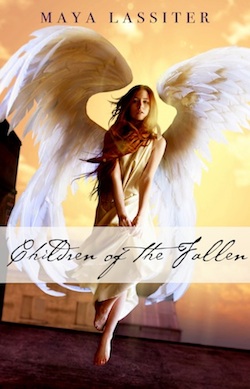
    P.S. Look at the cover of Maya’s latest novel. I think it’s gorgeous.

    Share

4 Comments

  1. I would really love if you would start this up. This would help me further my writing so much, I’ve wanted to start a book and I have started it but i feel like this would help me further my progress and capability to create a book successfully. My former teacher Amy Lamborn said that she would recommend this for me highly. Please consider,

    Sincerely, Leahdon Heimuli

  2. Leahdon, thanks for expressing interest. As soon as we have enough people sign up like you did, I will create it. So if you know others who are like you and want to learn how to do this, let them know about it. If the decide it’s right for them, you’ll be that much closer to getting it 🙂

  3. I won’t be able to afford it right now. VERY tight budget, but I have really liked all the presentations I’ve heard you give.

Comments are closed.