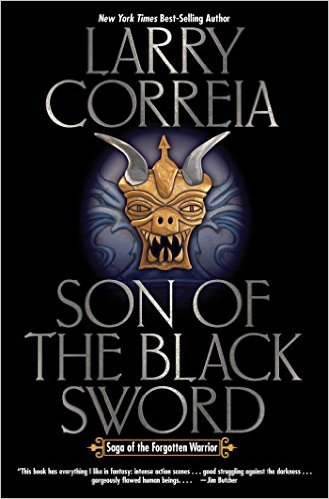
Correia’s Son of the Black Sword

I just finished reading Larry Correia’s Son of the Black Sword, and enjoyed it immensely.

It takes memes from King Arthur’s sword, Moses, the Shaolin monks, special operations forces, ancient India, prophets, and freedom and mixes them into an epic fantasy that’s simply tremendous.

It has all the action and entertainment you expect from a Correia production. There are monsters. There are battles and wonderful scenes of sword fighting. There are magic and wizards, but it’s not the magic and wizards you’ve seen before (magic from demon body parts?!) And unlike many fantasies, which revolve around the magic—discovering how it works and some chosen person growing in its power—this story revolves around matters of justice and mercy and law and truth.

This isn’t a story about magic. It’s a story about a man in terrible conflict.

The main character, Ashok, is not just a Lord Protector, one trained in battle to kill demons and administer death to those who break the law, he’s the most fearsome of them all. And the most pure in his devotion to the law. There’s just one problem—he finds out that he himself is a terrible affront to the law.

Discovering why that is and how it occurred is part of the enjoyment, so I won’t give it away. But along with that and all the action, you’ll be transported to a new world based on the old Indian caste system with a number of twists. You’ll encounter the court intrigue found in so many fantasies. But probably what was most delicious to me was a central mystery shrouded in the ancient past and a whole cast of wonderful characters. There’s Ashok, but we also get a courageous librarian/legal assistant, a tough female boat captain, a funny black market smuggler, and a veteran soldier who wants to restore the honor that was unjustly taken from him.

As a reader, I was delighted. As an author, I found many things to admire (and some to be envious of), including the fact that when you’re in the point of view of a character, you’re with that character, caring about what they care about and seeing the world through their eyes.

Son of the Black Sword is a book chock-full of delights. If you like fantasy and action, I think you’ll love it. As for me, I can’t wait for the second in the series.

Share

Similar Posts

  • “Like Diamond Tears From Emerald Eyes” by Eric James Stone

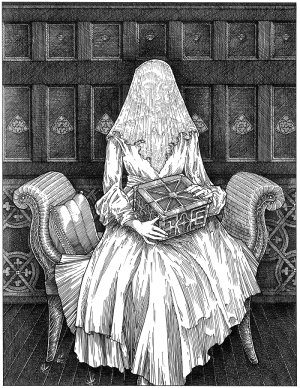
    Take a runty warrior and a slow-witted wizard who have been contracted by a veiled bride willing to pay diamonds to anyone who would fetch an oh so precious box from the castle of a dead wizard. A castle from which no adventurers have returned. Well, except for Thogar the Mighty. Of course, he’s now Thogar the One-Armed Madman. But let’s not quibble.

    At first blush you might think, whopee, another fantasy quest. But this isn’t another quest. This is an Eric James Stone quest, and it’s full of surprises.

    I was fortunate enough to hear Stone read his story at CONduit this May. He takes his listener on a ride full of humor and adventure. Then, if you’re like me, he will make your heart lurch. I loved this story down to the last line which is pure poetry.

    You can find it in issue 13 of Orson Card’s Intergalactic Medicine Show.

    Share
  • The Young Victoria

    Being a crass American I have always considered the current British royalty as nothing more than very expensive mascots. What function do they really serve besides acting as some kind of high-society-reality-show soap opera? 

    Not that this is bad. If the British want to spend their money on queens, princes, and princesses, who am I to oppose them? After all, we Americans have kept the stellar Survivor series going for ten seasons. And when it finally ends, we’ll probably replace it with something else of supreme value like World’s Biggest Belchers or Kids Who Eat Boogers. At least the Royal Family has some modicum of class. Still, the point is that I’m not disposed to feel much sympathy for state-supported rich folk. So when I tell you I just watched and loved The Young Victoria, it should tell you something.

    The movie was sublime. A large part of it was because the story left me edified, left me wanting to be a husband–a friend to my wife–as good as the Albert portrayed in that film. Compare this to Killers which could have been so good, but devolved into dumb sex jokes and dumber action, which then only got worse. When that one ended, I staggered out of the theater having lost half my brain.  The Young Victoria, on the other hand, enlarged my soul.

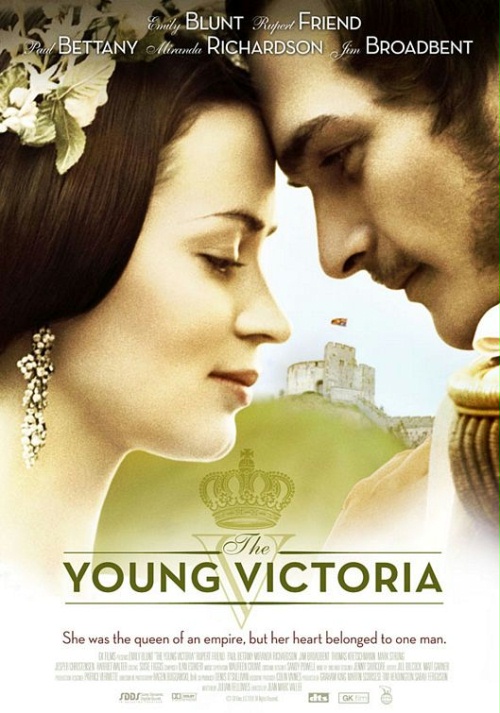
    The movie is a romantic dramatization of some of the events preceding and following the coronation of  Alexandrina Victoria (Queen Victoria), focusing on her early reign and romance with Price Albert in the 1830s. She was only 18 when her uncle, the King, died and the crown fell to her. Some suggested she was too young and should sign her powers over to a regent. Others wanted to use her as a puppet. The question was: would she fall prey to the political aspirations of others? I will let you watch the movie to find out.

    Emily Blunt does a wonderful job as Victoria. I loved her in the Jane Austen Book Club as well. She’s supported by a great cast, including Rupert Friend as Prince Albert, Mark Strong (the villain in the recent Sherlock Holmes and Robin Hood) as the domineering Sir John Conroy, and Paul Bettany as the dubious Lord Melbourne.

    When recently compiling my list of favorite movies of the decade, I lamented the dearth of good love stories. Well, I just found one. This movie was golden.  If you love Jane Austen, you’re going to love this show.

    (BTW, the Royals actually do perform a number of worthwhile tasks. Read this wiki on the British Royal Family. You may also want to read this on Victoria after you watch the movie.)

    Share
  • |

    JB Speculates: eBooks, Book Contracts, Agents, and Libraries

    I’ve looked in the crystal ball I hide under my desk and caught a glimpse of what ebooks will change in the next few years. Specifically I saw what will happen to:

    • Book Contracts
    • Literary Agents
    • eBook Aggregators and Libraries

    After showing me the vision, the ball thanked me for shopping at Walmart. Weird.

    PRINT ONLY CONTRACTS

    The only reason to have a print publisher is to get distribution you cannot obtain on your own, or to get it more cheaply than it would cost you if you tried to get it on your own. That’s it. Now, it’s true publishers have excellent art departments and story editors. But you can contract out cover art, copy editing, formatting, and even story editing yourself.

    Distribution is the main thing publishers offer that you can’t get anywhere else.

    BTW, when I’m talking about distribution, I’m talking mostly about getting the books out to places people can see and purchase them. For example, publishers can get your book into hundreds or thousands of books stores all at the same time–Barnes & Noble, Hastings, Walmart, Costco, indie book stores, airport book stores, grocery stores, drug stores, etc. Publishers can get you display in those stores so consumers see your book. One form of that are the racks and new book displays. Another is one that Scholastic does so well, i.e. displaying and selling titles in tens of thousands of classrooms with its book catalogs. A single author just can’t do that. 

    It’s also true publishers can convince some platform venues, that would never look at a self-pubbed author, to spotlight your book.  For example, it’s unlikely a self-published author will be able to convince Booklist, Publishers Weekly, and Library Journal, which have huge platform for library book purchasers, to review a book.  But publishers have no problem getting their stuff in there. Likewise, it’s often much easier for publishers to get endorsements from other authors or people with platform than it is for a single author.  Of course, there are so many places that have some kind of platform, that publishers don’t have a lock on them all, e.g. Goodreads and Amazon reader reviews.  But for the sake of simplicity, let’s just look at the distribution end.  

    Because 90% of book sales are still hardcopy, the only way to have HUGE sales numbers, right now, is through a print publisher. I’m talking about the numbers you see in the Publishers Weekly top selling books, where you have to sell at least 100k copies in hard back, 500k copies in mass market, to even make the list.

    Publisher’s lock on this ability will erode. We can see signs of this in the USA Today Top 150 already. I consider this to be the most accurate picture of what truly is selling the most. Here’s why. And ebooks are starting to be the best selling format for a number of books. On that list, they add up sales of a title in all formats and then list the best-selling format. So when you see an (E) at the end of the listing, you know it’s selling more ebooks than any other format. E’s are starting to pop up all over and we’re still in the early adopter stage for ebooks and ereaders.

    So what does this mean?

    If I put on my author business slacks (why does it always have to be hats we change?), I’d be crazy to turn down a publisher that wanted to offer me monster distribution. A bird in the hand is worth two in the bush. You offer me $500k now, I’m taking the money and running all the way to the bank and then the $6.99 Indian all-you-can-eat buffet.

    Of course, I’m not likely to get that kind of an offer. We new writers are more likely to get an offer for, what were Hines’ numbers? $6k – $12k? And for that the publisher will want all our ebook rights and will tie them up for years and years and years. And then they’ll try to give us a fraction of what we could get selling directly. Furthermore, they don’t provide such books the same push to garner platform spotlight. They don’t spend the money to give them the prime display in bookstores. This means the difference between what they bring to the table for us smaller authors and what we can do on our own is much less. And the ebook has narrowed that even further.

    How much further? Well, how many books would you have to sell to make that advance of $6k – $12k? If you’re selling your books for $2.99 for the Kindle, you get about $2.00 a book. That means you’d have to sell 3k-6k copies of an ebook to earn as much as that average advance. 

    Do you think you can sell 3k – 6k copies of an ebook at $2.99?

    Some authors will be able to do this. Some won’t. If you wanted to do that in three years, you’d have to sell about 150-350 books per month. For a more in depth comparison between traditional publishing and self-publshing ebooks, see Dean Smith’s blog on cash flow.  

    Maybe you don’t think you can make those numbers. But maybe you can. The point is that if you think you can, then you can make as much on your own as you can with a publisher. This means there is absolutely no financial reason on earth to take the publisher’s deal. None. Now, if you have non-financial reasons, that’s another thing, but when looking at dollars and cents, it’s fairly clear the publisher’s ability to put you into their distribution channels isn’t worth what it will cost you. Especially since the ebook is forever and may keep selling for years to come AND because the market for ebooks is still in the early adopter phase–it’s only going to grow massively over these next years.

    But this doesn’t mean paper publishing is dead. It’s not. Nor will it be for some time. Just because SOME authors can make as much in the ebook market on their own as they can with a publisher through their distribution channels doesn’t mean all of them can. Furthermore, publishers with distribution have something to offer even those who successfully publish ebooks themselves.

    Let’s say you have an ebook series that starts to sell well for you, 1,000 per month. That’s $2k per month, $24k per year. If a publisher wanted to buy the rights to that from me, they would have to pay me MORE than $70k as an advance. MORE. Because I can make that on my own in three years selling it myself. In fact, since ebooks are forever, I have to look at the present value of all of those years of sales. That income stream is going to be a LOT MORE than $70k, even if we think sales will taper off after five or six years.

    How many big publishers are going to want to pay that?

    Probably none. Or, at least, I suspect those deals will be few and far between. But there is money to be made in paper, even if that market is shrinking. There will be some smaller publishers who, for the right price, will offer paper distribution. And if they can get me distribution that I couldn’t get myself for paper, or do it at a lower cost, then I’d want to sell them paper rights. Why not?

    And so what I see in the crystal ball are some authors, the ones who do well selling ebooks, being able to sign contracts with publishers that sell paper rights only. I know the big publishers probably won’t go for that in the near term, but smaller publishers will see the value and step up to the plate.

    AGENTS

    What about agents? Are they going to die?

    I think if we remember that literary agents are SALES agents, then their future becomes clear. The only reason to get a sales agent is because doing so makes my property worth more (same reason for getting a publisher, btw). If, by letting them focus on sales and letting me focus on getting more product out the door, I make more money than I would if I tried to do BOTH the selling and the producing, then I want an agent.

    I want to sell as many rights as I can to as many people as possible–gaming, film, audio, foreign, merchandise, etc. I’d be a fool to say, well, no, I’ve got this little ebook gig going. I’m not going to sell any of these many other rights to anybody. No, I’m just going to let them sit in my basket and earn me nothing. Let them go to waste.

    !?

    A good agent should be able to sell more than I could on my own because they have a better ability to reach AND close editors AND other people that are in the market for purchasing rights to my property. They’ll also allow me to sell more because all the time I would have spent selling, I can now use to create more product. So not only do I have more books, and therefore rights, to sell, I can hopefully sell them for a better price and terms than I could on my own.

    I’d be a fool not to increase my revenue. I’d be a fool not to have a good agent.

    So as long as there are people who want to purchase these non-ebook rights, and an agent can make a sale I couldn’t or can make it for less than what it would cost me to do it on my own, then agents will be useful. Because of this, because we’ll always have more than ebook rights to sell, I don’t see a role for good agents ever going away.

    EBOOK AGGREGATORS & LIBRARIES

    When more and more people begin reading ebooks what happens to the libraries?

    Ebooks cost less. So a lower price per book would simply allow libraries to purchase more books and expand the collection. But wait, they don’t need rooms and rooms to hold all the paper. You can store the world’s library in one computer room. Shoot, this means that housing the collection on a server instead of on the shelves would cost less. This would allow for an even bigger collection. But why maintain a server and manage your own collection if you can network to the collection down the road?

    In fact, what if there were a mega service with millions of titles you could subscribe to? That would be even cheaper. Then you wouldn’t have to pay book purchasing agents or IT folks to keep your server running.

    Enter the ebook aggregators–the Netflixes of ebooks (I know somebody somewhere is working on this business plan; is it you?)

    I’m betting the whole library system goes national. I’m betting you’ll have some government aggregators, but they’ll probably be dwarfed by the private companies. You’d subscribe to the aggregator’s service just as you do Netflix today and many university libraries currently subscribe to electronic periodical collections.

    The aggregators will probably charge users as Netflix does for a certain number of books checked out at the same time. If a large entity like a library wanted to subscribe, I bet the aggregator would charge access to the collection based on number of users at the library. The library would pass some of that fee onto patrons. The rest of the fee would be paid by the community’s tax dollars, just as those tax dollars pay for the current collections. You might even have device manufacturers coupling subscriptions with purchase of the product as incentives to buy their devices.

    When the aggregators step in, we suddenly end up with a different mix of distribution channels that will coexist:

    1. Author –> ebook retailer (Amazon Kindle, B&N Nook, etc.) –> reader
    2. Author –> subscription aggregator –> reader
    3. Author –> subscription aggregator –> public and school libraries –> reader
    4. Author –> publisher –> subscription aggregator –> then option 2 or 3 above
    5. Author –> publisher –> current distribution channels

    Surprised by #5? Well, the current distribution channels are not going away until every book can be read on an ereader and everyone who reads has and wants to read on such a device. That’s going to take some time, if it happens at all.

    Why would readers buy individual titles ala distribution channel 1 above? Some people just want to own. Other readers will be happy to purchase the books because they don’t want to wait for a checkout slot to open up, e.g. I already have my allotted number of books checked out and I really want this one on hand all the time because it’s Suzie’s favorite. Other readers will want to customize a book with highlights, margin notes, links, etc. just as many of us like to mark up paper texts. We’ll need our own copy for that. Still, I think the bulk of reading will move to the subscriptions. For example, right now I purchase DVDs I love, even though I can get them from Netflix. But the number of DVD’s I own are a fraction of those I watch. Most TV and film I watch once and it goes back to Netflix until I want to see it again. And this checking out becomes even easier where there’s nothing physical to send through the mail.

    Please note: there will probably be some form of gatekeeping with the aggregators. I doubt they will carry every scrap of anything ever written. They’ll carry a lot of stuff, but not every written word. Furthermore, when you have hundreds of thousands of titles, you’ll need mechanisms for helping your subscribers find great content suited to their tastes. A lot of “people who read this read that,” review services, etc.–the next generation of Netflix recommendations, Goodreads reviews, and Pandora like tools. 

    Aggregators won’t be the only gatekeepers, however. The key is in getting notice. And there will be many places with platform that will be able to shine a spotlight on a book. Think about all the places you find out about movies today—radio movie programs, TV movie reviews, Rotten Tomatoes, Newspaper Reviews, Yahoo viewer and critic review summaries, Kids-in-mind, and on and on. Look at all the ways you find music. There will be just as many ways to find books.

    As far as paying authors, I suspect aggregators will pay authors each time a book is checked out, or, if it’s a must-have name author, they will pay to list the title plus a per use payment.

    So that’s the future I saw in my strange little ball. Feel free to comment or add your own thoughts.
    Share
  • |

    Brain Nazis and Feeling Good by David D. Burns, M.D.

    Have You Got a Brain Nazi?

    If you’re conscious, you’re monitoring your environment. You have to. It’s how you survive. This is not something you can turn off. It’s just one of those systems that runs automatically, like your liver. You’re always appraising the situation.

    And as soon as you encounter something that’s likely to be of importance to you or yours, your monitor kicks off a physical response to prepare you to deal with or take advantage of it.

    The problem is that sometimes a Nazi propagandist worms his way into the monitoring station. And like any good Nazi, he distorts reality.

    Sometimes those distortions lead to burning resentment, sometimes to unwarranted shame or anxiety, sometimes to eating disorders, sometimes to grave depression. When I heard of the tragic suicide that occurred in our community a few months ago, my heart went out in sympathy to the girl, her family, and friends.  I’m not a doctor. I don’t know the situation. But I’m positive she was dealing with one of these villains.

    I wished I’d been able to share something that’s been a literal life saver to me. Now, it might not have changed anything. But hopefully it can change things in the future for you and others you know who may have to deal with a Nazi in the brain.

    And you will have to deal with a brain Nazi at some time.

    This is not something that affects a miniscule portion of the population. In any given year you can expect more than 15% of a population to experience some form of this [1]. That’s roughly 238 of the estimated 1,592 people 18 years and older in the little county where I live [2]. Rates for teens are similar [3]. Besides, you don’t have to have a full-blown case of a depression for distortions to affect you. How many of us haven’t made faulty comparisons with others? “Oh, she’s so thin and has such great hair; I’m so dumpy.” “Oh, he’s doing so well, and I’m not. I’ll never be a success.”

    The question is not whether you or someone important to you will have to deal with it. The question is how prepared you’ll be when you do. Everyone deals with distortions now and again.  Which means everyone can find a little more enjoyment in life by showing their brain Nazis the door.

    So how does it all work? How do you show the villain out?

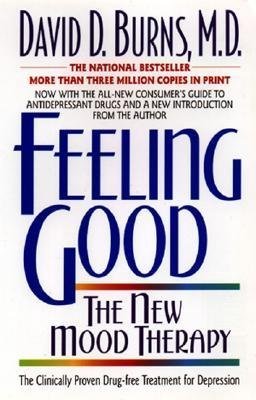
    I’m going to summarize it below, but I’ll tell you right now that the book that saved my life was Feeling Good by David D. Burns, MD. This isn’t positive mental attitude. It’s not neuro-linguistic programming. It’s not the mumbo jumbo of Freud and Jung. This is practical and proven. It is the most prescribed intervention for dealing with these issues in the current medical community. It’s prescribed because it works.

    Your Brilliant Appraisal-Emotion System

    To understand this, you have to understand how emotions work. As I said before, you’re always monitoring your situation. You hear a buzz and see a rattlesnake on the path two feet away. Your monitor immediately responds. Alarm, adrenaline, increased blood flow–all of that to get you ready to deal with the situation. Your monitor writes “alarm” on your face to communicate it to those around you–to warn and ask for help. This happens in less than a blink of an eye.

    But this doesn’t just happen with danger. It happens when we encounter unfamiliar things. When we encounter positive things. You see a great friend who makes you laugh all the time. Boom, your monitor responds. You smile. Feel. Focus. You do so because you not only want to avoid dangers, you also want to seek out the things that make you happy.

    Our emotions prepare us to fight, flee, seek, and pitch woo. Our little monitoring and physical response system is brilliant.

    But there’s more. We don’t rely on just the automatic subconscious monitoring. We also have a cognitive (conscious thinking) part. Let’s go back to the rattlesnake. You walk out into the garden, step on a slither, and immediately go into alarm mode. Then you look, consciously see the slithery thing is not a snake, but the garden hose. You relax. Laugh.

    The quick subconscious appraisals keep us alive, because with snakes and other things, if you’re slow, you’re dead. We don’t have time for thought. If you touch a hot stove, you want an immediate reflex. You don’t want to ponder it for a second or two. On the other hand, the cognitive appraisals help us further appraise a situation. They bring more of our resources to bear on the situation.

    How Does the Nazi Get In?

    So there are three parts of the appraisal-emotion system: the subconscious appraisal of the situation, the physical response, and the cognitive appraisal. Each of the three parts affects the other two. And when things are running smoothly, we don’t have problems. But sometimes we get a distortion mucking up the works. We make a faulty appraisal of the situation. And therefore have a faulty physical response.

    For example, you’re a mother. You’ve had a hard day. The kids make a huge mess with flour in the kitchen. You yell, freak out. When they’re cowering in their rooms and you’re cleaning up the flour, you think, “There I go again. I’m a total failure. I can’t stand it! I never do anything right! I’m a terrible mother.” These thoughts make you even sadder.

    And that’s the propaganda. That’s your brain Nazi with his all-or-nothing thinking, telling you that you either perform perfectly or you’re a failure.

    But is that true? No, it’s not. You might be a B+ mother, filling the lives of your kids with all sorts of goodness. You might have just had a great time reading with the kids not thirty minutes before. But the brain Nazi tells you to forget that. “Vatch dis film,” he says, “und see de horrors of vut you are!”    

    And the all-or-nothing thinking gambit is just one of ten common weapons he uses. Furthermore, this happens so quick that we often don’t notice it. In fact, we’ve often repeated some of these distortions so often than they’ve become almost automatic.

    Mr. Nazi, Meet Mr. Bazooka

    The good news is that you can pull the lid off the lies. You can open the door, spot the brain Nazi that slipped in, and take him out. You can do this because one of the three parts of the system is our cognitive appraisal. This means you can consciously stop the movie, pin the distortion on the wall, and uncover the truth. Once you do that, it’s like the rattlesnake scenario above—oh, it’s a hose, we realize, not a snake, and the appropriate emotions immediately follow.

    But you need to know how to stop the movie. You need to know how to spot the lies. David D. Burns, MD tells you exactly how to do this in his book Feeling Good. (By the way, DON’T get this book confused with his Feeling Good Handbook–you DON’T want the handbook; you want Feeling Good, the book.)  In the book, Burns talks about the theory, the results, and then gets right down to the practical techniques used to blow the brain Nazi to kingdom come.

    A few years ago I hit a bad patch with a brain Nazi that had taken up residence. A very bad patch. He’d been there for quite some time. This book and a good counselor saved me. I thank the Lord for that. By the time I went to see a medical doctor to assess whether chemical issues might be playing a role, I was stable. I wasn’t out of the woods yet, but I had opened the lid and found the villain at the controls. I used the techniques Burns gave me, and I’m happy to say that while the brain Nazi still comes round every once in a while, I can spot him. And I can take that sucker out.

    Go to the library and check out the book and take the assessment test. If you, or someone you know, scores in the mild range, maybe you’ve just experienced a very sad event. But maybe you’ve also got a villain in residence. Get the book. Read it. Be happy. Nobody needs to live with a Nazi at the controls.

    For Authors

    By the way, fiction authors should pay special attention to this stuff. Not because we’re more susceptible to brain Nazis than others, although we do have to deal with our fair share as we develop and share our stories. No, we should because the emotion process is exactly what we’re trying to tap into. Knowing the principles can be very useful indeed. Let me recommend you read the books on emotion listed on the Learning With Pros page.

    Sources

    1. 1. http://www.nimh.nih.gov/health/publications/the-numbers-count-mental-disorders-in-america/index.shtml
    2. 2. http://quickfacts.census.gov/qfd/states/49/49033.html (find your state and county and see how many folks are likely dealing with a brain Nazi in your area)
    3. 3. http://www.oas.samhsa.gov/2k5/youthDepression/youthDepression.htm
    Share
  • |

    Dewitt Jones and Clear Vision

    Not many people understand creativity. Dewitt Jones, a National Geographic photographer, does. And this video on the creative process, HOLY COW, it’s so good I had to buy it so I could watch it whenever the yearning took me.

    Clear Vision

    But this isn’t just for artists. The principles of creativity apply to any creative endeavor–from writing and drawing to building microchips and parenting. 

    Go here. Watch the brief clip. Then watch the whole Clear Vision video. Tell me what  you think.  

    Capture the zing!

    Share
  • Basic Economics, Avatar: the Last Airbender

    How to not be duped by political blarney

    Karl Marx was not a scientist. Nor was Adam Smith before him. They were philosophers. Theorists. Idea men. That’s what all economists in those days were. They had little tested knowledge, and so which economic system was best was all a matter of opinion.

    But things are now much different. Nations and local governments tried the various theories. And we’ve seen the results. We now have a whole century of data. Furthermore, economists now are scientists. They use scientific methods and deal with tested knowledge. Sure, there are still controversies, just as there are in any science, but the basic principles of economics today are NOT matters of opinion.

    For example, we know what happens when governments impose price controls in all their many varieties—rent caps, minimum wages, laws against price gouging, and medical care cost limits. These last few years we’ve seen a dramatic demonstration of what happens when they meddle with the prices of home loans. We know what happens when they impose tariffs or give subsidies to special groups like farmers or steel producers. We know what happens when they create barriers to people entering a market to compete, like they’ve done with immigrants. We know what taxes do.

    The unfortunate thing is that many of these principles seem to be ignored by our politicians. And by those who vote them in. And so we can have a Congress pass massive health care legislation that will cause health care shortages just as similar laws caused shortages in other countries. This is how we have a president who in a recent speech to the U.S. Chamber of Commerce suggested, in good Marxist fashion, that it was business owners who kept the American workers down by hoarding all the profits. Has he not looked at the data which shows that huge profits invite more competition, which tries to get ahead of the leader by cutting prices, which allows the American workers to get more for less, thus raising their standard of living?

    In the 1980’s and 1990’s India and China began to make fundamental changes to their economic policies, doing the things that have been proven to work. Suddenly, the economies of those nations started to grow. It’s estimated that 20 million people in India rose out of poverty in a decade. In China, more than a million people rose out of poverty EACH MONTH.

    But this seems lost on a number of politicians. Don’t let it be lost on you. We have critical elections coming up. One of the best things we can do is educate ourselves about these basic economic principles so we can cut through all the political blarney. I haven’t found a better, more enjoyable book on the subject than Basic Economic Principles: A Common Sense Guide to the Economy by Thomas Sowell. Sowell is an economist and Senior Fellow on Public Policy at the Hoover Institution at Stanford University. His book is written for the general public and so foregoes dry charts and theoretical ho-hum for lots of real-life examples and straight-forward explanations. There are times when I wish he would have gone into more detail on a few subjects, but what he lacks in depth in a handful of areas, he makes up with breadth. Furthermore, the way he presents the topic was interesting enough to make me stay up late a number of nights well past my bedtime. 

    Great family entertainment

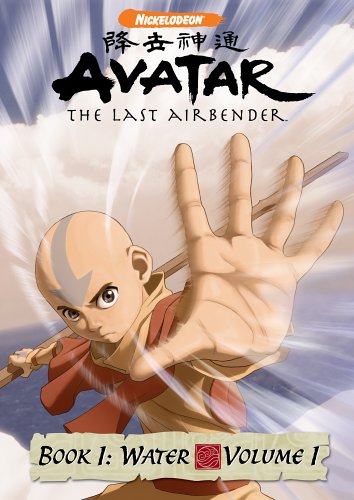
    Do you want some fun family entertainment that includes laughs, wonder, and moments of poignancy? Something you can watch and enjoy with the kids? Then let me recommend the animated TV series Avatar: The Last Airbender. This is NOT the movie Avatar by James Cameron with all the big blue people Nor is it the movie The Last Airbender, based on the TV series, which many fans disliked. This is the original. The one that millions love.

    Through the miracle of Netflix, I started watching it with my girls a few months ago. And we’ve all been sucked in. It’s unlike any “cartoon” I’ve seen. In fact, you can’t call it a cartoon just as you can’t call The Incredibles or Lion King cartoons. This is great story telling. Furthermore, instead of it being a bunch of unconnected episodes, this series is telling a long story. It ran for three years on Nickelodeon and includes more than sixty 22-minute episodes.

    The series follows the adventures of the main protagonist Aang and his friends, who must save the world by ending the destructive war with the Fire Nation. Aang’s world is divided up into four nations—Air, Earth, Water, and Fire. In each nation are “benders” who can powers with the element of that nation. So Air Benders can fly and create huge winds; Fire Benders can generate and throw fire; Water Benders can create ice and waves.

    So it’s fantasy, and all of that is cool, but it’s the characters that we enjoy the most. We quote and laugh at some of their lines. And then there are the episodes with true dramatic moments.

    Avatar has been nominated for and won many awards, including the Annual Annie Awards, the Genesis Awards, the primetime Emmy awards and a Peabody Award. It’s excellent entertainment.

    Share

3 Comments

  1. Yup, great book. You are lucky that you just read it. I read it over a year ago and it seems the sequel is still maybe a year from now.

  2. Speaking of waiting a long time for sequels, I noticed that there is no longer a progress bar here for Glory. Is that a bad sign for a person waiting on it?

Comments are closed.