“$13.99 + (head) tax” by Janet Reid, literary agent

For you writers who don’t get David Farland’s Daily Kick in the Pants, he just pointed to this must read blog entry by Janet Reid, literary agent. It relates what exactly it might mean when you get an agent rejection.

Share

Similar Posts

  • |

    Awful Intent Update: The power of having the electric ladies read to you

    Everyone says you cannot copyedit your own work.

    You’re an idiot if you try.

    Because you’re mind auto-corrects eorrs, and fills in missing punctuation or words like “of” “the” and “a”.  And often doesn’t care or know the house rules for capitalization. Etc.

    (Did you catch all the errors in that paragraph?)

    Except the brains of copy editors play this trick as well. That’s why some read the manuscript backward and others use arcane WordText code to suss out issues. And some change the font face. And some make multiple passes over a section, looking for dialogue issues the first time through, capitalization the next, and something else the third time. And despite all their work, you still find errors in the text.

    I’m not saying editors aren’t any good. I’m just saying that our brains, for the most part, don’t care about the details. They just care about the communication, and they’re very good at ignoring the rubbish. And when it’s just the brain and the eye working together, the brain makes sense of the text, even when something’s wrong or missing.

    So one trick to force the brain to see what’s actually on the page is to read your text out loud to yourself. It’s an excellent practice, except a human brain is still involved, and it sometimes still plays tricks. And sometimes we get lazy and start to read too quickly, and the next thing you know we’re subvocalizing and whipping along, missing all sorts of stuff.

    So what can you do?

    Well, a few book releases ago, I stumbled onto something. I invited an electric lady to help. And she was dynamite. (You can invite a man if you prefer the sound of those voices.)

    I’m talking about inviting your computer to read aloud every word of your manuscript to you. And highlight the words as it goes.

    I can tell you I’m never going back. These ladies have simply helped me see too many errors that were invisible to me and my beta readers who had editorial chops.

    I use WordTalk, a free plugin for Microsoft Word for this kind of reading. The University of Edinburgh created it to help kids learn how to read. It allows you to select from the text-to-speech voices you have on your computer, set the reading rate, and it highlights the word it’s reading so you immediately see where the error is.

    I set it at a slightly faster reading speed so my mind cannot wander during the reading and use the quick keys so I can start and stop and make my edits easily. And I always, always, always have my electric friend re-read any fixes I make because I can’t tell you how many times I’ve adjusted a sentence or paragraph and introduced more errors that I didn’t see, even though they were staring me in the face.

    I must admit that the electric ladies can’t do everything. Having them read to you cannot help you spot errors you don’t know are errors in the first place. If you don’t know, for example, the conventions for capitalization of personal titles or the conventions for numbers (is it a “.44mm” gun or “forty-four millimeter”?) If you don’t have your own house rules for the many areas where you have a choice like in an epic fantasy (do you use “Dreadman” or “dreadman”?) If you don’t know any of that, you’ll blithely skip over a host of errors and only see the issues you know like the misuses of “rise” and “raise” or “lie” and “lay.”

    So you have to learn the conventions or find someone who does (an editor). Or both.

    Also, doing this type of reading will not help you see if what you’ve written is actually translating the scene in your head clearly and vividly to the page for someone new to your story. Only a fresh set of eyes can tell you where your story isn’t clear, believable, or interesting (at least to that one reader).

    But for helping you spot the issues you do know, I haven’t found anything better. Give it a try.

    Oh, and the update on Awful Intent–Zira and I are almost finished with the copy edit! Which means the release is only days away.


    Share
  • “A Few Things Writers Can Learn from Harry Potter” by Cheryl Klein

    Klein (isn’t that a lovely photo with the arch, the girl, and the color? It feels Potterish and is perfect for Klein) is a senior editor at Arthur A. Levine Books, an imprint of Scholastic Inc. (Levine is the guy who purchased Potter in the US), and the continuity editor for the U.S. editions of the Harry Potter books. A “continuity editor” is responsible for ensuring that the world an author creates remains as consistent as possible through multiple books. A senior editor, on the other hand, finds likely books and acquires them for publication.

    Please look at this list of best selling books of all time. Rowling’s success is simply AMAZING. And Klein looks, as an editor, at some reasons why she feels Potter did so well. Of course, there are other factors like the fact that it was a book the whole family could enjoy and the wonder she created with things like quidditch and every flavor beans etc. But the points she makes here are marvelous. Take some time to think about and digest what Klein has to say. For more essays, here’s her website: http://www.cherylklein.com/.

    Share
  • The main thing about villains

    The main role of villains and antagonists in stories is to generate suspense, anxiety, and fear in the reader. They make it possible for us to worry that the hero will not be able to avoid a significant threat or remove a lack. There are other effects–mystery, poignancy (about the human situation like in Les Mis). But those are secondary.

    For the main things to happen the villain has to be a credible, significant, and immediate threat…all the way through the book until he or she is smushed or wins.

    If he’s not credible, the reader realizes there is no real threat. If the threat is not significant, who cares? If it’s not immediate, again, who cares?

    So how do we make a villain like that? We make him or her smart, powerful, a few steps ahead of the hero, and dedicated to doing something we root against (because it’s just plain wrong or because we love our hero and want the best for him and the villain is pitted against him). He has to be able to put the hero on his heels most of the way through the book, and our poor hero is scrambling to adjust.

    You can have all sorts of villains–liked by many or few, kooky or calculating, eccentric or plain, noble or sadistic–just as long as they remain significant, immediate, and credible threats. The minute they lose threat status, the game’s over because at that point fear, anxiety, and suspense in the reader vanish.

    Share
  • How long should my novel be?

    There are two answers to this question.

    1. The story answer by Orson Scott Card, best-selling author

    As long as the story needs, but 75k-100k is when it starts to “feel” like a novel.

    2. The selling it to editors answer by Jenny Rappaport, literary agent

    “Aim for 80k minimum and 120k maximum. Try to hit as close to 100k as possible, but not go over. There are exceptions made for fat fantasies and longer novels.”

    “For YA: 50k minimum. Try not to go over 75k. You can nudge it to 90k if it’s a fantasy. YA is a little more flexible.”

    3. What happened to one author, Brandon Sanderson, when he tried to write to “the market”

    As in stories less than 200,000 words…

    BTW, Brandon is now New York Times best-selling author.

    Share
  • Why stories follow patterns

    There is a lively discussion on The Passive Voice about Kris Rusch’s recent blog post which challenges the use of the term “churn out” to describe writers who write quickly. In the comments, someone said that folks also use “formula” or “formulaic” as a pejorative. Another commenter said that in computer design, they use design patterns, and suggested that’s probably a better word. Here’s my response.

    Design pattern is right.

    The people who decry familiar patterns are those that completely misunderstand one of the main purposes of fiction.

    Readers go to fiction to have an emotional experience–thrill, horror, dread, falling in love, mirth, wonder, wish-fulfillment, etc.

    Those emotions are not created out of nothing.

    They’re not created haphazardly.

    They are generated by a specific . . . pattern.

    1. You receive some stimulus–from your environment or your own thoughts or something you’re lead to think, such as via a book.

    2. You make an assessment about what’s going on and what might happen in the future and how that impacts you or someone else. There are two assessment systems. One is incredibly quick. Almost subconscious. The other is a bit slower. You can read about them in Daniel Kahneman’s Thinking, Fast and Slow and Jenefer Robinson’s Deeper Than Reason. Robinson even relates the science to fiction.

    3. If the assessment says it’s something that will affect you or someone you can sympathize with, you feel an emotion. The emotion focuses your attention. For example, if there’s a mountain lion stalking you, you don’t want to forget she’s there. It also prepares you to act–to pursue something desirable, avoid something that’s not, etc. It also writes that emotion on the face to communicate it to others to solicit help or warn (we are social animals).

    Okay, so certain cues or assessments are required to produce certain emotions. If the cues aren’t there, the emotion doesn’t arise.

    Certain stimuli lead to an assessment that there’s a threat. Other stimuli lead to assessments that there’s an opportunity, for love, money, sex, security, etc.

    Suspense, surprise, and curiosity have all been studied in experiments. There’s a certain structure required for each. If you take the same story, but simply change the structure, you end up with different reader effects. See more here.

    This means that a reader who wants to feel the experience of falling in love is going to have to be guided through the pattern of cues that produce the assessments that lead to the emotion.

    There are lots of variations in the pattern that will work. But we can’t give a reader the pattern for horror and expect them to feel romance.

    Duh.

    You can’t give a reader a downer ending and expect her to feel joy.

    Again, there are certain delights readers are going to certain genres for. Folks read romance after romance precisely because those romances do specific things to them. And they want to experience them again and again.

    For example, one thing romance readers love is the joy of a happily-ever-after (HEA) ending. So if that’s what they’re looking for, then that’s what the product must provide for them to be satisfied. We follow patterns, but change them enough so that the reader doesn’t get bored.

    So, yeah. Patterns. It’s like the very essence of what we’re doing.

    We are all working with patterns, whether we know it or know. And the sooner we learn what the general patterns are for the type of story we’re trying to tell, which could also be called the type of experience we’re trying to provide, the quicker we gain control over our writing.

    Share
  • Meyer on the Brain

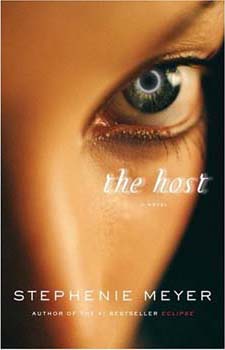
    Watch an interesting Borders interview with Meyer about Host and Twilight. The thing I keep seeing in her interviews is that this woman follows her passion. She follows the story that wows her. It’s nice, of course, that millions of fans want to share that wow with her. But I don’t know that a writer can be successful doing anything else.

    Here’s Orson Card’s blurb about Meyer in Time’s list of the 100 Most Influential People

    Nobody was looking for Twilight. A Mormon housewife writes a young-adult novel about a love affair between a teenage girl and a vampire?

    Is this Anne Rice lite? Not in the eyes of the teenagers—and their mothers—who have embraced the book.

    But Stephenie Meyer’s Twilight does raise some questions, and I’ve asked them. “You really want your teenage daughter to live inside the story of a girl who lies to her parents, invites a boy to sleep in her bed and trusts him not to take advantage of her?”

    These women look at me as if I’m insane. “But she can trust him. He really loves her. He’s…perfect.”

    In an era when much of the romance genre has been given over to soft porn, and dark fantasy is peopled with one-dimensional characters bent on grim violence, many readers have become hungry for pure romantic fantasy—lots of sexual tension, but as decorous as Jane Austen.

    Meyer, 34, did not calculatedly reach for that audience. Instead, she wrote the story she believed in and cared about. She writes with luminous clarity, never standing between the reader and the dream they share. She’s the real thing. Still, who’d have thought it? Today Mr. Darcy is a vampire.

    Card is author of Ender’s Game, Empire and Women of Genesis

    Share