|

Awful Intent Update: The power of having the electric ladies read to you

Everyone says you cannot copyedit your own work.

You’re an idiot if you try.

Because you’re mind auto-corrects eorrs, and fills in missing punctuation or words like “of” “the” and “a”.  And often doesn’t care or know the house rules for capitalization. Etc.

(Did you catch all the errors in that paragraph?)

Except the brains of copy editors play this trick as well. That’s why some read the manuscript backward and others use arcane WordText code to suss out issues. And some change the font face. And some make multiple passes over a section, looking for dialogue issues the first time through, capitalization the next, and something else the third time. And despite all their work, you still find errors in the text.

I’m not saying editors aren’t any good. I’m just saying that our brains, for the most part, don’t care about the details. They just care about the communication, and they’re very good at ignoring the rubbish. And when it’s just the brain and the eye working together, the brain makes sense of the text, even when something’s wrong or missing.

So one trick to force the brain to see what’s actually on the page is to read your text out loud to yourself. It’s an excellent practice, except a human brain is still involved, and it sometimes still plays tricks. And sometimes we get lazy and start to read too quickly, and the next thing you know we’re subvocalizing and whipping along, missing all sorts of stuff.

So what can you do?

Well, a few book releases ago, I stumbled onto something. I invited an electric lady to help. And she was dynamite. (You can invite a man if you prefer the sound of those voices.)

I’m talking about inviting your computer to read aloud every word of your manuscript to you. And highlight the words as it goes.

I can tell you I’m never going back. These ladies have simply helped me see too many errors that were invisible to me and my beta readers who had editorial chops.

I use WordTalk, a free plugin for Microsoft Word for this kind of reading. The University of Edinburgh created it to help kids learn how to read. It allows you to select from the text-to-speech voices you have on your computer, set the reading rate, and it highlights the word it’s reading so you immediately see where the error is.

I set it at a slightly faster reading speed so my mind cannot wander during the reading and use the quick keys so I can start and stop and make my edits easily. And I always, always, always have my electric friend re-read any fixes I make because I can’t tell you how many times I’ve adjusted a sentence or paragraph and introduced more errors that I didn’t see, even though they were staring me in the face.

I must admit that the electric ladies can’t do everything. Having them read to you cannot help you spot errors you don’t know are errors in the first place. If you don’t know, for example, the conventions for capitalization of personal titles or the conventions for numbers (is it a “.44mm” gun or “forty-four millimeter”?) If you don’t have your own house rules for the many areas where you have a choice like in an epic fantasy (do you use “Dreadman” or “dreadman”?) If you don’t know any of that, you’ll blithely skip over a host of errors and only see the issues you know like the misuses of “rise” and “raise” or “lie” and “lay.”

So you have to learn the conventions or find someone who does (an editor). Or both.

Also, doing this type of reading will not help you see if what you’ve written is actually translating the scene in your head clearly and vividly to the page for someone new to your story. Only a fresh set of eyes can tell you where your story isn’t clear, believable, or interesting (at least to that one reader).

But for helping you spot the issues you do know, I haven’t found anything better. Give it a try.

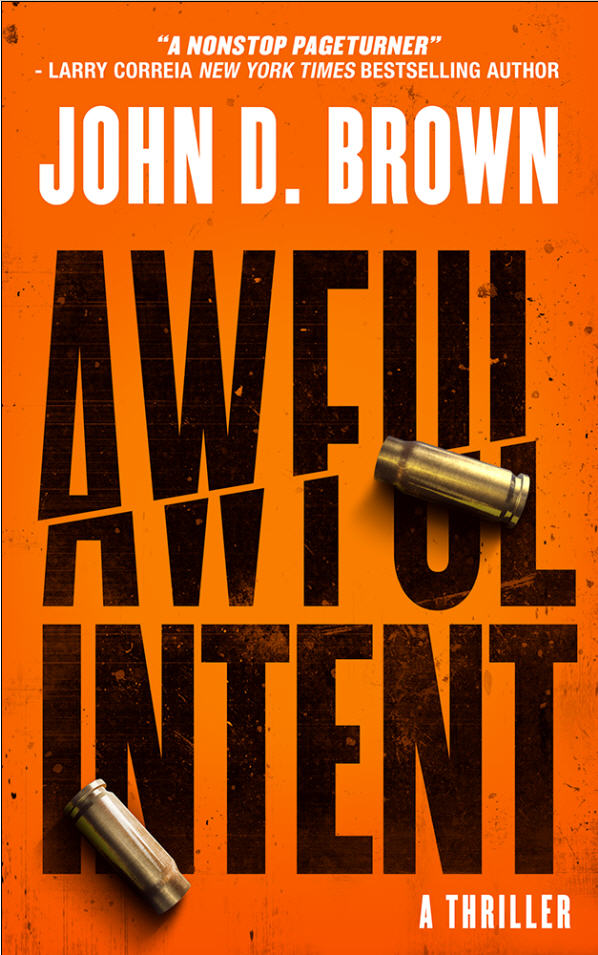
Oh, and the update on Awful Intent–Zira and I are almost finished with the copy edit! Which means the release is only days away.


Share

Similar Posts

  • I hate mission statements, but…

    Stephen R. Covey (or is it Lex Luthor?)
    Stephen R. Covey (or is it Lex Luthor?)

    First of all, if I could look like Stephen R. Covey does in that picture, I would shave my head and never look back. Holy moly, I love that picture. But that’s not why I’m writing.

    James Maxey is a writer who I respect and whose comments on the boards of Codex Writers often make me think or laugh. He recently started a thread about writing mission statements.

    Ack!

    I groaned when I first read the title of his topic. I know first-hand how useful goals are. I know how vital it is to identify what’s vital in any endeavor. Heck, I’m a Covey-lover through and through.

    But every mission statement I’ve seen has either been useless corporate toilet paper (because they’re printed on stuff that’s too stiff and rigid to be of any help in the bathroom) or it’s a personal artifact that has a six week half life, after which it turns into something like that singing fish you bought and can’t for the life of you figure out why or where to put it now that you realize you could have eaten a steak for just as much money and the pleasure would have lasted longer.

    And yet consciously thinking about how you want to live is so powerful. I think the corporate world ruined the term for me. I cannot bring myself to write a “mission statement.” I know what I want to do in my various roles in life. I know how I want to live. But I cannot use that label. Alas.

    So here’s my “what I want to do” as far as writing is concerned. It’s not crisp and clean. And if I had to write it again, it would come out differently. But it has the gist.

    —-

    I want to make people fall in love like I did when I first watched the Sound of Music–that sweet, pure yearning. And when they’re out of love, I want them to see a way back.

    Every once in a while I want the ground to shift under the feet of my readers like it shifted under mine when I first watched Les Miserables with Anthony Perkin.

    I want them to laugh.

    I want to give them the wonder and adventure that was given me when I read the Hobbit.

    I want them, at least once, to shout in triumph.

    I want to share my delight in people who are fascinating, flawed, salt-of-the-earth, odd, funny, strong or a hundred other wonderful things, but who show some courage, a little or a lot.

    I want readers to weep at the hope of redemption. I want them to despair at loss.

    I want the sun to shine. I want the world to crack.

    And when my readers are done, when the book’s closed and they sit back, I want the story and people to linger, I want my readers to want to go back. I want them to feel it was, not only a surge of living, but a good thing to have once been lost in the pages of my book.

    Share
  • Washington Irving, Family, & Writing

    How do writers juggle writing and family?

    One of my heroes is Mary Higgins Clark who, as a single mom, started a career. She got up very early, wrote for 1-2 hours in the morning, and became a mega-seller.

    I have four girls. And a full-time job. When the first two were little my wife was working and I was Mr. Mom going to school. Then we switched.

    Here’s my experience. While I love writing, my stories do not run to me and give me wonderful strangling hugs after school like my youngest. While I laugh at the humor I come up with in my stories and enjoy it, it cannot replace the uncontrollable giggling I experience when I go on dates with my second. While writing lifts me, it does not fill my office with notes and wallpapers of love like my oldest. And writing never drags me out to play ghosts in the graveyard or hide and seek–daughter #3. Nor will my stories and novels be there for me when I’m old.

    While writing is incredibly fulfilling, my wife, kids, and other relationships are a joy it cannot replace.

    What all this means is that I try to recognize that I can’t let family and writing compete. They can’t be equal priorities. Family comes first. But this doesn’t mean I don’t write. I block out times to write. These are my writing times. I get up early to make time for this. I don’t watch a lot of TV. I don’t read a million blogs, nor, alas, can I read fiction at the level I used to. I make time. But I also make blocks when I just forget writing (even though it can be hard).

    Specifically, here’s my average work week.

    5:00 AM rise, wake and get centered for the day
    6:00 AM work (“work” is my day job and writing)
    6:30 AM family and breakfast
    7:30 AM go to work (at home). Try to get in 7-8 hours at day job and 2 hours writing. When I did commute I wrote for 1 hour during lunch and 1 hour in the morning before I went to work. Then I’d take a 2 hour block on Thursdays.
    5:30 PM family etc.
    9:30 PM bed

    On Saturdays I get a few more hours writing. Sunday I forget everything but family.

    With the new book contract I have to become a bit more creative. But if it ever comes down to sacrifice the last 2 years of my oldest being at home and writing, well, the books will go.

    When my writing plans meet reality, I try to adjust and find other slots for writing. It wasn’t easy in the beginning, but it’s become much easier. And I don’t worry about what I might have accomplished in writing if I’d just had the extra time. Such what-if’s, I’ve found, are almost always poisonous. And who the heck cares? Because while I want to write wonderful stories, I think the greatest loss I think I might experience at the end of my life (believing in an after life or not) is looking back and seeing that I traded the opportunity for wonderful relationships for a rapidly mouldering spot on the shelves.

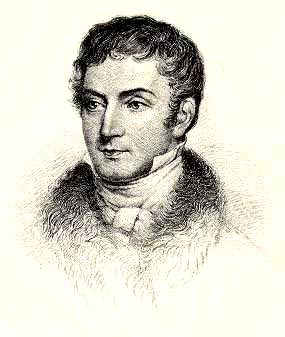
    Washington Irving wrote a funny and wonderful piece on this mouldering in his “The Mutability of Literature” in THE SKETCHBOOK OF GEOFFERY CRAYON. I recommend every writer read this to put life and writing into perspective.

    Share
  • Goodies from Curse of a Dark God

    Bow to the dark god, ye minions. Here’s some of what’s coming in book 2:

    • The dogmen of Toth and their maulers
    • The Ungar and the one they call Ruin
    • The tanglewoods of the woodikin
    • Firesteeds
    • Gloryweaves
    • Nashrud the hunter
    • And last, but not least, the Orange-eyed priest of Mungo

    The end is in sight on the first draft of book 2 in the Dark God series, and because this one has been a roller coaster, I had to post some of the coolness before I have to go back into frantic mode. My word count estimates for this book have been so consistently off it hasn’t been funny. Literally. It’s made me panic and stress. It should clock in around 220k. And then it’s going to be cut, cut, cut.

    In the meantime…dogmen of Toth (give it the James Earl Jones).

    Oh, baby.

    Share
  • Resist the SERVANT marshmellow

    Folks, please resist the SERVANT marshmellow.

    Me and my big mouth. I unwisely let it slip in a comment thread that I had Servant up on Amazon (it’s up early because I need at least 24 hours to make sure my purchase gets the ratings going and to make sure everything looks right). And some of you have gone out to purchase it, for which I love you, BUT I should have made clear that we’re still in the proof check phase. That means we’re carefully going over the beta version of the trade paper book and catching the errors you only see when it’s in book form (next time I’ll do the trade paper first and then the ebook). You might not notice the things we’re catching and will be happy with the proof version. But I hate thinking you’re getting anything but the best.

    If you’ve already purchased and don’t care, fine. If you do, Amazon has a liberal return policy. For the rest of you: DON’T EAT THE MARSHMELLOW. Give us just a few days. Make sure you’ve signed up for the new book release notification on the left. I’ll let you know when everything is ready to go AND on sale 🙂

    Happy holidays!

    Share
  • |

    Update and Fage

    I passed the 90% mark today on SERVANT. It’s been wonderful going back through this story, remembering why I loved these characters so much. The cover too is coming along. I’m looking forward to revealing it in the near future. Right now everything looks like it will release on target, although that may change.

    While you’re here, you know I have been on a quest for delicious low-sugar yogurt for some time. I have found it at last. Behold.

    Fage 2 percent yogurt

    No Greek yogurt has a better taste or texture. And there’s no added sugar. Add some fruit and it’s heaven.

    It’s pronounced “fa-yeh.” Except, how do you pronounce that? Who comes up with product names nobody can pronounce? 

    But it doesn’t matter how you pronounce it. We luvs it, Precious.


    Share

One Comment

Comments are closed.