Indie Thoughts: What drives book sales?
 What are the biggest factors influencing which book a person will read next?
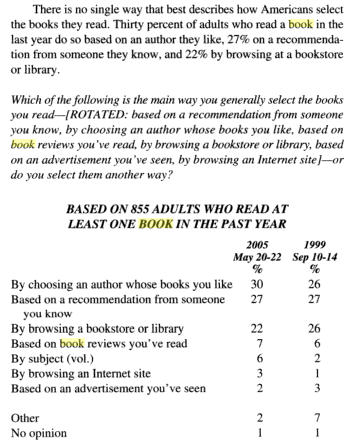
Many surveys have been conducted over the years to answer just that question. I’ve pasted one on the right and summarize the results of others here. One factor sits at the top of almost all of those surveys. Did you look at those other surveys? According to these surveys, folks tend to buy books by authors they already like.
This phenomenon is called a lot of things. One of the most common is “brand loyalty.” Some might be wondering how you define a brand and what could be branded in publishing. KKR has a great piece here that answers those questions.
So brand loyalty. How does it develop? Well, any time you please readers, their loyalty grows and inches them toward the loyal fan end of the spectrum. Your brand may not have the power of a Dean Koontz because you don’t have near the number of loyal customers as Koontz, but you still have a brand. And people who like your stuff are going to be loyal to some degree, but not the same degree.
I think that last point is important to remember: readers that know and like your brand won’t all have the same degree of loyalty.
You have hard-core fans who are totally dedicated to you and make an effort to know what’s happening. You’ve pleased them so much, your brand is gold to them.
You have others who will buy your book the minute they hear it’s out, but don’t make an active effort to keep up to date on things.
There are others who will mark it to be read when they hear about it, but don’t make a big effort to get it unless it’s convenient.
You have others who like your stuff but are still in that period where they like but haven’t yet committed to being a fan. That sometimes may take a few books.
That’s how it was with me and Lee Child. I read the first and liked it. Some time later I saw another and was predisposed to like it. I read that one and liked it too. I wasn’t a Child fan yet. But then I read the third. And that’s when I became a true fan. I’m not hard-core. But I now read everything he puts out within a few months of the release.
From what I can see, branding and brand loyalty matter no less in publishing than they do in any business where you’re relying on repeat customers.
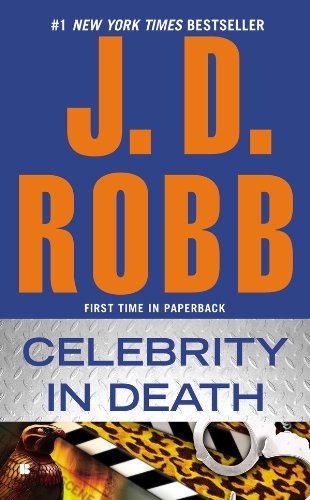 I see the effect of brand loyalty all over. It was the force behind the dramatic explosion of sales when it was revealed that Robert Galbraith, the author of The Cuckoo’s Calling, was J.K. Rowling. It was the force behind the midnight book store events when Stephanie Meyer would release a Twilight book (and the Twilight balls). And other similar events with many other authors. It’s the reason why publishers make the names of a lot of authors so prominent on the cover. Good grief, sometimes that’s all you need. Look at some of the Nora Roberts or JD Robb covers. On many of those the name, the brand, takes up 75% of the cover. You can see customer loyalty blossoming in reviews on GoodReads and Amazon and elsewhere where readers say in essence, “I loved this author and I will be looking for the next book.”
Building a base of loyal customers is they goal in businesses that rely on repeat sales. Because not only do those folks come back for more, but the also tell other folks about the product.
Go back an look at those surveys. What was usually the number two reason someone selected a book?
Word of mouth.
Word of mouth comes in many forms. Recommendations from folks you know. Recommendations from other influencers–folks like Rush Limbaugh or review sites you frequent. Recommendations from some other type of social influence mechanism like a bestseller list on Amazon.
The key takeaway for me is that top two factors driving book sales all stem from a loyal customer base. Which means building that base should be one of my main goals as a writer.
So how do you do that?
The same way everyone else in a repeat customer business does it. At a general level, you:
- Create a product (a book in this case) that’s likely to delight a certain set of consumers (readers).
- Let those consumers (readers) know about it.
- Make it enticing for them to give it a try.
- Make it easy for those who liked it to know when they can get another.
- Get more product (another book that’s similar to the last) out the door so your repeat customers can come back for more.
I’ll be sharing more of my ideas about aspects of those five steps in upcoming posts. And I’ll be wanting to hear what you’ve found that works. Because ultimately we’re all testing various strategies. And the more we share with each other, the more we’ll each benefit.
While you’re waiting, you might want to look at an awesome book on customer loyalty called The Loyalty Effect by Frederick F. Reichheld.