Author: John Brown

  • Miss Potter, Downton Abbey, Human Planet

    Miss Potter, a true romance
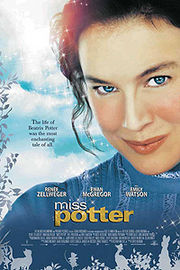
    How many shows are good enough that you can walk into them partway through and within a minute become completely engrossed? I found two this week. The first is the 2006 film Miss Potter, which tells the story of Beatrix Potter (1866-1943), who is the best selling children’s author of all time. You might know her by the most famous of her 23 illustrated children’s stories: The Tale of Peter Rabbit.

    As a side note, Potter spent a lot of time at her family’s country home in the Lake District. I was lucky enough to be able to vacation there once, but never knew until I saw this film that the gorgeous landscapes that had been preserved were partially due to her donation of 4,000 acres.  

    The movie opens with the fact that Potter, who is played so well by Renée Zellweger, has missed her early chances of marriage. She’s a young spinster, and, having a number of her illustrations purchased, is determined to make some money publishing her own illustrated stories. The movie follows her journey to publication, which met with opposition from both publishers and her family, but the real heart of the film is the story of her meeting and falling in love with Norman Warne, whom her parents, especially her mother, don’t approve of because he’s a tradesman. The film is full of wonderful drama, humor, tragedy, and solace. I can’t recommend it highly enough. In fact, I found myself watching it a second time two days later with my girls with just as much enjoyment.

    Downton Abbey, a period drama
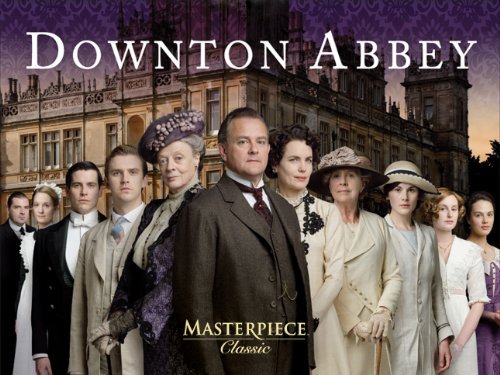
    The second show is the BBC miniseries Downton Abbey.  Its first season of seven episodes aired last year in the USA on PBS’s Masterpiece Theater.  The second season will air at the beginning of 2012.  

    The series is set in the fictional Downton Abbey and follows the lives of the aristocratic Crawley family and their servants. The stories take place over the time period that starts with the sinking of the Titanic in April 1912 to the outbreak of the First World War on 4 August 1914.

    The main story line running through the episodes is the fact that the Crawley family must give up the estate to a distant relation because they have no male heir. But what I find so refreshing is that the stories of various servants are included. Some are funny. Some pull at your heart strings.

    So far I’ve met and enjoyed some truly delightful characters as well as a couple of villains. If you enjoyed the BBC’s Pride & Prejudice or the Cranford series, I think you’ll enjoy this.

    Human Planet, an amazing documentary
    These last two weeks I’ve watched with fascination the eight episodes of the BBC and Discovery documentary series Human Planet. One species on our planet has adapted to every environment on earth—that’s us. The series looks at a number of remarkable ways humans have adapted to the various habitats.

    You’ll see people from all over the globe who do things you never would imagine. Here’s just a small sample:


    • -Folks in Churchill, Manitoba Canada who trick or treat on Halloween with hungry polar bears stalking the streets
    • -A man in Papua New Guinea practicing the ancient art of shark calling in a small canoe
    • -Dolphins that help humans fish in Brazil
    • -A wild honeyguide bird working with Maasai boys to steal honey from wild African bees
    • -Mongolians using tamed golden eagles to hunt fox
    • -People in the eastern Amazon who love their pet monkeys so much they breastfeed them
    • -Inuit Canadians who risk death going under the arctic ice during low tide to gather mussels
    • -Three Dorobo in Kenya stealing food from a lion pride of more than twenty lions


    Oh, and how could I not mention the three children who hunt tarantulas in Venezuela, roasting them up as tasty treats that taste a little like crab. I could go on and on. There are sixty-three of these stories in all, grouped into eight episodes that each focus on a certain habitat, including deserts, the Arctic, jungles, mountains, grasslands, rivers, and cities. Each episode also includes a behind-the-scenes story about the filming of one of the episodes. And some of these are as thrilling as the stories themselves.

    In fact, that’s one of the things I love about this series. In addition to showing me fascinating things I’ve never seen, a number of the stories also raise the adrenaline just a bit. And yet, that’s not all. Because while presenting “strange” cultures, the stories humanize these folks so that instead of presenting aliens, these people feel more like fascinating distant relations. This is storytelling at its finest. If you like nature shows at all, you’ll be totally delighted with Human Planet.

  • This pass through CURSE is done!

    Oh, this feels soooooooo good. Here are the stats.

    • 58 chapters
    • 205,000 words
    • I received the green light midway through April. Finished 27 weeks later.
    • Looking at my time records, it took me a total of 345 hours to finish this draft.  And the lion’s share was new stuff.  This took less time than it normally does for me, but it’s the freaking forth time through and I know the world and characters.
    • I averaged about 13 hours per week. It still bothers me I couldn’t get that closer to 20 hours.
    • This translates to a rate of about 600 words per hour, and that’s with daily edits, thinking, backtracks.  I’m not going to win any speed contest, but at least I’m consistent.

    Of course, it took me an additional 105 hours of work to finally get an outline we could agree on. If I add that, it brings my stats down a bit. But, overall, I’m pleased. For those who want to read an excellent article on writing productivity, look at Kevin J. Anderson’s “The Mathematics of Productivity.”

    Now I need to take the next two weeks to cut about 10%. And fix the weather stripping on our French doors to keep the hordes of  #@!$%! spiders from coming in. Wish me luck.

    Note: it bugs me my bullets don’t show up. Some day I’m going to get someone to fix the stylesheet on this website.

  • The Rocket Science of Overspending

    In July, I blogged some spending 101 for Congress and the President, including contigency planning for alien invasions.  I thought I made some good points.  However, through the whole spending debate that occured this last spring nobody in the media or elsewhere was able to make clear what is going on with the US government. Nobody except Dave Ramsey. He explained it on Fox and then on his website. If you take the big federal numbers and translate them to a size we can understand, here’s the situation:

    – Joe and Susie (the Federal government) make $55,000 a year
    – They spend $96,000 a year
    – At the same time, they have $366,000 in credit card debt

    Look at those numbers again. Every year those clowns in Washington are adding $41,000 a year to that massive debt total. Soon enough, our overspending will kill our ability to do anything else except pay the interest on that debt.  150 years after America abolishes slavery, we decide that debt slavery really is a good idea. Yea! Give us shackles! Give us shackles!

    No wonder our credit score as a nation (our bond rating) was reduced.

    So what did the government do this last Spring? They agreed to find some way to cut spending from $96,000 to $78,000. Meaning they’re still adding $28,000 dollars a year to the government’s massive credit card debt total. Which we have to pay!

    If the US Government was a family, they would be making $55,000 a year, they spend $96,500 a year, & are $366,000 in credit card debt. What’s the first step to get out of debt? Stop overspending! But that means a family that is used to spending $96,500 a year has to learn how to live on $55,000. That’s a tough pill to swallow. It works the same way for the government. You can’t borrow your way out of debt, whether you’re a typical American family or the entire U.S. government. At some point, you’ve got to say, “Enough is enough!” and make the hard cuts necessary to win over the long haul. – Dave Ramsey

    The answer is NOT to print more money.

    If you do that, you reduce the value of each dollar. It’s called inflation. As Ron Paul rightly points out, it acts effectively as a tax. Or as I like to put it–a PAY CUT. How many of you would like to get a nice fat 10% or 20% pay cut this year? Furthermore, instead of fixing the problem, the overspending continues, which means more pay cuts in the future. More fun!

    No, the thing we have to do is STOP SPENDING MORE THAN WE MAKE.  Here’s what has to happen.

    1. We must write into law that Congress balance its budget every year–they must not be able to spend more than they take in except in rare emergencies. This means they might need to build up a rainy-day fund.
    2. We must cut our spending. Now. I linked to an idea Ron Paul has for this in my 101 post where we just go back to 2007 levels of spending.
    3. We must work to increase our revenues. Not through hiking taxes to monstrous levels, but by providing optiomal regulatory conditions for economic growth. See my 101 post. 
    4. We need to make sure the taxes are visible, so the American people can easily see what’s going on. Congress has mandated that lenders provide clients an APR so they can clearly see the rate they will pay on a mortgage. Why shouldn’t we mandate that the IRS send out an ATR–annual tax rate (or maybe Annual Grab Rate or Annual Tax Burden or you come up with the name)–which includes all Federal taxes translated into one total rate?  
    5. We need to give everyone the opportunity to pay for the soldiers that defend them and the roads they drive on, even if it’s just $50-100 a year for the very poor.
    6. We must send people to the White House and Congress who are willing to do what it takes RIGHT NOW.

    I mentioned Ron Paul a number of times above. He’s not my choice for president. But he has added a number of good things to this discussion. Here are the Ramsey links:

    EDIT: Mark Holt makes an excellent point in the comments. Inflation isn’t just a pay cut. It’s a savings cut, a retirement cut, a 401k cut, a house value cut, an everything cut. Using that backdoor method, the DC Connivers institute a tax of everything, something they’d never be able to pass out in the open.


  • Merry Halloween!

    Poetry is a species of literature that struggles to flourish in written and spoken environments.  We forward the occasional insightful, funny, or sentimental poem in our emails. Once in a while speakers will quote a few verses. But we don’t share that form of poetry like we do the poetry in songs. Music is the environment in which poetry thrives.  People say you can’t make money writing poetry—tell that to lyricists and song writers.  I have three poems (songs) that I think you’ll enjoy.

    First is “God Rest Ye Merry Gentlemen / We Three Kings” by Barenaked Ladies and Sarah McLachlan. This is one of the Brown family’s most favorite Christmas songs. It’s such a favorite that we can’t help but listen and sing along all year round. The Bare Naked Ladies put a mix of these two classics to a punchy beat with an acoustic guitar, but then they change the mood part way in by bringing in McLachlan’s haunting, beautiful voice. It is an upbeat, wonderful arrangement.

    The next song is another remake of a classic: “I Heard the Bells on Christmas Day” by Casting Crows.  While the song is updated with modern instruments (drums, piano, guitar), this isn’t a raucous arrangement. It starts with a simple lovely melody and a solo male voice. It moves into a swell with a sweet child chorus that repeats the most important refrain in the song: “peace on earth, good will to men.” There are no bells in the song, but it makes me wish I was back in Europe so that when the bells in the towns there did peal, I would think of the message of this song.

    Now, I know some of you are thinking, “Christmas. In October? Are you kidding me?” So to appease these strict seasonalists, I present “Calling All The Monsters” by China Anne McClain. The perfect groove Halloween song–upbeat and catchy. And you simply must watch the music video that goes with it. It’s good fun that hearkens back to the Michael Jackson “Thriller” music video but is much more playful.  

    All of these songs can be purchased on Amazon for less than a buck each. If you want to preview them, you can on YouTube. Links below. Merry Halloween!

    So what are some of your favorites?

  • |

    PDF of presentation given at Heart of the West Conference

    Had a delightful time delivering “Story Lessons from the Hunger Games” at the annual conference for the Utah chapter of RWA up in Park City. Especially enjoyed delivering a sweet dream telegram involving waxed chests 🙂 Here’s the PDF as promised: Story Lessons from the Hunger Games RWA 2011