Blindingly white and female!

MaryLeonhardt_KeepingKidsReadingThe Guardian just published a report of a survey taken of 34 American book publishers and found that 79% of staff are white and 78% female. Or as The Guardian put it “blindingly white and female” as if it’s some kind of horror show.  The rest of the article bemoans the lack of diversity in publishing and our society in general and quotes the author of the study suggesting that these percentages should be monitored.

Is anyone up in arms about appropriate diversity percentages in the NBA or NFL?

Some might roll their eyes and ask me not to trot out that old chestnut. But it’s not a chestnut. It’s a point–nobody cares, me included. So why care about this? Many industries will be skewed toward one gender or race than another. As long as everyone has free opportunity to compete, who gives a flip?

Maybe that still doesn’t satisfy. Okay, how about this. According to Humanites Indicators, approximately 70% of degrees in English language and literature in America are awarded to…women. And about 82% are awarded to Whites. I’m assuming these percentages are probably pretty good indicators for the gender and race of folks interested in working at publishing companies.

If so, the survey results don’t reflect some white woman conspiracy at these publishing houses. They simply reflect the choices people make in college.

By the way, did you know the United States is still 72% White and European. So it’s not surprising to see roughly that many Whites in these jobs. The numbers might be a little high, but minorities seem to be pursuing other degrees in greater numbers (compare the overall percentages here versus those with ELL degrees).

This is not to say that we don’t want to welcome authors from all different background. We do. But if you want more men and more minorities, then maybe instead of monitoring publishers, you ought to start by seeing if you can attract more men and minorities to ELL degrees.

Or even better yet, how about reaching out to more boys and minorities at an earlier age and helping them learn the delights of reading and writing? Maybe if they like it, more of them will go into it as a career.

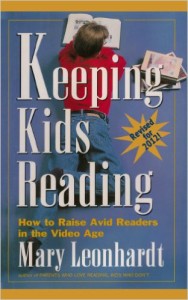
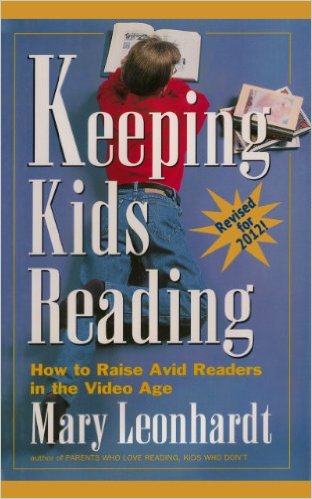
The best program I’ve seen for helping kids learn to love reading is the one Mary Leonhardt outlines in Keeping Kids Reading: How to Raise Avid Readers in the Video Age. It’s the culmination of the insights she gained over her thirty-five years teaching high school English and focusing on helping kids learn to LOVE reading. What an excellent book!

Oh, and one other idea. It might be effective to maybe just skip publishers altogether and help folks go directly to readers as indie writers. Amazon’s algorithms are pretty much race- and gender-blind.

Share

Similar Posts

  • The Good Guy by Dean Koontz

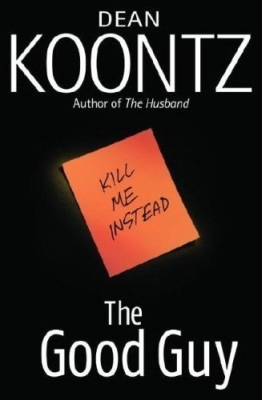
    Good_Guy_Dean_KoontzSo let’s say you’re in a bar and a guy shows up, mistakes you for someone he was meeting, and you play along. Just for fun. You’ll let him know his mistake sooner or later. But then he slides a manila envelope to you and says, “Half of it is there. Ten thousand. You’ll get the rest when she’s gone.”

    Would you say, “Sorry, dude. I’m not your hit man”? A woman’s life is on the line.

    In Dean Koontz’s The Good Guy, Tim Carrier is too astonished to react. The man leaves. Carrier opens the envelope. There’s ten thousand in cash and a 5×7 of the woman. She’s Linda Paquette who lives in Laguna Beach.

    A few minutes later the actual killer shows up. Makes the same mistake. What do you do?

    Carrier plays along, tells the man that he’s decided not to go through with it and to take the ten thousand as a “kill fee.” The man leaves. Carrier goes to alert the woman. But very soon the killer and those who hired him realize the mistake. And now they’re after both Carrier and the original target.

    The Good Guy was a wonderful story of action and suspense. It’s also a love story. Koontz portrays a deadly and frightening killer. But he also includes lots of banter between Carrier and Paquette. Both have secrets which are interesting to learn. And then at the end of the book, when you think it’s all about a kill, Koontz twists it. Then he twists it again. I loved this story and enjoyed the characters immensely. But the book went beyond mere entertainment. It’s a book that also makes you think about how you live.  

    I should be working hard on draft 3 of Curse of a Dark God. But every now and again I need a break. I’m glad I took this one with Koontz.

    Share
  • Laff and Learn

    My daughters have introduced me to Studio C, a comedy program that started with The Divine Comedy troupe on the BYU campus who all growed up and were given a gig on TV. They do these  hilarious skits.

    Like “Drivers Ed”

    And “Blind Date“.

    And “Shoulder Devil”.

    I hope you enjoy them as much as I do.  BTW, Studio C airs weekly on BYUtv.

    My oldest daughter introduced me to Olan Rogers. Who is crazy.  Here’s “Ghost in the Stalls”

    If you loved that, I think you’ll enjoy “Midnight Claw”  

    Sock slouch . . .

    Next is John Branyan’s brilliant “Three Little Pigs”. My family and I have been enjoying this for months.

    Finally, here’s something to think about. You know I enjoyed Jonathan Haidt’s book The Righteous Mind. Matt Wolfe pointed it out his TED talk to me. The one that preceeded his book. If you’re conservative, like I am, this talk will, at times, annoy you.  But the ideas behind it are great.

    If you want to be equally enlightened but less annoyed, let me suggest you watch Bill Moyer’s interview of Haidt instead.


    Share
  • Good Stuff! Mr. Holmes and 13 Hours, the book

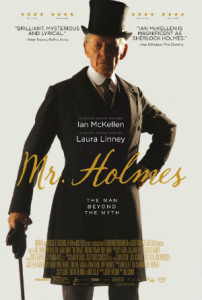
    Earlier this month I watched Mr. Holmes.

    Mr._Holmes_poster

    It left me with this fine peace. With this feeling of goodness and light, in spite of, or probably because of, a number of poignant moments. It also surprised me.

    To write a story like this, to give people this kind of gift…

    What a wonderful, powerful thing.

    Now, it was not a thriller. It’s not an episode of Sherlock or Elementary. It’s not a murder mystery. It reminds me of Saving Mr. Banks most, but also of Miss Potter, maybe even The King’s English. It has that kind of tempo.

    Basically, Sherlock Holmes is a much older man. He’s retired. And there’s a case he’s trying to solve. But, again, this isn’t a murder mystery. This story is about Sherlock himself and wisdom and the beauty of change whenever it occurs.

    The story lingered with me, and I avoided reading or watching anything else for a few days to savor it. Give yourselves a treat. Watch this wonderful story.

    *

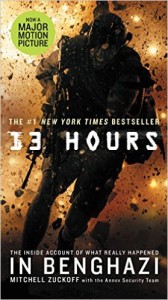
    The book 13 Hours: The Inside Account of What Really Happened in Benghazi was the answer to so many questions.

    13_Hours_ZuckhoffWant really happened in Benghazi?

    What we’re we doing there?

    Who are the brave men who tried to save the ambassador?

    It was also a thrilling read in the tradition of Marcus Luttrell’s Lone Survivor. As such, it purposely avoids the political aspect of the incident. It’s not about what the officials of the United States government did, said, or knew, or the political firestorm that ensued.

    It’s not a hit piece on Clinton and Obama, nor is it any kind of defense. Instead it simply documents the events on the ground in those last 13 hours, relying most heavily on what the five American security contractors who rushed to give aid said happened. Those men–two former Marines, two former SEALs, and a former Army Ranger—teamed up with Mitchell Zuckoff, the writer, to simply set the record straight.

    I couldn’t put the book down. Not only because the book’s well-written and the characters and situation are compelling, but also because of the insight it shared into some key dynamics within Libya itself. For example, it helps you understand why the revolt against Muammar Gaddafi centered in Benghazi, not Tripoli. It also touches on some of the currents inside these Muslim-majority countries close to the epicenter of Sunni extremism—Egypt and Saudi Arabia–so volatile. And it shares details, large and small, as only those who experience such things first hand can.

    If you want a fascinating account of really happened on the ground in Benghazi, get this book.


    Share
  • The Drowned Cities by Paolo Bacigalupi

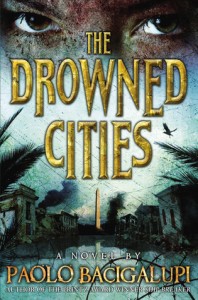
    The Drowned Cities by Paolo BacigalupiI just finished The Drowned Cities by Paolo Bacigalupi, and, holy cow, folks—this story rocked.

    It’s set in the future in the area around Washington D.C. which is the titular drowned cities. They’re drowned because the climate has gotten warmer, the seas have risen, and D.C. is half under water, permananetly flooded. It’s more like Georgia or Florida—gators, kudzu, the works. But this is not another dumb book about global warming. If it were, I wouldn’t be writing this.

    No, the United States has fallen apart. Up north there’s some alliance with money and power and the ability to keep those in the Drowned Cities out. South, who knows? West? Don’t know. But right around D.C. everything has gone to hell.

    It’s like Mogadishu, Somalia in the 1990’s (Blackhawk Down) with warlords fighting each other, tearing the place apart.

    It’s like Sierra Leone at the end of that decade with different factions butchering locals and forcing kids to fight as soldiers.

    Except instead of the U.S. or Europe or the U-freaking-N sending in peacekeepers to stabilize the situation, it’s China. And just like the U.S. in Somalia, the warlords send the Chinese peacekeepers packing. And so now it’s just chaos.

    Talk about a setting for a story. But Bacigalupi doesn’t stop there. He adds in genetically modified creatures. He starts the book with one named Tool. A creature that’s got the DNA of humans, mastiffs, tigers, reptiles and who knows what else all combined to make him smarter and stronger than humans ever could be—a monster that’s the ultimate killer, the ultimate soldier, the ultimate war machine. One that was bred to submit to a master, but something went wrong with Tool. And he was able to break free of that bond.

    Tool is trying to escape prison and death. But as mighty as he is, he’s weak and injured. And then two kids from a village run into him while in the jungle. He knows they’re going to reveal his whereabouts to the warlord searching for him. In his weakened state, Tool is only able to grab the small boy named Mouse.

    Mahlia, the girl, promises to bring medicine if Tool will only spare the boy. He knows she’s lying.

    And so starts a rich tale of the monster, the boy, and the girl: a tale that is filled with friendship, triumph, loss, heroism, cowardice, and earthy sci-fi coolness all set in the midst of a guerilla war. The beginning sucks you in. The ending leaves you breathless. Along the way you get to see into the character of all three plus some of the bad guys. In the end you get a story about sacrifice and love.

    If you liked A Long Way Gone, Ishmael Beah’s memoir of his time as a child solider in Africa; if you liked The Hunger Games, and not primarily for the romance; if you like person in jeopardy fiction or war flicks where a small group has to fight for its life, I think you will love this book.

    This is the second book set in the same world. The first was Ship Breaker. Tool, one of the most interesting characters I’ve come across, is in that one too. But you don’t need to read that to enjoy this. And I wouldn’t put this read off to do so. Go give The Drowned Cities a try. Three or four pages in, I suspect you’ll be completely lost in the wondrous tale.

    Share
  • | |

    30 books you should read before you die

    An avid reader friend of mine began reading through the books in a list called “100 books you must read before you die.”

    She got to Jack Kerouac’s On The Road and went to Facebook and posted the following: “I don’t get the appeal. It’s about a group of boys/men who are irresponsible, drunks, whoring around taking advantage of others and being enabled by their women. Why is this a classic and why should I have wasted my time on it? Can some of my literary friends explain? I hated a brave new world and the handmaid’s tale too.”

    Is the book a classic?

    Should she read it before she dies?

    Is it really that important?

    Let me share an edited version of my response and then provide my list of 30 books you should read before you die.

    *

    Annette, the unfortunate truth is that these lists of “classics” are a sham because there is no objective criteria for determining literary excellence.

    Or maybe I should say that measuring quality in the arts isn’t like measuring the unambiguous, objective score of a baseball game. After books exhibit a certain level of proficiency, it becomes increasingly difficult to distinguish the quality of one book from another, especially because much of this depends on a reader’s interests and subjective experience of the story.

    When it becomes hard to rank performances, people rely on other measures. One of the most powerful is social networks.

    So if two readers find two different books that blow them away, one of the books might get all the attention because the one book gets picked up by a news service (The New York Times) or a platform (the Oprah Book Club effect) or some other social network of influence. A lot of the so-called literary classics only appear on various lists because they tapped into the academic network, which kept them alive far longer than they would have lasted otherwise.

    On The Road is simply a book that made a stir among some circles in the 1950s. That’s it.

    Was it more important or of higher quality than Exodus? The Chronicles of Narnia? Lord of the Rings? A Town Like Alice? All published in the 1950s as well.

    It depends.

    If you’re wanting to understand the 1950s beat culture, it would be an important book.

    But if you’re wanting to understand fantasy writing of the time, it wouldn’t.

    If you’re wanting to read a book that’s had a huge impact on popular culture, well, LOTR beats On The Road like a dog.

    Some people have the feeling that the so-called classics have some inherent medicinal value because someone put them on a list and called them classics.

    Nope. They’re just stories. Some of which can shed light on the issues and interests of a part of the culture in a given period. But if you’re not interested in that specific sub-culture, who cares?

    And if you’re reading to be entertained, moved, uplifted, or educated—which ones do that best for Annette is for you to decide.

    So all that to say I wouldn’t devalue your reaction to the book ?

    *

    I’m now going to give you my list.

    But it’s not going to be a list of titles. Nor will it focus on a book’s impact on some sub-culture of a given period.

    It’s going to be a real list. One that focuses on what so many of us go to stories for.

    1. The one that makes you weep.
    2. The one that makes you giggle and snort.
    3. The one that reminds you of what it’s like to fall in love.
    4. The one that gives you hope.
    5. The one that you begin to read more and more slowly because you don’t want it to end.
    6. The one that scares the soup out of you.
    7. The one that you can’t put down, even though you need to wake up early in the morning.
    8. The one that makes you wish you lived there.
    9. The one that’s so good that when you close it, you immediately start to read it a second time.
    10. The one that gives you and your child hours of pleasure together.
    11. The one that gives you a sacred, spiritual experience.
    12. The one that makes you reread some of the lines because the turns of phrase are just so delicious.
    13. The one that gives you courage.
    14. The one that takes you on an awesome adventure.
    15. The one that makes you want to be a better person.
    16. The one that bores you to tears (just so know you how good the others are).
    17. The one that introduces you to a different culture that delights you.
    18. The one that makes you think.
    19. The one that lingers with you for days.
    20. The one that gives you lovely insights.
    21. The one that inspires you to love your spouse more.
    22. The one that introduces you to the sorts of people you normally don’t like and makes you actually like them.
    23. The one that delights you with its characters.
    24. The one that whisks you away to a different historical period.
    25. The one that inspires you to give your children a hug.
    26. The one that gets your adrenaline pumping.
    27. The one that sparks all sorts of ideas in your head.
    28. The one that makes you wonder and start imagining what it would be like to be there.
    29. The one that blows your freaking mind.
    30. The one that makes you stand up in your living room and cheer.

    We could do more than 30, couldn’t we?

    Like the one that makes you think people from a different time period are just like us. And the one that makes you think people from that same period are completely alien.

    But I think we’ll stop. That there above is a list.

    Those are 30 books I think everyone will want to read before they die.

    Share
  • Audio book is on the way

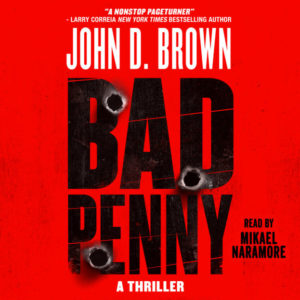
    This last week I listened to the reading of Bad Penny by Mikael Naramore on our trip down and back to Panguitch (and the forest fire from hell) and then later here at the house and was so happy I hooked up with Naramore. He’s done a wonderful job. He nailed the voices of Frank, Sam, Pinto, Carmen, Ed (ye slimy villain), and all the rest and delivered excellent sound. And the process was so easy.

    Right now ACX is doing its quality control on the production. When they clear it, it will be posted for sale on Audible, iTunes, and Amazon.

    I’m very excited to bring Frank to the audio market. I think he and Naramore are going to please a lot of listeners.

    Here’s the final cover for the audio book.


    Share