Good Stuff! Mr. Holmes and 13 Hours, the book

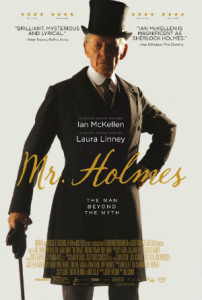
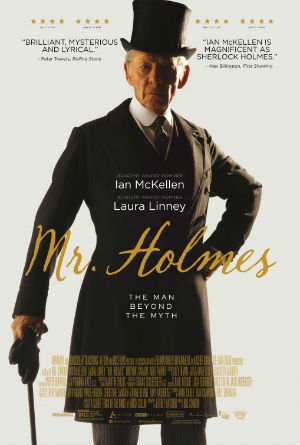
Earlier this month I watched Mr. Holmes.

Mr._Holmes_poster

It left me with this fine peace. With this feeling of goodness and light, in spite of, or probably because of, a number of poignant moments. It also surprised me.

To write a story like this, to give people this kind of gift…

What a wonderful, powerful thing.

Now, it was not a thriller. It’s not an episode of Sherlock or Elementary. It’s not a murder mystery. It reminds me of Saving Mr. Banks most, but also of Miss Potter, maybe even The King’s English. It has that kind of tempo.

Basically, Sherlock Holmes is a much older man. He’s retired. And there’s a case he’s trying to solve. But, again, this isn’t a murder mystery. This story is about Sherlock himself and wisdom and the beauty of change whenever it occurs.

The story lingered with me, and I avoided reading or watching anything else for a few days to savor it. Give yourselves a treat. Watch this wonderful story.

*

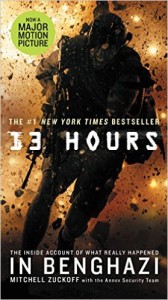
The book 13 Hours: The Inside Account of What Really Happened in Benghazi was the answer to so many questions.

13_Hours_ZuckhoffWant really happened in Benghazi?

What we’re we doing there?

Who are the brave men who tried to save the ambassador?

It was also a thrilling read in the tradition of Marcus Luttrell’s Lone Survivor. As such, it purposely avoids the political aspect of the incident. It’s not about what the officials of the United States government did, said, or knew, or the political firestorm that ensued.

It’s not a hit piece on Clinton and Obama, nor is it any kind of defense. Instead it simply documents the events on the ground in those last 13 hours, relying most heavily on what the five American security contractors who rushed to give aid said happened. Those men–two former Marines, two former SEALs, and a former Army Ranger—teamed up with Mitchell Zuckoff, the writer, to simply set the record straight.

I couldn’t put the book down. Not only because the book’s well-written and the characters and situation are compelling, but also because of the insight it shared into some key dynamics within Libya itself. For example, it helps you understand why the revolt against Muammar Gaddafi centered in Benghazi, not Tripoli. It also touches on some of the currents inside these Muslim-majority countries close to the epicenter of Sunni extremism—Egypt and Saudi Arabia–so volatile. And it shares details, large and small, as only those who experience such things first hand can.

If you want a fascinating account of really happened on the ground in Benghazi, get this book.


Share

Similar Posts

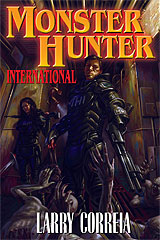
  • Monster Hunter International by Larry Correia

    MonsterHunterInternational_LarryCorreiaThere’s a joke that all horror movies would be over in two minutes if you just made the hero smart and gave him a gun.

    Well, Correia gives his likeable hero a gun, but not just any old thing. If you’re going to kill a vampire, why not use a rocket propelled grenade or a flame thrower? In fact, if there were enough monster outbreaks, you might have a government agency. You might also find that agency was willing to outsource some of the monster hunting to private contractors (ala Blackwater). And you can bet they won’t be hunting with pea shooters. They’ll be doing it right, with brains and firepower. Correia, someone who loves guns (used to own a gun shop and shoot competitively in rifle, shotgun, and pistol) and monsters, wrote a story that does just that.

    The idea of Larry Correia’s Monster Hunter International might remind you a bit of X-Files or Men in Black, but it’s neither. However, it is as  good as or better than both. Correia tells the story of Owen Pitt, a big lug of an accountant, who, as he was working late one evening, gets called into the office of his boss. No big deal, right? Except the fat man is naked, transforming into a werewolf, and vows to eat Pitt’s heart. It’s not quite how you want to end your day tallying debits and credits. Pitt almost dies in the encounter, but manages to “live the American dream” and throw his incompetent jerk of a boss from the fourteenth-story window and splatter him on a double-parked Lincoln Navigator below.

    Good work for a bean counter. When Pitt finally recovers, he gets an offer he can’t refuse (mostly because of the alluring agent that comes to recruit him), and he joins Monster Hunter International (MHI), the private contractor who sends out special force teams to use any means at their disposal to kill monsters. Unlucikly for Pitt, one of the baddest monsters around is just about to ruin the world forever, and Pitt finds himself in the middle of the fight.

    Correia fills the book with enough action for any red-blooded male, a variety of bad mamba jamba monsters, and wonderful characters. There’s romance and heroism (I got a lump in my throat at one part toward the end), but his signature is his humor. I laughed again and again.

    Part of that humor stems from the fact that Correia has an ear for good lines. Part stems from his delight in taking common tropes and stereotypes and twisting them. And this is another one of the things that I enjoyed immensely about the book. For example, the team of newbie hunters that Pitt joins is not made up of square-jawed males and females with Navy SEAL backgrounds, although some in the company do have that. Nope, Correia puts together an accountant, librarian, school teacher, and stripper (all people who faced some kind of monster and are ready for payback), and he makes them believable hunters. 

    This tongue-in-cheek tweaking is everywhere. There are elves in this book unlike any you have ever seen. But he also makes it personal. Owen is not your typical accountant. Even a number of the minor characters get this treatment. For example, one of the people on the team is a Black guy with Rasta hair. But Correia doesn’t choose from what Correia calls one of the four Hollywood stereotypes. Nope, this guy plays against those types. He isn’t the comic relief, the gangsta, the sports dude, or scary male. He’s his own man, a shy virgin with a good heart. Correia also gives his characters interesting backstories. And one of the delights is discovering them.

    I encountered a few minor flaws in the presentation, but these are easily overlooked. Easily. There’s also quite a bit of profanity (and so those who wish to avoid it are forewarned). However, when I turned the last page Friday night, I looked up at Larry who was lying on his bed in our La Quinta hotel room in Denver, his concealed .45 and 9mm guns on the floor beside him, and said, “Wow. WOW.” And then I think I said, “Dude, what a marvelous read” or maybe it was “Oh, great lord of zombie destruction tales do not smite me,” but I’m not sure because I was still thinking about the perfect last line of the perfect last scene of the last chapter.

    Now, those exclamations of satisfaction and delight had nothing to do with the guns on the floor, that Larry’s a deadly shot, or that he’s a big 6’3″ Portugese. It has nothing to do with the fact that he and I were on a book tour together. I don’t read books that don’t grab me. End of story. I stopped doing that long ago. I don’t care who wrote them. And I don’t give false praise. False praise irks me to no end and does nobody any good, especially not the receiver. The truth is that Larry’s book was simply too good to put down. It pulled me in with the opening quote and kept delivering the goods until the end. And if you don’t believe me, you read the quote that both inspiried and opens the book and tell me you don’t want to turn the next page.

    “You know what the difference between me and you really is? You look out there and see a horde of evil, brain-eating zombines. I look out there and see a target-rich environment.” ~Dillis D. Freeman Jr.

    Yeah, it got ya, didn’t it. The ride is waiting folks. Just go on over to Amazon. Correia is going to be a writer to watch.

    Share
  • |

    Brain Nazis and Feeling Good by David D. Burns, M.D.

    Have You Got a Brain Nazi?

    If you’re conscious, you’re monitoring your environment. You have to. It’s how you survive. This is not something you can turn off. It’s just one of those systems that runs automatically, like your liver. You’re always appraising the situation.

    And as soon as you encounter something that’s likely to be of importance to you or yours, your monitor kicks off a physical response to prepare you to deal with or take advantage of it.

    The problem is that sometimes a Nazi propagandist worms his way into the monitoring station. And like any good Nazi, he distorts reality.

    Sometimes those distortions lead to burning resentment, sometimes to unwarranted shame or anxiety, sometimes to eating disorders, sometimes to grave depression. When I heard of the tragic suicide that occurred in our community a few months ago, my heart went out in sympathy to the girl, her family, and friends.  I’m not a doctor. I don’t know the situation. But I’m positive she was dealing with one of these villains.

    I wished I’d been able to share something that’s been a literal life saver to me. Now, it might not have changed anything. But hopefully it can change things in the future for you and others you know who may have to deal with a Nazi in the brain.

    And you will have to deal with a brain Nazi at some time.

    This is not something that affects a miniscule portion of the population. In any given year you can expect more than 15% of a population to experience some form of this [1]. That’s roughly 238 of the estimated 1,592 people 18 years and older in the little county where I live [2]. Rates for teens are similar [3]. Besides, you don’t have to have a full-blown case of a depression for distortions to affect you. How many of us haven’t made faulty comparisons with others? “Oh, she’s so thin and has such great hair; I’m so dumpy.” “Oh, he’s doing so well, and I’m not. I’ll never be a success.”

    The question is not whether you or someone important to you will have to deal with it. The question is how prepared you’ll be when you do. Everyone deals with distortions now and again.  Which means everyone can find a little more enjoyment in life by showing their brain Nazis the door.

    So how does it all work? How do you show the villain out?

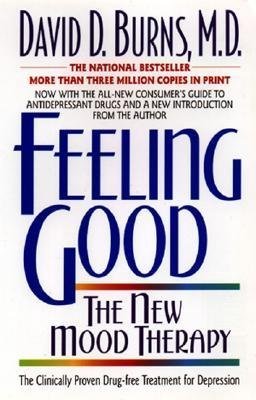
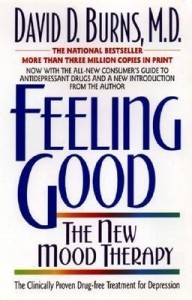
    I’m going to summarize it below, but I’ll tell you right now that the book that saved my life was Feeling Good by David D. Burns, MD. This isn’t positive mental attitude. It’s not neuro-linguistic programming. It’s not the mumbo jumbo of Freud and Jung. This is practical and proven. It is the most prescribed intervention for dealing with these issues in the current medical community. It’s prescribed because it works.

    Your Brilliant Appraisal-Emotion System

    To understand this, you have to understand how emotions work. As I said before, you’re always monitoring your situation. You hear a buzz and see a rattlesnake on the path two feet away. Your monitor immediately responds. Alarm, adrenaline, increased blood flow–all of that to get you ready to deal with the situation. Your monitor writes “alarm” on your face to communicate it to those around you–to warn and ask for help. This happens in less than a blink of an eye.

    But this doesn’t just happen with danger. It happens when we encounter unfamiliar things. When we encounter positive things. You see a great friend who makes you laugh all the time. Boom, your monitor responds. You smile. Feel. Focus. You do so because you not only want to avoid dangers, you also want to seek out the things that make you happy.

    Our emotions prepare us to fight, flee, seek, and pitch woo. Our little monitoring and physical response system is brilliant.

    But there’s more. We don’t rely on just the automatic subconscious monitoring. We also have a cognitive (conscious thinking) part. Let’s go back to the rattlesnake. You walk out into the garden, step on a slither, and immediately go into alarm mode. Then you look, consciously see the slithery thing is not a snake, but the garden hose. You relax. Laugh.

    The quick subconscious appraisals keep us alive, because with snakes and other things, if you’re slow, you’re dead. We don’t have time for thought. If you touch a hot stove, you want an immediate reflex. You don’t want to ponder it for a second or two. On the other hand, the cognitive appraisals help us further appraise a situation. They bring more of our resources to bear on the situation.

    How Does the Nazi Get In?

    So there are three parts of the appraisal-emotion system: the subconscious appraisal of the situation, the physical response, and the cognitive appraisal. Each of the three parts affects the other two. And when things are running smoothly, we don’t have problems. But sometimes we get a distortion mucking up the works. We make a faulty appraisal of the situation. And therefore have a faulty physical response.

    For example, you’re a mother. You’ve had a hard day. The kids make a huge mess with flour in the kitchen. You yell, freak out. When they’re cowering in their rooms and you’re cleaning up the flour, you think, “There I go again. I’m a total failure. I can’t stand it! I never do anything right! I’m a terrible mother.” These thoughts make you even sadder.

    And that’s the propaganda. That’s your brain Nazi with his all-or-nothing thinking, telling you that you either perform perfectly or you’re a failure.

    But is that true? No, it’s not. You might be a B+ mother, filling the lives of your kids with all sorts of goodness. You might have just had a great time reading with the kids not thirty minutes before. But the brain Nazi tells you to forget that. “Vatch dis film,” he says, “und see de horrors of vut you are!”    
    And the all-or-nothing thinking gambit is just one of ten common weapons he uses. Furthermore, this happens so quick that we often don’t notice it. In fact, we’ve often repeated some of these distortions so often than they’ve become almost automatic.

    Mr. Nazi, Meet Mr. Bazooka

    The good news is that you can pull the lid off the lies. You can open the door, spot the brain Nazi that slipped in, and take him out. You can do this because one of the three parts of the system is our cognitive appraisal. This means you can consciously stop the movie, pin the distortion on the wall, and uncover the truth. Once you do that, it’s like the rattlesnake scenario above—oh, it’s a hose, we realize, not a snake, and the appropriate emotions immediately follow.

    But you need to know how to stop the movie. You need to know how to spot the lies. David D. Burns, MD tells you exactly how to do this in his book Feeling Good. (By the way, DON’T get this book confused with his Feeling Good Handbook–you DON’T want the handbook; you want Feeling Good, the book.)  In the book, Burns talks about the theory, the results, and then gets right down to the practical techniques used to blow the brain Nazi to kingdom come.

    A few years ago I hit a bad patch with a brain Nazi that had taken up residence. A very bad patch. He’d been there for quite some time. This book and a good counselor saved me. I thank the Lord for that. By the time I went to see a medical doctor to assess whether chemical issues might be playing a role, I was stable. I wasn’t out of the woods yet, but I had opened the lid and found the villain at the controls. I used the techniques Burns gave me, and I’m happy to say that while the brain Nazi still comes round every once in a while, I can spot him. And I can take that sucker out.

    Go to the library and check out the book and take the assessment test. If you, or someone you know, scores in the mild range, maybe you’ve just experienced a very sad event. But maybe you’ve also got a villain in residence. Get the book. Read it. Be happy. Nobody needs to live with a Nazi at the controls.

    For Authors

    By the way, fiction authors should pay special attention to this stuff. Not because we’re more susceptible to brain Nazis than others, although we do have to deal with our fair share as we develop and share our stories. No, we should because the emotion process is exactly what we’re trying to tap into. Knowing the principles can be very useful indeed. Let me recommend you read the books on emotion listed on the Learning With Pros page.

    Sources

    1. 1. http://www.nimh.nih.gov/health/publications/the-numbers-count-mental-disorders-in-america/index.shtml
    2. 2. http://quickfacts.census.gov/qfd/states/49/49033.html (find your state and county and see how many folks are likely dealing with a brain Nazi in your area)
    3. 3. http://www.oas.samhsa.gov/2k5/youthDepression/youthDepression.htm
    Share
  • Gandhi & Waiting for Superman

    Enthralling History

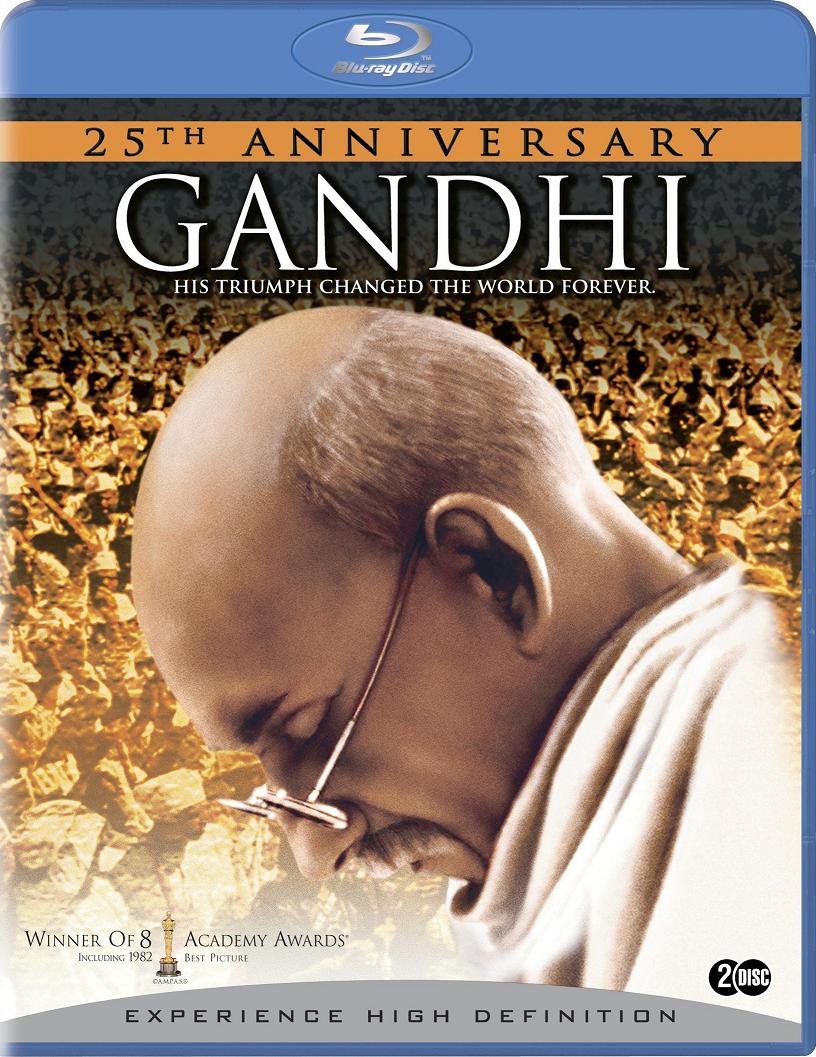
    The miracle of Netflix means that no movie or television show becomes unavailable. And there are so many produced over the last fifty years that are so very good. I recently re-watched the 1982 Gandhi with my family and have to say it is one of those fabulous movies that’s amazing every time I watch it. Not once did the production feel dated. And even though I’d already seen it, I found myself enthralled with the events and the character played so well by Ben Kingsley. No wonder it won eight Academy Awards.

    The movie portrays the last 50 years of Mahatma Gandhi’s life. It starts in 1893, when Gandhi, educated in the UK, is thrown off a South African train for being an Indian and traveling in a first class compartment. Gandhi decides to start a non-violent protest campaign for the rights of all Indians in South Africa. Quite an undertaking in those years. He’s arrested and finds himself in a number of dicey moments, but ultimately brings change.

    Gandhi is then invited back to India, where he is considered a national hero. Leaders there urge him to take up the fight for India’s independence from the British Empire. Gandhi agrees and mounts a non-violent campaign of unprecedented scale. Nothing of this magnitude has ever happened in the recorded history of the world. Which is why it’s a rough road all the way to the end.

    There’s suspense and humor and heartbreak in this movie. But it goes far beyond entertainment. This movie will move you. It has power to change. This movie is what history should be. If you haven’t seen Gandhi, or haven’t seen it in a while, let me recommend you get it this week and sit down with friends or family to enjoy a wonderful experience.

    Education and Teachers Unions

    I find it interesting that teachers in Utah, one of the most conservative states in the union, send almost three million dollars each year to the National Education Association. That’s the $165 in NEA dues for each of the roughly 18,000 union members in Utah. This is interesting because the NEA, the largest labor union in the United States, is one of the biggest supporters of the Democratic party.

    For example, the NEA spends roughly 85-90% of its direct candidate donations on Democrats. The NEA is quick to point out that those direct candidate donations do not come out of the three million Utah teachers send to them, but from additional donations to one of their political action committees. It’s illegal, in fact, to contribute directly to candidates with money received from union dues. However, there are a lot of other ways to support candidates and causes in addition to direct donations. 

    Mike Antonucci, a teacher’s union observer, explains just how that works in his article “How Much Does the NEA Spend on Politics”. The upshot is that the NEA can spend as much as they want on politics with their dues. And the lion’s share of that spending goes toward liberal causes. ACORN, for example, has been a beneficiary of NEA grants.

    Now, I don’t see anything wrong with that. People should be able to donate to whatever cause they think is important. The NEA has just as much right to make their voice heard as anyone else. I just think it’s interesting that so many conservatives have been led to donate their cash to these causes. And it’s not just in Utah. About 60% of NEA members identify themselves as conservative or independent. And yet they donate to these liberal causes via the union. What’s even more ironic is that most of them probably do not personally donate anything close to that to conservative candidates and causes. It’s not like teachers have tons of extra cash.

    It’s a neat trick to get conservatives to donate so much money to liberals. And perhaps some teachers feel it’s the price they have to pay for the services they want from the union. I would think it would be better to start another union, but that’s me. However, this is not the only kink teachers unions have introduced into the education system.

    I’m not going to argue that teachers unions are evil. These unions arose in a time when female teachers were heavily discriminated against. They do some good things. But mixed in with the good is, well, you’ll have decide for yourself if it smells.

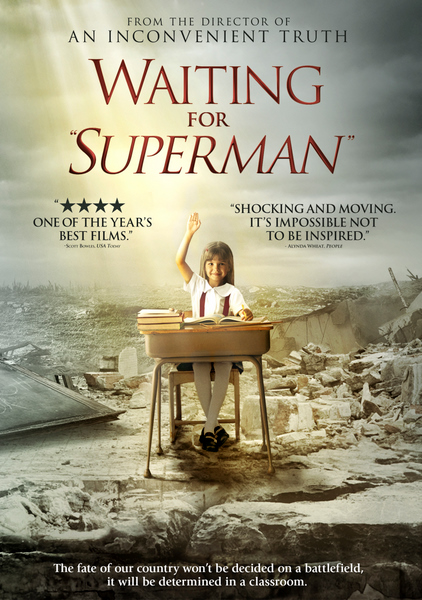
    A great place to begin is with the documentary Waiting for Superman. You should know this movie came out of the gate with a huge strike against it in my mind–it’s produced by Davis Guggenheim, the same guy who did An Inconvenient Truth. Good grief, that’s all I wanted was another two hours of Chicken Little running around saying “sky is falling, the sky is falling!”

    But I didn’t find any of that in the film. For example, the film doesn’t say all American schools are awful. It doesn’t say teachers are terrible. Contrary to what the movie’s critics claim, including the NEA and its many state and local affiliates, the film doesn’t suggest charter schools or standardized testing are the silver bullet answers to our issues. I simply didn’t encounter the sensational propaganda others claimed would be there.

    No. What the film does is examine some of the issues in our current system, which put so many children at a disadvantage, and the role the teacher unions play. It does not, as some critics claim, go on to suggest any solutions. It presents a problem, experienced by real parents and children right now, then poses a question: what can be done?

    I found it eye-opening and thought-provoking. I think it’s a must-see. If you have children or grandchildren in school, if you’re one of our many fine teachers or school administrators, you’ll want to watch this movie and then ask yourself that same question. What can be done? What works? What’s best for the children? And does the current way our unions operate work in any way against those interests? For those who elect not to go into immediate union-attack or union-defense mode, I think this film will introduce some valuable points to the discussion about education.

    Share
  • Good Stuff: The Free State of Jones

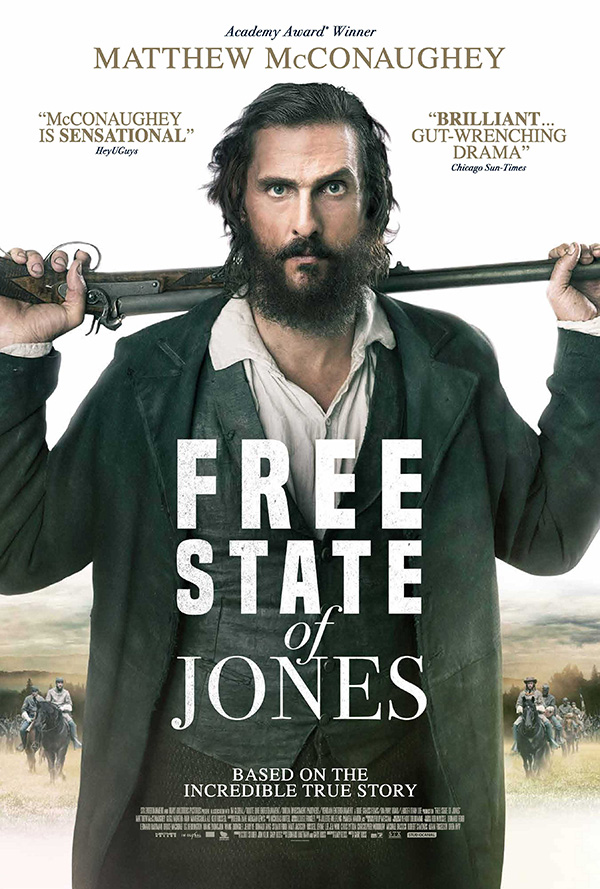
    I recently watched a moving and surprising film called The Free State of Jones, starring Matthew McConaughey. It’s about Newton Knight and how he led three counties in Mississippi to break away from the Confederacy during the Civil War.

    Think of that. On January 9, 1861, Mississippi declared it’s independence from the United States over the issue of slavery. They were the second state to do so. South Carolina was the first. On reflection, it makes sense these two states seceded first because they had the highest portion of the population as slaves. South Carolina’s population was 57% slave. Mississippi’s was 55%.

    Mississippi’s declaration of independence from the Unites States starts with this paragraph.

    “Our position is thoroughly identified with the institution of slavery—the greatest material interest of the world. Its labor supplies the product which constitutes by far the largest and most important portions of commerce of the earth. These products are peculiar to the climate verging on the tropical regions, and by an imperious law of nature, none but the black race can bear exposure to the tropical sun. These products have become necessities of the world, and a blow at slavery is a blow at commerce and civilization. That blow has been long aimed at the institution, and was at the point of reaching its consummation. There was no choice left us but submission to the mandates of abolition, or a dissolution of the Union, whose principles had been subverted to work out our ruin.”

    The rest of the declaration simply elaborates on that theme. However, not everyone in Mississippi agreed. The folks in Jones County, way down in the southeastern part, were mostly non-slave holders and cattle herders and had little use for a war over a state’s right to maintain the institution of slavery.

    Led by Knight, on October 13, 1863, with the war still raging, folks in Jones County and adjacent counties formed a separate government known as the “Free State of Jones”. They fought at least fourteen skirmishes with Confederate forces and went so far as to raise an American flag over the courthouse in Ellisville and send a letter to Union General William T. Sherman declaring Jones County’s independence from the Confederacy and asking for support.

    This movie is based on those events and, importantly, some that occurred after the war ended.

    The film is rated R for a scene with some Civil War battle injuries. And perhaps because of the use of the n-word. What it delivers is a powerful depiction of the issues of the time and the courage of one man who’d had enough. If you like history and action, I think you’ll enjoy this movie.

    Share
  • |

    Wowser sequence in Life season 1 episode 3

    I just started watching Life, the NBC series. I’ve enjoyed the first four episodes. In fact, episode three has one of the most brilliant sequences I’ve ever seen.

    Here’s the setup. Charlie Crews is a detective who was sent to jail for a murder he didn’t commit. Being a cop in prison made him a target for many many beatings. Eleven years later they found none of the DNA at the murder site was his. So they released him, and, as settlement for damages, gave him a bunch of money, and allowed him to be a cop again. He’s been partnered up with Dani Reese. Nobody really wanted him, but she’s had problems of her own and got stuck with him. Crews had a car in the first episode, geeked out about GPS and handsoff telephone (stuff his missed in prison), but the ex-con lawyer Crews has put up in his mansion ran it over with a tractor. He’s been riding the bus. In this sequence, Crews and Reese are looking for a guy named Manny Umaga who carjacked a man and his wife then shot the wife. In this sequence they go find where he is and then go get him.

    Watch it and then read my comments below. It runs from minute 15:49 to 21:15.

    1. Surprise. You walk into a dangerous car shop. What are you expecting? You know you’re going to meet hard characters. They’re not going to want to talk to you. There’s some danger and so a bit of suspense. So we meet some hard characters. I was still surprised by the particulars of Buscando Maldito–his neck tattoos and hat. Wonderful and new (at least to me). But before we can have a confrontation–surprise–Crews sees the car of his dreams. Then we get that wonderful exchange between him and Maldito and El Repitito. Total humor. Totally unexpected. Then Maldito suggests a posse? Not only is he willing to talk, but he suggests he goes with them? When going to get Umaga, more surprises. Flash bangs? Big honking Samoan running? Busts down the door? Takes Crews by the neck? Crews pulls his own knife? Surprise after surprise after surprise.

    2. Characters. Loads of interest factors (see my post on character). Maldito and Repitito have fabulous eccentricities. Crews displays his own interesting reaction to the car. Surprising, but logical (BTW, in a later scene you see him driving the car!) Then we see his prison background coming up with the knife. Love his backstory. And did you notice how strong Reese is, taking none of Maldito’s crap?

    3. Dialogue. Did you notice how the first few times Reese says anything to Maldito he doesn’t respond to her question? Total avoidance of on-the-nose dialogue, talking cross-purpose.

    4. Soundtrack. The way they bridged the two scenes with that music was fabulous. And the music itself. Wow. BTW, that’s “No Nadie” by Edgard Jaude, Rafael Torres, & Andres Ayrado.

    5. Conflict. Between the Maldito and Crews about the car, between Maldito and Reese, between Umaga and Crews. Then Crews and Reese (with the knife).

    I think I watched this a dozen times. Loved it.

    Share
  • Tales From Earthsea

    Tales from Earthsea (The Earthsea Cycle, Book 5) 

    When I was in 7th grade I read Tolkien’s The Lord of the Rings trilogy. Of course, I wasn’t the sharpest literary tack back then, and so great sections of The Two Towers and The Return of the King went over my head and, therefore, bored me. But, with the help of the Hildenbrant calendars, enough came through to thrill. I wept at the events in the mines of Moria with Gandalf, geeked out over the elves, orcs, and Nazgul, was fascinated with the Ents and wizards, and generally wanted to stay in that world forever.

    When I finished the trilogy, I mourned–the dream was over. I read Smith of Wootton Major and Farmer Giles of Ham. Both were delightful, but neither was the same as LOTR. Then I saw The Silmarillion. It had a cool cover, a map.

    Oh, joy! I bought it and took it home.

    Alas, that book was about as much fun as reading a ten-pounder on the history of baroque cornices. I tried mightily to push through, but I don’t think I was able to finish more than 15 pages total from all the sections. So I mourned again, and then, still feeling the loss, went looking for something else that might whisk me away.

    One of those whisking stories was Ursula LeGuin’s A Wizard of Earthsea. Of course, the fact that there was a wizard in it was important, but as equally delightful to my then puny literary prowess, was that the story was a slim thing. As were its two companions The Tombs of Atuan and The Farthest Shore.

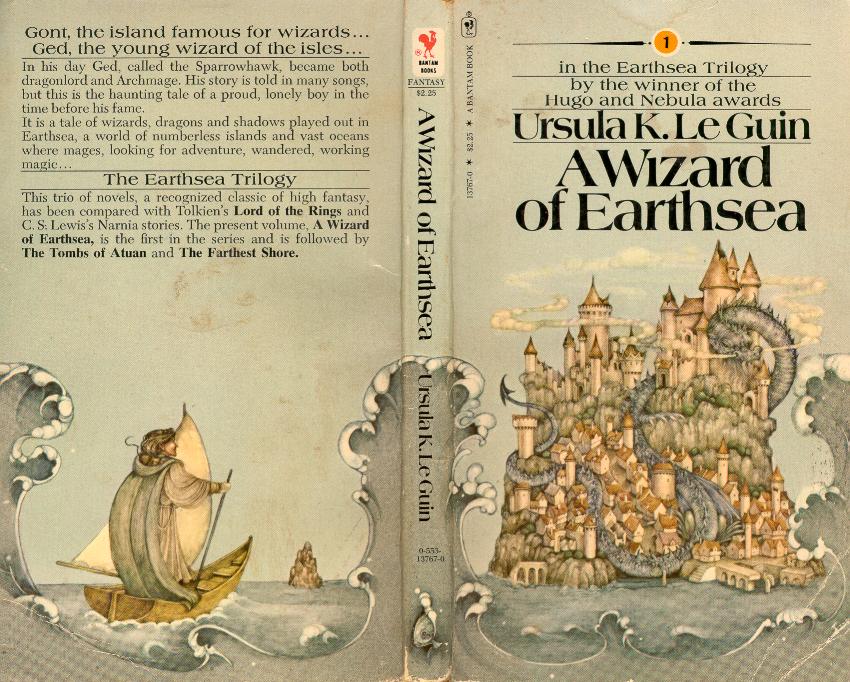
    Here’s the cover the drew me in so long ago.

    I relished all three and moved on to other stories.

    Time passed and I forgot about LeGuin. Almost 10 years later I was newly married. My wonderful new wife started reading to me as we’d drive. And on one of the three-hour drives to her parents, she pulled out this little book and began to read.

    It was A Wizard of Earthsea! And it was just as marvelous the second time with a bigger brain as it was the first time with a smaller one. In fact, Nellie’s reading to me was so enjoyable I slowed down to 40 mph so I could extend the 3-hour drive. Of course, she quickly caught on to my scheme, shut the book, and told me she wouldn’t read another word unless I drove 65 mph, at the very least.

    What can a guy do? I kept it at 65 (well, 60) and joyed in the wonderfulness of a new wife who would read aloud to me (you mean this model reads, too?!), the night and the stars spread above those lonely Utah and Wyoming roads, and the amazing story unfolding before me.

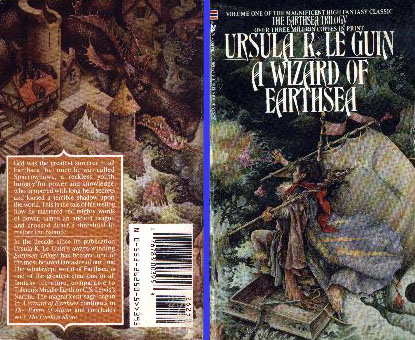
    And this is the cover of the one my wife read to me.

    We read all three to each other and moved onto other stories.

    More than 15 years passed and I’d mostly forgotten LeGuin (I really never could get into her Hainish stuff). I was in the library looking for some good audio. And there on the shelf stood Tales from Earthsea by Ursual LeGuin.

    Just a little slim container of cassettes. Why not? I thought.

    Holy heroes, Batman—it was gold. LeGuin’s a master of building that feel: the wonder of fantasy, the mystery of things long forgotten or rumored to exist, the pull of learning arcane powers. I loved every minute of it (well, except for the slogging first four pages of backstory, but get through that, which isn’t too bad with Karr’s reading, and you’re into the kingdom). The first story, “The Finder,” read by Amanda Karr was incredible. It takes us back to how Roke became was it was in the first trilogy. But the delights do not end there. Four more stories follow.

    I liked them all so much, I just checked the audiobook out again so I could listen a second time. And, it appears, LeGuin was busy in my absence because she has more Earthsea than this.

    • A Wizard of Earthsea, 1968
    • The Tombs of Atuan, 1971
    • The Farthest Shore, 1972 (Winner of the National Book Award)
    • Tehanu: The Last Book of Earthsea, 1990 (Winner of the Nebula Award)
    • Tales From Eathersea, 2001 (a collection of short stories)
    • The Other Wind, 2001

    I just got the last two from Amazon. I can’t wait to enter into LeGuin’s magic spell yet again.

    More cool Earthsea stuff.

    Share