 I’ve finished chapter 17 of CURSE. I’m up to 50,000 words and have moved from the presentation phase into the struggle. And I’m stopping at this point to review the what I’ve got. I’ve learned that if the foundations of the story–the presentation phase–has fundamental flaws in it, you’re only going to create a HUGE rewrite mess if you push on.
I know this from experience. When writing the first draft of CURSE back in 2009 (oh my heck, it feels like forever ago), I ignored my Spideysenses and told myself I could fix anything that was wrong in post production. And it IS possible to fix many things afterwards–you can change scenes, improve clarity and transport, remove continuity errors, layer in character tags and things like that.
And it IS true that sometimes you do just have to write to the end to figure out the story. Sometimes you have to just write to the end, and do it in a substandard way, because if you don’t you’ll never finish anything. Sort of like sketching first and then painting. But if there’s something wrong with the basic premise of a story line, and you keep writing, then that story line affects everything it touches. The fractures ripple out all the way to the end of the book. And you might end up, like I did, having to toss a huge amount of what you’d written.
Which is not all bad. I learned a lot and invented a lot of cool stuff while writing that. But when you’re on a deadline, it can be a killer. And I’m not doing that this time. I worked out the big issues in my chapter outline.
So I’m pulling back and reviewing. I’m delighted with everything but the villain. He’s still not right. I love his chapters, the scenes. I love the name I’ve given him–Endless. But the structure isn’t right. I’ve inadvertantly created two main villains. And that’s not useful. Having two “main” villains doesn’t double the power of the opposition. It splits it. The villain/henchman model works well. But I don’t have that either. Over the next few days I’ll be rectifying the setup. Then moving forward.
For those of you who are writers, I thought you’d be interested to know that there were a few times these last two weeks when I dreaded the writing. I had a large problem before me or had to invent a new chapter (as opposed to using something from the previous draft), and a dread filled me. But I sketch/drafted my way to the end, and soon found the writing a joy again.
I can’t say enough about the sketch/draft method. I’ve found it works in creative activities OUTSIDE writing as well. When working up a lesson plan for my day job, designing landscaping for our house, developing a talking script for a sales call, writing a technical manual, or a hundred other things I’ve had to do–it’s always easier to work from something than create everything all from scratch.
Sketching allows me to create that first draft. And it allows me to do this without having to worry about quality. Sketches can be silly. Weird. Full of crap. They can be all this because I can throw them away. They’re not meant to be permanent. And so there’s no pressure to perform. There’s no staring at a blank screen or page. Sketching is a free-wheeling joy. It fills me up with ideas. And then, when I’ve got the general idea of what I want to do, I can start in on the “real” draft knowing WHAT I want to accomplish which leaves me free to think about the HOW. And if I run into problems and realize the draft isn’t going to work, or I run into something better, I just call the current draft a sketch (or “take” as used in the movie business) and move on to the real one.
Sometimes a chapter or section requires 1 sketch or take, sometimes I’ve run up into the 20’s. Sometimes I haven’t needed any at all. It’s not the number that’s important, it’s the process that has really freed me.

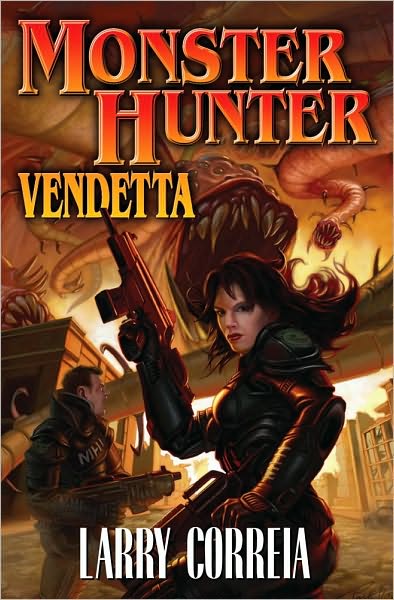
 SERVANT OF A DARK GOD, written by the Lizard King of the Hollow Earth, and MONSTER HUNTER VENDETTA, by Gun Happy Larry Correia, have been picked up by the vendors that stock the book shelves in the Fresh Market and Maceys grocery stores in Utah. The dynamic duo rocks! So all of you wanting to give books for Christmas, pick some up when you go get your peanut butter and bread. This is excellent news for both books.
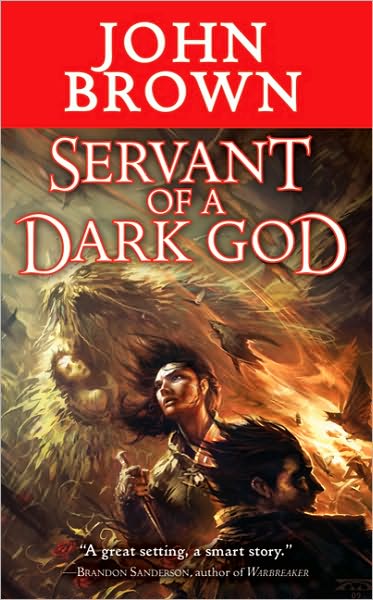


I just wanted to say, I haven’t actually read your book yet, but I did buy it. You were asking about seeing Servant of a Dark God in grocery stores, well I’m in northern California (specifically the S.F. Bay Area), and I picked my copy of it up in a Rayle’s. I’m looking forward to reading it though. 🙂
Yes! YES!! YEEESSSSS!
I was hoping it was more than Utah. Thanks so much for letting me know. And I hope you enjoy the read!!