Buck, America the Vulnerable

Buck
About two years ago I was walking out in Round Valley and saw a rider on a horse coming down a hill through the brush.  I got to him just as he moved onto the road. Right away, I noticed that there was something a bit off with the horse’s gear—the rider was not using a bridle. The rider, Wayne Batty, was using nothing more than a rope harness that went around the horse’s head. I was amazed; how did you steer the horse without a bit in its mouth?

I asked Wayne if I might walk alongside as he rode. He agreed, and then began to talk about training and riding horses. I stuck with him for little over a mile before I had to turn back. I learned in that short period that Wayne was able to communicate with that horse with small nudges. The horse also communicated to him many things with its stance, ears, the cock of its head. Most importantly, I learned they both had built up a trust of each other. Wayne’s methods were not based on fear, it seemed, but something else.

It reminded me a lot of the fascinating and compelling The Man Who Listens to Horses, the autobiography of Monty Roberts, that shares Roberts’ life and his development of natural horsemanship methods. Unlike many training approaches which seek to break a horse’s will through harsh punishment-based methods that often veer into abuse, natural horsemanship employs methods that are much gentler and seek to build trust in the handler. Roberts can join up with (he doesn’t “break” horses) a wild or un-ridden horse, be up on the saddle calmly riding the animal, in an incredibly short period of time.

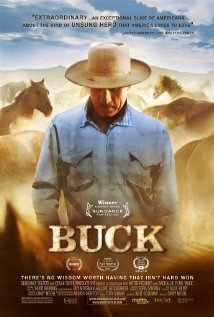
But Batty and Roberts aren’t the only ones practicing this. These methods have been around some time. One of the most famous practitioners and teachers is Buck Brannaman, who found his years of being severely physically abused by his father actually provided some insight into training horses.

Says Brannaman: “I’ve started horses since I was twelve years old and have been bit, kicked, bucked off and run over. I’ve tried every physical means to contain my horse in an effort to keep from getting myself killed. I started to realize that things would come much easier for me once I learned why a horse does what he does. This method works well for me because of the kinship that develops between horse and rider.”

Recently, a film was produced that looks at Brannaman’s life and methods. It’s called Buck and is worth every minute. If you love horses, you’ll love this movie. If you have a horse and think you might want to learn these methods, or just want to watch and listen, you might want to check out Brannaman’s teaching schedule at his site brannaman.com. He travels all over the country and is likely to hold a class within driving distance.

America The Vulnerable
A few years ago I received an email from my bank. At least, it looked legit to me. I opened it. It said it needed me to update some parts of my account and provided a link to the bank’s website. I clicked on the link, which took me to my bank’s website. At least, it looked exactly like my bank’s website. I entered my account number, login, and password. I made the requested changes and logged out.

Two days later, somebody in Spain cleared every penny out of my account—thousands of dollars stolen.

That email was a phishing (fishing) scam. The website had been a fake. I had willingly handed over my account number, login, and password to thieves.

Luckily, the bank insures such thefts. But the problem of information security remains. Thieves living in Spain, or Russia, or LA, or China, can rob me blind from their bedrooms in their pajamas. They can do this because our information processing nowadays is increasingly tied to the internet.

And they don’t just rob dopes like me, because it’s not just individual criminals who are in the business. Corporations and governments are in this business as well.

They steal billions of dollars of trade secrets, engineering designs, and other intellectual property from American companies through computer hacking. They steal military secrets. For example, the US Navy spent years and about $5 billion dollars to develop a quiet electric motor for submarines that would make them incredibly hard to find and track. Chinese spies stole that technology. The Navy then spent billions more to develop a new radar for their top-of-the-line Aegis Cruiser. Chinese spies stole that, too.

And they not only steal. Terrorists, crime organizations, and foreign governments can now insert malicious software into the computers that control, among other things, our electrical grid. They can use this in an attack, not just to shut the grid down for a while, but to destroy power generators. They can insert such software into our air traffic control system. Our train transportation systems. Our banks. They have already done this. They have already breached some of our most secure government systems.

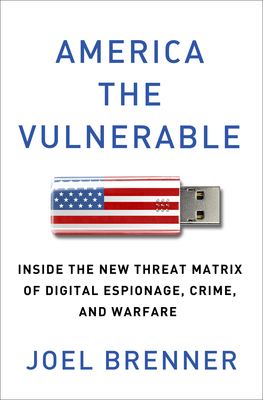
It sounds too far-fetched to be true, but it’s reality. Joel Brenner, who has served as the former senior counsel at the National Security Agency (NSA), the national counterintelligence executive in the office of the director of National Intelligence, and as the NSA’s inspector general writes about what he’s seen in America The Vulnerable: Inside the New Threat Matrix of Digial Espionage, Crime, and Warfare. In the book, he explains the cyber threats to individuals, corporations, and the country and what we can do about it. If you want a fascinating look into the next phase of crime, espionage, and warfare, and an introduction to some of the things you need to do to protect yourself and your company, and what we need to do as a nation, you’ll want to read this book.

Share

Similar Posts

  • Good Stuff: Why We Get Fat

    What if everything you know about fat, cholesterol, and diet is pretty much wrong?

    What if you found out that the science behind the good old food pyramid is, well, not really there?

    We’ve been told that a healthy diet consists of lots of grains, bagels, bread, pasta, cereals, rice, etc. and very little fat. What if it’s actually the reverse?

    If it is, then it might explain why the rates of diabetes and obesity began to skyrocket as the nation started to implement a low fat high carb diet.

    I remember having gained about fifteen pounds when I was first married. I decided I would go on a diet. I read up on the low fat high carb diet and followed it strictly. Two weeks later, I had gained ten more pounds. Did I, at the time, look at the diet and think that maybe there was something wrong with it?

    No. That would have been too intelligent.

    Instead, I figured something must be wrong with me and continued to try to “eat healthy.” What’s that definition of insanity—doing the same thing over and over again and expecting different results? Call me insane. Or slow. Or too trusting of authority.

    It appears that the science of nutrition got hijacked. Government policy then ran away with it. It’s a fascinating and cautionary tale. Let me recommend three books that explain what really causes us to deposit fat and how we got off track.

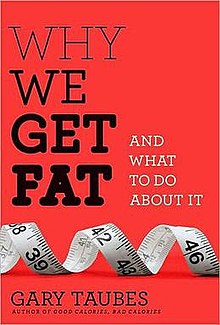
    The first is Why We Get Fat by science writer Gary Taubes. In it he reveals the bad nutritional science of the last century, why the good science was ignored, what really causes us to store fat, and what to do about it.

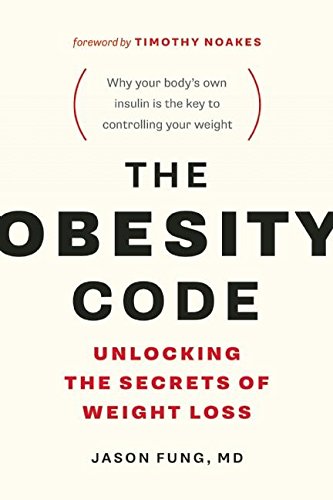
    The next is The Obesity Code by Dr. Jason Fung. Fung is a kidney specialist. Obesity and diabetes are the root of many kidney problems. And so he decided to help his patients by strop treating symptoms and get at the root cause. Fung’s gift is clarity. He explains how obesity and diabetes became an epidemic, the errors in how we think about calories and diet, and then he explains in great clarity the new model of what really causes obesity and how to reverse it.

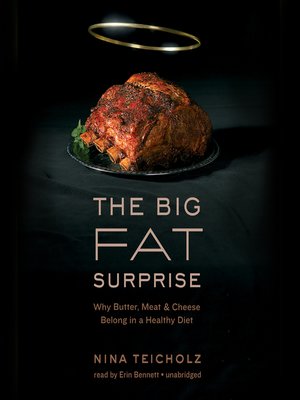
    The last is The Big Fat Surprise: Why Butter, Meat & Cheese Belong in a Healthy Diet by investigative journalist Nina Teicholz. She spent nine years investigating this, and the book reveals how the misinformation about saturated fats took hold in the scientific community, government, and the public and how recent findings overturn these beliefs. It’s a startling history, a cautionary tale showing how ego, bias, and premature institutional consensus allowed dangerous misrepresentations to become dietary dogma.

    If you’re dealing with obesity, heart disease, or diabetes, I think you’ll find these books very interesting.

    Share
  • The Husband by Dean Koontz

    TheHusband_DeanKoontzYou’re name is Mitch Rafferty. You’re a gardener. You have no past as a cop, spy, or Navy SEAL–you’re just a plain old petunias and begonias guy. You’re working in someone’s yard when you get a call on your cell phone. You answer. And the guy on the other end has your wife.

    He tells you that you will get him two million dollars or you’ll never see her again.

    You’re lost. This has to be a sick prank. You’re just a gardener. You know peat moss and mulch. You don’t have two million. Heck, you have, at the most, $11,000 in the bank. You tell him this. He tells you he knows.

    Then your wife screams over the phone. The wife who you love, who makes  you whole. They let her talk. It’s not just one man. And then, just to show you that they’re serious, they kill a complete stranger who is walking a dog across the road. They shoot him in the head. You know they’re watching you. You look around and can’t see where the sniper is hiding.

    You’re a gardener. They have your wife. If you go to the cops, they kill her. If you don’t deliver, they kill her. What do you do?

    That’s the premise of Dean Koontz’s The Husband. I listened to this on audio book, read by Holter Graham, and, folks, I don’t think a book has gripped me like this in a very long time. And that despite some quirks in the reader’s presentation. I’m coming to respect Koontz as a writer more and more. I can’t recommend this book highly enough. Go get it. Read it. Do it before they make the movie.

    Share
  • For those whole love ENDER’S GAME

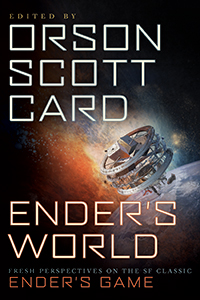
    Enders World Essays SmartPopThere’s a special joy in sharing a wonderful experience with someone else. There’s a delight in reliving the experience afterwards, in recalling key moments and quoting funny or cool lines. This is especially true of books. One of my favorite book experiences is Ender’s Game. Which is why I’m so happy to announce that Smart Pop is about to release a collection of articles written by folks sharing their experience with that book.

    You get to hear from Eric James Stone about how the book should have ended. You get to hear from Matt Nix (creator and producer of Burn Notice) how the book was a guide to his life. You get to hear from Colonel Tom Ruby why he made the book mandatory reading for the Air Force’s Air Command and Staff College.

    There are 11 other articles from Neal Shusterman, Captain John F. Schmitt U.S.M.C., Mary Robinette Kowal, Hilari Bell, Ken Scholes, Mette Ivie Harrison, and many others. There are Q&A sections. And there is Card’s own introduction in which he explains what Ender’s Game is really about for him. All of these articles are wonderful reads.

    If you loved Ender’s Game like I did, you’re going to enjoy this book. You can get a free PDF excerpt from the book that includes a few of the Q&As from Card along with the full version of my essay “The Monster’s Heart.” To download the PDF, just scroll down to where it says “Sign Up for Free Chapters & Book Updates”: http://www.smartpopbooks.com/book/enders-world.


    Share
  • Ramsey’s Total Money Makeover & Brown Cow Yogurt

    Wear some financial underpants

    I graduated from BYU with a Master’s degree in accounting. BYU’s accounting program is regularly ranked as one of the top three schools in the nation.

    Whoa. Go, John. I ought to be some kind of financial superstar, right? You’d think I would have come out of that program with all my crap put together, living within my means, investing wisely, making a bundle of moo-lah. I’d have a tidy stash.

    Yeah, nope.

    That program taught me how to account for money, but not how to use it. Or maybe I was just too dumb to get it. We came rolling out of school with thousands of dollars of debt. So instead of graduating and building our wealth, we worked to pay off the man.

    Dumb, dumb, dumb.

    I can tell you right now my daughters aren’t going to do the same. They will pay as they go. I’m not co-signing any loans. They’re not going to use credit cards. If it takes them a few years longer to graduate, then it takes them a few years longer.

    But they’ll be free when they finish. No shackles for my girls.

    I always thought it was a good idea not to send them out into the world without underpants. Or knowing how to brush their teeth. It’s equally important I don’t send them out there not knowing how to build wealth and reap all the security and peace that comes with it.

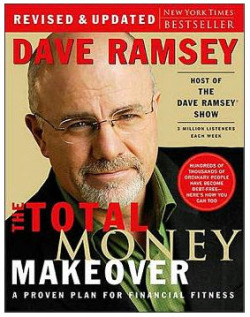
    This is why every child of mine is going to get a copy of Dave Ramsey’s The Total Money Makeover. It’s a goofy title, but the principles in it are sound. I can’t tell you how much I wished I’d known and followed the steps he outlines there on how to build wealth when I was just starting out.

    1. Save $1,000 in an emergency fund
    2. Pay off all your debt except the mortgage using the debt snowball (and don’t go into debt)
    3. Complete your emergency fund by saving three to six months’ expenses
    4. Maximize retirement investing
    5. Save for your kids’ college
    6. Pay off the home mortgage early
    7. Build wealth and give like crazy
    8. Live like no one else

    The book starts out by talking about the debt myth, i.e. debt is a great tool and should be used to create prosperity. Sometimes a little debt can be helpful. But in the vast majority of cases “debt adds considerable risk, most often doesn’t bring prosperity, and isn’t used by wealthy people nearly as much as we are led to believe.” Ramsey goes on to say, “Your largest wealth-building asset is your income. When you tie up your income, you lose. When you invest your income, you become wealthy and can do anything you want.  How much could you give every month, save every month, and spend every month if you had no payments? Your income is your greatest wealth-building tool, not debt. Your Total Money Makeover begins with a permanently changed view of the Debt Myths.”

    After tackling debt, Ramsey outlines other money myths and wealth-destroying attitudes and then explains each of the principles of the steps outlined above.

    I love this book so much it’s part of my gift package to every couple that invites me to their wedding reception. I hope those new couples follow his recommendations. It will bring them peace. If you want to give your children the gift of financial peace, if you want that peace yourself, I recommend you buy this book today and start following those baby steps. You can get the book for a mere $10 bucks at his website http://www.daveramsey.com.

    While you’re waiting for it to come, you might want to go over to Larry Correia’s site (another accountant and fiction author), and read his hilarious comments on some real folks who actually were sent out without any financial underwear: http://tinyurl.com/3zx9tbo.

    Thick and Creamy

    I love thick, creamy yogurt.

    Mix it with some raisins or fresh fruit, and I’m in heaven.

    The problem is that most of the yogurt on the shelves today is weird Splenda- or NutraSweet-filled crap. Or it’s full of sugar. And none of it has that thick mouth feel.

    I had some great yogurt up in Oregon a few years ago, but could never find anything like it here. Then a little while ago I hit the jackpot.

    Hello, Brown Cow Greek Yogurt.

    Thick. Oh, baby is it thick. Creamy. And full of goodness: 23 grams of protein, 9 grams of sugar, 0 grams of fat, and active cultures of more of our belly friends than any other yogurt I’ve found—give a big welcome to S. Thermophilus, L. Bulgaricus, L. Acidophilus, Bifidus, and L. Casei.

    I get the plain style. This allows me to mix it to my taste with fruit, granola, or a little bit of sugar or honey.

    If you’ve been looking for some good yogurt, let me recommend Brown Cow.

    Share
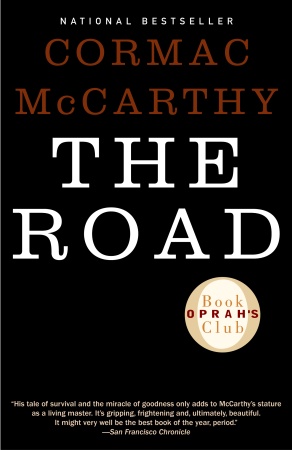
  • The Road by Cormac McCarthy

    If I’d known Cormac McCarthy’s The Road had won a Pulitzer Prize in 2007, I might not have picked it up. So many books that have won the award just bore my underpowered literary sensibilities to death. Luckily, I’d listened to McCarthy’s All The Pretty Horses a few years ago and enjoyed it. So when I saw the audio book, performed by Tom Stechschulte, in the library I checked it out. I’m so glad I did.

    The story is set in the Eastern US (although you don’t learn that into well into the book, and then only by one reference to them traveling through “the Piedmont”) years after a holocaust (meteor, nuclear, a caldera–it’s not ever really confirmed) and the resulting choas that turns America in a bleak place of ash and death. A father and son travel a mostly deserted road south to warmer weather, pushing a grocery cart with their few belongings. The father’s sick; he might be dying. And if he dies, we know the boy will die too because there’s nothing to eat but tins of what they can scavenge from houses that were ransacked and abandoned years before. And because others who survived have turned to hunting and eating people.

    This is an incredible story about the relationship between this father and son and the dangers they face. McCarthy tells the story in plain detail. In fact, his understatement and attention to detail in this terrible landscape make it all the more powerful. Stechschulte’s reading is perfect.

    The film is due out in 2009 and features Viggo Mortensen. But I wouldn’t wait for the movie if I were you. I’d get the book now. Or the recording. I couldn’t put this tale down. I’m betting you won’t be able to either.

    Share