Blather

  • Good Stuff! Two books, a movie, and a dinner

    Are you ready for a story that’s heroic and inspirational? And poignant. And action-packed. And all true.

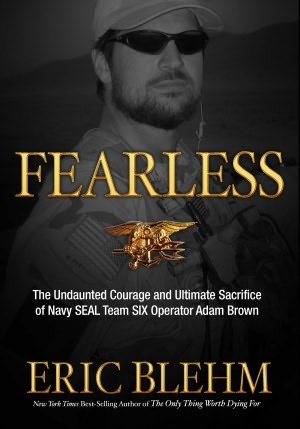
    I just finished Fearless: The Undaunted Courage and Ultimate Sacrifice of Navy SEAL Team SIX Operator Adam Brown by Eric Blehm. And wow. I can’t tell you how happy I am to have read this book.

    It tells the story of Adam Brown who was killed while on assignment in 2010. But this book isn’t about a special operations battle in Afghanistan, although the battle is detailed. It’s not a war book. Although it tells about many episodes in the life of a Navy SEAL operator. No, this book starts when Adam was a kid.

    It like the story of Louis Zamperini that’s told in Unbroken by Laurel Hillenbrand (and, yes,the film adaptation missed so much of the story, including the most important part,that if you haven’t read that book, you are missing out on an absolute treat). In this one, Brown starts out as a boy with bright promise, but after he graduates from high school, he makes a number of bad choices and drives his life right off a cliff.

    You’ll be flipping the pages to see what helps him turn it around and whether he can make the change permanent, or if he’ll lose everything, including the love of his wife and kids. You’ll also be amazed at his grit. It’s a tremendous read. If you can listen to it on audio, you’ll enjoy the narration by Paul Michael. Either way, if you like stories about redemption and triumph amidst struggle, if you like books about special operations forces and elite soldiers, then you’re going to love this book. Highly recommended.

    *

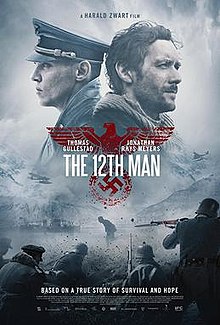
    The 12th Man is a 2017 World War 2 historical drama based on the true story of Jan Baalsrud. He and eleven other Norwegian resistance fighters set off from the UK on board a fishing boat with six to seven tons of TNT to sabotage some German military facilities.

    However, their mission falls apart soon after reaching Norway. A German warship attacks. The resistance fighters set fire to the TNT on their boat and jumped into the water just off shore. Eleven of the fighters are caught by the Germans. The twelfth, Jan Baalsrud, gets shot in the toe, but still runs across land and manages to elude immediate capture by swimming across the fjord, in the dark, in the freezing, winter water.

    Yeah, and that’s just the beginning. The story is about his attempt to get to the safety of Sweden, a neutral country. I watched this with my teenage daughter, and we were riveted with the suspense and action. And we were amazed at what this guy endured.

    You will have to read English subtitles during a large parts, but we found that after a few minutes, we really didn’t notice it. It was a great date night. If you like war movies and action, I think you’ll love this movie.

    *

    Tonight I ate a dish that instantly became one of my favorites. My oldest daughter and her husband found it. They love it and shared it with Nellie. And since it was her night to cook, she decided to give it a try. My first bite was wow.

    It’s a baked casserole, a cross between lasagna and spaghetti, called “MillionDollar Spaghetti” from tastesbetterfromscratch.com. Just click on the link the get the recipe.

    Now, here’s the thing: you can use spaghetti pasta, or you can make it totally low carb by replacing the pasta with cooked spaghetti squash like we did. The low carb version was awesome. I can’t wait to heat up the leftovers tomorrow.

    By the way, here’s a quick way to cook spaghetti squash.

    First, cut the squash in half lengthwise. The easiest and safest way I’ve found to do this is to place the uncooked squash on a cutting board. Next, get a big knife and set it along the line you want to cut. Finally, rap the spine of the blade smartly with a thick stick or long block of wood until the knife cuts through all the way. Using a knife this way is called batoning because you’re using a baton, a stick. It’s a slick and safe way to cut a hard squash.

    Once you have cut the squash in half, scrape out the seeds with a large spoon.

    Next, pour about a quarter cup of water into the hollow of the squash, and then turn the squash hollow-side down on a plate or microwave dish. Microwave the half on high for five to six minutes. It’s done when you can easily pierce the outside with a fork.

    Remove the plate with hot pads and use a fork to scrape out the cooked squash. Voila! Cooked spaghetti squash in less than 10 minutes.

    You can also just bake the halves in the oven for 40 minutes on 375 degrees. Baking gives the squash a slightly richer flavor. In this method, you brush the halves with olive oil and sprinkle with salt and pepper then put the sides face-down on a baking sheet. Again, it’s done when you can easily pierce the outside with a fork.

    *

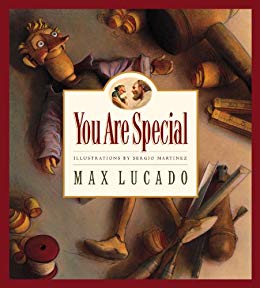
    And here’s one more because it’s Christmas. I attended a young women’s meeting for my local congregation not too long ago. As part of the program, one of the leaders read a picture book called You Are Special by Max Lucado.

    It’s about these small wooden people called Wemmicks who stick gold stars or gray dots on one another. The pretty or talented ones always get stars. The others, like Punchinello, get the ugly gray dots. And then one day Punchinello finds a happy Wemmick that has no dots at all. In fact, no dots stick to her. How does she manage it?

    It’s a great little tale with an important insight. After hearing it, I knew I needed a copy of the book to read to all my grown up kids. 

  • The Surprising Truth About Militias and the Second Amendment

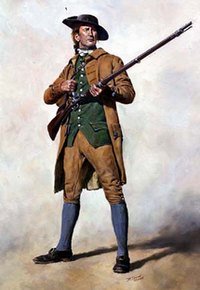
    When the founding fathers spoke of “militias,” they were not referring to a bunch of yahoos running around in the woods with paint on their faces outside of state control.

    They were referring to a citizen army under state control.

    So is “militia” just the old-time word for what our army is today?

    No.

    A standing or “regular” army is one made up of professional, full-time soldiers like the US Army, the Marines, the Navy, and the Air Force. And it’s permanent, meaning you don’t disband the army when the fighting is done.

    A militia back in those days was something completely different.

    The problem of a standing army

    The founding fathers knew they needed to provide for the common defense, but they saw standing armies controlled by a central government as an immediate threat to the liberty the new union sought to preserve.

    Why would they think that?

    Easy. History was littered with case after case where standing armies had become a law unto themselves and oppressed the populace. One glaring example is what happened to the Roman empire. It suffered centuries where this faction and then that faction of the army was in control, and it brought nothing but a continual procession of civil wars and bloodshed.

    History also showed that even if the military didn’t take over, kings and queens were happy to wield standing armies to impose their will and oppress the people. Remember: the world then was ruled by monarchies. The founders had never seen a standing army wielded by any other type of power.

    So the founders didn’t want to give a president or any other central authority that power. They feared doing so would only pave the way to the ruin of the new nation they sought to form.

    So if you don’t have a standing army, how do you defend your country?

    The fyrd

    The founding fathers thought they saw a solution in a tradition of duty that went back hundreds of years in England. In the days when the Saxons ruled England, the kings and dukes would muster and deploy the fyrd to help them fight their wars.

    The fyrd was made up of all able-bodied free males between certain ages, regardless of their vocation. It was their duty to provide their own arms and defend the land when called by their leaders. So this was an army made up of farmers, tanners, smiths, tailors, etc.

    But the fyrd wasn’t a standing army. Nor was it populated with full-time soldiers. This citizen army was to be called out when needed, and when the crisis was over, it was disbanded, and the men went back to their vocations.

    The militia scheme

    The founders took this idea and tweaked it. Back in the Saxon days, the king controlled the fyrd. In this new scheme, the United States would rely on a fyrd (which they called a militia), but the powers to control it would be split between the president, Congress, and the States.

    First, Congress, not the president, was the only authority that could declare war and summon the state militias. So the president would be the commander in chief when the militia was active. But the minute Congress decided to end a war and disband the militia, that army dissolved, leaving the president as commander in chief of only the tiny number of troops that had been authorized as the regular army (less than 1,000 at the time).

    Second, while the Federal government would provide the weapons the militia would use when it mustered them for war, the state governments would be the ones to appoint the officers and train the soldiers. You can’t run an army without officers. So this would prevent the Federal government from taking control by stacking the army leadership with those loyal to a despot president or Congress.

    So the militia was supposed to be the main force that fought our wars, and it was supposed to be temporary. It’s true that Congress did authorize a standing army, but it was tiny. And with this setup, the founders figured we’d have the army we’d need, but we’d avoid the problems standing armies had posed in the past.

    So militias, as thought of by the founders in the 1700s, were not groups outside the government’s control. They were temporary citizen armies. And power over them was broken up between the president, Congress, and the States so no one group or person could wield them tyrannically.

    1791 and The Bill of Rights

    Accordingly, the founders wrote the articles and sections of the Constitution in 1787 to set all of this up. However, many anti-federalists were concerned that the Constitution didn’t go far enough to protect the rights of individuals and limit the power of the Federal government. In fact, many of the founders were so concerned about the issue that they refused to ratify the Constitution as it was.

    The only way they’d sign on is with the promise of the Bill of Rights. When they knew that bill was forthcoming, delegates from nine of the original thirteen states ratified the Constitution. The delegates of two other states waited until the document was produced. The final two (North Carolina and Rhode Island) waited until 1791 when the Bill of Rights, which includes the second amendment, was passed.

    So let’s look at the language of the Second Amendment in light of what we know about the fear the founders had of standing armies.

    “A well regulated Militia being necessary to the security of a free State, the right of the people to keep and bear Arms shall not be infringed.”

    Why did they include this? It was not because they wanted the citizens to be able to hunt or protect themselves with guns. They figured that was a given. They included this amendment because they concluded that an armed citizenry would make it impossible for tyranny to arise.

    Noah Webster, a Federalist, stated the idea this way when trying to persuade Pennsylvania to ratify the Constitution:

    “Before a standing army can rule, the people must be disarmed; as they are in almost every kingdom of Europe. The supreme power in America cannot enforce unjust laws by the sword; because the whole body of the people are armed, and constitute a force superior to any bands of regular troops that can be, on any pretense, raised in the United States. A military force, at the command of Congress, can execute no laws, but such as the people perceive to be just and constitutional; for they will possess the power, and jealousy will instantly inspire the inclination, to resist the execution of a law which appears to them unjust and oppressive”

    So the second amendment was included in the Bill of Rights because enough of the founders feared that the Constitution could be read in a way that would allow the Federal government to disarm the populace. Disarming the populace would open the way to a standing army under Federal control. And that would open the way to tyranny.

    When all was said and done, the founders separated the power of the military in this way:

    • Only Congress could declare war and muster the militia
    • Only Congress could finance it
    • There would be no standing army to speak of
    • Only the states could appoint officers to the militia
    • The government was forbidden to infringe on the rights of individuals to keep and bear arms

    So what happened?

    Militias didn’t work

    The problem is the militia didn’t work well enough to actually provide for the common defense.

    It didn’t work during the Revolutionary War. The republic had to create the Continental Army. That army was supported by the militias, but the colonists found they couldn’t rely on the militias alone. They had to have the regular army to fight the British.

    After the war, the Continental Army was disbanded, but the militias simply weren’t good enough to face the threats the new nation faced, and George Washington himself openly lamented it. The troops took a licking in 1791 at the battle of St. Claire’s and then time and again during the War of 1812.

    Heck, militias didn’t even work in the days of the fyrd. In those days, the Saxon and Norman kings relied on their house warriors (their standing army) and mercenaries for most of the work. They only supplemented with the fyrd.

    1792

    After the defeat in 1791, the early leaders concluded they needed a regular army with the training and skill it possessed. So in 1792 Congress authorized the creation of the First Legion of the United States, a standing army of 5,190 men. The legion was renamed “The United States Army” in 1796.

    In 1792 Congress also passed the Militia Acts. The acts were written to expire in two years. But Congress wrote another in 1795 to replace them. These laws authorized the president to called out the militia “whenever the United States shall be invaded, or be in imminent danger of invasion” and “whenever the laws of the United States shall be opposed or the execution thereof obstructed, in any state, by combinations too powerful to be suppressed by the ordinary course of judicial proceedings, or by the powers vested in the marshals by this act.”

    So a mere five years after the Constitution was first ratified, and a year after the Bill of Rights, Congress dramatically increased the size of the nation’s standing army and gave the President the authority to call out the militia! It’s clear that right from the beginning the militia scheme started showing some cracks.

    Today

    The First Legion was small. But it grew again in 1808, and then again during the war of 1812. And it continued to grow slowly, then ballooned in the 1900s until we now have more than a million troops in the armed forces of the US.

    The National Guard is what the militias of the 1800s transformed into in the early 1900s, but, wouldn’t you know it, the National Guard is now mostly under the control of the Federal government too.

    What does this mean?

    It means we now have the most powerful standing army the world has ever known and almost no militia. It means our military is a complete 180 of what the founders envisioned.

    I’m not saying it’s bad. I love our military.

    I’m merely pointing out that militias back then meant a certain thing and the founders wanted them for a certain reason. And that we have completely replaced that arrangement with the exact opposite.

    As for tyranny, we still have armed citizens. Maybe this is enough to deter tyranny as Webster claimed. Although the disparity between what the citizens can arm themselves with now and what the regular army has is nothing like it was in the 1700s. So maybe there are other laws and aspects of our culture that have prevented it. Maybe it’s both.

    Either way, it’s important to understand what the original militias were, why the founders wanted them, and what the second amendment was all about.

    More

    Helpful articles

    US Constitution – Provisions for the military

    Here are all of the parts of the original seven articles of the Constitution that deal with the military.

    Article 1 – The Congress
    Section 8

    This section gives Congress seventeen powers. Six of these have to with the common defense. Those military powers granted are:

    • To declare War, grant Letters of Marque and Reprisal, and make Rules concerning Captures on Land and Water;
    • To raise and support Armies, but no Appropriation of Money to that Use shall be for a longer Term than two Years;
    • To provide and maintain a Navy;
    • To make Rules for the Government and Regulation of the land and naval Forces;
    • To provide for calling forth the Militia to execute the Laws of the Union, suppress Insurrections and repel Invasions; [notice there are only three cases that warrant the calling forth of the militia]
    • To provide for organizing, arming, and disciplining, the Militia, and for governing such Part of them as may be employed in the Service of the United States, reserving to the States respectively, the Appointment of the Officers, and the Authority of training the Militia according to the discipline prescribed by Congress;
    Section 10

    This section prevents the States from doing thirteen things. Three of these have to do with the military.

    “No State shall, without the Consent of Congress, lay any Duty of Tonnage, keep Troops, or Ships of War in time of Peace, enter into any Agreement or Compact with another State, or with a foreign Power, or engage in War, unless actually invaded, or in such imminent Danger as will not admit of delay.”

    Article 2 – The President
    Section 2

    “The President shall be Commander in Chief of the Army and Navy of the United States, and of the Militia of the several States, when called into the actual Service of the United States;”

    Article 4 – The States
    Section 4

    “The United States shall guarantee to every State in this Union a Republican Form of Government, and shall protect each of them against Invasion;”
  • What’s driving the rise in school shootings?

    Homicide rates are down in America, but school shootings are up. What’s going on? What’s driving this?

    Some say it’s guns.

    I have an hunch that I think deserves some study.

    Back in the 1970s we had 30 school shootings with a population of about 216 million.

    Today we have a population of 320 million. If we had the same ratio of shootings to population today, we’d have 44 shootings total in the decade between 2010 and 2020. But from 2000 – 2010, we had 60. And since 2010 (if my data is correct, and it appears that’s a big if–see Edit 2 at bottom) we’ve had 146. That’s a 300% increase!

    If we want to solve the school shooting problem in the long term, we need to figure out what’s fueling it. One way to get at this is to ask what’s changed since the 1970s and 80s when the rates were lower.

    Are we killing at a higher rate in general? Is that what’s changed?

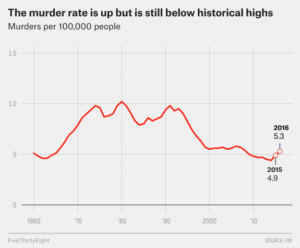
    No. FiveThirtyEight reports homicide rates have dropped. Here’s their chart.

    We’re down.

    But school shootings are up. Way up!

    Clearly, what’s driving school shootings doesn’t seem to be the same thing that’s driving general homicide rates. Otherwise, the rates would be moving in the same direction, but they’re not.

    Is it gun ownership rates?

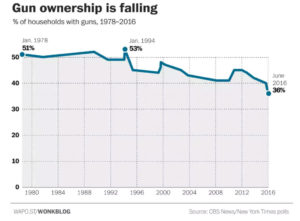
    According to the Washington Post, ownership rates are at their lowest in quite some time. Here’s their chart.

    This means that if general gun ownership rates were a major factor, then we’d be seeing school shooting rates fall. We’re not.

    Furthermore, some of the US states with the highest gun ownership rates have the lowest murder and school shooting rates. (For those wanting to know more about guns, magazines, the definition of an assault rifle, gun control, etc. see Larry Correia’s informational post below.)

    Now, it could be that while overall gun ownership rates have fallen, ownership in certain population segments has risen. That’s something to look at. But when looking at the overall ownership rate, we don’t find an answer.

    Is there anything else to study? Anything else that might be different now?

    Here’s my hunch–it’s the internet. My hunch is that an unintended consequence of social media and the ease of finding certain types of content have facilitated the development of the mindset and ability of certain youth to commit these crimes.

    We do things when we are prompted to take a specific action and we have both the ability and desire necessary to take that action. So action requires three things:

    1. A prompt
    2. The ability
    3. The desire

    If the rates are going up, then one or more of those things have changed. Either more kids are being prompted to take this specific action, we’ve made it easier for them to do it, or we’ve increased their desire to do it. Or some combination of those three.

    Let’s see if the internet might be a factor.

    First, from what I’ve read, it seems a lot of these kids feel like outcasts and seem to be seeking some kind of revenge. Does social media foster and facilitate more bullying and isolation and, therefore, more resentment? Has it increased the desire to conduct such attacks?

    Second, it is dramatically easier for kids to learn how to do all sorts of stuff now. Back in the 70s and 80s, it was hard to learn about the methods and tactics of crime, firearms, etc. Now, if you want to learn how to shoot, scope a place out, plan an attack, do all sorts of things, you can watch YouTube videos on it. Has the easy accessibility of how-to instruction facilitated the ability to plan and carry out these attacks?

    Third, back in the 70s and 80s you had limited programming. Gilligan’s Island, Brady Bunch, The Love Boat, The Donny and Marie Show, Lawrence Welk, etc. They all fostered good-citizen values. Today, kids have easy access to all sorts of crap. Violent rape porn. Evil games like Blue Whale that give challenges to the player, and the last is to kill yourself. Are there certain types of programming on the internet that foster a violent mindset? That prompt these very actions and makes them seem like a good alternative?

    Fourth, look at how well political conversations go on Facebook. Chat rooms, blogs, etc.–we all know they foster more incivility than when you talk in person. Does our social media, by its very structure, anonymity, etc. foster a more anger-filled approach to disagreements? Has it prompted, even trained, more kids to behave this way?

    Is one of the unintended consequences of the internet and social media a rise in school shootings?

    I’m not saying it’s the only part of the puzzle. But I do think it’s worth studying. We need a long-term solution.

    At the same time, we need something now while that long-term solution is being researched and implemented. One of the best ideas I’ve seen so far to stop the killings is the one mentioned here.

    Such people are screened, trained, and on-site. They can respond immediately. Plus it’s voluntary. If you’re a teacher that doesn’t want to do this, you don’t have to. Plus this doesn’t add security guards to schools. Nothing changes at the school until the shooter shows up, and suddenly there are half a dozen, dozen, two dozen deputies immediately there.

    I think at our tiny 1A middle school, there are probably 6-8 people who would do this, including my wife. The teachers know the kids, know where other teachers are likely to be, know the place like the back of their hands. We know security deters threats. I can’t see anything but positives.

    I don’t like the fact that we have to contemplate this. I want to go back to my youth in Bountiful, Utah where this never happened. Maybe we can get back to that type of a society. Until then we need an immediate, practical, and effective solution. This seems like a good part of a multi-approach solution.

    But what’s the long-term solution?

    I wonder if has to do with the internet.

    Is any organization seriously studying this?

    Do you see anything else that might have increased the prompts for this specific action, the ability to plan and conduct attacks, or the motivation to do so?

    Edit 1 – gun retention

    On Facebook today, a former deputy sheriff I know and respect was asked “Should teachers carry guns?” His answer: “No. Weapon retention is never even considered when politicians and others come up with that. Imagine some big, unfriendly student disarming a teacher during some classroom issue. Instant problem.”

    This is a good point to raise.

    I didn’t think of it. It’s clear none of the teacher defense plans are complete without it.

    But is it a show stopper?

    First of all, how big a risk is this? How many student-teacher scuffles do we have in grades 1-6 where the teacher is overpowered by a third-grader? How about in middle school? I’m sure the risk is higher in high school.

    But just because there’s a risk doesn’t always mean you shouldn’t do something. Male and female agents and officers are trained in retention. My question is whether such retention training is ineffective? Should officers not carry guns because of this?

    If it is effective, then it seems to me that if you’re trained, you’re trained. A big senior boy has just as much chance to disarm a trained cop as a trained non-cop of the same size and strength.

    This is another reason I like the suggestion of the sheriff above. It’s not just any teacher that would do this. They need to be screened and trained. They’re deputized. I could see them doing training on a frequent basis. Something goes down at at school, and you immediately have 6-8 trained deputies on site. Maybe a dozen or more. Is that not a game changer?

    It’s good to identify risks. But what would reduce the risks identified? Could we reduce them to acceptable levels? It’s a question that needs answering.

    Edit 2 – is the “rise” due to bad data?

    Just saw this. Is the “rise in school shootings” even real? Or is it bad data? Here’s an opinion on USA Today, suggesting it might not be as bad as we think. One of the things that’s maddening about all of this is what seems to be a lack of good data!

    Sources

  • The secret of Mormonism

    If you want to understand the secret to Mormonism, something 99.9% of the world does not know, even though many think they do, read on.

    This last Tuesday I was at dinner with a number of wonderful coworkers. We were talking about religion and listening to the guy who helps set up our training environments talk about the interesting hunting ministry he’s involved with (it’s very cool—12,000 acres of woodland in Alabama all dedicated to hunting, outdoor survival, and God).

    At one point in the conversation, a delightful fellow trainer, who shared with us the night before the definition of diplomacy as being able to tell someone to go to hell and have them look forward to the trip, asked me, “Does your church believe in Christ. Or, no, is it some other fellow?”

    It’s a great question, and I realized that many people are confused. And so I wanted to take time to clear it up.

    So what the heck is a Mormon?

    It’s not what you think.

    And for those of you who think you know, nope, it’s not about that book.

    Let me explain. You’ll come away knowing more about us than anyone in any of your circles, and you can lord your superior knowledge over them at dinner parties, when playing games that require vast stores of smarts, or at random moments, just because you can.

    Here’s the deal. The first part of the name of the church is “The Church of Jesus Christ.” So, yes, we believe in Christ, that he died for us, was resurrected, is our Lord and god, etc.

    The last part of the name is “of latter-day saints.” We don’t use “saint” to mean super-holy people like the Catholic church does, but more as followers or disciples. So you could translate the last part of the name of our church as “of latter-day followers.”

    So the whole name would be The Church of Jesus Christ of Latter-day People who Follow Him.

    Okay, then what’s the deal with the name “Mormon”?

    Well, here’s where we get to the nub of it and the thing that 99.9% of the world doesn’t know. The key difference between the Mormon church and other Christian churches is that we believe that Jesus has called apostles again in our day, just like he did back in the good old days. And when I say apostles, I mean guys like Peter, James, John, Paul, etc.

    You might be wondering what an apostle is. What made those guys special?

    It wasn’t that they had great faith in Jesus. Lots of people had great faith. It was that they were called to bear special witness of him. And that special witness was not merely that they believed, but that they knew Jesus was the Messiah because they had seen and heard him after his resurrection.

    Peter himself said it best when he wrote in his letter, “For we have not followed cunningly devised fables, when we made known unto you the power and coming of our Lord Jesus Christ, but were eyewitnesses of his majesty.”

    When the apostles had to choose someone to replace Judas, Peter said, “Wherefore of these men which have accompanied us all the time that the Lord Jesus went in and out among us, beginning from the baptism of John unto that same day that he was taken up from us, one must be ordained to be a witness with us of his resurrection.”

    These guys didn’t simply believe. They knew. They were eyewitnesses to the fact that Jesus wasn’t just some preacher—he was the son of God and was resurrected.

    So Mormons believe that Jesus has called apostles again today who bear witness of an absolute certain knowledge of the reality of Jesus the Christ. We believe their purpose is also to be the Lord’s spokesmen when He wants to make general announcements or give general instructions. Finally, we also believe they’ve received the authority to offer the covenants the Lord wants to make with all of us.

    We believe the first apostle called in these latter days was a fellow by the name of Joseph Smith. We don’t worship Smith. He was just an apostle. Just like Matthew or John of old were. But we do believe the Lord called him to be an apostle and restore some truths that had gotten lost or confused over the years.

    We also believe the Lord asked him to bring forth other scriptures in addition to those in the Bible. One of these new scriptures was a translation of an ancient record called The Book of Mormon. It’s called that because Mormon is the name of the guy who wrote it. And Mormon was another apostle—one called by Jesus in ancient America.

    And guess what the purpose of The Book of Mormon is? It’s to testify of Jesus Christ and explain his gospel.

    So the name of the Mormon church is really The Church of Jesus Christ of Latter-day Saints. Mormons believe that Jesus has called and commissioned apostles in our times, right up to today, to bear special witness of him. And in addition to that, those apostles have brought forth additional scriptures that witness of the divinity and mission of Jesus Christ.

    For Mormons, it’s all about Jesus Christ.

    So when someone asks, what’s a Mormon? You can say, let me tell you the real answer. It’s not about an additional book of scripture. Yes, folks gave them the nickname of Mormons because of that book, but the key difference is that Mormons believe that Jesus has called apostles like Peter and Paul again in our day to be his spokesmen, and bear a certain witness of him and his good news, and help folks receive all the blessings the Lord wants to pour out on them.

    And, O, what a wonderful message we Mormons believe that is.

    If you liked those videos, you can see more here.

    Please feel free now to randomly lord your superior knowledge over your family and friends.

  • I’m done being Amazon’s fool

    Do you see this picture? This is Jeff Bezos laughing at John Brown. Because John Brown was a fool.

    Let me explain.

    When I sell my ebooks on Amazon for $2.99 to $9.99, Amazon charges me 30% of the price. I keep 70%. That’s a decent deal. I’m happy to do business with them as a partner with my ebooks.

    But Amazon’s got some alter ego going when dealing with folks selling used books. When I sell used books, Amazon somehow thinks it’s a swell deal for all of us little guys if they take a huge chunk of the pie. Look at the numbers below.

    Order date: 04/08/2017
    Price: $3.98
    Shipping: $3.99
    Amazon fees: -$3.99 (100% of sale price)
    Your earnings: $3.98

    Order date: 04/05/2017
    Price: $5.50
    Shipping: $3.99
    Amazon fees: -$4.21 (77% of sale price)
    Your earnings: $5.28

    Order date: 03/23/2017
    Price: $3.50
    Shipping: $3.99
    Amazon fees: -$3.91 (112% of sale price)
    Your earnings: $3.58

    Order date: 03/15/2017
    Price: $1.49
    Shipping: $3.99
    Amazon fees: -$3.61 (242% of sale price)
    Your earnings: $1.87

    You might think, hey, John, you’re making a few bucks on each. But no, what you see above is what I get from Amazon. I still have to ship the product. And if I purchased the book somewhere, I have to cover those costs as well.

    For example, look at the last one. Amazon feels that not only do they need to charge me the total sale price of the book, they also need more than half of the shipping costs. That book cost over three dollars to ship plus a little for a bubble mailer because I actually care that the book is in great shape when the buyer opens the package. So I lost money. But Amazon did just fine.

    And Bezos was laughing because John Brown, the fool, was paying Amazon for the pleasure of taking time to list the book, shelve the book at his house, package it, and then post it. It was as good as going to Disneyland!

    The fees used to be lower.

    Order date: 06/26/2014
    Price: $3.59
    Amazon fees: -$2.88 (a mere 80% of the sale price)
    Shipping: $3.99
    Your earnings: $4.70

    I hated the fees they were charging then, but after postage, we could still make a buck or so on books priced at this level. Not anymore.

    So adios Amazon. I’m done being your fool. And shame on me for taking so long to recognize it. I’m moving all my used book stock to Half.com because they actually have a good thing going. Look at what they charge for their services.

    $0.75 – $50.00: 25.0%
    $50.01 – $100.00: 22.5%
    $100.01 – $250.00: 20.0%
    $250.01 – $500.00: 17.5%
    > $500.00: 15.0%

    That means on that $1.49 book, they would have charged me a whopping 37 cents.

    Hey, profit for them AND me. And a great price for the buyer. Win-win-win.

    How nice.