The secret of Mormonism

If you want to understand the secret to Mormonism, something 99.9% of the world does not know, even though many think they do, read on.

This last Tuesday I was at dinner with a number of wonderful coworkers. We were talking about religion and listening to the guy who helps set up our training environments talk about the interesting hunting ministry he’s involved with (it’s very cool—12,000 acres of woodland in Alabama all dedicated to hunting, outdoor survival, and God).

At one point in the conversation, a delightful fellow trainer, who shared with us the night before the definition of diplomacy as being able to tell someone to go to hell and have them look forward to the trip, asked me, “Does your church believe in Christ. Or, no, is it some other fellow?”

It’s a great question, and I realized that many people are confused. And so I wanted to take time to clear it up.

So what the heck is a Mormon?

It’s not what you think.

And for those of you who think you know, nope, it’s not about that book.

Let me explain. You’ll come away knowing more about us than anyone in any of your circles, and you can lord your superior knowledge over them at dinner parties, when playing games that require vast stores of smarts, or at random moments, just because you can.

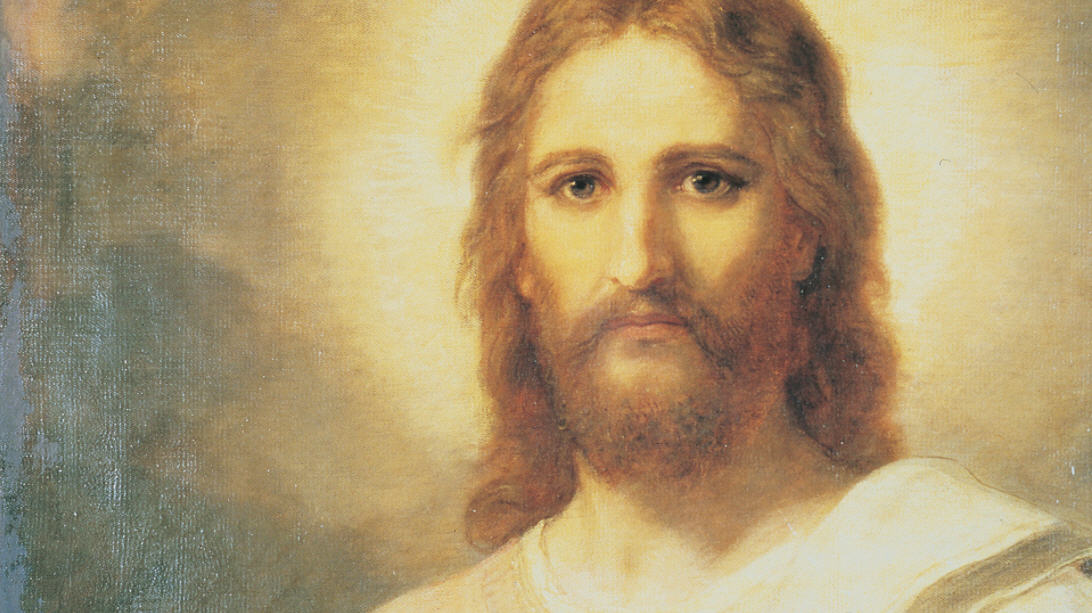
Here’s the deal. The first part of the name of the church is “The Church of Jesus Christ.” So, yes, we believe in Christ, that he died for us, was resurrected, is our Lord and god, etc.

The last part of the name is “of latter-day saints.” We don’t use “saint” to mean super-holy people like the Catholic church does, but more as followers or disciples. So you could translate the last part of the name of our church as “of latter-day followers.”

So the whole name would be The Church of Jesus Christ of Latter-day People who Follow Him.

Okay, then what’s the deal with the name “Mormon”?

Well, here’s where we get to the nub of it and the thing that 99.9% of the world doesn’t know. The key difference between the Mormon church and other Christian churches is that we believe that Jesus has called apostles again in our day, just like he did back in the good old days. And when I say apostles, I mean guys like Peter, James, John, Paul, etc.

You might be wondering what an apostle is. What made those guys special?

It wasn’t that they had great faith in Jesus. Lots of people had great faith. It was that they were called to bear special witness of him. And that special witness was not merely that they believed, but that they knew Jesus was the Messiah because they had seen and heard him after his resurrection.

Peter himself said it best when he wrote in his letter, “For we have not followed cunningly devised fables, when we made known unto you the power and coming of our Lord Jesus Christ, but were eyewitnesses of his majesty.”

When the apostles had to choose someone to replace Judas, Peter said, “Wherefore of these men which have accompanied us all the time that the Lord Jesus went in and out among us, beginning from the baptism of John unto that same day that he was taken up from us, one must be ordained to be a witness with us of his resurrection.”

These guys didn’t simply believe. They knew. They were eyewitnesses to the fact that Jesus wasn’t just some preacher—he was the son of God and was resurrected.

So Mormons believe that Jesus has called apostles again today who bear witness of an absolute certain knowledge of the reality of Jesus the Christ. We believe their purpose is also to be the Lord’s spokesmen when He wants to make general announcements or give general instructions. Finally, we also believe they’ve received the authority to offer the covenants the Lord wants to make with all of us.

We believe the first apostle called in these latter days was a fellow by the name of Joseph Smith. We don’t worship Smith. He was just an apostle. Just like Matthew or John of old were. But we do believe the Lord called him to be an apostle and restore some truths that had gotten lost or confused over the years.

We also believe the Lord asked him to bring forth other scriptures in addition to those in the Bible. One of these new scriptures was a translation of an ancient record called The Book of Mormon. It’s called that because Mormon is the name of the guy who wrote it. And Mormon was another apostle—one called by Jesus in ancient America.

And guess what the purpose of The Book of Mormon is? It’s to testify of Jesus Christ and explain his gospel.

So the name of the Mormon church is really The Church of Jesus Christ of Latter-day Saints. Mormons believe that Jesus has called and commissioned apostles in our times, right up to today, to bear special witness of him. And in addition to that, those apostles have brought forth additional scriptures that witness of the divinity and mission of Jesus Christ.

For Mormons, it’s all about Jesus Christ.

So when someone asks, what’s a Mormon? You can say, let me tell you the real answer. It’s not about an additional book of scripture. Yes, folks gave them the nickname of Mormons because of that book, but the key difference is that Mormons believe that Jesus has called apostles like Peter and Paul again in our day to be his spokesmen, and bear a certain witness of him and his good news, and help folks receive all the blessings the Lord wants to pour out on them.

And, O, what a wonderful message we Mormons believe that is.

If you liked those videos, you can see more here.

Please feel free now to randomly lord your superior knowledge over your family and friends.

Share

Similar Posts

  • You vote: excerpt or full text?

    Readers, for the last year or so I’ve set the blog to show a summary of each post which you then click into as shown below.

    For the years before that I just showed the full text like you see now.

    I personally engage more with full text displays because I read as I scroll, so even if I’m skipping, I do at least pick up the gist of the post.

    Do you have a preference? Does one view “feel easier” to you?

    Let me know.

    Share
  • Good Stuff! The China Study

    T. Colin Campbell grew up on a dairy farm, loved milk, loved meat, and started his career as a nutrition scientist thinking the cornerstone of good nutrition was high-quality animal protein—meat, milk, and eggs.

    One of his first projects was for MIT, trying to help the chicken industry. Millions of chickens were dying each year from something toxic in their feed. What was the mystery killer? Campbell was responsible for isolating and determining the structure of the chemical. Through his work, he helped discover dioxin, one of the most toxic chemicals ever found.

    After helping with that, he began work helping malnourished children in the Philippines. He wanted to find ways to help them get more protein in their diets, because, again, protein was supposed to be the cornerstone of health. Part of the project was remedying an unusually high incidence of liver cancer in children, which is normally an adult disease. At the time, they thought a lack of protein was leaving the children vulnerable to aflatoxin in their diet.

    But as they began their scientific investigation, Campbell discovered the kids who ate the most protein had the highest rates of liver cancer.

    But that just couldn’t be right.

    And then he came across a study of rats and aflatoxin. The scientists in the study administered the cancer-causing aflatoxin to all of the animals. Half of the animals were then fed a diet with 5% protein. The other half were fed a diet with 20% protein. All of the animals fed a diet with 20% protein developed liver cancer. None of the animals fed a diet with 5% protein developed the cancer.

    Again, that couldn’t be right. Protein was good for you. A respected colleague suggested surely the researchers must have mislabeled the animal cages. Campbell decided to run his own studies and find out. Back at Cornell, he and his research assistants ran the experiment multiple times and in various ways. And all of the experiments confirmed that protein promoted cancer growth. In fact, they could turn cancer growth on and off by the amount of protein they fed the animals.

    But it wasn’t all protein. It was animal-based protein. The plant-based protein didn’t promote cancer growth.

    Campbell was astounded. The findings rocked his world, but he was determined to follow the facts wherever they led. This began decades of research into diet and nutrition. The culmination was what’s called The China Study. It is the most comprehensive study of nutrition ever conducted. And what all of his decades of research demonstrated was that “People who ate the most animal-based foods got the most chronic disease. Even relatively small intakes of animal-based food were associated with adverse effects. People who ate the most plant-based foods were the healthiest and tended to avoid chronic disease.”

    Campbell didn’t rest there. He sought out the findings of other researchers and clinicians. And what he found all demonstrates that “The same diet that is good for the prevention of cancer is also good for the prevention of heart disease, as well as obesity, diabetes, cataracts, macular degeneration, Alzheimer’s, cognitive dysfunction, multiple sclerosis, osteoporosis and other diseases.”

    What was the diet that showed such important results? A whole food plant-based diet. It’s a diet rich in legumes, whole grains, vegetables, and fruits with little or no meat, milk, and eggs.

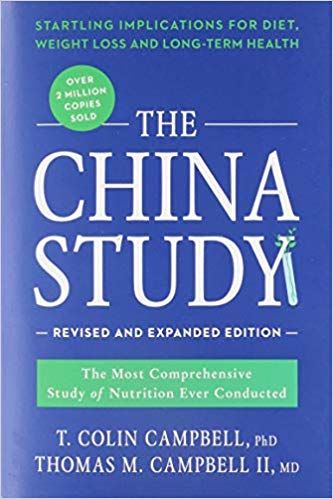
    Campbell has written a book for lay people like you and me that explains the science and findings called The China Study: Revised and Expanded Edition.

    The book is a fascinating masterwork of clarity. In it, he not only explains the research but also how and why various groups have tried to suppress and discredit the information.

    Campbell is not some crazy quack. He isn’t someone selling pills and supplement drinks on the internet. He has no financial interest in you believing him. He is one of the foremost researchers on nutrition, a renowned scientist at Cornell University, who has worked as a senior science adviser to the American Institute for Cancer Research, sat on government nutrition panels, and is on the advisory board of the Physicians Committee for Responsible Medicine.  

    If you or someone you love are worried about any of the following:

    • Heart disease
    • Cancer (breast, prostate, colon, liver, and others)
    • Type 1 Diabetes
    • Type 2 Diabetes
    • Erectile dysfunction
    • Multiple sclerosis
    • Cataracts
    • Macular degeneration
    • Osteoporosis
    • Alzheimer’s

    I think you will be interested in hearing what he has to report. Of course, you’ll have to make up your own mind about the evidence he provides. But I think you owe it to yourself to hear what he has to say.

    Share
  • LTUE 2026 Presentations

    I always enjoy presenting at the Life, the Universe and Everything writers conference. This year they asked me to present the following.

    The 3 Little Secrets that Make Plotting So Much Easier

    No, the secrets don’t have anything to do with the hero’s journey; 3, 7, 8, or 9 acts; Lester Dent; or cat-saving beats. An average novel has around 40 to 70 scenes. If you’re like me, those abstract plot structures spark an idea or three, then dump you in front of a blank wall. So where in the heck do all the other scenes come from? Well, a whole heap of them stand up and present themselves when you use these 3 little secrets. If you struggle with plotting, this is your chance to put that behind you for good and start generating fun and exciting plots with ease. Come learn the 3 little secrets that make plotting so much easier. 

    Here’s the handout.

    Vivid And Clear

    Despite the oft-repeated 11th commandment for writers—show, don’t tell—writers never show. They can’t. It’s all tell, tell, tell. The trick is to tell in a way that helps your readers imagine with such vividness and clarity that your story triggers an emotional response.  In this session learn the five critical prose techniques that help you do just that. 

    Here are the presentation slides.

    Share
  • Do you wish books had ratings for sex, violence, and language? If so I want to chat with you.

    MarshmallowMateysBack in 2011 I wrote a post titled “Since when did young adult fiction become the cure for cancer?”  It was a response to all the YASaves hysteria. The main point of my amazing post (grin) was that the people complaining about some YA content wanted not to ban books, but to simply have a way to more easily evaluate if they wanted to buy a particular book in the first place.

    They want to avoid purchasing what they thought was a box of Marshmallow Mateys only to open it and find a bunch of bicycle sprockets.

    Last year I decided to work on a solution. I have some ideas. But before I get ahead of myself and build something, I want to really understand if it’s a problem worth solving. I want to chat with others who do care about content to see what aspects of this are important to them and what they’re doing now to find this information.

    So, if you wish books had ratings for sex, violence, and language, then I want to talk to you. It will take about 20 minutes. If you’re open to chatting, leave a comment, or click Contact above and fill in the form.

    Because I live up in the middle of nowhere, we’ll have to chat via a web meeting. But never fear: I’ll host that. All you’ll have to do is show up and answer my questions 🙂


    Share
  • The First Step to Being an Entertaining Storyteller

    What’s the first step to becoming an entertaining storyteller?

    In a recent ZOE Nutrition podcast, James Clear, author of Atomic Habits, suggests the key to starting a new behavior, like telling entertaining stories, is doing four things:

    • Make the cue to the behavior OBVIOUS.
    • Make the behavior more ATTRACTIVE.
    • Make the behavior EASY.
    • Make the behavior SATISFYING.

    But what’s the FIRST step?

    It’s mastering the art of showing up.

    That’s it.

    What does that look like?

    He shared an interesting story in the section where they were talking about making the behavior easy.

    START

    Let me give you two examples that’ll probably help clarify. So the first one this is just a really simple tactic, a very actionable thing, that you can use for building better habits. I call it the two-minute rule, and it just says take whatever habit you’re trying to build and you scale it down to something that takes 2 minutes or less to do.

    So read 30 books a year becomes read one page. Do yoga four days a week becomes take out my yoga mat.

    Now sometimes people resist that a little bit because they’re like, okay buddy, you know I know the real goal is not to just take my yoga mat out. I know I’m actually trying to do the workout, so this is some kind of trick, and if I know it’s a trick, then why would I fall for it?

    I have this reader his name is Mitch. I mentioned him in Atomic Habits. He lost over 100 pounds. So what is that? 40 or 50 kilos? And he kept it off for more than a decade. And he had this strange little rule for himself where he first started going to the gym, and for the first like 6 weeks he wasn’t allowed to stay for longer than 5 minutes.

    So he would get in the car, drive to the gym, get out, do half an exercise, get back in the car, and drive home, and it sounds ridiculous. You know? It sounds silly. It’s obviously not going to get the guy the results that he wants, but what you realize is that he was mastering the art of showing up.

    He was becoming the type of person that went to the gym four days a week even if it was only for 5 minutes, and this is a pretty deep truth about habits. Which is that a habit must be established before it can be improved. It has to become the standard in your life before you can scale it up and turn it into something more. You need to standardize before you optimize.

    And so the two-minute rule kind of helps push back against that perfectionist tendency that we have sometimes, or against that tendency to try to do too much, and encourages you to master the art of just showing up.

    END

    That’s the answer!

    If we want to be entertaining storytellers, the first, most powerful identity we can adopt is being the creative who shows up every day to work on his or her entertainment. Or maybe it’s five days a week. Or six days, four days, whatever your number is.

    The first identity is that I’m the kind of creative that shows up to work. This awesome work of entertainment.

    So what’s a two-minute behavior that might go along with that?

    Here’s mine. After I come back from weighing myself in the morning, I set my writing session timer, open my writing document, read a bit of what I wrote in the previous session, and identify the task for this session.

    That’s it. Nothing more.

    That’s showing up.

    If I show up and do that, I’ve shown up.

    If, for some reason, I miss showing up. I identify the next slot in that day to get it done.

    I can master all the other parts of writing entertainment later. But I must master the art of SHOWING UP first.

    So tell yourself you’re the kind of creative who shows up to write entertainment every day.

    Make that your identity. You can expand that identity later. But let’s start here.

    Write your two-minute behavior. Get specific on the time and action.

    Then be like Mitch. Show up and celebrate showing up.

    And if, like Mitch, it takes you six weeks to master the art of showing up, then it takes six weeks. Big whoop.

    Writing fiction is a long-haul game. That means the name of this game is playing the game until you win the game. And to do that you first have to master the art of showing up.

    This is the key. When you master this, everything else is possible.

    “I am the kind of creative who shows up every day to create.”

    Tell yourself that. Repeat it when brushing your teeth. Make that your identity. Be that guy.

    If you have a two-minute action for showing up, share it.

    If you don’t have one yet, identify one and share it. And if your action doesn’t work? No biggie. Act like a scientist and tweak it until it does.

    NOTES

    ZOE Nutrition podcast with James Clear. https://www.youtube.com/watch?v=mcdzK8BOfBY or https://zoe.com/learn/podcast-how-to-master-healthy-eating

    Share
  • A simple calculator for how much home you can afford

    It’s March. Spring is here in most places. And this is when the house hunting season starts to get rolling. I used to moonlight as a realtor. I started from nothing, ran my own little gig, and did very well. Then I got a book contract, and there was no way I could do three jobs. But I learned a lot.

    One of the things I learned is that home buyers very frequently have a very hard time staying within their budget.

    They set a number, start looking in their price range, then peek at the homes in a higher price range, and of course those homes look better. Why wouldn’t they? They’re more expensive! And, geez, they have such nice faucets and cool counters and a shower with five heads so you can wash your body from every imaginable angle, and suddenly many of my buyers would refuse to see cheaper homes. Because they just had to have the ultrawash shower.

    Or a dent in a wall that’s officially called an alcove.

    Or a super deluxe gas heater fireplace that runs on banana peelings and saves gerbils.

    Or whatever.

    It’s called house craze. It’s a temporary thing. It passes as soon as you get in the house and start making the payments.

    And then you wake up and realize you have a hot tub and you hate hot tubs! What in the world were you thinking?!

    Well, you had house craze.

    The unfortunate side effect of buying too much house is that the mortgage eats up so much of the take-home pay that it makes everything else exceedingly tight. Or impossible.

    You don’t have room to pay off debts. Don’t have room to invest much, or at all. Don’t have room to have fun vacations. Don’t have room for anything except the fricken-ricken, blankity-blank, #$%!* house!

    This condition is called being house poor.

    So house craze leads to being house poor.

    Which leads to second jobs and stress and often more debt. You may also end up in a roadside ditch. The situation below occurs with more than just with cable companies.

    The lender will tell you that you can lend up to 36% of your take-home pay!

    Your eyes go wide, and you being to think that maybe you can afford two ultrawash showers. But just slow down and think for a second–the lender is the one SELLING you the loan.

    Right…

    Don’t listen to the lenders.

    Listen to common sense.

    My advice is the same as Dave Ramsey’s:

    1. Don’t buy a house until you’re out of debt and have saved enough to pay 10% of the purchase price of the house.
    2. When you’re at that point, get a 15-year, fixed-rate mortgage with a monthly payment that’s no more than 25% of your take-home pay.

    So that’s my advice. You’re free to do with it what you wish. Just know that being house poor sucks.

    And all that to introduce the calculator which will tell you exactly how much home you can afford. It takes 10 seconds to fill in.

    Here it is: How much home can I afford?

    Download it and be happy.

    Share

4 Comments

  1. To respond specifically, the modern LDS apostles and prophets have almost never testified that they have seen Christ as did the scriptural ones. One famous testimony from Joseph Smith actually changed over the tellings. What changes is who he saw and what age he was and why he had gone. I’ve heard the apologetics and find them lacking. Following is a link to the several accounts.
    http://mit.irr.org/changing-first-vision-accounts-1827-first-vision-account-related-willard-chase
    I find it a stretch to call them special witnesses.

  2. Jerry Timothy, it’s true they don’t bandy it about. These are sacred experiences. And so they refer to them most often in general terms.

    But I’m not sure the old apostles did anything different. What we have from those old apostles mostly are their letters to fellow saints, not what they always preached openly. Even Christ himself did not proclaim his divinity often. What the four gospels show us is that he mostly spoke in parables. During his three-year ministry we only have a few instances when he spoke openly.

    But to say that the modern apostles don’t testify of their certain knowledge is not at all accurate. Let me give you one of the first and some others more recent, including one as recent as 2 years ago.

    https://www.lds.org/scriptures/dc-testament/dc/76.19-24?lang=eng (Joseph Smith and Sidney Rigdon, verses 19-24)

    https://www.lds.org/general-conference/1985/04/the-purifying-power-of-gethsemane?lang=eng (Bruce R. Mckonkie)

    https://www.lds.org/general-conference/2014/04/the-witness?lang=eng (Boyd K. Packer)

    https://www.mormonchannel.org/listen/series/conversations-audio/elder-richard-g-scott-and-daughter-linda-mickle-episode-6 (Richard G. Scott, start at 79:55 and listen to the end)

    Now if you are here to argue the validity of their claims, that’s not the purpose of this post. We can talk about that at a different time. This post is to tell you what Mormons believe. Not establish the truth of it. That’s an entirely different discussion 🙂

    Also, if someone wants to view the various versions of what Jerry is talking about, you can see them all here with a well-informed discussion of those differences: https://www.lds.org/topics/first-vision-accounts?lang=eng#_

Comments are closed.