I’m done being Amazon’s fool

Do you see this picture? This is Jeff Bezos laughing at John Brown. Because John Brown was a fool.

Let me explain.

When I sell my ebooks on Amazon for $2.99 to $9.99, Amazon charges me 30% of the price. I keep 70%. That’s a decent deal. I’m happy to do business with them as a partner with my ebooks.

But Amazon’s got some alter ego going when dealing with folks selling used books. When I sell used books, Amazon somehow thinks it’s a swell deal for all of us little guys if they take a huge chunk of the pie. Look at the numbers below.

Order date: 04/08/2017
Price: $3.98
Shipping: $3.99
Amazon fees: -$3.99 (100% of sale price)
Your earnings: $3.98

Order date: 04/05/2017
Price: $5.50
Shipping: $3.99
Amazon fees: -$4.21 (77% of sale price)
Your earnings: $5.28

Order date: 03/23/2017
Price: $3.50
Shipping: $3.99
Amazon fees: -$3.91 (112% of sale price)
Your earnings: $3.58

Order date: 03/15/2017
Price: $1.49
Shipping: $3.99
Amazon fees: -$3.61 (242% of sale price)
Your earnings: $1.87

You might think, hey, John, you’re making a few bucks on each. But no, what you see above is what I get from Amazon. I still have to ship the product. And if I purchased the book somewhere, I have to cover those costs as well.

For example, look at the last one. Amazon feels that not only do they need to charge me the total sale price of the book, they also need more than half of the shipping costs. That book cost over three dollars to ship plus a little for a bubble mailer because I actually care that the book is in great shape when the buyer opens the package. So I lost money. But Amazon did just fine.

And Bezos was laughing because John Brown, the fool, was paying Amazon for the pleasure of taking time to list the book, shelve the book at his house, package it, and then post it. It was as good as going to Disneyland!

The fees used to be lower.

Order date: 06/26/2014
Price: $3.59
Amazon fees: -$2.88 (a mere 80% of the sale price)
Shipping: $3.99
Your earnings: $4.70

I hated the fees they were charging then, but after postage, we could still make a buck or so on books priced at this level. Not anymore.

So adios Amazon. I’m done being your fool. And shame on me for taking so long to recognize it. I’m moving all my used book stock to Half.com because they actually have a good thing going. Look at what they charge for their services.

$0.75 – $50.00: 25.0%
$50.01 – $100.00: 22.5%
$100.01 – $250.00: 20.0%
$250.01 – $500.00: 17.5%
> $500.00: 15.0%

That means on that $1.49 book, they would have charged me a whopping 37 cents.

Hey, profit for them AND me. And a great price for the buyer. Win-win-win.

How nice.

Share

Similar Posts

  • The Surprising Truth About Militias and the Second Amendment

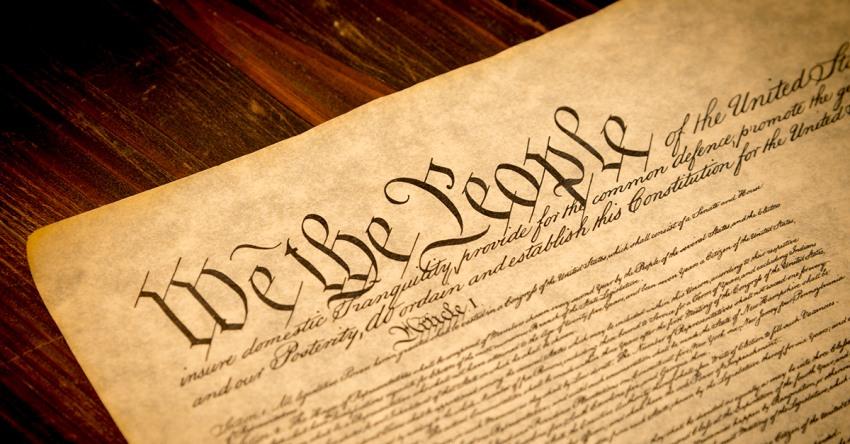
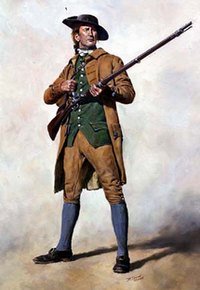
    When the founding fathers spoke of “militias,” they were not referring to a bunch of yahoos running around in the woods with paint on their faces outside of state control.

    They were referring to a citizen army under state control.

    So is “militia” just the old-time word for what our army is today?

    No.

    A standing or “regular” army is one made up of professional, full-time soldiers like the US Army, the Marines, the Navy, and the Air Force. And it’s permanent, meaning you don’t disband the army when the fighting is done.

    A militia back in those days was something completely different.

    The problem of a standing army

    The founding fathers knew they needed to provide for the common defense, but they saw standing armies controlled by a central government as an immediate threat to the liberty the new union sought to preserve.

    Why would they think that?

    Easy. History was littered with case after case where standing armies had become a law unto themselves and oppressed the populace. One glaring example is what happened to the Roman empire. It suffered centuries where this faction and then that faction of the army was in control, and it brought nothing but a continual procession of civil wars and bloodshed.

    History also showed that even if the military didn’t take over, kings and queens were happy to wield standing armies to impose their will and oppress the people. Remember: the world then was ruled by monarchies. The founders had never seen a standing army wielded by any other type of power.

    So the founders didn’t want to give a president or any other central authority that power. They feared doing so would only pave the way to the ruin of the new nation they sought to form.

    So if you don’t have a standing army, how do you defend your country?

    The fyrd

    The founding fathers thought they saw a solution in a tradition of duty that went back hundreds of years in England. In the days when the Saxons ruled England, the kings and dukes would muster and deploy the fyrd to help them fight their wars.

    The fyrd was made up of all able-bodied free males between certain ages, regardless of their vocation. It was their duty to provide their own arms and defend the land when called by their leaders. So this was an army made up of farmers, tanners, smiths, tailors, etc.

    But the fyrd wasn’t a standing army. Nor was it populated with full-time soldiers. This citizen army was to be called out when needed, and when the crisis was over, it was disbanded, and the men went back to their vocations.

    The militia scheme

    The founders took this idea and tweaked it. Back in the Saxon days, the king controlled the fyrd. In this new scheme, the United States would rely on a fyrd (which they called a militia), but the powers to control it would be split between the president, Congress, and the States.

    First, Congress, not the president, was the only authority that could declare war and summon the state militias. So the president would be the commander in chief when the militia was active. But the minute Congress decided to end a war and disband the militia, that army dissolved, leaving the president as commander in chief of only the tiny number of troops that had been authorized as the regular army (less than 1,000 at the time).

    Second, while the Federal government would provide the weapons the militia would use when it mustered them for war, the state governments would be the ones to appoint the officers and train the soldiers. You can’t run an army without officers. So this would prevent the Federal government from taking control by stacking the army leadership with those loyal to a despot president or Congress.

    So the militia was supposed to be the main force that fought our wars, and it was supposed to be temporary. It’s true that Congress did authorize a standing army, but it was tiny. And with this setup, the founders figured we’d have the army we’d need, but we’d avoid the problems standing armies had posed in the past.

    So militias, as thought of by the founders in the 1700s, were not groups outside the government’s control. They were temporary citizen armies. And power over them was broken up between the president, Congress, and the States so no one group or person could wield them tyrannically.

    1791 and The Bill of Rights

    Accordingly, the founders wrote the articles and sections of the Constitution in 1787 to set all of this up. However, many anti-federalists were concerned that the Constitution didn’t go far enough to protect the rights of individuals and limit the power of the Federal government. In fact, many of the founders were so concerned about the issue that they refused to ratify the Constitution as it was.

    The only way they’d sign on is with the promise of the Bill of Rights. When they knew that bill was forthcoming, delegates from nine of the original thirteen states ratified the Constitution. The delegates of two other states waited until the document was produced. The final two (North Carolina and Rhode Island) waited until 1791 when the Bill of Rights, which includes the second amendment, was passed.

    So let’s look at the language of the Second Amendment in light of what we know about the fear the founders had of standing armies.

    “A well regulated Militia being necessary to the security of a free State, the right of the people to keep and bear Arms shall not be infringed.”

    Why did they include this? It was not because they wanted the citizens to be able to hunt or protect themselves with guns. They figured that was a given. They included this amendment because they concluded that an armed citizenry would make it impossible for tyranny to arise.

    Noah Webster, a Federalist, stated the idea this way when trying to persuade Pennsylvania to ratify the Constitution:

    “Before a standing army can rule, the people must be disarmed; as they are in almost every kingdom of Europe. The supreme power in America cannot enforce unjust laws by the sword; because the whole body of the people are armed, and constitute a force superior to any bands of regular troops that can be, on any pretense, raised in the United States. A military force, at the command of Congress, can execute no laws, but such as the people perceive to be just and constitutional; for they will possess the power, and jealousy will instantly inspire the inclination, to resist the execution of a law which appears to them unjust and oppressive”

    So the second amendment was included in the Bill of Rights because enough of the founders feared that the Constitution could be read in a way that would allow the Federal government to disarm the populace. Disarming the populace would open the way to a standing army under Federal control. And that would open the way to tyranny.

    When all was said and done, the founders separated the power of the military in this way:

    • Only Congress could declare war and muster the militia
    • Only Congress could finance it
    • There would be no standing army to speak of
    • Only the states could appoint officers to the militia
    • The government was forbidden to infringe on the rights of individuals to keep and bear arms

    So what happened?

    Militias didn’t work

    The problem is the militia didn’t work well enough to actually provide for the common defense.

    It didn’t work during the Revolutionary War. The republic had to create the Continental Army. That army was supported by the militias, but the colonists found they couldn’t rely on the militias alone. They had to have the regular army to fight the British.

    After the war, the Continental Army was disbanded, but the militias simply weren’t good enough to face the threats the new nation faced, and George Washington himself openly lamented it. The troops took a licking in 1791 at the battle of St. Claire’s and then time and again during the War of 1812.

    Heck, militias didn’t even work in the days of the fyrd. In those days, the Saxon and Norman kings relied on their house warriors (their standing army) and mercenaries for most of the work. They only supplemented with the fyrd.

    1792

    After the defeat in 1791, the early leaders concluded they needed a regular army with the training and skill it possessed. So in 1792 Congress authorized the creation of the First Legion of the United States, a standing army of 5,190 men. The legion was renamed “The United States Army” in 1796.

    In 1792 Congress also passed the Militia Acts. The acts were written to expire in two years. But Congress wrote another in 1795 to replace them. These laws authorized the president to called out the militia “whenever the United States shall be invaded, or be in imminent danger of invasion” and “whenever the laws of the United States shall be opposed or the execution thereof obstructed, in any state, by combinations too powerful to be suppressed by the ordinary course of judicial proceedings, or by the powers vested in the marshals by this act.”

    So a mere five years after the Constitution was first ratified, and a year after the Bill of Rights, Congress dramatically increased the size of the nation’s standing army and gave the President the authority to call out the militia! It’s clear that right from the beginning the militia scheme started showing some cracks.

    Today

    The First Legion was small. But it grew again in 1808, and then again during the war of 1812. And it continued to grow slowly, then ballooned in the 1900s until we now have more than a million troops in the armed forces of the US.

    The National Guard is what the militias of the 1800s transformed into in the early 1900s, but, wouldn’t you know it, the National Guard is now mostly under the control of the Federal government too.

    What does this mean?

    It means we now have the most powerful standing army the world has ever known and almost no militia. It means our military is a complete 180 of what the founders envisioned.

    I’m not saying it’s bad. I love our military.

    I’m merely pointing out that militias back then meant a certain thing and the founders wanted them for a certain reason. And that we have completely replaced that arrangement with the exact opposite.

    As for tyranny, we still have armed citizens. Maybe this is enough to deter tyranny as Webster claimed. Although the disparity between what the citizens can arm themselves with now and what the regular army has is nothing like it was in the 1700s. So maybe there are other laws and aspects of our culture that have prevented it. Maybe it’s both.

    Either way, it’s important to understand what the original militias were, why the founders wanted them, and what the second amendment was all about.

    More

    Helpful articles

    US Constitution – Provisions for the military

    Here are all of the parts of the original seven articles of the Constitution that deal with the military.

    Article 1 – The Congress
    Section 8

    This section gives Congress seventeen powers. Six of these have to with the common defense. Those military powers granted are:

    • To declare War, grant Letters of Marque and Reprisal, and make Rules concerning Captures on Land and Water;
    • To raise and support Armies, but no Appropriation of Money to that Use shall be for a longer Term than two Years;
    • To provide and maintain a Navy;
    • To make Rules for the Government and Regulation of the land and naval Forces;
    • To provide for calling forth the Militia to execute the Laws of the Union, suppress Insurrections and repel Invasions; [notice there are only three cases that warrant the calling forth of the militia]
    • To provide for organizing, arming, and disciplining, the Militia, and for governing such Part of them as may be employed in the Service of the United States, reserving to the States respectively, the Appointment of the Officers, and the Authority of training the Militia according to the discipline prescribed by Congress;
    Section 10

    This section prevents the States from doing thirteen things. Three of these have to do with the military.

    “No State shall, without the Consent of Congress, lay any Duty of Tonnage, keep Troops, or Ships of War in time of Peace, enter into any Agreement or Compact with another State, or with a foreign Power, or engage in War, unless actually invaded, or in such imminent Danger as will not admit of delay.”

    Article 2 – The President
    Section 2

    “The President shall be Commander in Chief of the Army and Navy of the United States, and of the Militia of the several States, when called into the actual Service of the United States;”

    Article 4 – The States
    Section 4

    “The United States shall guarantee to every State in this Union a Republican Form of Government, and shall protect each of them against Invasion;”

    Share
  • Good Stuff! A clear-eyed view of the Founders

    When it comes to politics, we frequently talk twice as much as we should and listen half as much as is deserved. With our mouths open so much of the time, we fail to get the facts. And this often leads us to paint things in hyperbolic black or white.

    One area where we seem to do this regularly is with the Founding Fathers. Depending on our side, we label the Founders as devils or demigods and the constitution as a wicked document or holy writ.

    Is it possible both sides are distorting the truth?

    Joseph Ellis, one of the nation’s foremost scholars of American history, suggests that we are. He has written an excellent article for the online Encyclopedia Britannica called “Founding Fathers” that points out both the amazing things the Founders achieved with the birth of this nation and some of their most egregious failures.

    I don’t know about you, but I find clarity a good thing. I think it helps us have more productive conversations. If you agree with me, I think you’ll enjoy the clarity Ellis brings to the Founders and the nation they set up. Read his article here.

    For my part, I think the Founders set up an awesome system. Not because it was perfect at birth, but because it was a system that got enough right to allow us to get where we are today. Look at how far we’ve come on so many fronts! And it got enough right to allow us as a nation to get even better in the future.

    Just consider what the Founders implemented that was in no government at that time. The ideals of individual liberty, the separation of powers, the ability for a huge swath of citizens to elect their leaders, the ability to change the constitution itself, the separation of church and state, and the engine of democratic capitalism that has lifted more people out of poverty than anything else the world has seen.

    The Framers didn’t create the Constitution in a vacuum, but nowhere in the world had anyone set anything up that went so far. There was nothing like it, no real examples to follow. And many thought it would fail, just as France’s attempt in their revolution failed just a few years later.

    As for things they got wrong. Well, they themselves soon recognized the way we elect the president and vice president didn’t work and adjusted it. Their idea that political parties wouldn’t form was wrong. Their idea of a militia for common defense didn’t work (see my writeup here). Their compromise on slavery was a festering sore that came to a head before the Union was 100 years old. Their treatment of the Indians was awful. Their reasons for excluding women and those not owning land was bone-headed.

    So, yes, they got some things wrong. Some of them held some beliefs that we find appalling today. And the nation has not implemented their stated ideals as well as we might have hoped. However, the Founders got so many things right. And what’s more, they did it as men living in the times they lived, having grown up with the beliefs and values of that time, not those of 2019!

    While we as a nation have progressed from some of their failures (thank heavens), in other ways the Founders may be are our betters. There are a great many lessons to learn from them, both from their successes and failures. One is their humility—they knew what they’d created wasn’t perfect. Let’s not imagine that we or our ideas are perfect either.

    If you’re at all interested in politics, I recommend Ellis’s article and its view of the Founders. Read it article here.

    Share
  • Presenting at the League’s Summer Symposium

    I’ll be presenting this Saturday, June 8, at the league’s summer writer symposium at USU. Here’s the description of my presentation.

    Make ‘Em Beg For More!
    How do you keep your readers begging for one more page? The answer is probably not what you think. Come to this session to learn the surprising secret—along with plenty of examples and how-tos. When you’re done, you’ll know exactly what you need to do to write stories that are devilishly hard for readers to put down.

    Check out the schedule below. Looks like there will be some great presentations. If you attend, please come and say hello.

    https://www.leagueofutahwriters.com/summersymposium

    Share
  • |

    Indie Thoughts: When an author should self-publish and how that might change

    From publishing consultant Mike Shatzkin:

    For a number of reasons, the belief here is that most of the time for most authors who can get a deal with an established and competent house, their best choice is to take it.

    Sounds reasonable, but then we get to the money quotes.

    The strength of the traditional publishers and the traditional deals is directly related to the amount of the market that is served by inventory in stores. When that proportion was “nearly all”, the power allocation was “nearly all” to the traditional publishers.

    ***

    Self-publishing and new-style digital-first publishing can grow more to the extent that the book-in-store share of the market shrinks more. But while that’s happening, the big publishers are also adding to their capabilities: building their databases and understanding of individual consumers (something that all the big houses are doing and which the upstarts seem not to believe is happening, or at least not happening effectively), distributing and marketing with increasing effectiveness in offshore markets, and controlling more and more of the global delivery in all languages of the books in which they invest.

    It will compound the pressure on the alternative players if Amazon continues to grow its global market share for ebooks. The bigger the percentage of the market that can be reached by self-publishers with one stop at Amazon, the less interest they’ll have in picking up smaller chunks of the market with additional deals and the more powerful will be any incentives Amazon cares to offer for making the title exclusive to them.

    Link to the rest at The Shatzkin Files, and thanks to Passive Guy for the original link.

    Shatzkin’s discussion of the amount of the market served by inventory in stores is right on. But his “best choice” conclusion doesn’t follow.

    Why?

    Because the question for each author has to be which stores will I be in, what kind of floor space will I have, and how long will I be there? And in many cases the answers to those questions do not compete well with indie options.

    For example, a lot of in-store sales come from the drug store, grocery store, airport, Walmart, Costco type venues. But it’s rare than an author getting an average deal will see the light of day in those places. Those are reserved for bigger sellers. And not very many of those. So unless you’re getting a big deal, you can’t count that floor space.

    Poof. Tens of thousands of venues are now no longer part of the equation.

    So you are now left with whatever number of stores the publisher can get you into at Barnes&Noble (a max of 675 stores), Books-a-Million (max of 200 stores), Hastings (max of 149 stores), non-chain stores,  etc. I think the total number of book stores in the USA is around 10,000 or so. But publishers won’t get you into all of them. Some don’t carry your type of book: they’re used books stores, or kids book stores, or Christian book stores. And even if it’s a store like Barnes&Noble, you probably won’t get into all their stores. So how many stores will you actually be in?

    Next, you have to wonder where you’ll appear in the stores you do get into. Will you be face-out somewhere prominent? Or will you have two copies spine-out in the back? If you’re spine-out, that’s just reduced the value of the floor space publishers offer you yet again.

    Finally, how long will you be there? If you sell your two copies in a store, are you done at that store? Will your books be there longer than 12 weeks? Will they be there even 8 weeks?

    James Patterson can sell millions of books because he has multiple copies in tens of thousands of stores with great display. And he’s usually there for more than just a handful of weeks. If you have two books spine-out in each of 500 stores for eight weeks, how well are you going to do?

    Here’s some math on author revenue and units sold. Is selling 1,000 books with the royalties and contract terms offered really worth it? What about 4,000 books? 7,000? Are you going to be in enough stores with a decent placement to get those numbers?

    If you’re going to be in thousands and thousands of stores with good placement, and the terms of the contract are reasonable, then, good golly, working with a publisher looks great. But if you’ve got a book that’s good enough to make an editor somewhere want to buy rights to it and the publisher is offering to put you spine-out in a little over a thousand stores with all sorts of contract crap, then Shatzkin’s “best choice” is really a poor one. In those situations my money is on going indie.

    EDIT: It seems there are about 12,700 book stores in the USA. But that includes big-box stores, which I think are the Walmarts and Costcos.

    Share
  • |

    Writers of the Future, the Church of Scientology, and Killing Puppies

    Author Jim C. Hines recently posted a thoughtful blog about connections between Writers of the Future and Scientology. There are a number of folks who have issues with Hubbard’s metaphysical claims and the church he started. Some folks claim that supporting Writers of the Future (WOTF) in any way supports the Church of Scientology (CoS) and the abuse of the young, the innocent, those who are vulnerable, and the stupid.

    I won a first prize in the Writers of the Future. I received $2,000 cash for the prize and subsequent publication. I also recieved a paid trip to Cocoa Beach, Florida to workshop with the other winners and pro writers. I tell new writers to submit to the contest all the time. I do not feel I’m supporting any wickedness. Let me walk you through this. You tell me if I’m killing any puppies.

    A. What underlies the continued operation of WOTF?

    1. Hubbard wanted it (I don’t know why, although he states it was to help new sff authors and illustrators).
    2. The folks who run it have a very HIGH esteem of Hubbard and so have huge motivation to make it successful.
    3. A trust was set aside, although without looking at the books we can’t know exactly if it’s an independent thing or if money is being funneled from other CoS holdings.  You do not pay many to enter the contest, so all of the money to run the contest and pay prizes etc. comes from this trust, sales of the WOTF anthologies, and perhaps other CoS holdings.
    4. It’s used for positsive PR for Hubbard’s brand name.
    5. The judges, who don’t give a fig about CoS, want to help new writers.

    B. What are the effects of the contest?

    1. No documented writer conversions to CoS.
    2. No documented WOTF anthology conversions of young skulls full of mush to CoS. Someone please show me some evidence of the WOTF antho being a gateway to anything, despite the rumored statements of some Scientologists someone’s uncle overheard.
    3. No documented donations to CoS that I know of.
    4. New writers get paid a whole bunch of money, get to network, and receive instruction from pros for a week.
    5. The winners, on average, think better of Hubbard, as do their friends and family.
    6. Most winners report it was a great experience and encourage other new writers to submit.
    7. WOTF sells some anthologies and makes a little bit of cash to offset expenses. I can’t imagine they’re ever in the black, are they?
    8. WOTF tracks winners and uses those who have done well as PR shiny for . . . WOTF and the Hubbard brand name.

    I was a first place winner. I had a marvelous time. This was the one held in Cocoa Beach, Florida. One night I needed to go to a convenience store to get something (tooth paste?). One of the WOTF folks drove me there. A nice woman. It was raining. It was just the two of us in the SUV.

    I’m a VERY CURIOUS guy. I’ve read most of DIANETICS. I stopped by a Scientology place in Seattle to chat. I like hearing people talk about their faiths, about their lives, about whatever. If you spend any amount of time with me, you will tell me your life story. You will. It just happens.

    I tried my dangest to get something out of that woman, but she was as tight as a clam sealed in four feet of concrete.

    Nobody talked Scientology. Everyone involved went out of their way to avoid it. End of story. I’ve talked to many other winners. They report the same.

    On the other hand, they did have a PR guy there.

    Mr. PR intereviewed us about the contest and Hubbard’s works and took footage. Our one-on-one interviews were on camera. We took still photos. He asked us in our acceptance speeches to thank Hubbard by name.

    He was a PR guy.

    It was very clear his job was to generate PR content for WOTF and Hubbard. How do I KNOW this? Because his questions all centered around WOTF and/or Hubbard. But never CoS.

    Some of the winners did not like his solicitation for a mention of Hubbard’s name. There was some reality show behind the scenes grumbling and scheming, and they did not mention Hubbard in their thanks at the awards event.

    That’s fine, although it didn’t make much sense to me. Maybe they felt gratitude needs to be spontaneous, not asked for. And I can agree with them on that. At the same time, why would I take $2,000 cash for the prize and publication, and the paid hotel, and workshop, and airfare and then slap the folks who gave it to me? I was indeed grateful. So I mentioned Hubbard in my thanks (oh, look at how noble I am; somebody should saint me).

    What did the contest do for me?

    1. Gave me some cash.
    2. Validated that maybe I had some chops. No, I wasn’t competing against pros. But I was competing against all those wanting to break in. I talked to Wolverton, who was a coordinating judge for many years and was the first reader, about the numbers of submissions they received. Hundreds upon hundreds each quarter. Huge boxes full. Were some drek? Of course. Who cares? Others weren’t. I won.
    3. Planted an idea in me that maybe I could do this.
    4. Gave me great connections with some pros and other authors.
    5. Allowed me to tell people I won a big international award for my writing. A little PR for my own brand. Who doesn’t want to engage in a bit of puffery now and then (and so you see, Fred, I am a little fabulous, aren’t I . . . )?

    So the contest, as far as I’m concerned, is a GREAT contest for new writers.

    But am I supporting CoS? And is that a bad thing?

    Every time I purchase a Kraft Foods or Nabisco product, I directly fund Phillip Morris tobacco company and their efforts to hook children on smoking abroad. Some of the tomatoes I purchase in Walmart and other grocery stores are tainted by slavery that occurs today in Florida and California’s central valley with migrant workers. Some of those tomatoes end up in various restaurants like Pizza Hut or Papa Murphy’s. Every bite of chocolate you eat funds slavery in the Ivory Coast, where the vast majority of cocoa beans come from. Not a few slavers here and there, but widespread slavery and abuse. There are many situations like this.

    What do you do when you like a product or service, but don’t necessarily want to lend aid to an affiliated cause?

    In many situations, I don’t do much.

    Alas, there goes my sainthood.

    I admit that I should and should probably think more about this.  At the same time, with regards to CoS, I don’t know that it is a wicked and exploitative organization.

    I’ve seen nothing that suggests they’re into crime. Or systemic abuse. Or fraud. Or that they have a vendetta against dumb people. I don’t share one iota of their faith in Hubbard or his metaphysical teachings. But I do share other values and beliefs with them. Just as I do with Catholics, Muslims, Pagans, Athiests, Communists, and Realtors.

    Besides, I never did PR for them. I’ve always said I DISAGREED with their theology, which is negative PR, if you think about it. Furthermore, I’m fairly confident the contest DOES NOT funnel large amounts of money to CoS.

    What can they be making after taking out the expenses of the award week for all those authors, illustrators, judges, “luminaries,” etc. that they fly in and house, all in addition to the prize and publication monies? I’m confident they make nothing at all, but actually lose money each year.

    So the net net is that they get some PR for WOTF in the SFF community and some for Hubbard’s name. That’s it. That’s what I’m giving them.

    But I don’t see any documented stories of that leading to any donations or conversions to CoS. Or positive PR for CoS. Which, again, I’m still not convinced is a systemically exploitative and wicked organization.

    But even if it were, am I really supporting CoS when I promote WOTF?

    I don’t think so. I’m not giving them cash. I’m not giving them any positive PR. It seems to me purchasing one bag of Oreos or a Lindt chocolate bar does more harm than this ever could.

    I feel so much better now. I am saving the puppies.

    Of course, if you disagree, please post a comment. If you have reliable documentation, not hearsay and tabloid clamor, that can add to the discussion, feel free to share it. I’m all for good data. And if you see issues with my logic, share that as well. But no wild-eyed, Chicken Little, my mother was eaten by CoS aliens rants please.

    As for that Twix I just ate. . .

    (sigh)

    EDIT 1: I just learned the Phillip Morris spun Nabisco and Kraft off in 2007.  So that frees up my Oreo conscience, but the principle remains.

    EDIT 2: Okay, so I just learned that the CoS planned and authorized crimes in Operation Snow White. What to make of that? Comments? Talk about your corporate espionage. I know there are governments and organizations around the world and in the US that engage in that all the time. But this is the first I’ve seen from a “church.”

    EDIT 3: Read through the links on this post by Deirdre Saoirse Moen where she explains why she no longer supports the WOTF contest. Primarily, she just can’t stand some of the CoS practices.

    Of note is the link to the court report by the Village Voice at the Debbie Cook hearing. One question I have is why all those leaders were in the Hole to begin with? Was it some routine church program? Yeah, it sounds awful, but the military puts the SEALs and Special Forces through awful things. So I’m not clear on all of that.  And why haven’t more come out to complain? The unlawful detainment aspect of these allegations is disturbing. But are they really doing this? Are these isolated experiences, or SOP? I don’t know.

    There’s another one farther down that lists alleged harassment of folks posting some CoS theology documents on the internet.  I sampled the documents linked to there. Most of those are just copyright violation letters. SOP for anyone trying to protect copyright.

    Looking at Operation Snow White, the Debbie Cook hearing, and the copyright violation stuff, it’s becoming fairly clear that the CoS has taken an extremely aggressive approach against some of those who speak out against them (maybe it’s over the top) and a similar approach with protecting their materials. Although I think they’ve lost the battle about their materials on the internet. 

    Instead of trying to win public opinion with the truth, it seems in some cases they’ve instead attempted through various methods to try to silence detractors.

    Anyone have any more links to substantive material?

    EDIT 4: Here’s a letter from Joni Labaqui, a Scientologist and the person who runs the whole WOTF shooting match, to Frank Wu, who was an illustrator winner, and had posted some stuff about WOTF and CoS here: http://www.frankwu.com/illo.html (I found the letter at the bottom).

    Dear Frank,

    Hi! It’s Joni Labaqui here. Haven’t seen you since you blew me off at LA Con a few years ago and now I know why. I didn’t understand why you didn’t want to talk to me for very long. I loved your write-up on your site about the contest until you got into talking about Scientology. I know what you mean about feeling hurt when people put down your church. I happen to think you are NOT stupid because you are a Christian. I have many Christian friends and I respect their beliefs and even fight for them. But then you get into my religion on your site and putting out falsehoods, then I realized you didn’t have all of the info. We don’t sue people for bad mouthing our religion. The Church sues when there is slander and liable of considerable magnitude involved. Lets use an analogy here – lets say someone accused you of raping the girl next door, but you didn’t do it. Would you be upset? Lets say the parents then sued you or had you put in jail or both. Would you be upset? Would you hire an attorney? Gee, you’d be involved in a legal suit wouldn’t you? What if the father of the girl made sure you were lied about in the newspapers and on TV and he tried or succeeded in ruining your reputation? How would you feel? On top of that, lets say what really happened is you simply talked to the girl and were trying to help her and she turned around and accused you. How would you feel? And how about all those people who love to gossip? (I personally hate people who gossip as all they are doing is hurting others and they are basically low-life losers – lots of people fit into this category, I’m afraid). How would you feel?

    You were actually wrong in that Scientology pays for the writers and illustrators awards. The Hubbard estate (which is not the church) makes so much money on royalties from his hundreds of published fiction it would make your head spin. You were right about the fact that every one of us who works at Author Services is a Scientologist, but the judges of the contest are not. They share the same goal that Mr. Hubbard did in starting and paying for this contest – to help the new guy, just like yourself back then when you won. So I don’t understand, a nice person like you has to even bring up the subject in your write-up. You think we are interested in “converting” any of you winners just because we have you tour the Life Exhibition? The answer from the horses mouth is NO. We are simply showing you more about his life and works so that you have the facts about the other part of his life, not the bullshit and lies that has been put out by vested interests of multi-billion dollar drug companies and the psychs that can’t stand us. Have you received tons of unwanted, unsolicited mail? The answer is no. Trust me, if we wanted to convert you, you would sure know it. Believe it or not, Mr. Hubbard in founding this contest just wanted you guys to be seen and heard because he knew how hard it is to get started. Period. Its not about Scientology. That is the simplicity of this contest. Anyone reading anything else into it has their own issues and I feel sorry for them. I guess maybe you ran into someone bad mouthing us and you listened to them. If someone badmouthed you – to this day – I wouldn’t buy it. I’d tell them to take a hike. Do you know why? Because I know you are a good person. I met you, I shared some of that joy you experienced when you won, and I was truely happy for you because I like people being happy, winning in life and doing well and winning this contest. I still like you, but I’m a bit disappointed that you felt compeled to write what you did. I don’t get it. I personally put in hundreds of hours of work to help give you the event that you won your award at, so how do you think I feel?

    I hope to hear from you. Best, Joni

    Share
  • You vote: excerpt or full text?

    Readers, for the last year or so I’ve set the blog to show a summary of each post which you then click into as shown below.

    For the years before that I just showed the full text like you see now.

    I personally engage more with full text displays because I read as I scroll, so even if I’m skipping, I do at least pick up the gist of the post.

    Do you have a preference? Does one view “feel easier” to you?

    Let me know.

    Share

6 Comments

  1. Yeah, the fees are ridiculous. It’s to the point I’d rather save the books and donate them to needy libraries or the doctor’s office or the jail because it’s not worth hoop jumping and making nothing all at once.

  2. Perhaps they are trying to intentionally minimize or limit their used book sales for whatever reason. Mission accomplished, it seems.

  3. Good for you, John! Good life lesson here. We all pay something for convenience every day -and sometimes its worth it. But if i had a nickle for every goofy “deal” (good generally for the other guy!) that I allowed to go on for too long; well, i could retire now. And i can’t. So i need to be reminded by good posts as these to “WAKE UP” from time to time. Thanks for sharing.

Comments are closed.