Create Story Ideas That Beg to be Written
I’m happy to announce the release of Create Story Ideas that Beg to be Written, a new handbook to help make novel writing easier. It’s available now on Amazon.
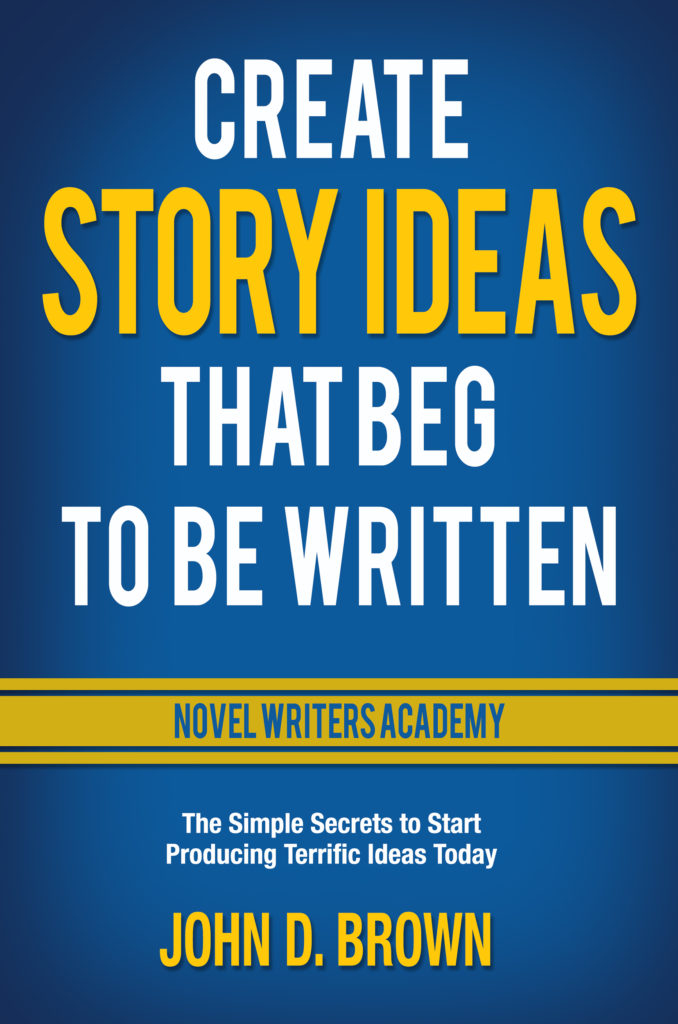
I’m happy to announce the release of Create Story Ideas that Beg to be Written, a new handbook to help make novel writing easier. It’s available now on Amazon.
Brandon asked me to come in and teach about indie writing. Here are the slides of my lecture and a document for notes.
Brandon asked me to substitute for him on March 1st and teach the students about indie publishing. For those of you who were there, here are the slides.
2018 Sanderson Class – Indie Publishing Final PDF
To start the presentation, I regaled the students with a surprise: my epic-fantasy-BYU-newbie-author version of the classic Fiddler on the Roof song which I called “If I Were Published.” Dylan Rowe, a student in the class with some serious violin chops, practiced with me in secret, then accompanied me during the performance. He was great. And the performance went well. We all had a great time. There’s a recording. Once I get it, I’ll post it here.
Here’s how it went.
Isaac introduced me. I said how happy I was to be there. I then asked for a show of hands: who was hoping to be published. Not all did, BTW. Some were taking the course for other reasons. I then said that the sight of such a vast assemblage of unpublished writers made me think of someone else. I displayed the slide of Tevye dancing. They all laughed, and I knew this was going to be a good crowd.
And then Dylan, who was hiding off to the side, played the phrase for “If I were a rich man” and I put on my own black Tevye hat. There was more laughter and surprise, and I began.
Dear Lord, you made many, many unpublished writers.
I realize, of course, that it’s no shame to be unpublished
But it’s no great honor, either.
So what would have been so terrible if I had one small best-selling series?
[Dylan began to play and I began to sing]
If I were published,
Yaba dibba dibba dibba digguh deedle daidle dum.
All day long I’d biddy-biddy-bum
If I were a published man
Wouldn’t have to work hard,
Yaba dibba dibba dibba digguh deedle daidle dum.
If I were a biddy biddy pub
digguh deedle daidle published man
I’d write a big long epic–hundreds of characters!
Swords and dragons and a lot of gore
A snot-nosed lad who was prophesied for the fight
There’d be a quest to one far side of the map
And one to find a lovely ancient lore
And one more leading out into the blight
[I paused here, to think, then sang the tune to the last line again with the first four of these]
To meet a sprite,
and a dark knight,
with an old birth right,
read by moon light,
that … cures snake bite.
[Dylan produced a big scratch. I covered my eyes in shame.]
Oy! Bad story development.
I’d see my wife, my Nellie,
Looking like a rich man’s wife,
with a proper golden skin,
rolling out the yoga mats to her heart’s delight.
I’d see her driving the kids
in something other than a minivan
Oy! What a happy mood she’s in!
Posting perfect selfies to day and night.
Hordes of bright-eyed zoobie writers will come to fawn on me.
They will ask me to advise them,
like Sanderson the Wise.
“If you please, Mister Brown?”
“Pardon me, Mister Brown?”
Posing problems that would cross a Shakespeare’s eyes
Ya da dee da dum, ya dah da dum
And it won’t make one bit of difference
if I answer right or wrong.
When you’re published they think you really know.
If I were published, I’d have the time that I lack
to go to the temple and to pray,
seated in a corner of the celestial room.
And I would serve on projects building Enoch’s Zion
from here to Africa and beyond.
And that would be the sweetest thing of all
Oy!
If I were pub-lished.
Yaba dibba dibba dibba digguh deedle daidle dum.
All day long I’d biddy-biddy-bum
if I were a published man.
Wouldn’t have to work hard.
Yaba dibba dibba dibba digguh deedle daidle dum.
Lord who made the lion and the lamb,
You decreed I should be what I am.
Would it spoil some vast, eternal plan,
if I were a pub-lished man?
I took a bunch of copies as my books as gifts to support the good cause of entertaining hard-working students. But there was a twist. To get a book, they had to pay me one limerick. It could be about anything and of any quality. But it needed to be a limerick. They had, like, 5 minutes to write one at the end. Thirty-three souls came up with the payment. Here they are for your enjoyment.
1.
A writer, a publisher, and a poet,
And now, wouldn’t you know it,
They’re debating a comma,
and imagine the drama,
When they’re divided on just how to cull it
2.
There once was a class of fiction
Which had a stranger take up his position
He was quite amusing
He kept them from snoozing
For he had quite a talent for diction.
3.
John Brown’s book could be greatness
I hope it’ll be a hit, not a miss
Your lecture was great,
It did not stagnate
I hope you will great me my wish! (to get your book)
4.
I want to write a book that is fun
where an evil something kills someone
And the people will fail
‘Til the heroes prevail
But I fear I will never be done.
5.
I’m trying to write my own book.
But, if you now went to look
I fear you will find
It’s all in my mind
But, oh – all the effort it took!
6.
There once was a poodle named Paddle
whose fur was cut into a saddle
until in the park
he ate too much bark
And now his tight fur is a battle.
7.
There was a young woman whose head
Had eyes that looked dead
As boys approached her,
Her sharp tongue they started to stir
Filling others with dread
8.
A poet sat twiddling his thumbs
He felt his ideas were dumb.
He was lacking in time
But just couldn’t rhyme
So he loosened his thoughts with some rum.
9.
“In honor of your song”
“You know I’d really love to be published
Oh, the glam and the glory I would relish
The hordes of fans my mind’s eye can see-
Sanderson with John Brown bowing to me –
And don’t (?) tell me my dreams are embellished”
10.
Homework I do not much like, you see
But for your book a lim’rick it be
and so i must do,
with great thanks to you,
this my small bit of lame poetry
11.
There once was a boy named John
Who needed to mow the lawn.
He pulled on the rope
But oh, what a dope!
Alas, the gas was all gone!
12.
Guardian Angel Limerick
I’ve struggled to write since the phone call,
when the maybe’s, the what-if’s turned actual
and the grieving stretched on
till the morn she was gone
and the world lost, but I gained, an angel.
The note with that one: “I was the girl who asked if the limericks had to be funny. Thank you for coming to class and giving us the books. I’ve included my limerick below. My mother passed away a couple weeks ago. This is my tribute to my loudest cheerleader and my harshest critic.” Boy, I’m definitely honored to have this one.
13.
There was a young man from Pocatello
Who thought that he was a brave fellow
But one dark, dark night
He took quite a fright,
And found that he was quite, quite yellow.
14.
There once was a sorcerer bloke
Who traveled outside for a smoke
He yawned, “curse this day”
And that is to say
The incantation now was spoke
15.
There once was a ship fresh-moored
With my favorite couple on board
But despite the large fanon
It was destroyed by the canon
And my ship, sunk quick, sailed no more
16.
There once was a sad unicorn
Who had tragically lost his gold horn
And thus ran away
and still to this day,
He stands but a horse all forlorn
17.
There once was a grandma so old
on her birthday she had a bad cold
as she blew out her candles
her kids yelled, “Mad scandal!”
as her dentures flew into the mould
18.
There once was a cat named caterer
who keeps running into the mirror
we got her some glasses
form the shopping masses
and now she sees everything clearer
19.
There once was a dust speck named Mike
Who lived on the edge of a spike.
He was bumped off that edge,
then snagged on some sedge,
ending up on the wheel of a bike
20.
I am a cat who is hip.
Who likes to shoot from the lip.
My songs are all crude.
My stories are lewd.
I like to make reality flip.
21.
There once was a bunny named Mopey
Who had friends that were silly and dopey.
They hopped on a train
That took them to Maine
Where someone threw them in a bath that was soapy
22.
I want something to teach me to cook
but this sure and that kind of a book
but bore shadiz tes (yeah, couldn’t read it, dang it)
and this sure seems fair
So now I guess I should take a look
23.
There once was a man named John
Who put his books out to pawn
Some students one day,
Wrote limericks to say,
“We love your free books–give us one.”
24.
My mother wanted to get a book,
And she gave me that terrible look.
A limerick the price,
I wrote one down twice,
So please give me that sought after book.
25.
There once was a man named Lam
Who like to eat lots of Spam.
When the aliens came
He cooked them a meal
And so his soul they did not steal
26.
There once was a tiger named Ted
He went to town in a bed.
Jeep in the rustle
He spotted a tussle
And now he has bumps on his head.
27.
Once I tried writing haiku;
it seemed like a fun thing to do.
But I fumbled the timing,
and couldn’t stop rhyming,
and now this haiku is just poo.
28.
Once I was writing a sonnet
But my paper hand not a word on it.
I sat there confused,
My talents unused,
Because nothing else rhymes except “bonnet”.
29.
I love me a good paper book
But the digital have a nice look
Shopped for a kindle all day,
Tried to buy on eBay,
But, somehow I just have a Nook.
30.
There once was a man with pink hair
And all he ever got were rude stares.
He said, “I know that I’m hot.
There’s no need to gawk.
Goodbye.” And left with great flair.
31.
There once was a lobster named Clyde
Who was inexplicably snide.
But he had some bad luck,
from the sea he was plucked
and now he’s been battered and fried.
32.
I was once walking home on the street
When a woman, I happened to meet
I said to her, “Hey.”
She said to me, “Nay.”
So I went out and bought me a treat.
33.
Tetris is the very best game
My playing will put you to shame
See… I am the best
Put it to the test
One day it may lead me to fame.
I’m at LDStorymakers this weekend. Had a wonderful time yesterday facilitating idea generation for the magic systems of eight writers who all had some really cool stuff. Today I will be giving my presentation on banishing writer’s doubt, fear, and block using cognitive therapy.
For those who want the slides, here they are.
Banish writers fear doubt and block with cognitive therapy (PDF)
Enjoy!
Are you tired of being educated ABOUT writing?
Do you just want someone who knows what they’re doing help you do it?
Specifically, do you want to develop a killer story idea, outline it, and write the first 3 chapters with the guidance of a pro?
If so, then here’s your chance to vote to have me create a course that will do just that.
Read on for more information…
When you’re educated about something, you can talk about concepts and principles. You can recall facts. But most people I know don’t want to be educated about writing. They want more than another class, podcast, video, or book about the topic.
They want to be trained.
They want to develop a killer idea, sketch it out, and actually begin writing. Not just watch or read about it. But they want some help.
I’ve been asked many times if I would teach an online class or workshop, but I’ve put it off for years because I know that I don’t want to offer just another set of videos about writing.
Of course, I will offer just videos. That’s all some people want.
But I know there are others out there who want to go beyond that. They want on-the-job training. They want to develop a fun story, but don’t know the process well enough, and want someone who knows it to guide them.
They want training.
But training takes time. More than the time it takes to create videos or posts.
That’s what I do, by the way. When I’m not writing novels, I work in corporate America training people to actually do things. Over the last 20 years I’ve trained people to do everything from give compelling presentations and speak Dutch to plan and schedule manufacturing plants and close their accounting books at the end of a financial period.
And so I know there’s a difference between being educated about something and being trained.
Just think about it. Do you want a surgeon who has been educated about surgery or one that’s been trained to perform surgery at a mastery level? Do you want a plumber who has been educated about plumbing, or one that’s been trained to plumb? Do you want your airplane pilot to be educated about flying or trained to fly, in all sorts of weather?
Going to school and being educated is cool, awesome, and necessary. But we all know we have to go beyond that. We need to be able to actually DO things. Training requires you know concepts and principles, but it also requires you take the next step and actually do something.
I’m willing to provide this on-the-job training, but before I develop and conduct this course, I need to know enough people are interested in it for it to be worth my time (it would probably be more sensible for me to focus exclusively on getting the books I need to write out the door, but I love to teach too, and had to figure out a way to do it).
So here’s the test. If you want to take the class described below, sign up to express your interest.
This does not obligate you to anything. It simply says that you are almost 100% sure you want to take the class, barring earthquakes, plagues of demons, or crazy in-laws.
When enough people signup, I know it will be worth my time, and the love of teaching part of me will be able to convince the sensible part of me to do it.
And then I’ll do a Kickstarter to make it official. Or I may just develop and release. We shall see.
So, here’s more on the course.
The first order of business is to determine if this course is right for you.
Do you want to write a novel, but feel like you have no idea what you’re doing?
Do you often get ideas for a character or setting or snippets of scenes and dialogue, but find they just never go anywhere?
Are you tired of learning about writing, and just want someone who knows what they’re doing help you to do it?
If so, this class is for you.
This is not a theory class. Oh, we’ll talk about theory. You’re going to learn a ton of theory. But this isn’t about theory because I don’t care about theory. And neither, I suspect, do you. I care about developing an awesome story experience and sharing it with readers who enjoy it as much as I do.
So I’m not interested in talking about it. I’m interested in doing it. And having fun.
Which means that in this course you’re going to:
In order to do that, you will need to learn the secrets to:
These secrets and many more. But remember: this isn’t a course about secrets. It’s a course about you actually improving your ability to generate story ideas, develop them into ideas worthy of a novel, and then write them.
This means you need to not only produce, but also have someone who has the ability look at your work and guide you along. It means getting feedback.
So I will be there helping you every step of the way. And if you’re writing in a genre I don’t know as well, I will loop in working authors who are successful in that genre to add their two cents.
I started my novel writing career when I received a three-book, $50,000 deal from a major publisher. I am now an indie author with books that sell thousands of copies each year to readers all over the world. I’ve had publishers purchase and produce my books in audio. I’ve sold story rights to foreign publishers. I love developing and telling stories. And I love teaching others how to do the same.
But when I started, years before that novel contract, I had no idea what I was doing. I didn’t know where to start stories, how to develop them, or even where they were supposed to end. And I didn’t have anyone to really help me. In fact, I remember asking one of my creative writing professors after class how you knew where to end your story. He looked at me, shrugged, and said, “I don’t know. I just end them.”
What the heck?
It was all a vast mystery. I loved stories, but I was clueless about what they were, how they worked, and how someone went about developing and writing one. I had a lot of fun, enjoyed my writing teachers (they were all great people), but I was never able to write something that hung together and felt like something you’d see in a movie or read in a book.
But that didn’t discourage me. I kept at it. And over the years, I made a number of breakthroughs.
What I discovered was that there are three things you must learn to write killer stories. You must learn:
In this class, you’re going to learn those three things and the key principles for each, saving yourself all the frustration and discouragement that comes from trying to discover these insights by stumbling around on your own in the dark. With this class, you can cut years off the time it takes to learn how to write.
When you know these three things, you will be able to write stories on purpose, instead of by accident. You will have power over your craft.
You will see that instead of trying to remember a list of hundreds of “writing rules” or use “writing formulas,” many of which are nonsense, you’ll write by focusing on the simple and fundamental heart of what storytelling is all about.
Below is a more detailed view of the course. My lessons are called quests because I’m expecting you to actually do something, not just watch.
As you can see, in this course you aren’t going to just hear someone go on about theory. You’re going to define your type of story, surprise yourself by developing at least 10 solid story ideas that beg to be written (by you). Then you’ll select one of those ideas, sketch an outline, and write the first three chapters, all under my guidance, using the same practical, simple methods I use.
Most important of all, you’ll actually stop thinking about writing and be well on your way to finishing your novel with a clear path to the end.
Instead of dreaming about someday, you’ll enjoy the excitement of writing a novel right now.
The cost of the course depends on what you want:
Having said that, you need to know that this class is not for everyone. If you are not willing to actually make time to do the work I ask, you will find no benefit.
How much time will you need to spend?
With all of the videos, reading, and development you’ll do, you should expect to take 30-40 hours. You can move through it at your own pace, but I strongly suggest you spend at least five hours per week. Any less than that, and you’re going to find it very difficult to keep your creativity hot enough to make dinner.
Also, if possible, I recommend you take the course with a friend. You will progress so much more quickly when you discuss the lessons and insights and bounce your ideas off of each other.
If you want to just watch the videos, that’s perfectly fine. If you want to actually develop a story and learn on the job, then you have to make time to do this awesome thing, just as you would if you wanted to learn how to dance, quilt, race cars, rappel, or paraglide.
So if you aren’t in a position to make the time, I understand. Please don’t sign up.
But if you’re interested, then click below to raise your hand as someone who is definitely interested. Once I see there are enough people interested, you’ll get the class.
If you’re interested, let me know by filling out the form below.
This does not obligate you to anything. It simply says that you are almost 100% sure you want to take the class, barring earthquakes, plagues of demons, or crazy in-laws.