John’s Reviews – books, movies, whatever

  • Good Stuff! Extinct, RadioWest, and Ruca’s

    I’ve been looking forward to watching Extinct, a brand-new TV series. I watched the pilot with my wife and teenage daughter, and we enjoyed it. I watched the next episode, and then a few days later couldn’t help but binge-watch three more. And I’m happy to report it’s full of good stuff and interesting stories.

    First of all, it starts with a killer concept. Aliens invade earth and wipe us out, but that’s been done to death. This story doesn’t start there. This story is set four hundred years in the future after the extinction of the human race, when a small group of humans is revived by an alien civilization.

    But this isn’t Star Wars, Star Trek, Blade Runner, Battlestar Glactica or anything like that. It feels more like the TV series Lost or The Maze Runner. The heroes are three humans who have been brought back and are trying to figure out what’s happening and how to survive in a place that’s low tech and is the home to a dangerous band of other humans that were also brought back. They’re dangerous, by the way, because they have been taken over by spores that latch other their nervous system and use their bodies as a host.

    This series transports you to a world of cool tech and alien stuff like the sparks that regenerate the humans in pools of water, two interesting drones, and alien ruins and glyphs. But the best part about this isn’t the spectacle of the technology. It’s the stories. There’s suspense and action, but also mystery and a lot of stuff that’s human and warm and, surprisingly enough, thought-provoking.

    We try to hold a family night once a week to have fun together and discuss important topics. And I can see us easily watching one of these episodes and finding ourselves in a deep discussion about free will, or the creation, or whether Duncan, one of the skin riders, looks like someone right out of The Hobbit.

    I liked episodes one and two, but it was episode three that kicked it into high gear for me. If you liked Lost or The Maze Runner or the series Once Upon a Time, I think you’ll really enjoy this. Right now you can stream the first eight episodes for free from byutv.org/extinct or extinct.tv.

    EDIT: I just finished episode 8. I really like this series.

    #

    Do you like listening to interesting ideas? If so, you will love tuning into RadioWest. It’s a daily program from KUER in Salt Lake City that features hour-long interviews of folks who are experts on some of the most interesting things or have an interesting story to tell.

    Doug Fabrizio is the host and has to be the best interviewer on the planet. I love his voice, but it’s his skill in drawing out the fascinating meat of the topic from his guests is what sets him apart. And unlike some interviewers who don’t even read the books they’re talking about, you can see that Fabrizio has done his homework. He’s really thought about what they have to say.

    For example, just this last week, I got to listen to compelling interviews of (1) Tom Christofferson, the gay brother of Elder Todd Christofferson, a Mormon apostle, (2) Ben Shapiro, an orthodox Jew who is an up and coming voice on the Right and was recently protested at Berkeley and the University of Utah, and (3) science writer Ben Mezrich who has written a book about the scientists and researchers who are trying to bring back the wooly mammoth.

    Week after week, Fabrizio brings amazing people and ideas into my car and home. You can listen to his interviews every morning at 11 a.m. and 8 p.m. on the radio at FM 90.1 (Salt Lake Area), FM 90.5 (Logan and Bear Lake), and FM 88.3 (Randolph and Woodruff). Or you can listen live online at radiowest.kuer.org, which is also where they keep all the recordings so you can catch up on any you miss.

    #

    New restaurants come and go all the time in Garden City, Utah. Most of them don’t last more than a few seasons. Often this is because they charge lots of money for food that’s really not worth it. So it’s with great delight that I tell you about Ruca’s, a little spot on the block between the city park and Bear Lake Pizza on the main drag.

    Not only are the prices reasonable, but the food is delicious. They have sandwiches and other stuff, but we have gone back multiple times for their ebleskivers (AY-bill SKEE-vurs). These are Danish pancakes in the shape of a ball that can be filled with all sorts of stuff. My wife and daughter love the ones filled with peaches and the others filled with Nutella and strawberries. I like the savory ones filled with bacon and cheese with eggs on top.

    They’re going to be closing up for the winter, so if you want some great food for a great price, get over there now and enjoy a new delight.
  • Good Stuff: Books Worth Multiple Readings Part 2

    What’s your typical response when someone shares a frustration, problem, or issue with you? Or when they state an opinion or desire you disagree with?

    Sometimes we get impatient, exasperated, or annoyed with them and simply don’t want to hear it.

    Sometimes we get mad. Or defensive. And want to line them out.

    Sometimes, however, we want to help.

    And wouldn’t you know it, but we sometimes cause as many problems with that last reaction as the first two.

    How can this be?

    Your teenage daughter comes home and expresses disappointment about something that happened at school, and you want to help. How in the world could that be wrong?

    Your spouse shares a frustration about something that happened with a friend, and you don’t want him or her to be sad. This is a bad thing?

    Your coworker expresses annoyance with a program management is trying to implement, and you know exactly what will fix the problem and want to share it. This is going to cause problems?

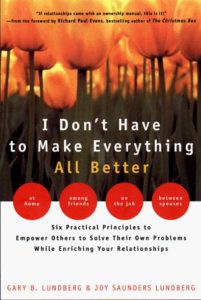
    In their fabulous book, I Don’t Have to Make Everything All Better: Six Practical Principles that Empower Others to Solve Their Own Problems While Enriching Your Relationships, Gary and Joy Lundberg show two different ways of acting on the desire to help others that have dramatically different results. If we try to help using the first method, we actually create more issues. We will make the person less willing to talk to us, introduce strain into the relationship, and create a lot of stress for ourselves. On the other hand, if we try to help using the second method, we’ll find the person more willing to talk. There will be more friendliness in the relationship. And our own stress will go way down. Furthermore, we’ll end up helping the person far more than we ever could with the first method.

    Gary is a licensed marriage and family therapist. His wife Joy is a writer and lyricist, and they have held marriage retreats, firesides, and seminars throughout the country. And the six principles they share in the book for using the second method all revolve around accepting this one statement: “I do not have the power to make anything all better for anyone else. I can offer my help, but I cannot make it all better.”

    Accepting this view has a dramatic impact on how we approach helping others.

    So when the teenage daughter comes in and expresses disappointment, instead of trying get her to buck up or tell her she just needs to do xyz with her friends, or do 123 in sports practice, we listen, validate her emotions, leave the responsibility for the problem where it belongs—with her!—and then, when it’s all out, offer to help in a way that empowers her, not have us take over.

    When the spouse shares frustration, it’s the same. When the coworker expresses annoyance, the same. When someone comes in to complain to us, it’s the same.

    What the Lungbergs do in this book is show exactly what this looks like with tons and tons of examples. They even have a whole chapter (a short one) which gives a list of validating phrases and questions. The first six chapters of the book explain the principles. The last eight each apply them to a different group: young children, teenagers, adult children, spouses, parents and parents-in-law, friends, and coworkers.

    Folks, this book is a gem. It’s loaded with wisdom and insight. Every time I practice what’s in here, my interactions go better. This stuff produces immediate results. I just wished I’d studied and practiced it more. But it’s never too late. And that’s why I’m rereading it now.

    And why I wanted to share it here. If you want to improve your interactions with others and enrich your relationships, do yourself a favor and immediately go get this book.

  • Good Stuff: Books Worth Multiple Readings Part 1

    Would you like to improve your relationship with your spouse or children?

    Would you like to improve your experience with teachers, coaches, and administrators this coming year at school as you try to influence them and work with them for the benefit of your children?

    Would you like to simply have a better time with the people in your community?

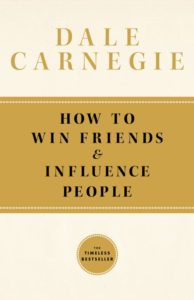
    There are some books so full of practical wisdom about relationships that they deserve to be read every year or three. I want to recommend two such books to you. The first is How to Win Friends and Influence People by Dale Carnegie.

    This book has been in print for eighty years. And not only that, it has been, year after year, one of the bestselling books out there for almost each of those eighty years. For example, Amazon right now ranks it the #9 most read book. You’ll see other books come and go on that list. But books like this and Stephen R. Covey’s The Seven Habits of Highly Successful People stay.

    There are thousands of how-to books published each year on relationships in business and personal settings. Most are never seen again. But this one has stayed because people find it so useful they recommend it over and over again.

    And I wish to heck I’d not waited ten years to pick my copy up again.

    As I re-read the book this last month, I saw that if I’d been thinking about the practical guidelines Carnegie shares, I could have avoided a number of public and private arguments I’ve had over the last few years.

    I could have avoided subjecting those relationships to attack, coming to my senses, and then trying to clean up the mess, large or small.

    But even more important, I could have added a little more sweetness to my life and the life of others I encounter on my way. There are only so many days we have here on earth, and how much better it is to add additional drops of honey to them instead of vinegar.

    One of the wonderful things about his book is that Carnegie shares the wisdom in a down-to-earth way with lots of examples and stories. He shares wisdom on building relationships, being liked, winning people to your way of thinking, and how to make your requests for change known without giving offense or rousing resentment. And he does it simply and in a way that you feel like you’re sitting down with a good-humored grandfather. There are no dry, abstract parts. Just look at a sampling of the chapter titles.

    • “If You Want to Gather Honey, Don’t Kick Over the Beehive”
    • “He Who Can Do This Has the Whole World with Him. He Who Cannot Walks a Lonely Way”
    • “An Easy Way to Become a Good Conversationalist”
    • “If You Must Find Fault, This Is the Way to Begin”
    • “Give a Dog a Good Name”

    I can tell you that every time I try to approach things the way he proposes, they almost always seem to go better.

    If you have an issue you want to discuss with a school teacher, coach, or administrator this year, let me suggest you first listen to what Carnegie has to say. I can promise you you’ll get much farther. And you will probably end up enjoying the interaction.

    If you want to improve your time with your wife and kids, open this book and look for insights.

    If you want to have a better time with your co-workers or boss, I suggest reviewing the wisdom you’ll find here.

    Carnegie doesn’t possess all the wisdom there is to be had about relationships. There are many people out there with great insights. But, gee whiz, he provides a great start. If you want to add some sweetness to your life, I think you’ll find this book a great help.

    Let me illustrate this Carnegie stuff with an experience I had with one of our high school coaches two years ago. I have a vast background in basketball that includes, well, nothing. I basically know how to dribble a ball. Oh, yeah, I also played church ball two or three years in a row back in the 1980s. So, as you can see, my knowledge is vast.

    And not to toot my own horn, but this wasn’t just any church ball team. This was a team that improved the sport.

    How? You ask.

    Well, during one of those church ball years, me and the guys from my ward (“congregation” for those not familiar with the Mormon faith) thought it would be capital to make jeans and concert tee-shirts our uniforms. Back in those days concert tee-shirts looked like this.

    This meant we ran up and down the church courts with drugs, sex, and rock and roll on our chests (I’m sure that’s precisely what the brethren had in mind for the program).

    As you can see, we were way up there on the basketball ladder.

    So back to this coach. My daughter was playing on the high school team, and the team was having a consistently hard time with one type of defense. And I thought, “Self, there’s got to be a way to break that defense.” These are the big thoughts that basketball gurus like myself have.

    And so I researched and watched and talked to folks who had actually played basketball competitively (unfortunately, without concert tee shirts) and identified an offensive counter that looked like it might work.

    And I sent an email to the coach sharing my idea.

    Now, the coach could have reacted in many ways. Especially given the fact that (1) he had already thought of the idea I was proposing, (2) had already tried it in games that, yes, I had attended, and (3) probably knew just a teensy bit more about basketball and his team than I did even though my church ball team had vastly superior uniforms.

    But this coach, whether he knew it or not, was following a number of the principles found in Carnegie’s book, including the chapter titled “Let the Other Person Save Face”. This meant that instead of rolling his eyes or ridiculing or saying something like, “Brown, are you blind?”, he explained what he was doing and then expressed his appreciation. He was happy I was so invested. He thanked me.

    And here’s the thing: he meant it.

    I replied that if he ever wanted someone to suggest an idea he was already trying, to just call. I’d be happy to help.

    We laughed, but the important thing is that what could have been a wedge became a good experience for all. And, more than ever, I wanted to work with him to help my daughter in the program.

    I will give you one more example. There’s a mother who had four of her children go through my wife’s seventh and eighth grade language arts classes. Now, Nellie is a worker. She expects her students to work. She wants to have a good time, loves having great interactions with the kids, but she also wants them to improve and learn, and knows that’s going to take some work. Sometimes the assignments, despite her best efforts, aren’t clearly understood. Sometimes they’re a bit challenging. And this sometimes creates frustration.

    There are a lot of ways that parents deal with this. But this one mother took an approach that, whether she knew it or not, followed many of the principles in the book including those shared in “You Can’t Win an Argument” and “A Formula That Will Work Wonders For You”. This resulted in a fabulous working relationship. It helped the mother have less stress. Helped her kids. And helped Nellie improve her program.

    The issues the mother encountered could have become wedges, but instead, because of how she handled them, they became stepping stones. And this didn’t happen with this one individual. There are many mothers and fathers who have taken a similar approach with similar results. The principles work every time.

    I could go on with many more examples in other situations, but why listen to mine? Carnegie has a book full of them. If you want to improve your relationships or persuade others to your way of thinking, you’ll want to start by reading this book.

    The second book I want to recommend is I Don’t Have to Make Everything All Better by Gary and Joy Lundberg. But this post is full, so stay tuned, and next time I’ll explain what awaits you in its fabulous pages.

  • Audio book is on the way

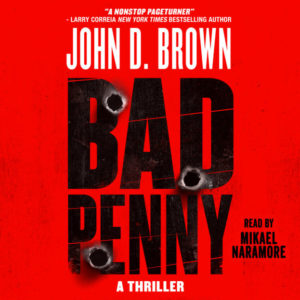
    This last week I listened to the reading of Bad Penny by Mikael Naramore on our trip down and back to Panguitch (and the forest fire from hell) and then later here at the house and was so happy I hooked up with Naramore. He’s done a wonderful job. He nailed the voices of Frank, Sam, Pinto, Carmen, Ed (ye slimy villain), and all the rest and delivered excellent sound. And the process was so easy.

    Right now ACX is doing its quality control on the production. When they clear it, it will be posted for sale on Audible, iTunes, and Amazon.

    I’m very excited to bring Frank to the audio market. I think he and Naramore are going to please a lot of listeners.

    Here’s the final cover for the audio book.


  • Good Stuff: 8 Awesome Movies

    Summer is a great time to catch up on great movies you haven’t seen because sometimes the movies that are released to the theaters during this time are contenders for the dud award.

    I shall leave films such as Transformers: The Franchise Could Have Been So Cool or Pirates of the Caribbean: Johnny Depp Is Now Acting Really Weird nameless.

    Instead of watching duds, try a couple of these fantastic movies, all of which are based on true stories.

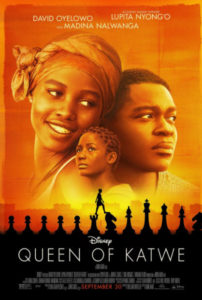
    Queen of Katwe. A tremendous film based on the true story of depicts Phiona Mutesi, a girl growing up in the slums of Katwe, a city in Uganda, who gets a chance to break out of that life with chess. You will come away having laughed and cheered and been touched in a poignant way. Highly recommended.

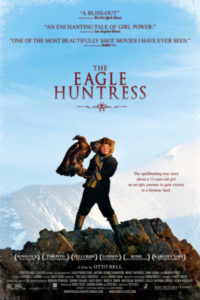
    The Eagle Huntress. A fascinating documentary about the first girl in Mongolia to compete as an eagle hunter—these are folks who capture and train golden eagles to hunt game like fox or rabbit. You’ll be introduced into a new and interesting culture that triggers you to think about your own.

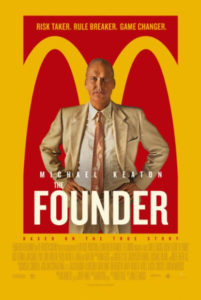
    The Founder. Ever wonder how McDonald’s got started? No, neither had I. Who cares, as long as the food is good, right? Well, if you’re like me, you’re in for an eye-opener. This tells the story of how Ray Kroc started McDonald’s, except, hint, he didn’t. Kroc is played by Michael Keaton. He’s one of my favorite actors, and I loved his performance. This story will fascinate you, and then make you think, and then make you really appreciate folks like Dave Thomas of Wendy’s.

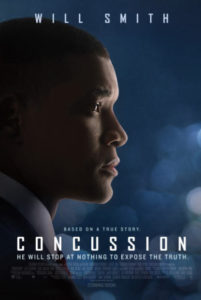
    Concussion. An engrossing, suspenseful film about the true story of Dr. Bennet Omalu and the tie between football and brain degeneration. Omalu was working as a forensic pathologist (one who figures out the cause of death) in Pittsburg, Pennsylvania. In 2002, Omalu performed an autopsy on Mike Webster, a former NFL star who played for the Pittsburg Steelers and is considered by some to be one of the best centers in NFL history. And his worked opened up a can of worms the NFL wanted to quash. I loved this film.

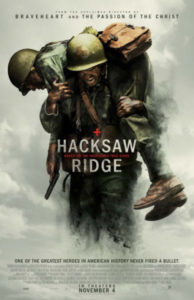
    Hacksaw Ridge. This one is based on the true story of Desmond Doss, a Seventh-day Adventist who did not believe in killing, but wanted to support his country and all those going to war. So he goes into World War 2 as a medic and is sent to the Pacific theater. His first engagement is the Battle of Okinawa. And, oh my holy heck, what he did during that battle is nothing short of amazing. There’s one part of the film in boot camp that seemed out of place. Really, some dude back in the 1940s was going to do pull ups in the barracks naked (nothing but a bum is shown in the film)? But then I recall that growing up in the 70s and 80s that we guys showered in communal showers. And that wasn’t a big deal. And earlier than that, swimming at the swimming hole often meant shucking your clothes and jumping in. So who knows? We have a similar funny scene in Mulan, but for some reason that one felt more organic. This one felt tacked on. It was a gag for humor and then, thankfully, Mel Gibson, who directed this, got on with the awesome story of Doss.

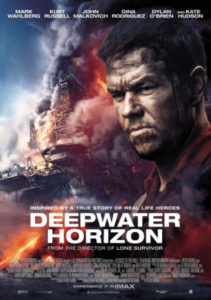
    Deepwater Horizon. This one is based on the true story of the Deepwater Horizon, an oil rig in the Gulf of Mexico that encounters a catastrophe. The details of how such rigs work and the issues involved are fascinating. But what will really get you is the heroism of the captain and crew.

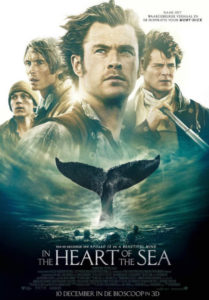
    In the Heart of the Sea. This is based on the true story of the whaleship Essex that was sunk in the Pacific in 1820 by a sperm whale and what the few that survived did to remain alive. Back in the 1700s and early 1800s, sperm whale oil, which was contained in the whale’s large head, was highly prized for lamps because it burned bright and odorless. It was also a great lubricant. Later the oil was replaced with kerosene and other and petroleum-based lubricants, but in those days there was a whole industry dedicated to harvesting it. I watched this with my teenage daughter, and we both found it a powerful tale.

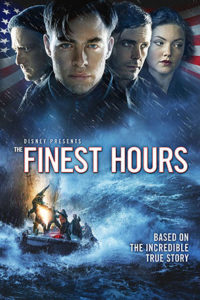
    The Finest Hours. This last one is based the book The Finest Hours: The True Story of the U.S. Coast Guard’s Most Daring Sea Rescue by Michael J. Tougias and Casey Sherman. It chronicles the 1952 United States Coast Guard rescue, in a dinky boat, of the crew of the SS Pendleton, a big tanker, after the ship split apart during a nor’easter off the New England coast. The movie was thrilling and heroic.

    And after you watch all of those, if you want some more great films based on true stories, well, you won’t go wrong with Tom Hanks in Sully or Captain Phillips or Bridge of Spies.