The Guardian just published a report of a survey taken of 34 American book publishers and found that 79% of staff are white and 78% female. Or as The Guardian put it “blindingly white and female” as if it’s some kind of horror show. The rest of the article bemoans the lack of diversity in publishing and our society in general and quotes the author of the study suggesting that these percentages should be monitored.
Is anyone up in arms about appropriate diversity percentages in the NBA or NFL?
Some might roll their eyes and ask me not to trot out that old chestnut. But it’s not a chestnut. It’s a point–nobody cares, me included. So why care about this? Many industries will be skewed toward one gender or race than another. As long as everyone has free opportunity to compete, who gives a flip?
Maybe that still doesn’t satisfy. Okay, how about this. According to Humanites Indicators, approximately 70% of degrees in English language and literature in America are awarded to…women. And about 82% are awarded to Whites. I’m assuming these percentages are probably pretty good indicators for the gender and race of folks interested in working at publishing companies.
If so, the survey results don’t reflect some white woman conspiracy at these publishing houses. They simply reflect the choices people make in college.
By the way, did you know the United States is still 72% White and European. So it’s not surprising to see roughly that many Whites in these jobs. The numbers might be a little high, but minorities seem to be pursuing other degrees in greater numbers (compare the overall percentages here versus those with ELL degrees).
This is not to say that we don’t want to welcome authors from all different background. We do. But if you want more men and more minorities, then maybe instead of monitoring publishers, you ought to start by seeing if you can attract more men and minorities to ELL degrees.
Or even better yet, how about reaching out to more boys and minorities at an earlier age and helping them learn the delights of reading and writing? Maybe if they like it, more of them will go into it as a career.
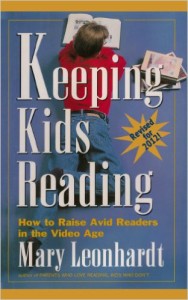
The best program I’ve seen for helping kids learn to love reading is the one Mary Leonhardt outlines in Keeping Kids Reading: How to Raise Avid Readers in the Video Age. It’s the culmination of the insights she gained over her thirty-five years teaching high school English and focusing on helping kids learn to LOVE reading. What an excellent book!
Oh, and one other idea. It might be effective to maybe just skip publishers altogether and help folks go directly to readers as indie writers. Amazon’s algorithms are pretty much race- and gender-blind.
The joy of music. Pure, unadulterated joy–this is what I recently stumbled across on YouTube.
I was watching the The Piano Guys and thought I saw something new from them. I clicked, but it wasn’t The Piano Guys. It was Simply Three doing a cover version of the popular “Wake Me Up” by Avicii.
For those unfamiliar with the term, a “cover” or “cover version” is a reworking, updating, or interpretation of an existing song. And this cover simply blew me away.
Simply Three is an electrifying trio made up of cellist Zack Clark, bassist Nicholas Villalobos, and violinist Glen McDaniel, although they have switched in other violinists, including Alex Weill and Olivia Lemmelin. But don’t let the instruments fool you–this isn’t some stuffy classical music gig. And it’s not muzak in the elevator. Not even close.
They are doing what Lindsey Stirling and The Piano Guys are doing: taking modern songs in wonderful new directions and, in the process, making these classical instruments cool again.
I went on to watch a number of their other covers, and then I had to purchase the songs because I simply had to be able to listen to their great beats and interpretations on the road.
Here’s their cover of “Wake Me Up.” The joy Zack Clark (the cellist) exhibits sells the whole thing for me.
Here is their cover of “Demons” by Imagine Dragons.
And finally their cover of “Counting Stars” by OneRepublic.
If you like them, you can get each of these on Amazon for less than a buck with these links:
Buying them not only supports the artists, but it lets them know there’s a demand for it and encourages them to make more. And I hope they make more.
***
By the way, “Counting Stars” has some interesting lyrics. Ryan Tedder, the songwriter, is a professed Christian. He grew up in a Charismatic household and graduated from Oral Roberts University.
However, you might look at some of the lyrics and think he’s given all that faith up.
I feel something so right
Doing the wrong thing
I feel something so wrong
Doing the right thing
I could lie, could lie, could lie
Everything that kills me makes me feel alive
But you need to look at the lyrics in context of the rest of the song and the artist’s statements about the song to see he’s singing about something totally different.
Some poets, and songwriters are poets (song is where poetry lives these days), think being obscure is cool. Tedder follows that more obscure approach in this song, which is unlike the immediate clarity he put into the lyrics of the fantastic “Halo,” performed by Beyonce, or his own OneRepublic’s “Apologize.”
Sometimes the artist writing gnomic lyrics doesn’t want to pin down a message for the listener—they think it’s cool for each person to make up their own message (I prefer clarity). Other times they do have a message, but they want the listener to work for it, and so they try to be subtle. Or sometimes they simply goof and don’t realize their lyrics are being so vague.
I have no idea which path Tedder was trying to take with these lyrics, but I do know that he’s made statements about the song. And these statements give us a guide.
In an interview with 5280, the Denver magazine (Denver is where Tedder lives) we get the first glimpse.
At 15, he began writing his own songs. “I obsessed over music and just loved it,” Tedder says. “But I never considered it as a career. Where I grew up you go to high school, you go to college, you find a wife in college, you get married, you have 2.3 kids, and if that hasn’t all happened by the time you’re 24, some people think there’s something wrong with you—or the assumption is that maybe you’re not into the opposite sex.”
But he couldn’t keep away.
Back in Oklahoma, at Oral Roberts University, the largest charismatic Christian university in the world, Tedder majored in public relations and advertising. At least that’s what his diploma says. Based on the time he put into sneaking into the Timko-Barton Performance Hall’s piano rooms, he probably could have been a double major. He spent hours on the piano and the guitar deconstructing his favorite albums—like Eric Clapton and B.B. King’s Riding with the King—figuring out the chords and then trying to write new songs using those same chords. He was skipping classes—even meals—to write songs.
No one knew. Not friends. Not his roommate. He sang in secret. He was in the school choir, but his friends always thought it was odd that a person who didn’t seem overly musically inclined would be taking a singing class. When he was in one of the piano rooms he would tape a piece of notebook paper over the small window in the door so that no one could see him.
Tedder says there were two reasons he hid his passion. The first was that he believed there were so many bad singers and bad songs in the world that he didn’t want to add to the noise. He wanted to be certain he would be successful before he revealed himself. The second reason was more deep-seated: Being raised in a religious home, Tedder had been taught that there was a purpose for his life, and that because God had ordained that purpose, he should live the life expected of him—one that was pious and humble. “Deciding you want to go into the music business is about the most narcissistic thing in the world,” Tedder says. “I had this constant battle—and to some degree I still do.”
So Tedder felt “wrong” about songwriting. But he eventually began to see it as his gift to share.
Billboard: Given “Counting Stars”‘ uplifting, faith-based message, it must be gratifying to be connecting with such a meaningful song.
Tedder: I think it’s our responsibility as a band, and what separates us from everyone else. I took that from being a fan of U2 for two decades now, since “Achtung Baby.” To this day, they might be the only band on that level who sings about things other than just boy-girl troubles or the kind of selfish, “I’m a badass” stuff. I’ve spoken with Bono about this when we toured with him, and he said the same thing. I felt a responsibility to actually write and sing about things that have a level of human gravity to them. If everybody else sings about sex and love and lust and money, then somebody’s gotta be singing about life and faith and hope and things of that nature.
So if “Counting Stars” isn’t about sex, lust, and money, what’s it about?
In another interview with Radio.com, he indicated that the whole counting stars bit was for anyone who loses sleep wondering how they’re going to be able to afford their rent or provide for their family. When he was first starting out, things were rough.
“A lot of time I just lay in bed awake, stressing out,” Tedder said. “Everybody does it. And I just thought, I can’t wait until I’m counting stars and not counting dollars anymore. Things will be so much better.”
To me, it’s clear that Tedder is singing about his story. And he’s singing for people like him who have a passion, but society says it’s not the practical thing to follow or dedicate your life to. Songwriting is what makes him feel alive. Furthermore, he had flashing signs indicating that if he sought, he would find—in other words, it was the thing God wanted him to do. And he just had to have hope, a four-letter word for those who are practical- and money-minded, and follow that passion.
We can argue the merits of that follow-your-passion message, but I think we’re all happy Tedder followed his.
***
And while we’re talking about the joy of music, how about this baritone saxophone and drum.
I can’t remember the last time I emoted over hamburgers.
Yeah, I’ve been to Smash Burger (way overpriced) and Five Guys (good) and Carl’s Jr. (no scantily clad women to be seen; talk about issues with truth in advertising), In-and-Out (what’s the appeal?), and a hundred other chains and non-chains. Burgers were burgers. Big whoop.
Of all these, McDonald’s was way down at the bottom. I have never gotten excited about McDonald’s hamburgers. I worked for McDonald’s back in the early 1980’s, and the food wasn’t bad then, but the burgers have gotten progressively uninspiring as the company has turned to various methods of pre-cooking everything. To me McDonald’s has simply been the place you went for filler. Except for the Egg McMuffin, which I’ve always enjoyed.
But last week my daughter wanted McDonald’s, and since I’m not a totalitarian despot, I took her there. We went to the one by the Layton Hills mall. Inside, to my surprise, I found three, tall touch screen kiosks. I thought, oh, neat, a way to cut the ordering queue. But it was more than that.
McDonald’s has rolled out a new Make Your Own Burger offering that allows you to select the type of bun, cheese, and toppings you want with a quarter pound patty. And the toppings aren’t just the standard pickle, onion, and ketchup. Oh, no. There are three types of buns to choose from. Three or more types of cheese. You can get raw onions or grilled. Guacamole, sautéed mushrooms, two types of mayo, bacon, and more. The lettuce is a leaf, not some iceberg chop.
So I selected the artisan bun, sharp white cheddar, sriracha mayo, ketchup, pickle, lettuce, tomato slice, grilled onions, and sautéed mushrooms.
The results?
I was shocked. The beef was juicy. The onions were perfect. The mushrooms, perfect. The sriracha mayo gave it the perfect little zing. Folks, it was so good that within the week, I went back for another in Logan. I have never gone back with any sort of anticipation for a chain burger, anywhere. And the second sandwich was just as good as the first. I am now an official McDonald’s make your own burger fan.
If you’ve become bored with burgers, if you consider them last-resort filler, as I did, or if you’re just wanting to try something new, let me recommend you go to, yes, McDonald’s. You do need to be aware that not all stores offer this new option. So check to make sure the one you’re going to has it (in Logan, Utah you’ll only find it at the south McDonald’s), and then see if you don’t agree that McDonald’s hasn’t finally come out with a great new offering.
ISIS, the Taliban, Al Qaeda, the Muslim Brotherhood, Iran.
What drives these groups?
What are they really about?
Why is there so much religious strife in the Middle East?
For that matter, what is Islam actually about? Is the religion really defined by these violent actors, or are they just the most visible because they’re what’s reported on in the media?
I set out to find the answers to these questions, and what I have found so far surprised me. If you are interested in understanding what’s going on in the Middle East today, you have to understand Islam. And it’s a fascinating story. There are a lot of books on the subject, but you don’t have to sift through all those I did. I want to share with you three slim books that I found to be the most clear and engaging introductions I’ve come across.
The first is Understanding Islam: An Introduction to the Muslim World by Thomas W. Lippman, an award-winning author and journalist who specializes in the Middle East and spent years living in Egypt, covering the events, and traveling from Tunisia to Pakistan. Again, this is a slim, easy-to-read volume, but it is packed with information. If you want to know the basic beliefs of Islam, who Muhammad was, what all this business about Sharia is, and who the major Islamic groups of the Middle East are today, this is the book to start with. One note, you want to make sure you get the third edition of this book.
The next book is by Bernard Lewis, a man internationally recognized as one of our century’s greatest historians of the Middle East. The book is called The Crisis of Islam: Holy War and Unholy Terror. Again, another slim, engaging, but information-packed volume. In it, Lewis explains what it is in Islam that is breeding these extremist groups. And what is leading them to target America, which is especially interesting because for most of the 1900s the United States was seen as the good guy by the Islamic world. What changed? Read this book to find out.
The last book, a lively, engaging read, is called After the Prophet: The Epic Story of the Sunni-Shia Split by Lesley Hazleton, another veteran Middle East journalist. When you finish this book, you will understand why Saudi Arabia supported ISIS before they so recently turned against it. You’ll understand why they recently joined Israel, of all nations, in condemning Iran’s nuclear program. You will also understand one main reason why the Iraqis can’t seem to get along. In this book, Hazelton goes back to the beginning of the religion and tells the story of the splitting of Islam–the split between the Shias and Sunnis. It’s as significant a split as that of the Protestants from the Catholics in the time of Luther. But unlike that split, which has lost almost all of its heat, the antagonism between Sunni and Shia still leads to war. You cannot understand the Middle East today without understanding this.
So there you have it. If you’ve been wanting to learn more about Islam and the Middle East, you’ll find these the perfect introduction. And if you’re religious at all, you’ll find much to ponder. There isn’t one god-fearing Christian, Jew, Hindu, or what have you who doesn’t think that submitting our will to God’s won’t help us build a better families, communities, nations–a better world. Would it surprise to you to know that Muslims believe the same thing? That Islam means “to submit” to God?
There are of course many differences between Islam and my own Christian beliefs, but there are also many striking similarities. And the experience I kept having reading these books was seeing over and over again echoes of my own faith and the history of Christianity. There are cautions, to be sure, but also things worthy of emulation. If nothing else, it felt like it did when I learned Dutch. Yes, it was all foreign, but I saw the ties and the differences and, surprisingly, understood my language better than I ever had before.
Now there are three other equally fascinating books I want recommend that focus on Al Qaeda, fighting terrorism, and Saudi Arabia, but I’ll save those for another time. Go treat yourself and read these fine introductions.
If you’ve been looking for some good movies to watch, I have four here that I think you’ll enjoy.
The first is for fans of Downtown Abbey and Pride and Prejudice. It’s a four-episode, BBC TV miniseries called Wives and Daughters, and is based on the novel by Elizabeth Gaskell, who was a popular English novelist in the mid-1800s. Gaskell is the one who also brought us the delightful Cranford and North and South, which all my daughters love.
Wives and Daughters is about Molly Gibson, the daughter of a country doctor, who suddenly has to deal with a new stepmother and a stepsister who becomes Molly’s good friend but brings a lot of baggage with her, mostly concerning men. It’s also about a man whom Molly falls in love with, but who only thinks of her as a sister.
But it’s about even more than that. It’s about the enjoyable relationship Molly has with her father and the local Squire and his family, and the issues the Squire has with his own sons. It’s also about how the women in the town and the local gentry deal with Molly.
Gaskell has a knack for showing both the good and bad about people and still making you love them. She also writes a fabulous ending. I don’t want to spoil anything, but the ending, for me, was just brilliant in so many ways. If you enjoy period romances, you’re going to love this.
*
The next movie is called The Hundred Foot Journey and is a humorous story about a contemporary Indian family down on its luck. The father leads them to England, but things don’t work out. So he takes them on a trip through France looking for the place to set up their restaurant. Except it’s a bit of a hare-brained idea because France doesn’t do Indian food.
The family’s vehicle breaks down outside a little town, and the father decides this is the place where they will try to build their life again. The problem is the spot he’s chosen is right across the street, the titular hundred feet, from a posh French restaurant. And the battle between the two restaurant owners begins.
You’ll laugh and fall in love with the characters in this story. And when it’s over, you’ll immediately want to go out and get some Indian food. It’s a great film.
*
Another wonderful fish-out-of-water story is The Good Lie, which is about three of The Lost Boys of Sudan, refugees who are resettled in America.
In 1983-2005 there was a civil war in Sudan, which lies on the southern border of Egypt. During the war, government troops and rebels of the south systematically attacked villages in southern Sudan, killing 2.5 million and displacing a million others. The Lost Boys and The Lost Girls were children who escaped the attacks and traveled by foot in search of safe refuge. For many that was over 1,000 miles across three countries to refugee camps in Ethiopia and Kenya. Over half died along their epic journey, due to starvation, dehydration, sickness and disease and attack by wild animals and enemy soldiers.
In 2001, as part of a program established by the United States Government and the United Nations, approximately 3,800 Lost Boys were given the chance to leave the camps and resettle in the United States. This film is inspired by their experience. In fact, a few of the actors are actually some of those who were resettled.
The beginning of the film is about their journey. The rest is about what happens when they come to America. There are many poignant moments in this film, but there is also a good dose of humor and goodness. It’s a wonderful film to watch with the family.
*
My last, but certainly not least, recommendation is McFarland, USA, made by Disney and starring Kevin Costner. My family and I simply loved this movie. We loved it so much some of us ended up watching it three times because we couldn’t coordinate our schedules and so watched it again with the family members who weren’t there the first time.
It’s based, with a little literary license, on a true story about Jim White, a teacher who re-starts a cross country running program in 1980 in McFarland, a small agricultural town at the south end of California’s Central Valley. It’s another fish-out-of-water film with this White coach being introduced to Hispanic culture.
Now I know what you’re thinking—oh, jeez, another sports film. And, yes, it has many of the same story beats that you find in many sports stories. But this one seemed to make them all fresh again. All I can say is that we loved it. In fact, immediately after the third viewing, two of my daughters were so juiced about running, they went out on a run of their own.
If you like sports at all, you’ll like this one. But even if you don’t love sports, you’ll like it because it’s not really about sports. It’s about the human spirit and seeing value in the things everyone else overlooks.
 The Guardian just published a report of a survey taken of 34 American book publishers and found that 79% of staff are white and 78% female. Or as The Guardian put it “blindingly white and female” as if it’s some kind of horror show. The rest of the article bemoans the lack of diversity in publishing and our society in general and quotes the author of the study suggesting that these percentages should be monitored.