Similar Posts
Trusting the writing process
I’ve experienced yet again the miracle of manure, of starting from scratch, and following the zing.
This last week I’ve been rewriting a beginning to a novel. It’s a bit tricky because I can’t just rewrite it without constraint. Such a rewrite would cause massive changes to everything else in the book. In fact, a complete, unfettered rewrite of a beginning might end up requiring a totally different book. But Tor bought the book in hand. Besides, I don’t have time for a total rewrite even if they did want one. So the new beginning had to fit into the rest of the current story.
At three different spots where this beginning needed significant changes I have had to write a pile of cow crap because it’s all I had in me at the time. I knew I couldn’t use those plops when I finished them. But there they were.
The problem was compounded by my reading the recent Time article about Stephenie Meyer and starting to listen to Empire by Card. I have a weakness for comparing myself to others, and this time the comparison yeilded some depressing results.
Then I asked myself what wasn’t working and how I might meet the goals of those scenes a bit better. I followed my heart. But in all three cases I had to stop trying to use the brilliant words I had written originally. Not the cow crap revision, but the original stuff.
I’m not talking about the general prescription that we writers need to “murder our darlings” because the darlings are usually bad writing. I find general prescriptions to be wrong much of the time and that one in particular to make no sense at all.
In this case one of the things I had to jettison was a beginning segment that had compelled 90% of the readers who glanced at it to read more. A beginning page that snagged agents and editors. A beginning page I still loved, even after reading it as many times as I had.
But it just wouldn’t fit, couldn’t fit with the new structure. When I tried to hang onto it, I wrote crap. Which was fine. There was some good stuff in the crap. But I eventually had to trust myself and come up with something else completely.
And while I don’t know if it’s going to suck readers in like the original, I think it’s pretty dang good. Back before Card’s boot camp I would have never made it to this point. I would have given up. But this is just the process for me now. It took some time to learn and trust it. But now I know that while sometimes I can write hot. There’s no reason to despair if I don’t. Sometimes it takes a few tries before I get to the good stuff.
As for Meyer and Card, well, it’s not my goal to be a one-trick pony, now, is it. 🙂
Zing Generators
Where do you get your ideas? How do you turn them into story?
Those are fabulous questions. The answer is a bit longer than I have time for today. But I have posted my list of idea generation methods, structured ways of performing creative Q&A.
These have been collected over the years from a number of sources and are now passed on to you, faithful reader. Use them, cherish them, and, if you wish, start an order of crazed monks to preserve the fabulous secrets.
John Browns’s Idea Generation Method List
Enjoy!
What Makes a Great Villain?
GENUS & SPECIES

I think there are a few facets to the question posed in the title. But before we get to that, I think we need to define what a villain is.
A villain is a type of antagonist. Every story has an antagonist, someone or something that opposes the hero or heroine, even if it’s the setting as in Jack London’s “To Build A Fire” or the hero himself as in Jim Carrey’s Liar Liar. But usually the antagonist is another character in the story.
Antagonists vary in many ways. One way that’s important to the story is how sympathetic they are. The spectrum runs all the way from those who generate fear and loathing to those who generate just a little less sympathy than the hero. Note: we can never feel more sympathy for the antagonist; the moment we do, they become the hero in our eyes. The definition of the antagonist is the person we’re rooting against, the person who is working against the person we’re rooting for.
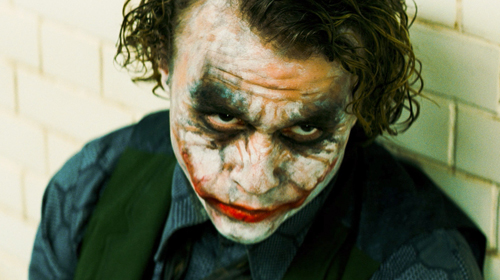
So a villain is a species of antagonist that generates fear and loathing in the reader. It doesn’t matter if they think they have good reasons for their acts. We still feel they are evil and dangerous. Examples include: Darth Vader, Sauron, the kidnapper in Mel Gibson’s Ransom, Commodus in Gladiator, or the Joker in The Dark Knight.
So here’s what I’ve noticed about effective villains.
VILLAINS & STRUCTURE
1) In a villain/hero story situation, the villain is key because the hero is reacting to the villain’s plan. It’s a total threat/danger plot.
2) So the villain has to be active. He’s the one who WANTS something. He’s the one that starts the whole story. A weak villain isn’t going after this thing whole-hog or doesn’t have the power to do it or has no urgency and will.
3) Strong villains are ruthless AND powerful. Villains also need to have some brains–we need to be worried for the hero, remember? We have to know that they’re they type of person that will take you out if you get in their way. Even if they have a well-spun way of making themselves sound ethical. But villains go beyond other antagonists in that we fear and hate them. They are evil.
4) The hero needs to be the underdog in the relationship, meaning less powerful, two steps behind, not as easily ruthless etc. The bigger the plan the more high stakes and high concept the story becomes. But it’s the villain’s plan that drives it. And they will be taking steps to counter the hero, will probably be two steps ahead most of the story.
5) As always, as with any character, the villain’s plan and motives have to be believable. Even if they are evil. The minute a villain becomes too far-fetched, they lose their power.
CHARACTER INTEREST
In addition to the role villains play in the story, there are a number of other things that make them interesting. However, these things are not anything new or different. They’re the same things that make any character (or person) interesting.
– Larger-Than-Life Attributes (as in experience, power, skill, success, position, or behavior)
– Eccentricities and Particularities
– Outrageousness
– Humor
– Beauty
– Surprise (as in against type details, reactions, motivations, or backstory)
– Inner Conflicts (as in the “ethical” dilemmas they find themselves in)While danger and threat draws the attention, rouses interest, and can be sufficient to make a villain memorable, I think the factors mentioned above have a wonderful effect.
THE CORE QUESTION
The root question when considering villains is what pushes readers toward the fear and hate of others?
Of course, it’s relative. But there are qualities that engender these feelings in us. Selfishness, brutality, sadism, madness, cruelty, a complete disregard for others AND the power to carry their wishes out. It’s someone who poses huge, immediate, specific threats to me or those I care about and does it without any concern or with relish. The more intense these factors, I think the more we move along the spectrum towards fear and hate.
So people say the best villains are those who are the hero’s of their own story and with whom we can empathize. I don’t think this is accurate. The Joker in the Dark Knight was a great villain and may have been the hero of his own story, but never in a million years would I empathize with him. It’s true we can smpathize more with people who agonize and resist horrible acts. And some antagonists do show scruples. But not every story demands that type of antagonist. Sometimes what’s needed is someone who kills grandma horribly and says “so what” or “it was fun”–and engenders fear and hate.
One last point. “Villain” is a reader attributed characteristic, i.e. the reader is the one who labels the character. This means the person has to be a villain in the READER’S eyes, not necessarily a villain in the eyes of the culture in the story. For example, In Not Without My Daughter the hero subverted and violated the dominant story culture, and I cheered for her. The guy who was sustaining the moral order of the story culture was the villain.
ROOTING
From what I can tell, all rooting response is based on some innate sense of justice, of what’s appropriate in a situation. For whatever reason, we feel discomfort when undesireable things happen to good or innocent people. We also feel discomfort when desireable things happen to bad people. The reason why we root for someone is because they have a lack of happiness or a threat to their happiness AND we belive they deserve better. I can’t see anything else we based that deservingness upon except some inner sense of justice.
It doesn’t mean the deserving person is a goodie two-shoes. It just means that in the context of the story and what’s happening, we think the scales of justice tip, if only slightly, to the hero’s side.
Some may argue this, but I don’t think it’s possible to root for someone or against someone without a moral judgment. It’s true that not every antagonist needs to or does act immorally. In fact, the antagonist might be doing the right thing, the moral thing, in his or her particular situation, and it just happens to oppose the hero’s desires. The key however, is that the story guides the reader to feel the hero should win at the antagonist’s expense. And that it’s right for the hero to do so. That “rightness” is based on a moral stance of what’s good and desireable in the given situation. The farther along the spectrum of antagonists we move towards villany, the more clear that moral stance becomes.
Indie Thoughts: How much does it cost to publish a book independently?
Is The Guardian right?
Does it really cost $6,000 to publish a book independently?
Is that the price to become Hemmingway these days?
Lots of commenters at The Passive Voice said the numbers were rubbish. Far too high. They said this was yet another thinly-veiled bit of flimflam The Guardian cooked up to depress indies and send aspiring authors into the arms of the zombie traditionalists.
I actually thought the piece was good.
Why?
Because I like numbers. I did get a Master’s degree in accounting, after all.
But is it just that numbers are sexy?
It’s true the shape of the number 3 can be glorious. 9 is a stunner as well. But the slopes and curves of these digits is not why I like them. Numbers, even if they’re bad numbers, allow you to start thinking about costs. They allow you to question whether they could be reduced. Or whether you’re getting any bang for your buck in a certain category. Heck, numbers allow you to discover whether you’re allocating way too much in one area and far too little in another.
I thought The Guardian did a great job breaking the costs out into categories and starting an examination. The question is: are the categories and amounts political fictions or real?
Comparing My Numbers
One way numbers do all the things I mentioned above is by letting you do comparisons. So I figured I’d compare The Guardian’s numbers with a set of my own. I’ve published four books independently. How do my costs stack up?
Here are the costs for the latest.
Cover: $500
- $500 for illustration
- $0 for cover design (I have a friend who is so incredibly generous with his time)
- Cover for some genres can cost less. Some folks do it themselves. Most of those do-it-yourself covers look awful.
- The zombie traditionalists can sometimes spend a few thousand. And when they do it right, they get some amazing, AMAZING, work.
- Verdict: The Guardian’s number seems reasonable, but I’m thinking the range is a few hundred up to a few thousand for something that doesn’t give the average reader worms.
Editing: $0
- My wife, former technical writer, current language arts teacher, is my editor. There are some other folks I’ve tapped as well.
- If I didn’t have her, I’d need someone. My experience is that if you yourself are not an editor, and you try to do this, you’re going to end up with a poorly edited book. Even with her experience, we’re still finding it hard, and are working to get the process down. We might outsource this in the future.
- I’ve gotten reasonable quotes, and they’re all around $600-900. And that’s just for a copy edit. You want other kind of editing, you’re going to pay more.
- Verdict: The Guardian’s number is high, but not if you tap into a bunch of pros for multiple edits.
Formatting for POD and ebook: $120
- I do the interiors myself, so the labor is free. If I had to pay, it could run anywhere from $100-$300 or more.
- I pay a subscription fee for InDesign. If I release two books a year, it comes out to roughly $120/book.
- I spent $300 taking a class on basic interior design principles. But that was just the beginning. I must have spent 50-70 hours, maybe more, last October and November, banging my head against the wall as I learned this. Luckily, all that thrashing about didn’t result in any medical bills. I’ve had to spend maybe 10-20 more since then learning advanced techniques and keeping the basics fresh.
- Verdict: The Guardian didn’t even include this.
ISBN: $0
- I owe my friend; without him, this would definitely be a cost. I’m such a free loader.
- Verdict: The Guardian’s number is good.
Copyright Registration: $55
- $20 bucks to mail 2 copies to the Copyright Registration Office
- $35 processing fee
- Yes, you do want to do this. For detail on why, see The Copyright Handbook by Stephen Fishman.
- Verdict: Another miss
Print-on-demand fees: $0
- I go with CreateSpace instead of Lightning Source
- Verdict: Another miss
Notice what’s NOT up there that was in The Guardian article: reviews and review copies.
Why don’t I include them?
First, I would never pay for a Kirkus review. I wouldn’t because it appears such reviews mean little to readers. They don’t seem to generate much notice or desire to sample. Here’s what readers report matter to them. Such pre-publication reviews DO matter to store and library book buyers. But, as an indie, I’m not focusing on those channels. Those channels are in the hands of the zombie traditionalists.
What about review copies?
You don’t need them to publish. All this review business is marketing. And you don’t need marketing to publish.
So what are my totals? I’ve included The Guardian numbers so you can see the differences.
Category My Costs Guardian Estimates Cover $500 $750 Editing and proofing $0 $4,000 Ebook and POD Formatting $100 ? ISBN $0 $125 Copyright Registration $55 ? POD setup fees $0 ? Reviews – $825 Review Copies – $300 TOTAL $655 $6,000 Whoa! The Guardian estimated a cost that’s ten times what it costs me. But I don’t think that’s a sign of some plot. If I’d paid an editor and cover designer and formatter and didn’t mooch my ISBNs, that could have added as much as $1,000-$2,000 to my total. I have friends who have paid more.
Furthermore, that’s just for the ebook and hard copy. Depending on if you publish an audio edition and how you do it, you could spend another $2,000-$3,000.
What does this tell you? It tells me that the reporter made a good start, but needed to do a bit more digging. It also tells me there’s a huge variability in the costs depending on the skills you and your friends possess. It also shows that this is a business. I doesn’t cost a gazillion dollars to publish. It’s not like the $200,000-500,000 you need to start some food franchises, but you’d better be prepared to fork over some cash and/or a lot of hard work.
In fact, when you consider that last point of sweat equity, the $655 is completely misleading because it does not capture the hours I spent, at least 20-60, doing my part of the cover, editing, and formatting. Nor the time spent by my wife or friends. There’s a huge opportunity cost there.
What’s the value of what I could have done with that time?
It’s for dang sure not reflected in the $655.
Marketing
I didn’t include marketing in those costs above because marketing is its own beast. You can publish and do zero marketing. You can publish and do gobs. And just as with the publishing costs, marketing costs will vary based on what you can do in-house and what your situation is. It costs JK Rowling nothing to get covered in every news outlet in the land. She sneezes, and we get a report about her. You and I are probably going to have to work harder to get noticed.
There are all sorts of marketing costs. Whatever those costs, marketing has a job to do. It’s got to pay for itself. It’s got to help pay for the cost of publishing. And it’s got to help me meet my goal of winning new readers and compensating me for my time.
There are lots of cost categories depending on what you decide to do:
- Hard copies you sell at events
- Travel and lodging required to attend events
- Hard copies and postage for reviewers
- Time writing blog posts
- Promotions with folks like BookBub and BookSends
- Giveaways
- Etc.
The bottom line is that I think it’s good to separate these costs from publishing so you can measure their effectiveness against sales. Marketing is about revenue generation. These costs really have nothing to do with producing a book.
Books and Lemonade
I’m going to go off an a tangent here for a second. Some folks suggest that indie authors shouldn’t do much marketing. Especially if they only have one or two books out.
I find no evidence to support the idea that just writing the next book is all you need to do for readers to hear about you and beat a path to your door. It’s true you’ve got to write the next book. You must get new product out the door. Hey, I learned that when book 2 from the publisher fell into a black hole. But that doesn’t mean marketing and promotion are inappropriate, wrong-headed, or a waste of time or money.
Let me ask you a question.
Let’s say Juanito is a no-name in the lemonade business. He’s just starting from scratch with dreams of becoming a big time lemonader. Who thinks it’s a good idea for him to open a lemonade stand in his back yard? Or better yet, in a closet in his basement? And when folks suggest that the stand might get more business if he lets the neighbors know about it or puts the stand in a place with a lot of foot traffic, who says, no, that’s a waste of time and money–the key to selling more lemonade is whipping more batches up in the kitchen?
In retail, you must get folks to notice your product and then persuade them to try it. Now, maybe you’ve got something going that’s generating all the notice and sampling you can handle. Maybe you lucked out.
What percentage of indies are in that situation? Raise your hands, please.
What? We’re not all inundated with hordes of readers? We’re not all swimming in gold? Imagine that.
The fact is that it’s tough to get notice. It’s tough to get people to try. But there are some things we can do to increase our odds. Selling books is a retail business. Retail lives and dies by visibility. Yeah, you need word of mouth. But you need to be noticed and sampled in large enough amounts to keep that word of mouth going.
What would you rather have? 100,000 people all over the country in many social networks (I’m not talking about Facebook) noticing and sampling and talking about your product, or would you rather have five?
In the brick and mortar world, there are lots of ways to get visibility without doing much TV or internet advertising. Ways to get notice include things as simple as signage and a store’s location. For example, you get a ton of eyeballs just situating your restaurant in the parking lot of a big destination shopping mall. You get eyeballs putting a sign on top of a 100 foot pole next to the freeway exit saying “Gas & Eats.” Online retailers get noticed in other ways.
Without blathering on about that (this was a post on publishing costs), let me just say that until customers begin to line up and start throwing hundred dollar bills at me, it appears I’m going to have to do what every other retail business has done for hundreds of years–get my lemonade stand out of the basement and into the park with lots of thirsty kids and moms.
EDIT 8/30/2014
While a number of folks are assuming the article was written as part of some vast conspiracy to undermine indie authors, David Gaughran posted some criticism in the article’s comment section that actually make sense.
DavidGaughran
The reason I’m so annoyed by the inaccuracies in this article is that this kind of misinformation is creates an information gap which allows shady operators to flourish.
Vanity press operators thrive because inexperienced authors think that self-publishing is either difficult or expensive. It’s neither of those things, and articles like this only serve to reinforce this false notion. That’s why I think this piece is irresponsible as well as inaccurate.
Companies like Author Solutions specifically target the most inexperience authors, the ones who know least about self-publishing and the industry in general, the ones who have fallen under the spell of various myths (like that self-publishing costs $6,000).
As a commenter said below, saying self-publishing costs $6,000 is like saying houses cost $10m. You can spend that much, but you don’t need to.
It costs me less than a third of that to publish a book, and I use a Big 5 cover designer as well as an editor with over ten years experience working for traditional publishers. Anyone can look at my books and immediately see that they are produced to professional standards.
You don’t even have to spend as much as I do to get a quality product. If authors are on a tighter budget, they can purchase a pre-made cover design. There are some wonderful pre-mades out there for as little as $40. You will have to invest a fair bit of time combing through the sites to find something suitable, but if you are on a shoestring budget it’s an option.
Same goes for content editing/developmental editing. All manuscripts will need a thorough copy edit, but you can get by without a specific content edit with successive round of beta readers. Again, this will require a time investment – writers usually trade beta reads of each other’s work. But if you’re on a tighter budget, it’s another way you can save money.
This is why this piece is so off. Even going the “deluxe” route shouldn’t cost more than $2,000. And if you don’t have $2,000, there are plenty of options where you can achieve a quality product, spending far less, if you are willing to put in a little time.
There are ways you can save money in other areas too. It’s a waste of money for an author (especially a new author) to buy a NetGalley membership for themselves. Authors can (and do) form collectives to buy a membership between them – often spending just $20 per person. I got a NetGalley spot for a month, for free, by bartering with another author. (I didn’t think it was quite worth $20, by the way, let alone $400).
If you need reviews, there are much better and cheaper ways. Submitting to book bloggers costs nothing (we usually send e-book copies or PDFs, rather than hard copies). Doing an e-book giveaway on LibraryThing costs nothing. Giving out electronic ARCs in advance of your release costs nothing. And all of these are much more effective than giving any kind of money to Kirkus, let alone $425.
But I guess it doesn’t matter how many experienced self-publishers (and editors who work with same) tell you that your figures are off, or that you don’t need ISBNs to self-publish, you are going to stick to your guns.
How to Write a Story that Rocks
Folks, a huge thanks goes to Stephen Nelson for putting all this together. You may kiss his hand when you see him.
This is a recording of “How to Write a Story that Rocks,” a two-hour seminar Larry Correia and I just put on at the annual BYU’s Life, The Universe, & Everything symposium. I think we had 130-140 people attend. This symposium is focused on writing fiction. And while the panels and presentations do include things specific to the science fiction, horror, and fantasy genres (both adult and young adult), a lot of time is also spent on story writing fundamentals that apply to ALL genres. So when I developed this workshop, I made sure I took the fundamental approach.
The two-hour seminar has been broken down into 12 segments. To switch between the segments:
- Hover your mouse pointer over the YouTube below
- Click the forward and back arrows that appear on the right and left sides to move to the next or previous segment, OR
- Scroll through all 12 segments and select the one you want using the playlist control at the bottom
If you prefer, you can watch all 12 on the How to Write a Story that Rocks YouTube playlist page.
I’ve found whenever I develop any presentation or training that it takes a few iterations and revisions before it’s the best it can be. This is the first iteration of this seminar. And so below this video I’ve provided additional comments on each segment explaining key concepts, principles, and techniques that we might have failed to discuss or convey as clearly as we’d hoped. Enjoy!
Handout
How to Write a Story That Rocks – Handout
Segment 1
It’s documented–right-wing gun nut Larry Correia sang “Kumbaya.” What’s next? The hugging of small trees? Oh, Larry, the disilluion. The disillusion.
The reason why I had Larry sing was not for his mellifluous performance, but to demonstrate the difference in reactions between him and our happy volunteer (“Country Road” by John Denver–this really was a love fest). The volunteer balked because he hadn’t taken any thought to know what to sing before he was commanded to do so. On the other hand, Larry and I had spoken before the seminar. So Larry had something to sing BEFORE he sang it. It’s a simple demonstration, but it illustrates a principle a lot of new writers forget. Writing is a performance. It helps to know what it is you’re going to perform before you perform it.
It’s one thing for you to tell yourself to write. It’s much easier to tell yourself to write the scene where the rancher finds out one of his illegal ranch hands has been kidnapped.
Now this doesn’t mean that you have to know everything. Or that you can’t write exploratory drafts to figure out what it is you want to write. But it does illustrate that whatever techniques you use, you’ll be a lot more effective in your writing when you have something to say first.
But what do you develop? What are the things that bring the story to life? How do you go about getting those things to say? That’s precisely what I wanted to address in the seminar. In the segments that follow, I try to:
- Explain what I’ve found are the most important things to develop, the things that define the essence of story, that make the story come alive in the writer’s mind–the things that really matter
- Demonstrate techniques to develop those things so you have something to say
Segment 2
I think this segment went fairly well. What rocks will different from person to person, even though there will often be a huge overlap between people. So it’s important for authors to seek to develop the kinds of stories that rouse their passion. Watch this interview with best seller Debbie Macomber to see what I mean. So I can’t tell you what to write about. Or if whath you think rocks will resonate with a large number of people. However, what I can do is share the techniques I use that have been most productive in helping me develop initial ideas into something that has much more power.
You can use the techniques to juice up any of the four parts of story. However, I will say that I find that the most productive, the most important parts, are character and problem. Plot and setting are important. I love them and work to juice them up. But when I get a good character and problem, that’s when the writing seems to flow the easiest.
And no, I don’t list theme as a part of story. Everyone talks about theme, but when I read what they have to say or press them for examples, it seems that it always either boils down to (1) a story element or topic that’s repeated, (2) a story problem/issue stated in an abstract manner, or (3) some moral situation. Les Miserables is about the “theme” of mercy versus justice. But saying justice versus mercy is just an abstraction of the story problem and dilemmas the story deals with. So, no theme.
Segment 3
Loved this bit about scenes from David Mamet: http://www.slashfilm.com/2010/03/23/a-letter-from-david-mamet-to-the-writers-of-the-unit/
Segment 4
I’ll be adding my comments to the rest of these segments over the next few days.
Segment 5
Segment 6
Segment 7
Segment 8
Segment 9
Segment 10
Segment 11
Segment 12
Dan Wells on Story Structure
Check it out: Dan Wells on How to Build a Story (story structure). I find Dan’s “start with the ending” technique helpful as well as thinking about a worst fears realized moment. Watch the videos and see if there isn’t something there that can help you develop your story idea.
You can get the PowerPoint of How to Build a Story on Dan’s site.
If you find this approach useful, you might want to check out what novelist Larry Brooks has written about the same material on StoryFix.com.
A Great Post on Writing by Mette Harrison
Author Mette Harrison writes a column on writing for Orson Card’s Intergalactic Medicine Show. I think you can read them without a subscription. This month’s column had some great insights. Here’s one fab example.
I also recommend that if you want to write a book that readers will not be able to put down, focus on one really good story (more on this next month). I am not saying that you can’t have sub plots or minor characters. You can. But I urge you to make sure that your page count does not obscure which characters are the main ones or what their main goal is. If you have lots of different characters who are in different parts of your world, that is fine. But make sure that they are all working at different ends of the same thread, that they all end up being part of the same story. If you cannot figure out which character is the one you want your readers to care the most about, to root for most desperately, you may have too many characters.
Good advice. There’s more.